
TL;DR

Get business pricing on tools and workshop supplies
- Business-only prices and quantity discounts
- Tax-exempt purchasing
- Multiple users, one account, clear invoices
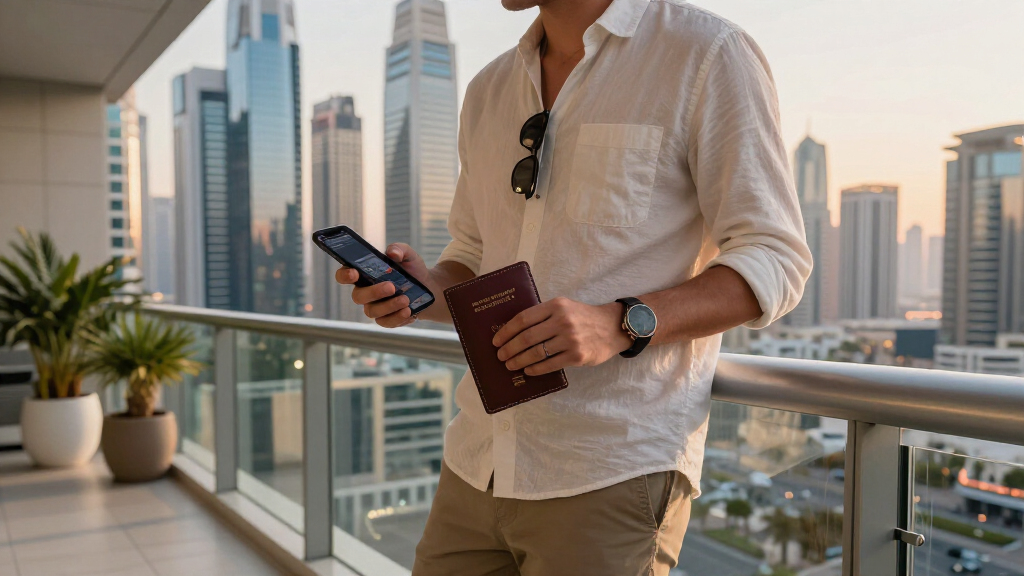
Dubai’s residents are shifting towards international travel, aligning with global tourism trends. This development indicates changing lifestyle preferences in the UAE, driven by economic growth and increased connectivity.
Dubai’s residents are increasingly engaging in international travel, marking a significant shift in lifestyle preferences that aligns with global tourism trends, according to recent reports. This development highlights a broader cultural and economic transformation in the UAE, driven by increased connectivity and rising disposable incomes.
Recent data from travel agencies and industry analysts indicate a notable rise in international travel among Dubai residents, with outbound trips increasing by approximately 20% in the first quarter of 2024 compared to the same period last year. This trend is reflected across various demographics, including young professionals, expatriates, and affluent families, suggesting a widespread change in travel habits.
Experts attribute this shift to multiple factors, including the UAE’s expanding global connectivity through new flight routes, the easing of travel restrictions, and the country’s economic growth, which has improved disposable income levels. Additionally, Dubai’s position as a global hub for business and leisure has made international travel more accessible and appealing.
Travel agencies report that destinations such as Europe, Southeast Asia, and North America have seen increased bookings, with many residents citing leisure, education, and business reasons for their trips. Social media influence and exposure to international cultures are also believed to be motivating factors for this lifestyle change.
The UAE’s Lifestyle Shift: Embracing International Travel Trends in Dubai
International travel is becoming a routine expression of modern life for Dubai residents. Stronger connectivity, rising disposable income and broader cultural exposure are moving long-haul trips from occasional luxury toward an increasingly mainstream habit.
Reported year-over-year outbound growth in the first quarter of 2024.
Europe, Southeast Asia and North America stand out in booking activity.
Leisure, education and business are the recurring reasons for travel.
Residents are moving beyond historically regional and short-haul patterns.
Why Dubai residents are looking farther abroad
The behavior is not driven by one isolated event. Infrastructure, prosperity and social expectations reinforce each other, making international movement easier to access and more desirable.
Global connectivity
New flight routes and Dubai’s hub position reduce friction between residents and destinations across virtually every continent.
Disposable income
Economic growth gives more households the financial flexibility to treat international trips as a regular lifestyle choice.
Travel facilitation
Easing restrictions and improved confidence after the pandemic have accelerated the return of outbound demand.
Global exposure
Dubai’s international population and business environment normalize cross-border experiences and cultural exchange.
Social discovery
Digital content continually introduces residents to new places, experiences and travel formats worth pursuing.
Modern expectations
Travel is increasingly associated with education, professional growth and personal enrichment—not only prestige.
Where demand is heading—and why
Reported bookings point to a broad geographic appetite. Each leading region answers a different combination of leisure, learning, business and cultural interests.
| Destination region | Leisure | Education | Business | Demand signal |
|---|---|---|---|---|
| Europe | ✓Strong | ✓Strong | ✓Active | Leading |
| Southeast Asia | ✓Strong | ~Selective | ✓Active | Rising |
| North America | ✓Active | ✓Strong | ✓Strong | Rising |
| Regional short-haul | ✓Established | ~Selective | ✓Established | Mature |
How access becomes cultural change
Travel infrastructure creates more than passenger volume. It can reshape consumption, social norms, education choices and the way residents relate to the wider world.
More routes
Expanded air links increase the range and convenience of reachable destinations.
Lower friction
Facilitation and improved travel confidence make international trips easier to plan.
Broader access
More demographic groups begin participating in frequent outbound travel.
Global exposure
Residents encounter international ideas, cultures, institutions and business practices.
New norms
Travel becomes integrated into expectations of a modern, cosmopolitan lifestyle.
A lifestyle trend with system-level effects
Outbound demand reaches beyond airlines. It affects travel services, local retail behavior, infrastructure priorities, cultural attitudes and the environmental debate surrounding mobility.
Travel ecosystem growth
Agencies, booking services, retail and travel-related hospitality can benefit from greater resident engagement.
Cosmopolitan outlook
Frequent exchange may influence attitudes toward global cultures, education and professional practices.
More resident services
Demand may support additional direct routes and expanded travel products tailored to Dubai residents.
Sustainability pressure
Higher flight volumes raise concerns about carbon emissions, resource use and future policy responses.
Momentum is clear; durability is uncertain
The central question is whether recent growth represents a lasting transformation or a post-pandemic surge. Better longitudinal data will be needed to separate structural change from temporary acceleration.
Signals that could sustain growth
Several reinforcing conditions support continued outbound participation.
- Further expansion of direct international flight routes
- Stable household income and continued economic confidence
- Growing demand for international education and business access
- Travel services designed around frequent resident mobility
Variables that could slow it
The outlook remains exposed to forces beyond traveler preference.
- Economic volatility and pressure on discretionary spending
- Geopolitical disruption across important travel corridors
- Environmental regulation and rising sustainability costs
- Changes in visa rules, capacity or global travel confidence
Current evidence leans toward structural change, but confirmation requires more time-series data.
Implications of Dubai’s Travel Lifestyle Shift
This trend signifies a broader cultural shift in the UAE, with residents adopting more globalized lifestyles. It reflects economic prosperity, increased international connectivity, and changing social norms that favor travel and cultural exchange. The rise in outbound travel also has potential economic benefits for Dubai’s tourism and hospitality sectors, as residents become more engaged in international destinations.
Moreover, this shift may influence local attitudes towards global cultures, education, and business practices, fostering a more cosmopolitan outlook among Dubai’s population. However, it also raises questions about the environmental impact of increased travel and the sustainability of such growth.
As an affiliate, we earn on qualifying purchases.
Dubai’s Evolving Travel Culture and Infrastructure
Over the past decade, Dubai has positioned itself as a major international travel hub, with the expansion of Dubai International Airport and new flight routes connecting to virtually every continent. The city has also invested heavily in tourism infrastructure, including luxury hotels, entertainment complexes, and cultural attractions, making it a desirable destination for both inbound and outbound travelers.
Historically, Dubai’s residents primarily traveled regionally or for short-haul trips. However, recent years have seen a significant increase in long-haul international travel, driven by the country’s economic growth, visa facilitation, and global marketing campaigns. This evolution aligns with a broader trend in the UAE, where lifestyle and consumption patterns are becoming more aligned with international standards.
Prior to this shift, travel was often viewed as a luxury for the elite, but now it is increasingly regarded as an essential part of a modern lifestyle across various socio-economic groups. The COVID-19 pandemic temporarily disrupted travel patterns but has since accelerated the return and growth of international trips, as confidence in travel safety has improved.
compact travel backpacks for Dubai residents
As an affiliate, we earn on qualifying purchases.
As an affiliate, we earn on qualifying purchases.
Unanswered Questions About Long-Term Impact
It is not yet clear how sustainable this increase in international travel will be, especially considering potential geopolitical or economic shifts. Additionally, the environmental impact of rising travel levels and whether the trend will lead to changes in local travel policies or infrastructure investments remain uncertain.
Further data is needed to determine if this is a temporary spike or a lasting transformation in Dubai’s lifestyle patterns.
passport holders with RFID protection
As an affiliate, we earn on qualifying purchases.
As an affiliate, we earn on qualifying purchases.
Future Trends and Policy Responses in Dubai
Expect ongoing monitoring of travel statistics and government policy adjustments to accommodate increased outbound travel. Dubai may also expand its tourism infrastructure to support residents’ international travel needs, including more direct flight routes and travel-related services. Additionally, industry stakeholders anticipate that the trend will continue to evolve alongside global travel patterns, influenced by economic, environmental, and geopolitical factors.
As an affiliate, we earn on qualifying purchases.
Key Questions
What factors are driving the increase in international travel from Dubai?
The rise is driven by improved connectivity through new flight routes, economic growth, easing of travel restrictions, and increased disposable income among residents.
Which destinations are most popular among Dubai travelers?
European countries, North America, and Southeast Asia are among the top destinations, with leisure, education, and business reasons cited for travel.
How might this trend affect Dubai’s local economy?
The increase in outbound travel could boost related sectors such as travel agencies, hospitality, and retail, while also encouraging further infrastructure investments.
Are there environmental concerns related to increased travel?
Yes, higher travel volumes raise environmental issues, including carbon emissions and resource use, which may lead to future policy considerations.
Will this trend continue in the long term?
It remains uncertain; future developments depend on economic stability, geopolitical factors, and global travel trends.
Source: rss
Halloween Picks
halloween
As an affiliate, we earn on qualifying purchases.