
TL;DR

Get business pricing on tools and workshop supplies
- Business-only prices and quantity discounts
- Tax-exempt purchasing
- Multiple users, one account, clear invoices
A tree or hedge is generally owned by the person whose land its trunk or main stem occupies, but ownership can be uncertain when it sits on a boundary. Ideal Home’s expert sources advise checking property deeds and the legal boundary before pruning; protected-tree rules and nesting birds can also restrict work.
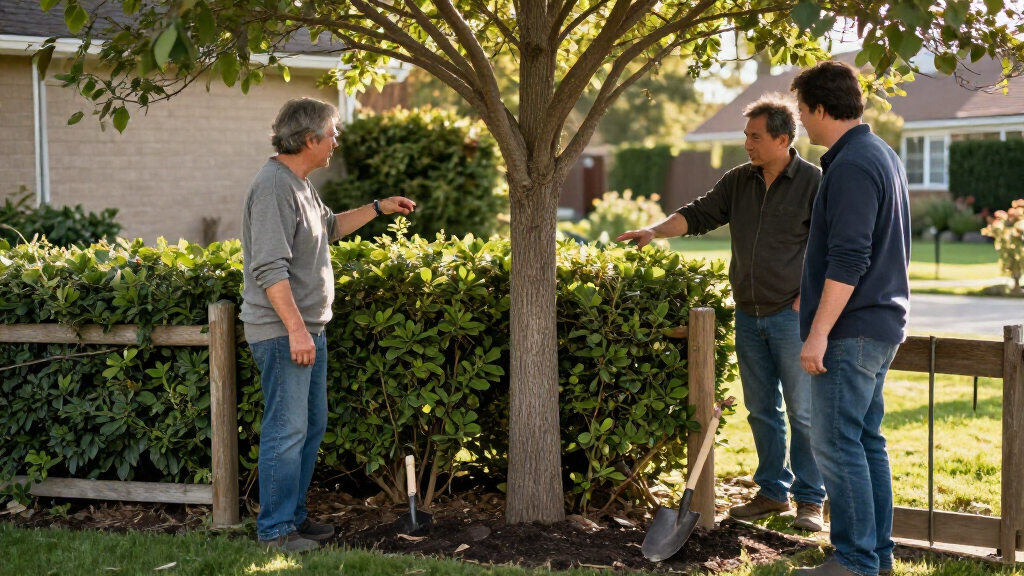
Ideal Home has published guidance on how homeowners can establish who owns a tree or hedge between neighbouring properties, advising them to check property deeds and the tree’s position against the legal boundary before arranging work. The question matters because a fence may not mark the true boundary, and pruning can be restricted by ownership, tree protections or wildlife law.
The report says the property deeds are a useful starting point. Lucie Bradley, gardening and greenhouse expert at Harvst Automatic Watering, advises checking the HM Land Registry title documents. A thick red line commonly shows the general extent of a property, but it is not a precise measurement. Bradley says deeds may also show T marks: a mark on one side of a boundary can indicate responsibility for that boundary feature, while paired marks resembling an H can indicate shared responsibility.
Those symbols are clues, not a guaranteed answer in every dispute. The report stresses that the fence’s location is not definitive proof of the legal boundary, since fences can shift over time. Kara Gammall, a home insurance expert at MoneySuperMarket, says a tree whose trunk is wholly on one property will generally belong to that landowner, even if branches or roots extend into the neighbour’s garden.
Where a trunk or the main stems straddle the boundary, ownership and care may need to be agreed between neighbours. Bradley suggests examining where the base sits in relation to the boundary and discussing maintenance or major pruning before making irreversible changes. For branches or roots crossing onto a neighbour’s land, Gammall says a resident generally has a right to prune encroaching growth back to the boundary, but should not enter the neighbour’s land or cut beyond it without permission.
Boundary Checks Before Pruning
Getting ownership and the boundary wrong can turn routine garden maintenance into a neighbour dispute or lead to damage and legal problems. A tree may appear to belong to one garden because of where its canopy falls, while the trunk’s position and property documents point elsewhere. Confirming the boundary first can help residents decide who should maintain the feature and whether work needs agreement.
The report also distinguishes the right to trim encroaching growth from a right to remove or substantially alter a tree. Protected status and wildlife rules may limit what an owner or neighbour can do, even when branches cross a property line. The practical message is to check the facts and applicable restrictions before cutting.
As an affiliate, we earn on qualifying purchases.
Deeds, Trunks and Boundary Marks
The article addresses a common assumption about garden boundaries: that a homeowner is responsible for the left-hand side of a property. It describes the so-called “left-hand rule” as a property myth, rather than a dependable way to identify who owns a fence, hedge or tree. The guidance instead points readers to deeds, boundary evidence and the position of the trunk or main stem.
Even deed plans may not settle every case. The red line indicates the general extent of land and is not millimetre precise, according to Bradley’s explanation in the report. Historical documents and a conversation with the neighbour may help where the boundary is disputed. The source does not describe a formal dispute-resolution process or provide legal advice for cases that cannot be resolved informally.
Tree rules can add another layer. The report says some trees are protected by a Tree Preservation Order (TPO) and advises checking with the local council, including whether the property is in a conservation area. It also notes that disturbing or harming nesting birds is unlawful under the Wildlife and Countryside Act 1981.
“The place to start when trying to find out who owns a tree or hedge is to check your house deeds.”
— Lucie Bradley, gardening and greenhouse expert at Harvst Automatic Watering, quoted by Ideal Home
As an affiliate, we earn on qualifying purchases.
When Ownership Is Still Disputed
The source provides general guidance, not a ruling on any particular property. It does not establish ownership of a specific tree or hedge, and deeds or boundary marks may not resolve a disagreement on their own. Where a trunk sits across the line, neighbours may need to agree on responsibility or seek further advice.
The report also does not identify the rules that would apply in every location or circumstance. The quoted right to prune encroaching growth is described as general guidance; protected-tree status, local restrictions and nesting wildlife can affect what work is lawful. Wilson cites fines of up to £20,000 for pruning a protected tree without permission, but the report does not set out the circumstances or penalties for a particular case.
As an affiliate, we earn on qualifying purchases.
Check Documents Before Work
Homeowners concerned about a boundary tree or hedge can start by reviewing their title documents and comparing the plan with the feature’s trunk or main stems. They can check with the local council for TPO and conservation-area information before pruning; the report says online tools can offer an indication, but council confirmation is the more specific check.
If the boundary or ownership remains uncertain, the next practical step is to speak with the neighbour and agree on any proposed work before it begins. Do not cross the boundary or cut beyond it without permission, and obtain relevant approval where a tree is protected. The source does not report a new legal decision or announced policy change; its guidance is intended to help residents avoid acting on assumptions.
As an affiliate, we earn on qualifying purchases.
Key Questions
Who usually owns a tree near a boundary?
According to the experts quoted by Ideal Home, a tree whose trunk is wholly on one property will generally belong to that landowner, even if branches or roots extend over the boundary. If the trunk straddles the boundary, responsibility may need to be agreed.
Does the fence show exactly where the legal boundary is?
Not necessarily. The report says fences can move over time, so their position should not be treated as definitive proof. Check the property deeds and relevant historic documents.
Can I cut branches that extend into my garden?
The general guidance cited in the report says residents may prune encroaching growth back to their side of the boundary. Do not cross onto the neighbour’s land or cut beyond the boundary without permission, and check whether the tree is protected or wildlife restrictions apply.
How can I check whether a tree is protected?
Ideal Home advises contacting the local council to check for a Tree Preservation Order or conservation-area restrictions. An online checker may provide an indication, but the report says council information is needed for more specific details.
Source: rss
Fall yard work Picks
leaf blowers
As an affiliate, we earn on qualifying purchases.