
TL;DR

Get business pricing on tools and workshop supplies
- Business-only prices and quantity discounts
- Tax-exempt purchasing
- Multiple users, one account, clear invoices
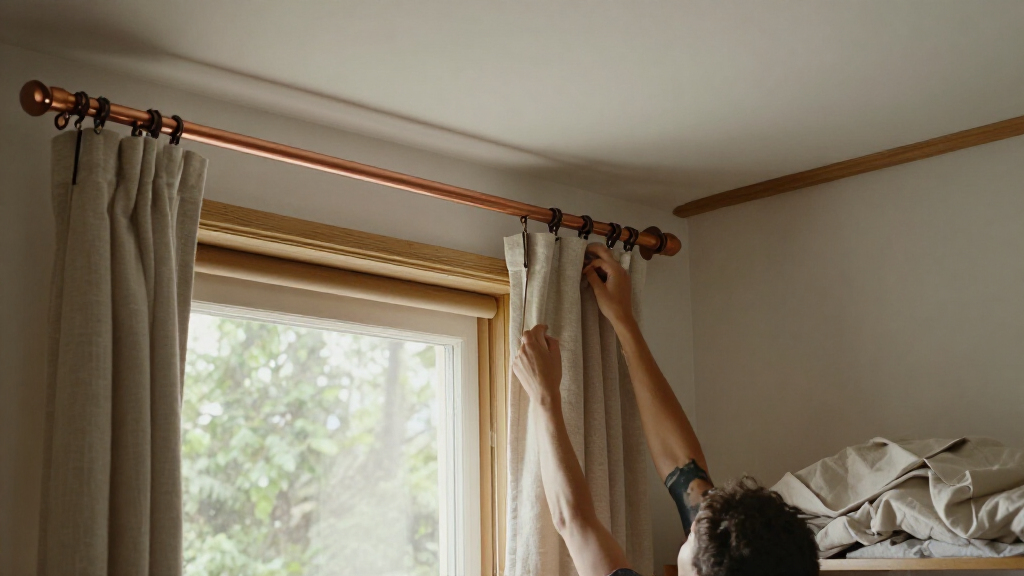
Hunker has published a DIY guide showing how copper plumbing pipe can serve as a curtain rod, offering a visible metal accent that may cost less than some store-bought rods. The project requires careful measuring, compatible fittings and secure wall mounting; the guide lists a five-foot Type M pipe at $16.54 at Home Depot, but prices vary by location.
Hunker has described a DIY curtain rod made from copper pipe, presenting plumbing materials as an alternative to conventional window hardware. The guide says a five-foot length of Type M copper pipe was listed at $16.54 at Home Depot, though the price may vary by store or region, and notes that the fixed-length pipe must be measured and cut to fit.
The project uses more than a length of pipe. Hunker’s materials list includes two flanges, two copper male adapters and two elbows, as well as a copper tee if the rod needs center support. The guide also suggests copper-colored spray paint for the flanges, which it says are often sold in silver. Curtain rings are optional, depending on the curtain panels.
Tools listed include a tape measure, level, pencil, drill and deburring tool or sandpaper. A tubing cutter is needed if the pipe must be shortened. Hunker advises measuring the window and checking the proposed layout before cutting, leaving space for the supports and curtains. Unlike an adjustable curtain rod, a cut pipe cannot be extended to compensate for a length miscalculation.
For installation, the guide describes attaching a flange and adapter at one side, using the pipe and elbows to mark the other support position, then fitting the second flange. It says to check that the wall supports can bear the combined weight of the pipe and curtains, adding a center tee if needed. The pipe ends should be smoothed after cutting so rough edges do not snag fabric.
A Visible Accent at the Window
The idea turns curtain hardware into a more prominent part of a room’s design. Hunker suggests copper could suit different interiors, including white curtains with weathered wood for a farmhouse look or exposed brick in an industrial-style space. These are design suggestions, not tested outcomes; the appeal will depend on the room and the finish of the other fixtures.
Cost is another reason readers may consider the approach. The cited $16.54 pipe price is only one item in the project, not a complete installed cost. Fittings, flanges, paint, tools and any added support may increase the total, and the source does not compare the finished project with specific retail rods. The guide presents the pipe as a potentially lower-cost option, but shoppers would need to price all required parts locally.
The project also calls for more planning than buying an adjustable rod. Accurate measurements and secure mounting affect whether the rod fits and stays in place. For renters or anyone unsure about drilling into their walls, the source does not address permission, wall type or suitable anchors; those details need to be checked before installation.
As an affiliate, we earn on qualifying purchases.
From Plumbing Supply to Window Hardware
The Hunker report frames copper pipe as an unconventional reuse of a standard plumbing material. Its central appeal is visual: the pipe remains exposed rather than being hidden behind a conventional rod finish. The article suggests coordinating curtain rings with the copper for a consistent appearance, while also describing the option of allowing the metal to stand out against other room materials.
The source gives one retail price example, identifies a half-inch-by-five-foot Type M pipe, and notes that prices can vary across stores and regions. It does not provide a full bill of materials, installation labor estimate or comparison with particular curtain rod products. Readers should treat the stated pipe price as a dated-at-publication example rather than a guaranteed current price.
Hunker also notes that copper can tarnish over time. Its suggested cleaning method uses lemon and kosher salt: gently rub the affected area, wipe it with a damp cloth and dry the metal thoroughly. The source does not discuss how that method may affect every copper finish, coating or adjacent surface.
““the perfect curtain rod could be hiding in the plumbing aisle.””
— Hunker
As an affiliate, we earn on qualifying purchases.
Costs and Mounting Depend on the Room
The source does not state when its price check was made, and the listed pipe price may no longer be current. It also does not calculate the total cost of fittings, paint, tools or installation, so the project’s final price compared with a store-bought rod remains unclear.
There is no specific guidance on wall construction, fasteners or load ratings for the listed hardware. The appropriate mounting method will depend on the wall and the weight of the curtains. The report also does not establish how well the assembly performs over time or whether the suggested cleaning method suits coated copper and nearby materials.
As an affiliate, we earn on qualifying purchases.
Measure, Price and Check Supports
Anyone considering the project can start by measuring the window and confirming the desired rod length, then checking local prices for the pipe and every fitting. Before cutting or drilling, lay out the parts and identify suitable support points. Hunker’s instructions call for smoothing cut edges and checking the rod’s ability to carry the curtains; a center tee may be needed for support.
The source reports no product launch, test results or scheduled follow-up. The practical next steps are therefore project-specific: confirm current material prices, check wall conditions and mounting requirements, and decide whether the copper finish and upkeep fit the room.
As an affiliate, we earn on qualifying purchases.
Key Questions
How much does the copper pipe cost in Hunker’s example?
Hunker cites a $16.54 price for a five-foot, half-inch Type M copper pipe at Home Depot. It says prices can vary by store or region, and the pipe price does not include the other project materials.
What fittings are needed to make the rod?
The guide lists two flanges, two copper male adapters and two elbows. It also recommends considering a copper tee for support in the center if the rod needs it.
Can copper pipe be adjusted like a regular curtain rod?
No. Hunker notes that a pipe is a fixed-length piece once cut, so measure the window and plan for the supports before shortening it.
How does the guide suggest cleaning tarnished copper?
Hunker suggests rubbing tarnished areas gently with a cut lemon dipped in kosher salt, then wiping the surface with a damp cloth and drying it thoroughly. The report does not specify whether this is suitable for every copper finish.
Source: rss
Fall Picks
fall essentials
As an affiliate, we earn on qualifying purchases.