TL;DR
A cordless power tool set groups battery-powered tools, batteries and a charger around a shared battery platform. Choose the platform first, then compare the tools you will use, battery capacity and count, weight, motor type and long-term replacement costs. For occasional home repairs, a drill and impact driver may be plenty; regular cutting or demanding work calls for a broader, higher-capacity setup.
A shiny 10-tool kit can still leave you waiting on a dead battery while a two-tool set keeps your project moving. The difference comes down to what you will use, how long you will use it, and whether the batteries can keep pace.

Get business pricing on tools and workshop supplies
- Business-only prices and quantity discounts
- Tax-exempt purchasing
- Multiple users, one account, clear invoices
A cordless power tool set bundles several tools with batteries and a charger, usually on one manufacturer’s battery platform. You get portability and fewer cords across the floor, but you give up the endless runtime of a corded tool and take on battery costs.
This guide helps you choose a set around your actual work: hanging shelves in an apartment, building a deck over weekends, or running tools all day on a job. You’ll learn how to compare 12V and 18V/20V-max tools, read battery capacity, spot kit-padding, and think through the cost of the platform you may keep buying into for years.
Choose a battery platform with compatible tools and replacement packs you can actually get.
Treat 18V/20V-max and 12V as broad classes; compare tool specifications and handling, not voltage labels alone.
Higher Ah can mean longer runtime and more weight; it does not independently measure tool power.
For continuous work, two batteries and a charger that keeps pace can beat a larger tool count.
Buy brushless for frequent or demanding use when the runtime and durability justify the higher cost.
Start with the battery platform you’ll keep using
A cordless power tool set is a bundle of battery-powered tools, one or more batteries and a charger, built to share a manufacturer’s battery platform. That shared system can make later purchases cheaper: if you already own compatible packs, you may only need to buy a bare tool. The catch is that batteries usually work only within a brand’s supported platform and voltage family.
Think of the battery platform as the tool shed’s foundation. If you buy a drill set today and a saw next year, the second purchase is easier when both tools accept the same packs. But brand names alone don’t guarantee compatibility. Manufacturers may have multiple battery families, and older and newer packs may not mix; check the tool and battery compatibility list before you spend.
Say you’re fixing a fence with a cordless power tool set and already have two batteries from the same platform. A bare impact driver could be a sensible addition. If your packs don’t fit that model, the apparent bargain may turn into another charger and battery purchase. That’s how a low kit price grows into a more expensive system.
Compare the whole platform, not just the tool in front of you. Check replacement battery availability, charger options, warranty terms in your region, and whether the range includes the tools you expect to need. Brands keep expanding their platforms, but a promised future tool is less useful than one you can actually buy today.
Popular right now

Samsung 55-Inch S90H OLED 4K UHD Smart TV Bundle with Full-Motion Mount and Surge Protector

Dyson V9 Motorbar Cordless Vacuum

Ninja Prestige Smart XL 10-in-1 Air Fryer and Countertop Oven with Pro Cook System, Stainless Steel, DT551
As an affiliate, we earn on qualifying purchases.
Pick 12V or 18V/20V-max by matching the work
For light household repairs and compact handling, a 12V platform is often enough; for more demanding work and a wider choice of saws or grinders, 18V/20V-max is often the more flexible pick. Those are broad battery classes, not a simple score of tool quality. “20V max” and “18V nominal” can describe similar classes under different rating conventions, so the label alone won’t tell you how a drill performs.
A 12V drill is appealing when you’re assembling cabinets or tightening hinges: it’s typically compact, easier to carry up a ladder and less tiring overhead. If you’re sinking long screws into framing lumber all morning, the extra range and tool choices of an 18V/20V-max platform may fit better. Your hands notice the difference after the first hour, not just when you lift the tool in the store.
Picture a weekend project that starts with hanging curtain rods and grows into building a garden shed. A 12V kit may handle the rods neatly, while shed framing and repeated cutting ask more of the tools and batteries. A beefier platform can help, but it adds weight and may cost more. The right voltage class depends on material, tool type and how often you work.
Compare actual specifications, ergonomics and intended use. If a seller highlights voltage but says little about the tool’s features or included battery, treat that as incomplete information. For mixed household tasks, check whether the platform offers both compact tools and the saws you might later want.
Read battery capacity without mistaking it for power
A battery’s amp-hour rating, or Ah, describes capacity and helps you estimate how long it may run; it does not by itself tell you a tool’s power or quality. A higher-capacity pack can keep you working longer, but it usually weighs more and may cost more. Actual runtime changes with the tool, material, workload and battery condition.
For instance, drilling pilot holes in soft pine draws less from a battery than cutting dense material with a saw. A compact pack might feel balanced in an overhead drill, while a larger one can make a grinder more comfortable to hold for longer. One number cannot capture both jobs.
Battery count matters too. With two packs, you can use one while the other charges, which helps when you’re cutting boards for a fence or drilling a run of holes. But the plan only works if charging keeps pace. Check the pack capacities and charger speed; two small batteries and a slow charger may still leave a heavy-use tool waiting.
Manufacturers sometimes publish runtime estimates, but treat them as conditions-dependent guidance rather than a promise for your project. If your work involves long cuts or repeated drilling, look for details on battery and charger models in the box. A second battery may be the more useful upgrade when downtime matters more than adding another seldom-used tool.
Capacity buys potential runtime, not a guarantee. The tool, material and pace of work decide how quickly a battery empties.
Check the tools in the box before counting them
A good starter kit for general home repairs often includes a drill/driver and impact driver, while larger sets may add saws, a grinder, a work light or an oscillating multi-tool. Count the tools you’ll use, not just the number printed on the case. A light can be handy in a dark cupboard, but it won’t replace a saw when you need to trim boards.
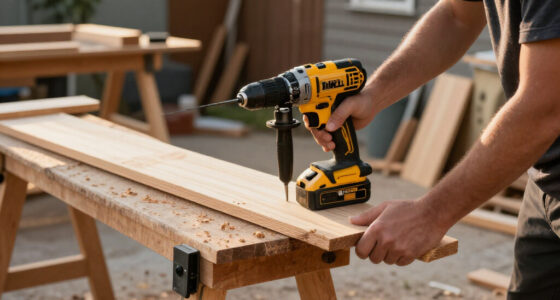
The drill/driver handles holes and controlled screwdriving; the impact driver is built for driving screws and fasteners with repeated impacts. That makes the pair practical for, say, assembling a workbench: drill a pilot hole, then drive the screw without swapping one tool back and forth. For a project that involves only occasional shelf brackets, the extra driver may be less useful than a drill with a battery that suits your budget.
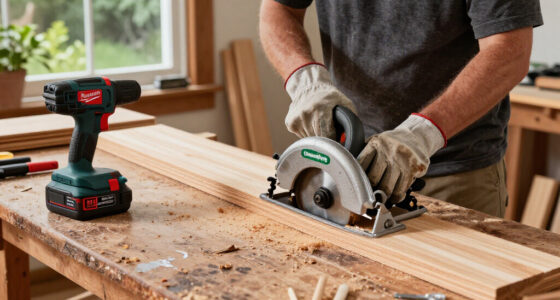
Look at the complete contents list. Some tool set bundles include lower-capacity batteries, basic accessories or tools you may rarely reach for. A circular saw earns its place if you cut boards often, but adds weight and draws on batteries quickly during long cuts. A reciprocating saw is useful for rough demolition, where a precise finish isn’t the goal.
Before buying, name two or three real jobs you expect to tackle in the next year. If a tool doesn’t match one of those jobs, ask whether the kit price still makes sense without it. This keeps useful tools at the center of the decision, instead of a box full of impressive-looking extras.
- Home repairs: drill/driver, with an impact driver if you often drive longer screws.
- Woodworking or decking: consider a circular saw and a second battery.
- Demolition or pruning: check whether a reciprocating saw fits your materials and control needs.
Choose brushless motors when the workload earns the cost
Brushless tools generally use energy more efficiently and often offer longer runtime and durability, but they can cost more than brushed models. That premium is easier to justify when you use a tool often, work it hard or depend on battery runtime. For occasional light repairs, a brushed tool can still be a sensible buy.
Imagine driving a handful of screws to mount a coat rack once a month. A basic brushed drill may do the job without fuss. On a deck build where the impact driver works through box after box of fasteners, a brushless model’s efficiency and wear characteristics may matter more. The best choice changes with the workload.
Motor type isn’t the only thing that shapes performance. Tool balance, grip, vibration, heat management and the battery you attach all matter. A brushless tool with a heavy pack can feel clumsy overhead, while a lighter brushed model may be easier to control for a short task. Try the grip and trigger if you can, especially if the job involves repeated use.
Some newer tools also offer connected features such as tracking or app-managed settings. These can help organize tools on a busy jobsite, but many homeowners won’t need them. Spend first on the motor and battery setup that fits your workload, then treat connected features as a useful extra only if they solve a real problem.
Use this five-step check before you buy
To choose a set, start with your next projects, then check the platform, included tools, battery and charger, and long-term cost. This simple order keeps sales claims from taking over the decision. It works whether you’re choosing powered tools with a small DIY budget or buying for repeated site use.
- Write down the work. List the materials and tools your likely projects call for, such as drilling masonry, building shelves or cutting fence boards.
- Choose a battery class and platform. Decide whether compact 12V tools or a broader 18V/20V-max range fits, then check current compatibility and tool availability.
- Read the box contents. Note each tool’s model, the batteries’ Ah ratings, charger speed and whether the kit includes the accessories you need.
- Handle the tools if possible. Check balance, grip, vibration and battery weight; overhead comfort can matter more than a long feature list.
- Add up ownership costs. Compare the kit with individual bare tools, replacement batteries, extra chargers and service or warranty terms.
Here’s how that check plays out: you plan to assemble furniture, hang shelves and build a small raised bed. A drill/driver and impact driver with two batteries may make more sense than a larger set that includes a grinder and saw you won’t use. If you already own compatible batteries, compare bare-tool prices before paying for another charger.
Use the manual’s instructions for accessories and battery care. Wear suitable eye and hearing protection for the task, secure the workpiece and use the correct bit or blade. For electrical, gas, structural or roof work, bring in a licensed professional and follow applicable safety steps and permit requirements.
Frequently Asked Questions
What should a first cordless tool set include?
For general home use, a drill/driver is a practical start; an impact driver helps if you often drive longer screws or fasteners. Add a saw only when a planned project calls for it, such as cutting boards for a raised bed.
Is 12V or 18V/20V-max better?
Choose 12V for lighter, compact tasks and 18V/20V-max for a broader range of demanding work and tool choices. Consider the material, tool and time you’ll use it; a lighter drill can be easier overhead even when a bigger platform offers more range.
Are 18V and 20V tools the same?
Those labels often describe a similar broad battery class using different rating conventions. Compare the specific tool, battery compatibility and features instead of treating the number as a performance ranking.
How many batteries should a kit include?
One battery may be fine for occasional jobs. Two can help you keep working while a pack charges, such as during repeated cuts, but check capacity and charger speed so the spare can be ready when you need it.
Can batteries from different brands be used together?
Usually not directly: battery shape, electronics and platform design differ. Use a battery only with combinations its manufacturer supports, and check compatibility when mixing older and newer products within one brand.
Should I buy a brushless cordless power tool set?
Brushless tools often suit frequent or demanding work because they can use energy more efficiently and may offer better runtime and durability. For occasional light repairs, a less expensive brushed set may cover the job just fine.
Conclusion
Pick your cordless set by naming the work first, then matching the battery platform, tools and runtime to it. Check what’s in the box and what it will cost to keep the platform running after the included batteries age.
The right kit won’t be the one with the loudest number on the carton. It’s the one still ready when the last fence board needs a clean cut.