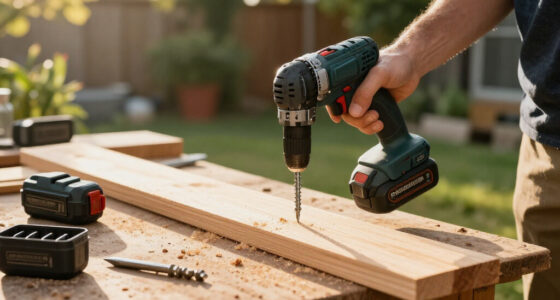
Choose a cordless power tool set by matching its tools, battery platform, and included accessories to the jobs you plan to do. This guide is for homeowners and new DIYers comparing sets before buying. Allow 30-60 minutes to list your needs, check compatibility, and compare the final options.

Get business pricing on tools and workshop supplies
- Business-only prices and quantity discounts
- Tax-exempt purchasing
- Multiple users, one account, clear invoices
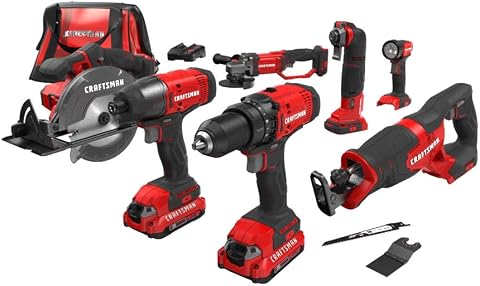
CRAFTSMAN V20 7-Tool Cordless Power Tool Combo Kit with 2 Batteries and Charger (CMCK700D2)
- ✔ Platform: CRAFTSMAN V20, 20V MAX
- ✔ Included tools: Drill/driver, impact driver, reciprocating saw, circular saw, oscillating tool, grinder, LED task light
- ✔ Batteries: Two 2.0Ah lithium-ion batteries

RYOBI P1819 18V ONE+ Lithium-Ion 6-Tool Combo Kit
- ✔ Platform: RYOBI ONE+, 18V
- ✔ Included tools: Drill/driver, impact driver, reciprocating saw, circular saw, multi-tool, LED worklight
- ✔ Batteries: 4.0Ah and 1.5Ah lithium-ion batteries

BLACK+DECKER 20V MAX 4-Tool Cordless Power Tool Combo Kit
- ✔ Platform: BLACK+DECKER 20V MAX
- ✔ Included tools: Drill/driver, circular saw, reciprocating saw, work light
- ✔ Batteries: Two lithium-ion batteries
Difficulty: Beginner | Time: 30-60 minutes
What You’ll Need
Tools & Materials:
- A list of planned projects or common household repairs
- A note or spreadsheet for comparing sets
- Product listings or packaging for the sets you are considering
Knowledge:
- Basic awareness of the tasks you expect to do, such as drilling, driving screws, or cutting
Set a maximum budget before comparing products. Prices and included items vary by retailer, so compare the exact kit contents and model numbers rather than relying on a brand name or tool count.
CRAFTSMAN V20 7-Tool Cordless Power Tool Combo Kit with 2 Batteries and Charger (CMCK700D2)
The CRAFTSMAN V20 seven-tool kit earns the top spot because it covers the most types of work in one purchase. Alongside a drill/driver and impact driver, it includes a reciprocating saw, circular saw, oscillating tool, grinder, and task light. That lineup is more useful for a homeowner tackling mixed repairs or renovations than the BLACK+DECKER set, which omits both the multi-tool and grinder. Those extra tools also make CRAFTSMAN the better fit when projects may involve sanding, scraping, or light grinding as well as fastening and cutting.Its driving specifications are a strength: the drill is rated at 280 UWO, and the impact driver delivers 1,460 in-lbs of torque. The 6-1/2-inch circular saw also has a larger blade than BLACK+DECKER’s 5.5-inch model. However, tool count does not guarantee uninterrupted work. Both included batteries are 2.0Ah, so extended cutting or grinding may mean swapping batteries and pausing to recharge. RYOBI includes a 4.0Ah option that better suits longer sessions. We would choose CRAFTSMAN for breadth, but buyers planning sustained heavy use should account for its modest included battery capacity.
Pros:
- Seven tools cover drilling, fastening, cutting, grinding, and task lighting.
- Includes both a reciprocating saw and an oscillating tool for different cutting and removal tasks.
- Impact driver is rated at 1,460 in-lbs, and the circular saw uses a 6-1/2-inch blade.
- Tool-free reciprocating-saw blade changes and circular-saw bevel adjustments simplify setup.
Cons:
- Both included batteries are 2.0Ah, which can limit runtime during demanding work.
- The 6-1/2-inch circular saw may not suit deeper cuts that call for a larger blade.
- The kit belongs to the CRAFTSMAN V20 battery platform.
Best for: Homeowners who want one kit for varied repairs and renovation tasks, including grinding and oscillating-tool work.
Not ideal for: Buyers who need long work sessions from the included batteries or regularly make cuts requiring a larger blade.
Bottom line: Choose the CRAFTSMAN kit for the broadest mix of tools in this comparison, provided you are comfortable managing runtime with two 2.0Ah batteries.
“Choose the CRAFTSMAN kit for the broadest mix of tools in this comparison, provided you are comfortable managing runtime with two 2.0Ah batteries.”
RYOBI P1819 18V ONE+ Lithium-Ion 6-Tool Combo Kit
For buyers who care as much about the battery system as the tools in the box, the RYOBI P1819 is the strongest alternative to our top-ranked CRAFTSMAN set. It provides six core tools—drill/driver, impact driver, reciprocating saw, circular saw, multi-tool, and worklight—so it misses the CRAFTSMAN grinder but retains broad coverage for common DIY projects. The differentiating detail is its battery pair: a 4.0Ah and a 1.5Ah battery give us a larger-capacity option for the saws and a smaller pack for lighter tasks.RYOBI also lists 1,800 in-lbs of impact-driver torque and compatibility with more than 125 tools in the ONE+ system. That makes this kit appealing to someone building a collection over time, especially compared with the more limited tool count of BLACK+DECKER. The tradeoff is that its circular saw’s stated depth of cut is 1-9/16 inches, so buyers should check that against their materials and cut plans. The set may also feel substantial to carry as a complete package. We rank it second because its battery flexibility and platform are compelling, while CRAFTSMAN still delivers one more tool and a larger circular-saw blade.
Pros:
- Six tools cover common drilling, fastening, cutting, and lighting jobs.
- A 4.0Ah battery offers more capacity than either of CRAFTSMAN’s included 2.0Ah batteries.
- Impact driver is rated at 1,800 in-lbs of torque.
- ONE+ compatibility provides a stated path to add more than 125 other tools.
Cons:
- Circular saw depth of cut is listed at 1-9/16 inches, which limits some applications.
- The kit can be substantial to carry with its tools and batteries.
- It does not include the grinder found in the CRAFTSMAN set.
Best for: DIYers who want a versatile six-tool starter kit, a larger-capacity battery option, and a platform they can expand.
Not ideal for: Buyers who need a grinder in the initial set or whose projects require circular-saw cuts deeper than the stated capacity.
Bottom line: Pick RYOBI if battery flexibility and future ONE+ expansion matter more to you than having the most tools in the box.
“Pick RYOBI if battery flexibility and future ONE+ expansion matter more to you than having the most tools in the box.”
BLACK+DECKER 20V MAX 4-Tool Cordless Power Tool Combo Kit
The BLACK+DECKER four-tool kit is the most focused choice here. A drill/driver, circular saw, reciprocating saw, and work light cover basic drilling, fastening, and cutting without asking a new DIYer to sort through seven tools. Its compact designs and 14-pound listed item weight may also be appealing when storage and handling matter. Compared with RYOBI and CRAFTSMAN, though, it leaves out an impact driver and multi-tool, so it is less suited to repeated heavy fastening or finish work that needs controlled scraping and sanding.The drill’s 11-position clutch helps users select a setting for different fasteners, but its speed tops out at 650 rpm, below the more performance-oriented specifications in the other kits. The 5.5-inch circular-saw blade is the smallest listed here, which narrows its usefulness for deeper cuts. It does include two batteries, a charger, saw blades, and tool-free saw adjustments, making setup straightforward. We see it as a sensible entry set for occasional household projects; buyers expecting a kit to grow with frequent renovation work will get more range from either CRAFTSMAN or RYOBI.
Pros:
- Four core tools make the kit straightforward for basic home projects.
- Compact tool designs can be easier to handle in tight spaces.
- Includes two batteries, a charger, and saw blades.
- Circular-saw adjustments and reciprocating-saw blade changes are tool-free.
Cons:
- The 5.5-inch circular-saw blade is smaller than the CRAFTSMAN blade.
- Drill speed is limited to 650 rpm, and the kit does not include an impact driver.
- It has fewer included tools than either the RYOBI or CRAFTSMAN set.
Best for: New DIYers and occasional users who want a compact set for straightforward household repairs and basic cutting.
Not ideal for: Frequent renovators who need an impact driver, a broader selection of tools, or greater circular-saw capacity.
Bottom line: Choose BLACK+DECKER for a compact, uncomplicated starter set, but step up to RYOBI or CRAFTSMAN for more demanding or varied projects.
“Choose BLACK+DECKER for a compact, uncomplicated starter set, but step up to RYOBI or CRAFTSMAN for more demanding or varied projects.”
As an Amazon Associate we earn from qualifying purchases.
Before You Start
Make a short list of jobs you expect to do during the next year. A set is useful when its tools match those jobs; a larger kit can cost more while leaving you without the tool or accessory you actually need. Treat batteries and chargers as part of the purchase: they affect runtime, weight, future expansion, and total cost.
Step-by-Step Instructions
Step 1: List the jobs you need to handle
Write down the specific work you expect to do, such as assembling furniture, hanging shelves, building a deck, or making occasional cuts in wood. Mark each job as frequent, occasional, or unlikely. Note the materials and fasteners involved when you know them.
Tip:Separate immediate projects from possible future projects. Buy for work you expect to do, rather than paying extra for tools that may stay unused.
Check: Your list names the tasks, how often you expect to do them, and any materials that affect tool choice.
Step 2: Choose the tools that match those jobs
Match each frequent task to a tool. A drill driver handles holes and many screw-driving jobs; an impact driver is designed for driving screws and other fasteners; a circular saw cuts sheet goods and lumber; an oscillating multi-tool handles detail cuts and trimming. Add a tool only when a listed job calls for it.
Tip:Some kits include a drill and impact driver, but those tools do different work. A drill driver is usually the more versatile first tool for general household tasks.
Check: Every tool you plan to buy has a clear job on your list.
Step 3: Check the battery platform and kit contents
Record the battery platform, battery capacity, number of batteries, and charger included with each set. Check the manufacturer’s compatibility information for bare tools you may want later; battery systems are not automatically interchangeable between brands or product lines. List the exact tools and accessories in the kit.
Tip:Battery voltage labels alone do not establish compatibility. Confirm the platform and model series in the product documentation.
Check: You can identify the batteries, charger, tools, and accessories included, and you know which future tools can use those batteries.
Step 4: Compare battery capacity, runtime, and weight
Compare the battery capacity listed in amp-hours (Ah), the number of batteries, and the weight of the tool with a battery attached. For longer sessions or demanding tasks, a second battery can let you keep working while the first charges. For overhead work or small repairs, a lighter setup may be easier to control.
Tip:A higher Ah rating usually means more stored energy and added battery weight. Runtime varies with the tool, material, and workload, so treat advertised runtime as an estimate.
Check: The battery count and capacity fit the expected length of your work, and the tool weight seems manageable for the tasks you listed.
Step 5: Check power, features, and safety details
For each tool, confirm that its stated use, speed or adjustment options, and cutting or drilling capacity suit your work. Check which blades, bits, guards, and other accessories are included, and whether replacement accessories are easy to find. Read the product manual for safety features and operating limits.
Tip:Do not assume a kit includes the right blade or bit just because it includes the tool. Some tools ship with only a basic accessory.
Check: The selected tools can handle your listed materials and tasks, and you have identified any required accessories that are sold separately.
Step 6: Compare total cost and warranty terms
Add the kit price to the cost of any missing batteries, accessories, or protective gear you will need. Compare that total across your shortlisted sets. Read the warranty terms for the tools and batteries, and check the registration deadline and proof-of-purchase requirements.
Tip:Compare equivalent kits. A lower advertised price may reflect fewer batteries or missing accessories.
Check: You have a realistic total cost for each option and know the main warranty conditions.
Step 7: Select the set and confirm the exact model
Choose the set that covers your frequent tasks, fits your budget, and uses a battery platform you can expand if needed. Before ordering, verify the model number, seller, kit contents, return period, and warranty information on the listing or package.
Tip:Save the product page or take a photo of the box contents and model number. That record can help resolve missing-item or compatibility questions.
Check: The model you plan to buy matches the kit you compared, and its tools, batteries, charger, and accessories are clearly listed.
Common Mistakes to Avoid
- Buying the kit with the most tools without checking whether they fit planned jobs. — Match every tool to a specific frequent or occasional task before comparing kit size.
- Assuming batteries from different brands or product lines fit the same tool. — Check the manufacturer’s compatibility chart and exact platform or series before purchasing batteries or bare tools.
- Comparing kit prices without counting extra batteries and accessories. — Calculate the cost of the complete setup needed for your projects.
- Ignoring tool and battery weight. — Check the assembled weight and consider how long you will hold the tool, especially overhead.
Troubleshooting
Problem: The product listing does not clearly state how many batteries are included.
Solution: Check the full kit contents on the manufacturer’s product page or packaging, then confirm with the seller before ordering.
Problem: A battery does not fit a tool you already own.
Solution: Check the exact platform and model series against the manufacturer’s compatibility information. Do not force a battery into a tool.
Problem: The set appears suitable, but the included blade or bit cannot handle the material.
Solution: Check the tool manual for compatible accessory types and capacity. Buy a suitable rated accessory separately if needed.
Problem: The chosen set exceeds your budget after adding essentials.
Solution: Remove tools for unlikely tasks, compare a smaller kit on the same platform, or price a starter kit with the required battery and charger.
What Success Looks Like
You have selected a set with tools for your planned tasks, batteries and a charger on a compatible platform, suitable accessories or a clear list of what to buy, a manageable weight, and a total cost within budget. The exact model and kit contents are confirmed, and you know the warranty and return terms.
Next Steps
After purchase, compare the delivered contents with the listing and keep the receipt, model numbers, and warranty details. Read each tool’s manual before use, wear the protective equipment it specifies, and use bits and blades rated for the tool and material. Store batteries and tools as directed by the manufacturer. Add another platform tool only after checking that it is compatible with your batteries.
Frequently Asked Questions
Should a first cordless power tool set include a drill or an impact driver?
A drill driver is a versatile first choice for drilling holes and driving many screws. An impact driver is useful for driving fasteners, especially during repeated or demanding work. Choose based on your projects; a kit with both can cover more tasks.
Does a higher battery Ah rating make a tool more powerful?
Ah describes battery capacity, not a direct measure of tool power. A higher-capacity battery can often run longer, but it may weigh more. Check tool specifications and reviews for performance information.
Can I use batteries from another brand with the set?
Usually, batteries fit only specified tools within their compatible platform. Check the manufacturers’ compatibility details; similar voltage or connector appearance does not confirm a safe fit.
How many batteries should a set include?
One battery can suit short or occasional jobs. Two batteries can reduce charging interruptions during longer sessions, provided the second battery and charger are included in the price or budget.
Are kit accessories good enough to start using the tools?
Some kits include only a basic blade or a small selection of bits. Check the contents and the manual to confirm that the accessories match your material and task. Replace damaged or unsuitable accessories before use.