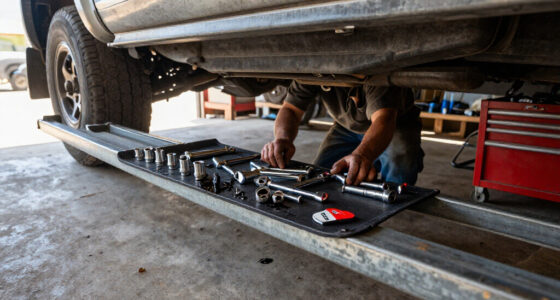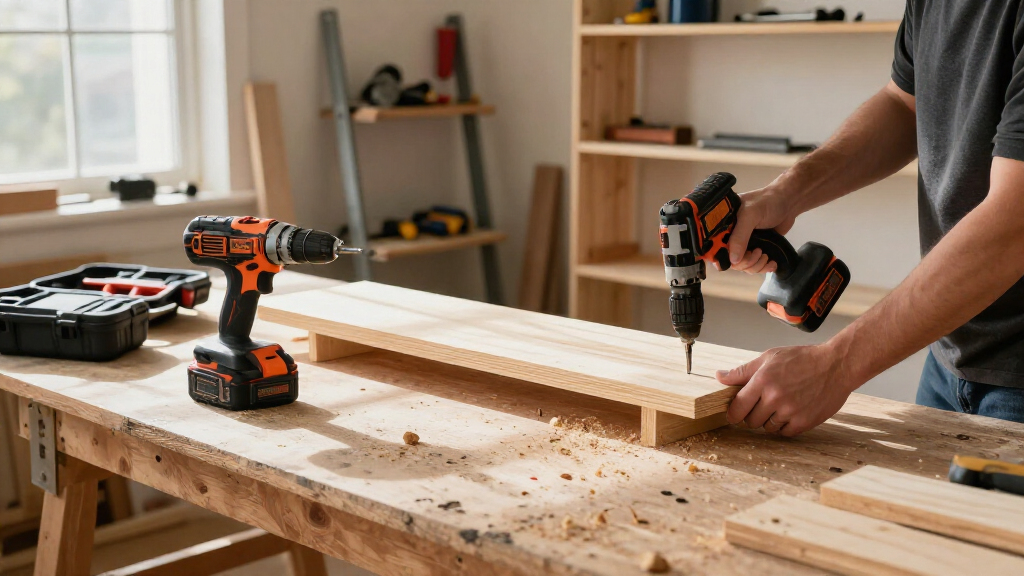

When comparing cordless power tool sets, the real choice is often between a budget homeowner kit and a professional kit from a major tool brand. Both may bundle a drill, driver, batteries, charger, and storage, but a similar tool count does not mean similar performance or long-term cost. The homeowner set makes sense for occasional repairs and straightforward projects; the professional set is aimed at people who use their tools regularly, work with tougher materials, or need to keep going through a full workday. The deciding question is whether the extra durability, power, battery capacity, and platform options will earn back the higher purchase price in your work.

Get business pricing on tools and workshop supplies
- Business-only prices and quantity discounts
- Tax-exempt purchasing
- Multiple users, one account, clear invoices
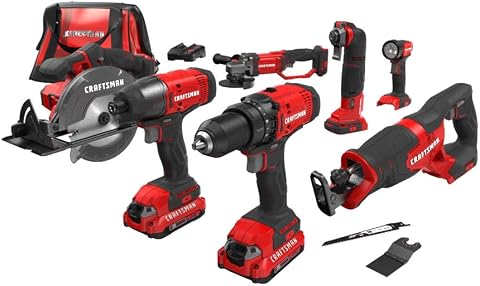
CRAFTSMAN V20 7-Tool Cordless Power Tool Combo Kit with 2 Batteries and Charger (CMCK700D2)
- ✔ Voltage: 20V MAX
- ✔ Included batteries: Two 2.0 Ah lithium-ion batteries
- ✔ Drill output: 280 UWO

RYOBI P1819 18V ONE+ Lithium-Ion 6-Tool Combo Kit
- ✔ Voltage: 18V
- ✔ Included batteries: 4.0 Ah and 1.5 Ah lithium-ion
- ✔ Drill/driver torque: 500 in-lbs

BLACK+DECKER 20V MAX 4-Tool Cordless Power Tool Combo Kit
- ✔ Voltage: 20V MAX
- ✔ Included batteries: Two lithium-ion batteries; capacity not specified
- ✔ Drill speed: 0–650 rpm
At a Glance
| Criteria | Budget homeowner cordless tool set | Professional cordless tool set | Winner |
|---|---|---|---|
| Upfront cost | Usually lower; attractive for a first set or occasional use. | Higher, with the premium varying by brand, battery count, and included tools. | A |
| Power and demanding tasks | Sufficient for common household repairs and light projects; can be slower or less capable under heavy load. | Typically offers more capability for sustained drilling, fastening, and tougher materials. | B |
| Battery capacity and runtime | Often includes smaller batteries; suitable for shorter sessions with charging breaks. | Often sold with higher-capacity battery options, though the exact kit contents vary. | B |
| Durability and service life | Designed for lighter workloads; less suited to repeated jobsite use. | Built for frequent use and rougher working conditions; repairs and warranties still depend on brand and model. | B |
| Tool selection and platform | May cover common tools, though specialized options and battery choices can be more limited. | Usually part of a broader system with more compatible tools, batteries, and specialty equipment. | B |
| Included tools and kit quality | May include several useful basics, but check battery size and tool specifications instead of counting pieces. | Often provides more capable tools or batteries; kit contents differ, so compare model numbers. | Depends |
| Value over time | Strong value if infrequent use keeps wear and replacement needs low. | Can be better value when frequent use and compatible future tools justify the initial expense. | Depends |
CRAFTSMAN V20 7-Tool Cordless Power Tool Combo Kit with 2 Batteries and Charger (CMCK700D2)
For buyers who want one kit to span more than drilling and basic cutting, CRAFTSMAN’s seven-tool lineup is the most complete option here. Alongside a drill/driver, impact driver, reciprocating saw, circular saw, and work light, it includes an oscillating tool and grinder. Those additions matter when a project moves from fastening and rough cuts to sanding, detail work, or grinding. RYOBI has six tools and BLACK+DECKER has four, so neither covers quite as many job types out of the box.The performance figures suggest useful capability for demanding household tasks: the drill is listed at 280 UWO, and the impact driver at 1,460 in-lbs of torque. The tradeoff is the battery setup. Both included packs are 2.0 Ah, which may mean more charging or battery changes during prolonged, heavy use than with RYOBI’s included 4.0 Ah pack. Its 6-1/2-inch circular saw also has limits for buyers who need deeper cuts. Choose CRAFTSMAN when breadth matters more than a larger supplied battery or a particularly deep-cutting saw.This kit makes the clearest case as an all-rounder, but that breadth has value only if we expect to use the extra tools. A beginner who needs a drill, a saw, and a light may find several pieces redundant. We should also plan around the V20 battery system, since the kit’s batteries do not cross over to other brands. Compared with the simpler BLACK+DECKER set, it offers more ways to tackle varied work; compared with RYOBI, it adds a grinder but gives up the larger battery option.
Pros:
- Seven tools cover drilling, driving, reciprocating and circular sawing, grinding, detail work, and lighting.
- Includes two 2.0 Ah batteries and a charger.
- Impact driver is rated at 1,460 in-lbs of torque; drill is listed at 280 UWO.
- Reciprocating saw has tool-free blade changes, and the circular saw has tool-free beveling.
Cons:
- Two 2.0 Ah batteries may need frequent charging during extended or heavy jobs.
- The 6-1/2-inch circular saw blade may not suit deeper-cut applications.
- The kit is tied to the CRAFTSMAN V20 battery system.
Best for: Home renovators and serious DIYers who expect to drill, fasten, cut, grind, and handle detail work with one battery platform.
Not ideal for: Buyers who want a lighter starter kit, need longer runtime from the supplied batteries, or regularly make deep circular-saw cuts.
Bottom line: Choose CRAFTSMAN for the broadest tool coverage in this comparison, provided its smaller supplied batteries suit your workload.
“Choose CRAFTSMAN for the broadest tool coverage in this comparison, provided its smaller supplied batteries suit your workload.”
RYOBI P1819 18V ONE+ Lithium-Ion 6-Tool Combo Kit
RYOBI’s two battery capacities are the main reason to choose this six-tool kit over the other sets. Its 4.0 Ah pack can be reserved for longer sessions or tools that draw more power, while the 1.5 Ah pack can handle shorter jobs and lighter tools. That gives buyers more options than CRAFTSMAN’s two 2.0 Ah batteries or BLACK+DECKER’s two batteries, whose capacities are not specified in the provided details. The package also includes a bag, which helps keep a multi-tool set together between jobs.The lineup covers the core jobs: drilling, fastening, reciprocating and circular sawing, detail work with a multi-tool, and illumination. Its impact driver is listed at 1,800 in-lbs of torque, higher than the figure given for CRAFTSMAN’s driver. RYOBI also claims compatibility with over 125 other tools in the ONE+ system, giving existing owners a strong reason to stay with the platform. That ecosystem claim is especially useful for buyers planning to add tools later.There are practical limits. The kit is described as substantial in weight, and its listed circular-saw cut depth is 1-9/16 inches, a figure buyers should check against the materials they plan to cut. CRAFTSMAN may suit someone who specifically wants a grinder in the same set, while BLACK+DECKER may be easier to manage for a smaller, less involved job list. RYOBI is a better middle ground when battery choice and platform expansion matter more than having the highest tool count.
Pros:
- Six tools cover drilling, driving, cutting, detail work, and lighting.
- Includes both a 4.0 Ah and a 1.5 Ah battery for different runtime needs.
- Impact driver is rated at 1,800 in-lbs of torque.
- Part of the RYOBI ONE+ system, stated to be compatible with over 125 other tools; a bag is included.
Cons:
- The collection may feel heavy to carry or manage as a full set.
- The stated circular-saw cut depth is 1-9/16 inches.
- It does not include a grinder, which CRAFTSMAN supplies in its seven-tool kit.
Best for: DIYers who want a versatile core set, value a larger-capacity battery for longer sessions, or already own RYOBI ONE+ tools.
Not ideal for: Buyers who prioritize the largest tool selection in one kit, need a lightweight set, or require greater circular-saw cutting depth.
Bottom line: RYOBI is the strongest fit for buyers who value battery flexibility and room to expand a widely compatible tool platform.
“RYOBI is the strongest fit for buyers who value battery flexibility and room to expand a widely compatible tool platform.”
BLACK+DECKER 20V MAX 4-Tool Cordless Power Tool Combo Kit
BLACK+DECKER keeps the set focused: a drill/driver, circular saw, reciprocating saw, and work light cover many straightforward home projects without adding specialized tools. Its compact tool designs can make the kit easier to use in tighter spaces, and the listed total item weight is 14 pounds. Buyers who do not expect to grind or use an oscillating tool may find this four-tool approach more approachable than the fuller CRAFTSMAN and RYOBI collections.The drill’s 11-position clutch gives us a way to adjust screw-driving force for different fasteners and materials, while tool-free adjustments on both saws reduce setup steps. The work light is rated for up to 11 hours of runtime, though its output is up to 70 lumens. Those choices suit maintenance and basic DIY work. In comparison, RYOBI offers a more powerful stated impact driver and a 4.0 Ah battery; CRAFTSMAN adds a grinder and oscillating tool for buyers with a broader project list.The limits are clear and worth considering before buying. The drill runs at up to 650 rpm, and its 3/8-inch chuck is a more modest setup than buyers may want for frequent demanding drilling. The 5.5-inch circular-saw blade is also smaller than CRAFTSMAN’s 6-1/2-inch blade, narrowing the material and cut situations it can handle. Battery capacities are not specified in the supplied details, making runtime comparisons harder. Pick this set for compactness and simplicity, not as the most expandable or capable choice for heavier work.
Pros:
- Four essential tools provide a simpler starting point for common household projects.
- Compact tool designs and a listed total item weight of 14 pounds suit smaller work areas.
- Drill has an 11-position clutch, and both saws have tool-free adjustments or blade changes.
- Includes two batteries, a charger, and saw blades.
Cons:
- Drill speed is limited to 650 rpm, with a 3/8-inch keyless chuck.
- The 5.5-inch circular-saw blade offers less cutting capacity than CRAFTSMAN’s 6-1/2-inch blade.
- Battery capacities are not specified in the supplied product details.
Best for: First-time tool buyers and homeowners handling routine repairs, light assembly, and occasional cutting in compact work areas.
Not ideal for: Frequent users who need faster drilling, larger circular-saw capacity, or specialized tools such as a grinder and oscillating tool.
Bottom line: Choose BLACK+DECKER for a compact, approachable set for routine home tasks, while accepting its more limited drilling and saw capacity.
“Choose BLACK+DECKER for a compact, approachable set for routine home tasks, while accepting its more limited drilling and saw capacity.”
As an Amazon Associate we earn from qualifying purchases.
Key Differences
The biggest gap is how each set handles repeated work. A homeowner kit can be a sensible purchase for assembling furniture, mounting shelves, making occasional repairs, and completing light DIY projects. A professional kit is more likely to sustain demanding use and offer the performance or battery choices that reduce delays on larger jobs. These are general patterns, not guarantees: compare the exact tools, batteries, and model specifications in each package.
The second difference is the platform you are buying into. Batteries are often compatible across tools within the same brand system and voltage family, so a set can shape the cost of later purchases. A professional range may offer more specialty tools and battery choices, while a budget range may cover the basics at lower cost. If you expect to add tools, check compatibility and the price of bare tools before choosing. For a one-time project, those future options may have little value.
More pieces do not automatically make a better deal. A set with several small or rarely used tools can be less useful than a smaller kit with a capable drill, a suitable impact driver, and batteries that match the work. The homeowner set wins on the initial outlay; the professional set earns its premium through workload capacity and a system that can support frequent use. The right purchase depends on how often you will use it and what you plan to build or repair.
Detailed Comparison
Upfront cost (Budget homeowner cordless tool set wins — major)
The homeowner set wins by asking less of your budget at checkout, often bundling enough equipment for everyday jobs. The professional set costs more, and its price is justified only if its performance or system advantages matter to your work. This is a major difference for buyers who need a basic drill and driver but do not use them often. Compare the exact package: a low price can reflect smaller batteries or a different tool specification, and promotional pricing can change the gap.
Power and demanding tasks (Professional cordless tool set wins — major)
The professional set generally wins when work involves repeated fastening, larger holes, dense materials, or long sessions. A homeowner set is usually adequate for routine household tasks, though it may take longer or reach its limits sooner under heavier loads. The gap is moderate for mixed DIY and can be major for tradespeople or serious renovators. Check the model’s stated capabilities and features; the word “professional” on a label is not a substitute for specifications.
Battery capacity and runtime (Professional cordless tool set wins — moderate)
Professional kits often include or support higher-capacity batteries, giving users more working time between charges. Homeowner kits may use smaller batteries to keep the package price down and reduce weight. That can be fine for brief jobs, but frequent charging interrupts longer projects. The practical gap is moderate, and it depends on the exact kit and tool: a high-capacity battery adds runtime but also weight, and a basic package may not include one even if the platform supports it.
Durability and service life (Professional cordless tool set wins — moderate)
The professional set is generally built with more frequent use in mind, so it is the stronger choice for regular work and rougher conditions. A homeowner kit can last well when used lightly and stored with reasonable care, but it is less suited to the wear of daily jobs. The difference is major for a contractor and modest for someone who uses tools a few times a year. Durability varies by model; review warranty terms and repair support rather than assuming every pro tool will outlast every budget tool.
Tool selection and platform (Professional cordless tool set wins — moderate)
Professional systems commonly offer a wider selection of compatible specialty tools, batteries, and chargers. That matters if you expect to expand the set for work; it matters less if you only need a drill and driver at home. Homeowner platforms may have a narrower range, but can still cover many common tasks. The professional system wins for future flexibility, with a moderate gap for buyers who plan additional purchases. Check the specific voltage family and battery compatibility before counting on later upgrades.
Included tools and kit quality (minor difference)
Neither category wins automatically by tool count. A homeowner package may include extra tools that are handy for home projects, while a professional package may provide fewer tools with more capable specifications or more useful batteries. The gap is minor until you compare the exact contents and prices. List the tasks you expect to tackle, then compare the model numbers, battery capacities, charger, and storage. A larger number printed on the box does not tell you which kit is better for your work.
Value over time (major difference)
The homeowner kit is better value when tools see occasional, light use and the lower cost is the main benefit. The professional set may return its higher price through fewer interruptions, greater capability, and compatible tools added over time. The winner depends on frequency and workload, making this a major personal decision. For a few weekend jobs, the premium may go unused; for paid work or recurring renovation, the budget kit’s lower price can be misleading if its limits slow the job or lead to an early replacement.
Budget homeowner cordless tool set: Pros and Cons
Pros:
- Lower purchase price for buyers who need useful basics.
- Well suited to common home repairs and occasional projects.
- Often a lighter and simpler entry into cordless tools.
Cons:
- May be slower or less capable during demanding, sustained work.
- Smaller included batteries can mean more charging breaks.
- May provide fewer compatible specialty tools for future expansion.
Professional cordless tool set: Pros and Cons
Pros:
- Better suited to frequent use and tougher tasks.
- Often supports higher-capacity batteries for longer work sessions.
- A broad compatible system can make later tool purchases easier.
Cons:
- Higher upfront cost, which may not pay off for occasional use.
- More capable tools and batteries can add weight.
- The premium is difficult to justify if the extra performance goes unused.
Who Should Choose What
Choose Budget homeowner cordless tool set if:
- You mainly handle furniture assembly, shelves, small repairs, and light DIY projects.
- You expect to use the tools occasionally and want to keep the initial expense low.
- The included basic tools match your tasks and you have little need to expand the system.
Choose Professional cordless tool set if:
- You use tools regularly for paid work, renovation, or substantial home projects.
- You often work with tougher materials or want fewer slowdowns during long sessions.
- You expect to buy more compatible tools and batteries from the same platform.
Skip both if: Neither set matches your needs: choose a smaller, better-specified single tool for a one-off task, or compare specialist tools if your work demands features neither kit includes.
Value for Money
Paying more for a professional set is worthwhile when the tools will be used often enough for extra capability, runtime, or platform breadth to affect real work. For a contractor, frequent renovator, or committed DIY user, fewer charging interruptions and a compatible system can make the premium reasonable. For occasional household jobs, the homeowner set is usually the better value because much of the professional set’s extra capacity may sit unused. Compare prices for the actual tools and batteries you need, plus the cost of compatible batteries or bare tools you may buy later. Do not pay extra solely for a larger kit or a professional label.
Final Verdict
For most people doing occasional home repairs, choose the budget homeowner cordless tool set: it covers common tasks at a lower cost, and the professional premium is hard to justify without regular use. Choose the professional set if you depend on your tools, work through tougher tasks, or plan to build out a compatible system over time. The biggest deciding factor is workload frequency. Before buying either one, compare the exact tool models, battery capacities, compatibility, and warranty; those details can matter more than the number of items in the case.
Frequently Asked Questions
Is a professional cordless tool set worth the higher price?
It can be for people who use tools frequently or need stronger performance and longer work sessions. If your jobs are occasional and light, a homeowner set is usually the more sensible purchase.
Should I choose a set with more tools?
Only if you will use the extra tools. Compare the model specifications, batteries, and charger, then match the contents to your actual tasks. A smaller set with the right drill and batteries can be a better buy than a larger package with tools you will not reach for.
Can I use batteries from one tool on another?
Often, batteries work across tools in the same brand platform and voltage family, but compatibility varies. Check the manufacturer’s compatibility details for the exact battery and tool models before buying additional equipment.
What matters most when comparing cordless tool sets?
Start with the tasks you will do, then compare tool model numbers, battery capacity, platform compatibility, and warranty. Those factors tell you more about practical fit than the number of pieces in the set.