
For a strong all-around choice, I’d start with the Simpson PowerShot 4000 PSI with Honda GX270, which pairs high cleaning output with a well-known engine. The Simpson Aluminum Series 3600 PSI is a more moderate-output alternative, while the Westinghouse WPX3400 suits buyers who want substantial cleaning capacity without jumping to a 4.0 GPM model. The main tradeoff is between cleaning speed and control: higher flow can cover large areas faster, but also brings more water use, weight, and care demands. Engine reputation, hose reach, and practical storage matter alongside headline PSI. Read on for how these 14 gas-powered pressure washers differ and which buyer each one suits.

Get business pricing on tools and workshop supplies
- Business-only prices and quantity discounts
- Tax-exempt purchasing
- Multiple users, one account, clear invoices
Complete the kit


Key Takeaways
- The Simpson PowerShot 4000 PSI with Honda GX270 is the strongest all-around candidate in this lineup, balancing high output with a recognizable engine platform.
- Four 4200 PSI, 4.0 GPM listings advertise similar headline output, but sparse model detail makes it harder to compare support, construction, and long-term serviceability.
- The Simpson Aluminum Series 3600 PSI and Westinghouse WPX3400 offer a middle ground for buyers who do not need the maximum flow advertised by the heavy-duty models.
- The Simpson PowerShot 3300 PSI with Honda GX200 and Westinghouse WPX3000 are lower-output options that may better match routine home cleaning than demanding commercial work.
- Included accessories are not a substitute for fit: nozzle selection, hose length, engine access, and machine weight affect day-to-day use as much as peak PSI.
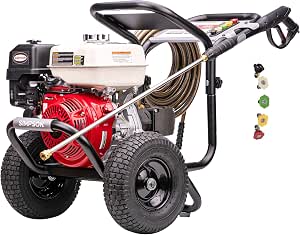


| gas-powered pressure washer | Engine | Hose length | Maximum pressure | Pump |
|---|---|---|---|---|
| Simpson PowerShot 4000 PSI Gas | Honda GX270 | 50 feet | 4,000 PSI | AAA industrial triplex plunger pump |
| Simpson Aluminum Series Gas Pr | Honda GX200 with low-oil shutdown | 35 feet | 3,600 PSI | AAA triplex plunger pump |
| DEWALT DXPW3300-S Gas Pressure | 208cc gas engine with low-oil shutdown | 25 feet | 3,300 PSI | OEM Technologies axial cam pump |
| Simpson PowerShot 4400 PSI Gas | CRX 420cc | 50 feet | — | AAA industrial triplex plunger pump |
| Westinghouse WPX3400 Gas Press | 212cc 4-stroke OHV | 25 feet | — | Maintenance-free axial cam |
| Simpson Clean Machine 3200 PSI | 174 cc | 25 ft | 3200 PSI | OEM Technologies axial cam |
| IvyBess 4200 PSI Gas Pressure | 212 cc, 7 HP, 4-stroke gasoline | 25 ft | 4200 PSI | Axial cam |
| Ezasin Gas-Powered Pressure Wa | 212 cc, 4-stroke OHV | 25 ft | 3500 PSI | Aluminum axial cam |
| 4200 PSI 4.0 GPM Gas Pressure | 212 cc, 7 HP, 4-stroke gasoline | — | 4200 PSI | Axial cam |
| 4200 PSI Gas Pressure Washer | 209 cc, 7 HP, 4-stroke | 25 ft | 4200 PSI | — |
| 4200 PSI Gas Pressure Washer | 212 cc, 7 HP, four-stroke OHV | 25 ft | 4200 PSI | — |
| Simpson PowerShot Gas Pressure | Honda GX200 | 25 ft | 3300 PSI | AAA triplex pump |
| Steupoek 4200 PSI Gas Pressure | 212cc, 7HP | 25 ft | 4200 PSI | — |
| Westinghouse WPX3000 Gas Press | 212cc four-stroke OHV | 25 ft | 3000 PSI | — |
More Details on Our Top Picks
Simpson PowerShot 4000 PSI Gas Pressure Washer with Honda GX270 Engine
The 4,000 PSI output and 3.5 GPM flow give this PowerShot the capacity for demanding cleanup where both impact and water volume matter. Its Honda GX270 engine and AAA triplex pump set it apart from residential-focused options such as the DEWALT DXPW3300-S, which is easier to manage but has less pressure and flow. A 50-foot hose also gives more working reach than the DEWALT’s 25-foot line, reducing how often I’d need to reposition the machine on a large job.
The tradeoff is its 120-pound weight: pneumatic tires help on rough ground, but loading and storage take more effort than with the 78-pound Simpson Aluminum Series. It is also not compliant in all 50 states, so buyers should check local availability before choosing it.
Pros:- High 4,000 PSI pressure and 3.5 GPM flow suit demanding cleaning work.
- Honda GX270 engine paired with an AAA industrial triplex pump.
- 50-foot high-pressure hose offers more reach than the DEWALT DXPW3300-S.
- Welded steel frame and 13-inch pneumatic tires support use on uneven ground.
Cons:- At 120 pounds, it is difficult to lift and less convenient to store than the Simpson Aluminum Series.
- 49-state compliance means it is not suitable for sale in every state.
- Its professional-grade output can be excessive for routine, light residential washing.
Best for: Contractors and property owners who regularly clean large driveways, equipment, or other surfaces that benefit from strong pressure, high flow, and an extended hose.
Not ideal for: Buyers who need a washer that is easy to lift into a vehicle, have limited storage, or live in a state where this model is not compliant.
- Engine:Honda GX270
- Maximum pressure:4,000 PSI
- Maximum flow rate:3.5 GPM
- Pump:AAA industrial triplex plunger pump
- Hose length:50 feet
- Nozzles:Five quick-connect tips: 0°, 15°, 25°, 40°, and soap
- Weight:120 pounds
- Compliance:49-state compliant
Our verdict“Choose this PowerShot for frequent, heavy cleaning where its strong output and long hose matter more than low weight or easy storage.”
Simpson Aluminum Series Gas Pressure Washer, 3600 PSI, 2.5 GPM, Honda GX200
The Aluminum Series is a useful middle ground for buyers who want a Honda GX200 engine and triplex pump without the heft of the Simpson PowerShot 4000. At 78 pounds, its aircraft-grade aluminum frame is substantially lighter than that 120-pound model, and the corrosion-resistant construction is a practical fit for outdoor storage or damp work areas. Its 3,600 PSI and 2.5 GPM still provide substantial cleaning capacity, though the PowerShot’s higher flow is better suited to faster work across large, heavily soiled surfaces.
A 35-foot hose and five nozzle tips make it ready for varied jobs, while the GX200’s low-oil shutdown adds a layer of engine protection. The compromises are its shorter hose compared with the PowerShot and 49-state restriction; it is not for sale in California. This is a cold-water washer, not a solution for cleaning that needs heated water.
Pros:- 78-pound aircraft-grade aluminum frame is lighter than the Simpson PowerShot 4000’s steel-frame build.
- Honda GX200 engine includes low-oil shutdown.
- AAA triplex pump and 3,600 PSI output suit a wide range of demanding outdoor tasks.
- Includes a 35-foot hose and five quick-connect nozzle tips.
Cons:- Not for sale in California and listed as 49-state compliant.
- Its 2.5 GPM flow is below the Simpson PowerShot 4000 and 4400 models for covering large areas quickly.
- Cold-water operation does not fit jobs that call for heated cleaning.
Best for: Homeowners and small property-maintenance crews who want a durable gas washer with a lighter frame for moving between jobs.
Not ideal for: California buyers, people who need the longest reach or highest flow for large commercial jobs, and anyone seeking hot-water cleaning.
- Engine:Honda GX200 with low-oil shutdown
- Maximum pressure:3,600 PSI
- Flow rate:2.5 GPM
- Pump:AAA triplex plunger pump
- Hose length:35 feet
- Frame:Aircraft-grade aluminum
- Weight:78 pounds
- Compliance:49-state compliant; not for sale in California
Our verdict“Pick the Aluminum Series if a lighter, corrosion-resistant frame matters more to you than maximum flow or a 50-foot hose.”
DEWALT DXPW3300-S Gas Pressure Washer, 3300 PSI, 2.4 GPM
The DEWALT DXPW3300-S makes more sense for regular home cleanup than the higher-output Simpson PowerShot models. Its 3,300 PSI and 2.4 GPM can handle decks, patios, siding, and driveways, while avoiding the extra weight and work-oriented capacity of the Simpson PowerShot 4400. A 208cc engine with low-oil shutdown and an axial cam pump keep the setup straightforward, and the five nozzles let me match the spray to different surfaces rather than relying on a single pattern.
Portability is a relative strength: 10-inch pneumatic tires and a compact design are easier to manage around a home than the large-tire, high-output Simpson units. Its 25-foot hose, however, is half the length of the PowerShot 4000’s, so larger properties may require more repositioning. This gas-powered washer also needs fuel and routine upkeep, and it is still a substantial machine compared with a small electric unit.
Pros:- 3,300 PSI and 2.4 GPM fit many common residential cleaning tasks.
- 208cc engine includes low-oil shutdown.
- Five quick-connect nozzles support different cleaning approaches.
- Pneumatic tires and compact design are easier to maneuver around a home than the Simpson PowerShot 4400.
Cons:- 25-foot hose offers less reach than the 50-foot hose on the Simpson PowerShot 4000.
- Lower pressure and flow than the Simpson PowerShot models limit its suitability for the most demanding work.
- Requires gasoline and ongoing engine maintenance.
Best for: Homeowners who want a gas-powered washer for recurring deck, patio, siding, and driveway cleaning without stepping up to contractor-level output.
Not ideal for: Contractors or owners of large properties who need a 50-foot hose, higher flow, or faster coverage across heavy-duty jobs.
- Engine:208cc gas engine with low-oil shutdown
- Maximum pressure:3,300 PSI
- Flow rate:2.4 GPM
- Pump:OEM Technologies axial cam pump
- Hose length:25 feet
- Nozzles:Five quick-connect tips: 0°, 15°, 25°, 40°, and soap
- Tire size:10-inch pneumatic
- Warranty:5-year frame, 3-year pump, 2-year engine
Our verdict“Choose the DEWALT for varied home maintenance if manageable residential output matters more than contractor-level flow and reach.”
Simpson PowerShot 4400 PSI Gas Pressure Washer, 4.0 GPM, CRX 420cc Engine
With 4,400 PSI and 4.0 GPM, this PowerShot has the highest stated output in this group, making it the pick for contractors and demanding property work rather than routine patio washing. The extra flow gives it an advantage over the Simpson PowerShot 4000’s 3.5 GPM when covering large, heavily soiled areas, while the CRX 420cc engine and AAA industrial triplex pump suit sustained, intensive cleaning. Its 50-foot hose and five nozzle tips also provide useful reach and spray options without requiring a separate accessory setup.
That capability brings real costs in handling: the welded steel frame and 13-inch tires help it roll across rough ground, but do not make a bulky machine easy to load or store. Like the DEWALT DXPW3300-S, it needs fuel and regular engine care, and its much higher output can be more than a homeowner needs. It is 49-state compliant, not for California.
Pros:- Highest listed output in this group at 4,400 PSI and 4.0 GPM.
- CRX 420cc engine and AAA industrial triplex pump are suited to demanding work.
- 50-foot hose gives more working reach than the DEWALT DXPW3300-S.
- Welded steel frame and 13-inch pneumatic tires support movement over uneven ground.
Cons:- Heavy and bulky, making transport and storage less convenient than the DEWALT DXPW3300-S.
- Not compliant for sale in California.
- High output may be excessive for routine residential cleaning, while gasoline operation requires maintenance.
Best for: Contractors and experienced users who need high flow and pressure for frequent, large-scale cleaning and can accommodate a heavy machine.
Not ideal for: Casual homeowners, buyers with limited storage, or California buyers; its high output and bulk are poorly matched to light, occasional washing.
- Engine:CRX 420cc
- Pressure:4,400 PSI
- Flow rate:4.0 GPM
- Pump:AAA industrial triplex plunger pump
- Hose length:50 feet
- Nozzles:Five quick-connect tips: 0°, 15°, 25°, 40°, and soap
- Tires:13-inch pneumatic
- Compliance:49-state compliant
Our verdict“Choose this PowerShot when maximum stated pressure and flow are your priorities and its size, upkeep, and state restriction are acceptable.”
Westinghouse WPX3400 Gas Pressure Washer, 3400 PSI, 2.6 GPM
The Westinghouse WPX3400 is a practical choice for outdoor jobs where applying detergent is part of the routine. Its 0.5-gallon onboard soap tank removes the need to arrange a separate soap container, and the five quick-connect tips cover common spray patterns. At 3,400 PSI and 2.6 GPM, it offers a modest step up in pressure and flow from the DEWALT DXPW3300-S, though neither approaches the Simpson PowerShot 4000’s 3.5 GPM or its 50-foot hose.
The 25-foot hose and never-flat wheels suit typical residential work, but the heavy-duty steel-frame construction can make moving it less effortless than the wheels suggest. Its axial cam pump is described as maintenance-free, yet the 212cc gas engine still requires fuel and routine care. I’d favor it over the DEWALT when onboard detergent capacity is useful; I’d choose the DEWALT instead if low-oil shutdown and its stated frame, pump, and engine warranty coverage carry more weight.
Pros:- 0.5-gallon onboard soap tank is handy for detergent-based cleaning.
- 3,400 PSI and 2.6 GPM provide slightly more stated output than the DEWALT DXPW3300-S.
- Five quick-connect tips support several cleaning tasks.
- Never-flat wheels and a 25-foot hose help with ordinary residential use.
Cons:- 25-foot hose has less reach than the 50-foot Simpson PowerShot hoses.
- Heavy-duty steel-frame construction can be cumbersome to move and store.
- Gas engine still requires fuel handling and routine maintenance despite the maintenance-free pump.
Best for: Homeowners who frequently wash vehicles, patios, or other outdoor surfaces with detergent and want an onboard soap tank.
Not ideal for: Users who need a long hose or contractor-level flow, and buyers who want a lightweight machine that is easy to lift or store.
- Engine:212cc 4-stroke OHV
- Pressure:3,400 PSI
- Flow rate:2.6 GPM
- Pump:Maintenance-free axial cam
- Fuel tank capacity:1 gallon
- Soap tank capacity:0.5 gallon
- Hose length:25 feet
- Warranty:3-year limited warranty
Our verdict“Pick the WPX3400 if an onboard soap tank is more useful to you than a longer hose, lighter handling, or higher-end commercial output.”
Simpson Clean Machine 3200 PSI Gas Pressure Washer with Turbo Nozzle
The Simpson Clean Machine is a balanced choice for homeowners who want gas-powered freedom without stepping up to the high-flow 4.0 GPM machines in this lineup. Its 3200 PSI and 2.5 GPM suit regular jobs such as cleaning a driveway, deck, or siding, while the included turbo nozzle can speed work on stubborn, compatible surfaces. Compared with the Ezasin 3500 PSI, it has slightly less stated pressure but offers a broader nozzle assortment and a built-in soap tank for detergent application. The 174 cc engine and 50-pound listed weight also make it a more moderate-duty proposition than the larger-output options. Its tradeoffs are gas-engine upkeep and a California sales restriction; the pump and accessory warranties are shorter than the frame coverage.
Pros:- Turbo nozzle and several quick-connect tips cover different cleaning tasks
- Built-in soap tank makes detergent application convenient
- 12-inch never-flat wheels support movement without tire inflation
- Powder-coated steel frame and a 5-year frame warranty
Cons:- Not for sale in California
- Gas operation requires fuel handling and engine maintenance
- 2.5 GPM flow is below the 4.0 GPM IvyBess and commercial-style options
Best for: Homeowners who want a wheeled gas washer for varied seasonal cleaning and value a turbo nozzle plus straightforward soap application.
Not ideal for: California buyers, or users who need the 4.0 GPM flow and long hose of the higher-output 4200 PSI models.
- Maximum pressure:3200 PSI
- Flow rate:2.5 GPM
- Engine:174 cc
- Pump:OEM Technologies axial cam
- Hose length:25 ft
- Included nozzles:0°, 15°, 40°, soap, and turbo
- Weight:50 lb
- Compliance:49-state compliant; not for sale in California
- Warranty:2-year engine, 1-year pump, 5-year frame, 90-day accessories
Our verdict“Choose the Clean Machine for varied home jobs and useful nozzle options, but pick a 4.0 GPM model for faster coverage on large areas.”
IvyBess 4200 PSI Gas Pressure Washer, 4.0 GPM, 212cc, with 25-ft Hose and Nozzles
The IvyBess SU098 pairs a stated 4200 PSI and 4.0 GPM with a wheeled steel frame, making it a high-output option for buyers tackling patios, driveways, and other broad outdoor surfaces. Its flow rate matches the much larger-output class represented by the 32-foot-hose commercial-style washer, while the IvyBess keeps the hose to 25 feet and the detergent tank to 1 liter. That shorter reach and smaller soap capacity suit routine property maintenance better than extended or detergent-heavy work. The 212 cc, 7 HP engine brings gas-powered mobility, but also fuel and oil checks. The listing states EPA/CARB compliance and a two-year warranty; buyers should also verify the nozzle contents, since the supplied description is inconsistent about the number of options.
Pros:- 4.0 GPM flow supports faster coverage than the 2.3–2.5 GPM models
- 212 cc, 7 HP four-stroke gas engine allows use away from electrical outlets
- Wheeled steel frame and 25-foot hose support mobility around a property
- Stated two-year warranty and EPA/CARB/ETL compliance
Cons:- Nozzle count is inconsistent in the product information
- 1 L detergent tank is smaller than the 3 L dual tank on the commercial-style 4200 PSI model
- Requires gasoline and engine oil checks; factory testing may leave fuel or oil residue and odor
Best for: Property owners who want 4.0 GPM flow for substantial outdoor cleaning but do not need a 32-foot hose or large dual-soap tank.
Not ideal for: Buyers who need clearly confirmed nozzle contents, longer reach, or a lower-maintenance electric washer.
- Maximum pressure:4200 PSI
- Flow rate:4.0 GPM
- Engine:212 cc, 7 HP, 4-stroke gasoline
- Pump:Axial cam
- Hose length:25 ft
- Detergent tank:1 L
- Nozzles listed:0°, 15°, 25°, 40°, 60°, and soap; count is inconsistent in listing
- Frame:Steel
- Warranty:Two years
Our verdict“Pick the IvyBess when 4.0 GPM cleaning capacity matters more than a longer hose, larger detergent tank, or fully clear nozzle listing.”
Ezasin Gas-Powered Pressure Washer, 3500 PSI, 2.3 GPM, 212cc Engine
The Ezasin EAPW01 suits buyers who want a gas engine and strong stated pressure for occasional tough cleaning, without needing the 4.0 GPM flow of the IvyBess or the commercial-style 4200 PSI washer. Its 3500 PSI, 2.3 GPM rating is more pressure-focused than flow-focused: useful for targeted work, but less suited to quickly washing extensive paving. Four tips cover concentrated, broader, and soap application, although there is no turbo nozzle like the one included with the Simpson Clean Machine. The 25-foot hose offers familiar reach, while the 63-pound weight makes this a heavier choice than the Simpson’s listed 50 pounds. Buyers should plan for gasoline and SAE 10W-30 oil, and the one-year warranty is shorter than IvyBess’s stated two-year coverage.
Pros:- 3500 PSI rating for targeted outdoor cleaning
- Four quick-connect tips include a soap option
- 25-foot hose provides useful working reach
- 10-inch tires support movement across outdoor surfaces
Cons:- 2.3 GPM flow is lower than the 4.0 GPM IvyBess and 4200 PSI options
- At 63 pounds, it is heavier than the Simpson Clean Machine
- One-year warranty and required gasoline and oil maintenance
Best for: Homeowners handling occasional pressure-focused cleaning who want a 212 cc gas engine and a basic nozzle set.
Not ideal for: People covering large driveways regularly, or buyers prioritizing a lighter unit, a turbo nozzle, or longer warranty coverage.
- Maximum pressure:3500 PSI
- Maximum flow rate:2.3 GPM
- Engine:212 cc, 4-stroke OHV
- Pump:Aluminum axial cam
- Hose length:25 ft
- Nozzles:0°, 25°, 40°, and soap
- Weight:63 lb
- Dimensions:21.5 × 23.5 × 39.5 in
- Warranty:1 year
Our verdict“Choose the Ezasin for occasional pressure-focused jobs, but favor a 4.0 GPM washer for quicker coverage of large paved areas.”
4200 PSI 4.0 GPM Gas Pressure Washer – Heavy Duty Commercial Power Washer for Driveways, Cars, Decks, Patios & Siding (Dark Black)
This 4200 PSI, 4.0 GPM washer is the lineup’s reach-focused heavy-duty pick: its 32-foot steel-braided hose gives more working distance than the 25-foot IvyBess and Homdox hoses, reducing the need to reposition the frame around a large area. A 3 L dual-soap tank and five tips add flexibility for jobs that call for detergent or different spray patterns. Its stated output matches those two 4200 PSI alternatives, so the distinguishing case is the longer hose and larger soap capacity, not a higher pressure rating. The tradeoff is a commercial-style setup that may be harder to lift or store, with gasoline, oil maintenance, and typical gas-engine noise to manage. The listing gives no product brand or warranty details, so buyers have less information on support.
Pros:- 4.0 GPM flow and 4200 PSI rating for demanding outdoor cleaning
- 32-foot steel-braided hose offers more reach than the 25-foot hoses on IvyBess and Homdox
- 3 L dual-soap tank supports detergent use across larger jobs
- Five quick-connect nozzles and a steel frame with pneumatic tires
Cons:- Heavy-duty frame may be difficult to lift and store
- Gas engine requires fuel handling and ongoing maintenance and is noisy
- Brand and warranty details are not provided in the supplied product information
Best for: Owners of large driveways, patios, or decks who want 4.0 GPM flow, extended hose reach, and a larger dual-soap tank.
Not ideal for: Apartment residents, buyers with limited storage or lifting capacity, and shoppers who need clearly stated warranty or brand support details.
- Maximum pressure:4200 PSI
- Flow rate:4.0 GPM
- Engine:212 cc, 7 HP, 4-stroke gasoline
- Pump:Axial cam
- Hose length and type:32 ft steel-braided
- Soap tank:3 L dual tank
- Nozzles:Five quick-connect: 0°, 15°, 25°, 40°, and 60°
- Wheels:10-inch pneumatic tires with never-flat wheels
Our verdict“Choose this model over the IvyBess or Homdox when the longer hose and larger dual-soap tank matter more than compact storage.”
4200 PSI Gas Pressure Washer, 7 HP Engine Portable Power Washer with Wheels
The Homdox AMD005389_2 offers the same headline 4200 PSI and 4.0 GPM as the IvyBess and commercial-style 4200 PSI model, but its listed dimensions of 21 × 18 × 20 inches make it the more compactly specified option of that group. That can appeal to buyers short on storage who still want high flow for driveways and decks. Its 25-foot hose is shorter than the other 4200 PSI model’s 32-foot steel-braided hose, and the Homdox lists a soap dispenser rather than a large dual tank. Five tips include four spray angles plus soap, a practical set for mixed tasks. The gas engine removes reliance on an outlet, but brings fuel, oil, noise, and handling demands; the supplied details do not state a warranty.
Pros:- 4200 PSI and 4.0 GPM rating matches the high-output IvyBess and commercial-style washer
- Listed dimensions are smaller than the other 4200 PSI models in this batch
- Five nozzles include four spray patterns and a soap option
- Large rubber wheels and 25-foot hose support movement around the work area
Cons:- 25-foot hose is shorter than the 32-foot hose on the commercial-style 4200 PSI model
- Gas engine requires fuel handling and maintenance and can be noisy
- Warranty and pump details are not stated in the supplied product information
Best for: Homeowners with limited storage who want a compactly specified wheeled gas washer with 4.0 GPM flow for substantial outdoor jobs.
Not ideal for: Users who need long hose reach, a large-capacity dual-soap tank, or published warranty details before choosing.
- Maximum pressure:4200 PSI
- Maximum flow rate:4.0 GPM
- Engine:209 cc, 7 HP, 4-stroke
- Hose length:25 ft
- Nozzles:Five: 0°, 15°, 25°, 40°, and soap
- Wheels:Rubber
- Dimensions:21 × 18 × 20 in
- Power source:Gas
Our verdict“Pick the Homdox for high flow with a compactly listed frame, but choose the commercial-style alternative for longer reach and more detergent capacity.”
4200 PSI Gas Pressure Washer, 4.0 GPM, 212cc Engine, 25 ft Hose & 5 Nozzles, Commercial Grade
With 4200 PSI and 4.0 GPM, this washer is built for buyers who want high pressure and substantial water flow for large, stubborn jobs. Its 3.6 L fuel tank and 3 L detergent tank reduce interruptions during longer cleaning sessions, while the 25-foot hose and five included nozzles provide useful reach and spray choices. Compared with the Steupoek 4200 PSI Gas Pressure Washer, it lists a larger detergent tank and pneumatic wheels suited to uneven ground; Steupoek, by contrast, specifies EPA, CARB, and ETL certifications and a two-year warranty. The tradeoff is the familiar burden of a powerful gas unit: noise, exhaust, and substantial weight make it a poor fit for tight storage or frequent vehicle loading. Its output can also be excessive for delicate surfaces unless the operator selects an appropriate nozzle and keeps distance.
Pros:- 4200 PSI and 4.0 GPM suit demanding cleaning on durable surfaces.
- Large 3.6 L fuel tank supports longer work sessions between refills.
- 3 L detergent tank provides more capacity than the Steupoek model’s 1 L tank.
- 25-foot hose, five nozzles, and pneumatic wheels support varied jobs and rougher terrain.
Cons:- Heavy-duty construction can make loading and transport difficult.
- Gas engine produces exhaust and noise, limiting indoor or close-neighbor use.
- High output calls for care on painted, soft, or otherwise delicate surfaces.
Best for: Property owners cleaning large driveways, equipment, or other durable surfaces who want high flow and fewer fuel or detergent refill stops.
Not ideal for: Apartment dwellers, buyers who need to carry a washer up stairs, or anyone mainly washing delicate siding and vehicles.
- Maximum pressure:4200 PSI
- Flow rate:4.0 GPM
- Engine:212 cc, 7 HP, four-stroke OHV
- Fuel tank capacity:3.6 L
- Detergent tank capacity:3 L
- Hose length:25 ft
- Nozzles:Five: 0°, 15°, 25°, 40°, and 60°
- Wheels and frame:10-inch pneumatic wheels; heavy-duty steel frame with anti-rust coating
Our verdict“Choose this model for long, demanding outdoor jobs where its high flow and larger tanks matter more than easy transport or quiet operation.”
Simpson PowerShot Gas Pressure Washer, 3300 PSI, 2.5 GPM, Honda GX200 Engine
The Simpson PowerShot takes a more measured approach than the 4200 PSI options in this roundup. Its 3300 PSI and 2.5 GPM are aimed at demanding home and property jobs such as driveways, decks, fencing, and equipment, without matching the much higher output of the 4200 PSI Gas Pressure Washer with 212cc Engine. The specified Honda GX200 engine and AAA triplex pump, along with an integrated unloader and thermal relief, give buyers a clearly described engine-and-pump setup. Its 25-foot hose and five quick-connect tips cover common spray needs. The long listed warranties for the engine, pump, and frame also set it apart from the Steupoek model’s two-year warranty, though accessory coverage is only 90 days. At 74 lb, it is still a substantial unit, and its 49-state sales restriction rules it out for California buyers.
Pros:- Honda GX200 engine includes low-oil shutdown.
- AAA triplex pump includes an integrated unloader and thermal relief.
- 25-foot hose and five quick-connect tips cover common cleaning tasks.
- Specified warranties include three years for the engine, five for the pump, and ten for the frame.
Cons:- Not for sale in California according to the supplied product data.
- At 74 lb, it may be awkward to lift into a vehicle or carry over steps.
- Its 2.5 GPM flow is below the 4.0 GPM output of the 4200 PSI models in this batch.
Best for: Homeowners and property managers who want a gas washer for recurring driveway, deck, fence, or equipment cleaning and value the specified Honda engine and pump warranty.
Not ideal for: California buyers, people who need a lightweight machine, or users whose main jobs demand the 4.0 GPM output of the 4200 PSI models.
- Model:PS61002-S
- Maximum pressure:3300 PSI
- Flow rate:2.5 GPM
- Engine:Honda GX200
- Pump:AAA triplex pump
- Hose length:25 ft
- Weight:74 lb
- Warranty:3-year engine, 5-year pump, 10-year frame, 90-day accessories
Our verdict“Pick the Simpson PowerShot if you want a specified Honda engine, triplex pump, and extended component warranties for regular property cleaning, and can accept its weight and regional restriction.”
Steupoek 4200 PSI Gas Pressure Washer with 25ft Hose and 5 Nozzles
The Steupoek pairs 4200 PSI and 4.0 GPM with a 212cc, 7HP engine, matching the headline output of the other high-capacity machines in this batch. Its distinguishing details are the listed EPA, CARB, and ETL certifications, a two-year warranty, and a stated 60-pound weight. That makes it easier to compare on documented compliance and portability than the similarly powered 4200 PSI model with the 3 L detergent tank, which instead specifies a larger soap reservoir and pneumatic wheels. Steupoek includes a 1 L soap tank, five spray angles plus a soap nozzle, and a 25-foot hose, so it can handle a range of outdoor surfaces. The main compromise is that its tank is smaller than the competing model’s, and 60 lb is still a load to move for users who need frequent lifting. Buyers should also plan routine oil checks for the gas engine.
Pros:- 4200 PSI and 4.0 GPM provide high output for demanding outdoor cleaning.
- EPA, CARB, and ETL certifications are listed in the product data.
- Includes five spray-angle tips plus a soap nozzle and a 1 L soap tank.
- Stated 60 lb weight is lower than the 74 lb Simpson PowerShot’s listed weight.
Cons:- Its 1 L soap tank is smaller than the 3 L tank on the other 4200 PSI model in this batch.
- At 60 lb, it can still be difficult to lift into a vehicle or carry over stairs.
- Gas-engine upkeep includes checking oil before use.
Best for: Buyers seeking a high-output gas washer who want the supplied EPA, CARB, and ETL certification details and a stated two-year warranty.
Not ideal for: People who need a large onboard detergent capacity, regularly carry equipment by hand, or want a lower-output washer for occasional delicate-surface cleaning.
- Maximum pressure:4200 PSI
- Maximum flow rate:4.0 GPM
- Engine:212cc, 7HP
- Hose length:25 ft
- Nozzles:Five spray-angle nozzles plus soap nozzle
- Soap tank capacity:1 L
- Weight:60 lb
- Certifications and warranty:EPA, CARB, and ETL; 2-year warranty
Our verdict“Choose Steupoek if you want 4200 PSI-class output with listed certifications and warranty details, and do not need a large detergent tank.”
Westinghouse WPX3000 Gas Pressure Washer, 3000 PSI, 2.3 GPM
The Westinghouse WPX3000 is the more restrained choice here: 3000 PSI and 2.3 GPM put it below the Simpson PowerShot’s 3300 PSI and 2.5 GPM, and well below the 4200 PSI, 4.0 GPM machines. That lower output can make sense for routine work on decks, siding, and vehicles, where the highest pressure in the lineup may be unnecessary. It has a 212cc four-stroke engine, a 25-foot hose, four quick-connect nozzles, and a detergent siphon hose. Its never-flat wheels and steel frame suit outdoor movement, while the three-year limited warranty is a useful point of comparison with the Steupoek’s specified two-year warranty. The smaller nozzle selection offers less variety than the Simpson’s five tips, and gas operation still means fuel, oil upkeep, noise, and exhaust. This is not the pick for rapid work on extensive, heavily soiled surfaces.
Pros:- 3000 PSI and 2.3 GPM suit a range of routine residential cleaning jobs.
- 25-foot hose, four quick-connect nozzles, and detergent siphon hose support varied tasks.
- Steel frame and never-flat wheels are designed for outdoor maneuvering.
- Three-year limited warranty is specified.
Cons:- Lower pressure and flow than the Simpson PowerShot and 4200 PSI options make large, heavily soiled jobs slower.
- Four nozzles provide fewer spray choices than the Simpson PowerShot’s five tips.
- Gas operation requires fuel and oil maintenance and produces noise and exhaust.
Best for: Homeowners who want a gas-powered washer for periodic cleaning of decks, siding, vehicles, and similar residential surfaces without needing 4.0 GPM flow.
Not ideal for: Contractors or property owners cleaning large areas of stubborn grime who would benefit from the higher flow of the 4200 PSI models.
- Model:WPX3000
- Maximum pressure:3000 PSI
- Flow rate:2.3 GPM
- Engine:212cc four-stroke OHV
- Fuel tank capacity:0.95 gallon (3.6 L)
- Hose length:25 ft
- Nozzles:Four: 0°, 25°, 40°, and soap
- Warranty:3-year limited
Our verdict“Choose the WPX3000 for regular home cleaning where moderate output and a three-year limited warranty matter more than maximum cleaning speed.”
How We Picked
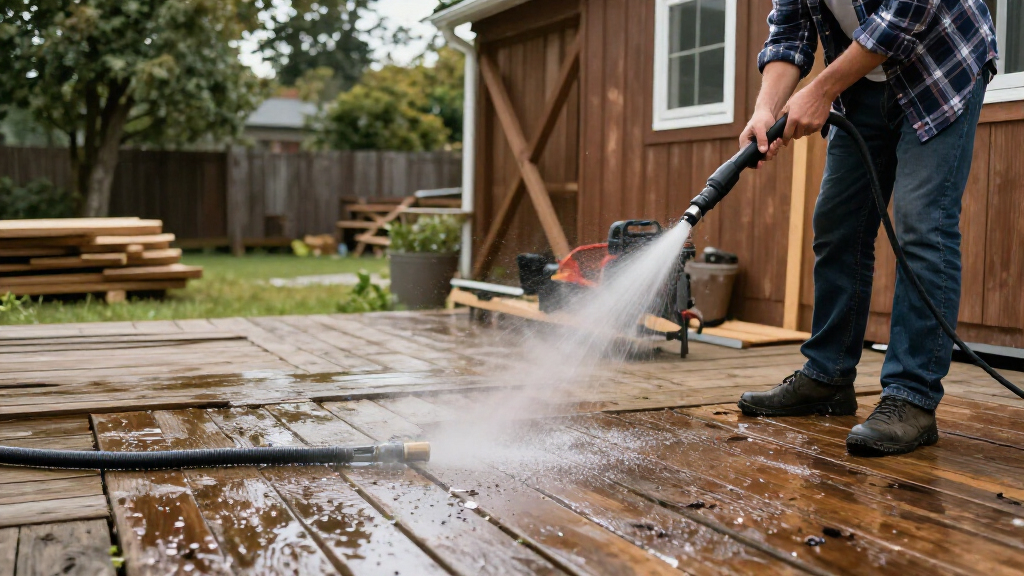
I compared the listed machines by pressure and flow, since PSI and GPM together shape both cleaning force and how quickly a washer can cover a surface. I also weighed engine details, included hose and nozzle information, portability cues, and the likely demands of maintenance. A familiar engine model and clear specifications make a product easier to evaluate than a listing that provides only broad performance claims.
The ranking favors models with a clearer balance of capability and buyer-relevant details, rather than placing every high-PSI listing at the top. The Simpson PowerShot 4000 PSI with Honda GX270 leads as a strong general-purpose option; the Simpson and Westinghouse midrange models follow for buyers who want less output. The 4200 PSI, 4.0 GPM products may appeal to large-area users, but their limited distinguishing information keeps them from outranking models with better-defined specifications. This is a comparison of the supplied product details, not a claim of hands-on testing.
Factors to Consider When Choosing Gas-powered Pressure Washers
Before choosing a gas washer, match its cleaning capacity to the surfaces and workload you actually have. I’d look past the largest number on the label and check whether the machine’s flow, included accessories, service needs, and storage demands fit your routine.
Read PSI and GPM as a Pair
PSI describes water pressure, while GPM describes how much water moves through the machine. A high PSI figure alone does not tell you how quickly a washer can rinse a long driveway or remove loosened debris. Higher flow can speed broad cleaning, but it also calls for more water supply and may make delicate surfaces easier to damage. For mixed household jobs, a moderate-output washer can be easier to control than a commercial-oriented model. Check both numbers and choose for your largest regular task, not an occasional job you may never tackle.
Match the Nozzle to the Surface
Nozzle choice changes the spray pattern and the risk of damage. A narrow spray concentrates force for stubborn grime, while a wider pattern spreads it over a larger area and is generally easier to manage. Start with a less aggressive nozzle and test an inconspicuous spot before cleaning wood, painted siding, or vehicle finishes. Turbo nozzles can save time on suitable hard surfaces, but they are not a universal upgrade for every job. Buyers should check which tips are included and whether compatible replacements are easy to obtain.
Think Through Engine Care Before Buying
Gas engines need more routine care than electric motors, including fuel management, oil checks, and winter storage planning. If the washer may sit unused for long stretches, stale fuel can turn a simple seasonal job into a maintenance problem. Look for clear engine identification and accessible service points, and check the manual for the maker’s maintenance schedule before purchase. A model with a familiar engine designation may be easier to research than one described only by displacement or horsepower. Choose gas power when its mobility and sustained output justify that extra upkeep.
Account for Weight, Storage, and Hose Reach
A gas washer is not just a motor and pump; it is a bulky machine that needs to move between the storage area and the work site. Wheels help on firm ground, but they may not make a heavy unit easy to lift into a vehicle or move across steps. Hose length affects how often the machine must be repositioned, especially around a house or parked vehicle. Measure your storage space and think about where the washer will run, with safe clearance and ventilation. A compact, lower-output unit can be a better household fit than a larger machine that is awkward to store.
Separate Useful Accessories from Marketing Claims
Long accessory lists can make a listing look ready for every task, but the quality and compatibility of the parts matter more than the count. Verify the hose length, connection type, nozzle sizes, and whether replacement fittings are available. Treat phrases such as commercial grade as a prompt to check the pump, frame, engine, and warranty details rather than as proof of durability. Listings with limited model information create more uncertainty about parts and service. When two washers appear similar on paper, clearer specifications can be more useful than a slightly higher advertised PSI.
Pay More for Capacity Only When the Workload Calls for It
Higher-output machines make the most sense for frequent cleaning across large paved areas or demanding work that benefits from stronger flow. They may be unnecessary for occasional patio furniture, smaller walkways, or light vehicle cleaning, where technique and the correct nozzle matter more than maximum output. More capacity can bring extra water use, fuel consumption, noise, and storage burden. Estimate how many hours you will use the washer each season and how much area you clean per session. If the answer is modest, a midrange unit may offer a more sensible balance than a heavy-duty model.
Frequently Asked Questions
Is a 4200 PSI, 4.0 GPM washer automatically better than a 3600 PSI model?
No. The higher figures suggest greater cleaning capacity, which can help on large, hard surfaces, but they do not prove that a washer is better built or a better fit for every task. More output can make delicate materials easier to damage and can demand more water and careful technique. A 3600 PSI model may be the more manageable choice for mixed home use. Compare pump and engine details, accessories, service information, and your actual workload before choosing by headline numbers.
Should I choose a Honda-engine model over one with an unspecified engine?
A clearly identified engine gives you a concrete starting point for checking maintenance instructions, parts, and service options. That can reduce uncertainty compared with a listing that supplies only broad engine claims. It does not, by itself, prove that the washer’s pump, frame, or fittings are superior. Consider the complete machine and confirm that replacement parts and support are available where you live. If long-term serviceability matters to you, clear engine identification is a meaningful advantage.
Can I use a gas-powered pressure washer on a car or wood deck?
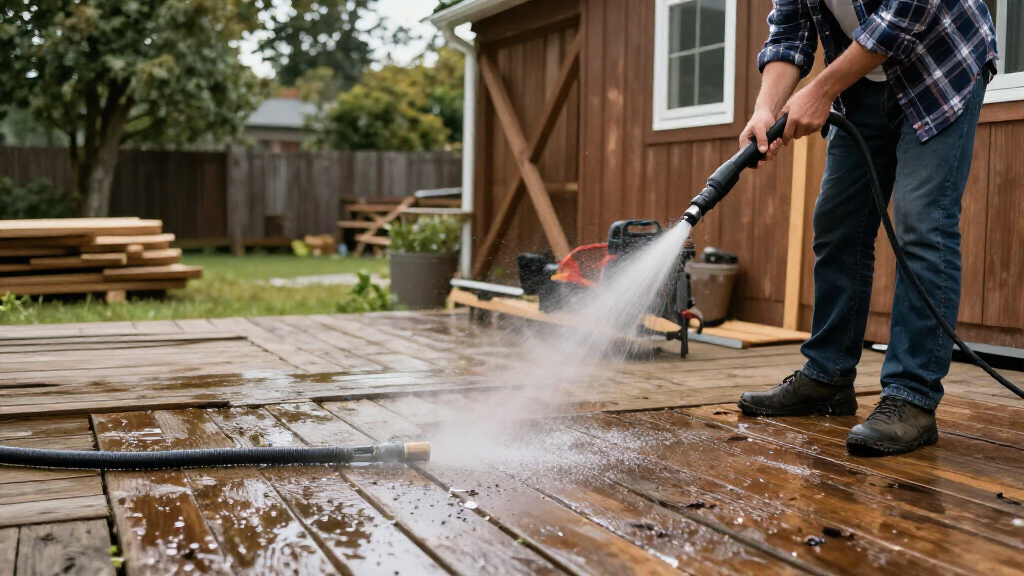
Yes, but use a wide spray pattern, keep the nozzle moving, and begin at a conservative distance on a hidden area. High-pressure water can strip paint, force water past seals, etch soft wood, or damage the finish if held too close. A higher-output washer does not need to be used at full force for every job. Follow the surface maker’s cleaning guidance and use detergent only when it is approved for that material. If you mainly clean delicate surfaces, a lower-output model or another cleaning method may be easier to control.
Are the 4200 PSI models with limited brand or model details a safe choice?
They may suit a buyer focused on advertised capacity and included accessories, but limited detail makes it harder to judge service, parts, and construction. Before ordering, look for a specific pump and engine identification, a usable manual, warranty terms, and a clear parts channel. Check whether the hose and fittings use standard connections so replacements are practical. If those details are unavailable, a better-documented model may be the lower-risk choice even if its headline output is less striking. The uncertainty is worth weighing against the workload you need to handle.
What should I prioritize if I only clean my driveway and patio a few times a year?
Prioritize manageable size, straightforward setup, a useful nozzle set, and easy maintenance rather than maximum PSI. A midrange washer can handle routine hard-surface cleaning without the extra burden of a commercial-oriented machine. Check that your water supply can support the washer’s flow and that the hose reaches enough of the work area. Plan fuel storage and seasonal care before buying, since infrequent use makes stale fuel a real concern. If storage or maintenance is a bigger hurdle than cleaning power, compare whether a gas machine is the right format at all.
Conclusion
Best overall: I’d choose the Simpson PowerShot 4000 PSI with Honda GX270 for a blend of substantial output and a clearly identified engine. Best value: the Simpson PowerShot 3300 PSI with Honda GX200 is a sensible direction for routine home jobs when maximum capacity is not needed. Best premium: the Simpson PowerShot 4400 PSI, 4.0 GPM model fits buyers who need high flow for demanding, large-area work and are prepared for the added scale of that machine. Best for beginners: the Westinghouse WPX3000 is the lower-output option to shortlist for more modest tasks, though careful nozzle use still matters. For buyers with specific high-volume needs, compare the 4200 PSI, 4.0 GPM options closely and give preference to the listing with the clearest engine, pump, warranty, and parts information. I’d pick by workload and support details before letting the biggest PSI figure decide.