TL;DR

Get business pricing on tools and workshop supplies
- Business-only prices and quantity discounts
- Tax-exempt purchasing
- Multiple users, one account, clear invoices
Your generator’s hour meter records engine runtime and gives you a practical basis for scheduling oil, spark plug and valve lash service. Follow the exact manual for your model, including any calendar limits, because runtime alone does not measure load, oil condition or fuel age.
Use the manual for your generator’s exact engine to set oil, plug and valve lash intervals and specifications.
Follow whichever hour or calendar limit the manual reaches first; an hour meter does not track oil condition, load or fuel age.
Check the correct spark plug type and gap; hard starting or rough running can have causes beyond the plug.
Have a qualified technician check valve lash if you lack the model-specific procedure, tools or experience.
Log the date, meter reading, work performed, parts and oil used, and the next due point.
Field Guide / Engine Care
Generator Maintenance by the Hour Meter
Oil, plugs and valve lash each follow the schedule for your exact engine. Use runtime to plan service, then check calendar limits, operating conditions and the owner’s manual before you act.
01 / The right schedule
Let the meter set reminders
Similar-looking generators can use different engines, oil grades, parts and procedures. Find the make, model and engine identification, then use that engine’s service information. Dust, heat, heavy loads and frequent short runs may call for more frequent service.
Record the generator and engine model.
Find intervals, specifications and procedures.
Check runtime and any calendar limit.
Log each service and its next due point.
02 / Three service priorities
Oil, ignition and valve clearance
Lubrication
Change oil to schedule
Check the level before operation. Follow the manual for break-in service, recurring intervals, oil grade and amount. Heat and use degrade oil; low oil can damage the engine.
Spark plug
Use the specified plug
Inspect or replace it as directed, checking the correct type and gap. Hard starting or rough running can have other causes, and appearance alone may not prove a plug is unserviceable.
Valve train
Measure lash by procedure
Clearance depends on the engine and its prescribed position. Use model-specific measurements and tools; have a qualified technician check or adjust it if needed.
03 / What the meter can’t tell you
Runtime is one part of the picture
The hour meter helps you plan routine work, but these other factors still need attention. A digital reminder can prompt an inspection; it cannot assess the engine for you.
Bars distinguish meter visibility from maintenance factors that require separate checks; they do not represent measured percentages. Low runtime does not rule out stale fuel or calendar-based service.
04 / Service safely
A few careful steps protect the engine
Oil work
Shut down and prepare
Park on stable, level ground. Let hot parts cool enough to handle, then drain and refill as the manual directs. Use the specified grade and quantity, and check the level before restart.
Plug service
Match type and gap
Use the stated tools and gap specification. Tighten as instructed; forcing or overtightening can damage threads. Ask a qualified shop to investigate persistent starting problems.
Valve lash
Measure to engine spec
The engine must be positioned correctly for measurement. If you lack the model-specific procedure, tools or experience, have a qualified technician do the work.
Never run a portable generator indoors or in an enclosed area. Operate it outdoors, away from doors and windows, and follow the manufacturer’s carbon monoxide guidance. Oil may remain hot after shutdown; use suitable gloves and keep spills away from hot surfaces.
05 / The maintenance record
Make the next service easy to verify
Record enough detail to see whether an hour or calendar limit is approaching. Keep the make, model and engine details with the log; documentation may also help with warranty discussions when maintenance records are required.
| Date | Meter | Work performed | Parts / oil | Next due |
|---|---|---|---|---|
| Record date | Engine hours | Oil / plug / lash / inspection | Type and specification | Manual limit |
| Record date | Engine hours | Note symptoms or findings | Part numbers, if relevant | Hours or calendar |
Traceability / Service chain
From runtime to reliable readiness
Capture meter and date.
Use exact engine guidance.
List work, parts and oil.
Set the next due reminder.
Let the hour meter set your service reminders
Generator maintenance by the hour meter uses engine runtime to help schedule service, but the manual for your exact engine sets the interval and procedure. The meter records how long the engine has run; it does not measure load, oil condition or fuel age. That makes it a useful clock, not a complete diagnosis.
For example, a standby generator might run briefly for scheduled exercise and then work hard through a long outage. Both periods add runtime, but the outage may put the engine under a heavier load and expose it to more heat. A dusty property or repeated short runs can also change what the manufacturer recommends. Follow the manual’s instructions for severe conditions when they apply.
Some schedules specify service after a certain number of hours or a period of time, whichever comes first. If your machine reaches neither threshold but has sat through a season, calendar-based instructions may still matter. A digital reminder can make the date easier to remember, yet it cannot tell whether the oil is low or fuel has aged.
Write down the make, model and engine identification before you look up intervals. “My 5,000-watt generator” is not precise enough: two units with similar output can use different engines, oil grades and service procedures.
Popular right now

Dyson Cyclone V10 Origin Cordless Vacuum

Ninja DualZone 6-in-1 Air Fryer, 8-Qt, Grey, DZ801

Vitamix Propel Series 510 Professional-Grade Blender, 3 Programs, Black
As an affiliate, we earn on qualifying purchases.
Change oil on the schedule your engine actually uses
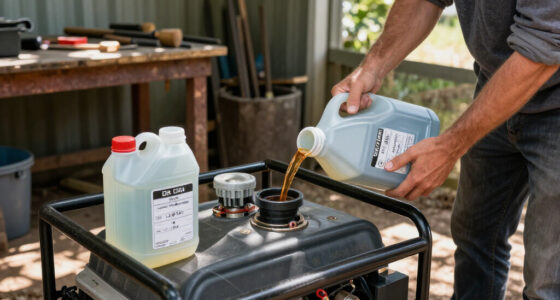
Change generator oil at the interval in the engine’s manual, including any early break-in service, and use an oil grade that meets its stated requirements. There is no safe universal hour count for every portable or standby generator. Heat and runtime degrade oil, while a low oil level can damage the engine.
Imagine your portable unit ran overnight at a steady load during a summer outage. When power returns, check the manual before deciding whether an oil change is due; don’t assume a familiar interval from another machine applies. The initial service may differ from recurring changes, and operating conditions can affect the schedule.
- Park the generator on a stable, level surface and shut it down.
- Let hot parts cool enough to handle, then follow the manual’s steps for draining and refilling.
- Use the specified oil grade and amount, and check the level as instructed before you restart.
- Record the date, hour-meter reading, oil used and work performed.
Never run a portable generator indoors or in an enclosed area; operate it outdoors, away from doors and windows, following the manufacturer’s carbon monoxide safety guidance. Oil can still be hot after shutdown, so use suitable gloves and keep spills away from hot surfaces. Synthetic oil is appropriate only when its viscosity and specifications meet the manual’s requirements.
Use the right spark plug, gap and service interval
A worn, fouled or incorrectly gapped spark plug can contribute to hard starting, rough running or reduced power. Check or replace it according to the engine’s service information, using the specified plug type and gap. Plug choices and intervals vary by model, so a part that fits the threads may still be wrong for the engine.
Suppose your generator coughs twice before starting and stumbles when you connect a load. A plug inspection may be part of the diagnosis, but the same symptoms can come from other faults. Don’t treat a dark or worn-looking electrode as proof by itself; appearance doesn’t always show whether the plug remains serviceable.
When the manual calls for inspection, use its procedure and tools, and check the gap against the stated specification. Replace the plug if the manual directs it or its condition falls outside the stated limits. Tighten it as instructed; forcing or overtightening can damage the engine’s threads.
If you’ve worked on spark plugs in small engines, the task may feel familiar, but generator access and procedures still differ. For a unit that is hard to reach or still under warranty, a qualified service shop can check the plug and investigate the starting problem together. Record the part used and meter reading so the next service has a clear starting point.
Check valve lash only with the correct procedure
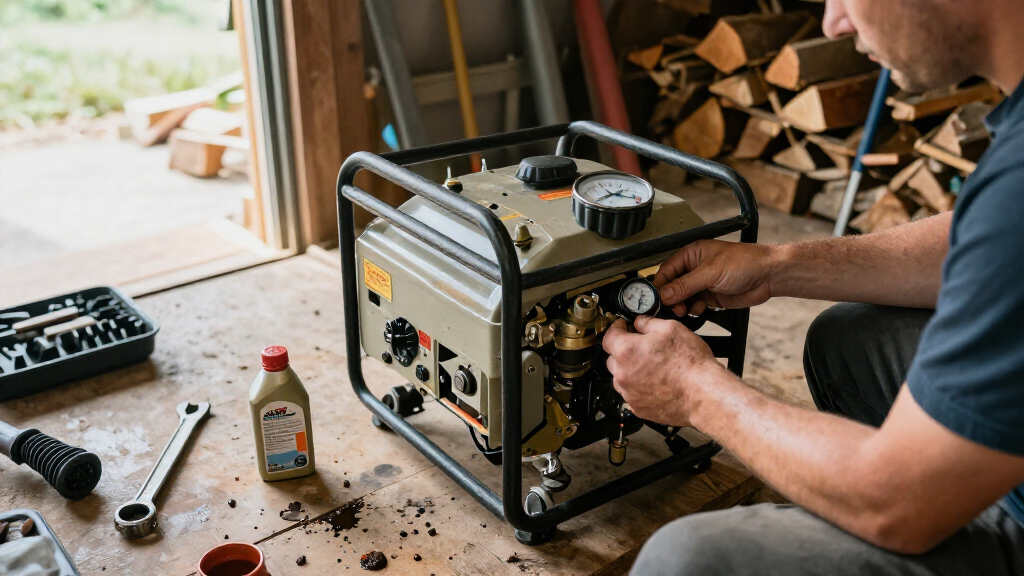
Valve lash is the specified clearance between valve-train components when the engine sits in the position required by its service procedure. The correct clearance can affect starting, power, noise and valve life. Both the measurement and adjustment method depend on the engine, so use its service information rather than a generic figure.
For instance, a generator that has become harder to start after years of use may need a valve-lash check if its manual calls for one. That symptom alone doesn’t confirm a valve problem; ignition, fuel and other issues can also interfere with starting. A technician can measure lash with the engine positioned correctly and compare it with the model’s specification.
Some owners can do this work with the right tools, experience and model-specific procedure. If you lack any of those, have a qualified technician handle the measurement or adjustment. Guessing at clearance or turning an adjuster without the prescribed steps can create new problems instead of fixing the old ones.
Use the engine’s service specification for valve lash. A clearance figure from a different engine is not a substitute, even if both generators have similar output.
When you arrange service, provide the make, model, engine details and current hour-meter reading. Ask the shop to record measured clearance and any adjustment. That gives you a useful maintenance record for the next interval and helps distinguish a measured check from a general inspection.
Keep a log that catches missed service
A short service log turns hour-meter readings into useful maintenance records. Each time you service or inspect the generator, note the date, meter reading, work performed, oil or parts used, and any symptoms. These details can help you spot a missed interval and support warranty discussions when the terms require maintenance documentation.
Picture a generator used for a few winter outages and occasional exercise runs. If you only remember that it had an oil change “last year,” you may not know whether it crossed an hour limit or a calendar limit. A log showing the reading at each service makes that decision easier and gives a repair shop a clearer history.
- Date and runtime: record both, even when the hour count barely moved.
- Service details: list the oil grade, plug part number, inspection or adjustment, and who performed the work.
- Observations: note hard starts, unusual noise, smoke or leaks without assuming a cause.
- Next due point: copy the next interval or calendar date from the manual.
If your generator has no hour meter, use a compatible meter if the manufacturer permits it, or keep a runtime log alongside calendar reminders. An hour meter records how long the engine has operated; it doesn’t replace routine checks or the manual’s storage instructions. Keep the log with your manual, or store a clear photo where you can find it during an outage.
Give low-hour generators the storage care they need
Few engine hours do not mean a generator needs no care. Fuel age, storage conditions, inspections and calendar limits can matter even when the meter barely moves. Follow the manual’s directions for periodic exercise and long-term storage; runtime cannot tell you whether fuel has degraded or a part needs attention.
Take a backup generator that spent a year in a shed and ran only once for a short test. Its low meter reading may look reassuring, but it doesn’t answer whether the fuel system was prepared for storage or whether a calendar-based service limit has arrived. Check the storage instructions and inspect the unit before you depend on it during a storm.
Exercise schedules vary by design. A standby unit may have its own automatic exercise routine, while a portable model may call for a different approach. Follow the manufacturer’s instructions for run time, load and preparation. When running a generator for a test, use it outdoors and follow carbon monoxide precautions.
Modern digital meters and maintenance reminders can make tracking easier, and some generators provide diagnostic indicators. Treat those as prompts: they do not replace the manual, scheduled inspections or good fuel-storage practice. Before an outage season, check for leaks or damage, verify oil level as directed, and confirm the unit is ready to operate safely.
Match each maintenance task to its manual
The manual is the authority for each interval, fluid and adjustment, because generators and engines differ. Your hour meter helps track runtime, but the schedule may also include a calendar limit or specific checks that a meter cannot perform. Use this comparison to see what each maintenance item asks you to verify.
| Service item | What to check | What the meter cannot tell you |
|---|---|---|
| Engine oil | Initial and recurring interval, oil grade, level and change procedure | Oil condition or whether a calendar limit has arrived |
| Spark plug | Inspection or replacement interval, specified type and gap | Whether a starting fault comes from the plug |
| Valve lash | Whether a check is due, engine position, clearance and adjustment method | Actual valve clearance or engine health |
| Storage care | Fuel preparation, exercise and long-term storage steps | Fuel age or storage damage |
A real-world example: a portable generator might reach its oil service point after a busy outage season, while a lightly used standby model might reach a calendar limit first. Your schedule may also change when the manual identifies dusty, hot or heavy-load operation. Never copy an interval or valve clearance from a different model just because the units share a brand or wattage.
Keep the relevant manual pages handy and verify any current service bulletin or warranty condition with the manufacturer. That gives owners a practical basis for routine decisions while leaving model-specific numbers where they belong: in the service information for that engine.
Frequently Asked Questions
How often should I change generator oil?
Follow your exact engine manual for the initial and recurring oil intervals. Heavy loads, heat, dust and frequent short runs may affect the schedule, so check whether the manual gives special instructions for those conditions.
Should I change oil by hours or by time?
Use whichever hour or calendar limit the manual specifies first. An hour meter tracks runtime, but it can’t show oil condition or whether a calendar-based service point has arrived.
Do I need to change oil after the first few hours?
Some engines call for an early break-in oil change; others give different instructions. Check your exact model’s manual instead of applying another generator’s schedule.
How often should I replace the spark plug?
Use the engine’s specified inspection and replacement interval, plug type and gap. Hard starting, rough running and reduced power can be clues to a plug issue, but other faults can cause the same symptoms.
What is valve lash, and can I adjust it myself?
Valve lash is the specified clearance between valve-train components in the engine position required by its service procedure. Adjust it yourself only if you have the model-specific instructions, tools and experience; otherwise, use a qualified technician.
Does low runtime mean I can skip maintenance?
No. Fuel age, storage conditions, inspections and calendar limits may matter even when the generator has few hours. Follow the manual’s exercise and long-term storage instructions.
Will keeping maintenance records help with warranty service?
A log of dates, meter readings, work and parts can support a warranty discussion and show what service you performed. Warranty requirements vary, so check the terms for your specific generator.