
TL;DR

Get business pricing on tools and workshop supplies
- Business-only prices and quantity discounts
- Tax-exempt purchasing
- Multiple users, one account, clear invoices
A generator’s dBA rating is only a fair comparison when the measurement distance, operating load, mode, and test method are similar. In ideal open conditions, doubling the distance can lower a reading by about 6 dB, but that rule is an estimate—not a way to rewrite a manufacturer’s rating.
A generator listed at 58 dBA can look whisper-quiet—until you learn the reading was taken far away, at light load, with eco mode switched on. That little number may tell you less than the bold type suggests.
This guide shows you how test distance, load, operating mode, and measurement method shape a generator’s noise rating. You’ll learn which comparisons hold up, which ones fall apart, and how to judge the noise you’ll hear at your campsite, driveway, or property line.
Noise matters beyond comfort. A generator that drones through dinner or rattles beside a neighbor’s bedroom can turn a practical piece of equipment into a problem. Read the fine print first, and you can shop with your ears—and your expectations—properly calibrated.
Compare dBA readings only when test distance, load, and operating mode are similar.
Doubling distance can lower a reading by about 6 dB in ideal open conditions, but this is an estimate, not a correction to a manufacturer’s rating.
A 3 dB increase means roughly twice the sound intensity, while a 10 dB increase is often perceived as about twice as loud.
Inverter generators can reduce noise at light loads, but engine speed and sound can rise as electrical demand grows.
Treat a rating without test details as incomplete, and never run a fuel-burning generator indoors or in an enclosed space.
Why a generator’s dBA number needs more than a headline
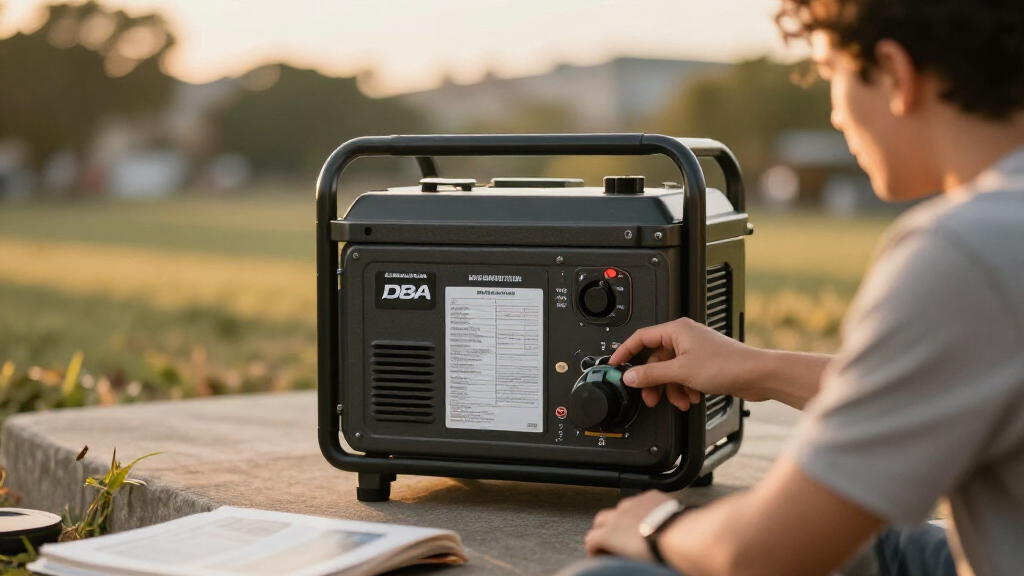
Generator dBA ratings describe a sound reading under specific conditions, not a universal promise about how loud a machine will sound everywhere. To make sense of a figure such as 58 dBA, you need the measurement distance, operating load, mode, and test method. Without those details, the number is an incomplete comparison.
The letters matter, too. dBA means decibels measured with A-weighting, a filter that adjusts sound readings to reflect how human hearing responds to different frequencies. That makes it useful for broad comparisons, but it doesn’t tell you everything about sound quality. A low, steady hum and a sharp, fluctuating engine note can share the same dBA reading yet feel very different beside your tent.
Decibels also use a logarithmic scale, not a simple percentage scale. A 3 dB increase represents about twice the sound intensity, but usually sounds like a modest change rather than twice the loudness. A 10 dB increase corresponds to ten times the sound intensity and is often perceived as roughly twice as loud under comparable conditions.
For example, imagine a quiet lakeside campsite where one generator makes a smooth low hum and another has a sharper exhaust note. Even if both list 60 dBA, the second may cut through conversation more. Treat the rating as one useful clue, not a complete description of what your ears will experience.
Popular right now

Sony BRAVIA 5 85-Inch Mini LED 4K HDR Smart TV (K-85XR50)

Ninja CREAMi 7-in-1 Ice Cream Maker, NC299AMZ

Dyson Cyclone V10 Origin Cordless Vacuum
As an affiliate, we earn on qualifying purchases.
How test distance can make one generator look quieter
Generator dBA ratings taken at different distances are not direct comparisons: a microphone farther from the machine generally records a lower level. In ideal open conditions, doubling distance from a point-like source lowers the reading by about 6 dB. That makes test distance one of the easiest details to miss—and one of the easiest ways a spec sheet can make a number look attractive.
Consider two listings: Generator A claims 58 dBA at 7 meters, while Generator B claims 68 dBA at 3 meters. You can’t say A is exactly 10 dB quieter in a fair test. The distances differ, and the load, mode, surroundings, and measurement methods may differ as well.
A rough distance calculation can help explain the mismatch, but don’t use it to manufacture a corrected rating. If you move from 7 meters to 14 meters in open conditions, a 70 dBA reading might fall to roughly 64 dBA. That estimate can shift outdoors, where walls, fences, pavement, wind, and nearby structures change how sound travels and reflects.
Think of the distance figure as the camera position in a photograph: move the camera back and the subject looks smaller, even though the subject hasn’t changed. A reading at 7 meters (about 23 feet) should not be directly compared with one taken at 3 meters (about 10 feet). If a product page hides the distance, treat its rating as limited information and ask for the test setup.
Which details make two generator noise ratings comparable?
Two generator noise ratings are comparable only when their test conditions are close enough to match. Check distance, load, operating mode, test environment, and method before you decide that one machine is quieter. A lone dBA figure can look like a simple number, but it is only meaningful when you know what produced it.
| Spec-sheet detail | What to check | Why it changes the comparison |
|---|---|---|
| Distance | How far the microphone sat from the generator | Sound usually falls as distance increases |
| Load | Whether the test used 25%, 50%, or full load | More electrical demand can make the engine work harder |
| Mode | Eco mode on or off | Engine speed may change with demand |
| Environment | Open test area or reflective surroundings | Surfaces and barriers can alter readings |
| Method | Named standard and described procedure | A clear method makes the result easier to judge |
For instance, a listing might say “60 dBA” but omit that it was measured in eco mode at 25% load. Another might report a higher figure at full load. Those numbers describe different operating situations, not a clean head-to-head contest.
Look for footnotes and technical documents, not just the largest type on the product page. If you can’t find the distance, load, and mode, ask the seller or manufacturer. If they can’t provide them, say plainly that the ratings are not directly comparable. A test method matters, too: don’t assume every consumer-facing rating uses one universal setup.
How inverter mode and electrical load change the sound
Inverter generators can be quieter at light loads because many can vary engine speed to match electrical demand. Conventional generators typically run at a more fixed speed. But the word “inverter” does not guarantee a specific noise level: the engine, enclosure, load, and operating mode all affect the result.
Say you’re at a cabin and need to charge phones and run a few lights. An inverter unit in eco mode may slow its engine and settle into a gentler hum. Add a high-demand appliance, and the engine may speed up, changing the sound. A rating measured at light load won’t tell you exactly what you’ll hear while running a larger appliance.
Compare like with like: same distance, similar load, and same mode. If a manufacturer gives only one number, check the fine print for a stated load such as 25% or 50%. The engine may sound calm while sipping fuel at a low demand, then grow louder when you ask it to handle more.
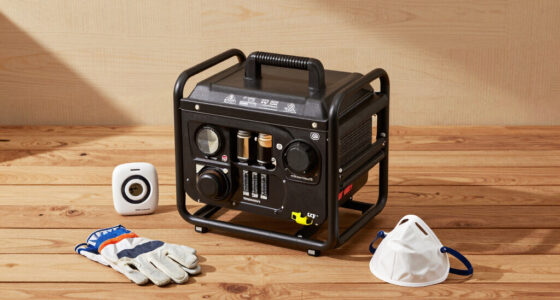
Gas and battery power also bring different tradeoffs. A battery power station can avoid engine noise during use, but its runtime and available output depend on battery capacity and the load you connect. A gas generator can run longer with refueling, but it brings engine sound, fuel storage, and exhaust hazards. Pick around your actual runtime and power needs, not a quiet-sounding label alone.
How to compare generator ratings without falling for the distance trick
To compare generator noise ratings, match the distance, load, and operating mode first. Then check the test method and environment. If the maker leaves those details out, don’t try to turn a rough distance estimate into a precise corrected figure; label the comparison incomplete.
- Find the full specification. Search the manual or technical sheet for distance, load, and eco-mode details. A product page may show “58 dBA” in large print while placing “at 7 meters, 25% load” in small text.
- Put the conditions side by side. Compare like-for-like readings. If one maker tested at 3 meters and another at 7 meters, you don’t have a direct contest yet.
- Ask for missing test information. Request the distance, load, operating mode, and method. A clear answer is more useful than a confident but context-free number.
- Listen to the sound character. A demo or recording can help you notice a low hum, sharp exhaust, or engine fluctuation. Recordings are useful for tone, not precise meter readings.
- Check your real placement and local rules. Distance and barriers affect what reaches your ears and your neighbor’s property line. Follow the manual’s ventilation and clearance instructions, and check local noise limits and quiet hours.
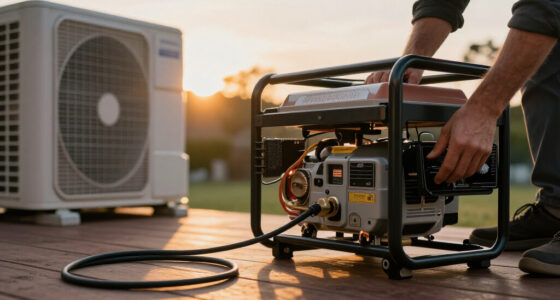
Here’s a practical scenario: you want backup power for a home and plan to place the generator well away from a bedroom window. A 7-meter rating offers more useful context if that resembles your intended placement, but it still doesn’t predict the exact reading at home. A driveway with a fence and house walls won’t behave like an open test area.
Never run a fuel-burning generator indoors, in a garage, or in another enclosed space. Place it outdoors as the manufacturer directs, with exhaust pointed away from doors and windows. If your setup involves electrical connections to home wiring, hire a licensed electrician; shut off power as directed and use the required protective equipment. Noise planning never outranks carbon-monoxide and electrical safety.
What a phone app can—and can’t—tell you about generator noise
A phone sound-meter app can give you a rough indication, but it is not automatically a calibrated measurement tool. Phone microphones vary, and app readings depend on the device, settings, and surroundings. Use one to compare conditions on the same phone, not to certify that a generator meets a specific dBA claim.
For a basic comparison, keep the setup consistent: use the same phone, location, distance, orientation, and generator load. For example, if you’re checking whether eco mode changes the sound at your campsite, take readings in the same spot before and after switching modes. Wind gusts, traffic, and a wall nearby can still skew the result.
A calibrated sound-level meter and a consistent test setup give you more meaningful readings. Even then, your measurement describes your location and conditions, not the manufacturer’s original test. A meter beside a garage wall may pick up reflections that an open test area does not.
Think of an app reading as a field note rather than a legal or laboratory result. If a generator’s 60 dBA claim matters for a neighborhood rule, check the local requirement and the required measurement procedure. A spec-sheet number does not guarantee compliance at your property line, where distance, barriers, and local regulations all matter.
What a low dBA rating means for your campsite or home
A low dBA rating can help you narrow your choices, but it cannot predict exactly how loud the generator will seem at your site. Distance, load, sound character, background noise, and placement all shape the experience. A number measured in a test area doesn’t travel unchanged into your backyard.
At a campground, a steady low hum may blend into the evening more easily than a sharper engine note that rises and falls. At home, a generator running near a fence or wall may sound different from one in an open area because those surfaces reflect sound. The closest neighbor may hear a different mix than you do beside the machine.
Use the rating to screen options, then think through your actual setup: where the generator will sit, what you’ll power, how long it needs to run, and how far people are from it. If the machine will cover several acres of property operations, you may value runtime and capacity more than the quietest light-load figure. If you’ll use it beside a tent, noise and safe placement may carry more weight.
There’s no magic threshold that makes a generator “quiet” in every setting. A rating is most useful when the conditions resemble your intended use. If the test distance, load, and mode don’t match your plan, the headline number may be tidy, but it is not a reliable preview.
Frequently Asked Questions
What does “58 dBA at 7 meters” mean?
It means the manufacturer reports an A-weighted sound level of 58 dBA at a distance of 7 meters under its test conditions. The load, mode, environment, and method still affect how useful that figure is for comparing another generator.
Is a generator rated at 60 dBA quiet?
Not by that number alone. A 60 dBA reading at a greater distance or light load may not compare with the same figure taken nearby at heavier load. Check the test details and consider the sound’s pitch and fluctuation, too.
How much quieter is a generator when you move it farther away?
In ideal open conditions, doubling the distance from a point-like source lowers the measured level by about 6 dB. Outdoors, reflections, barriers, wind, and ground conditions can change the result, so treat that as a rule of thumb rather than a guarantee.
Are inverter generators always quieter?
No. Many inverter generators can run at lower engine speeds when demand is light, which can reduce noise. Their sound still depends on the model, load, enclosure, and mode, so compare readings taken under similar conditions.
Can a phone app measure generator noise accurately?
A phone app can give you a rough reading, but the phone microphone and app may not be calibrated. For a useful comparison, keep the phone, location, distance, and operating conditions consistent; use a calibrated sound-level meter when measurement accuracy matters.
Can I compare dBA and dB ratings?
Not confidently unless you know the weighting and measurement method behind each figure. dBA uses A-weighting to reflect human hearing sensitivity; an unweighted or differently weighted reading may describe sound differently.
Conclusion
When you shop, don’t chase the smallest dBA number; check the distance, load, mode, and test method behind it. If those details don’t match, the ratings don’t make a fair comparison.
Match the spec to your real setup, then plan safe placement and realistic runtime. A generator should keep the lights on—not leave you listening to a mystery hum through the night.