TL;DR

Get business pricing on tools and workshop supplies
- Business-only prices and quantity discounts
- Tax-exempt purchasing
- Multiple users, one account, clear invoices
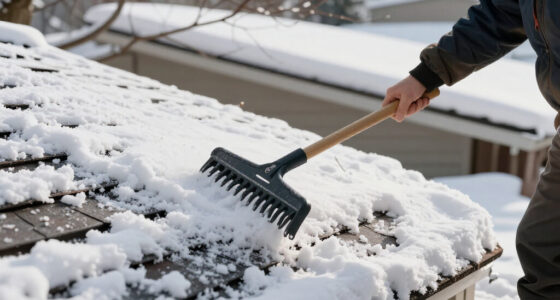
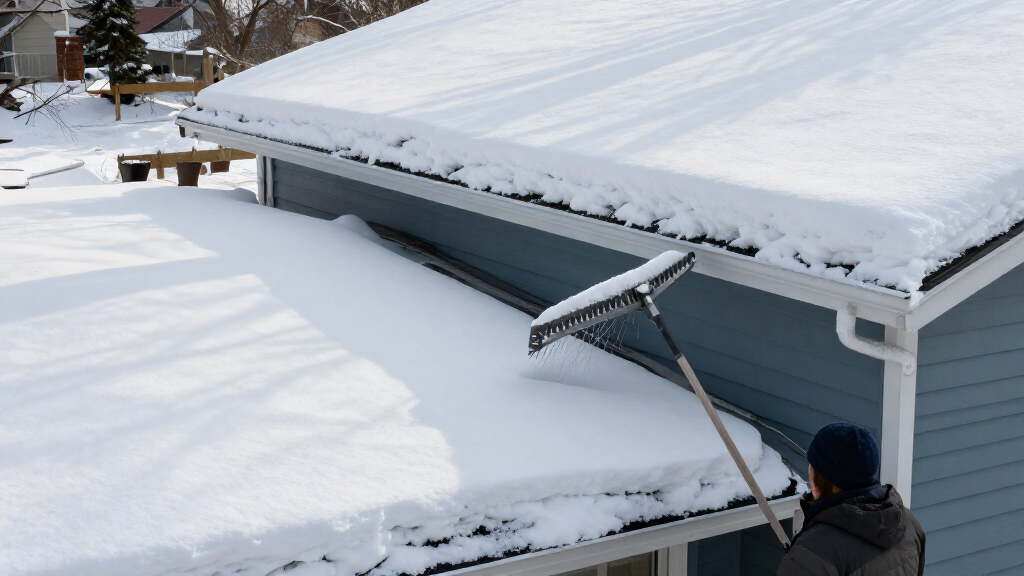
Use a roof rake from the ground to remove manageable layers near the eaves, and leave a thin protective layer above the roofing. There is no universally safe snow depth: wet or wind-packed snow, roof condition, and local snow-load guidance matter more than inches alone. Stop if snow will not move easily, ice is involved, or the roof shows signs of stress.
A roof can carry a white blanket for weeks, but the snow nearest the eaves can become a problem long before the whole roof looks buried. The trick is to reduce risky buildup without scraping the roof bare—and to stop before the tool, snow, or your footing gets away from you.
This guide explains how much snow to pull, what to leave behind, and how to use a roof rake without catching shingles, gutters, or flashing. You’ll also learn why a few inches of damp snow can demand more caution than a deeper layer of powder, and when a professional should take over.
Think of the rake as a broom for a high shelf: useful when you control the strokes, risky when you try to sweep the whole thing clean in one go. Work from the ground, keep people out of the drop zone, and let roof-specific guidance—not a universal inch count—set the limits.
Remove snow in a few-inch layer only when the rake can move it with steady, controlled effort.
Leave a thin protective cushion; do not scrape shingles, metal seams, gutters, or flashing.
Use snow weight, wetness, drifting, and roof condition as guides; no universal safe inch depth fits every roof.
Clear comparable areas evenly when practical, and keep people and pets out of the fall zone.
Stop for ice, heavy or wind-packed snow, awkward access, or signs of structural stress, and contact a qualified professional.
Roof Rake Technique: How Much Snow to Pull and What to Leave
Reduce risky buildup near the eaves with small, controlled pulls. Leave a thin cushion over the roofing, and let snow weight, roof condition, and local guidance set the limits.
How much snow should you pull off?
Pull only what moves in small, steady strokes, especially along the eaves. There is no universal safe inch count: moisture, drifting, roof design, age, and condition all change the load.
Work in narrow strips
Fluffy snow may slide easily. Start at the eaves and remove a few inches at a time while keeping the rake head and pole under control.
Depth can mislead
Wet, compacted, or wind-packed snow can weigh more and resist movement. Drifts behind chimneys or in valleys may be heavier than the edge suggests.
Do not force a slab
If the pole flexes, the rake snags, or snow will not move with a gentle pull, stop. A harder yank can drop a heavy mass or damage roof features.
Use conditions, not a ruler. Four inches of dry powder may move lightly; a similar depth after a thaw may cling like a damp blanket. Check local snow-load guidance, manufacturer advice, or a qualified roofing professional for site-specific limits.
Work in manageable layers
Stay on the ground, keep the drop zone clear, and make each stroke deliberate. Never climb onto a snowy roof or use a ladder with a roof rake unless a qualified professional has advised a safe setup.
Clear below
Move people, pets, and breakables away from where snow could fall.
Check overhead
Look for power lines before raising a long pole. Keep stable footing.
Start at eaves
Pull a narrow strip toward you, then move along the edge in short sections.
Take small pulls
Remove only a few inches at a time. Leave a protective cushion above the roof.
Keep it even
Where practical and safe, clear comparable areas instead of one side alone.
Know when to continue—and when to stop
Snow texture and tool response offer useful clues, but neither replaces roof-specific advice. Ice dams and compacted ice are not safe targets for forceful raking.
Small amounts move easily
Continue in short strokes from the ground. Keep the pole within reach and the area below clear. Stop before scraping the roof surface.
Resistance, ice, or stress
Stop for heavy or wind-packed snow, a stuck or bouncing rake, ice buildup, or signs such as new sagging, cracks, or doors that suddenly stick. Move away and seek professional help for possible structural stress.
Leave a snow cushion
The rake should move snow, not scrape the roofing. Keep its head from digging into shingles, catching metal seams, or dragging across gutters and flashing.
Ease off when the head catches
Forceful pulls can lift shingle tabs or scuff protective granules. On metal roofs, a rake can snag raised seams or scratch a finish. Wheels or rollers may help on some profiles, but check the tool and roof manufacturer’s guidance.
Leave snow that resists, especially when you cannot see what the rake has hooked. Fragile, steep, high, or complex roofs are better assessed by a qualified roofing professional.
Pull loose snow · Leave the roofing untouched
Raking helps at the eaves; it is not the whole solution
Snow near the eaves may contribute to ice dams, but a rake usually cannot clear the entire roof or prevent ice dams on its own. Attic insulation, ventilation, sealed air leaks, and drainage also matter.
How Much Snow Should You Pull Off Your Roof?
Pull off only as much snow as you can move in small, controlled layers, especially along the eaves, and leave a thin protective layer above the roofing. There is no single snow depth that is safe for every roof: wetness, drifting, roof design, age, and condition all change the load. A depth number alone cannot tell you whether your roof is fine.
For example, four inches of dry powder may slide in light strips, while a similar depth after a thaw can cling like a damp blanket. Wind can pile snow behind a chimney or roof valley, too, leaving one spot much heavier than the rest of the roof. The visible depth at the eaves may not tell you what is happening higher up or in a drift.
Start before snow accumulates into a heavy or compacted layer, but do not turn routine raking into a race against a guessed cutoff. Pull a few inches at a time and stop if the load resists, the rake catches, or you cannot keep the head under control. What you leave is a cushion; what you pull is the manageable snow above it, not the roofing surface itself.
Local snow-load guidance, the roof manufacturer, and a qualified roofing professional can give advice that fits your home. If a ceiling bows, a new crack appears, or a door suddenly sticks after a storm, those can signal structural stress. Move people away from the area and seek professional help rather than trying to fix a possible load problem with a rake.
Popular right now

Dyson Car+Boat Cordless Handheld Vacuum

Roborock F25 BX Cordless Wet Dry Vacuum Mop

Apple AirPods Pro 3 Wireless Earbuds with Active Noise Cancellation
As an affiliate, we earn on qualifying purchases.
Use This Roof Rake Technique to Work in Safe, Manageable Layers
- Clear the area below. Move people, pets, and anything breakable out of the path where snow could fall. Look up for overhead power lines before raising a long pole.
- Stay on the ground. Choose a rake with enough extension for a controlled reach from stable footing. Do not climb onto a snowy roof, and do not use a ladder unless a qualified professional has advised a safe setup.
- Start at the eaves. Pull a narrow strip down toward you, then move along the roof edge in short sections. Work upward only as far as you can keep the head and pole under control.
- Take a few inches at a time. Let manageable snow slide down in small amounts. Leave a thin cushion over the roofing and stop if the rake snags or the snow resists.
- Keep the load even where practical. If you can safely reach both sides, remove comparable amounts rather than clearing one side bare and leaving the other heavily loaded.
This roof rake technique favors control over speed. Imagine pulling a stiff blanket off a table: small tugs move it without sending everything flying. A heavy slab pulled in one go can slam into the rake, dislodge ice, or land hard near your feet.
Suppose you reach a drift above the front porch and the pole starts flexing. That is your stop signal, not a reason to yank harder. Set down the tool, check the area, and call a professional if the snow is too heavy or too high to manage safely.
Leave a Snow Cushion So the Rake Does Not Tear Up the Roof
Leave a thin layer of snow over the roofing instead of scraping until shingles or metal are exposed. That cushion helps keep the rake head from digging into the surface, catching an edge, or dragging grit and ice across the finish. A rake should move snow; it should not become a scraper.
On an asphalt-shingle roof, a forceful pull can lift shingle tabs or scuff the granules that protect them. On a metal roof, a head that snags a raised seam can scratch a coating or pull against a panel. Gutters, flashing, and trim can catch the rake as well. A tool with wheels or rollers may help keep the head off the roof, but its design must suit the roof profile and the manufacturer’s directions.
Consider a house with brittle, older shingles after a freeze. The snow slides in chunks, and the rake head briefly stops at the eave. That catch is a signal to ease off and reposition, not to jerk the pole until the chunk breaks free. Leave what resists, especially if you cannot see what the head has hooked.
Before using a rake on metal roofing or another specialty surface, check the roof manufacturer’s guidance. A rake that works well on a simple shingle roof may snag standing seams or damage a delicate finish. If the roof is fragile, steep, high, or complex, a qualified roofing professional can assess it without asking you to reach blindly from below.
Why Wet Snow and Ice Change How Much You Should Remove
Wet, compacted, or wind-packed snow is harder to move and can put more weight on the rake than fluffy powder. A small depth can still be a heavy load, so the way snow feels under the rake matters as much as the number of inches on a ruler. Do not force a load that will not move in small, controlled strokes.
After an afternoon thaw followed by a cold night, snow may crust over. A wind can also press snow into a dense drift behind a chimney or along a valley. Those conditions create uneven patches that an eaves-only view may hide. If the rake head bounces, sticks, or will not cut through a layer without a hard pull, stop and reassess.
Ice is a separate problem. A roof rake can remove loose snow above an eave, but it is not a safe way to break an ice dam or chip compacted ice. Chopping can damage roofing and gutters, while a heavy fall of ice can injure someone below. Keep the drop zone clear, and contact a qualified roofing or ice-dam professional for significant buildup.
Say the snow on your garage roof looks shallow, but it has survived several thaw-freeze cycles and now moves as a single slab. Treat it as a heavy, unpredictable load even if it is only a few inches deep. Stop when control fades; stubborn snow and ice call for expertise, not a harder pull.
Rake the Eaves Without Creating a Lopsided Snow Load
A roof rake is most useful for reducing snow near the eaves, where buildup can contribute to ice dams, but it generally cannot clear an entire roof. Remove similar amounts from comparable areas when you can reach them safely, and avoid stripping one patch bare while leaving a deep drift beside it. Even, modest removal is a better aim than a dramatic cleared stripe.
Picture a broad roof after a storm: the side facing the wind is mostly clear, while the sheltered side holds a deep ridge. Clearing only the easy side can leave an uneven load. On a complex roof with dormers, valleys, or several levels, it may be impossible to reach every area evenly from the ground. That is a good reason to stop and get professional advice rather than stretch the pole into an awkward angle.
Use the rake to work accessible eaves in narrow strips. Keep your stance steady and move along the ground instead of twisting hard to reach sideways. If you have a long driveway or acreage, plan the work so you can maintain safe footing and take breaks; a long pole feels heavier as your arms tire. A tired grip makes it easier to snag a gutter or lose control of the head.
Raking can reduce snow above the eaves, but it does not guarantee that ice dams will not form. Heat escaping into the attic, poor insulation, air leaks, ventilation, and drainage also matter. For a recurring ice problem, address those building conditions with qualified help instead of relying on winter raking alone.
Know When a Roof Rake Is the Wrong Tool
Call a qualified professional when a roof is steep, high, fragile, damaged, or too complex to reach safely from the ground, or when snow is dense and ice-covered. A roof rake cannot make a hazardous setup safe. Structural warning signs such as new sagging, cracking, or doors that suddenly stick also call for prompt professional attention.
A common example: you rake the porch roof and spot a new dip along the main roofline, or hear a sharp crack from inside after a storm. Stop work, keep people clear of the area, and contact a roofing professional or local authority. If collapse appears imminent, leave the building and contact emergency services. Do not climb up to inspect the cause.
Ground-level work still carries hazards. Snow can drop suddenly, ice can slide farther than expected, and long poles can reach overhead wires. Wear footwear with reliable traction and gloves that let you hold the pole securely. Keep your body outside the fall line, and never stand directly beneath the section you are pulling.
Use extra care on a ladder: falling snow can strike it, and a shifting ladder can leave you trapped below the roof edge. Working from the ground is generally safer. If ground reach is not enough, do not improvise a higher setup. Let a professional handle the access when the roof or snow conditions put you at risk.
Frequently Asked Questions
Should I remove all the snow from my roof?
No. Use a rake to reduce manageable buildup near the eaves and leave a thin layer above the roofing. Scraping to the surface can damage shingles, metal finishes, gutters, or flashing.
How many inches of snow are safe to leave?
There is no universal safe depth. Snow weight changes with wetness, compaction, and drifting, while roof capacity depends on design and condition. Check local guidance or ask a qualified roofing professional for site-specific advice.
How much snow should I pull down at a time?
Take a few inches at a time in narrow sections, and keep each pull under control. If the rake catches, the snow resists, or the pole flexes, stop instead of yanking harder.
Can roof raking prevent ice dams?
Raking snow above the eaves may reduce one contributor to ice dams, but it cannot guarantee prevention. Attic heat loss, insulation, air leaks, ventilation, and drainage also affect how ice dams form.
Is it safe to use a roof rake from a ladder?
Working from the ground is generally safer because a ladder can slip or be struck by falling snow and ice. Do not climb onto a snowy roof or improvise a higher setup; ask a qualified professional to handle difficult access.
What should I do about a thick ice dam?
Do not chop it, use an open flame, or apply improvised heat to the roof. Keep people clear of falling ice and contact a qualified roofing or ice-dam professional.
Conclusion
Use a roof rake to reduce manageable snow near the eaves, one controlled strip at a time. Leave a thin cushion, keep the drop zone clear, and stop when snow is heavy, icy, or beyond your reach. Inches alone cannot tell you what your roof can carry; local guidance and the roof’s condition matter.
When the pole starts to flex or the snow stops moving easily, let the storm keep its grip and call a professional. A little white left behind is far better than a damaged roof or an injured person.