
TL;DR

Get business pricing on tools and workshop supplies
- Business-only prices and quantity discounts
- Tax-exempt purchasing
- Multiple users, one account, clear invoices
Grass seed may still grow after heavy rain if the water drains and the soil stays moist rather than waterlogged. Lawn experts quoted by Ideal Home recommend redistributing washed seed once the ground is workable, lightly aerating pooled areas and covering seed with a thin layer of soil or compost. Germination commonly takes seven to 21 days, so wait and check for patchiness before overseeding.
Grass seed can still germinate after heavy rain if water drains away and the soil remains moist rather than saturated, according to lawn-care experts quoted by Ideal Home. The report recommends redistributing seed that has washed into patches, lightly aerating areas where water is pooling and protecting seed with a thin covering of topsoil or compost.
The outcome depends on what happened to the seed and how wet the ground remains. Moist soil supports germination, but seed sitting in standing water can rot or lack oxygen, says Jonathan Davis, a lawn-care expert at Lawnsmith. Heavy rain can also move seed from where it was sown, leaving some areas bare and others crowded with clumps.
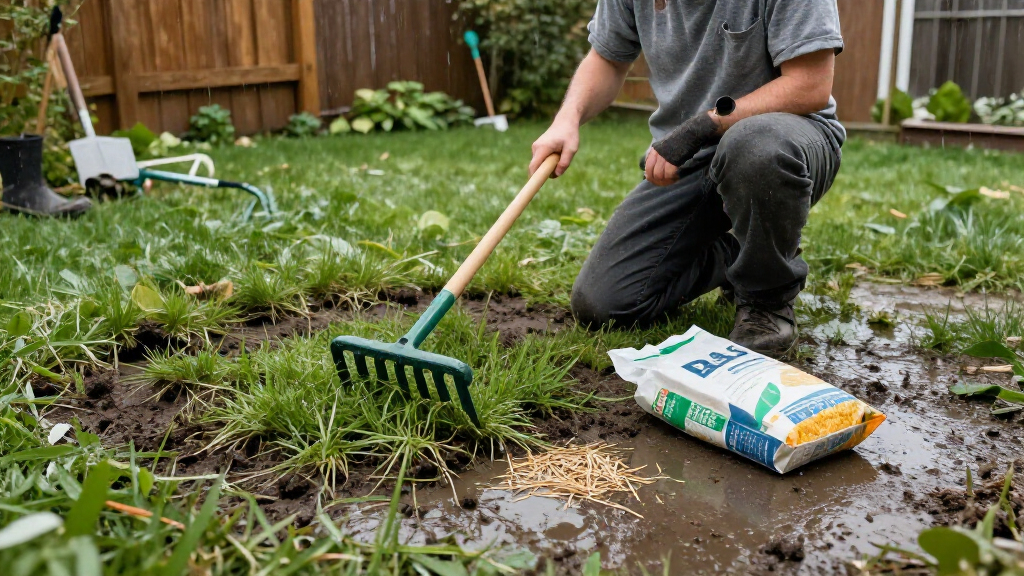
If seed has shifted, Guy Jenkins, consumer manager at Johnson’s Lawn Seed, advises waiting until the ground is workable before using a rake to spread it across bare areas. Jenkins says germination typically begins within seven to 21 days. If the lawn is still visibly patchy after that period, he advises overseeding the affected spots.
For pooling water, Davis recommends light aeration to create channels that help water drain. He advises focusing on waterlogged areas and avoiding heavy work that could disturb seed or stress the existing lawn. A thin layer of topsoil or compost can help hold seed in place; Davis also suggests a light, natural covering as protection from both runoff and birds.
Protecting Seed From Runoff
Rain shortly after sowing does not automatically mean a lawn must be restarted. Checking whether water has drained, and whether seed has moved, can help gardeners decide between waiting, repairing bare spots or sowing again. Acting only when the ground is workable also reduces the risk of further disturbing seed or compacting wet soil.
The advice is most relevant to newly seeded lawns, where unevenly distributed seed can translate into patchy growth. It does not promise that every seed will recover: prolonged standing water, poor drainage or seed washed away from the area may reduce germination.
Popular right now

Vitamix Propel Series 510 Professional-Grade Blender, 3 Programs, Black

Vitamix 5200 Professional-Grade Blender, 64 oz. Container, Black

Bose QuietComfort True Wireless Earbuds with Active Noise Cancellation, Black
As an affiliate, we earn on qualifying purchases.
How Heavy Rain Affects Germination
The Ideal Home report frames the question around autumn sowing and storms, while noting that moisture is needed for grass seed to sprout. Its central distinction is between moist ground and waterlogged ground: rain that soaks in or drains away is less concerning than water left pooled on the surface.
Davis says seed in standing water can rot or be deprived of oxygen. He also says runoff can shift seed into clumps, producing thick tufts beside bare patches. Jenkins’s guidance is to let the seed’s germination window pass before judging whether those patches need additional seed.
“You should typically start to see germination within seven to twenty-one days.”
— Guy Jenkins, quoted by Ideal Home
What the Rain Left Behind
The report does not establish how much rain, how long water must pool, or what soil and seed conditions determine whether a particular lawn will recover. Results will vary by drainage and site conditions, and the source provides no measured germination rates or comparison between different seed types.
It may take seven to 21 days to see germination, so the immediate appearance of a lawn may not show whether seed is viable. The report also does not give a fixed waiting period for soil to become workable or a precise amount of seed or topsoil to apply.
Check, Repair and Reassess
First check whether water is still pooling and whether seed has collected in clumps or washed away. Once the ground is workable, rake displaced seed across bare areas; where water has pooled, use light aeration focused on the affected spots. A thin covering of topsoil or compost can help protect seed from movement.
Allow the stated seven-to-21-day germination window before judging the result. If areas remain noticeably bare or uneven after that period, overseed those spots, following the seed product’s instructions. The report does not set a date for further updates or identify a single remedy that will work for every lawn.
Key Questions
Will grass seed grow after heavy rain?
It can. The experts quoted by Ideal Home say seed may germinate if rain drains away and the soil remains moist, but not waterlogged. Seed left in standing water may rot or lack oxygen.
What should I do if rain has washed seed into patches?
Wait until the ground is workable, then rake displaced seed across bare areas, advises Guy Jenkins of Johnson’s Lawn Seed. Check again after the usual seven-to-21-day germination period and overseed spots that remain patchy.
Should I aerate a waterlogged lawn?
Jonathan Davis of Lawnsmith recommends light aeration to help water drain through the soil. He advises concentrating on waterlogged areas and keeping the work light so seed and existing grass are not disturbed unnecessarily.
How long does grass seed take to germinate?
Jenkins says gardeners should typically begin to see germination within seven to 21 days. The report does not specify a more exact timing for individual lawns or seed varieties.
Source: idealhome.co.uk