
TL;DR

Get business pricing on tools and workshop supplies
- Business-only prices and quantity discounts
- Tax-exempt purchasing
- Multiple users, one account, clear invoices
A Veranda writer says cape plumbago has begun producing new flowers in front-door containers several weeks after planting. The South African shrub is presented as a heat-tolerant, relatively low-maintenance option for sunny gardens, but the writer’s account is an early personal report, not proof that it will thrive in every climate or with no care.
Veranda art director Julia reports that cape plumbago planted in front-door containers began producing new blooms almost daily within a few weeks, offering an early example of the flowering shrub’s appeal for sunny porches. Her account describes a promising start, not a guarantee that the plant is foolproof or will flower through fall in every location.
Julia said she chose cape plumbago (Plumbago auriculata) after seeking a flowering plant that could handle heat and sun without frequent watering. Native to South Africa, the shrub has clusters of blue flowers and can be grown as a rambling shrub, trained as a climber, or planted in a container. The report also describes it as deer-resistant, though it does not provide details of a test or evidence for that claim.
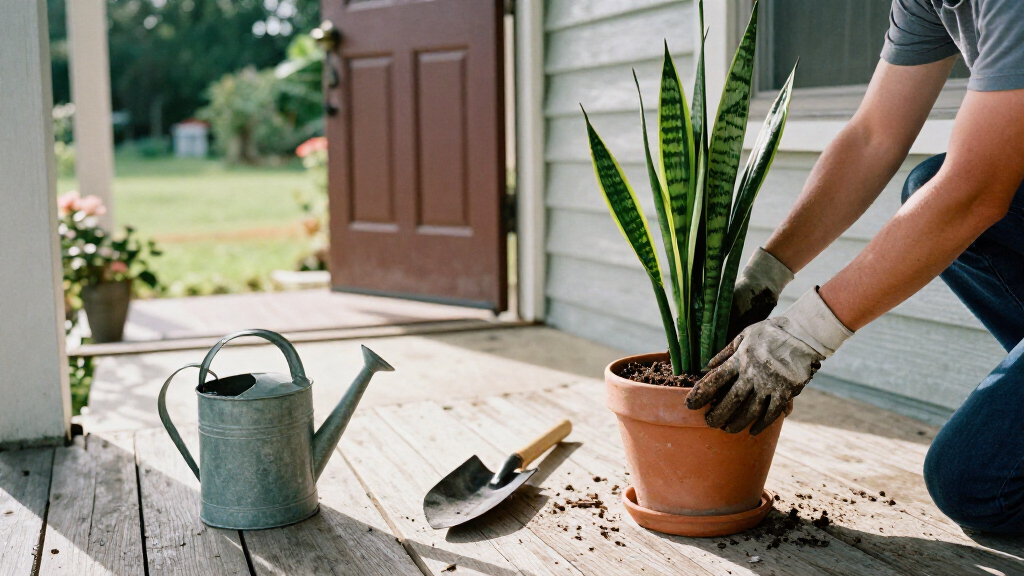
For her front-door planting, Julia bought two one-gallon plants and four pint-sized plants, along with potting mix. She removed old plant material and some used soil from her pots, added fresh mix, loosened the plants’ roots and set them into holes about twice the width and depth of their root balls. She then backfilled with potting mix and applied a balanced slow-release fertilizer around the plants, taking care to keep it away from the stems.
Several weeks later, she said the plants were flowering and beginning to grow upward and over the container edges. Rain in her area meant she had watered them with a hose only once during that period. The article’s general guidance is to water plumbago one to two times a week, depending on how dry the soil surface is. Julia said she planned to monitor the plants for possible additional fertilizer and pruning as the summer continued.
A Candidate for Sunny Entryways
Cape plumbago may suit gardeners looking for blue flowers, a container-friendly habit and tolerance of heat and sun. Its ability to grow upright or spill over a pot also gives it flexibility for entrances and patios. For readers in suitable climates, the report offers a practical plant to investigate rather than a universal recommendation.
The distinction between low maintenance and no maintenance matters. Julia’s plants benefited from rainfall, fresh potting mix and fertilizer, and the report’s own watering guidance depends on soil conditions. A gardener in a hotter, drier spot may need to water more often than she did. The early blooms show how her planting is performing so far; they do not establish how the plants will fare over a full season.
Popular right now

Vitamix 5200 Professional-Grade Blender, 64 oz. Container, Black

eufy E25 Robot Vacuum and Mop Combo with HydroJet Roller Mop

De'Longhi Rivelia Fully Automatic Espresso Machine with Milk Frother, White
As an affiliate, we earn on qualifying purchases.
What the Planting Report Covers
The Veranda article is a first-person gardening report by the magazine’s art director, who said she began looking for a low-effort flowering plant in spring. It recounts her selection of cape plumbago, how she planted it in containers, and what she observed in the first few weeks. The piece is not a controlled comparison with other porch plants.
The report says plumbago is suited to USDA hardiness zones 8–11 and can tolerate winter temperatures dipping to about 20–25 degrees Fahrenheit. Those figures are presented as general plant guidance, not as a record of Julia’s plants surviving winter. The article does not identify her exact growing conditions or explain how container placement, exposure and local weather may affect winter survival.
“I set out on a mission this spring to find a flowering front-door plant that thrives with a “set-it-and-forget-it” approach.”
— Julia, Veranda art director and author of the report
Season-Long Results Are Pending
The report does not yet establish whether Julia’s potted plants will continue blooming into fall, reach their potential size, or survive winter in her containers. She said she would watch for signs that they needed more fertilizer or pruning and had bought obelisks for the plants to climb. Those are plans, not reported outcomes.
Her watering experience also reflects local rainfall during the first few weeks, not a measured drought test. The article provides no side-by-side comparison of care needs, no long-term results, and no detailed account of the plants’ sun exposure or local climate. The description “foolproof” is the framing of the headline; the account itself shows an encouraging start, with results still developing.
Summer Growth Will Test the Choice
Julia said she would continue monitoring the plants through summer, checking whether they need additional fertilizer, pruning or watering. She also plans to see whether they keep flowering into fall and grow large enough to use the obelisks. The next useful update would be a report on those results, including how the containers perform as weather and soil moisture change.
For gardeners considering the plant now, the report’s practical guidance is to check the soil rather than copy a fixed watering schedule. Suitability will depend on local climate and growing conditions; the article’s zone range offers a starting point, while its author’s results remain specific to her own planting.
Key Questions
What is cape plumbago?
Cape plumbago (Plumbago auriculata) is a flowering shrub from South Africa. The report describes it as having clusters of blue flowers and says it can be grown as a shrub, trained to climb or planted in a container.
How often should cape plumbago be watered?
The article gives general guidance of one to two waterings a week, depending on how dry the soil is at the top. Julia watered only once over several weeks because her area had steady rain, so that experience should not be treated as a universal schedule.
Can cape plumbago grow in a pot?
Yes. Julia planted cape plumbago in front-door containers and reported that the plants began flowering and spilling over the sides within a few weeks. Her account does not establish how large the plants will ultimately get in those pots.
What climates does the report recommend for cape plumbago?
The article says the plant is suited to USDA zones 8–11 and may tolerate winter temperatures of about 20–25 degrees Fahrenheit. It does not report a winter survival test for Julia’s containers, and results can vary with local conditions.
Source: veranda.com