TL;DR

Get business pricing on tools and workshop supplies
- Business-only prices and quantity discounts
- Tax-exempt purchasing
- Multiple users, one account, clear invoices
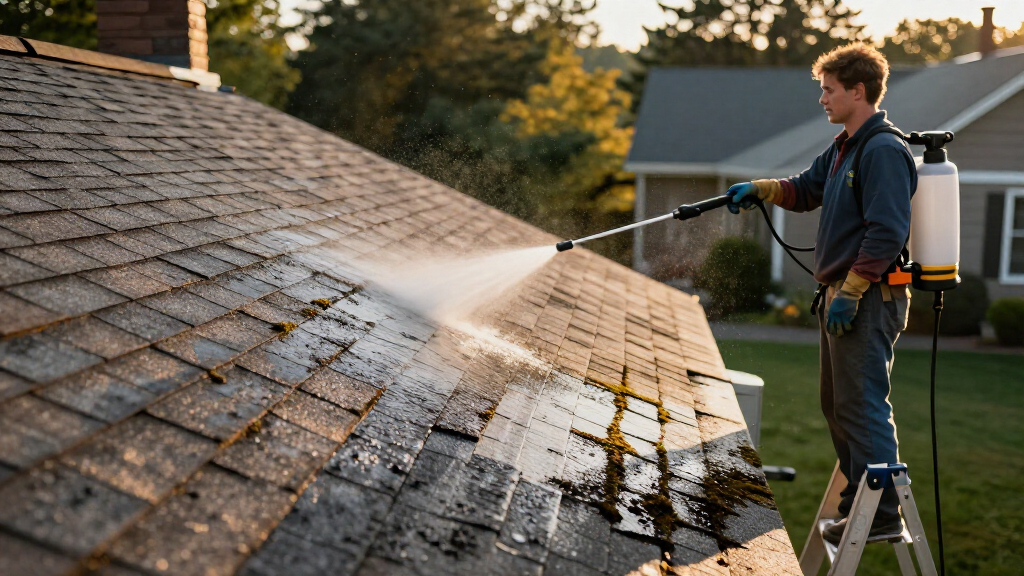
Pressure washing asphalt shingles can strip protective granules, damage shingles, and push water beneath the roof covering. For algae stains, a low-pressure treatment with a solution approved by the shingle maker is generally a safer option, but cleaning will not repair worn shingles or leaks. Check the roof’s condition and care instructions first, and hire an insured professional when access or roof condition makes the work hazardous.
A pressure washer can leave a roof looking brighter while quietly stripping away the granules that protect its shingles. You may not spot the damage from the driveway; the roof may simply lose some of its defense against sun and weather.
Those dark streaks are often algae, not a sign that your shingles need to be blasted clean. This guide explains what causes them, why pressure washing asphalt shingles is generally a poor way to clean a roof, and how a low-pressure treatment works. You’ll also learn when cleaning makes sense, when to call a roofer, and how to protect your landscaping and yourself.
Pressure washing asphalt shingles can remove protective granules, damage shingle edges, and drive water beneath the roof covering.
Black streaks are often Gloeocapsa magma algae, but moss, lichen, dirt, and other growths can need different treatment.
Soft washing uses low-pressure application and time for a suitable solution to work; follow the shingle maker’s instructions and product label.
Cleaning can improve appearance, but it does not restore granules, fix leaks, or prove that a roof will last longer.
Have a roofer inspect brittle, curling, leaking, or heavily worn shingles before arranging cosmetic cleaning.
ROOF CARE / FIELD GUIDE
Pressure Washing Asphalt Shingles Is a Mistake
Black streaks often signal algae, not a roof that needs blasting. Learn why forceful washing can harm shingles—and how a carefully applied, low-pressure treatment may address stains with less force.
Dark streaks can be cosmetic. Roof damage is a separate question.
The blue-green alga Gloeocapsa magma often causes black streaks on asphalt shingles. It can spread where dampness and shade linger. Staining alone does not prove that shingles are failing, and a view from the ground cannot always identify the growth.
Algae on a damp slope
Shade, roof orientation, airflow, and local climate affect where streaks appear. A shaded north slope may stain while a sunnier slope stays clearer.
Moss, lichen, dirt
Different growths may need different treatment. Avoid scraping or pulling stubborn material without guidance; force can damage the shingle surface.
Signs of wear or leaks
Ask a roofer to assess brittle or curling shingles, bald patches, leaks, or heavy granule buildup in gutters before arranging cosmetic work.
Cleaning treats surface appearance. It does not restore protective granules or fix leaks. A roof can look neater after treatment and still need repair or replacement.
What a pressure washer can take off with the stain
Mineral granules form a protective layer over the shingle. A forceful spray can dislodge them, lift or break shingle edges, and push water beneath the roof covering. Damage may be hard to see from the driveway and may only become apparent later.
| Approach | What it does | Main concern |
|---|---|---|
| Pressure washing | ✗ High force can blast grit away and direct water under overlapping shingle courses. | Granule loss, disturbed shingles, or hidden water intrusion. |
| Scrubbing or scraping | ~ Abrasion applies physical force to the roof surface. | Can remove granules or damage firmly attached material. |
| Low-pressure treatment | ✓ Less force applies a suitable solution and allows time for it to work. | Still depends on compatible products, correct application, runoff control, and maker instructions. |
Nozzle, distance, roof angle, and operator control all affect the spray. A lower machine setting does not make forceful washing a roof-safe method. Do not scrub or scrape as a substitute.
Soft washing lets a suitable solution do the work
Soft washing means applying a compatible cleaning solution at low pressure and allowing time for treatment. “Soft” should not mean blasting at a lower setting while standing on fragile shingles. Check the exact shingle maker’s care instructions and the product label.
What solution will be used? How will it be applied? How will runoff and nearby landscaping be managed? Does the process follow the roof maker’s instructions and the product label? Recommendations and warranty terms vary; no method guarantees every warranty.
A four-step check for a safer decision
Start with the roof’s condition and the care guidance. Then choose a treatment suited to the surface and plan for people and property around the work.
Check condition
Look for curling, brittleness, bald patches, leaks, or heavy granule loss. Get a roofer’s inspection when these signs appear.
Identify the stain
Algae is common, but moss, lichen, and dirt may need different guidance. Ground-level appearance can be inconclusive.
Verify the method
Check the specific shingle maker’s instructions, product label, and applicable local runoff requirements.
Protect people and property
Roof work brings fall, slip, and chemical hazards. Use a qualified, insured professional when access or condition makes the work hazardous; protect landscaping and control runoff.
From streak to sensible next step
Stain only?
Consider a maker-guided, low-pressure treatment for likely algae.
Wear or leak?
Arrange an inspection before cosmetic cleaning.
Work at height?
Choose insured help when the roof or access is hazardous.
After treatment
Remember: appearance can change; roof condition may not.
Why dark streaks appear even when your shingles are sound
Dark streaks on asphalt shingles are often algae, especially Gloeocapsa magma, a blue-green organism that can spread across damp, shaded roof areas. The stains can look like soot running downhill, but their presence alone does not prove that the shingles are failing. That distinction matters because treating a cosmetic stain and diagnosing roof wear are different decisions: one may improve appearance, while the other protects the house from water intrusion.
Some algae feed on components in asphalt shingles and spread more readily where moisture lingers. A roof under overhanging branches on the north side of a house, for example, may show streaks while the sunnier south slope stays relatively clean. Shade, airflow, roof orientation, and local climate all affect how quickly staining appears. A pattern limited to a damp slope may point toward environmental conditions, while widespread staining still does not reveal how much protective material remains.
Look at the whole roof before you decide what the streaks mean. Moss, lichen, dirt, and other growth can look different and may need different treatment; appearance from the ground cannot always identify the cause. If you see curling edges, brittle-looking shingles, bald patches, leaks, or granules collecting heavily in gutters, ask a roofer to inspect the roof before anyone cleans it. These signs can shift the priority from appearance to preventing further damage, and cleaning first may obscure what an inspection needs to assess.
Cleaning treats the surface appearance. It does not put granules back or fix a leak. A roof with worn shingles can look neater after treatment and still need repair or replacement, so separate the cosmetic question from the condition of the roof. The practical tradeoff is that waiting for an inspection may leave stains visible longer, but it avoids spending money on a treatment that cannot address the underlying problem.
Popular right now

Dyson Car+Boat Cordless Handheld Vacuum

Bose QuietComfort True Wireless Earbuds with Active Noise Cancellation, Black

Samsung 48-Inch S90H OLED 4K Smart TV (2026)
As an affiliate, we earn on qualifying purchases.
What a pressure washer can take off along with the stain
Pressure washing asphalt shingles can strip the mineral granules that shield the shingle surface from sunlight and weather. A forceful spray can also lift or break shingles and drive water beneath the roof covering, so the stain may fade while damage accumulates out of sight. The concern is not just a rough appearance: the granules are part of the shingle’s protective surface, and removing them exposes the material beneath to conditions it is designed to withstand less directly.
Those granules are not loose dirt. They form a protective surface, and aggressive cleaning can remove some along with algae and grime. A narrow fan tip held close to a shingle can concentrate force in a small area; even a pass that looks controlled from a ladder can disturb the edges or wash material uphill under the courses. Because the roof is assembled in overlapping layers, water pushed against the normal direction of runoff can reach places that ordinary rain should not.
Imagine a homeowner using a washer to clean a one-story garage roof. The black streaks lighten, but the spray sends grit toward the gutters and forces water beneath lifted shingle edges. The immediate view looks better; the roof has lost material and may now be more vulnerable to weather. Water under the covering can also reach roof components that should stay dry. The visible improvement is therefore a poor measure of success: the damage may not show until later, when a leak or accelerated wear becomes harder to connect to the cleaning.
Do not assume that a lower setting makes a pressure washer a roof-safe tool. The method still depends on the nozzle, distance, roof angle, and operator control, and shingles can be fragile. Check the shingle maker’s care instructions before any treatment, and do not scrub or scrape the surface as a substitute; brushing can remove granules too. A cautious process starts with the roof’s condition and the product guidance, rather than trying to find a machine setting that makes forceful washing harmless.
How a low-pressure treatment removes algae with less force
Soft washing means applying a suitable cleaning solution at low pressure and allowing time for the treatment to work. For asphalt shingles, pressure washing is generally a poor way to clean; a manufacturer-approved, roof-safe solution applied as directed is a less forceful approach to algae stains. Letting the solution do the work reduces the need to abrade the shingle surface, but the value of that lower force depends on choosing a compatible product and applying it correctly.
The word “soft” does not guarantee a safe job. It should not mean blasting the roof at a lower machine setting while standing on fragile shingles. Ask what solution the contractor plans to use, how it will be applied, how runoff will be managed, and whether the process follows the shingle maker’s instructions and the product label. These questions reveal whether the contractor has a controlled treatment plan; a vague promise of gentle cleaning does not explain how the roof, surrounding property, and people nearby will be protected.
For example, a professional may treat a shaded slope with a low-pressure application, then let the solution work rather than scrubbing until the black marks disappear. The goal is a controlled treatment, not an abrasive finish. The right process can differ for moss or lichen, which may attach firmly and should not be pulled or scraped off without guidance. Trying to force stubborn growth off immediately can trade a slower cosmetic result for damage to the shingle surface.
Before arranging a service, check the exact shingle product’s maintenance instructions and warranty terms. Manufacturers’ recommendations vary, and no contractor can promise that every cleaning method preserves every warranty. If the maker specifies a method or product, use that guidance rather than a generic claim that all soft washing is safe. This can narrow the available cleaning options, but it also gives you a concrete basis for judging the proposed service and its effect on warranty coverage.
Use this check before you schedule any roof cleaning
Before cleaning, determine whether the roof is sound, whether the stains are likely algae, and whether the proposed treatment follows the shingle maker’s instructions. This quick check can keep you from paying to clean a roof that needs an inspection or repair instead. It also helps set expectations: a cleaning quote addresses appearance, while signs of deterioration may require a separate diagnosis and repair plan.
- Look from the ground. Note the stained areas, overhanging branches, moss, lichen, curling edges, missing shingles, and any visible sagging. Do not climb onto the roof to get a closer look. A ground-level view cannot confirm the roof’s condition, but it can identify warning signs that make an inspection the more useful first step.
- Check gutters and attic clues. Heavy granule deposits in gutters, water stains inside, damp insulation, or a musty smell may point to wear or a leak. Have a roofer assess those signs before cleaning. These clues can connect a surface stain to a broader roof problem, and removing the stain first does nothing to resolve the cause of water intrusion.
- Find the shingle guidance. Check the product documentation and warranty for approved cleaning methods. If you cannot identify the shingle or find instructions, ask a roofing professional or the manufacturer before treatment. Without that guidance, you have less basis for deciding whether a proposed solution is compatible or whether the work could affect warranty coverage.
- Ask the cleaner specific questions. Ask what pressure and solution they use, how they protect plants and control runoff, and how they handle steep, brittle, or hard-to-reach sections. Clear answers help you compare the actual process rather than relying on labels like “soft wash,” which do not by themselves establish that a treatment suits your roof.
- Choose the next step. Treat likely algae only when the roof is in suitable condition and the method fits its instructions; get an inspection when damage or leaks are present. This order can delay a cosmetic improvement, but it reduces the risk of paying for cleaning while a more important roof issue remains unaddressed.
Consider a two-story house with black streaks and one curling patch near the ridge. The streaks may be algae, but the curling patch changes the decision: an inspection should come before a cosmetic cleaning quote. That distinction saves you from mistaking a cleaner-looking surface for a repaired roof and helps the homeowner direct money toward the need that affects the roof’s performance.
Protect plants, roof materials, and everyone doing the work
Roof cleaning brings chemical exposure, slippery surfaces, fall hazards, and runoff that can harm plants or other materials. A careful plan protects the property from the first application through the final rinse or cleanup, using the product label and local rules as guides. These risks are linked: controlling runoff matters for landscaping, while controlling access and application helps protect the crew and the roof itself.
Landscaping below the eaves deserves attention. A crew working over a flower bed, for instance, should plan how to protect or wet plants, control runoff, and keep cleaning solution away from sensitive surfaces. Ask how the contractor will manage downspouts and where the runoff will go; local requirements may limit chemical use or wastewater disposal. The goal is to prevent a cosmetic roof service from causing damage at ground level, where plants or finishes may be more sensitive to the treatment than the shingles.
Roof access carries serious risk even on a modest house. Wet shingles can turn slick, and fragile or steep sections raise the chance of a fall or roof damage. A qualified, insured professional may be the safer choice when a roof is high, steep, brittle, or difficult to reach. Check that the contractor can explain their safety plan and coverage. The added service cost is a tradeoff against the physical danger and the possibility that an inexperienced person could damage a roof while trying to save on labor.
If you do any related work near electrical equipment, keep clear of energized lines and equipment, and hire a licensed professional for electrical work. Wear appropriate protective equipment for any chemical exposure and follow the label’s handling instructions. Do not treat a roof as a safe DIY project just because the washer or sprayer is easy to operate from the ground; ease of operation does not remove the risks from runoff, chemical handling, or working around a roof edge.
Know when stains should wait for a roofer’s inspection
Skip cleaning and request a roof inspection when shingles look brittle, curled, loose, or heavily stripped of granules, or when the home has a leak. In those conditions, removing the stain cannot fix the roof and may add stress to material that is already failing. An inspection helps distinguish a surface problem from a condition that could let water in, which changes whether cleaning is a sensible expense at all.
Suppose your gutters contain a noticeable layer of granules and the attic has a fresh water mark after rain. A cleaning service might improve the roof’s color, but it would not restore the lost surface or seal the leak. Ask a roofer to identify the source and explain whether repair or replacement is appropriate before making an appearance-focused decision. Addressing the leak first can prevent further interior damage; the stains can be reconsidered once the roof’s function is understood.
Moss and lichen also deserve care. They can attach firmly, and pulling or scraping them may tear or abrade shingles. Since they may need different treatment from algae, follow the manufacturer’s guidance or ask a professional who can identify the growth and assess the roof condition. Correct identification matters because a treatment aimed at algae may not remove other growth in the same way, and forcing a result can damage the material underneath.
Cleaning is a maintenance choice, not a promise of longer roof life. A treatment may remove visible growth, but claims that it extends shingle life need evidence tied to the specific roof and product. The honest outcome is often simpler: the roof may look cleaner, while its underlying age and condition remain the same. That distinction lets you weigh the cost for appearance against the separate costs of inspection or repair without treating one service as a substitute for the other.
Slow future staining with shade and moisture control
You can reduce conditions that favor algae, but no prevention step guarantees a stain-free roof. Trimming overhanging branches where appropriate can let more light and airflow reach a damp slope, while a roof with copper- or zinc-based algae-resistant granules may resist staining longer without stopping it entirely. These measures address conditions that encourage growth; they do not repair worn shingles or remove the need to inspect the roof.
For example, a shaded roof beside dense branches may stay damp after rain while an open slope dries quickly. Improving airflow and reducing persistent shade can help, though tree work should be handled safely and carefully around the house. If branches are near power lines, contact the utility or a qualified tree professional rather than cutting them yourself. The benefit of more light and drying has to be weighed against safe tree maintenance and the risk of damaging the roof or nearby property during trimming.
Properly installed copper or zinc strips near the ridge may also help limit growth as rain carries trace amounts down the roof. Their effect depends on installation, roof layout, and local conditions; they are not a guaranteed cure for existing stains. Ask a roofer whether the approach suits your roof before adding metal strips. Since these strips are a preventive measure, installing them should not be confused with cleaning an existing stain or correcting a roof defect.
When replacing a roof, ask whether algae-resistant shingles fit your needs and what the product maker says about care. These products can slow staining, but they do not make roof maintenance unnecessary. Pair realistic expectations with periodic ground-level checks so you can spot damage or leaks before a cosmetic problem takes center stage. The choice may reduce how often staining becomes visible, but it cannot eliminate the effects of shade, moisture, or the roof’s age.
Frequently Asked Questions
Can you pressure wash asphalt shingles?
It is generally not recommended. Strong water pressure can dislodge protective granules, damage shingles, or push water beneath the roof covering. Check the shingle maker’s cleaning instructions before treating stains.
What is the best way to remove black streaks from shingles?
Black streaks are often algae, and a low-pressure treatment with a solution approved for the shingles is a commonly recommended approach. Follow the product label and manufacturer guidance; hire a professional for steep, fragile, or hard-to-reach roofs.
Are the black streaks on my roof mold?
Often, dark streaks on asphalt shingles come from Gloeocapsa magma, a blue-green alga. Moss, lichen, dirt, and other growths can also occur, so the color alone does not identify the cause.
Can roof cleaning damage shingles or affect my warranty?
The wrong method can damage shingles, and warranty terms and cleaning instructions vary by product. Check the exact shingle maker’s guidance before treatment; no general method can be promised to preserve every warranty.
Does soft washing extend the life of asphalt shingles?
Soft washing may remove visible growth when a suitable solution is applied at low pressure, but it does not repair worn shingles or restore lost granules. Do not assume that a cleaner roof will last longer without evidence specific to the roof and treatment.
Conclusion
Remember the practical rule: treat the stain gently, but assess the roof first. Pressure washing can dislodge the granules that shield shingles, and a brighter roof cannot tell you whether those shingles are sound.
Check the manufacturer’s guidance, watch for signs of wear or leaks, and choose a qualified professional when the roof is steep, fragile, or hard to access. Let the roof keep its protective surface; clean color is not worth a vulnerable roof.