
TL;DR

Get business pricing on tools and workshop supplies
- Business-only prices and quantity discounts
- Tax-exempt purchasing
- Multiple users, one account, clear invoices
You can often clean second-story siding from the ground with an extension wand or water-fed pole, but added reach also adds leverage, hose drag, and control challenges. Use the siding maker’s cleaning instructions, apply cleaner at low pressure when appropriate, rinse gently across the surface, and avoid forcing water behind laps, seams, vents, or window seals. A ladder is a poor default for broad overhead washing; hire a qualified professional for awkward, unstable, or power-line-adjacent work.
A second-story wall can look close from the lawn and still feel a world away once you’re holding a spray gun overhead. That distance matters: reach, water direction, and control decide whether you lift grime or push water into a seam.
This guide explains how extension wands and telescoping poles work, why ladders often make broad siding jobs harder, and how to choose a safer cleaning approach for your siding. You’ll also get a practical sequence for planning the job, plus clear signs that it’s time to stop and call a qualified pro.
Use a pressure-washer extension wand for a trigger-gun spray method and a water-fed pole for lower-pressure brush or rinse work; they are different tools.
Aim across siding and avoid forcing water upward into laps, seams, vents, or window seals.
Choose pressure, cleaner, and technique from the siding maker’s instructions, then test an inconspicuous patch.
Ladders are a poor default for broad overhead washing because they require repeated moves and can invite overreaching.
Stop and call a qualified professional for power-line hazards, unstable access, damaged siding, or a tool you cannot control.
FIELD GUIDE / EXTERIOR CARE
Second-Story Siding: Extension Wands, Angles and Why Ladders Lose
Ground-based reach can make a high wall easier to clean, but reach alone does not guarantee control. Match the tool and water path to the siding, keep the spray gentle, and know when the safest move is to stop.
01 / PICK THE TOOL
Reach is useful. Control is essential.
A tool’s advertised maximum length is not the same as comfortable working reach. The longer it extends, the farther small hand movements travel at the tip.
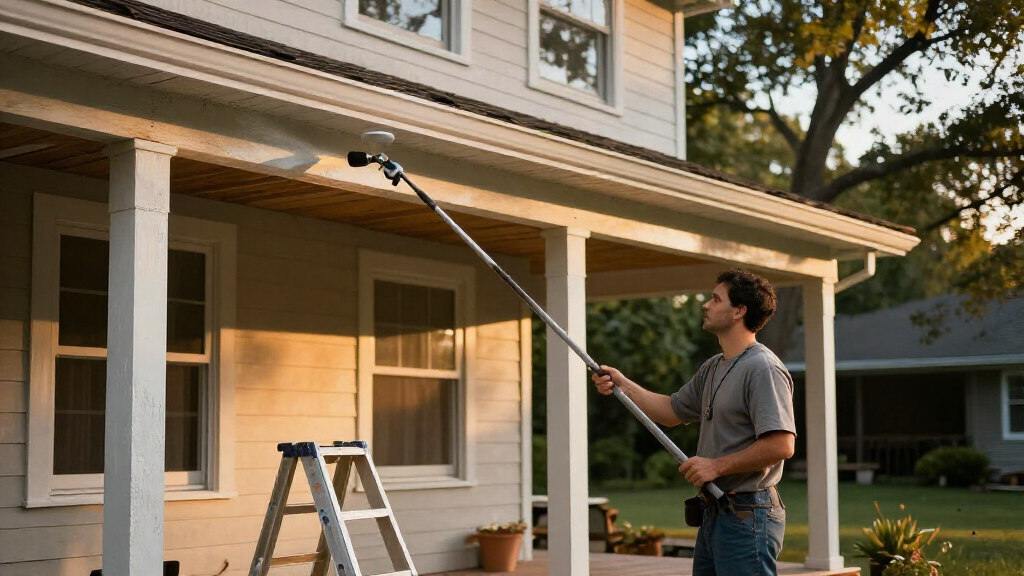
Extension wand
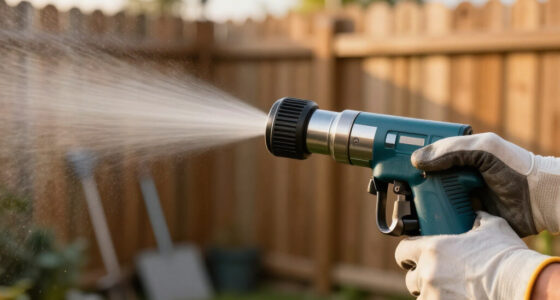
Carries high-pressure water through a trigger gun. It can speed work on stubborn grime, while recoil and force make a long wand harder to steady and easier to misdirect.
Water-fed pole
Usually sends lower-pressure water to a brush or rinse head. It trades force for brushing and may need more passes, with less pressure against the surface.
Material sets the rules
Vinyl, fiber-cement, wood, and painted siding have different care needs. Follow the siding maker’s guidance and the tool manual for pressure, cleaner, and technique.
Comfortable reach beats theoretical reach. A narrow side yard may force you close to the wall. If the pole flexes or the head sways, bring it in or change methods; more extension makes corrections harder.
02 / CONTROL THE WATER PATH
Clean across the surface, not up into the wall.
Overlapping siding sheds rain as it runs down and out. A forceful upward stream can work against that design, pushing water behind laps, seams, vents, or tired window seals.
Use a controlled spray directed across the surface. When the manufacturer allows it, apply an appropriate siding cleaner at low pressure, then rinse gently. Test an inconspicuous patch first and keep spray away from damaged siding, open vents, electrical fixtures, and window seals.
If water enters a seam or the finish starts to fuzz, chip, or flex, stop and reassess. A remaining stain is cosmetic; water intrusion or finish damage can become a repair.
Keep water on the outside
03 / CHOOSE YOUR ACCESS
Why ladders lose on broad walls
Ladders are not inherently wrong. They are often a poor default for broad overhead washing, where repeated moves and awkward reaching can make the job harder to control.
| Approach | Where it helps | Tradeoff to manage | Read the situation |
|---|---|---|---|
| Ground-based wand | Covers more area without repeated climbing | Long reach, recoil, hose drag, and wind reduce control | Use only while you can steady the tip and direct the spray |
| Water-fed pole | Brush or rinse work at lower pressure | May take more passes; full extension can sway | Choose a manageable length and work in sections |
| Ladder | Small, accessible tasks with stable access | Repeated repositioning and sideways reach challenge stability | Firm, level ground; follow instructions; never overreach |
A 30-foot gable means repeated ladder moves. Each new position interrupts stable access. A long hose or spray tool adds another thing to manage; broad walls are often better approached from the ground where practical.
04 / BEFORE YOU PULL THE TRIGGER
A practical four-step sequence
Plan the wall, tool, and water path before washing. Work in manageable sections and stop if control or access becomes uncertain.
Check guidance
Read the siding maker’s cleaning instructions and the equipment manual. Match cleaner, pressure, and method to the material.
Choose reach
Select a wand or water-fed pole you can control from firm footing. Leave room to stand back and keep a shallow spray angle.
Test gently
Try an inconspicuous patch. If allowed, apply cleaner at low pressure and watch for finish changes or water entry.
Rinse and reassess
Rinse gently across the siding. If the head sways, water enters a seam, or the finish changes, stop and change the plan.
STOP SIGNS / CALL A QUALIFIED PRO
Some conditions change the job.
A ground-based tool reduces ladder moves, but it does not remove the need to manage pressure, water direction, or footing.
Work near electrical service or power lines calls for a qualified professional. Keep spray away from electrical fixtures.
Stop if the ground is uneven, access is awkward, or a ladder cannot be set securely on firm, level ground.
Call for help if the tool is too heavy, flexes beyond control, or fatigue makes it hard to keep water on the siding.
Do not pressure wash loose, cracked, or damaged siding. Get advice before water makes the damage worse.
Water appearing indoors or entering laps, vents, or window seals is a stop signal. Reassess the method before continuing.
If you must lean, reach sideways, or handle bulky equipment from a ladder, choose qualified professional help.
THE DECISION PATH
From siding guidance to a safer finish
A clean wall is the goal. Keeping water out of the wall is part of the method.
Read maker instructions and inspect the wall.
Choose ground reach that fits the cleaning method.
Test, clean gently, and aim across the surface.
Use a qualified pro for hazards or uncertain access.
Choose a ground-based tool that fits the job
Second-story siding is often reachable from the ground with a pressure-washer extension wand or a water-fed pole, but those tools work differently. An extension wand carries pressurized water through a trigger gun; a water-fed pole usually sends lower-pressure water to a brush or rinse head. The distinction matters because a trigger-gun wand can cut cleaning time on stubborn grime, but its force and recoil also raise the chance of damaging a finish or losing control. A water-fed pole trades that force for brushing and rinsing, which can be gentler but may take more passes. Match the tool to the cleaning method and the siding maker’s instructions.
Think of the tool like a long-handled paint roller: extra reach gets you to the far corner, but the handle becomes harder to steer as it gets longer. A wand that feels manageable at shoulder height may sway when you raise it over your head. Hose drag and wind can tug the tip off line, and pressure-washer recoil can make a long setup tiring to hold. Fatigue matters because it gradually reduces precision: a spray that starts on the siding may drift toward a window seal or electrical fixture as your arms tire.
That’s why a pole’s advertised maximum length is not the same as comfortable working reach. The longer it extends, the more any small movement at your hands travels at the tip. If a wall is 20 feet high, you still need room to stand back, control the tool, and keep the spray angle shallow. For example, a narrow side yard may force you close to the siding; a shorter wand or a soft-wash brush may give you better control than a fully extended pole. You may cover less area per pass, but steadier control is more useful than theoretical reach when it keeps water on the surface.
Before starting, check the tool manual and the siding manufacturer’s cleaning guidance. A ground-based tool can reduce ladder moves, but it does not remove the need to manage pressure, water direction, or footing. If the pole flexes enough that you can’t keep the head steady, bring it in or change methods; continuing at full extension makes each correction harder and less predictable.
Popular right now

Bose QuietComfort Wireless Bluetooth Headphones with Active Noise Cancellation, Mic, USB‑C Charging, Deep Bass, 24‑Hour Battery – White Smok

Vitamix 5200 Professional-Grade Blender, 64 oz. Container, Black

Philips 5500 Series Fully Automatic Espresso Machine with LatteGo
As an affiliate, we earn on qualifying purchases.
Aim across the siding so water stays out of the wall
Second-story siding should be cleaned with a controlled spray that travels across the surface, not upward into laps, seams, vents, or openings. The goal is to loosen surface dirt while keeping water on the outside of the wall. This direction matters because overlapping siding sheds rain when water runs down and out; a forceful upward stream can work against that design and drive water behind the courses. Follow the siding maker’s directions, since safe methods vary by material and condition.
Imagine brushing crumbs off a table: you sweep along the surface instead of shoving them under the placemat. The same idea applies to lap siding. Aiming upward can drive water behind overlapping courses, while a narrow, forceful jet may scar paint, loosen material, or push water through a tired window seal. Water that gets behind the siding may not show up right away, so an apparently clean surface is not proof that the wash was harmless.
Start with a low-pressure application of a cleaner made for the siding, if the manufacturer allows it, then rinse gently. Test an inconspicuous patch first. That small test lets you see how the finish responds before the method is repeated across a large wall, where a problem can become costly to correct. On a warm afternoon, for instance, try a small area behind a shrub and look for color change, lifted paint, or water appearing inside before you clean an entire wall.
Keep the spray away from damaged siding, open vents, electrical fixtures, and window seals. Don’t assume that one pressure setting or nozzle angle suits every house: a broad spray and greater distance reduce force at the surface, but may not remove every stain. If you see water entering a seam or the surface begins to fuzz, chip, or flex, stop and reassess rather than moving closer with more force. A remaining stain is a cosmetic issue; water intrusion or finish damage can become a repair issue.
See why ladders lose ground on wide walls
Second-story siding covers a broad area, and a ladder gives you access to one small working position at a time. You have to move it repeatedly along the wall, while a long hose or spray tool pulls at your balance. That combination matters because each move interrupts stable access, and each new position creates another chance to overreach or place the ladder poorly. A ladder is therefore a poor default for washing large overhead surfaces, especially when the job encourages leaning or reaching sideways.
Consider a 30-foot gable wall with grime beneath the eaves. From a ladder, you may clean one narrow strip, climb down, shift the feet, and climb again. Add a pressure-washer gun in one hand and a hose brushing your leg, and each reposition becomes another chance to lose stable footing. Ground-based reach tools can cover more area without that repeated climb, though they shift the challenge from balance on rungs to managing a long, heavy tool from below.
Ladders still have legitimate uses when they’re set on firm, level ground, secured where appropriate, and used according to their instructions. Keep stable contact and avoid overreaching. Never carry or control a cumbersome tool in a way that compromises your hold, and do not place a ladder near power lines. For a small, accessible task, a properly set ladder may be more practical than handling a long pole; for broad washing, frequent repositioning usually makes it a less appealing option.
If you need an awkward body position, must work near electrical service, or can’t establish stable access, stop and hire a qualified professional. Electrical work itself belongs to a licensed professional; keep spray away from fixtures and have damaged or exposed wiring addressed with power safely off by someone qualified. A clean wall is not worth a fall or an electrical injury.
Match pressure and cleaner to your siding
Second-story siding needs a cleaning method suited to its material and condition; there is no universal pressure setting that works for every wall. Vinyl, fiber-cement, wood, and painted siding respond differently to water force and chemicals. That variability matters because a setting that removes dirt from an intact surface may strip a finish or drive water into damage on another. Check the maker’s instructions before choosing a nozzle, cleaner, or technique.
For example, a sound vinyl wall may tolerate a gentle wash that would still be too aggressive for loose paint on old wood. Fiber-cement may have a finish with its own care requirements, while cracked or softened material can let water travel behind the surface. If you see peeling paint, split boards, open joints, or brittle panels, fix the condition or get professional advice before washing. Cleaning pressure cannot repair a weak surface; it can make the underlying problem harder to ignore and more expensive to address.
Cleaner choice matters beyond the wall. Strong or unsuitable chemicals can discolor siding, harm plants, or mark nearby surfaces. Wet down landscaping when appropriate, use only a product labeled for the material, and follow its directions for dilution and contact time. If a cleaner dries into a chalky film on a sunny wall, you may have waited too long to rinse. Working in smaller shaded sections can slow drying, though it takes longer than applying cleaner to a whole elevation at once.
Rinse windows, trim, and plants as the product directions require, and shield items that should not get wet. A small test patch is a cheap way to catch a problem before it spreads across an entire elevation. If the grime does not lift with a gentle method, increasing pressure may not be the right next step; the surface may need a different cleaner or specialist care. The useful tradeoff is a slower, material-appropriate clean versus a faster pass that risks finish damage or water intrusion.
Use this sequence before you wash a second story
Second-story siding is safer to clean when you plan the wall, tool, and water path before pulling the trigger. This short sequence keeps you focused on the surface instead of improvising with a loaded wand in your hands. Each check reduces a different uncertainty: the inspection identifies weak points, the instructions set limits, and the test confirms how the actual wall responds. Work in manageable sections and stop when control slips.
- Inspect the wall. Look for loose panels, cracked boards, peeling paint, open seams, damaged seals, outlets, and vents. Repair or avoid vulnerable spots, because water and pressure can turn a small defect into a path for moisture.
- Read the instructions. Check the siding guidance, cleaner label, and equipment manual for allowed methods and safety limits. This is where you learn whether a chemical or pressure-washer method is appropriate before committing it to the whole wall.
- Set up from stable ground. Clear hoses and tripping hazards, protect plants and nearby surfaces, and keep away from power lines. A clear hose path makes it easier to move without a sudden tug shifting the pole or your footing.
- Test a hidden patch. Apply cleaner or rinse gently, then check for discoloration, lifted finish, or water intrusion. Give the area a moment to reveal problems that may not be visible during the spray itself.
- Clean in small sections. Apply an approved cleaner at low pressure if suitable, let it work only as directed, then rinse across the surface without driving water upward. Small sections let you rinse before cleaner dries and make it easier to notice a change in the siding.
For a typical house, you might start on the shaded side, where cleaner is less likely to dry while you work, and move one manageable panel-width at a time. Keep the nozzle well back and use a broad, gentle spray rather than a concentrated jet. If the pole whips in gusts or you cannot see where the rinse lands, pause and reset; otherwise you may continue applying water without knowing whether it is reaching the intended surface.
At each section, check the ground and the wall. Water pooling near an outlet, a loose corner, or a dark line appearing beneath a lap are reasons to stop. These clues can show that water is collecting where it should not or that the wall has a weak point. The process should feel steady and repeatable; if you find yourself wrestling the tool, that’s useful information about the method, not a cue to muscle through.
Know when long reach is no longer safe reach
Second-story siding should be left to a qualified professional when the height, surface damage, access, or nearby hazards make it hard to control water and equipment from the ground. A longer tool can reduce climbing, but it also adds leverage and can become difficult to steady. Reach alone does not make a setup safe: if the head cannot be aimed and retrieved predictably, you lose control over where water lands.
Picture a gust pushing a fully extended pole toward a bay window while the hose catches on a garden bed. If you cannot quickly bring the head back under control, the tool is too long for that position or the wind is too strong. The same applies when a narrow walkway forces you beneath the wall or when the only ladder location sits on soft soil. Waiting for calmer conditions or using a shorter tool may solve a control problem; unstable access or a nearby power line calls for professional help.
Hire a pro if the work is near overhead electrical lines, involves unstable or very high access, or requires awkward ladder positions. Ask how they protect siding, windows, plants, and electrical fixtures, and what cleaning method they plan to use. A careful contractor should be able to explain why their method fits your material and the wall’s condition. That explanation helps you judge whether they are addressing the cause of the grime without putting the surface or nearby areas at needless risk.
There’s also a point where cleaning becomes repair work. If water is already getting behind siding, if boards move under light contact, or if paint is failing over a broad area, pause the wash and address the underlying issue. Continuing to clean treats the visible symptom while exposing a damaged wall to more water; the best result may be a repair first and a gentler clean later.
Frequently Asked Questions
Can I wash second-story siding from the ground?
Often, yes. An extension wand or water-fed pole can reach many second-story walls, but the tool’s usable reach depends on wall height, space to stand back, wind, and your ability to control it. Follow the siding maker’s instructions and stop if you can’t keep the head steady.
Is an extension wand safer than a ladder?
For broad overhead washing, a ground-based wand can avoid repeated ladder moves and reduce the temptation to lean sideways. It still adds leverage, hose drag, and sometimes recoil, so it is only a safer choice when you can control it from stable ground. Ladders must be placed and used according to their instructions.
Should I spray upward, downward, or straight at the wall?
Use a controlled spray across the surface and avoid aiming upward into laps, seams, vents, or openings. Water forced behind siding can cause trouble, especially around damaged boards or tired seals. Follow the manufacturer’s direction for your specific material.
What pressure is safe for vinyl, wood, or fiber-cement siding?
There is no single pressure setting that is safe for every siding type, finish, and condition. Check the siding maker’s instructions, use an appropriate cleaner and gentle rinse where permitted, and test a hidden area first. Stop if paint lifts, material flexes, or water enters a seam.
When should I hire a professional?
Call a qualified professional for unstable or very high access, awkward ladder positions, work near power lines, or siding that is loose, cracked, or badly deteriorated. Keep spray away from electrical fixtures; have electrical problems handled by a licensed professional with power safely off. A pro can also help when a ground-based pole is too difficult to control.
Conclusion
Choose the gentlest method that reaches the wall while keeping you steady on the ground. Check the siding instructions, test a small patch, and rinse across the surface instead of forcing water under it.
If the tool starts to sway or the access feels awkward, stop and bring in a qualified pro. Clean siding should leave only a fresh, even wall behind—not a ladder story you wish you could take back.