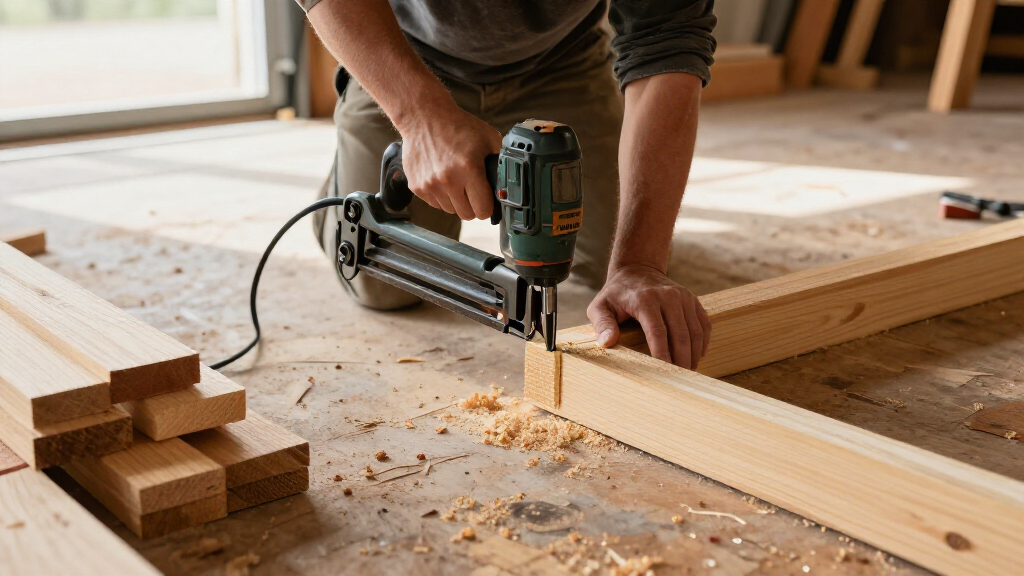
Among these cordless framing nailers, I rank the DEWALT DCN930B 30-degree model as the best overall for its balance of a widely used battery platform and framing-focused design. The Paslode Xpro 30° stands out as an alternative for buyers who value a fuel-powered system, while the FLEX 24V 21° kit includes a battery and fast charger for those starting without compatible tools. The main tradeoffs are nail angle and availability, tool weight and handling, and whether a kit or bare tool makes more sense for your battery collection. I compare all 11 options by those practical differences, so keep reading to match a nailer to your work and setup.

Get business pricing on tools and workshop supplies
- Business-only prices and quantity discounts
- Tax-exempt purchasing
- Multiple users, one account, clear invoices
Complete the kit



Key Takeaways
- 30-degree and 21-degree nailers suit different nail supplies: the lineup includes both, so check which collated nails your local suppliers stock before choosing a platform.
- The DEWALT DCN930B leads the overall ranking by pairing the 30-degree format with DEWALT’s 20V platform; the 21-degree DCN920B is the closer fit for buyers already set on that nail angle.
- Kit contents change the value calculation: the FLEX and Metabo HPT kits include a battery and charger, while most listed options are tool-only.
- Brushless models appear across several battery ecosystems, including CRAFTSMAN V20, RYOBI ONE+, FLEX 24V, and RIDGID 18V, making an existing battery platform a strong deciding factor.
- Paslode is the lineup’s distinct fuel-powered option; buyers should weigh its system requirements against the battery-only choices rather than treating all cordless nailers as interchangeable.


| cordless framing nailer | Model | Voltage | Weight | Power source |
|---|---|---|---|---|
| Paslode Cordless Xpro 30° Fram | 906800 | — | 7.9 pounds | Battery and fuel cell |
| DEWALT DCN930B 20V 30-Degree F | DCN930B | 20V | 9.9 pounds | — |
| CRAFTSMAN V20 Brushless Cordle | CMCN630PTB | 20 volts | 9.83 pounds | — |
| CRAFTSMAN V20 Cordless 21° Fra | CMCN621PLB | 20 volts | 10.75 pounds | Battery powered |
| Metabo HPT 18V Cordless 30° Pa | NR1890DCA | 18 volts | 8.2 pounds without battery | — |
| FLEX 24V Brushless 21° Framing | FX4351A-1C | 24 volts | — | Battery powered |
| RYOBI 18V ONE+ HP Brushless Ai | PBL345B | 18 volts DC | 11 pounds | Battery powered |
| DeWalt DCN920B 20V 21° Framing | DCN920B | 20V, as stated in the product title | — | Listed as hand powered; conflicts with the 20V cordless title |
| RYOBI ONE+ HP 18V Brushless Co | PBL350B | 18V | — | — |
| RIDGID 18V Brushless Cordless | R098941B | — | — | 18V battery |
| Metabo HPT 18V MultiVolt Cordl | NR1890DRA | 18V | 8.4 lbs without battery | Battery powered |
More Details on Our Top Picks
Paslode Cordless Xpro 30° Framing Nailer, Model 906800
The Paslode Xpro suits framing crews who want a cordless tool that can keep working across a long stretch of fastening. Its listed capacity of up to 6,000 shots per charge is a clear distinction from the Metabo HPT NR1890DCA, which is rated for up to 500 nails per charge. At 7.9 pounds, the Paslode is also lighter than the 9.9-pound DEWALT DCN930B. Its gas-powered drive is designed to sink nails flush into demanding materials without a compressor or hose, useful when moving around a site would make pneumatic gear cumbersome. The tradeoff is that it depends on both a battery and a fuel cell, unlike the battery-only CRAFTSMAN V20 models. I’d choose it for extended framing work, but skip it if you want to avoid fuel-cell supplies or prefer a battery-only setup.
Pros:- No compressor or hose required
- Rated for up to 6,000 shots per charge
- 7.9-pound listed weight is lower than the DEWALT DCN930B
- Gas-powered drive is described as driving nails flush into demanding materials
Cons:- Requires both a lithium-ion battery and a fuel cell
- Fuel-cell dependence adds a consumable to manage
- The listing does not specify compatible nail length or firing modes
Best for: Framing crews who need a lightweight 30° nailer and a listed high shot count for extended work away from a compressor.
Not ideal for: Buyers who want a battery-only tool or do not want to manage replacement fuel cells.
- Model:906800
- Nailer type:Gas-powered cordless framing nailer
- Nail angle:30°
- Weight:7.9 pounds
- Battery:7.2-volt lithium-ion, included
- Shots per charge:Up to 6,000
- Power source:Battery and fuel cell
Our verdict“Choose the Paslode Xpro if low listed weight and a high stated shot count matter more than avoiding fuel cells.”
DEWALT DCN930B 20V 30-Degree Framing Nailer (Bare Tool)
The DEWALT DCN930B is the straightforward choice for a buyer already equipped with compatible 20V batteries who wants a 30° framing nailer without adding another battery platform. Unlike the Metabo HPT NR1890DCA kit, this is a bare tool: the supplied components are limited to the nailer, and the listing does not include a battery or charger. That keeps the package focused, but makes it a less convenient starting point for someone building a cordless setup from scratch. Its 9.9-pound weight also sits above the Paslode Xpro’s listed 7.9 pounds, while the available product information gives fewer performance details than the CRAFTSMAN CMCN630PTB, which specifies brushless drive and tool-free depth adjustment. I’d rank this for platform compatibility, not for documented feature breadth or low weight.
Pros:- Uses a 20V cordless platform
- Designed for 30° framing nails
- Bare-tool package avoids duplicating a battery and charger for existing DEWALT users
Cons:- Battery and charger are not listed as included
- Listed weight is 9.9 pounds
- Product information does not specify nail capacity, firing modes, or maximum nail length
Best for: DEWALT 20V tool owners who already have batteries and a charger and need a 30° framing nailer.
Not ideal for: First-time cordless-tool buyers who need a complete kit or shoppers prioritizing a lighter listed tool.
- Model:DCN930B
- Voltage:20V
- Nailer angle:30°
- Weight:9.9 pounds
- Included components:Framing nailer
- Package type:Bare tool
Our verdict“Pick the DCN930B if you already own DEWALT 20V batteries and want a 30° tool-only option.”
CRAFTSMAN V20 Brushless Cordless 30° Framing Nailer (Tool Only, CMCN630PTB)
The CRAFTSMAN CMCN630PTB gives tool-only buyers more explicitly stated working features than the DEWALT DCN930B: it has a brushless motor, tool-free depth adjustment, and rapid sequential firing. Its ability to drive full round-head nails up to 3-1/4 inches, including into laminated veneer lumber, makes it a capable fit for substantial framing tasks rather than light fastening alone. Compared with the CRAFTSMAN CMCN621PLB, this model uses 30° nails instead of 21° nails, so the right pick depends partly on the collated nails already used on the job. At 9.83 pounds, it is not a lightweight option, and the battery and charger are sold separately. I’d favor it over the less-detailed DEWALT when its listed firing and adjustment features matter, but not for buyers seeking a ready-to-run kit.
Pros:- Brushless motor
- Tool-free nail depth adjustment
- Rapid sequential firing mode
- Drives full round-head nails up to 3-1/4 inches
Cons:- Battery and charger are sold separately
- Listed weight is 9.83 pounds
- 30° nail format may not suit crews set up for 21° nails
Best for: Framers who want a 30° tool-only nailer with brushless drive, sequential firing, and tool-free depth adjustment.
Not ideal for: Buyers without a compatible V20 battery and charger, or crews standardized on 21° nails.
- Model:CMCN630PTB
- Voltage:20 volts
- Nail angle:30°
- Maximum nail length:3-1/4 inches
- Weight:9.83 pounds
- Motor:Brushless
- Battery and charger:Sold separately
Our verdict“Choose this CRAFTSMAN if you want detailed firing and adjustment features in a 30° tool-only package and already have V20 batteries.”
CRAFTSMAN V20 Cordless 21° Framing Nailer (Tool Only, CMCN621PLB)
The CRAFTSMAN CMCN621PLB is the 21° choice for V20 owners who want to leave the compressor, hose, and gas cartridges behind. It drives full round-head nails up to 3-1/4 inches and includes tool-free depth adjustment plus a rafter hook, giving it practical framing features without the brushless motor and rapid sequential firing specified for the 30° CRAFTSMAN CMCN630PTB. That difference makes the CMCN630PTB the more feature-detailed option on paper, while this model makes more sense when 21° nails match your existing supply. Its listed 10.75-pound weight is heavier than the Paslode Xpro and the Metabo HPT NR1890DCA before that kit’s battery is attached. The battery and charger are separate, so the package is best for existing V20 users rather than new cordless-tool buyers.
Pros:- Cordless design avoids compressors, hoses, and gas cartridges
- Drives nails up to 3-1/4 inches
- Tool-free depth adjustment
- Rafter hook included
Cons:- Battery and charger are sold separately
- Listed weight is 10.75 pounds
- Does not list the brushless motor and rapid sequential firing features specified for the CMCN630PTB
Best for: V20 owners whose framing work calls for 21° full round-head nails up to 3-1/4 inches.
Not ideal for: Buyers who need a complete kit, want a lighter listed tool, or rely on 30° nail collation.
- Model:CMCN621PLB
- Voltage:20 volts
- Nail angle:21°
- Maximum nail length:3-1/4 inches
- Weight:10.75 pounds
- Power source:Battery powered
- Warranty:3-year limited warranty
Our verdict“Choose the CMCN621PLB if you already own V20 batteries and need a 21° nailer rather than the 30° CMCN630PTB.”
Metabo HPT 18V Cordless 30° Paper Tape Framing Nailer Kit (NR1890DCA)
The Metabo HPT NR1890DCA is the most ready-to-work package here: unlike the tool-only DEWALT DCN930B and both CRAFTSMAN V20 nailers, it includes a 4.0Ah battery, charger, and carrying bag. Its brushless motor and air spring drive system are paired with a stated rate of up to three nails per second, while selectable sequential and bump-fire modes let the operator choose between controlled placement and faster repetitive work. It accepts 30° paper-tape nails from 2 to 3-1/2 inches, giving it a longer listed maximum nail length than the CRAFTSMAN models. The tradeoff is its stated capacity of up to 500 nails per charge, far below the Paslode Xpro’s listed 6,000 shots. At 8.2 pounds without the battery, it also gets heavier once the included pack is attached.
Pros:- Kit includes a 4.0Ah battery, charger, and carrying bag
- Brushless motor and air spring drive system
- Selectable sequential and bump-fire modes with tool-less depth adjustment
- Drives 30° paper-tape nails up to 3-1/2 inches
Cons:- Rated for up to 500 nails per charge, well below the Paslode Xpro’s listed shot count
- 8.2-pound weight is specified without the battery
- Paper-tape 30° nail format may not match every crew’s existing fasteners
Best for: Framers who want a complete 30° cordless kit with battery and charger included, plus selectable firing modes.
Not ideal for: Buyers prioritizing very high stated shots per charge, the lightest assembled setup, or nails outside the 2- to 3-1/2-inch range.
- Model:NR1890DCA
- Voltage:18 volts
- Nail angle:30°
- Compatible nail length:2 to 3-1/2 inches
- Nail capacity per charge:Up to 500 nails
- Weight:8.2 pounds without battery
- Battery:4.0Ah lithium-ion
- Included components:Nailer, battery, charger, wrench, bag, safety glasses
- Warranty:Lifetime tool body; 2-year battery; 1-year charger
Our verdict“Choose the NR1890DCA if you want a complete cordless 30° kit with broad firing options and accept its stated battery capacity and added battery weight.”
FLEX 24V Brushless 21° Framing Nailer Kit with 5.0Ah Battery and 160W Fast Charger
I’d rank the FLEX 24V kit highest for buyers who want a ready-to-work package and sustained output. Its included 5.0Ah battery is rated for up to 1,100 nails per charge, and the stated rate of up to three nails per second suits repetitive framing better than a slower, stop-and-start workflow. Adjustable depth, two firing modes, worklights, and dry-fire lockout add practical control. Compared with the RYOBI PBL350B 30°, FLEX includes the battery and charger and claims more nails per charge, though the RYOBI accepts both clipped and full-head nails. The tradeoff is substantial: at 22.1 pounds, FLEX is much heavier than the listed RIDGID and DeWalt tools. I’d also factor in the registration deadline for its longer warranty.
Pros:- Includes a 5.0Ah battery and 160W fast charger, so the kit is ready to use without a separate battery purchase.
- Rated for up to 1,100 nails per charge with the included battery.
- Supports bump and sequential firing, adjustable depth, and dry-fire lockout.
- Dual LED worklights and three no-mar tips add useful jobsite control.
Cons:- At 22.1 pounds, it is considerably heavier than the listed RIDGID and DeWalt models.
- The five-year limited warranty requires registration within 30 days; otherwise the stated term is three years.
- Its 21° magazine does not match the 30° format used by the RYOBI PBL350B and several other roundup options.
Best for: Framing crews seeking a battery-and-charger-included 21° nailer for repeated, high-volume fastening.
Not ideal for: Roofers or installers who frequently work overhead, or buyers prioritizing a lightweight tool; the listed 22.1-pound weight is a major drawback.
- Model:FX4351A-1C
- Power source:Battery powered
- Voltage:24 volts
- Magazine angle:21°
- Compatible fastener length:2 to 3-1/2 inches
- Nailing speed:Up to 3 nails per second
- Nails per charge:Up to 1,100 with included 5.0Ah battery
- Item weight:22.1 pounds
- Included components:Framing nailer, 5.0Ah lithium battery, 160W fast charger, rafter hook, belt clip, 3 no-mar tips, and bag
Our verdict“Choose the FLEX kit for a ready-to-run, high-capacity 21° setup, but skip it if low weight matters more than its included battery and runtime claim.”
RYOBI 18V ONE+ HP Brushless AirStrike 21° Framing Nailer (Tool Only)
The RYOBI PBL345B makes the most sense as a platform buy: its 18V battery format can appeal to owners already invested in RYOBI ONE+, and the listed 11-pound weight is far below the FLEX kit’s 22.1 pounds. That lighter listed weight favors carrying and positioning the tool, while its brushless motor is a useful feature for a cordless framing nailer. But the product information gives no nail-per-charge figure, firing modes, or fastener-length range, leaving less basis for judging production pace than the FLEX 24V kit or RYOBI’s own PBL350B 30°. This is a tool-only listing, too, so a battery and charger are separate needs. I’d choose it for an established RYOBI battery owner who values a 21° format, not for a buyer who needs clearly documented performance or a complete kit.
Pros:- Uses an 18V battery platform that may suit existing RYOBI ONE+ owners.
- Brushless motor design.
- Listed weight of 11 pounds is much lower than the FLEX kit’s listed 22.1 pounds.
- 21° magazine angle provides an alternative to the lineup’s 30° models.
Cons:- Battery and charger are not included.
- The supplied product information does not specify nail length compatibility, firing modes, or nails per charge.
- Performance is harder to compare confidently with the more fully specified FLEX and RYOBI PBL350B.
Best for: RYOBI ONE+ users who already own compatible batteries and want a listed 11-pound 21° framing nailer.
Not ideal for: First-time cordless nailer buyers or production framers who need documented nail capacity, drive modes, and fastener-length compatibility before choosing.
- Model:PBL345B
- Voltage:18 volts DC
- Power source:Battery powered
- Nail angle:21°
- Weight:11 pounds
- Dimensions:14.3 x 4.4 x 13.25 inches
- Included components:Framing nailer; tool only
Our verdict“Buy the PBL345B if you already own RYOBI 18V batteries and want a lighter listed 21° option, but choose a better-documented model if output specs are a priority.”
DeWalt DCN920B 20V 21° Framing Nailer (Bare Tool)
The DeWalt DCN920B is a straightforward platform choice for buyers seeking a 20V, 21° cordless framing nailer and already equipped for a bare-tool purchase. Its listed 10.05-pound weight is notably lower than the FLEX kit’s 22.1 pounds, a meaningful distinction if carrying weight matters. The listing, however, is thin on the details that help compare framing nailers: it gives no fastener-length range, battery runtime, drive modes, or depth-adjustment information. That makes it harder to judge for demanding work than the RYOBI PBL350B 30°, which specifies nail capacity and actuation modes. The provided power-source field says “hand powered,” despite the title identifying a 20V nailer, so I would confirm the exact configuration before buying. This bare tool is best for a compatible DeWalt owner willing to verify specifications.
Pros:- 20V platform and 21° design are clearly identified in the product title.
- Listed weight is 10.05 pounds, lower than the FLEX kit’s listed 22.1 pounds.
- Compact listed dimensions of 13.9 x 5.9 x 13.9 inches.
- Bare-tool package includes the framing nailer.
Cons:- No battery or charger is listed as included.
- Product data does not specify fastener-length range, drive modes, or nails per charge.
- The power-source field says “hand powered,” which conflicts with the 20V cordless title and warrants confirmation.
Best for: DeWalt 20V users who specifically want a 21° framing nailer and can confirm its specifications before purchase.
Not ideal for: Buyers who need a complete kit or require published details on nail length, runtime, firing modes, and depth adjustment to compare jobsite capability.
- Model:DCN920B
- Voltage:20V, as stated in the product title
- Magazine angle:21°
- Item weight:10.05 pounds
- Product dimensions:13.9 x 5.9 x 13.9 inches
- Power source:Listed as hand powered; conflicts with the 20V cordless title
- Included components:20V 21° framing nailer
- Warranty:Manufacturer warranty
Our verdict“Consider the DCN920B if you own DeWalt 20V batteries and can verify the tool’s configuration, but its sparse and conflicting listing makes it a less certain choice than better-documented alternatives.”
RYOBI ONE+ HP 18V Brushless Cordless AirStrike 30° Framing Nailer (Tool Only)
I’d pick the RYOBI PBL350B for buyers who want a clearly specified 30° tool that handles clipped or full-head nails up to 3-1/2 inches. That fastener flexibility separates it from the 21° FLEX and RIDGID models, while its sequential and contact actuation modes let users choose between controlled placement and faster repeated nailing. It is rated for up to 750 nails with a 4.0Ah battery, which is useful planning information, though below the FLEX kit’s stated 1,100 nails—and the RYOBI battery is sold separately. Tool-free depth adjustment makes setup simpler, and an onboard air fill valve is included. At 5.19 kg, it is no lightweight; buyers comparing it with the listed DeWalt 10.05-pound tool should account for that difference.
Pros:- Accepts clipped or full-head nails up to 3-1/2 inches.
- Offers sequential and contact actuation modes with tool-free depth adjustment.
- Rated for up to 750 nails per charge with a 4.0Ah battery.
- Includes a rafter hook and onboard air fill valve.
Cons:- Battery is sold separately, so the tool-only package is not ready to use by itself.
- Its stated 750 nails per 4.0Ah charge is lower than the FLEX kit’s stated 1,100 per 5.0Ah charge.
- Listed weight of 5.19 kg may be a drawback for extended overhead work.
Best for: Framers who need a 30° magazine compatible with clipped or full-head nails and want selectable sequential and contact actuation.
Not ideal for: Buyers who want a complete kit, need the longest stated runtime per battery, or prioritize a lightweight framing nailer.
- Model:PBL350B
- Voltage:18V
- Motor:Brushless
- Nail angle:30°
- Maximum nail length:3-1/2 inches
- Nails per charge:Up to 750 with a 4.0Ah battery
- Battery:Sold separately
- Drive modes:Single sequential and contact actuation
- Item weight:5.19 kg
Our verdict“Choose the RYOBI PBL350B if 30° fastener flexibility and two drive modes matter most, and accept the separate battery purchase and heavier listed weight.”
RIDGID 18V Brushless Cordless 21° Framing Nailer, 3-1/2 in., Tool Only
The RIDGID R098941B stands out among these 21° options for its listed 8.5-pound weight, well below the FLEX kit’s 22.1 pounds and the RYOBI PBL345B’s 11 pounds. That makes it the more appealing pick for buyers who regularly reposition a nailer or want to reduce tool weight. Its brushless motor and tool-free depth adjustment provide useful fundamentals, and it accepts 21° plastic-collated nails from 2 to 3-1/2 inches. Compared with the RYOBI PBL350B 30°, it trades clipped/full-head flexibility and listed firing modes for a lighter 21° setup. The package includes only the nailer, so compatible RIDGID batteries and a charger are needed separately. I’d also avoid assuming features the listing does not state, such as a nails-per-charge figure or selectable drive modes.
Pros:- Listed at 8.5 pounds, lighter than the FLEX and RYOBI PBL345B 21° options.
- Brushless motor design.
- Accepts 21° plastic-collated nails from 2 to 3-1/2 inches.
- Tool-free depth adjustment supports quick changes at the worksite.
Cons:- Battery and charger are not included.
- The product information does not state nails per charge or selectable drive modes.
- The 21° format differs from 30° options such as the RYOBI PBL350B.
Best for: Framers who already own RIDGID 18V batteries and want a light-listed 21° nailer with tool-free depth adjustment.
Not ideal for: Buyers needing a battery-and-charger kit, a published runtime estimate, or confirmed selectable firing modes.
- Model:R098941B
- Power source:18V battery
- Motor:Brushless
- Magazine angle:21°
- Nail length:2 to 3-1/2 inches
- Item weight:8.5 pounds
- Product dimensions:5 x 16 x 14 inches
- Included components:Nailer only; battery and charger not included
Our verdict“Choose the RIDGID if low listed weight and a 21° magazine suit your work and you already have RIDGID 18V batteries.”
Metabo HPT 18V MultiVolt Cordless 21° Framing Nailer Kit (NR1890DRA)
The NR1890DRA is a strong choice for buyers who want a cordless framing setup in one box rather than a bare tool. Its included battery, charger, and carrying bag make it more job-ready than the DeWalt DCN920B, which is sold without a battery or charger. The air spring drive system and brushless motor are designed for pneumatic-like performance without ramp-up time, while tool-less depth adjustment and selectable bump or sequential firing modes let you adapt to different tasks. Its 21° format takes nails up to 3-1/2 inches, matching the stated capacity of the RIDGID 21° model. The tradeoff is weight: 8.4 pounds before adding the battery can feel tiring during overhead or all-day work. Battery-capacity and nail-count details are also unclear in the product description.
Pros:- Includes a battery, charger, and carrying bag, unlike bare-tool alternatives such as the DeWalt DCN920B
- Air spring drive system is designed for pneumatic-like performance without ramp-up time
- Tool-less depth adjustment and bump or sequential firing modes support different framing tasks
- Drives nails up to 3-1/2 inches and eliminates the need for hoses and a compressor
Cons:- Weighs 8.4 pounds without the battery, adding to fatigue during long or overhead sessions
- Product description gives conflicting battery-capacity and nail-count specifications
Best for: Framers who want a 21° cordless nailer with the battery and charger included, plus tool-less adjustments for switching between jobs
Not ideal for: Buyers who prioritize low weight for extended overhead work, or who need clearly stated battery capacity and per-charge nail counts
- Model:NR1890DRA
- Power source:Battery powered
- Voltage:18V
- Fastener angle:21°
- Weight:8.4 lbs without battery
- Maximum nail length:3-1/2 in
- Drive system and motor:Air spring drive; brushless motor
- Included components:Nailer, battery, charger, wrench, carrying bag, and safety glasses
- Warranty:Lifetime tool body; 2-year battery; 1-year charger
Our verdict“Choose the NR1890DRA if you want a complete 21° cordless framing kit with useful firing controls and can accept its substantial tool-only weight.”
How We Picked
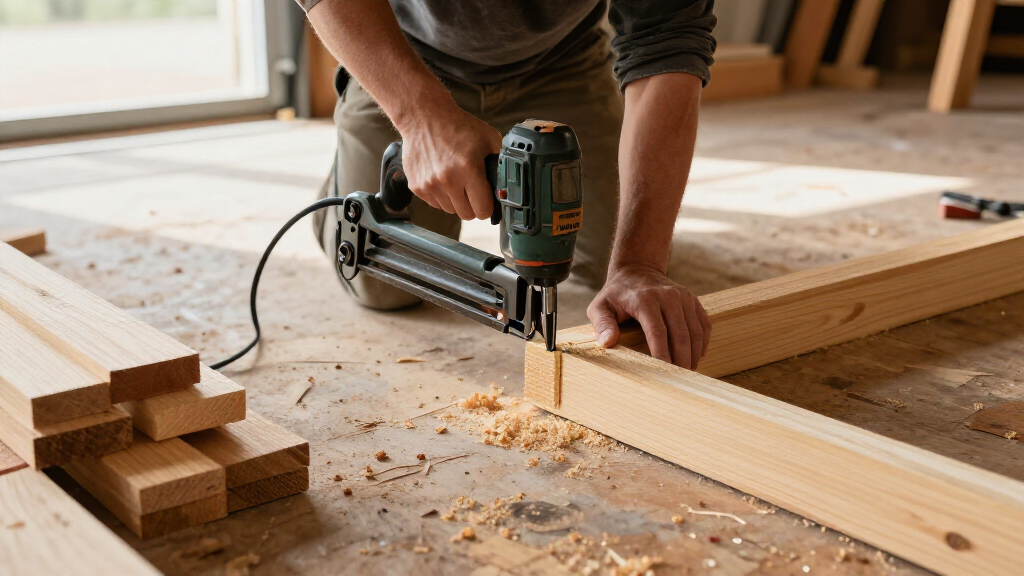
I compared these nailers on the factors that affect framing work: nail angle and collation, battery-platform fit, tool format, included kit components, and the practical implications of a fuel-powered versus battery-only design. I also looked at the product positioning and stated features, giving more weight to choices that make sense for a clear buyer need than to a long feature list by itself.
The ranking favors versatility and ease of matching the tool to a typical jobsite setup. That puts the DEWALT DCN930B first as a 30-degree option on a familiar 20V platform, while specialized choices rank higher for their specific strengths: the FLEX kit for included power components, Paslode for a fuel-based setup, and the 21-degree models for buyers committed to that nail format. Tool-only models can be a sound fit for existing owners, but their lower position for first-time cordless buyers reflects the added battery and charger decision.
Factors to Consider When Choosing Cordless Framing Nailers
Before choosing a model, I would settle the nail format and power setup first. Those decisions shape which fasteners you can use, what you need to bring to the job, and whether a bare tool is a sensible purchase.
Match the Nail Angle to Your Fastener Supply
A 21-degree or 30-degree label describes the collation angle, not a universal measure of power or quality. The two formats can use different nail types and packaging, so a nailer that looks right on paper may add friction if its compatible fasteners are hard to source locally. Before buying, check the exact nail length, shank, head style, and collation specified for the tool. Avoid assuming a box of framing nails will fit because its length matches. For recurring work, ask suppliers about both availability and the pack sizes they carry. This can matter more over time than a small difference in tool features.
Compare Battery-Only Tools With Fuel-Based Systems
Battery nailers avoid fuel-cell purchases, but their runtime and convenience depend on battery capacity, charging access, and how many tools share the platform. A fuel-powered cordless design brings a different supply item and operating routine, so check the manufacturer’s requirements before treating it as a grab-and-go alternative. Think about where the tool will be used: a site with limited charging access may call for spare batteries, while a shop already stocked with compatible packs may favor a bare tool. The purchase decision should include the cost and availability of the consumables and batteries you will actually need, not just the nailer body. Also check whether your existing charger supports the battery included in any kit.
Decide Whether a Kit or Bare Tool Fits Your Setup
A tool-only listing makes the most sense when you already own compatible batteries and a charger; otherwise, the missing pieces can turn an apparently simple purchase into a separate shopping list. Kits reduce that setup work, but confirm exactly what is included rather than assuming a case, extra battery, or other accessory comes in the box. If framing is a major part of your workload, a second battery may be more useful than a small accessory bundle. For occasional repairs, an existing platform battery may be enough, though its age and capacity still matter. Compare kit contents against what you already own to avoid paying for duplicates or arriving without a usable power source.
Plan Around Weight, Balance, and Overhead Work
Framing nailers can feel tiring when held away from the body, even if their listed weight appears manageable. Battery placement, nose shape, and grip can change balance, so a heavier tool may feel acceptable at floor level but less comfortable for repeated overhead or ladder work. If possible, handle a similar tool with the battery attached before committing. Consider the work pattern too: occasional wall framing puts different demands on handling than a full day of sheathing or repetitive overhead fastening. A compact feel is useful only if it still gives you the reach and control your applications require. Do not judge comfort from bare-tool weight alone.
Choose Based on Work Pace, Not a Single Feature
For intermittent repair work, convenience and compatibility may matter more than maximizing firing speed. On production framing, feeding, clearing jams, battery changes, and consistent operation all affect how smoothly a crew works. Check the manual for the tool’s operating modes, adjustment procedures, and jam-clearing steps before purchase. A feature that saves time is useful only if it suits your fastening pattern and does not complicate routine setup. If more than one person will use the nailer, simple controls and an easy-to-follow maintenance routine can carry extra weight. Match the tool to your actual work rate rather than assuming a higher-spec model is always the better fit.
Check Service and Maintenance Before Committing to a Platform
A cordless nailer is a specialized tool, so access to parts, service, and clear maintenance instructions can matter after the initial purchase. Read the manual for lubrication requirements, cleaning, approved fasteners, and any fuel-cell handling rules. Confirm how the maker supports repairs in your area and whether batteries are shared with other tools you use. Common buying mistakes include using unsuitable nails, overlooking routine cleaning, or assuming a jam can be cleared without following the manufacturer’s procedure. A tool with a convenient battery platform may still be a poor fit if support is difficult to reach. This check is especially useful when choosing between a familiar brand ecosystem and a less familiar system.
Frequently Asked Questions
Should I choose a 21-degree or 30-degree cordless framing nailer?
Start with the nails you can reliably buy for your projects, then choose the matching collation angle. A 21-degree model is not automatically better than a 30-degree model, and the angle alone does not tell you how quickly or strongly a nailer works. Confirm the nail specifications in the tool manual, including length and collation, before purchasing fasteners in bulk. If you work across multiple sites, check what local suppliers stock in each format. The best choice is usually the one that fits both your required fastener and your supply routine.
Is a tool-only cordless framing nailer a better buy if I already own batteries?
It can be, provided the battery is from the exact compatible platform and has enough capacity for your planned workload. Verify the manufacturer’s compatibility details rather than relying only on a shared voltage label. Consider whether you have a spare battery available while the other charges, especially for extended framing sessions. A bare tool can be a poor fit if your existing packs are old, small, or already committed to other work. Compare the cost of adding a battery and charger with the included contents of a kit before deciding.
Should I buy a cordless framing nailer for occasional DIY projects?
For occasional work, cordless convenience can be worthwhile if you have several framing tasks or limited access to a compressor and air hose. If you only need a handful of fasteners for a small project, renting or borrowing may make more sense than maintaining a specialized tool and its battery system. Also account for compatible nails, since the correct collation and specifications are not interchangeable across every model. A buyer who already owns batteries from the same platform has a simpler case for ownership. For anyone starting from scratch, compare the full setup rather than the tool alone.
Is a framing nailer kit worth choosing over a bare tool?
A kit is useful when you need a battery and charger or want a ready-to-use setup from one purchase. It is less attractive if you already own compatible packs, since you may pay for equipment you will not use. Check the exact kit contents and battery capacity; the word “kit” does not guarantee extra batteries or accessories beyond what is listed. If your work runs for long stretches, think about whether one battery will be enough or whether you need a separate spare. The right choice depends on your current platform, not the label alone.
What should I check before using a cordless framing nailer on a jobsite?
Confirm that the fastener type and size match the nailer’s manual and the project requirements. Check the battery charge or fuel-cell supply, then review the maker’s setup, adjustment, and jam-clearing instructions. Follow applicable site rules and safety practices, including eye protection and keeping hands clear of the nose and work area. If several workers will use the tool, agree on how it will be loaded and maintained before work starts. A short setup check can prevent delays caused by incompatible nails or missing power supplies.
Conclusion
For the best overall, I recommend the DEWALT DCN930B 30-degree nailer for buyers who want a 20V-platform option and a 30-degree format. The best value for an existing battery owner is a tool-only model that matches the platform already on their site; among the listed options, the CRAFTSMAN V20 or RYOBI ONE+ choices make the most sense for their respective ecosystems. For a premium kit-oriented pick, consider the FLEX 24V kit with its included battery and fast charger, while the Paslode Xpro is the distinctive choice for buyers who prefer a fuel-based system. Beginners starting without compatible batteries should focus on the FLEX or Metabo HPT kits and verify the full contents before buying. If you have a specific need, choose by nail format first: the DCN920B, RIDGID, or Metabo HPT NR1890DRA for 21-degree nails, and the RYOBI 30-degree or CRAFTSMAN CMCN630PTB for a 30-degree platform match.
Fall yard work Picks
leaf blowers
As an affiliate, we earn on qualifying purchases.