
For most buyers, I’d start with the DEWALT DWE575SB: it pairs a familiar 7-1/4-inch format with a blade brake, making it a well-rounded choice for general cutting. The Makita 5007MGA is a stronger fit for buyers who want magnesium construction and a brake, while the SKIL 5280-01 offers a higher-amp motor and laser guide for budget-minded projects. Across corded circular saws, the main tradeoffs are cutting capacity versus weight, useful safety features versus simplicity, and full-size versatility versus compact handling. I compare all 13 options by those practical differences below, so you can match a saw to the materials and cuts you actually make.

Get business pricing on tools and workshop supplies
- Business-only prices and quantity discounts
- Tax-exempt purchasing
- Multiple users, one account, clear invoices
Complete the kit


Key Takeaways
- The 7-1/4-inch format is the roundup’s most versatile class. Most picks use this blade size, which suits common framing and sheet-goods work better than the specialized 10-1/4-inch or 4-1/2-inch alternatives.
- The Makita HS0600 trades compactness for capacity. Its 10-1/4-inch blade suits buyers who need deeper cuts, but it is not the natural choice for routine, lighter tasks.
- Brakes and magnesium construction separate several Makita options. The 5007MGA combines both features, while the 5007MG has magnesium construction without a brake and the 5007F prioritizes a simpler setup.
- The SKIL 5280-01 emphasizes guidance and motor rating. Its laser and 15-amp motor may appeal to cost-conscious users, though a laser does not replace careful setup and a clear sightline.
- The two DEKOPRO saws and SEESII mini saw target narrower needs. Their different blade sizes and formats make it especially important to match cutting depth and task scale before choosing them over a conventional full-size saw.
| Makita HS0600 10-1/4-Inch Circular Saw |  | Best for Deep-Capacity Cuts | Motor: 15 A | Voltage: 120 V | Blade diameter: 10-1/4 in. | VIEW LATEST PRICE | See Our Full Breakdown |
| SKIL 5080-01 13-Amp 7-1/4-Inch Circular Saw |  | Best for Beginners | Motor: 13 A | Voltage: 120 V | Wattage: 1,800 W | VIEW LATEST PRICE | See Our Full Breakdown |
| Makita HS7610 7-1/4-Inch Circular Saw |  | Best for Lightweight Framing | Motor: 14 A | Blade diameter: 7-1/4 in. | Listed speed: 5,500 RPM; product data also lists 500 RPM | VIEW LATEST PRICE | See Our Full Breakdown |
| Makita 5007MGA 7-1/4-Inch Magnesium Circular Saw with Electric Brake |  | Best Feature-Rich Worksite Pick | Motor: 15 A | Voltage: 120 V | Wattage: 2,300 W | VIEW LATEST PRICE | See Our Full Breakdown |
| SKIL 5280-01 15-Amp 7-1/4-Inch Circular Saw with Laser Guide |  | Best for Visible Cut Guidance | Motor: 15 A | Listed speed: 5,300 RPM | Blade diameter: 7-1/4 in. | VIEW LATEST PRICE | See Our Full Breakdown |
| DEWALT DWE575SB 7-1/4-Inch Corded Circular Saw |  | Best Overall | Blade diameter: 7-1/4 inches | Motor: 15 amps | Voltage: 120 volts | VIEW LATEST PRICE | See Our Full Breakdown |
| DEKOPRO 1200W Corded Circular Saw with 165mm Blade |  | Best for Guided Straight Cuts | Motor power: 1200 W | No-load speed: 4,800 rpm | Blade diameter: 165 mm | VIEW LATEST PRICE | See Our Full Breakdown |
| DEWALT DWE575 7-1/4-Inch Lightweight Corded Circular Saw |  | Best for Lightweight Handling | Blade diameter: 7-1/4 inches | Motor: 15 amps | Voltage: 120 V | VIEW LATEST PRICE | See Our Full Breakdown |
| Makita 5007F 7-1/4-Inch Circular Saw |  | Best for Fast, Visible Cuts | Blade diameter: 7-1/4 inches | Motor: 15 amps | Speed: 5,800 rpm | VIEW LATEST PRICE | See Our Full Breakdown |
| Makita 5007FA 7-1/4-Inch Circular Saw with Electric Brake |  | Best for Brake-Controlled Jobsite Work | Blade diameter: 7-1/4 inches | Motor power: 15 amps | No-load speed: 5,800 rpm | VIEW LATEST PRICE | See Our Full Breakdown |
| Makita 5007MG 7-1/4-Inch Magnesium Circular Saw |  | Best for Lightweight Framing | Blade diameter: 7-1/4 inches | Motor: 15 amps | Speed: 5,800 RPM | VIEW LATEST PRICE | See Our Full Breakdown |
| DEKOPRO 1200W Circular Saw with 185mm 24-Tooth Blade | 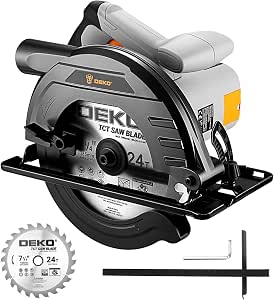 | Best Value for Basic Cuts | Model: DKPCCS0026 | Power: 1200 W | Power source: Corded (product data also lists hand powered) | VIEW LATEST PRICE | See Our Full Breakdown |
| SEESII 4-1/2-Inch Corded Mini Circular Saw with Laser Guide |  | Best Compact Multi-Material Pick | Power source: Corded electric | Motor: 4.8 amps | Wattage: 580 watts | VIEW LATEST PRICE | See Our Full Breakdown |
| corded circular saw | Blade diameter | Motor | Weight | Bevel capacity |
|---|---|---|---|---|
| Makita HS0600 10-1/4-Inch Circ | 10-1/4 in. | 15 A | 15.2 lb. | — |
| SKIL 5080-01 13-Amp 7-1/4-Inch | — | 13 A | 7 lb. | — |
| Makita HS7610 7-1/4-Inch Circu | 7-1/4 in. | 14 A | 8.7 lb. | 0°–45° |
| Makita 5007MGA 7-1/4-Inch Magn | 7-1/4 in. | 15 A | 10.6 lb. | — |
| SKIL 5280-01 15-Amp 7-1/4-Inch | 7-1/4 in. | 15 A | 8.7 lb. | 51°, with positive stop at 45° |
| DEWALT DWE575SB 7-1/4-Inch Cor | 7-1/4 inches | 15 amps | 8.8 pounds | 57 degrees, with stops at 45 and 22.5 degrees |
| DEKOPRO 1200W Corded Circular | 165 mm | — | — | — |
| DEWALT DWE575 7-1/4-Inch Light | 7-1/4 inches | 15 amps | — | 57 degrees |
| Makita 5007F 7-1/4-Inch Circul | 7-1/4 inches | 15 amps | 6.17 kg | 0°–45° |
| Makita 5007FA 7-1/4-Inch Circu | 7-1/4 inches | — | — | 0°–45° |
| Makita 5007MG 7-1/4-Inch Magne | 7-1/4 inches | 15 amps | — | — |
| DEKOPRO 1200W Circular Saw wit | 185 mm | — | — | — |
| SEESII 4-1/2-Inch Corded Mini | — | 4.8 amps | — | 0–45 degrees |
More Details on Our Top Picks
Makita HS0600 10-1/4-Inch Circular Saw
The Makita HS0600 fills a different role from the standard 7-1/4-inch saws here: its 10-1/4-inch blade cuts up to 3-13/16 inches at 90 degrees, enough to pass through 4x lumber in one cut. That capacity is the reason to choose it over the lighter Makita HS7610, which is easier to handle for routine framing but has a 2-1/2-inch maximum depth. A 15-amp motor, auxiliary handles, and magnesium and aluminum construction are suited to demanding stock and controlled handling. The tradeoff is substantial: at 15.2 pounds, it is much heavier than the other saws in this group, so overhead or repeated one-handed work is a poor fit. The listed speed is also inconsistent, with 4,300 RPM in the description and 300 RPM in the specifications; I would verify that detail before buying.
Pros:- Cuts 4x lumber in a single pass at 90 degrees
- Offers 3-13/16-inch depth at 90 degrees and 2-11/16 inches at 45 degrees
- Auxiliary handles support control on demanding cuts
- Includes a carbide-tipped blade, rip fence, and wrench
Cons:- At 15.2 pounds, it is the heaviest and least nimble option in this group
- Its listed speed conflicts: 4,300 RPM in the description versus 300 RPM in the specifications
Best for: Carpenters and builders who regularly cut thick lumber, including 4x material, and value single-pass capacity over low weight.
Not ideal for: DIYers doing routine sheet goods or framing cuts who want a lighter saw; its 15.2-pound weight and oversized blade are more tool than those jobs need.
- Motor:15 A
- Voltage:120 V
- Blade diameter:10-1/4 in.
- Cutting depth at 90°:3-13/16 in.
- Cutting depth at 45°:2-11/16 in.
- Weight:15.2 lb.
- Included components:24-tooth carbide-tipped blade, rip fence, and wrench
- Warranty:1-year limited
Our verdict“Choose the HS0600 when cutting thick lumber in one pass matters more than portability; choose the Makita HS7610 for ordinary framing and easier handling.”
SKIL 5080-01 13-Amp 7-1/4-Inch Circular Saw
The SKIL 5080-01 is the straightforward pick for first-time corded-saw buyers who want bevel capability without stepping up to a heavier 15-amp model. Its 13-amp motor and 7-pound weight suit common home projects, while the bevel adjusts to 51 degrees and has a positive stop at 45 degrees for a repeatable standard bevel. A dust blower helps keep the cut line visible, and the included carbide blade and wrench let buyers get started without sourcing those items separately. Compared with the SKIL 5280-01, it gives up motor output and the laser guide, but its lighter, simpler setup may be a better match for occasional use. The tradeoff is less power headroom for sustained or demanding cuts, and the cord still ties work to a nearby outlet.
Pros:- 7-pound weight is relatively easy to manage for home projects
- Bevel adjusts up to 51 degrees with a positive stop at 45 degrees
- Dust blower helps keep the cut line clear
- Includes an 18-tooth carbide blade and blade wrench
Cons:- 13-amp motor offers less power headroom than the 15-amp SKIL 5280-01
- Corded operation limits work away from a power outlet
Best for: First-time DIYers handling occasional lumber cuts, basic bevel work, and home repairs who prefer a light, uncomplicated corded saw.
Not ideal for: Frequent users cutting dense or thick stock who want a 15-amp motor, or buyers who specifically want a laser guide.
- Motor:13 A
- Voltage:120 V
- Wattage:1,800 W
- Blade:18-tooth carbide
- Maximum bevel:51°
- Positive bevel stop:45°
- Weight:7 lb.
- Warranty:1-year limited
Our verdict“Pick the SKIL 5080-01 for occasional projects and lighter handling, but move up to the SKIL 5280-01 for more motor power and a laser guide.”
Makita HS7610 7-1/4-Inch Circular Saw
At 8.7 pounds, the Makita HS7610 is a practical middle ground for framing and general cutting: it is easier to handle than the 10.6-pound Makita 5007MGA, while its 14-amp motor and 5,500-RPM listed speed suit routine wood cuts. The aluminum base supports stable tracking, and the bevel range reaches 45 degrees. Its dust nozzle can direct debris away from the cut or connect to a vacuum, a useful advantage over the SKIL 5280-01, whose supplied features focus on a laser guide and blower rather than a vacuum connection. The limitation is capacity: the 2-1/2-inch depth at 90 degrees covers common framing stock but cannot match the HS0600’s single-pass reach through 4x lumber. The product data also gives conflicting speeds—5,500 and 500 RPM—so that specification merits confirmation.
Pros:- 8.7-pound design is lighter than the Makita 5007MGA
- 14-amp motor and listed 5,500-RPM speed suit general framing cuts
- Aluminum base supports stable tracking
- Dust nozzle can connect to a vacuum
Cons:- 2-1/2-inch maximum depth at 90 degrees cannot cut 4x stock in one pass
- Listed speed conflicts: 5,500 RPM in the description versus 500 RPM in the specifications
- Corded design requires access to a power outlet
Best for: Framers and DIY renovators who want a manageable full-size saw for routine wood cuts and appreciate a vacuum-connectable dust nozzle.
Not ideal for: Buyers who need to cut 4x lumber in one pass or want the extra listed motor output and electric brake of the Makita 5007MGA.
- Motor:14 A
- Blade diameter:7-1/4 in.
- Listed speed:5,500 RPM; product data also lists 500 RPM
- Weight:8.7 lb.
- Bevel capacity:0°–45°
- Cutting depth at 90°:2-1/2 in.
- Cutting depth at 45°:1-3/4 in.
- Included blade:24-tooth framing blade
Our verdict“Choose the HS7610 for lighter everyday framing with a vacuum connection; choose the HS0600 when deep cut capacity is the priority.”
Makita 5007MGA 7-1/4-Inch Magnesium Circular Saw with Electric Brake
The Makita 5007MGA is the feature-rich choice for buyers who want a full-size corded saw equipped for repeated work. Its 15-amp motor runs at a listed 5,800 RPM, while magnesium components help keep this model at 10.6 pounds—lighter than the HS0600, though heavier than the HS7610. The electric brake is the clearest differentiator: it stops the blade after the trigger is released, supporting quicker, more controlled pauses between cuts. Two LEDs and a built-in dust blower also help keep the cut area visible. Compared with the SKIL 5280-01, it adds the brake and a tool case, but it weighs more and does not list a laser guide or a dust-collection connection. Its included rip fence and carbide blade make it a well-equipped package, though buyers seeking a lightweight saw should look at the HS7610 instead.
Pros:- 15-amp motor with listed 5,800-RPM speed
- Electric brake stops the blade after trigger release
- LED lights and a built-in dust blower aid cut visibility
- Includes a carbide-tipped blade, rip fence, wrench, and tool case
Cons:- At 10.6 pounds, it is heavier than the Makita HS7610
- No dust-collection system or vacuum connection is listed
- Corded use limits mobility away from outlets
Best for: Frequent DIYers and framing crews who want a 15-amp saw with an electric brake, illuminated cut area, and included storage case.
Not ideal for: Buyers prioritizing the lightest handling, a laser guide, or listed dust collection; the HS7610 is lighter, and the SKIL 5280-01 includes a laser.
- Motor:15 A
- Voltage:120 V
- Wattage:2,300 W
- Blade diameter:7-1/4 in.
- Listed speed:5,800 RPM
- Weight:10.6 lb.
- Special features:Electric brake, LED lights, and built-in dust blower
- Included components:Carbide-tipped blade, rip fence, hex blade wrench, and tool case
Our verdict“Choose the 5007MGA for a well-equipped worksite saw with an electric brake; choose the lighter HS7610 for easier handling.”
SKIL 5280-01 15-Amp 7-1/4-Inch Circular Saw with Laser Guide
The SKIL 5280-01 pairs a 15-amp motor with a laser guide, making it a strong fit for buyers who want a visual reference while following a cut line. Its 5,300-RPM motor, 24-tooth carbide blade, and dust blower cover common cutting needs, while the bevel reaches 51 degrees and includes a positive stop at 45 degrees. Compared with the SKIL 5080-01, this model offers more motor output and adds the laser, but weighs 8.7 pounds rather than 7. The Makita 5007MGA is the better-equipped worksite alternative if an electric brake, LED lights, and a case matter more; the SKIL’s case is a carry bag, and its standout is guidance rather than added stopping features. At 8.7 pounds, it is not the lightest choice for long sessions.
Pros:- 15-amp motor runs at a listed 5,300 RPM
- Laser guide and dust blower help with cut-line visibility
- 51-degree bevel capacity includes a positive stop at 45 degrees
- Includes a 24-tooth carbide blade, wrench, and carry bag
Cons:- At 8.7 pounds, it is heavier than the SKIL 5080-01
- Does not list an electric brake, unlike the Makita 5007MGA
Best for: DIYers and remodelers who want a full-size corded saw with a laser guide for following cuts and a wide bevel range.
Not ideal for: Buyers who prioritize low weight or an electric brake; the SKIL 5080-01 is lighter, while the Makita 5007MGA includes a brake.
- Motor:15 A
- Listed speed:5,300 RPM
- Blade diameter:7-1/4 in.
- Blade:24-tooth carbide-tipped
- Bevel capacity:51°, with positive stop at 45°
- Weight:8.7 lb.
- Included components:Circular saw, carbide blade, wrench, and carry bag
Our verdict“Pick the SKIL 5280-01 if a laser guide and 15-amp power matter more than the lighter weight of the SKIL 5080-01.”
DEWALT DWE575SB 7-1/4-Inch Corded Circular Saw
The DEWALT DWE575SB balances jobsite power, manageable weight, and useful cut visibility features better than the other saws in this group. Its 15-amp motor and 2-9/16-inch cutting depth suit common framing cuts, while the 8.8-pound listed weight is easier to handle overhead than the Makita 5007FA at 11.1 pounds. A 57-degree bevel range also gives it more angle flexibility than the Makita 5007F, which tops out at 45 degrees. The electric brake and dust blower add practical control and help keep the cut line clear. The tradeoff is that it still needs an outlet, and the supplied information conflicts on blade length, listing both a 7-1/4-inch blade and a 4-inch blade length. Buyers should verify the blade specification before purchase.
Pros:- 15-amp motor and 2-9/16-inch maximum cut depth handle common framing work
- 57-degree bevel range exceeds the 45-degree range listed for the Makita 5007F
- Electric brake and integrated dust blower support safer stopping and clearer cuts
- 8.8-pound listed weight is lighter than the Makita 5007FA
Cons:- Corded power limits movement around large or distant work areas
- Blade length information conflicts between the 7-1/4-inch title and a listed 4-inch specification
Best for: Framers and remodelers who want a full-size 15-amp corded saw with broad bevel capacity and a relatively manageable listed weight.
Not ideal for: Buyers who need cordless movement or want completely consistent blade specifications before ordering.
- Blade diameter:7-1/4 inches
- Motor:15 amps
- Voltage:120 volts
- Speed:5,200 rpm
- Maximum cutting depth:2-9/16 inches
- Bevel capacity:57 degrees, with stops at 45 and 22.5 degrees
- Weight:8.8 pounds
- Features:Electric brake, integrated dust blower, aluminum base
Our verdict“Choose the DWE575SB for a versatile, full-size corded saw with a strong mix of cutting capacity, bevel range, and handling features.”
DEKOPRO 1200W Corded Circular Saw with 165mm Blade
The DEKOPRO 1200W is the more approachable pick for buyers whose priority is making guided cuts in sheet goods rather than maximizing capacity for heavy framing. Its included straight cutting guide helps keep rip cuts on track, and the double protection switch adds a layer of defense against accidental starts. The 165 mm blade cuts up to 55 mm at 90 degrees, less than the DEWALT DWE575SB’s 2-9/16-inch capacity, so the DEWALT is better suited to thicker stock and demanding site work. DEKOPRO lists a 1200-watt motor and 4,800 rpm, but provides less detail on motor amperage and long-term support. Its steel base and corded design also make it a simpler, less portable setup than a cordless saw. I’d choose it for guided everyday cuts, not the heaviest construction tasks.
Pros:- Included straight cutting guide supports steadier rip cuts
- 55 mm cutting depth at 90 degrees suits many routine material cuts
- Double protection switch helps reduce accidental starts
- Adjustable depth and included hex wrench make setup more adaptable
Cons:- Cutting depth is lower than the DEWALT DWE575SB’s listed 2-9/16 inches
- Warranty period is not specified in the supplied product information
- Corded operation restricts reach when working away from an outlet
Best for: DIYers and occasional renovators making straight cuts in lumber or sheet material who value an included guide and a safety switch.
Not ideal for: Framing crews cutting thicker stock regularly or buyers who want a stated warranty period and more detailed power specifications.
- Motor power:1200 W
- No-load speed:4,800 rpm
- Blade diameter:165 mm
- Blade teeth:24
- Maximum cut depth at 90°:55 mm
- Maximum cut depth at 45°:33 mm
- Base material:Steel
- Included accessories:Straight cutting guide and hex wrench
Our verdict“Pick the DEKOPRO for guided, occasional cutting where its included accessories matter more than maximum depth or extensive jobsite credentials.”
DEWALT DWE575 7-1/4-Inch Lightweight Corded Circular Saw
The DEWALT DWE575 offers the same core appeal as the DWE575SB: a 15-amp motor, a 57-degree bevel range, and a listed 2-9/16-inch cutting depth in a relatively light package. Its integrated dust blower can help keep the cut line visible, which is useful for repeat cuts without stopping to clear debris. Compared with the DWE575SB, however, this version is listed at 4,500 rpm rather than 5,200 rpm and does not list an electric brake. That makes the SB the stronger choice for buyers who value faster stopping and the higher stated speed. This model’s biggest complication is its weight data: the description says 8.8 pounds, while item measurements list 5.6 pounds. I’d treat the weight advantage as uncertain until confirmed.
Pros:- 15-amp motor and 2-9/16-inch cutting depth support full-size cutting tasks
- 57-degree bevel capacity offers more angle range than the Makita 5007F
- Integrated dust blower helps clear debris from the cut line
- Includes a carbide-tipped blade and blade wrench
Cons:- Listed weight conflicts between 8.8 pounds and 5.6 pounds
- Listed speed is lower than the DWE575SB’s 5,200 rpm
- Corded design limits freedom of movement
Best for: Home renovators and carpenters who want a 15-amp corded saw with wide bevel adjustment and a dust blower, without needing a listed electric brake.
Not ideal for: Buyers who need reliable weight information or prefer the DWE575SB’s listed electric brake and higher stated speed.
- Blade diameter:7-1/4 inches
- Motor:15 amps
- Voltage:120 V
- Speed:4,500 rpm
- Maximum cutting depth:2-9/16 inches
- Bevel capacity:57 degrees
- Listed weight:8.8 pounds in description; 5.6 pounds in item measurements
- Included components:Carbide-tipped blade, blade wrench, instruction manual
Our verdict“Choose the DWE575 if you want DEWALT’s broad bevel range and dust blower, but verify its weight and skip it if you want the DWE575SB’s listed brake.”
Makita 5007F 7-1/4-Inch Circular Saw
The Makita 5007F stands out for its 15-amp motor running at a listed 5,800 rpm, the highest speed among these five entries. Two built-in LED lights and a dust blower help keep the cut area visible, a useful combination for framing work in dim or debris-prone spaces. Its 2-3/8-inch cutting capacity at 90 degrees is slightly shallower than the DEWALT DWE575SB’s 2-9/16-inch depth, and its bevel range stops at 45 degrees rather than 57. That makes the DEWALT more flexible for angled cuts, while the Makita emphasizes speed and visibility. The supplied weight of 6.17 kg is substantial for a handheld saw and may fatigue users during long sessions. I’d favor it for steady construction work, provided its weight is acceptable.
Pros:- 15-amp motor runs at a listed 5,800 rpm
- Two LED lights and a dust blower help keep the cutting area visible
- All-ball-bearing construction and aluminum base are designed for durability
- Includes a shaft lock and AC/DC switch
Cons:- Listed 6.17 kg weight may make prolonged handheld work tiring
- 45-degree bevel limit is narrower than the DEWALT DWE575SB’s 57-degree range
- 90-degree cutting capacity is slightly below the DEWALT DWE575SB’s listed depth
Best for: Framers and builders who prioritize a high stated blade speed, cut-line lighting, and a dust blower for repeated jobsite cuts.
Not ideal for: Users making frequent steep bevel cuts or extended overhead cuts who would benefit from the DEWALT DWE575SB’s wider bevel range and lower listed weight.
- Blade diameter:7-1/4 inches
- Motor:15 amps
- Speed:5,800 rpm
- Cutting capacity at 90°:2-3/8 inches
- Cutting capacity at 45°:1-3/4 inches
- Bevel capacity:0°–45°
- Weight:6.17 kg
- Special features:Two LED lights, dust blower, shaft lock, AC/DC switch
Our verdict“Choose the Makita 5007F for fast, well-lit construction cuts if you can accept its heavier listed weight and more limited bevel range.”
Makita 5007FA 7-1/4-Inch Circular Saw with Electric Brake
The Makita 5007FA pairs a 15-amp, 5,800-rpm motor with an electric brake, making it the clearest fit here for buyers who want the blade to stop promptly after a cut. It also includes two LED lights and a heavy-gauge aluminum base, matching the Makita 5007F’s focus on cut visibility and durable construction. The 5007F shares the same listed motor speed and cutting capacities, but its supplied details do not list an electric brake; the 5007FA’s brake is its main distinction. Against the DEWALT DWE575SB, the Makita has a lower stated 90-degree capacity and a narrower 45-degree bevel limit, while its 11.1-pound weight is notably greater than DEWALT’s listed 8.8 pounds. Its strength is controlled jobsite use, not light handling.
Pros:- Electric brake helps stop the blade after cuts
- 15-amp motor runs at a listed 5,800 rpm
- Two built-in LED lights illuminate the cut line
- Heavy-gauge aluminum base is designed for durable, straight cuts
Cons:- 11.1-pound tool weight is higher than the DEWALT DWE575SB’s listed 8.8 pounds
- 45-degree bevel capacity is narrower than the DEWALT DWE575SB’s 57 degrees
- Corded operation limits movement around a worksite
Best for: Contractors and builders who want a 15-amp corded saw with an electric brake, work lights, and a durable aluminum base.
Not ideal for: DIYers or tradespeople who make long overhead cuts, need a wider bevel range, or prioritize lower handheld weight.
- Blade diameter:7-1/4 inches
- Motor power:15 amps
- No-load speed:5,800 rpm
- Cutting capacity at 90°:2-3/8 inches
- Cutting capacity at 45°:1-3/4 inches
- Bevel capacity:0°–45°
- Tool weight:11.1 pounds
- Brake and lighting:Electric brake and two built-in LED lights
Our verdict“Choose the 5007FA if an electric brake and sturdy jobsite build matter more to you than lower weight or a wider bevel range.”
Makita 5007MG 7-1/4-Inch Magnesium Circular Saw
The 5007MG pairs a 15-amp motor with magnesium components, making it a strong choice for framing work where a full-size blade matters but a bulky saw can wear on the user. Its 5,800 RPM speed and 2-1/2-inch cut depth suit common lumber cuts, while twin LEDs and a dust blower help keep the cut line visible. Compared with the Makita 5007F, this model adds those visibility aids and a lightweight magnesium build; buyers who want an electric brake can instead look at the Makita 5007MGA. The 56-degree bevel range also exceeds the usual 45-degree setting, though the saw’s listed weight varies between 10.1 and 10.6 pounds. I’d choose it for frequent framing and bevel cuts, but skip it if a brake is a must-have.
Pros:- 15-amp motor and 5,800 RPM speed support demanding cuts in common framing lumber.
- Magnesium components keep the design relatively light for a full-size saw.
- Twin LED lights and a dust blower help maintain a clear view of the cut line.
- 56-degree bevel capacity and included ultra-coated framing blade add versatility out of the box.
Cons:- Does not include the electric brake found on the Makita 5007MGA.
- Product information lists two different weights: 10.1 and 10.6 pounds.
Best for: Framers and remodelers who want a powerful 7-1/4-inch saw with visibility aids and a broad bevel range.
Not ideal for: Buyers who require an electric brake or need a precisely documented weight before choosing a tool.
- Blade diameter:7-1/4 inches
- Motor:15 amps
- Speed:5,800 RPM
- Listed weight:10.1–10.6 pounds
- Cutting capacity at 90 degrees:2-1/2 inches
- Maximum bevel capacity:56 degrees
- Bevel stops:22.5 and 45 degrees
- Lighting:Twin LED lights
- Included blade:Premium ultra-coated framing blade
Our verdict“Choose the 5007MG for lightweight, full-size framing performance and visibility aids, but pick the 5007MGA if you want an electric brake.”
DEKOPRO 1200W Circular Saw with 185mm 24-Tooth Blade
The DEKOPRO DKPCCS0026 keeps the setup straightforward: a 1200-watt corded motor, 185 mm blade, steel base, and included straight cutting guide. Its stated 65 mm cut depth at 90 degrees is close to the 2-1/2-inch capacity of the Makita 5007MG, while the Makita offers a higher stated motor speed and extras such as twin lights and a dust blower. Here, the appeal is the guide rail and simple adjustment kit, which can help a home DIYer make repeatable straight cuts without buying those accessories separately. The 4,800 RPM speed and 24-tooth blade are suited to general cutting, not fine finish work. Product data also conflicts by describing the power source as both corded and hand powered, so I’d verify the listing before ordering.
Pros:- 1200-watt motor and 4,800 RPM speed provide a practical setup for general cutting.
- Maximum cut depth is listed as 65 mm at 90 degrees and 43 mm at 45 degrees.
- Straight cutting guide and hex wrench are included.
- Double protection switch and non-slip handle support controlled operation.
Cons:- Product data conflicts on whether the power source is corded or hand powered.
- Does not list visibility features such as the twin LEDs and dust blower on the Makita 5007MG.
- Corded operation requires access to a power outlet and limits movement around a worksite.
Best for: DIYers making occasional straight cuts in lumber who want a corded saw supplied with a guide and adjustment wrench.
Not ideal for: Frequent jobsite users who need well-documented specifications, premium cut-line visibility, or cordless mobility.
- Model:DKPCCS0026
- Power:1200 W
- Power source:Corded (product data also lists hand powered)
- Speed:4,800 RPM
- Blade diameter:185 mm
- Blade teeth:24
- Maximum cut depth at 90 degrees:65 mm
- Maximum cut depth at 45 degrees:43 mm
- Included accessories:Straight cutting guide rail and hex wrench
Our verdict“Pick this DEKOPRO for basic corded cuts with a supplied guide, but favor the Makita 5007MG for clearer cut-line visibility and more consistent product information.”
SEESII 4-1/2-Inch Corded Mini Circular Saw with Laser Guide
The SEESII mini saw trades depth for maneuverability. At 4.7 pounds with a 4-1/2-inch blade, it is easier to handle for smaller projects than full-size options such as the Makita 5007MG, but its 1-11/16-inch maximum depth at 90 degrees rules it out for many thick framing cuts. Its strongest distinction is versatility: TCT, HSS, and diamond blades are supplied for wood, soft metal, tile, and plastic, and the laser guide and rail help with alignment. The 580-watt, 4.8-amp motor runs at up to 4,000 RPM, so I’d treat it as a compact project saw rather than a substitute for a 7-1/4-inch workhorse. Adjustable depth, bevel settings, and a dust adapter broaden its usefulness, but the cord still tethers it to an outlet.
Pros:- Compact 4.7-pound design is easier to control for smaller cuts than full-size saws such as the Makita 5007MG.
- Three included blade types support cuts in wood, soft metal, tile, and plastic.
- Laser guide and guide rail help align cuts.
- Adjustable depth and bevel settings plus a dust extraction adapter add project flexibility.
Cons:- Maximum 90-degree cut depth of 1-11/16 inches is too limited for many framing tasks.
- 580-watt motor and 4,000 RPM speed make it a different class of tool from full-size saws.
- Corded design limits movement and requires access to an outlet.
Best for: DIYers doing smaller home projects across wood, soft metal, tile, and plastic who value a light, guided saw.
Not ideal for: Framers or anyone regularly cutting thick lumber who needs the depth and pace of a full-size 7-1/4-inch saw.
- Power source:Corded electric
- Motor:4.8 amps
- Wattage:580 watts
- Voltage:120 V AC
- No-load speed:4,000 RPM
- Blade size:4-1/2 inches
- Included blades:TCT, HSS, and diamond
- Maximum cutting depth at 90 degrees:1-11/16 inches
- Bevel capacity:0–45 degrees
Our verdict“Choose the SEESII for lighter, multi-material projects and guided cuts, but use a full-size saw like the Makita 5007MG for deeper lumber cuts.”

How We Picked
I compared the 13 saws by cutting format and practical capacity, motor information where specified, handling-related features, and the usefulness of additions such as a blade brake, laser guide, or magnesium construction. Blade diameter matters because it affects the work a saw can handle; it is not a stand-in for overall quality. I also considered whether each tool’s design makes sense for routine framing, occasional home projects, deeper cuts, or compact work.
The ranking favors versatility for common jobs first, then rewards features that offer a meaningful benefit without narrowing the saw’s role too much. Full-size 7-1/4-inch models lead because they address the broadest range of typical cutting needs; the larger Makita and smaller mini saw sit lower because their formats suit more specific tasks. Similar models are distinguished by their stated features rather than assumed performance differences, and I avoid treating a laser, motor rating, or lightweight label as proof of superior cutting results.
Factors to Consider When Choosing Corded Circular Saws
Before choosing a corded circular saw, I’d start with the cuts you need to make, not the longest feature list. These factors help separate a useful match from a saw that is oversized, under-capable, or awkward for your work.
Match Blade Size to Your Deepest Regular Cut
Blade diameter influences how deeply a saw can cut, so check the tool’s stated cutting capacity at the angles you expect to use. A 7-1/4-inch saw covers many routine jobs, but bevel cuts reduce depth compared with straight cuts. A 10-1/4-inch model can suit work that exceeds a standard saw’s reach, though buying extra capacity for occasional cuts adds bulk you may carry every day. A mini saw serves a different purpose and should not be treated as a smaller substitute for full-size framing work. Common mistake: choosing by blade diameter alone without checking the manufacturer’s cut-depth specifications. Match capacity to your most demanding repeated task, not a rare edge case.
Read Motor Ratings in Context
Amperage or wattage can help describe a corded saw, but it does not tell the whole story about cutting speed or how cleanly a tool handles a particular material. The SKIL 5280-01 lists a 15-amp motor, while the DEKOPRO models list 1200W; those numbers are not directly comparable across different specifications and designs. Blade condition, tooth count, material, feed rate, and setup all affect the cut. A higher rating may matter more for sustained work than for a few occasional cuts, but it cannot compensate for a dull or unsuitable blade. Check that replacement blades for your intended material are easy to source. Avoid buying on one headline number without considering the whole cutting setup.
Decide Whether a Brake or Guide Helps Your Work
A blade brake is a convenience and control feature that stops the blade after the trigger is released; it does not make a saw risk-free or replace safe handling. Laser guides can offer a visible reference, but alignment, lighting, dust, and blade position still affect accuracy. If you routinely set a saw down between cuts, a brake may be a useful preference; if you already mark and follow a clear cut line, a laser may matter less. Do not treat either feature as a substitute for eye protection, stable support, and keeping hands clear of the blade path. Features also vary among closely related models, so check the exact model rather than assuming a suffix includes a particular addition. Pay for guidance or braking when it solves a real workflow issue.
Balance Weight Against Capacity and Construction
A lighter saw can reduce fatigue during repeated cuts or overhead positioning, while a larger blade and sturdier build may better suit demanding work. Magnesium construction, as found in some Makita models, describes a material choice rather than a guarantee that the saw is right for every user. Compare the tool’s actual weight and balance in its specifications, especially if you will carry it between sites or use it for long sessions. A compact format can feel easier to manage but may give up capacity or compatibility with common tasks. Conversely, buying the biggest saw in the category can make routine cuts less comfortable. Choose based on the duration and position of your work as much as the cutting depth.
Check Blade Compatibility and Replacement Needs
Before buying, confirm blade diameter, arbor fit, and any other manufacturer requirements for replacements. The roundup includes 7-1/4-inch, 10-1/4-inch, 165mm, 185mm, and 4-1/2-inch formats, so blades should not be assumed interchangeable across these saws. Tooth count and blade type also shape the cut: a blade suited to fast rough cuts may not leave the finish you want on visible material. Consider whether the supplied blade matches your first job and how readily you can get suitable replacements. For a less common size, check availability before committing to a tool. This small compatibility check can prevent a capable saw from becoming inconvenient to maintain.
Choose a Format for the Work, Not the Label
“Circular saw” covers tools with very different roles in this lineup. A standard full-size model is the broad-use choice for framing and sheet goods, while a high-capacity saw or compact mini saw addresses more specialized cuts. Think through the material thickness, access, and cut length you face most often; a narrow work area may favor handling, while thick stock may demand more depth. A laser or included blade cannot make an undersized saw suitable for a job beyond its rated capacity. If your projects vary, a conventional 7-1/4-inch saw is often the more adaptable starting point. Buy a specialist format when its particular advantage solves a recurring problem.
Frequently Asked Questions
Is a 10-1/4-inch corded saw a better buy than a 7-1/4-inch model?
It is a better fit only when you regularly need the added cutting capacity. The Makita HS0600 stands apart from the mostly 7-1/4-inch lineup because its larger blade targets deeper cuts, but that does not make it the best everyday choice for every buyer. For common framing and general home projects, a standard-size saw is usually the more flexible format. Check the listed cut depth, weight, and bevel capacity against your actual material before choosing. If deep cuts are rare, the larger format may add more tool than your work requires.
Should I choose a saw with an electric brake?
A brake can stop the blade after you release the trigger, which may make repeated cutting and setting the tool down feel more controlled. In this roundup, the Makita 5007MGA and 5007FA are brake-equipped choices, while related models offer different feature combinations. A brake is not a safety system that makes careless handling acceptable, and it does not replace waiting for the blade to stop before placing the saw down. If you make frequent cuts, the feature may be worth prioritizing; for occasional work, capacity, blade compatibility, and comfortable handling may matter more. Compare the exact model specifications because similar names do not always mean identical features.
Can the DEKOPRO or SEESII models replace a standard 7-1/4-inch saw?
Not automatically: their blade formats differ from the conventional 7-1/4-inch group, so their cutting capacity and suitable tasks may differ too. The DEKOPRO models use 165mm or 185mm blades, while the SEESII is a 4-1/2-inch mini saw. Those formats may suit particular projects, but buyers should verify the rated cut depth and the blade options available for the materials they plan to cut. If you need one saw for varied framing and sheet-goods work, the standard-size models are the safer starting point. Choose a smaller format when access or task scale is the priority, not simply because it sounds easier to handle.
Does a laser guide make a circular saw more accurate?
A laser can provide a visible reference, but it does not guarantee a straight or precise cut. The SKIL 5280-01 includes a laser guide, which may help some users follow a planned line, yet blade alignment, saw control, material support, and the cut itself remain decisive. A laser can also be harder to see in bright conditions or when dust obscures the work area. For repeatable accuracy, check the saw’s alignment and practice on scrap material before cutting a finished piece. Treat the guide as an aid, not a replacement for marking and supporting the work correctly.
Which features should a first-time circular-saw buyer prioritize?
I’d prioritize a familiar 7-1/4-inch format, clear capacity specifications, manageable handling, and straightforward access to compatible blades. A brake can be a helpful extra, but safe technique matters more than relying on a feature. A laser is optional and should not decide the purchase by itself. First-time buyers should also plan for stable work support, eye and hearing protection, and practice cuts on scrap before working on finished material. Among this roundup, the standard-size options offer a broader starting point than the specialized large-blade or mini formats; compare their exact features to find the setup that feels least complicated for your projects.
Conclusion
For a broad mix of routine jobs, my best overall recommendation is the DEWALT DWE575SB, with its familiar 7-1/4-inch format and blade brake. The best value-oriented pick is the SKIL 5280-01 for buyers drawn to its 15-amp rating and laser guide, provided those features suit their work. For a premium feature set, I’d choose the Makita 5007MGA for its magnesium construction and electric brake; buyers who need extra cutting depth should instead look closely at the Makita HS0600. The best beginner direction is a conventional 7-1/4-inch model with capacity and blade availability that fit the planned projects, rather than a specialist saw. For specific needs, the SEESII mini saw favors compact tasks, while the DEKOPRO options offer alternative blade formats; confirm their capacity and replacement-blade fit before choosing. In the end, the right saw is the one whose size, features, and blade support match the cuts you make most often.
Halloween Picks
halloween
As an affiliate, we earn on qualifying purchases.