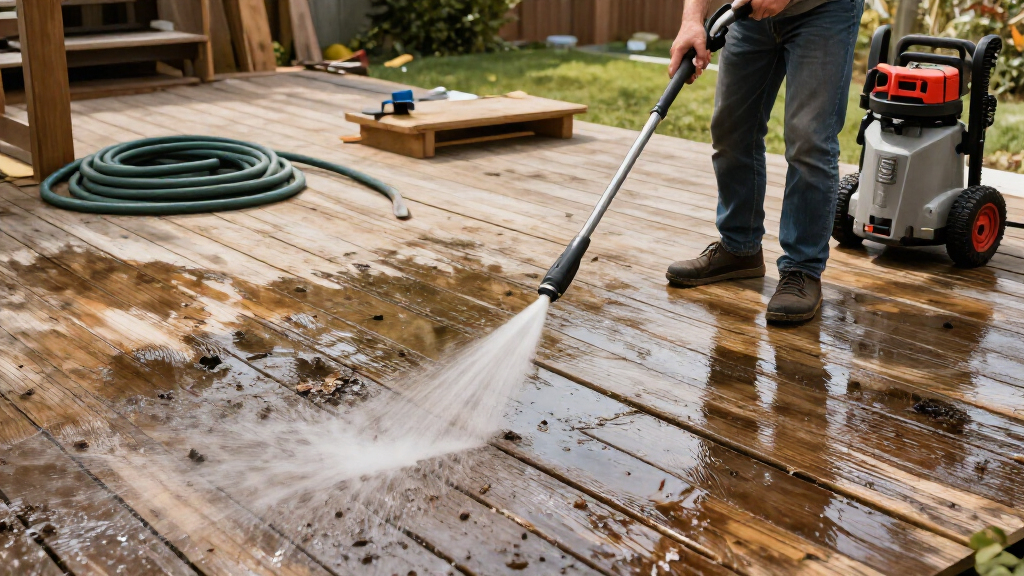
Among these gas-powered pressure washers, my best overall pick is the Simpson PowerShot 3500 PSI, whose Honda GX200 engine and balanced 2.5 GPM rating suit demanding home projects. The Westinghouse WPX3400 stands out for a strong combination of pressure and water flow, while the Simpson Clean Machine 3200 offers a turbo nozzle for tackling stubborn buildup. The main tradeoff is between pressure and flow for heavy cleaning and manageable output for more delicate surfaces; engine, pump, and nozzle details matter as much as headline PSI. I compare all 15 options by their stated specs, equipment, and likely buyer fit. Continue reading for the full breakdown and a guide to choosing the right machine.

Get business pricing on tools and workshop supplies
- Business-only prices and quantity discounts
- Tax-exempt purchasing
- Multiple users, one account, clear invoices
Complete the kit


Key Takeaways
- The Simpson PowerShot 3500 PSI is the standout balanced pick: its Honda GX200 engine and 2.5 GPM flow distinguish it from high-pressure models that advertise 4.0 GPM but provide fewer details about brand or build.
- The Westinghouse WPX3400 leads the named-brand options on stated output: 3400 PSI, 2.6 GPM, an onboard soap tank, and five nozzles make it more versatile than the WPX3000 and WPX3200.
- Three listings claim 4200 PSI and 4.0 GPM: that output may suit larger, heavily soiled areas, but shoppers should check pump specifications, warranty, and service support rather than relying on the headline numbers.
- The two 3500 PSI generic listings are close on paper: their 212cc and 209cc engine descriptions, axial aluminum pumps, and accessory sets call for careful comparison of exact model details and seller support.
- No single pressure level suits every surface: the 3200 PSI Simpson with a turbo nozzle emphasizes targeted cleaning, while machines with multiple quick-connect tips give users more ways to adjust the spray.


| gas powered pressure washer | Engine | Hose length | Flow rate | Pressure |
|---|---|---|---|---|
| Gas Powered Pressure Washer 35 | 212cc, 7HP | 25 ft | — | — |
| Westinghouse WPX3000 Gas Press | — | 25 ft | 2.3 GPM | 3000 PSI |
| Westinghouse WPX3200 Gas Press | 212cc 4-stroke OHV | 25 ft | 2.5 GPM | 3200 PSI |
| 3500 PSI Gas Pressure Washer | 212cc 4-stroke OHV | 25 ft | — | — |
| 4200 PSI Gas Pressure Washer 4 | 212cc 7HP 4-stroke OHV gasoline engine | 25 ft | 4.0 GPM | 4200 PSI |
| 4200 PSI Gas Pressure Washer | 212cc, 7HP gas engine | 25 feet | 4.0 GPM | — |
| Simpson Clean Machine 3400 PSI | 208cc CRX engine | 25 feet | 2.5 GPM | 3400 PSI |
| Simpson Clean Machine 3200 PSI | 174cc | 25 feet | 2.5 GPM | 3200 PSI |
| 4200 PSI Gas Pressure Washer | 212cc, 7HP | 25 feet | — | — |
| Westinghouse WPX3400 Gas Press | 212cc 4-stroke OHV | 25 feet | 2.6 GPM | 3400 PSI |
| DeWalt 3300 PSI Gas Pressure W | DeWalt 208cc | 25 ft | 2.4 GPM | 3,300 PSI |
| 4200 PSI Gas Pressure Washer w | 209cc, 7HP | 25 ft | — | — |
| Gas Powered Pressure Washer 35 | 209cc, 7HP | 25 ft | — | — |
| 4200 PSI 4.0 GPM Gas Pressure | 212cc, 7HP four-stroke OHV gasoline engine | 25 ft | 4.0 GPM | 4,200 PSI |
| Simpson PowerShot 3500 PSI Gas | Honda GX200 | — | 2.5 GPM | 3,500 PSI |
More Details on Our Top Picks
Gas Powered Pressure Washer 3500 PSI – 2.3 GPM Heavy Duty High Power Washer, 212CC 7HP Engine with 25ft Pressure Hose, Axial Aluminum Pump, Soap Tank, 4 Quick Connect Nozzles
This model makes sense for homeowners who want 3500 PSI cleaning power for driveways, siding, and other stubborn outdoor grime without stepping up to the much higher flow of the 4200 PSI, 4.0 GPM option in this roundup. Its 212cc, 7HP engine and axial aluminum pump support demanding household jobs, while four quick-connect nozzles let you adjust the spray for different surfaces. The included 25-foot hose gives useful reach around a typical home. Compared with the Westinghouse WPX3200, this washer offers more stated pressure but less flow, so it leans toward concentrated cleaning rather than faster coverage. The tradeoff is physical: at 63 pounds, it can take effort to reposition, and its gas engine needs routine fuel and maintenance care.
Pros:- 3500 PSI provides strong pressure for demanding residential cleaning.
- 212cc, 7HP engine and axial aluminum pump are suited to heavy-duty home tasks.
- Four quick-connect nozzles offer spray choices for different jobs.
- 25-foot hose and large tires support reach and movement around outdoor work areas.
Cons:- At 63 pounds, it may be difficult to lift or transport.
- Gas operation requires fuel handling and regular engine and pump maintenance.
- Its 2.3 GPM flow rate is lower than the 4.0 GPM 4200 PSI option for covering large areas quickly.
Best for: Homeowners tackling stubborn driveway, siding, and patio dirt who want strong pressure and multiple spray options.
Not ideal for: Buyers who need to move a washer up stairs or prioritize lighter handling, quiet operation, or minimal engine upkeep.
- Power source:Gas-powered
- Maximum pressure:3500 PSI
- Maximum flow rate:2.3 GPM
- Engine:212cc, 7HP
- Pump:Axial aluminum
- Hose length:25 ft
- Weight:63 lb
- Dimensions:21.5 × 23.5 × 39.5 in
Our verdict“Choose this model for pressure-focused residential cleaning, but pick a higher-flow washer for faster coverage across large surfaces.”
Westinghouse WPX3000 Gas Pressure Washer, 3000 PSI, 2.3 GPM, Spray Gun, Wand, 4 Nozzle Set
The Westinghouse WPX3000 is the more restrained choice for buyers who need a gas washer for decks, fences, vehicles, and routine driveway cleanup, rather than the strongest pressure in this group. Its 3000 PSI and 2.3 GPM sit below the Westinghouse WPX3200’s 3200 PSI and 2.5 GPM, making the WPX3000 a less forceful option for stubborn buildup but still a capable fit for regular outdoor maintenance. A 25-foot hose, four quick-connect nozzles, and never-flat wheels make it practical to move between common household jobs. The listed three-year limited warranty adds a stated coverage term that the other product descriptions here do not provide. Buyers should still expect the weight and upkeep that come with a gas engine, and the 0.95-gallon tank capacity may call for refills during extended sessions.
Pros:- 3000 PSI and 2.3 GPM suit a range of everyday outdoor cleaning tasks.
- Four nozzles provide useful spray options, including a soap setting.
- Never-flat wheels and a 25-foot hose help with repositioning and reach.
- Includes a three-year limited warranty.
Cons:- Lower pressure and flow than the Westinghouse WPX3200 in this roundup.
- Gas operation requires fueling and routine engine maintenance.
- Its weight may make transport difficult, and the listed tank capacity is 0.95 gallons.
Best for: Homeowners who want a gas-powered washer for recurring deck, fence, vehicle, and moderate driveway cleaning, with a stated warranty term.
Not ideal for: Buyers regularly removing heavy buildup or washing large areas who would benefit from the WPX3200’s higher pressure and flow or a 4.0 GPM model.
- Power:Gas-powered, 212cc 4-stroke engine
- Pressure:3000 PSI
- Flow rate:2.3 GPM
- Tank capacity:0.95 gallons
- Hose length:25 ft
- Nozzles:Four quick-connect nozzles: 0°, 25°, 40°, and soap
- Wheels:Never-flat
- Warranty:3-year limited
Our verdict“Pick the WPX3000 for routine home cleaning and a stated warranty, but step up to the WPX3200 when you need more cleaning capacity.”
Westinghouse WPX3200 Gas Pressure Washer, 3200 PSI, 2.5 GPM, Onboard Soap Tank, 5 Nozzle Set
The WPX3200 earns its place through a useful mix of output and job flexibility: 3200 PSI and 2.5 GPM give it more cleaning capacity than the WPX3000, while five quick-connect nozzles and an onboard soap tank make it easier to switch between rinsing and detergent-based work. That combination suits homeowners cleaning a mix of decks, furniture, siding, and driveways without moving up to the 4200 PSI, 4.0 GPM machine, whose output may be more than routine jobs require. Its 212cc engine, steel frame, and high-profile wheels are aimed at outdoor use, and the 25-foot hose offers workable reach. The downside is the familiar gas-washer burden: this unit weighs 63 pounds, needs fuel and maintenance, and is not a light choice for frequent lifting or storage in tight spaces.
Pros:- 3200 PSI and 2.5 GPM exceed the WPX3000’s listed output.
- Onboard soap tank supports detergent-based cleaning without a separate tank.
- Five quick-connect nozzles give more spray choices than the four-nozzle models in this batch.
- Steel frame, high-profile wheels, and a 25-foot hose support outdoor mobility and reach.
Cons:- At 63 pounds, it can be awkward to lift or load.
- Gas fueling and engine maintenance add ongoing work.
- Its output is less suited to rapid coverage of very large areas than the 4.0 GPM washer in this roundup.
Best for: Homeowners who alternate between detergent washing and rinsing across decks, siding, outdoor furniture, and driveways.
Not ideal for: Buyers who need a lightweight unit, avoid gas-engine upkeep, or want the faster large-area coverage of a 4.0 GPM washer.
- Power source:Gasoline
- Pressure:3200 PSI
- Flow rate:2.5 GPM
- Engine:212cc 4-stroke OHV
- Soap tank:0.9-gallon onboard tank
- Nozzles:Five quick-connect nozzles
- Hose length:25 ft
- Weight:63 lb
Our verdict“Choose the WPX3200 for varied residential jobs where an onboard soap tank and extra nozzle matter more than maximum flow.”
3500 PSI Gas Pressure Washer, 2.3 GPM with 212cc Engine, 4 Nozzles & 25 FT Hose for Outdoor Cleaning
This 3500 PSI model is a close match for buyers comparing pressure-focused gas washers, but its clearest practical distinction is a listed 59.5-pound weight—lighter than the 63-pound models here, including the WPX3200. That difference will not make it effortless to lift, but it may help when rolling or loading the unit. Its 212cc 4-stroke OHV engine, 2.3 GPM flow, and four nozzles cover common driveway, patio, siding, and vehicle jobs. Against the first 3500 PSI washer in this batch, it offers the same stated pressure and flow with a slightly lower listed weight, while the first model specifies a 7HP engine and axial aluminum pump. This option lists a 0°, 15°, 40°, and soap nozzle set, but its product data does not mention an onboard soap tank or extra accessories.
Pros:- 3500 PSI supplies pressure for demanding household outdoor jobs.
- Listed weight of 59.5 pounds is below the 63-pound models in this batch.
- Four nozzles include 0°, 15°, 40°, and soap spray patterns.
- 25-foot hose and wheeled steel frame support reach and repositioning.
Cons:- 2.3 GPM is lower than the WPX3200’s 2.5 GPM and the 4.0 GPM option’s stated flow.
- The product data does not specify a pump type or onboard soap tank.
- Gas operation requires fuel and engine oil, and the unit remains heavy for lifting.
Best for: Homeowners who want 3500 PSI for outdoor cleaning and value a slightly lower listed weight than the 63-pound alternatives.
Not ideal for: Buyers seeking an onboard soap tank, a documented pump type, or high flow for quickly cleaning broad surfaces.
- Power source:Gas-powered
- Maximum pressure:3500 PSI
- Maximum flow rate:2.3 GPM
- Engine:212cc 4-stroke OHV
- Nozzles:Four: 0°, 15°, 40°, and soap
- Hose length:25 ft
- Weight:59.5 lb
- Dimensions:39.37 × 23.5 × 21.5 in
Our verdict“Pick this 3500 PSI model if a slightly lower listed weight matters, but choose the WPX3200 for higher flow and an onboard soap tank.”
4200 PSI Gas Pressure Washer 4.0 GPM 212CC Gas Power Washer with 25ft Hose & 5 Nozzles
For buyers who value speed across large, heavily soiled surfaces, this is the clear step up in the batch: its stated 4200 PSI and 4.0 GPM exceed the 3500 PSI, 2.3 GPM models by a wide margin. The higher flow can move more water across a broad work area, while five quick-connect nozzles provide options for changing the spray task. A 3.6-liter fuel tank and 10-inch pneumatic wheels are practical touches for longer outdoor sessions and uneven ground. Compared with the Westinghouse WPX3200, this machine is built around throughput rather than a listed onboard soap tank; the WPX3200 is the more grounded fit for varied residential cleaning at lower output. This unit is also likely to be louder and more demanding to handle, and its high-pressure output calls for careful nozzle and surface selection.
Pros:- 4200 PSI and 4.0 GPM provide the highest listed output among these five products.
- Five quick-connect nozzles support different spray tasks.
- 3.6-liter fuel tank is suited to longer cleaning sessions.
- 10-inch pneumatic wheels are designed for movement across outdoor terrain.
Cons:- High output can be unsuitable for delicate surfaces without careful nozzle and distance choices.
- The gas engine requires fuel and oil, and operation may be noisy.
- It may be difficult to transport, and the product data does not list an onboard soap tank.
Best for: Experienced users cleaning large driveways, exterior surfaces, or other demanding areas who want high pressure and high water flow.
Not ideal for: First-time users, people washing delicate surfaces, or buyers who want a lower-output machine with a listed onboard soap tank.
- Pressure:4200 PSI
- Flow rate:4.0 GPM
- Engine:212cc 7HP 4-stroke OHV gasoline engine
- Nozzles:Five quick-connect nozzles
- Hose length:25 ft
- Fuel tank capacity:3.6 L
- Wheels:10-inch pneumatic wheels
- Certifications:EPA, CARB, ETL
Our verdict“Choose this washer for demanding, large-area cleaning where high flow matters, not for light household jobs or delicate surfaces.”
4200 PSI Gas Pressure Washer, 4.0 GPM, 212CC Gas Powered Commercial High Pressure Washer with 25ft Hose & 5 Nozzles
For buyers tackling broad, heavily soiled surfaces, this model pairs 4200 PSI with 4.0 GPM, giving it a higher flow rate than the Simpson Clean Machine 3400 PSI and the Westinghouse WPX3400. That extra water volume can help move debris across large driveways and outdoor work areas faster, though it may be more machine than routine vehicle or furniture cleaning calls for. Its 212cc, 7HP engine, five quick-connect nozzles, and 25-foot hose offer a useful mix of power and reach. At 60 pounds, it is lighter than the other 4200 PSI model in this batch, but still not an easy unit to carry. I’d shortlist it for demanding jobs, not for buyers seeking a small, low-maintenance washer.
Pros:- 4.0 GPM flow is suited to moving debris across large surfaces.
- 212cc, 7HP engine supports demanding cleaning tasks.
- Five quick-connect nozzles and a 25-foot hose provide useful setup flexibility.
- At 60 pounds, it weighs less than the 66-pound 4200 PSI alternative in this batch.
Cons:- High pressure and flow can be excessive for delicate finishes if used with the wrong nozzle or technique.
- Its 60-pound weight makes carrying and loading difficult.
- Gas operation requires fuel and oil maintenance, and there is no electric start.
Best for: Homeowners or small property-maintenance operators cleaning large driveways, decks, and other surfaces where high water flow can save time.
Not ideal for: People who mainly wash cars or patio furniture, or anyone who needs a lightweight, easy-to-store washer and wants to avoid gas-engine upkeep.
- Maximum pressure:4200 PSI
- Flow rate:4.0 GPM
- Engine:212cc, 7HP gas engine
- Hose length:25 feet
- Nozzles:5 quick-connect nozzles
- Weight:60 pounds
- Dimensions:20 x 20 x 22 inches
- Certifications:EPA, CARB, and ETL
Our verdict“Choose this 4200 PSI model for large, tough cleaning jobs where 4.0 GPM matters more than easy carrying and simple upkeep.”
Simpson Clean Machine 3400 PSI Gas Pressure Washer, 2.5 GPM, CRX engine
The Simpson Clean Machine is a practical fit for regular home jobs, with 3400 PSI and 2.5 GPM for cleaning siding, decks, and driveways without the 4.0 GPM output of the high-flow 4200 PSI washer in this batch. Its maintenance-free axial cam pump is a useful distinction for owners who want less pump servicing, while the 208cc CRX engine and four quick-connect tips cover common cleaning setups. The 25-foot hose offers the same reach as several alternatives, including the Westinghouse WPX3400. The tradeoff is weight: at 64 pounds, it is not a light-duty choice to lift or load, and its listed 49-state compliance means it is not suitable for sale in California. I’d favor it for routine outdoor upkeep over commercial-scale work.
Pros:- 3400 PSI and 2.5 GPM suit a range of household outdoor cleaning tasks.
- Maintenance-free axial cam pump reduces pump-service demands.
- Four quick-connect tips cover focused, wider, and soap applications.
- 25-foot hose and pneumatic tires support reach and movement around the yard.
Cons:- Not suitable for sale in California according to the listed compliance information.
- At 64 pounds, it can be cumbersome to lift or transport.
- Its residential-use positioning and 2.5 GPM flow are less suited to sustained, large-scale work than the 4200 PSI, 4.0 GPM options.
Best for: Homeowners outside California who want a gas washer for recurring deck, siding, driveway, and vehicle cleanup with a maintenance-free axial cam pump.
Not ideal for: California buyers, people who need high water flow for large commercial cleaning jobs, or anyone unable to move a 64-pound machine.
- Pressure:3400 PSI
- Flow rate:2.5 GPM
- Engine:208cc CRX engine
- Pump:Maintenance-free axial cam pump
- Hose length:25 feet
- Nozzles:4 quick-connect tips: 0°, 15°, 40°, and soap
- Weight:64 pounds
- Compliance:49-state compliant
Our verdict“Pick the Simpson Clean Machine for household cleaning and a low-maintenance pump, provided its California restriction and 64-pound weight work for you.”
Simpson Clean Machine 3200 PSI Gas Pressure Washer, 2.5 GPM, Turbo Nozzle
This Simpson Clean Machine gives residential users a different kind of cleaning advantage from the 3400 PSI Clean Machine: it has 3200 PSI and a turbo nozzle intended to speed up work on stubborn, compatible surfaces. Its 2.5 GPM flow matches the larger Simpson’s listed rate, while the lower pressure makes it the less forceful option on paper. The 174cc engine and 50-pound weight also make it lighter than that 64-pound alternative, though 50 pounds is still a substantial load to lift. An axial cam pump, built-in soap tank, and 25-foot hose round out a familiar residential setup. I’d choose it for varied yard maintenance where the turbo nozzle is useful; skip it if you need the greater pressure of the 3400 PSI model or California availability.
Pros:- Turbo nozzle can speed cleaning on compatible, durable surfaces.
- 2.5 GPM flow supports common residential jobs.
- Built-in soap tank and 25-foot hose simplify routine setup.
- At 50 pounds, it is lighter than the 64-pound Simpson Clean Machine 3400 PSI.
Cons:- Its 3200 PSI rating is lower than the Simpson Clean Machine 3400 PSI.
- A 50-pound weight can still make lifting and loading awkward.
- Gas-engine upkeep is required, and the product is listed as unsuitable for sale in California.
Best for: Homeowners who clean decks, driveways, and outdoor furniture and want a turbo nozzle for stubborn dirt on suitable surfaces.
Not ideal for: California buyers, users who need the strongest pressure in this lineup, or anyone looking for a genuinely lightweight washer.
- Pressure:3200 PSI
- Flow rate:2.5 GPM
- Engine:174cc
- Pump:OEM Technologies axial cam pump
- Hose length:25 feet
- Weight:50 pounds
- Dimensions:22 x 18 x 35.75 inches
- Warranty:2-year engine, 1-year pump, 5-year frame, and 90-day accessories
Our verdict“Choose this Simpson for residential cleanup where a turbo nozzle and lower weight than its 3400 PSI sibling matter more than maximum pressure.”
4200 PSI Gas Pressure Washer, 4.0 Max GPM, 212CC 7HP Commercial Gas Power Washer with Spray Gun, Wand, and 5 Nozzle Set
This 4200 PSI washer shares its headline 4.0 GPM output and 212cc, 7HP engine with the lighter 4200 PSI model in this batch, so both target large or stubborn cleaning jobs rather than delicate routine work. Its listed kit includes a spray gun, wand, five quick-connect nozzles, and a soap tank, giving buyers a ready range of cleaning options. The key tradeoff is portability: at 66 pounds, it is heavier than the other 4200 PSI choice at 60 pounds, with no stated performance advantage over that model in the supplied specifications. The 25-foot hose and large tires help with movement once set up, but don’t make it easy to carry. I’d choose it when the supplied accessories and high flow fit the job, rather than for weight-conscious buyers.
Pros:- 4200 PSI and up to 4.0 GPM suit heavy cleaning on broad, durable surfaces.
- 212cc, 7HP engine is specified for demanding work.
- Five quick-connect nozzles, spray gun, wand, and soap tank provide setup options.
- 25-foot hose and large tires help with reach and rolling movement.
Cons:- At 66 pounds, it is heavier than the other 4200 PSI, 4.0 GPM washer in this batch.
- High pressure can damage unsuitable surfaces if the nozzle or technique is poorly matched.
- Gas operation requires fuel and routine engine maintenance.
Best for: Property owners or small work crews who need high-flow cleaning for large paved areas and value a broad nozzle and spray-gun setup.
Not ideal for: Buyers who prioritize easier lifting, mostly clean delicate surfaces, or want a clearly lighter alternative with the same listed pressure and flow.
- Maximum pressure:4200 PSI
- Maximum flow rate:4.0 GPM
- Engine:212cc, 7HP
- Hose length:25 feet
- Nozzle set:5 quick-connect nozzles
- Tank volume:1 liter
- Weight:66 pounds
- Certifications:EPA and CARB
Our verdict“Choose this model for high-flow jobs when its included spray setup suits your needs, but the lighter 60-pound 4200 PSI alternative is easier to handle.”
Westinghouse WPX3400 Gas Pressure Washer, 3400 PSI, 2.6 GPM, Onboard Soap Tank, 5 Nozzle Set
The Westinghouse WPX3400 is the versatile middle ground here: its 3400 PSI and 2.6 GPM exceed the Simpson Clean Machine 3400 PSI’s 2.5 GPM flow by a small amount, while staying well below the 4.0 GPM output of the heavy-duty 4200 PSI options. That makes it a better match for mixed home tasks than for sustained high-volume work. Its five-nozzle set includes 25-degree and soap tips, and the 1.6-liter onboard soap tank supports detergent use without requiring a separate container. Never-flat, 12-inch wheels are handy for rolling over yard surfaces, though the supplied data does not give a weight, so I can’t compare its lifting burden directly. Gas maintenance remains part of ownership; this is a flexible home washer, not a maintenance-free option.
Pros:- 3400 PSI and 2.6 GPM balance cleaning force and flow for varied home jobs.
- Five nozzles include a 25-degree option and a soap tip.
- The 1.6-liter onboard tank makes detergent application more convenient.
- 12-inch never-flat wheels help roll the unit around outdoor work areas.
Cons:- Its 2.6 GPM flow is substantially below the 4.0 GPM 4200 PSI models for moving debris across large areas.
- Gas-engine operation requires ongoing fuel and maintenance.
- The supplied specifications omit weight, leaving buyers without a listed figure for judging lifting and storage demands.
Best for: Homeowners who want one gas washer for varied deck, driveway, and vehicle tasks, with onboard detergent storage and multiple nozzle choices.
Not ideal for: Users cleaning large commercial areas who need 4.0 GPM flow, or buyers seeking to avoid fuel, oil, and engine maintenance.
- Pressure:3400 PSI
- Flow rate:2.6 GPM
- Engine:212cc 4-stroke OHV
- Onboard soap tank:1.6 liters
- Hose length:25 feet
- Nozzle set:5 nozzles: 0°, 15°, 25°, 40°, and soap
- Wheels:12-inch high-profile, never-flat
- Fuel tank capacity:3.3 liters
Our verdict“Pick the WPX3400 for varied household cleaning and convenient soap application, not for the high-volume work suited to a 4.0 GPM washer.”
DeWalt 3300 PSI Gas Pressure Washer, 2.4 GPM, Residential Model DXPW3300-S
The DeWalt DXPW3300-S balances useful cleaning force with a residential-friendly 2.4 GPM flow rate, making it a more measured choice for patios, siding, and driveways than the 4.0 GPM models in this group. Its five quick-connect nozzles give buyers options for changing spray patterns, while the 25-foot hose and pneumatic tires help with reach and movement around a property. Compared with the Simpson PowerShot, it has a lower stated flow rate and an axial-cam pump rather than a triplex pump, so it is less geared toward sustained professional work. The welded steel frame and stated warranty coverage are practical strengths, but this is still a bulky, fuel-powered machine that needs routine care. Its 49-state compliance also rules it out for some buyers.
Pros:- 3,300 PSI and 2.4 GPM suit a range of residential exterior cleaning jobs.
- Five quick-connect nozzles include a soap option for switching between tasks.
- Powder-coated welded-steel frame and 10-inch pneumatic tires support outdoor mobility.
- Warranty coverage is specified for the frame, pump, and engine.
Cons:- Its heavy, bulky frame may be awkward to transport or store.
- 49-state compliance makes it unsuitable for buyers in the excluded state.
- As with other gas models, it requires fuel handling and ongoing engine maintenance.
Best for: Homeowners who want a gas washer for recurring patio, siding, and driveway cleaning and value a broad nozzle set.
Not ideal for: California buyers, or anyone seeking a lighter machine or a higher-flow option for frequent heavy-duty work.
- Pressure:3,300 PSI
- Flow rate:2.4 GPM
- Engine:DeWalt 208cc
- Pump:OEM Technologies axial cam
- Hose length:25 ft
- Nozzles:5 quick-connect: 0°, 15°, 25°, 40°, and soap
- Frame and tires:Powder-coated welded steel; 10-inch pneumatic tires
- Compliance:49-state
- Warranty:5-year frame, 3-year pump, 2-year engine
Our verdict“Choose the DeWalt for varied home cleaning jobs and useful included accessories, but pick a higher-flow model for more demanding, frequent work.”
4200 PSI Gas Pressure Washer with 7HP Engine and Wheels
With a stated 4.0 GPM flow rate alongside 4,200 PSI, this washer is aimed at buyers who want high-output cleaning for broad outdoor surfaces, not just occasional spot work. That flow figure sets it apart from the DeWalt DXPW3300-S and Simpson PowerShot, both of which list lower GPM and are more restrained choices for residential jobs. A 209cc, 7HP engine, 25-foot hose, soap system, and large wheels support extended outdoor use and moving around a work area. The tradeoff is size: the listed dimensions and heavy-duty positioning point to a machine that takes meaningful storage space. It also requires gasoline and routine maintenance, and no electric start is specified, so buyers should be prepared for manual starting rather than assuming push-button convenience.
Pros:- Stated 4,200 PSI and 4.0 GPM target demanding outdoor cleaning tasks.
- 209cc, 7HP engine is suited to a high-output gas washer.
- Soap system and multiple quick-connect nozzles support different cleaning approaches.
- Large wheels and a 25-foot hose aid movement and working reach.
Cons:- Bulky dimensions can make storage and transport difficult.
- Gas operation brings fuel handling and regular maintenance.
- No electric start option is listed.
Best for: Property owners or cleaning crews prioritizing high stated flow for large driveways and other broad outdoor surfaces.
Not ideal for: Buyers with limited storage, occasional light-duty needs, or a preference for electric starting and less engine upkeep.
- Power source:Gas-powered
- Engine:209cc, 7HP
- Maximum pressure:4,200 PSI
- Maximum flow rate:4.0 GPM
- Hose length:25 ft
- Dimensions:21 × 18 × 20 in
- Accessories:Quick-connect nozzles and soap system
- Color:Green
Our verdict“Pick this model when high stated flow matters more than compact storage or easy-start convenience.”
Gas Powered Pressure Washer 3500 PSI – 2.3 GPM Heavy Duty High Power Washer, 209CC 7HP Engine with 25Ft Pressure Hose, Axial Aluminum Pump, Soap Tank, 4 Quick Connect Nozzles
This model pairs 3,500 PSI with 2.3 GPM, landing between residential-focused machines such as the DeWalt DXPW3300-S and the 4.0 GPM washers in this lineup. That makes it a plausible fit for driveways, patios, and vehicle cleaning when a buyer wants gas-powered capability without choosing the highest-flow class. Its 209cc, 7HP engine, aluminum axial pump, soap tank, and four quick-connect nozzles provide a functional task range, though the supplied details do not identify the nozzle angles. Compared with the Simpson PowerShot, it lists slightly less flow and does not specify a Honda engine or triplex pump; the Simpson is the clearer choice for buyers prioritizing those components. This washer has a 25-foot hose and wheels for reach and movement, but its weight and gas-engine upkeep remain real ownership costs.
Pros:- 3,500 PSI provides substantial cleaning pressure for common outdoor tasks.
- 209cc, 7HP engine and axial aluminum pump form a gas-powered setup.
- Soap tank and four quick-connect nozzles offer task flexibility.
- 25-foot hose and wheels help extend reach around outdoor work areas.
Cons:- The 2.3 GPM flow rate is below the 4.0 GPM options in this group.
- Nozzle angles are not specified in the supplied product details.
- Heavy handling, gasoline use, and oil maintenance may burden occasional users.
Best for: Homeowners seeking a gas washer for routine driveway, patio, and vehicle cleaning with a soap tank included.
Not ideal for: Buyers who need the highest flow for larger jobs or specifically want a named Honda engine and triplex pump.
- Maximum pressure:3,500 PSI
- Maximum flow rate:2.3 GPM
- Engine:209cc, 7HP
- Pump:Axial aluminum
- Hose length:25 ft
- Nozzles:4 quick-connect nozzles
- Soap feature:Soap tank
- Power source:Gas-powered
Our verdict“Choose this washer for a midrange mix of pressure and included cleaning accessories, not for maximum flow or premium component specifications.”
4200 PSI 4.0 GPM Gas Pressure Washer, 212cc Heavy Duty Power Washer for Outdoor Cleaning
The combination of 4,200 PSI and 4.0 GPM places this washer in the high-output tier of the roundup, well above the DeWalt DXPW3300-S in stated flow. Its 212cc four-stroke OHV engine, 3.6-liter fuel tank, and five quick-connect nozzles are aimed at longer outdoor cleaning sessions where changing spray patterns matters. Ten-inch pneumatic wheels and a steel frame support movement over rougher surfaces, giving it a more clearly specified mobility setup than the 4200 PSI washer with 7HP in this batch. The cost of that capability is a heavy, bulky machine that still needs pull-starting and regular fuel and oil care. Buyers should also match nozzle choice and pressure to the surface: maximum output is not automatically suitable for every deck, vehicle, or siding material.
Pros:- 4,200 PSI and 4.0 GPM provide high stated cleaning output.
- Five quick-connect nozzles allow spray selection for different tasks.
- Ten-inch pneumatic wheels and a steel frame support outdoor mobility.
- The 3.6-liter tank is specified for longer runs between refills.
Cons:- Heavy, bulky construction can complicate loading and storage.
- Manual pull-start and regular fuel and oil management are required.
- Its high output calls for careful nozzle and surface selection.
Best for: Owners of large properties who need high flow, multiple spray options, and pneumatic wheels for moving between outdoor areas.
Not ideal for: Small-space owners, people seeking electric start, or buyers mainly washing delicate surfaces and small items.
- Pressure:4,200 PSI
- Flow rate:4.0 GPM
- Engine:212cc, 7HP four-stroke OHV gasoline engine
- Nozzles:5 quick-connect nozzles
- Hose length:25 ft
- Fuel tank capacity:3.6 L
- Wheels:10-inch pneumatic
- Certifications:EPA, CARB, ETL
Our verdict“Choose this model for high-flow outdoor work and wheeled mobility, provided you can accommodate its size and manual-start gas engine.”
Simpson PowerShot 3500 PSI Gas Pressure Washer, 2.5 GPM, Honda GX200 Engine
The Simpson PowerShot stands apart from the less-specified 3,500 PSI washer in this batch through its named Honda GX200 engine and AAA triplex pump. At 3,500 PSI and 2.5 GPM, it delivers a moderate flow rate compared with the 4.0 GPM models, trading peak water output for a component-focused setup suited to demanding cleaning work. The 25-foot MorFlex hose, quick-connect nozzles, low-oil shutdown, and pump thermal relief add practical protections and usability details. Its listed 74-pound weight, however, is a substantial handling commitment; the DeWalt is also bulky, but this Simpson is explicitly heavier than many buyers may expect from a wheeled washer. It is not suitable for sale in California, and the machine needs assembly and regular maintenance. I’d favor it for buyers who value the specified engine and pump over maximum flow.
Pros:- Honda GX200 engine includes low-oil shutdown.
- AAA triplex pump has thermal relief.
- 3,500 PSI and 2.5 GPM suit demanding cleaning tasks.
- Warranty terms are specified for the engine, pump, and frame.
Cons:- At 74 lb, it can be difficult to lift or transport.
- Not suitable for sale in California.
- Assembly and ongoing gas-engine maintenance are required.
Best for: Frequent users and cleaning professionals who prioritize a named Honda engine and triplex pump over maximum GPM.
Not ideal for: California buyers, users who need a lighter machine, or those seeking 4.0 GPM for faster coverage of broad surfaces.
- Pressure:3,500 PSI
- Flow rate:2.5 GPM
- Engine:Honda GX200
- Pump:AAA triplex pump
- Hose:25 ft MorFlex
- Weight:74 lb
- Dimensions:21 × 24 × 34 in
- Warranty:3-year limited engine, 5-year limited pump, 10-year limited frame
Our verdict“Choose the PowerShot for its specified Honda engine and triplex pump, unless you need California availability or the higher flow of a 4.0 GPM model.”
How We Picked
I compared the 15 listings using buyer-relevant criteria: stated PSI and GPM, engine and pump details, nozzle and soap-tank equipment, hose length, and the information available to judge serviceability. PSI indicates the force available at the spray tip, while GPM affects how quickly a machine can move dirt and rinse a large surface; I treated both as useful, but not interchangeable, performance indicators. I gave additional weight to identifiable engines and clearer feature sets because they make it easier to judge what a buyer is getting beyond a headline output claim.
The ranking favors useful balance and decision-ready specifications over the biggest number. That puts the Simpson PowerShot ahead for its named Honda engine and 2.5 GPM flow, with the Westinghouse WPX3400 next for its stronger listed flow and broad nozzle set. The 4200 PSI, 4.0 GPM listings may offer compelling stated output, but their similar descriptions and limited brand or component detail make them harder to distinguish confidently. Since listing specifications do not establish real-world performance, buyers should verify the exact model, warranty, and pump details before ordering.
Factors to Consider When Choosing Gas Powered Pressure Washers
Choosing a gas washer is less about finding the largest PSI figure and more about matching cleaning power, water flow, and equipment to the work you actually do. I would use these broader checks to avoid overbuying, damaging a surface, or ending up with a machine that is difficult to maintain.
Match PSI and GPM to the Job
PSI and GPM describe different parts of cleaning performance. Pressure helps break the bond between grime and a surface, while water flow helps carry loosened debris away and rinse more quickly. For a long driveway or large concrete area, flow can matter as much as a high pressure claim because it affects how quickly you can cover ground. Softer wood, painted surfaces, and vehicles need a gentler approach, even if the washer has ample output. Choose a machine with suitable nozzles and use a wider spray pattern before reaching for a narrow, aggressive one. Treat maximum ratings as a starting point, not a promise that every surface can tolerate that output.
Look Past the Headline Engine and Pressure Claims
Named engine and pump details make a listing easier to evaluate. Displacement or horsepower alone does not tell you how long a machine will last, how it will be supported, or how straightforward repairs will be. Check whether the seller identifies the pump type, offers a clear warranty, and lists replacement parts or service information. Several listings here share nearly identical 4200 PSI and 4.0 GPM claims, so the numbers alone do little to separate them. Compare exact model numbers and manufacturer documentation instead of assuming similar specifications mean similar construction. If those details are missing, treat the advertised output with caution.
Choose Nozzles for Control, Not Just Count
Nozzle choice changes how the machine behaves at the surface. A wider-angle tip spreads the spray over more area and is generally easier to control, while a narrow tip concentrates force in a smaller spot. A turbo nozzle can help break up stubborn buildup on suitable hard surfaces, but its concentrated, rotating spray calls for distance and care. A set with more tips is useful only if the angles match the jobs you plan to do. Start farther from the surface, test a small inconspicuous area, and move closer gradually. Avoid using an aggressive tip on siding, wood, trim, or vehicle finishes without checking the surface guidance.
Plan for Water Supply, Hose Reach, and Setup
High flow is useful only when the water supply can keep up. Before choosing a 4.0 GPM machine, confirm that your tap and hose can provide steady water at the washer’s inlet; a mismatch can interrupt work and put stress on equipment. Hose length affects how often you move the unit, but a longer hose can also add storage bulk and may not be included on every listing. Check the supplied hose length, fittings, and whether the machine has a soap tank or requires a separate detergent setup. Think about transport and storage too: gas models need room for the unit, fuel, and accessories, along with outdoor operating space. These practical details can matter more over a full cleaning session than a small difference in PSI.
Weigh Maintenance and Support Against Purchase Cost
Gas power brings upkeep that electric models generally avoid. Plan for fuel handling, engine oil checks, winter storage, and following the pump manufacturer’s instructions for storage and maintenance. A recognizable engine brand can make support and parts easier to research, but it does not replace checking the warranty for the complete washer. Ask how the pump is covered, what service channels are available, and whether routine parts can be sourced. Paying more may make sense for frequent use when the engine, pump, and support information are clearer. For occasional seasonal jobs, a simpler machine may be a better fit if its documentation and service terms meet your needs.
Frequently Asked Questions
Is a 4200 PSI, 4.0 GPM washer automatically better than a 3400 PSI model?
No—higher stated output is not a universal advantage. A 4200 PSI, 4.0 GPM machine may help with large, heavily soiled hard surfaces, but it can be excessive for delicate materials and demands a suitable water supply. A model such as the Westinghouse WPX3400 lists 3400 PSI and 2.6 GPM, which may be a more manageable balance for mixed household tasks. Nozzle choice, pump quality, and clear warranty information also affect the buying decision. Match the machine to your surfaces and workload rather than choosing by the largest number.
Which option makes the most sense for a homeowner who wants one washer for several jobs?
I would start with a balanced model that has multiple nozzle options and a practical flow rate. The Simpson PowerShot 3500 PSI combines 2.5 GPM with a named Honda GX200 engine, while the Westinghouse WPX3400 lists 2.6 GPM, an onboard soap tank, and five nozzles. Either profile is more adaptable for mixed work than choosing a high-output machine solely for its maximum rating. Before deciding, check the manufacturer’s surface guidance and the included nozzle angles. Use a less aggressive tip and test area first when moving between concrete, wood, and vehicle finishes.
Are the similar 4200 PSI listings interchangeable?
I would not assume they are interchangeable from the titles alone. Several listings share 4200 PSI, 4.0 GPM, and a 212cc engine, but the descriptions do not establish that their pumps, warranties, or support are the same. Compare the exact model number, pump specifications, included accessories, and service terms before buying. Check whether the listed 4.0 GPM is described as a maximum rating and what operating specifications the manufacturer provides. If those details are difficult to verify, a listing with clearer product documentation may be the safer choice.
What should I check before using a gas washer on a deck or car?
Check the surface guidance and begin with a gentle spray setup. High pressure and a narrow tip can scar wood, strip paint, or damage vehicle finishes even when the machine is operating as advertised. Use a wider-angle nozzle, keep the wand moving, and start at a greater distance than you expect to need. Test a hidden area before cleaning the full surface, and avoid a turbo or narrow tip on sensitive materials. Detergent suitability and the washer’s soap application method also matter; follow the product and surface instructions rather than assuming any cleaner is safe.
Is a branded engine worth prioritizing over higher listed PSI?
For frequent use, a clearly identified engine can be a more useful buying signal than a higher PSI claim alone. The Simpson PowerShot names a Honda GX200, which gives buyers a concrete engine specification to research, while several high-output listings provide less identifying information. Engine branding does not prove that the whole washer has superior durability, so also check pump details, warranty coverage, and parts support. If you only clean occasionally, a higher-output machine may still suit your work if its specifications and service terms are clear. Decide based on workload and supportability, not branding or pressure figures in isolation.
Conclusion
My best overall recommendation is the Simpson PowerShot 3500 PSI for buyers who want a balanced output and a specifically named Honda GX200 engine. For a best value-style choice, I would compare the Westinghouse WPX3000 and WPX3200 against your needs: the WPX3000 has a straightforward 3000 PSI, 2.3 GPM setup, while the WPX3200 adds a turbo nozzle and slightly higher stated output. The best premium fit is the Simpson PowerShot if engine identification and frequent-use confidence matter more than the highest advertised figures. For beginners, the Westinghouse WPX3200 is a sensible starting point among these listings because its nozzle set gives more spray options, though care with surface distance still matters. If you clean large, heavily soiled hard areas and can verify water supply, pump details, and support, consider one of the 4200 PSI, 4.0 GPM models; if you need broader household versatility, the WPX3400’s soap tank and five-nozzle set make a more balanced alternative.
Fall Picks
fall essentials
As an affiliate, we earn on qualifying purchases.