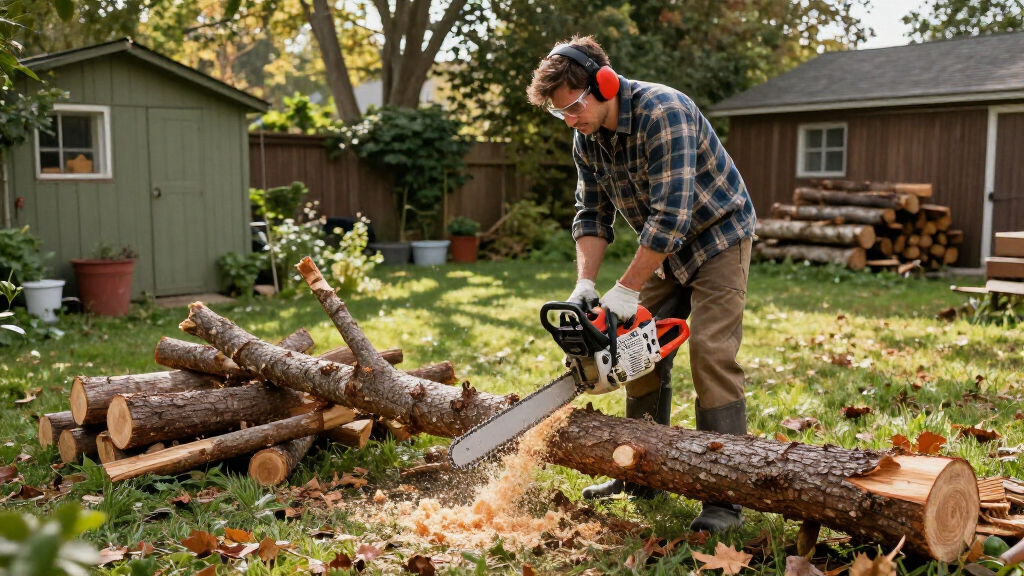
Among these gas powered chainsaws, I’d put the Husqvarna 455 Rancher first for buyers who need a capable 20-inch saw from an established brand, while the Husqvarna 120 Mark III suits lighter home cutting and the 62cc VEVOR 20-inch model offers a larger-engine alternative. The lineup ranges from compact 12- and 16-inch saws to 20- and 24-inch options, so the right choice depends on what you cut and how often. Larger engines and bars can help with bigger wood, but they also add weight and place greater demands on handling and maintenance. Brand support, vibration control, and included bar options also separate these picks. Read on for my full comparison and buying guidance.

Get business pricing on tools and workshop supplies
- Business-only prices and quantity discounts
- Tax-exempt purchasing
- Multiple users, one account, clear invoices
Complete the kit


Key Takeaways
- The Husqvarna 455 Rancher is the strongest all-around fit in this group for recurring property work: its 55cc engine and 20-inch bar offer more cutting capacity than the 16-inch Husqvarna homeowner models.
- The Husqvarna 120 Mark III and 130 are the more approachable choices for lighter jobs, but their 16-inch bars make them less suited to frequent work on large-diameter wood.
- Several listed saws share 62cc engines and 20-inch bars, so buyers should compare support, included equipment, and handling details rather than assuming engine size alone identifies the better saw.
- The 12-inch VEVOR 25.4cc saw fills a distinctly compact role; it is not a substitute for a 20-inch firewood or land-clearing saw.
- Bar options of 20 and 24 inches widen the cutting range on the PROYAMA 62cc and 68cc listings, but longer bars are not an automatic upgrade: they can add handling demands and may be unnecessary for routine limbing or small logs.


| gas powered chainsaw | Bar length | Engine displacement | Horsepower | Brand |
|---|---|---|---|---|
| VEVOR Gas Powered Chainsaw 25. | 12 inches | 25.4CC | — | — |
| VEVOR Gas Chainsaw | 18 inches | 52CC | 2.55HP | — |
| 62cc 20 Inch Gas Chainsaw for | 20 inches | 62cc | 3.5 hp | Baococo |
| Husqvarna 120 Mark III Gas Cha | 16 inches | — | — | — |
| PROYAMA 62cc Gas Powered Chain | — | 62cc | 3.5 hp | — |
| 62cc 20 & 24 Inch Gas Chainsaw | — | 62cc | 3.5 hp | DOWILIN |
| SUPMIXTOOLS 62cc Gas Chainsaw | — | 62cc | 4.2 hp | SUPMIXTOOLS |
| VEVOR 20-inch 62CC Gas Powered | — | — | 3.8 hp | VEVOR |
| Husqvarna 455 Rancher Gas Chai | 20 inches | 55 cc | 3.5 HP | Husqvarna |
| PROYAMA 68CC Gas Powered Chain | — | — | 4.5 HP | — |
| PAPABA 20-Inch 58CC Gas Chains | 20 inches | — | — | PAPABA |
| 2-Cycle 62CC Gas Chainsaw with | — | — | — | — |
| Husqvarna 120 Mark III Gas Cha | 16 inches | — | — | Husqvarna |
| Husqvarna 130 Gas-Powered Chai | 16 inches | — | — | Husqvarna |
| 58cc Gas Chainsaw | 20 inches | 58cc | — | — |
More Details on Our Top Picks
VEVOR Gas Powered Chainsaw 25.4CC 2-Cycle 12 Inch 1.2HP Cordless Chain Saw
The VEVOR CN-25 suits buyers who want a gas engine in a smaller, easier-to-manage package. Its 12-inch bar and 25.4CC engine are better matched to pruning, limbing, and smaller firewood than to felling large trees; the stated maximum cutting diameter is 9.84 inches. At 9.26 pounds, it is substantially lighter than the 15-pound VEVOR 52CC model, which can make short trimming jobs less tiring. That reduced size also sets a firm limit: buyers handling thick trunks or frequent land-clearing work will get more reach and power from the larger saws in this group. Like other gas models, it requires fuel and chain oil rather than the simpler charging routine of a battery saw. I’d choose it for occasional property upkeep, not as a primary saw for heavy cutting.
Pros:- 9.26-pound listed weight is lower than the larger VEVOR 52CC model’s 15 pounds.
- 12-inch bar is well suited to trimming and smaller cutting jobs.
- 25.4CC two-cycle engine provides gas-powered operation in a compact format.
- Fuel and chain-oil capacities are specified, helping buyers plan routine refills.
Cons:- 12-inch bar and 9.84-inch stated maximum cutting diameter limit it on larger wood.
- Small fuel and chain-oil tanks may call for more frequent refills during sustained work.
- Requires gasoline and oil preparation and ongoing engine maintenance.
Best for: Homeowners who need a relatively light gas saw for pruning, limbing, and cutting smaller branches or logs.
Not ideal for: Buyers regularly cutting trunks wider than its stated 9.84-inch maximum or clearing large trees who need a longer bar and more engine capacity.
- Engine displacement:25.4CC
- Engine type:2-cycle
- Power:1.2HP
- Engine speed:8500 RPM
- Bar length:12 inches
- Maximum cutting diameter:9.84 inches / 250 mm
- Weight:9.26 lbs / 4.2 kg
- Fuel tank capacity:0.24 qt / 230 ml
- Chain-oil tank capacity:0.17 qt / 160 ml
Our verdict“Choose this VEVOR for lighter property-maintenance cutting, but move to a longer-bar model for regular work on larger trees.”
VEVOR Gas Chainsaw, 52CC 18″ 2.55HP Gasoline Powered Chain Saw for Tree and Land Clearing
The VEVOR CN-52G lands between compact homeowner saws and the heavier 62CC options: its 52CC engine and 18-inch bar offer more reach for tree work than the 12-inch VEVOR CN-25, without stepping up to a 20-inch-plus bar. A stated cutting diameter of 16.93 inches gives it a clearer fit for medium-sized logs and general land clearing. Its shock absorber is intended to reduce vibration, while the larger fuel and oil tanks support longer stretches between refills than the smaller VEVOR. The tradeoff is heft: at 15 pounds, it is a demanding choice for prolonged overhead limbing or all-day handheld work. The product information also notes reported startup issues, so buyers should weigh that uncertainty against its useful bar-and-engine combination. I see it as a middle-ground work saw, not the easiest pick to handle.
Pros:- 52CC engine and 2.55HP rating provide more capacity than the VEVOR CN-25.
- 18-inch bar and 16.93-inch stated cutting diameter suit a range of medium-sized jobs.
- Shock-absorbing design is intended to reduce vibration during operation.
- 550 ml fuel and 260 ml chain-oil tanks support longer work intervals than the smaller VEVOR.
Cons:- Listed weight of 15 pounds can make extended handheld work tiring.
- Product information notes reported startup issues, creating some uncertainty around starting reliability.
- 18-inch bar has less reach than the 20- and 22-inch options in the roundup.
Best for: Property owners who cut medium-sized trees, firewood, and brush and want more bar reach than a compact gas saw provides.
Not ideal for: Buyers prioritizing low weight, frequent overhead limbing, or the longest possible bar for large-tree work.
- Engine displacement:52CC
- Horsepower:2.55HP
- Engine speed:8500 RPM
- Maximum RPM:12000 RPM
- Bar length:18 inches
- Cutting diameter:16.93 inches / 430 mm
- Item weight:15 pounds
- Fuel tank capacity:0.58 qt / 550 ml
- Chain-oil tank capacity:0.27 qt / 260 ml
Our verdict“Pick the VEVOR CN-52G when an 18-inch gas saw offers the right balance of reach and capacity, and its weight is manageable for your work.”
62cc 20 Inch Gas Chainsaw for Tree Cutting, Firewood, Logging
With a 62cc engine, 3.5 hp rating, and 20-inch bar, the Baococo is aimed at buyers who need more capacity than the 18-inch VEVOR CN-52G offers. That extra bar length is useful when bucking larger logs or tackling substantial tree-cutting jobs, while the listed anti-kickback chain brake adds a safety-focused feature. Quick-start technology and a winterized carburetor are presented as aids for starting and colder-weather operation, and tool-free chain tensioning can simplify routine adjustments. The tradeoff is a listed weight of 16.6 pounds, making it a less appealing choice for extended limbing than the 16-inch Husqvarna 120 Mark III. Its feature set is compelling on paper, but the provided product information notes limited customer feedback, so buyers have less evidence about how it holds up over time. This is a capacity-first choice rather than a light-duty all-rounder.
Pros:- 62cc engine and 3.5 hp rating are suited to heavier cutting than the 52CC VEVOR.
- 20-inch bar offers more reach for larger logs than the 18-inch VEVOR CN-52G.
- Anti-kickback chain brake is a stated safety feature.
- Tool-free chain tensioning and winterized carburetor add practical maintenance and weather features.
Cons:- 16.6-pound listed weight can be tiring during prolonged handheld or overhead work.
- Limited customer feedback in the supplied product information leaves durability less established.
- A 20-inch saw is more capacity than many light pruning and routine yard jobs require.
Best for: Rural property owners and firewood cutters who need a 20-inch gas saw for larger logs and heavier cutting tasks.
Not ideal for: Occasional users who mostly prune or limb, or buyers who want a lighter saw with a more established track record.
- Brand:Baococo
- Engine displacement:62cc
- Horsepower:3.5 hp
- Bar length:20 inches
- Item weight:16.6 pounds
- Power source:Gas powered
- Certification:EPA Phase III & CARB Compliant
- Additional features:Anti-vibration system, quick-start technology, tool-free chain tensioning
Our verdict“Choose the Baococo when a 20-inch bar and high engine capacity matter more than low weight or a long record of buyer feedback.”
Husqvarna 120 Mark III Gas Chainsaw, 38-cc, 2-Cycle X-Torq Engine, 16 Inch Bar
The Husqvarna 120 Mark III favors manageable handling and home-and-garden use over the raw capacity of the 62cc Baococo. Its 38cc X-Torq engine and 16-inch bar fit firewood cutting, limbing, and light felling without the longer reach and greater listed weight of the large-bar saws. Air Injection and LowVib are designed to reduce dust exposure to the filter and vibration at the handles, while the air-purge system and combined choke/stop control are intended to make starting more straightforward. Those features make this a more approachable fit for routine property work than the 20-inch Baococo, though it cannot match that saw’s capacity on larger trunks. The product information lists a small 0.15 L fuel tank, and this remains a gas saw requiring regular maintenance and fuel mixing. I’d choose it for moderate household cutting, not frequent heavy felling.
Pros:- 16-inch bar is more versatile for home cutting than the compact VEVOR CN-25’s 12-inch bar.
- Air-purge system and combined choke/stop control are designed to simplify starting.
- LowVib technology targets vibration reduction during handheld work.
- Air Injection is designed to limit debris reaching the air filter.
Cons:- 38cc engine is less suited to heavy cutting than the 62cc Baococo.
- 0.15 L fuel tank may require more frequent refills during sustained work.
- Requires fuel mixing and regular gas-engine maintenance.
Best for: Homeowners who regularly cut firewood, limb trees, or handle light felling and prefer a 16-inch gas saw from an established brand.
Not ideal for: Buyers who need a long bar and high engine capacity for large trunks, frequent land clearing, or heavy logging.
- Engine:38cc, 1.8 hp X-Torq, 2-cycle
- Bar length:16 inches
- Fuel tank volume:0.15 L
- Oil tank volume:0.32 US pint
- Technology:Air Injection, LowVib
- Starting features:Air purge system, combined choke/stop control
- Included components:Chainsaw
Our verdict“Choose the Husqvarna 120 Mark III for routine home cutting and easier handling, but select a 62cc model for demanding tree and log work.”
PROYAMA 62cc Gas Powered Chainsaw, 3 Position Spring Vibration System
The PROYAMA 62cc is the lineup’s flexible choice for buyers who want to switch between lighter cutting and larger-tree work: it includes 18-inch and 22-inch bars, while the Baococo offers a single 20-inch setup. Its 3.5 hp, 62cc two-cycle engine is specified for demanding wood cutting, and the three-position spring vibration system is intended to reduce fatigue during longer sessions. A transparent fuel tank makes the remaining fuel easier to check at a glance, and the optimized recoil starter is described as helping with starting in cold weather. The two-bar setup adds flexibility, but buyers should expect a heavier, more involved gas saw than the 16-inch Husqvarna 120 Mark III. The supplied weight is 14 pounds, though the product details give different dimension sets. I’d favor it when changing bar length is useful, rather than for simple, occasional yard trimming.
Pros:- Includes both 18-inch and 22-inch bars for different cutting needs.
- 62cc engine and 3.5 hp rating provide substantial capacity for wood cutting.
- Three-position spring vibration system is designed to reduce hand fatigue.
- Transparent fuel tank lets the operator check fuel level visually.
Cons:- Larger engine and bar options make it less suited to light pruning than the Husqvarna 120 Mark III.
- Switching between bars adds setup and maintenance work compared with a single-bar saw.
- Supplied product details list conflicting dimensions, making storage planning less certain.
Best for: Experienced property owners or firewood cutters who want one 62cc gas saw with both an 18-inch and a 22-inch bar for varied cutting jobs.
Not ideal for: Buyers who mainly need a light saw for pruning, or who prefer a simpler single-bar setup with less equipment to manage.
- Engine displacement:62cc
- Engine type:2-cycle
- Horsepower:3.5 hp
- Bar lengths included:18 inches and 22 inches
- Item weight:14 pounds
- Vibration reduction:3-position spring system
- Fuel tank:Transparent tank
- Emissions certification:EPA certified
Our verdict“Choose the PROYAMA if you need a powerful gas saw with two bar-length options, but skip it for light, occasional trimming.”
62cc 20 & 24 Inch Gas Chainsaw for Tree Cutting, Firewood, Logging
The DOWILIN stands out for buyers who want to switch between a 20-inch and 24-inch bar without choosing a separate saw for each job. Its 62cc engine and listed 3.5 hp suit substantial firewood and tree-cutting work, while the winterized carburetor is a useful distinction for owners who work in colder conditions. Compared with the fixed 20-inch Husqvarna 455 Rancher, this saw offers more bar flexibility; the Husqvarna, however, lists Smart Start and LowVib features that speak more directly to starting effort and comfort.
The tradeoff is weight: at 16.6 pounds, the DOWILIN is a demanding choice for long periods of handheld cutting. Its chain brake and tool-free tensioning add practical safety and adjustment features, but the available details do not mention an easy-start system or noise level. I’d choose it for varied, heavy work, not frequent overhead cutting or buyers prioritizing lower fatigue.
Pros:- Includes both 20- and 24-inch bar options for adapting to different cuts
- 62cc engine and listed 3.5 hp suit demanding cutting tasks
- Winterized carburetor is intended to support use in colder conditions
- Anti-kickback chain brake and tool-free chain tensioning add useful operating safeguards
Cons:- At 16.6 pounds, it is the heaviest option among the listed 62cc saws in this batch
- No electric or easy-start system is specified
- Noise level is not provided, leaving an important operating detail unclear
Best for: Firewood cutters and property owners who need to handle varied log sizes and value having both 20- and 24-inch bar options.
Not ideal for: Buyers who expect long sessions of handheld or overhead cutting, since its 16.6-pound weight can add fatigue, or anyone who specifically wants a documented easy-start feature.
- Brand:DOWILIN
- Model number:YYJ2601RB1822
- Engine displacement:62cc
- Horsepower:3.5 hp
- Bar lengths:20 inches and 24 inches
- Item weight:16.6 pounds
- Power source:Gas powered
- Certification:EPA Phase III and CARB compliant
Our verdict“Choose the DOWILIN if you need two bar lengths and a winterized 62cc saw, but skip it if low weight is a priority.”
SUPMIXTOOLS 62cc Gas Chainsaw 20 Inch Gas Powered Chainsaw 2-Cycle Petrol
Among the 62cc saws in this group, the SUPMIXTOOLS is the lighter fixed-bar choice: its 14-pound listed weight is below the DOWILIN’s 16.6 pounds and the VEVOR’s 16.1. That difference can matter when carrying a saw around a property or working through repeated cuts. Its 20-inch bar, 62cc engine and listed 4.2 hp point toward substantial firewood and tree work, while the quick-stop chain brake adds a clearly stated safety feature.
This is not a compact or effortless saw simply because it is lighter than those rivals. Fourteen pounds is still a substantial load, and the description’s ergonomic design does not replace the dedicated LowVib and Smart Start details listed for the Husqvarna 455 Rancher. The SUPMIXTOOLS also requires gasoline handling and routine two-cycle maintenance; noise may be a concern, and no fuel capacity or easy-start system is specified. I’d favor it for buyers who want 62cc power without the batch’s heaviest listed build, rather than for extended overhead use.
Pros:- 14-pound listed weight is lower than the DOWILIN and VEVOR 62cc models in this batch
- 62cc engine and listed 4.2 hp target demanding cutting jobs
- 20-inch bar provides reach for larger logs
- Quick-stop chain brake is a stated safety feature
Cons:- Still weighs 14 pounds, which can be tiring over extended sessions
- Requires gasoline handling and ongoing two-cycle engine maintenance
- No fuel capacity or easy-start feature is specified, and the description flags potential noise
Best for: Property owners preparing firewood or handling tree cleanup who want a 62cc, 20-inch gas saw that is lighter than the other listed 62cc options.
Not ideal for: Occasional users seeking an easy-care, low-noise saw or anyone who needs a genuinely light tool for prolonged overhead cutting.
- Brand:SUPMIXTOOLS
- Model number:6250
- Engine displacement:62cc
- Horsepower:4.2 hp
- Chain speed:8,500 rpm/min
- Chain length:20 inches
- Item weight:14 pounds
- Power source:Gas powered
Our verdict“Pick the SUPMIXTOOLS for a comparatively lighter 62cc saw with a 20-inch bar, but not for quiet, low-maintenance, or overhead work.”
VEVOR 20-inch 62CC Gas Powered Chainsaw, 3.8 HP, 2-Stroke Engine, Dual Fuel Tanks
The VEVOR’s clearest distinction is its dual fuel tanks, a feature aimed at extending operation between refills rather than changing the saw’s cutting reach. With a 62cc two-stroke engine, listed 3.8 hp and a 20-inch bar, it occupies the same general heavy-duty role as the SUPMIXTOOLS, though the SUPMIXTOOLS lists higher horsepower and a lower weight. The VEVOR counters with stated fuel and chain-oil capacities, giving buyers more concrete information about its onboard fluids.
At 16.1 pounds, it is a heavy choice for long sessions despite the extended-operation pitch; dual tanks do not make it easier to hold. The product description mentions easy starting and safety features but does not specify what those features are, so I would not treat them as a substitute for the named chain brake on the SUPMIXTOOLS or the Husqvarna 455 Rancher’s Smart Start and LowVib details. This VEVOR makes the most sense for ground-level cutting where fewer refills matter more than low weight.
Pros:- Dual fuel tanks are designed to extend operation between refills
- 62cc two-stroke engine and listed 3.8 hp suit demanding cutting tasks
- 20-inch guide bar offers reach for larger wood
- Fuel and chain-oil tank capacities are specified
Cons:- 16.1-pound weight can make long handheld sessions tiring
- Starting and safety features are mentioned without specific mechanisms
- Maintenance is required for continued operation of the two-stroke gas engine
Best for: Landowners doing extended ground-level cutting who value dual tanks and a 20-inch bar for firewood, tree trimming, or clearing work.
Not ideal for: Buyers who need a lightweight saw for prolonged carrying or overhead cuts, or who want clearly specified starting and safety systems.
- Brand:VEVOR
- Engine:62cc 2-stroke
- Horsepower:3.8 hp
- Guide bar length:20 inches
- Item weight:16.1 pounds
- Fuel tank capacity:550 ml
- Chain oil tank capacity:260 ml
- Power source:Gas
Our verdict“Choose the VEVOR when longer stretches between refills matter more than low weight or clearly documented controls.”
Husqvarna 455 Rancher Gas Chainsaw, 20 inch, 55-cc 3.5-HP
The Husqvarna 455 Rancher earns a distinct place here by emphasizing starting and handling features, not the largest engine. Its 55cc engine and 3.5 hp are below the 62cc SUPMIXTOOLS and 68cc PROYAMA figures, but this model lists Smart Start, LowVib and Air Injection. Those details give buyers a clearer picture of the starting, vibration and engine-protection approach than the VEVOR’s broadly described easy-start features. The fixed 20-inch bar suits firewood, landscaping and storm cleanup without the extra bar choice offered by the DOWILIN and PROYAMA.
That narrower bar setup and smaller displacement make it less compelling for buyers chasing maximum engine size or multiple bar lengths. The product data also gives no weight figure, so I can’t compare its carrying burden directly with the 14-pound SUPMIXTOOLS. It still needs regular fuel mixing and maintenance, and the description flags its weight as a concern for prolonged use. I’d choose this Husqvarna for buyers who place named comfort and starting systems ahead of raw displacement.
Pros:- Smart Start is specified to reduce starting effort
- LowVib technology is intended to reduce vibration during operation
- Air Injection is included as an engine-life feature
- 20-inch bar suits firewood, landscaping, and cleanup tasks
Cons:- 55cc displacement is lower than the 62cc and 68cc alternatives in this batch
- Only a 20-inch bar is listed, unlike the dual-bar DOWILIN and PROYAMA
- Requires regular maintenance and fuel mixing, and its weight is flagged as a concern
Best for: Homeowners and property managers who regularly cut firewood or clear storm debris and value specified starting and vibration-reduction features.
Not ideal for: Buyers seeking the largest engine, interchangeable bar lengths, or a documented low weight for long handheld sessions.
- Brand:Husqvarna
- Model number:970613220
- Engine displacement:55 cc
- Horsepower:3.5 HP
- Bar length:20 inches
- Oil tank volume:0.7 US pint
- Warranty:2 years
- Power source:Gas powered
Our verdict“Choose the Husqvarna 455 Rancher if its specified starting and vibration features matter more to you than maximum displacement or bar flexibility.”
PROYAMA 68CC Gas Powered Chainsaw with 20 and 24 Inch Bar Options
The PROYAMA is the engine-size pick in this group: its 68cc two-cycle engine and listed 4.5 hp exceed the figures given for the DOWILIN, SUPMIXTOOLS, VEVOR and Husqvarna 455 Rancher. It also includes 20- and 24-inch bar options, so buyers can match the setup to the cut rather than relying on one fixed length. That makes it a stronger fit for demanding tree work than the Husqvarna’s 55cc, 20-inch configuration, while the Husqvarna provides more specific named details for starting and vibration reduction.
The PROYAMA lists an easy-start mechanism, anti-vibration system and magnesium alloy chain brake, but its product data does not state weight, so buyers cannot judge the carrying burden from the specifications. The one-year warranty is shorter than the Husqvarna 455 Rancher’s listed two years, and no carrying case or included accessories are specified. I’d reserve this saw for people who can use its extra displacement and bar flexibility; occasional cutters may be better served by a less demanding setup.
Pros:- 68cc engine and listed 4.5 hp are the highest figures among these five products
- 20- and 24-inch bars provide flexibility for different cutting jobs
- Easy-start mechanism is included
- Anti-vibration system and magnesium alloy chain brake are specified
Cons:- Weight is not provided, making carrying demands difficult to judge
- One-year warranty is shorter than the Husqvarna 455 Rancher’s listed two-year warranty
- Included accessories and carrying case are not specified
Best for: Experienced property owners and tree-work users who need a high-displacement saw, two bar-length options, and features aimed at demanding cuts.
Not ideal for: Occasional firewood cutters or buyers prioritizing a documented low weight, a longer stated warranty, or clearly listed included accessories.
- Model number:PCS68
- Engine:68cc 2-cycle
- Horsepower:4.5 HP
- Bar lengths:20 inches and 24 inches
- Warranty:1 year
- Power source:Gas powered
Our verdict“Pick the PROYAMA for its 68cc power and two bar options, but look elsewhere if weight, warranty length, or included accessories drive your choice.”
PAPABA 20-Inch 58CC Gas Chainsaw
The PAPABA pairs a 58cc two-cycle engine with a 20-inch bar, putting it in the larger-cut category alongside the 62cc 20-inch models in this roundup. Its distinction is an adjustable oil pump: being able to change oil flow can help match lubrication to cutting conditions, though it also gives the owner another setting to manage. Automatic lubrication and non-slip grips support longer farm and firewood jobs, but the listed 7 kg weight makes it a less appealing choice for extended overhead work than the compact 16-inch Husqvarna 120 Mark III. This is a work-oriented saw rather than an easygoing yard-pruning pick. It needs correctly mixed fuel and routine upkeep, and the product data’s horsepower figure is not a useful basis for comparing output.
Pros:- 58cc two-cycle engine paired with a 20-inch bar for substantial cutting tasks
- Adjustable oil pump allows chain lubrication flow to be tuned
- Automatic lubrication helps reduce routine manual oiling
- Non-slip grips are intended to reduce fatigue during handling
Cons:- Listed weight of 7 kg may be tiring during prolonged or overhead use
- Two-cycle fuel mixing and regular maintenance add ownership work
- Adjustable oil flow introduces another setting to monitor
Best for: Farm and rural property owners who want a 20-inch bar and adjustable chain-oil flow for recurring firewood or tree-cutting work.
Not ideal for: Homeowners focused on pruning, overhead cuts, or long sessions where a heavier saw would be tiring; the 16-inch Husqvarna 130 is a better fit for lighter yard work.
- Brand:PAPABA
- Engine:58cc, 2-cycle
- Bar length:20 inches
- Power source:Gas powered
- Weight:7 kg
- Lubrication:Automatic, adjustable oil pump
- Included components:Chainsaw, guide bar cover, chain, installation kit, oil can, funnel, user manual
Our verdict“Choose the PAPABA if adjustable lubrication and a 20-inch bar matter more than low weight or simple yard-use handling.”
2-Cycle 62CC Gas Chainsaw with 20-Inch Chain
This 62cc saw combines a 20-inch chain with automatic oil lubrication, placing it among the larger-cut options rather than the lighter 16-inch Husqvarna 120 Mark III. Its standout detail is the stated emergency brake and dual throttle switches, features that may appeal to buyers who prioritize controls alongside cutting capacity. The listed two-year warranty also sets it apart from products here without a stated warranty term. The tradeoff is that chain tension requires manual adjustment, so upkeep is not entirely hands-off even with automatic lubrication. At 62cc, it is aimed at wood cutting and felling rather than routine pruning; buyers who mostly trim branches may find the smaller Husqvarna 130 easier to match to those tasks. The listing calls it lightweight but gives no weight figure for comparison.
Pros:- 62cc two-stroke engine and 20-inch chain suit substantial wood-cutting jobs
- Automatic oil lubrication helps reduce routine chain-oiling tasks
- Emergency brake and dual throttle switches are stated safety features
- Two-year warranty term is specified
Cons:- Chain tension must be adjusted manually
- No weight figure is provided to verify the lightweight claim
- Some oil residue on the chain is expected, which may concern buyers unfamiliar with saw lubrication
Best for: Property owners cutting firewood or felling trees who want a 20-inch saw with stated braking features and a specified two-year warranty.
Not ideal for: People mainly pruning or doing light yard cleanup, or buyers who want published weight and minimal chain-adjustment upkeep.
- Model:6220G
- Engine:62cc, 2-stroke
- Chain length:20 inches
- Automatic oil lubrication:Yes
- Safety features:Dual throttle switches and emergency brake
- Chain tension:Manual adjustment
- Warranty:2 years
Our verdict“Pick this 62cc model for larger cutting jobs if its stated brake features and two-year warranty matter more than effortless maintenance.”
Husqvarna 120 Mark III Gas Chainsaw, 16-Inch
The Husqvarna 120 Mark III is the most home-focused choice in this group: its 16-inch bar and 38cc engine suit firewood, fallen limbs, and light felling better than the 20-inch PAPABA or 58cc model, which target heavier cutting. An air purge system and combined choke/stop control are intended to make starting more straightforward, while LowVib technology addresses vibration during routine use. Air Injection is designed to help limit debris entering the engine. These features make it a more approachable gas saw for occasional property work, not a substitute for a larger saw when cutting substantial trunks. The shorter bar limits reach and capacity, and no weight is supplied in the product data. Buyers who need frequent heavy-duty cutting should look to the larger-displacement options instead.
Pros:- 16-inch bar is suited to common home and garden cutting tasks
- Air purge and combined choke/stop control support easier starting
- LowVib technology is designed to reduce vibration at the handles
- Inertia-activated chain brake and Air Injection are included
Cons:- 16-inch bar and 38cc engine are less suited to heavy-duty cutting
- Product data does not specify the saw’s weight
- Smaller cutting capacity may limit usefulness for large logs
Best for: Homeowners who need a gas saw for firewood, storm debris, and occasional light felling, and prefer a shorter bar for manageable tasks.
Not ideal for: Users regularly cutting large-diameter wood or felling substantial trees; the 20-inch PAPABA and 62cc options are more aligned with heavier work.
- Brand:Husqvarna
- Model number:970739616
- Engine:38cc, 2-cycle X-Torq
- Power:1.8 HP
- Bar length:16 inches
- Oil tank volume:0.32 US pint (0.15 L)
- Features:Air purge, inertia-activated chain brake, LowVib, Air Injection
Our verdict“Choose the 120 Mark III for occasional home cutting and easier handling, not for regular work on large trees.”
Husqvarna 130 Gas-Powered Chainsaw, 16-Inch
The Husqvarna 130 shares the 16-inch bar and 38cc engine class of the 120 Mark III, so both are aimed at yard maintenance rather than the heavier work suited to 20-inch saws such as the PAPABA. The 130’s listed 2-HP X-TORQ engine, fuel pump, and combined choke/stop control make it a practical match for users who want a compact gas saw for tree cutting and pruning. LowVib technology is intended to reduce vibration, while Air Injection supports engine protection. The listed 0.26 L oil tank is a useful ownership detail, though the product data does not state a weight. Its short bar remains the main limit: buyers processing large logs or felling bigger trees should step up to a larger saw, accepting more bulk and fuel-management demands.
Pros:- 38cc, 2-HP X-TORQ engine in a 16-inch-bar format
- Fuel pump and combined choke/stop control support easier starting
- LowVib technology is designed to reduce operator vibration
- Air Injection and a specified 0.26 L oil tank
Cons:- 16-inch bar is limiting for larger logs and heavy-duty tree work
- Requires fuel and ongoing maintenance
- Product data does not specify weight
Best for: Yard owners who want a compact gas chainsaw for pruning, routine tree work, and occasional firewood cutting.
Not ideal for: People regularly cutting large trunks or handling heavy firewood loads; a 20-inch saw such as the PAPABA offers more bar reach for that work.
- Brand:Husqvarna
- Model number:967108411
- Engine:38cc, 2-HP X-TORQ
- Bar length:16 inches
- Oil tank volume:0.26 L
- Starting controls:Fuel pump and combined choke/stop control
- Features:Inertia-activated chain brake, LowVib, Air Injection
- Warranty:2 years, extendable to 5 years with fuel purchase
Our verdict“The Husqvarna 130 suits routine yard cutting when compact handling matters more than the reach and capacity of a 20-inch saw.”
58cc Gas Chainsaw, 20-Inch, 3.2 HP
This 58cc model is the most clearly specified heavy-duty option in this batch: the listing gives 3.2 HP, a 20-inch bar, and a 13,000 max RPM. That makes it easier to judge against the PAPABA, which also has a 58cc engine and 20-inch bar but does not provide a comparable power figure. A 550 mL fuel tank and 260 mL chain-oil reservoir give buyers capacity details for planning work between refills. Automatic oiling and vibration reduction support longer cutting sessions, but its listed 15 lb weight is a real drawback when working overhead or carrying the saw around a property. The 25:1 fuel mix also requires careful preparation. Compared with the 16-inch Husqvarna 130, this is built for larger cuts, not light pruning or casual yard jobs.
Pros:- 58cc engine with listed 3.2 HP output
- 20-inch bar is suited to larger wood than the 16-inch Husqvarna 130
- Automatic oiling and vibration reduction are included
- Fuel and chain-oil reservoir capacities are specified
Cons:- Listed 15 lb weight may be tiring during long or overhead cuts
- Requires a specified 25:1 fuel mix and regular maintenance
- Power and bar length may be excessive for light yard tasks
Best for: Firewood cutters and property owners who want a 20-inch bar with stated engine power, RPM, and tank capacities for heavier cutting.
Not ideal for: Occasional users, people focused on pruning, or operators who want a lighter saw and simpler fuel preparation.
- Engine displacement:58cc
- Power:3.2 HP
- Bar length:20 inches
- Maximum RPM:13,000
- Fuel tank capacity:550 mL
- Chain-oil reservoir:260 mL
- Weight:15 lb
- Fuel mix ratio:25:1
Our verdict“Choose this model for heavier firewood and tree cutting when its stated power and capacity details outweigh its weight and fuel-mixing demands.”
How We Picked
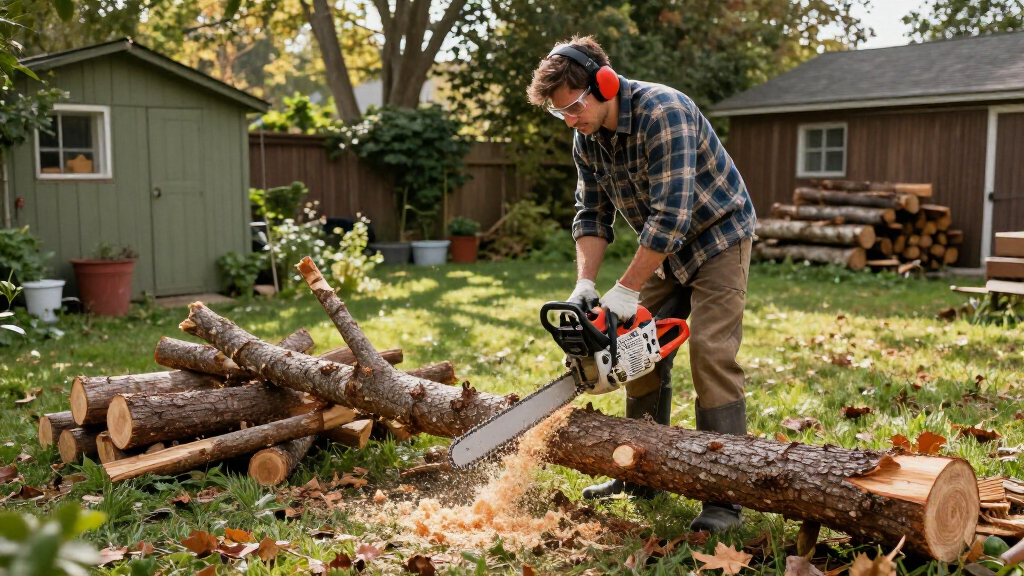
I ranked these gas powered chainsaws by how clearly their engine size and bar length match a practical workload, then weighed usability, stated features, and the likely demands of maintenance. A compact saw can be the better choice for occasional pruning and small logs; a larger bar makes more sense when a buyer regularly cuts substantial wood. I also gave weight to details such as vibration-control systems, chain-brake features, and whether a listing offers more than one bar length, since those details can shape day-to-day fit.
The order favors workload fit and confidence in the product choice, not the largest engine or longest bar. The Husqvarna models rank well for buyers who value a familiar brand and a defined homeowner or ranch-use role, while several 58cc- and 62cc-class alternatives compete on larger stated capacity and bar length. Those listings are not interchangeable on specs alone, so I treat unclear or limited feature information as a reason to check the exact configuration and support before buying. I distinguish saws by intended user rather than presenting every 20-inch model as equally suitable.
Factors to Consider When Choosing Gas Powered Chainsaws
Choosing among gas powered chainsaws starts with the work you actually do, not the biggest number on the box. I’d match cutting capacity to the largest wood you expect to handle, then check whether the saw’s weight, maintenance needs, and support fit your routine. These broader tradeoffs can prevent paying for capacity that sits unused—or choosing a small saw that struggles with recurring jobs.
Match Bar Length to the Wood You Cut
A longer bar can reach across larger logs, but it also adds leverage and can make the saw more tiring to guide. Buyers often treat bar length as a simple measure of power; the engine, chain, sharpening condition, and cutting technique all affect how well a saw handles its work. For routine limbing, pruning, and smaller firewood, a 16-inch bar may be easier to manage than a 20- or 24-inch setup. If you regularly cut large-diameter wood, a longer bar can reduce the need to reposition, provided the engine is suited to it. Avoid choosing a 24-inch option just for occasional oversized cuts if most of your work is small branches and logs.
Choose Engine Capacity for Frequency, Not Occasional Ambition
Engine displacement can help distinguish a light homeowner saw from a larger-workload model, but it does not tell the whole story about cutting performance or comfort. A 62cc saw may be sensible for recurring firewood and property jobs, while a smaller engine may be easier to handle during brief, occasional cuts. Buying more capacity than your workload needs can bring extra weight, fuel use, and handling demands without a meaningful daily benefit. On the other hand, a small saw used repeatedly on large wood can make the job slow and tiring. Think about the typical job, not the largest tree you might encounter once.
Account for Weight, Vibration, and Handling
When comparing saws, look beyond engine and bar specifications to the features that affect control over a full work session. A vibration-control system, such as the one listed on the PROYAMA 62cc model, may matter to a buyer doing repeated cuts, though it does not remove the need for safe technique and breaks. Larger saws can feel more demanding when held away from the body or used for extended periods. Buyers who are new to chainsaws should favor a manageable size and learn safe cutting practices before taking on heavy work. If possible, check the listed weight and handle layout for the exact configuration, since longer bars can change the feel of the saw.
Look Past Included Bar Options
A listing that offers 20- and 24-inch bars can appear more versatile, but verify what is included with the specific version you plan to buy. A second bar is useful only if it matches the saw’s approved setup and you have the right chain and maintenance tools. The same caution applies to bundled accessories: confirm whether they are included, compatible, and useful for your work rather than treating a bundle as proof of better value. Some buyers are better served by one well-matched bar than by an extra configuration they rarely use. Check the manufacturer’s instructions before changing bar length or chain type.
Plan for Fuel, Chain Care, and Regular Maintenance
Gas power offers freedom from a cord and battery runtime, but it comes with more upkeep than simply charging a tool. Buyers need to follow the manufacturer’s fuel and oil instructions, keep the chain sharp and properly tensioned, and clean and inspect the saw regularly. A dull chain can make a capable engine feel underpowered and can increase strain during cutting. Before buying an unfamiliar model, check that its manual, replacement chains, bars, and service parts are reasonably accessible. If you prefer minimal maintenance or only make occasional small cuts, compare whether gas is the right power source at all.
Treat Brand Support and Exact Model Details as Buying Factors
Two saws with similar displacement and bar length can differ in documentation, parts access, and after-sale support. That difference matters more when a saw will see frequent use, since routine service and replacement parts are part of ownership. Read the exact listing carefully: some names in this roundup describe multiple bar configurations, and similar model names do not guarantee identical specifications. Confirm the included bar, chain, safety features, warranty terms, and instructions before ordering. Buyers who prioritize a clear support path may prefer a recognizable brand even when another listing claims a larger engine or adds a longer bar.
Frequently Asked Questions
Is a 16-inch gas chainsaw enough for cutting firewood?
A 16-inch saw can handle smaller logs and routine firewood preparation when the wood diameter suits the bar and the operator works safely. It is a more manageable fit than a 20- or 24-inch model for many homeowners, but it can be limiting if large rounds are a regular part of the job. The Husqvarna 120 Mark III and 130 are the 16-inch options in this lineup, while the 455 Rancher offers a 20-inch bar for buyers expecting larger cuts. Choose based on the wood you commonly process rather than a rare oversized log. Never force a bar through wood beyond the saw’s intended capacity.
Should I choose a 62cc saw or the Husqvarna 455 Rancher?
I’d compare more than displacement: both the 62cc listings and the 455 Rancher are aimed at work beyond light pruning, but they differ in brand, listed features, and configuration. The 455 Rancher pairs a 55cc engine with a 20-inch bar and is the clearest fit here for buyers who want a recognized model for recurring property work. The 62cc alternatives state larger displacement, and some list features such as vibration control or multiple bar options, but buyers should verify the exact package and parts support. If support and a defined model identity matter most, lean toward the Husqvarna; if a specific 62cc feature fits your work, check its documentation before choosing it.
Are 20- and 24-inch bar options useful if I mostly cut smaller logs?
Usually, a longer bar adds little benefit when most cuts involve small logs, while it can make the saw bulkier and harder to control. The PROYAMA 62cc and 68cc listings offer 20- and 24-inch bar options, which may suit buyers who regularly handle larger wood and want configuration flexibility. Before selecting a longer setup, confirm that the engine is approved for it and that the bar and chain are included as expected. A shorter compatible bar can be a better match for frequent limbing or smaller firewood. Follow the manufacturer’s setup guidance rather than swapping components based only on a listing headline.
Which of these gas chainsaws makes the most sense for a first-time owner?
I’d start by looking at the 16-inch Husqvarna 120 Mark III or 130 rather than a 20-inch, 62cc-class saw. Their smaller bar length points to lighter homeowner work and may be less demanding for someone learning basic saw handling. The larger models can be appropriate for substantial cutting, but they require more strength, attention, and maintenance. A beginner should also budget time for reading the manual, learning chain tension and sharpening, and using suitable protective equipment. If the intended work involves felling or large trees, getting instruction or qualified help is a safer choice than relying on a larger saw alone.
What should I verify before buying a less familiar 20-inch gas chainsaw?
Check the exact engine and bar configuration, included chain, chain-brake details, warranty terms, and access to a manual before placing an order. Confirm that replacement bars, chains, and other service parts are available for the model rather than assuming common dimensions mean universal compatibility. Read the fuel and maintenance instructions, since gas saws require more care than many buyers expect. If the listing advertises dual fuel tanks, vibration control, or multiple bar sizes, verify what the specific package contains and how those features are described by the manufacturer. A larger engine claim is less useful if service information and compatible parts are hard to find.
Conclusion
For the best all-around fit, I’d choose the Husqvarna 455 Rancher for recurring property work that calls for a 20-inch bar and a recognized model. For best value among the listed larger saws, compare the 62cc 20-inch options by verified package contents, support, and features rather than picking on displacement alone. The best premium-leaning choice is also the 455 Rancher for buyers who prioritize a familiar brand and a substantial work range. For beginners and lighter home cutting, the Husqvarna 120 Mark III or 130 is a more proportionate starting point. For compact jobs, the 12-inch VEVOR has a distinct niche; for buyers who need longer-bar flexibility, look at the PROYAMA 62cc or 68cc configurations and verify the exact setup before purchase.
Halloween Picks
halloween
As an affiliate, we earn on qualifying purchases.