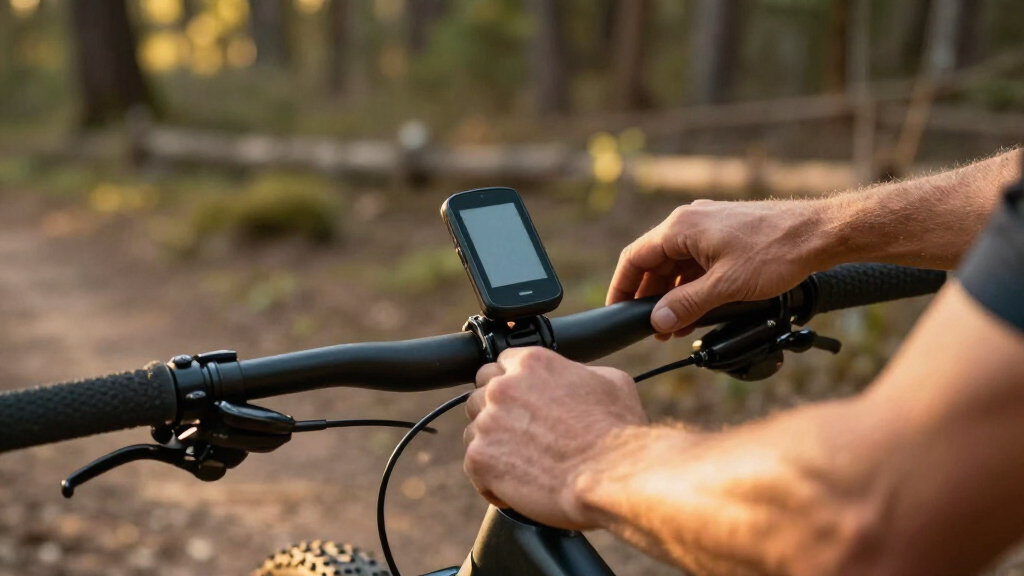
For cyclists seeking reliable navigation and performance data, choosing the best GPS cycling tracker can significantly enhance your rides. The Garmin Edge 540 stands out as the overall best for its balance of advanced features and ease of use. Meanwhile, the Garmin Edge 1050 offers premium capabilities for dedicated enthusiasts, and the CYCPLUS G1 provides a budget-friendly option for casual riders. Each option involves tradeoffs, such as size, complexity, and price, making it important to consider your specific riding style and goals. Continue reading for a detailed breakdown of the top picks and what makes each suitable for different needs.

Get business pricing on tools and workshop supplies
- Business-only prices and quantity discounts
- Tax-exempt purchasing
- Multiple users, one account, clear invoices
Complete the kit


Key Takeaways
- The top-ranked Garmin Edge 540 offers a strong balance of performance and usability, making it ideal for most serious cyclists.
- The Garmin Edge 1050 provides premium features but comes at a higher price point, suited for advanced users who want the best technology.
- Budget options like the CYCPLUS G1 deliver essential tracking and navigation without excessive complexity, perfect for casual riders.
- Size and weight vary significantly across models, with compact options favored by those prioritizing portability.
- User interface and touchscreen capabilities are key differentiators, with some models offering more intuitive controls for easier operation.
| Garmin Edge 540, Compact GPS Cycling Computer | 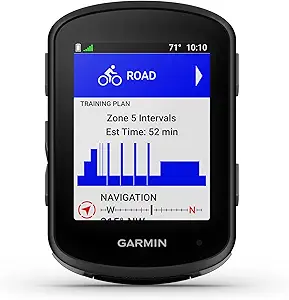 | Best Overall for Serious Cyclists Seeking Advanced Features | Battery Life: up to 26 hours (standard), up to 42 hours (battery saver mode) | Navigation: Multi-band GNSS technology | Display: Ride type-specific maps with points of interest | VIEW LATEST PRICE | See Our Full Breakdown |
| Garmin Edge 840 GPS Cycling Computer |  | Best for Versatile Navigation with Touchscreen Control | Battery life: up to 26 hours in demanding use, up to 32 hours in battery saver mode | Display: Touchscreen with button control | Navigation: Multi-band GNSS technology | VIEW LATEST PRICE | See Our Full Breakdown |
| Garmin Edge 820 Bike GPS – International Version with US Warranty (Renewed) |  | Best Compact High-Resolution Touchscreen for Serious Cyclists | Compatible with Vehicle Type: Bicycle | Screen Size: 2.3 inches | Display Resolution: 480 x 272 | VIEW LATEST PRICE | See Our Full Breakdown |
| CYCPLUS Wireless GPS Bike Computer G1, 70g, 2.0″ Screen, IPX6, 1200mAh |  | Best Lightweight, Long-Lasting GPS for Basic Tracking | Display Size: 2 inches | Display: LED | Battery Type: Lithium Polymer | VIEW LATEST PRICE | See Our Full Breakdown |
| Garmin Edge 1050 Premium Cycling Computer |  | Best for Premium Features and Extended Connectivity | Battery Life: up to 20 hours (demanding use), up to 60 hours (battery saver mode) | Display: Vivid color touchscreen | Connectivity: Smartphone pairing, Garmin Connect app | VIEW LATEST PRICE | See Our Full Breakdown |
| Garmin Edge 850 Compact GPS Cycling Computer |  | Best Overall for Serious Cyclists | Display: Vivid color touchscreen | Battery Life: Up to 12 hours in demanding use, 36 hours in battery saver mode | Maps: Preloaded for road, gravel, and trails including Trailforks | VIEW LATEST PRICE | See Our Full Breakdown |
| Bryton Rider 650 Sensor Bundle 2.8 Inch Color LCD Touchscreen GPS Bike Cycling Computer with Preloaded USA Map and Waterproof Design |  | Best Value for Extended Performance and Sensor Integration | Display Size: 2.8 inches | Display: LCD | Battery Life: 33 hours | VIEW LATEST PRICE | See Our Full Breakdown |
| Garmin Edge Explore 2 GPS Cycling Navigator |  | Best for Ease of Use and Everyday Rides | Display: 3-inch high-resolution touchscreen | Connectivity: Smartphone, sensors, Varia devices | Features: Preloaded maps, ride profiles, live tracking, incident detection | VIEW LATEST PRICE | See Our Full Breakdown |
| Garmin Edge 550 Compact GPS Cycling Computer |  | Best for Versatile, Compact Performance | Display: Vivid color display | Battery Life: Up to 12 hours (standard), 36 hours (battery saver mode) | Maps: Preloaded road, gravel, and trail maps including Trailforks | VIEW LATEST PRICE | See Our Full Breakdown |
| GPS cycling tracker | Display | Battery Life |
|---|---|---|
| Garmin Edge 540 | Ride type-specific maps with points of interest | up to 26 hours (standard), up to 42 hours (battery saver mode) |
| Garmin Edge 840 GPS Cycling Co | Touchscreen with button control | up to 26 hours in demanding use, up to 32 hours in battery saver mode |
| Garmin Edge 820 Bike GPS | — | up to 15 hours |
| CYCPLUS Wireless GPS Bike Comp | LED | — |
| Garmin Edge 1050 Premium Cycli | Vivid color touchscreen | up to 20 hours (demanding use), up to 60 hours (battery saver mode) |
| Garmin Edge 850 Compact GPS Cy | Vivid color touchscreen | Up to 12 hours in demanding use, 36 hours in battery saver mode |
| Bryton Rider 650 Sensor Bundle | LCD | 33 hours |
| Garmin Edge Explore 2 GPS Cycl | 3-inch high-resolution touchscreen | — |
| Garmin Edge 550 Compact GPS Cy | Vivid color display | Up to 12 hours (standard), 36 hours (battery saver mode) |
More Details on Our Top Picks
Garmin Edge 540, Compact GPS Cycling Computer
The Garmin Edge 540 stands out for offering a comprehensive suite of features in a compact form, making it ideal for riders who want detailed navigation, performance metrics, and personalized coaching. Compared with the Edge 840, it provides similar navigation capabilities but slightly fewer smart features, making it a more streamlined choice for performance-focused cyclists. Its long battery life—up to 42 hours in battery saver mode—caters to long-distance riders, though its advanced features come with a steeper learning curve and a higher price tag. This device is best suited for experienced cyclists who prioritize data and durability over simplicity.
Pros:- Long battery life suitable for multi-hour rides
- Advanced multi-band GNSS for highly accurate navigation
- Personalized coaching and ride insights
Cons:- Complex feature set can be overwhelming for new users
- Higher price point for advanced capabilities
Best for: Competitive cyclists and endurance riders who need detailed analytics and extended battery life
Not ideal for: Casual riders or beginners who prefer a simpler, more user-friendly device
- Battery Life:up to 26 hours (standard), up to 42 hours (battery saver mode)
- Navigation:Multi-band GNSS technology
- Display:Ride type-specific maps with points of interest
- Features:Performance tracking, personalized coaching, climb and effort insights, ride planning tools
Our verdict“This device is ideal for experienced cyclists who want in-depth performance data and reliable navigation in a compact package.”
Garmin Edge 840 GPS Cycling Computer
The Garmin Edge 840 offers a perfect blend of advanced navigation, performance tracking, and a user-friendly touchscreen interface, making it highly adaptable to various riding conditions. Its multi-band GNSS provides precise positioning, especially in challenging environments, a feature that surpasses many competitors like the Edge 540 in terms of ease of use. The combination of a touchscreen and physical buttons ensures flexibility, but the device’s high-end features come at a premium, which may deter casual riders. For those who value ease of interaction alongside comprehensive data, the Edge 840 strikes a compelling balance.
Pros:- Accurate multi-band GNSS for precise positioning
- Touchscreen with physical controls for flexible operation
- Extended battery life up to 32 hours in demanding use
Cons:- Steep learning curve for new users
- Premium price may be prohibitive for casual cyclists
Best for: Cyclists who want an all-in-one device with intuitive controls and accurate navigation
Not ideal for: Beginners or budget-conscious riders who may find the high-cost features unnecessary
- Battery life:up to 26 hours in demanding use, up to 32 hours in battery saver mode
- Display:Touchscreen with button control
- Navigation:Multi-band GNSS technology
- Maps:Ride type-specific maps with points of interest
Our verdict“This pick makes the most sense for experienced riders seeking a versatile, easy-to-operate GPS device with premium features.”
Garmin Edge 820 Bike GPS – International Version with US Warranty (Renewed)
The Garmin Edge 820 delivers a high-resolution, easy-to-read touchscreen in a smaller footprint, which is perfect for cyclists who want detailed metrics without bulk. Its 2.3-inch display offers sharp visuals, even in wet conditions, and supports custom apps via Connect IQ—an advantage over simpler models like the CYCPLUS G1. However, being a renewed product raises concerns about warranty and condition, and its small screen might not suit all users. It’s ideal for riders who prioritize detailed data and customization in a compact form, but less so for those seeking the latest model or a brand-new device.
Pros:- High-resolution touchscreen readable in various conditions
- Supports custom apps and data fields via Connect IQ
- Extended battery life up to 15 hours
Cons:- Renewed product may have limited warranty or unknown condition
- Small screen size may not be suitable for all users
Best for: Dedicated cyclists who want high-resolution data displays and customization options
Not ideal for: Casual riders or those sensitive to product condition and warranty uncertainties
- Compatible with Vehicle Type:Bicycle
- Screen Size:2.3 inches
- Display Resolution:480 x 272
- Battery Life:up to 15 hours
Our verdict“This device suits serious cyclists needing customizable data displays in a compact size, provided they’re comfortable with a renewed product.”
CYCPLUS Wireless GPS Bike Computer G1, 70g, 2.0″ Screen, IPX6, 1200mAh
The CYCPLUS G1 emphasizes simplicity and endurance, offering a lightweight design that’s perfect for riders who value long battery life over advanced features. Its 55+ hour runtime surpasses many competitors like the Garmin Edge 540, making it ideal for extended rides. The bright backlit display ensures visibility in sunlight, but the basic interface and limited feature set may not satisfy those seeking detailed navigation or performance analytics. It’s best suited for casual riders or those who want reliable ride data without the complexity of more feature-rich models.
Pros:- Extra-long battery life over 55 hours
- Bright, glare-free display visible in sunlight
- Waterproof IPX6 rated for all weather conditions
Cons:- Limited to handlebar mounting only
- Basic interface lacking advanced features
Best for: Casual cyclists and long-distance riders seeking straightforward tracking and exceptional battery life
Not ideal for: Tech-savvy riders or athletes needing detailed navigation and performance metrics
- Display Size:2 inches
- Display:LED
- Battery Type:Lithium Polymer
- Battery Average Life:50 hours
Our verdict“This unit is best for riders prioritizing battery longevity and simplicity over detailed data or advanced navigation.”
Garmin Edge 1050 Premium Cycling Computer
The Garmin Edge 1050 is tailored for cyclists who want a feature-rich experience, combining a vivid color touchscreen, advanced navigation, and smart connectivity. Its extensive suite includes hazard alerts, in-ride messaging, Garmin Pay, and detailed ride analysis—features that outshine models like the Edge 540 in terms of smart functions. The large, colorful display enhances map readability, but its weight and size may be a concern for those seeking a lighter device. This model is best suited for enthusiasts and serious riders who value comprehensive features, though its complexity and cost could be barriers for casual users.
Pros:- High-resolution color touchscreen for clear visuals
- Extensive smart features including hazard alerts and Garmin Pay
- Long battery life up to 60 hours in battery saver mode
Cons:- Premium price may be prohibitive
- Heavier and bulkier than basic models
Best for: Dedicated cyclists interested in comprehensive navigation, safety alerts, and smart connectivity
Not ideal for: Casual riders or those seeking a lightweight, simple GPS device
- Battery Life:up to 20 hours (demanding use), up to 60 hours (battery saver mode)
- Display:Vivid color touchscreen
- Connectivity:Smartphone pairing, Garmin Connect app
- Additional Features:Hazard alerts, in-ride messaging, leaderboards, incident detection, personalized coaching, ClimbPro ascent planner, power guide
Our verdict“This GPS device fits well for serious cyclists who want the most comprehensive smart features and detailed navigation in a robust package.”
Garmin Edge 850 Compact GPS Cycling Computer
The Garmin Edge 850 stands out as the most feature-rich option, combining a vivid color touchscreen with advanced navigation, performance metrics, and smart connectivity. Compared with the Edge 550, it offers longer battery life—up to 36 hours in battery saver mode—making it ideal for long-distance rides. While its complex setup can be daunting for newcomers, it rewards experienced cyclists with comprehensive features like hazard alerts, Garmin Pay, and detailed maps. The high price reflects its premium build and capabilities, making it less suitable for casual riders who need simplicity over depth.
Pros:- Vivid color display with touchscreen and button controls
- Preloaded maps for various terrains including Trailforks
- Impressive 36-hour battery life in power-saving mode
- Smart connectivity features like alerts, Garmin Pay, and incident detection
Cons:- Complex setup may overwhelm beginners
- Premium price point may be prohibitive for casual users
- Heavy reliance on a smartphone for full functionality
Best for: Experienced cyclists who want a comprehensive, feature-packed device for long rides and navigation.
Not ideal for: Beginners or casual riders seeking a simple, budget-friendly GPS unit with minimal setup.
- Display:Vivid color touchscreen
- Battery Life:Up to 12 hours in demanding use, 36 hours in battery saver mode
- Maps:Preloaded for road, gravel, and trails including Trailforks
- GPS:Multi-band GPS with automatic 5 Hz recording
- Connectivity:Smart alerts, Garmin Pay, in-ride messaging, incident detection
- Additional Features:Weather and wind overlays, hazard alerts, bike bell, performance plans
Our verdict“This is the best choice for serious cyclists needing detailed navigation and performance tracking, despite its complexity and cost.”
Bryton Rider 650 Sensor Bundle 2.8 Inch Color LCD Touchscreen GPS Bike Cycling Computer with Preloaded USA Map and Waterproof Design
The Bryton Rider 650 offers a compelling mix of long battery life, detailed mapping, and sensor compatibility, making it a strong alternative to Garmin’s higher-end models like the Edge 850. Its 2.8-inch color touchscreen ensures easy navigation, and the included sensors provide a comprehensive view of your performance. While it’s more suited to experienced riders familiar with GPS devices, its 33-hour battery life supports extended adventures without concern. The limited color options and potentially steep learning curve for beginners are tradeoffs that make it less ideal for casual or new cyclists.
Pros:- Vibrant 2.8-inch color touchscreen for intuitive use
- Long 33-hour battery life suitable for all-day rides
- Includes full suite of sensors for heart rate, cadence, and speed
- Preloaded detailed maps with turn-by-turn guidance
Cons:- May be complex for users unfamiliar with GPS technology
- Limited color options, only black available
- Requires some technical know-how for optimal setup
Best for: Enthusiast riders seeking a cost-effective device with extensive sensor support and long-lasting battery life.
Not ideal for: Beginners or casual cyclists who prefer a simpler interface or minimal sensor setup.
- Display Size:2.8 inches
- Display:LCD
- Battery Life:33 hours
- Sensor Type:Altimeter, GPS, Speed, Cadence
- Battery Type:Lithium Ion
- Connectivity Technology:ANT, Bluetooth
Our verdict“This device offers excellent value for experienced cyclists wanting long endurance and sensor integration, though it may challenge beginners.”
Garmin Edge Explore 2 GPS Cycling Navigator
The Garmin Edge Explore 2 emphasizes simplicity with its glove- and rain-friendly 3-inch high-resolution touchscreen, making it ideal for riders who value ease and durability. Unlike the Edge 850, it lacks some advanced features like multi-band GPS or extensive performance metrics but compensates with a straightforward interface and preloaded maps ready to go. Its ride profiles and live tracking boost safety and convenience for casual riders or newcomers. While it might fall short for those seeking in-depth performance data or extensive customization, its user-friendly design makes it a practical choice for everyday riding.
Pros:- Easy-to-use, glove- and rain-friendly touchscreen
- Preloaded maps and ride profiles for immediate use
- Connectivity features like live tracking and smartphone pairing
- Suitable for eBike and indoor rides
Cons:- Some features require additional sensors or devices
- Indoor ride features are limited without pairing
- Price not specified, but generally less feature-rich than premium models
Best for: Casual cyclists and beginners preferring an intuitive device with reliable navigation and safety features.
Not ideal for: Experienced riders wanting detailed metrics or advanced navigation options beyond basic routes.
- Display:3-inch high-resolution touchscreen
- Connectivity:Smartphone, sensors, Varia devices
- Features:Preloaded maps, ride profiles, live tracking, incident detection
- Compatibility:eBike, indoor rides, music control
Our verdict“This navigator excels for riders seeking simplicity and reliability over advanced performance features.”
Garmin Edge 550 Compact GPS Cycling Computer
The Garmin Edge 550 strikes a balance between size and functionality, offering advanced navigation with a vivid color display and safety features like incident detection and live location sharing. Unlike the Edge 850, its 12-hour battery life (up to 36 hours in battery saver mode) suits shorter or mid-length rides well. Although it requires a compatible smartphone and Garmin Connect app for full features and can be tricky to set up, it provides multi-band GPS with Trailforks maps for precise navigation. Its compact size makes it ideal for riders who want a lightweight device that doesn’t compromise on safety or mapping capabilities.
Pros:- High-accuracy multi-band GPS with detailed Trailforks maps
- Long battery life suitable for most rides
- Safety features like incident detection and live tracking
- Compact and lightweight design
Cons:- Setup can be challenging for newcomers
- Expensive compared to basic GPS units
- Requires a compatible smartphone for full functionality
Best for: Cyclists needing a compact, reliable GPS with safety features for mid-length rides, who are comfortable with some setup complexity.
Not ideal for: Beginners or riders seeking a plug-and-play device with minimal configuration or longer battery life for all-day use.
- Display:Vivid color display
- Battery Life:Up to 12 hours (standard), 36 hours (battery saver mode)
- Maps:Preloaded road, gravel, and trail maps including Trailforks
- GPS:Multi-band GPS with 5 Hz recording
- Connectivity:Smart notifications, incident detection, LiveTrack
- Compatibility:Requires compatible smartphone and Garmin Connect app
Our verdict“This compact GPS offers excellent navigation and safety features for riders who don’t mind a bit of initial setup and appreciate portability.”
How We Picked
Our evaluation focused on key factors that matter most to cyclists: performance accuracy, usability, build quality, battery life, and value. We prioritized devices that provide reliable GPS data, clear displays, and durable construction. Ease of use and interface responsiveness were also critical, especially for riders who prefer straightforward operation. Price was considered relative to features, ensuring that each product offers good value for its intended audience. The ranking reflects a balance between advanced features for seasoned cyclists and simplicity for beginners, so every rider can find a suitable option.Factors to Consider When Choosing Best GPS Cycling Trackers
Choosing the best GPS cycling tracker involves understanding several critical factors that affect your riding experience. Beyond basic features, consider how the device integrates with your riding style, ease of use, and durability. A well-chosen tracker can motivate you, improve your training, and help you navigate unfamiliar routes, but a misfit can lead to frustration. Here are key considerations to help you make an informed decision.Performance and Accuracy
Accurate GPS tracking is fundamental, especially if you rely on your device for precise navigation or detailed ride data. Look for models with high-sensitivity GPS chips and support for multiple satellite systems like GLONASS or Galileo, which improve accuracy in challenging environments such as urban canyons or forested areas. Keep in mind that some budget models may sacrifice some precision, so consider your needs carefully—casual riders may tolerate slight inaccuracies, while competitive cyclists need top-tier performance.
Display and Usability
The display size, resolution, and touchscreen capabilities greatly influence how easily you can read data while riding. Larger screens are easier to glance at but can be bulkier, affecting portability. Touchscreens offer intuitive control but may be less responsive in wet or cold conditions unless well-designed. Physical buttons are more reliable in adverse weather but can be less convenient. Think about your riding climate and personal preference when selecting the interface that feels most natural.
Battery Life
Extended battery life is especially important for long rides or multi-day trips. Most GPS trackers last between 10 to 20 hours on a single charge, but some premium models push beyond 24 hours. Consider how often you’ll need to recharge and whether the device supports quick charging or power-saving modes. A device with insufficient battery life may cut your ride short unexpectedly, so prioritize models that match your typical ride duration.
Build Quality and Durability
Riding exposes your device to dust, water, sweat, and impacts. Look for models with robust construction, waterproof ratings (like IPX6 or higher), and shock resistance. A durable tracker will withstand rough terrain and weather conditions without failure. Cheaper or less rugged options may be prone to damage or malfunction, leading to frustration or additional costs. Evaluate your riding environment to choose a device that can handle your specific conditions.
Connectivity and Compatibility
Ensure your chosen tracker easily syncs with your smartphone, cycling apps, and sensors such as heart rate monitors or power meters. Compatibility extends to data transfer via Bluetooth or ANT+ and supporting popular platforms like Garmin Connect or Strava. Seamless data sharing can streamline your training and route planning. Failing to verify connectivity options may limit the utility of your device, especially if you rely on third-party apps for analysis.
Frequently Asked Questions
Can I use a GPS cycling tracker without a smartphone?
Many GPS cycling trackers can operate independently for basic functions like recording rides, but most rely on smartphone connectivity for features such as map updates, firmware upgrades, and data syncing. Devices with onboard maps and offline navigation capabilities can function more autonomously, but these tend to be more expensive. Consider how much you want to rely on your smartphone versus standalone operation before choosing a device.
How important is map detail and route planning in a GPS tracker?
If you frequently explore new areas or prefer detailed navigation, a device with preloaded maps and route planning features becomes invaluable. High-detail maps make navigation easier and safer, especially in unfamiliar terrain. Cheaper models may offer basic breadcrumb trails or limited maps, which might suffice for casual rides but fall short for advanced navigation needs. Evaluate your riding style to determine how critical this feature is for you.
Will a GPS tracker improve my training performance?
Yes, a good GPS tracker provides detailed ride metrics such as speed, cadence, elevation, and heart rate data, which can help you analyze and improve your performance. Devices with advanced training features, like adaptive coaching or route analysis, can help you set goals and track progress over time. Keep in mind that the usefulness of these features depends on your commitment to data-driven training and whether the device’s interface is user-friendly enough to incorporate into your routine.
Are premium GPS cycling computers worth the extra cost?
Premium models often include larger, higher-resolution screens, longer battery life, more advanced navigation features, and better durability. If you frequently go on long rides, participate in races, or have specific navigation needs, investing in a premium device can pay off through enhanced functionality and reliability. However, for casual riders or those just starting out, a mid-range or budget model may offer all the features needed without the higher price tag.
How does size and weight impact my riding experience?
The size and weight of your GPS device can significantly influence comfort, especially on long rides. Compact models are less obtrusive and easier to mount, but may have smaller screens and fewer features. Larger devices offer better visibility and more controls but can feel cumbersome or distracting. Consider your typical ride length, terrain, and personal preference for weight when making your choice, aiming for a balance that maximizes convenience without sacrificing functionality.
Conclusion
For most cyclists seeking a reliable all-around device, the Garmin Edge 540 offers an excellent combination of features, usability, and value. If you prioritize advanced navigation and detailed metrics, the Garmin Edge 1050 is worth the investment. Beginners or casual riders will find the CYCPLUS G1 or similar budget options more suitable, providing essential tracking at a lower cost. For riders focused on premium features and durability, the Garmin Edge 850 or Edge Explore 2 strike the right balance. Ultimately, your choice should align with your riding style, experience level, and specific needs.
As an affiliate, we earn on qualifying purchases.Fall yard work Picks
leaf blowers