
TL;DR

Get tools and workshop supplies delivered free — and shop member deals
- Fast, free delivery on millions of items
- Access to Prime Big Deal Days deals on October 6–7
- Prime Video, Amazon Music and more included
Straight vs curved shaft trimmers differ mainly in reach, power delivery, working position, and attachment support. Choose a straight shaft for longer reach, dense growth, frequent use, and approved attachments; choose a curved shaft for light trimming in compact yards where low weight and close control matter more.
The wrong trimmer can make a 20-minute cleanup feel like an hour. You hunch to reach fence lines, hold a buzzing head too close to your boots, or discover that the edger attachment you bought will not fit. The difference often starts with one plain-looking part: the shaft between your hands and the cutting head.
Straight and curved shafts change reach, balance, power delivery, and cutting angle. A straight shaft usually reaches farther under shrubs and supports tougher workloads, while a curved shaft often feels lighter and more natural around a small lawn. Outdoor Pro Masters identifies those broad differences in reach, durability, and attachment range, while also recognizing that individual designs vary [1].
This guide shows you how the designs work and where their limits appear in real use. You will learn why a gearbox matters, why shaft shape alone never guarantees attachment compatibility, and how battery and gas power affect the choice. By the end, you can match the machine to your acreage, growth, storage space, and weekly runtime instead of buying from a spec-sheet headline.
Choose a straight shaft when you regularly reach under deep shrubs, cross ditches, cut coarse growth, or need an approved multi-tool system.
Choose a curved shaft when your route is short, the growth is light, storage is tight, and close control matters more than reach.
Confirm attachment support with the exact powerhead model and manufacturer compatibility list; shaft shape and tube diameter are not enough.
Test balance with the working battery or fuel load for at least five minutes, keeping your back upright and the head level.
Disconnect the battery or spark-plug lead before servicing the head or shaft, and use every specified guard, handle, harness, and item of PPE.
Straight vs Curved Shaft Trimmers
Reach, gearbox and attachment limits decide how a trimmer feels in the real world. Choose a straight shaft for longer reach, dense growth, frequent work and approved attachments. Choose a curved shaft for light trimming where low weight and close control matter more.
Favored beneath shrubs, across ditches and along deep beds.
Compact handling for open edges and short residential routes.
Coupler, drive interface, approval and available power.
Test with the working battery or normal fuel load installed.
Choose for the ground you actually trim
A longer shaft moves the cutting head outward and helps keep your torso upright. A shorter curved layout can feel nimble near lawn edges, but may force taller operators closer to obstacles.
Reach first
Best aligned with deep shrubs, split-rail fences, drainage ditches, coarse weeds, larger properties and taller operators.
Control first
Best aligned with soft grass, compact yards, open patio edges, tight storage and short sessions where attachment expansion is unnecessary.
Where the designs diverge
These are common design patterns, not guarantees. The exact model, drive components, motor output and manufacturer approvals always outrank shaft appearance.
| Feature | Straight shaft | Curved shaft |
|---|---|---|
| Working reach | ✓Usually longer; useful beneath shrubs and along wide beds. | ~Usually shorter; suited to close work around open edges. |
| Drive system | ✓Often a rigid drive shaft with an angled cutting-head gearbox. | ~Often a flexible drive cable that follows the bend. |
| Typical workload | ✓Frequent trimming, coarse weeds and larger properties. | ~Light lawn grass, compact yards and shorter sessions. |
| Attachment range | ~Broader on approved split-shaft systems, but never automatic. | ✗Usually fewer options and commonly trimmer-only. |
| Storage | ~Longer tube may be awkward in a small shed or vehicle. | ✓Compact and easier to hang on a short wall. |
| Operator stance | ✓Can keep the head farther from the feet and torso more upright. | ~May suit a shorter operator but can pull tall users forward. |
The gearbox is doing more than changing direction
The engine or motor creates rotation, the shaft carries it and the head converts it into cutting action. Every interface must manage speed, torque, heat and vibration.
Power unit turns
A gas engine or electric motor produces rotational force.
Drive transfers torque
A rigid shaft or flexible cable carries rotation through the tube.
Gearbox redirects
On many straight models, angled gears turn the drive toward the head.
Head meets load
Grass hisses softly; fibrous stems create repeated shock loads.
Rigid-drive tendency
A properly rated rigid shaft and gearbox generally handle sustained loads well, helping explain their prevalence on commercial and brush-capable machines.
Maintenance is model-specific
Some gearboxes have a service port; others are sealed. Never add unknown grease. Follow the specified lubricant, amount and service interval.
Long reach creates leverage as well as access
A straight tube is not proof of commercial durability. A long shaft can improve access while increasing leverage against the hands—especially with a heavy rear battery or engine.
Four checks before any attachment goes on
Tube diameter and shaft shape are not enough. Confirm compatibility against the exact powerhead model and the manufacturer’s current approved list.
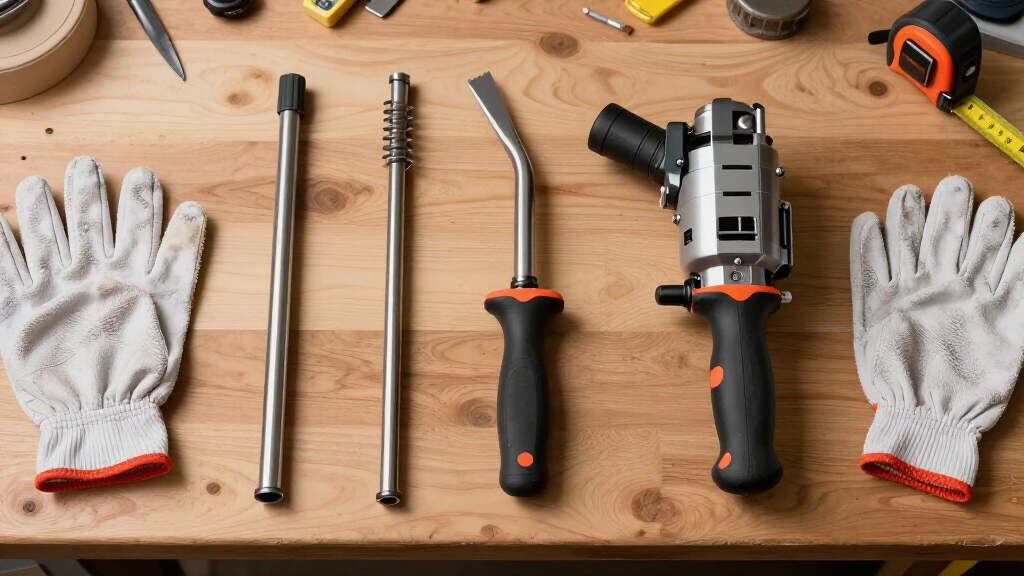
Split-shaft design
The powerhead must be designed to separate and accept interchangeable tools.
Compatible coupler
The locking system must engage fully without adapters, forcing or improvised fasteners.
Matched drive interface
The internal drive shape, length, rotation and engagement depth must align.
Approved power load
The motor, battery or engine must be rated to run that attachment safely.
Do not convert a fixed curved shaft into a straight-shaft machine.
Most fixed-shaft models are not designed for conversion. Modification can create alignment, guarding, vibration and overspeed hazards.
Start with the yard, not the tube
Five decisions that prevent buyer’s remorse
Choose straight for deep shrubs, ditches, coarse growth, frequent use and an approved multi-tool system.
Choose curved for light grass, compact yards, tight storage and short routes where close control matters most.
Verify the exact model. Shaft shape and tube diameter never prove attachment compatibility.
Test balance for five minutes with the working battery or fuel load, keeping your back upright and the head level.
Service safely. Disconnect the battery or spark-plug lead and use every specified guard, handle, harness and item of PPE.
See the Straight-vs-Curved Differences That Matter in Your Yard
Straight vs curved shaft trimmers differ most in reach, cutting-head position, power transmission, and attachment support. Straight models usually suit taller users, thick growth, and work beneath obstacles. Curved models usually suit light residential trimming where compact size, low weight, and close control take priority [1].
| Feature | Straight shaft | Curved shaft |
|---|---|---|
| Working reach | Usually longer; useful beneath shrubs and along wide beds | Usually shorter; suited to close work around lawn edges |
| Drive system | Often a rigid shaft with a geared cutting head | Often a flexible drive cable following the bend |
| Cutting angle | Head sits farther from your feet and reaches under obstacles | Head sits closer and can feel easy to steer in open grass |
| Typical workload | Frequent trimming, coarse weeds, larger properties | Light grass, compact yards, shorter sessions |
| Attachments | More common on split-shaft systems, but never guaranteed | Usually fewer options and often trimmer-only |
| Storage | Longer and sometimes harder to fit in a small shed | Compact and easier to hang on a short wall |
Suppose you maintain half an acre with a split-rail fence, three low spruce trees, and a drainage ditch. The extra reach of a straight shaft lets you sweep beneath the branches without pushing your face into prickly needles. Along the ditch, the longer tube also keeps the spinning line farther from your shoes.
Now shrink that property to a 1,500-square-foot townhouse lawn with two flower pots and a six-minute trimming route. A light curved model can feel quick and precise, almost like using a short-handled broom. You give up reach and expansion options, but those losses carry little weight when your thickest target is soft grass beside a patio.
The better shaft is the one that keeps the cutting head where you need it without forcing your back, wrists, or power unit to fight the job.
electric string trimmer straight shaft
As an affiliate, we earn on qualifying purchases.
As an affiliate, we earn on qualifying purchases.
Get More Reach Without Spending the Afternoon Bent Over
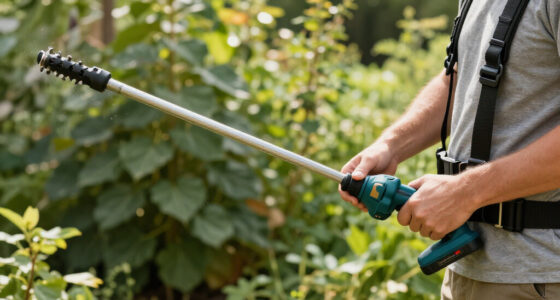
Straight vs curved shaft trimmers usually favor the straight design when you need more reach and a flatter approach beneath obstacles. Its longer line from the power unit to the head helps you trim under decks, hedges, benches, and low branches while keeping your torso more upright [1].
Think of shaft length like the handle on a garden rake. A short handle gives you nimble control near your toes, but you must step closer and bend farther to reach under a hedge. A long handle moves the working end outward; your arms guide the tool while your back stays quieter.
Your height changes the result. A curved shaft can suit a shorter operator because its bend places the head at a useful angle without demanding a high grip. A user over 6 feet tall, however, may find the same tool pulls the shoulders forward and leaves the head tilted, producing a ragged strip that looks pale and scalped in bright sun.
Consider a row of boxwoods with 18 inches of open ground beneath the foliage. A straight shaft can slide the cutting head into that shadowy space while you remain outside the branches. With a short curved shaft, you may need to crouch, press against the leaves, or attack from several awkward angles.
Reach has a limit: longer does not always mean easier. Extra tube length can increase leverage against your hands, especially when the motor or battery sits at the rear. Before buying, hold the trimmer in a normal cutting stance for at least five minutes; check whether the head floats just above the grass without a clenched front wrist.
- Choose longer reach for deep beds, ditches, low shrubs, fences, and taller operators.
- Choose compact control for small lawns, narrow storage, short sessions, and open edges.
- Use an adjustable handle or harness to tune balance instead of relying on shaft shape alone.
As an affiliate, we earn on qualifying purchases.
Know What the Gearbox Is Doing Before You Ask for More Power
Straight vs curved shaft trimmers often use different paths to move power from the motor or engine to the head. Many straight models use a rigid drive shaft and angled gearbox, while many curved models use a flexible cable that follows the tube. Model design, not appearance alone, determines the hardware.
The power path works like a socket wrench. Your engine or motor turns the handle end, the drive shaft carries that rotation down the tube, and the gearbox redirects it into the cutting head. Each connection must carry speed, torque, heat, and vibration without chewing itself apart.
A rigid shaft generally handles sustained loads well, which helps explain why straight layouts appear so often on commercial and brush-capable machines. Improved materials and gearbox designs have also strengthened modern power transfer [2]. Still, a bargain straight trimmer does not become heavy-duty merely because its tube lacks a bend.
Imagine clearing waist-high nettles and fibrous grass beside a barn. Each time the line catches a thick stem, the drive system feels a sharp load rather than the soft hiss of lawn grass. A properly rated straight-shaft machine can take that repeated bite, while a light curved residential unit may overheat, vibrate, or wear its flexible cable early.
Maintenance follows the manual. Some gearboxes have a service port and call for a specific lubricant after set operating intervals; others are sealed. Never pack an unknown grease into the housing, because the wrong amount or formulation can create drag, trap heat, or damage seals.
Stop the machine if the head chatters, squeals, becomes unusually hot, or pauses while the engine keeps running. Disconnect the battery or spark-plug lead, wear gloves, and inspect only as the manual directs. A damaged drive system needs qualified service, not a forced restart.
As an affiliate, we earn on qualifying purchases.
Avoid Buying Attachments Your Powerhead Cannot Safely Run
Straight vs curved shaft trimmers give straight models the broader attachment market, but a straight tube does not prove compatibility. You need an approved split-shaft powerhead, the correct coupler, a matching drive shape and diameter, suitable rotation, and enough rated power for the exact attachment [1].
An attachment system resembles a lock and key with several hidden pins. The outer tube may slide into the coupler, yet the internal drive ends can still differ. Then the latch must align, rotation must match, and the powerhead must carry the load; physical fit is only the first pin.
Say you own a straight fixed-shaft trimmer and find a pole-saw attachment at a yard sale. The tubes appear to be the same width, so forcing them together feels tempting. If the manufacturer does not list that pairing, you risk a slipping drive connection, damaged coupler, poor lubrication, or a cutting attachment spinning where its guard cannot protect you.
Check compatibility in this order before spending money:
- Find the exact powerhead model number, not merely the brand or voltage.
- Read its manual and identify whether the shaft is fixed or attachment-capable.
- Use the manufacturer’s current compatibility list for the exact edger, cultivator, hedge trimmer, blower, or pole saw.
- Confirm the required guard, handle, harness, and power rating.
- Inspect the coupler and drive ends for wear before assembly.
Curved-shaft machines are often trimmer-only because their bend, flexible cable, and compact layout are built around one cutting job. A few systems break that pattern, and some straight units accept nothing beyond their original head. Quick-attach systems have become more common, especially among modern straight-shaft platforms [2], but the manual remains the deciding document.
Never install a metal blade, saw head, or unapproved attachment because it fits the threads. Use the specified guard and harness, disconnect power during setup, and wear eye protection, hearing protection, gloves, sturdy boots, and leg coverage.
As an affiliate, we earn on qualifying purchases.
Match Comfort to Your Body, Not the Shape on the Box
Your most comfortable trimmer is the one that balances at cutting height with relaxed wrists, level shoulders, and minimal forward bend. Curved shafts often feel friendly during short residential jobs, while adjustable straight shafts can reduce fatigue across longer routes. Body height, handle position, head weight, and battery placement all affect comfort.
Ergonomics is not softness or padding. For a trimmer, ergonomics means keeping the spinning head on line without making your joints act as counterweights. A thick foam grip cannot rescue a machine that drags your front arm downward for 45 minutes.
Take two neighbors using the same curved trimmer. One stands 5 feet 4 inches and trims a small front lawn in eight minutes; the bend puts the head flat and the controls within easy reach. The other stands 6 feet 3 inches and spends the same eight minutes hunched, leaving a sore strip across the lower back.
A straight model can create its own trouble. Mount a heavy battery behind your elbow, extend the adjustable tube fully, and the machine becomes a seesaw. The rear weight may lift the cutting head, forcing your front wrist to press down through every sweep.
- Set the front handle so your elbows remain slightly bent.
- Keep the head close to level instead of trimming on one edge of the line.
- Use a properly adjusted shoulder harness when the manual supports one.
- Switch hands or stance only if you can keep the guard between you and the debris stream.
- Take a short break when tingling, numbness, or grip weakness appears.
Test the tool with the battery installed or the fuel tank partly filled, because showroom balance can lie. Sweep it slowly across a six-foot imaginary fence line. If the head stays low without a white-knuckle grip, you have found a workable fit.
Choose Battery or Gas Without Ignoring Runtime and Workload
Straight vs curved shaft trimmers are available with battery and gas power, but the better choice depends on runtime, vegetation density, noise limits, and the rest of your tool system. Battery suits stop-and-start residential work; gas remains useful for long routes, remote acreage, and rapid refueling [2].
A battery trimmer starts with a button, runs without fuel fumes, and becomes quiet the instant you release the trigger. On a quarter-acre suburban lot, one correctly sized battery may finish every fence, bed, and mailbox edge before the mower deck cools. Maintenance mostly centers on line, guards, vents, batteries, and gearbox items listed in the manual.
Gas earns its keep when the route keeps going. A crew cutting fence lines across several acres can refill in minutes rather than waiting for a pack to charge. You accept more noise, hot exhaust, fuel storage, pull-start hardware, and engine maintenance in exchange for fast energy replacement and long working days.
Do not judge cordless capability by voltage alone. Cutting swath, line diameter, motor control, vegetation load, temperature, and trigger use all change runtime. A machine that runs 40 minutes in light lawn grass can drain much faster when you bury the head in wet burdock and hold full throttle.
Attachments increase the load as well. A cultivator clawing through dry soil or a pole saw biting hardwood asks more from the powerhead than nylon line clipping soft grass. Check whether the platform rates your battery size and powerhead for that attachment; a connection that fits can still deliver disappointing runtime.
For either power type, clear stones, wire, toys, and pet leads from the work zone. Keep people and animals well outside the manual’s stated debris distance, wear eye and hearing protection, and never work without the specified guard. The line tip can throw a pebble with a sharp crack before you even see it.
Make the Right Choice in Five Minutes at the Store
You can choose the right shaft by matching five facts: your reach, weekly runtime, heaviest vegetation, attachment plans, and storage space. A straight shaft wins when several demanding needs overlap. A curved shaft wins when the work stays light, close, short, and simple.
Start with the hardest ten percent of your property, not the easy lawn edge. If your route includes a deep drainage ditch, blackberry runners, or shrubs with three-foot canopies, buy for that work. A machine selected only for the neat strip beside the driveway will struggle where you need it most.
Use this quick decision path:
- Choose straight if you need to reach beneath deep shrubs, across ditches, or around wide beds.
- Choose straight if you expect frequent heavy cutting or want manufacturer-approved attachments.
- Choose curved if you trim light grass for short periods and value a compact, simple machine.
- Try both with their working battery or fuel weight, then reject any model that forces a bent back or twisted wrist.
- Check the manual for line diameter, guards, service points, attachment limits, and blade approval before paying.
A homeowner with one-eighth acre, tidy beds, and twelve minutes of weekly trimming will rarely benefit from carrying a commercial powerhead. A rural owner maintaining half a mile of fence will soon resent a light curved machine, no matter how pleasant it felt during a 30-second showroom test.
Storage can break a close decision. Measure the wall, vehicle, or shed before choosing a long fixed shaft. An approved split-shaft system can separate into shorter pieces, but the coupler needs clean, dry storage so grit does not grind into the drive connection.
Buy for the toughest repeatable job, then check that the tool still fits your body. That rule protects you from both an underpowered bargain and an oversized machine you hate carrying.
Frequently Asked Questions
Are straight shaft trimmers always more powerful?
No. Shaft shape does not set motor or engine output. Straight models often appear in heavier-duty ranges because their drive layouts suit sustained loads, but a small straight cordless trimmer can still produce less power than a strong curved gas model. Compare the complete machine, its approved line size, and intended workload.
Can you put an edger attachment on any straight shaft trimmer?
No. The trimmer must have a compatible attachment coupler and drive interface. For example, a fixed straight shaft may look like an attachment powerhead yet have no safe way to separate. Check the exact model number and the manufacturer’s approved attachment list before buying an edger.
Is a curved shaft better for a shorter person?
A curved shaft often fits a shorter operator well because the bend can place the head flat without a long reach. Handle position and balance still matter, so test the tool with its battery or normal fuel load. If your shoulders rise or your wrist folds sharply, try an adjustable straight model.
Can you convert a curved shaft trimmer into a straight shaft model?
Most curved trimmers should not be converted. The tube, drive cable, gearbox, guard position, and head may work as one matched assembly. A homemade conversion can create alignment and safety problems, so use only manufacturer-approved replacement parts or replace the machine.
Which shaft works better for trimming under bushes?
A straight shaft usually works better beneath wide or low bushes because it offers more reach and a direct approach to the soil line. Under a three-foot-wide juniper, that extra length keeps your face and arms outside the scratchy foliage. A curved shaft can work beneath shallow borders but often requires more bending.
Can a straight shaft trimmer safely use a metal blade?
Only use a blade when the manufacturer approves the exact trimmer, blade, guard, handle, and harness combination. A blade stores more energy and can kick violently after striking wood, wire, or stone. Disconnect power during installation, wear full PPE, and never fit a blade merely because its mounting hole matches.
Do straight shaft gearboxes need grease?
Some do, while others use sealed gearcases. Follow the service interval and lubricant specification in your manual; extra grease is not automatically better. If the head squeals, chatters, binds, or becomes unusually hot, stop, disconnect power, and arrange qualified service.
Is battery power enough for a straight shaft trimmer?
Yes, a well-matched battery trimmer can handle routine residential work and substantial seasonal growth. Runtime falls when you use thick line, full throttle, or demanding attachments in wet vegetation. For remote acreage or all-day cutting, multiple charged packs or a gas machine may provide a smoother work cycle.
Conclusion
Choose the shaft around your hardest recurring job and your natural working posture. Straight designs usually deliver the reach, drive strength, and attachment support that larger properties demand. Curved designs make sense when your grass stays light, your route stays short, and a compact tool keeps the work pleasant.
Before you buy, hold the fully equipped machine, read the compatibility chart, and imagine the head beneath your deepest shrub—not floating over a clean showroom floor. The right trimmer should leave a crisp green edge, not an aching back or a shelf full of attachments that cannot connect.
Fall yard work Picks
leaf blowers
As an affiliate, we earn on qualifying purchases.