
TL;DR

Get business pricing on tools and workshop supplies
- Business-only prices and quantity discounts
- Tax-exempt purchasing
- Multiple users, one account, clear invoices
Amp-hours measure battery capacity, but watt-hours (volts × Ah) are the only fair way to compare battery backpack blowers across brands — a 56V/8Ah pack (448 Wh) beats a 40V/10Ah pack (400 Wh). Match capacity to your lot: 4–6Ah up to 1/4 acre, 7.5–10Ah to 1/2 acre, and a 1,000+ Wh backpack battery beyond that — then size up a tier if your fall means wet, matted leaves.
Here’s a spec-sheet trap that snags smart buyers every fall: a 10Ah battery can hold less energy than an 8Ah one. If you shop battery backpack blowers by the biggest amp-hour number printed on the box, you can pay more and walk away with less runtime.
That’s because amp-hours measure battery capacity only within a single voltage. Across brands, watt-hours decide roughly how much work a pack can do — and your lot size and leaf load decide roughly how much work needs doing. Match those two numbers and you finish the yard on one charge. Miss them, and you’re staring at a dead blower with the back forty still buried under wet maple leaves.
This guide turns an intimidating spec sheet into a 4-step buying decision: estimate your worst-week leaf volume, pick your CFM class, choose a watt-hour capacity that covers one full session, then settle the spare-battery question. You’ll get real runtime numbers, a lot-size cheat sheet, and an honest look at where gas still earns its keep.
Compare watt-hours (volts × amp-hours), not amp-hours, across brands: a 56V/8Ah pack holds 448 Wh — about 12% more than a 40V/10Ah pack’s 400 Wh.
Advertised runtime is eco-mode runtime. Turbo can cut it to a third, and wet leaves can cut it 50–70% — size up a full capacity tier in wet climates.
Up to 1/2 acre, a 7.5–10Ah battery usually finishes the job; beyond that, plan on a spare pack or a 1,000+ Wh backpack battery.
Two mid-size batteries plus a rapid charger beat one giant pack for most properties — one charges while the other works.
Size for your peak leaf-drop week, not the average week; a battery that fails in mid-November is the wrong battery.
Battery Backpack Blowers: Matching Amp-Hours to Lot Size & Leaf Load
Amp-hours measure capacity — but watt-hours (volts × Ah) are the only fair way to compare packs across brands. Match stored energy to your lot and your worst leaf week, and you finish the yard on one charge. Miss it, and you’re staring at a dead blower with the back forty still buried.
…beats a 40V × 10Ah pack at 400 Wh — about +12% energy from the “smaller” battery.
Box runtimes are eco-mode numbers. Full turbo drains the same tank 4–5× faster.
Wet, matted leaves force sustained turbo. In damp climates, size up a full tier.
40V, 56V, 58/60V homeowner class; 80V+ and tethered packs at the pro end.
At 145–190 MPH. CFM moves the pile; MPH dislodges wet, stuck debris.
20–28Ah tethered systems deliver 1–2+ hours of continuous trigger time.
Mid-size packs on a rapid charger — the engine of the two-battery strategy.
Why the Amp-Hour Number on the Box Is Only Half the Story
Shopping by amp-hours alone is like comparing cars by fuel-tank size without asking what fuel they burn. Voltage is the energy density; amp-hours are just the tank. Compare Ah only inside one voltage platform — across brands, multiply out.
Five seconds of arithmetic beats a glossy box every fall. Watt-hours decide how much work a pack can do; your lot size and leaf load decide how much work needs doing.
One Battery, Two Personalities: Power Draw Sets the Clock
A 448 Wh pack loafing at eco sips 150–200 watts; full turbo demands 800–1,000+ watts. Same tank, four to five times the drain — and advertised runtimes almost always reflect the lowest setting.
15–30 min mixed
Just 10–15 min on turbo. Fine for decks, driveways, and light weekly tidy-ups — not a November leaf campaign.
30–60 min mixed
The sweet spot for ¼–½ acre with moderate trees. One charge covers a full session outside peak drop.
1–2+ hours
Tethered hip/back batteries (EGO BAX1500-, Stihl AR-, Husqvarna BLi-class). All-day with a second pack.
Size Your Blower in 4 Steps — Before You Ever Look at Price
The order matters: each step feeds the next. Capacity bought before you know your leaf volume is money spent blindfolded on a $400 purchase.
Estimate worst-week leaf volume
Walk the property at peak drop. Five mature oaks dropping into turf ≈ 3× the work of two ornamental cherries on the same acreage.
Pick your CFM class
500–800 CFM / 145–190 MPH. CFM is the broom’s width, MPH is bristle stiffness. Open lawn → chase CFM; soggy beds → chase MPH.
Choose Wh for one full session
Cover your realistic trigger time with ~20% reserve — lithium ages, cold air shaves output, and this year’s session is next year’s borderline case.
Settle the battery question
Two mid-size packs + rapid charger, or a 1,000+ Wh tethered backpack. Acreage decides — the cheat sheet below makes it concrete.
Lot Size → Battery Plan, in Four Bands
Match the band to your property, then size up one tier if your fall means wet, matted leaves or slopes and fence lines that add trigger time.
| Lot Size | Leaf Load | Battery Plan | Why It Works |
|---|---|---|---|
| Up to ¼ acre | Light · Hardscape | 4–6 Ah | Decks, driveways, modest lawn. A backpack unit is overkill here — a 5–6Ah handheld covers it. |
| ¼ – ½ acre | Moderate · Deciduous | 7.5–10 Ah | One charge covers a full session outside peak drop — or rotate two mid-size packs. |
| ½ – 1 acre | Heavy Trees | 10 Ah + spare | A second pack or a step up to a backpack-battery system keeps the session interruption-free. |
| 1+ acre | Commercial / Multi-Lot | 1,000+ Wh backpack | Daily throughput matters more than per-battery runtime: tethered packs plus rapid charger. |
Leaf Load Rewrites the Runtime Math
A battery that coasts through July grass clippings can die halfway through one November pass. Size for the worst week, not the average week — a battery that fails in mid-November is the wrong battery.
Dry, fluffy leaves on grass
Eco/medium settings suffice and capacity stretches far. This is the scenario every box runtime is measured in.
Mixed turf, beds & slopes
Slopes, beds, and fence lines add trigger time. Working with the wind and blowing before raking adds “free” amp-hours.
Wet, matted oak & maple
Sustained turbo is mandatory. Runtime per charge can collapse — this is the tier-up trigger in damp climates.
The wet-leaf penalty. Runtime per charge can drop by half or more when leaves are wet and matted. If your fall is rainy, buy one capacity tier above the cheat-sheet band for your lot — or budget for the spare pack from day one.
Two Packs & a Rapid Charger — or One Giant Backpack Battery?
For most properties, two mid-size batteries beat one giant pack: one charges while the other works. Past an acre, the tethered backpack ends interruptions entirely.
Two Mid-Size Packs + Rapid Charger
Rotate packs on a 30–60 minute rapid charge and the work never stops.
- Lower upfront cost than a tethered system
- Weight off your back — swap weight, not carry it
- Ecosystem value — same packs run mowers, trimmers, chainsaws
- Swap break every session, mid-task
Tethered Backpack Battery · 1,000+ Wh
The battery rides on a hip or back harness, keeping the blower tube light.
- Zero interruptions — 1–2+ hours continuous
- Lighter tube for all-day commercial work
- Higher cost plus harness heft
- A cord between you and the blower
How One Number Flows Into the Next
Worst-Week Leaf Load
Peak drop, wet vs. dry, tree count
CFM / MPH Class
500–800 CFM · 145–190 MPH
Watt-Hours Needed
Session minutes × draw + 20% reserve
Battery Strategy
Two packs ↔ 1,000+ Wh backpack
Yard Done, One Charge
No dead blower at the two-thirds mark
Why the Amp-Hour Number on the Box Is Only Half the Story
Battery backpack blowers live and die by stored energy, and amp-hours (Ah) measure battery capacity — think of it as the size of the fuel tank. But tank size only means something paired with voltage. Watt-hours (Wh = volts × amp-hours) are the true comparison metric, the one core concept you need to understand before spending a dime.
Here’s an analogy that makes it click: shopping by amp-hours alone is like comparing cars by fuel-tank size without asking whether one burns regular and the other burns racing fuel. A 10-gallon tank of dense, high-energy fuel takes you farther than a 12-gallon tank of the cheap stuff. Voltage is the fuel’s energy density; amp-hours are just the tank.
Run the math on two real packs. A 40V / 10Ah battery holds 400 Wh. A 56V / 8Ah battery holds 448 Wh — about 12% more energy from the ‘smaller’ battery. I’ve watched a homeowner lean over the fence bragging about his 10Ah pack while his neighbor’s 8Ah unit quietly outlasted it by twenty minutes. The bragging rights belonged to whoever did the multiplication.
Why does this matter beyond trivia? Because marketers know buyers anchor on the biggest number on the box, and amp-hours are the easiest number to inflate — a brand can bump Ah cheaply on a low-voltage platform and still lose to a higher-voltage rival on actual stored energy. If you compare Ah across brands, you’re grading a test the box designers wrote for you to fail.
Voltage platforms cluster around 40V, 56V, and 58/60V for homeowner gear, with 80V-class and tethered backpack systems at the pro end. So compare Ah only inside one platform; across platforms, multiply out. Five seconds of arithmetic beats a glossy box every time.
Runtime adds a third variable on top: power draw. The same battery behaves like two different batteries depending on how hard you squeeze the trigger — a 448 Wh pack loafing along at eco sips maybe 150–200 watts, while full turbo can demand 800–1,000 watts or more, draining that same tank four to five times faster. More on that in the runtime section below.
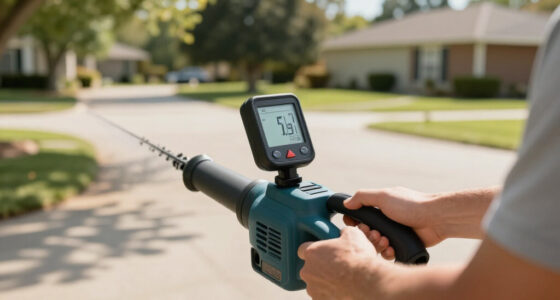
battery backpack leaf blower 448Wh
As an affiliate, we earn on qualifying purchases.
As an affiliate, we earn on qualifying purchases.
Size Your Blower in 4 Steps — Before You Ever Look at Price
Matching amp-hours to lot size takes four decisions, in order: estimate your worst-week leaf volume, pick the CFM class that moves it, choose a watt-hour capacity that covers one full session, and decide between a spare battery or a backpack-battery system. Skip a step and you’re guessing with a $400 purchase — and the order matters, because each step feeds the next. Capacity bought before you know your leaf volume is money spent blindfolded.
- Estimate worst-week leaf volume. Walk your property during peak drop — usually a two- to three-week window in fall. Summer grass clippings are a light snack; November’s mat of maple and oak is the meal. A battery that coasts in July can die halfway through one pass in November. A quick concrete test: count your mature deciduous trees and note the deepest accumulation. Five mature oaks dropping into turf hold roughly three times the work of the same lot with two ornamental cherries — acreage alone won’t tell you that.
- Pick your CFM class. Cordless backpack blowers commonly deliver 500–800 CFM at 145–190 MPH. CFM moves the pile; MPH dislodges wet, stuck debris. Big open lawn? Chase CFM. Tight beds packed with soggy leaves? You want MPH. Picture it this way: CFM is the width of the broom, MPH is the stiffness of the bristles. A wide broom sweeps a gym floor fast; you need stiff bristles to scrub dried mud off a welcome mat.
- Choose watt-hours for one full session. Nobody wants to stop at the two-thirds mark and stand around for an hour watching a charger blink. Add up your realistic trigger time and buy enough Wh to cover it with about 20% in reserve. That reserve isn’t padding — lithium cells lose capacity as they age, cold November air shaves output on its own, and the ‘one session’ you plan today becomes next year’s borderline case. Skimp here and you’ve bought a battery that’s right for exactly one season.
- Settle the battery strategy. Two mid-size packs with a rapid charger — one works while one charges — or a tethered backpack battery with 1,000+ Wh on your hip. The tradeoff is real: the two-pack route costs less upfront and swaps weight off your back, but forces a swap break every session; the backpack battery ends interruptions entirely but adds cost, heft, and a cord between you and the blower. Acreage decides this, and the table in the next section makes it concrete.
Work through these in order and the spec sheet stops being noise. Each step eliminates half the market, so by step four you’re choosing between two or three realistic setups instead of forty — and every dollar you spend is aimed at a number you actually measured instead of a number a copywriter picked.
cordless leaf blower with 1000Wh battery
As an affiliate, we earn on qualifying purchases.
As an affiliate, we earn on qualifying purchases.
The Lot-Size Cheat Sheet: Batteries That Actually Finish the Job
Battery backpack blowers match lot size in four bands: up to 1/4 acre needs just 4–6Ah, a 1/4 to 1/2 acre lot calls for 7.5–10Ah, 1/2 to 1 acre with heavy trees wants 10Ah plus a spare or a backpack-battery system, and anything past an acre earns a 1,000+ Wh backpack setup.
| Lot size | Leaf load | Battery plan | Why it works |
|---|---|---|---|
| Up to 1/4 acre | Light, hardscape focus | 4–6Ah | Decks, driveways, and a modest lawn; a backpack unit is overkill here |
| 1/4–1/2 acre | Moderate deciduous trees | 7.5–10Ah, or two mid-size packs | One charge covers a full session outside peak drop |
| 1/2–1 acre | Heavy tree cover | 10Ah+ plus a spare, or a backpack-battery system | Peak fall demand can double your trigger time |
| 1+ acre / commercial | Heavy, daily | 1,000+ Wh backpack battery, or multiple packs with a rapid charger | Daily throughput matters more than per-charge runtime |
Notice the pattern behind the numbers: each jump in tier isn’t really about acreage — it’s about what happens when one charge stops being enough and interruptions start costing you the afternoon. On a small lot, oversizing wastes money and hangs weight on your shoulders for nothing; on a big lot, undersizing doesn’t just slow you down, it breaks the job into fragments separated by hour-long charge cycles, which is how Saturday cleanup turns into a two-day siege.
A real example: a 1/3-acre lot with two mature maples and a long gravel drive. A 7.5Ah pack handles it in about 35 minutes of mixed use from April through October. Come mid-November, that same yard needs the spare battery on the charger before you even pull the trigger. Contrast that with a neighbor’s half-acre of mostly hardscape — pool deck, paver patio, one ornamental pear — which the same 7.5Ah pack finishes in twenty minutes flat even in peak season, because leaves on concrete barely resist. Same acreage class, wildly different bills.
Plan for the row above your average week — not your average week. Buying to the average means your equipment fails exactly when the job is biggest, which is the one week all year you can’t afford a dead blower.
high capacity battery backpack blower
As an affiliate, we earn on qualifying purchases.
As an affiliate, we earn on qualifying purchases.
Wet Leaves Double the Bill: Size for Leaf Load, Not Just Acreage
Leaf load changes your power draw more than lot size does. Dry, fluffy leaves on grass move at eco or medium settings, and your capacity stretches far. Wet, matted leaves — or small, dense debris like oak — demand sustained turbo, which can cut runtime per charge by 50–70%. Size up one full capacity tier if your fall looks like that.
There’s physics underneath that advice. Turbo doesn’t just drain the tank faster because it’s ‘stronger’ — power draw climbs steeply with air speed, so a blower pulling 200 watts at eco can demand 800–1,000 watts at full boost. That’s not a linear tax; it’s a four- or five-fold one. This is why a battery can feel generous all summer and suddenly gutless in November: you didn’t just add leaves, you switched the machine into a mode that burns watt-hours like a bonfire.
Anyone who’s pushed a blower through an October drizzle knows the feel. Oak leaves after three days of rain mat into the turf like wet cardboard, and eco mode just sighs at them. You end up riding the turbo trigger the whole session, and a battery rated for 45 quiet minutes can fold in 15. Run the arithmetic on a real pack: a 400 Wh battery at an eco draw of 200 watts theoretically lasts two hours; at a turbo draw of 900 watts, the same pack is empty in under half an hour, before losses. That’s the entire wet-leaf problem in one equation.
The fix costs nothing but honesty: size for your worst week, not your average week. A pack that finishes the yard 50 weeks a year and quits during peak drop is the wrong pack, full stop. If you’re on the fence between two tiers, wet climate is the tiebreaker — a buyer in rainy Seattle and a buyer in dry Albuquerque can own identical lots and correctly choose batteries a full tier apart.
Terrain quietly adds load too — slopes, foundation beds, and fence lines all stretch trigger time. Two free ways to claw some back: work with the wind at your back, and blow beds and corners before you mow or mulch, not after. Good habits are free amp-hours.
As an affiliate, we earn on qualifying purchases.
What One Charge Really Buys You: Eco Minutes vs. Turbo Minutes
Battery backpack blowers deliver roughly 15–30 minutes of mixed use from a 5–6Ah pack, 30–60 minutes from a 7.5–10Ah pack, and one to two-plus hours from a 20–28Ah backpack battery (1,000+ Wh). Those are working numbers, not brochure numbers — advertised runtime almost always reflects the lowest setting.
- 5–6Ah: ~15–30 minutes mixed use; ~10–15 minutes on turbo
- 7.5–10Ah: ~30–60 minutes mixed use
- Backpack battery (20–28Ah / 1,000+ Wh): 1–2+ hours; all-day coverage with two packs
Why the gap between box and backyard? ‘Up to X minutes’ is measured at the gentlest setting with no load — technically true, practically useless. It’s the blower equivalent of a car’s highway mileage quoted to a driver who only sits in city traffic. The honest mental conversion: take the advertised figure, assume eco-only, then halve it for a realistic mixed session and halve it again for a wet-leaf turbo day. If the surviving number still covers your trigger time, the pack fits.
According to Outdoor Pro Masters, turbo mode is the runtime thief: full boost can cut endurance to a third or less of eco mode. Treat the ‘up to X minutes’ claim on the box as a fairy tale unless your idea of leaf work is a gentle breeze.
Charging writes the second half of the story. Standard chargers need 1–3+ hours for big packs, while a rapid charger can turn a mid-size pack around in 30–60 minutes. That’s why two mid-size batteries plus a rapid charger usually beat one giant pack — one works while the other charges, and you never stand around watching a blinking LED. The implication most buyers miss: charge speed is a capacity multiplier. A 7.5Ah pack with a 45-minute rapid charger effectively delivers far more work per Saturday than a 10Ah pack on a 3-hour standard charger, because downtime, not tank size, becomes the bottleneck the moment one charge isn’t enough.
Treat the packs right and they’ll last 3–5+ years, roughly 500–1,000 charge cycles. Store them at 40–60% charge, cool and dry — not baking on a sunny garage shelf at 100%, and not frozen flat at zero. This matters to your wallet, not just the battery: a $300 pack nursed to 1,000 cycles costs thirty cents a use, while the same pack cooked on a shelf and dead at 300 cycles costs a dollar a use. Storage habits are the cheapest capacity upgrade you’ll ever buy.
Battery vs. Gas Backpacks: The Honest Scorecard
Battery backpack blowers now rival 50–60cc gas units on paper, but gas still wins sustained heavy output: an 80cc-class gas backpack pushes 900–1,100 CFM, while cordless units typically top out at 500–800 CFM. For most lots under an acre, cordless is more than enough blower. For all-day commercial leaf routes, gas still holds the crown.
- Where battery wins: zero direct emissions, no fuel mixing, instant starts, roughly 60–70 dB versus 70–80+ dB for gas, and one battery that also runs your mower, trimmer, and chainsaw — which lowers the real cost of going cordless. The decibel gap understates the lived difference: battery noise is a high whir that doesn’t carry, while gas two-strokes produce the sharp drone that travels through walls and down the block. That’s why neighbors complain about one and barely notice the other.
- Where gas wins: sustained maximum output, two-minute refueling, and no $300–$600 battery replacements every few years. Do the long math before you celebrate, though: a homeowner running 30 sessions a year spends roughly $60–$100 annually on fuel, oil, and tune-ups, so over five years the gas total often lands within a battery replacement of the cordless total — the real gas advantage is uptime on brutal days, not lifetime cost.
- Where the law is heading: California’s AB 1346 banned new sales of small off-road gas engines starting in 2024, Washington, D.C. banned gas leaf blowers outright, and many towns enforce 65 dB limits that gas units simply can’t meet. The practical implication: even if gas wins your personal scorecard today, check your zip code before investing in a platform a local ordinance could retire early.
A scenario that captures the split: a crew running eight properties a day through heavy November leaf routes makes back a gas backpack’s hassle many times over — refueling in two minutes at every stop, never managing a charging rotation in a cold truck. A homeowner doing 40 quiet minutes on a Saturday, three houses from a sleeping toddler, gets nothing from that same machine except fumes and a pull cord. Same tool category, opposite right answers — which is exactly why the watt-hour math from earlier sections should run your decision, not brand loyalty or habit.
Whichever side you land on, the safety list stays the same: eye protection, hearing protection, and sturdy boots. Gas adds hot mufflers and fuel handling — refuel a cold engine, well away from anything that sparks. Battery adds charger discipline — let a hot pack cool before it goes on the charger.
The right question isn’t ‘battery or gas?’ It’s ‘how many watt-hours does my worst week demand — and what noise am I allowed to make on my street?’
Frequently Asked Questions
How long will a battery backpack blower actually run on one charge?
Expect 15–30 minutes of mixed use from a 5–6Ah pack, 30–60 minutes from a 7.5–10Ah pack, and one to two-plus hours from a 20–28Ah backpack battery. Those figures assume you blend eco and medium settings. Run sustained turbo and runtime can drop to a third of the advertised number — wet leaves make that worse.
Is a 5Ah battery enough for a quarter-acre lot?
Usually, yes — for light leaf loads, hardscape cleanup, and grass clippings, a 5Ah pack covers a 1/4-acre lot with room to spare. It gets marginal during peak fall drop, especially with wet or matted leaves. If your yard has heavy tree cover, step up to 7.5–10Ah or keep a second pack charged.
What matters more — Ah, CFM, MPH, or voltage?
They answer different questions. Watt-hours (volts × Ah) tell you roughly how much energy you’re carrying. CFM tells you how fast you can move a pile. MPH tells you whether you can peel stuck, wet debris off the turf. Pick the CFM/MPH class for your debris first, then buy enough Wh to run it for a full session.
Do I need a second battery, or just a bigger one?
For most properties, two mid-size batteries plus a rapid charger beat one huge pack. One battery works while the other charges, so a 30–60 minute rapid charge never stops you mid-job. A single large pack only makes sense when your sessions fit inside one charge — or when you step up to a tethered backpack battery.
Can I use my mower or trimmer batteries in the blower?
Yes, as long as they’re on the same voltage platform — that’s one of the biggest money-savers in cordless outdoor gear. A 56V mower battery clicks straight into a 56V blower. Check the amp-hour rating before a big fall cleanup, though: a compact 2.5Ah trimmer pack will run the blower, just not for long.
Are battery blowers actually quieter — and will that satisfy my town’s ordinance?
Battery blowers typically run around 60–70 dB versus 70–80+ dB for gas, and the sound is less sharp, so they feel dramatically quieter to neighbors. Many towns set limits near 65 dB, plus time-of-day rules, so check your local ordinance before you buy — battery units are far more likely to comply.
Conclusion
The whole decision boils down to one habit: do the watt-hour math, then size for your worst week. Multiply volts by amp-hours, be honest about your leaf load and terrain, and buy enough capacity to finish one full session with a little left in the tank. The spec sheet stops being intimidating the moment you know which two numbers matter.
There’s a particular satisfaction in watching the last maple leaf skitter onto the curb pile just as your battery gauge blinks down to its final bar — job done, ears not ringing, no gas can to refill. That’s what matching amp-hours to lot size buys you.
Fall Picks
fall essentials
As an affiliate, we earn on qualifying purchases.