
TL;DR

Get tools and workshop supplies delivered free — and shop member deals
- Fast, free delivery on millions of items
- Access to Prime Big Deal Days deals on October 6–7
- Prime Video, Amazon Music and more included
Chainsaw chaps and protective pants both use high-performance fibers to clog chainsaws and prevent injury. Their effectiveness depends on layered design, material quality, and certification standards—making proper selection and maintenance key to safety.
Layered construction of fibers like Kevlar is what causes chainsaw teeth to clog within milliseconds.
Always verify PPE with certified standards like ASTM F1897 or EN 381 for real safety assurance.
High-performance fibers can resist extreme forces but aren’t invincible—regular inspection is vital.
Advances in materials now make safety gear lighter, more flexible, and more comfortable without sacrificing protection.
Proper maintenance and timely replacement of worn gear are essential for ongoing safety.
Cut-retardant PPE / Field guide
Chainsaw Chaps vs Protective Pants
Both systems use high-performance fibers to turn a chainsaw’s own motion against it. The difference is how those protective layers are packaged, fitted and maintained—not whether they look thick.
01 / Garment choice
Same objective. Different coverage.
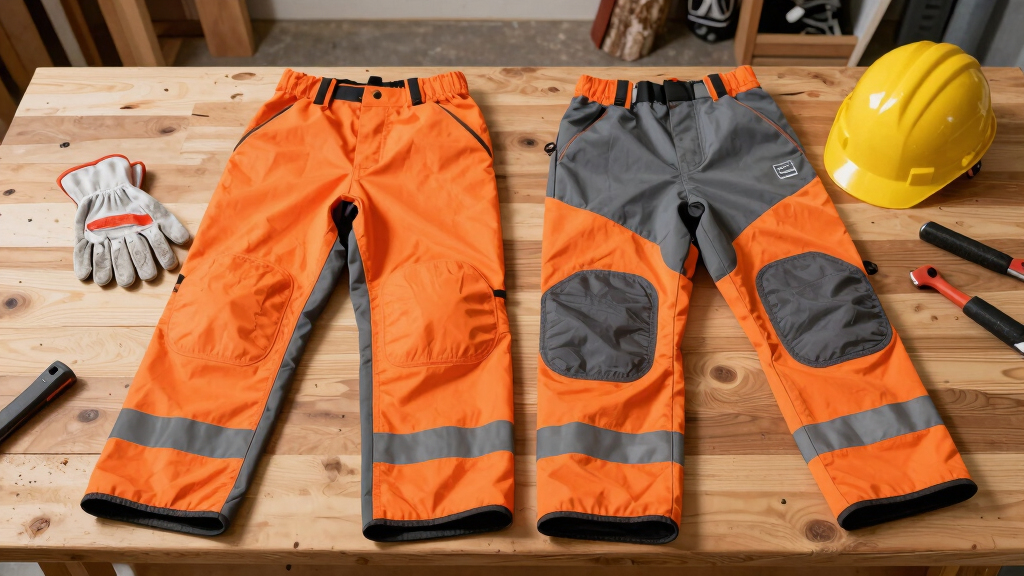
Chaps are removable protective panels worn over work clothes. Protective pants integrate cut-retardant layers into the garment itself, trading quick removal for more continuous coverage and a streamlined fit.
Chainsaw chaps
Adjustable panels wrap around the front and sides of the legs. They are quick to put on, easy to share between appropriately sized users and practical for intermittent work.
Protective pants
Cut-retardant layers are built into a complete pair of trousers. The garment stays aligned with the body and may provide broader protection around the leg.
| Decision factor | Chainsaw chaps | Protective pants | Selection signal |
|---|---|---|---|
| Application | ✓Intermittent use | ✓Extended use | Match gear to exposure time |
| Coverage | ~Front and partial wrap | ✓Integrated leg coverage | Check the certified protection zone |
| Adjustment | ✓External straps | ~Garment sizing | Secure fit prevents shifting |
| Removal | ✓Quick to remove | ✗Full clothing change | Consider task frequency |
| Comfort | ~Flexible layering | ✓Ergonomic integration | Wearability supports compliance |
02 / Chain-stopping science
Impact becomes entanglement.
Cut-retardant fabric does not behave like armor. Its job is to release a dense mass of long, tough fibers into the moving chain assembly and consume its momentum through friction and tangling.
Teeth strike
The moving cutters contact the outer garment surface.
Fibers release
Protective strands fray and pull rapidly from their layers.
Drive clogs
Long fibers wrap around the chain, sprocket and drive components.
Chain stalls
Resistance rises sharply, helping stop or slow cutting action.
Quality layered systems can clog a chain within milliseconds. Actual performance depends on chain speed, saw design, angle of contact, garment condition and the product’s tested protection class.
03 / Fiber architecture
Tough fibers work as a team.
Material strength matters, but the weave, density and stacking sequence determine how effectively a garment releases fibers and builds a chain-stopping tangle.
Kevlar
High tensile strength at low weight. Dense aramid fibers resist tearing while supplying long strands that can entangle the chain mechanism.
Spectra & Dyneema
Very strong, lightweight polyethylene fibers can improve flexibility and reduce garment bulk when used in engineered blends.
Ballistic blends
Multiple fiber types combine clogging performance, abrasion resistance, durability and comfort for the garment’s intended use.
Why three to five layers?
Each layer adds another opportunity to catch a tooth, release fibers and absorb energy. Redundancy improves the protective margin, but excessive bulk can reduce mobility and discourage consistent wear.
04 / Verification
Certification turns claims into evidence.
A thick garment is not automatically protective. Check the sewn-in label, exact model documentation, tested coverage area and applicable protection class before relying on any product.
Leg protection performance
Commonly referenced for chainsaw leg-protection products in North America. Confirm the product’s current certification, test results and intended application.
European chainsaw PPE reference
Frequently shown on older or regional product information. Verify the current applicable standard and protection class stated by the manufacturer.
Find the standard, class, garment type, size and certified protection zone.
Gear should stay aligned without restricting stance, steps or escape movement.
Use only approved cleaning, drying, repair and retirement procedures.
05 / Maintenance
Protection lasts only while the layers remain sound.
Inspection is not cosmetic. Cuts, pulled fibers, chemical exposure, heat damage, contamination or unauthorized repairs can change how the protective package behaves during contact.
Check the shell, straps, fasteners, seams and protective zone for damage or shifting.
Follow manufacturer instructions; harsh chemicals, high heat or incorrect drying may harm fibers.
Gear struck by a moving chain should be removed from service and assessed or replaced as directed.
Replace worn, damaged or expired garments according to the maker’s stated schedule.
Safety traceability
From material choice to injury reduction
What Are Chainsaw Chaps and Protective Pants, Really? They’re Safety Layers, Not Just Heavy Duty
Chainsaw chaps and protective pants are specialized PPE designed to stop a chainsaw before it cuts into your skin. Think of them as high-tech filters, made from layers of cut-resistant fabric. They’re not just thick cloth; they’re engineered to clog the saw’s teeth instantly. For example, a pair of Kevlar-lined chaps wrapping around your legs can slow down or stop a running chainsaw within a split second. The key is their layered construction, which acts like a net catching the saw’s teeth before they reach your flesh.
Chaps are usually worn over regular pants, adjustable for a snug fit, and easy to remove. Protective pants, on the other hand, are often one-piece or integrated garments that cover the entire leg. They’re essential for professional arborists or serious DIYers who want maximum coverage with minimal fuss. Both are certified to meet safety standards, but they differ in design and application. Knowing the difference helps you pick the right gear for your work or hobby.
As an affiliate, we earn on qualifying purchases.
How Do These Layers Actually Stop a Chainsaw? The Science of Clogging the Chain
Cut-retardant layers are engineered to clog a chainsaw’s chain almost instantly. When the saw teeth hit these fibers, they begin to catch and fray. As the fibers catch, they create resistance that causes the chain to jam, halting the saw. This process happens in milliseconds; a well-made layer can clog the chain before it has a chance to cut more than a few millimeters into your leg.
Imagine a chainsaw running at 3,500 RPM, with teeth zipping through wood or flesh. When it contacts a layer of Kevlar or Spectra fibers, the fibers instantly catch the teeth, pulling them into a tangled mess. This rapid response is crucial because the faster the chain jams, the less damage it can do. The layered fabric acts like a trap, turning the chain’s own momentum against itself. However, this also means that the design must balance between being thick enough to clog quickly and flexible enough to be worn comfortably. The timing of chain clogging is critical; delays can mean the difference between a safe stop and a serious injury. High-performance fibers are so effective that they can clog the chain within 0.1 seconds, which is why quality PPE can drastically reduce injury severity during accidents. The implication is that the better the fabric’s response time, the higher the safety margin, but tradeoffs include weight, flexibility, and cost.
As an affiliate, we earn on qualifying purchases.
What Materials Make These Layers So Tough? The Secret Fibers Behind Safety Gear
The backbone of cut-retardant layers is high-performance fibers like Kevlar, Spectra, or other aramid-based fabrics. Kevlar, for example, has a tensile strength five times that of steel per weight, making it perfect for stopping a chainsaw. These fibers are woven into dense fabrics that resist cuts and fraying when hit by saw teeth.
Some newer gear also combines multiple fibers, like adding Dyneema or ultra-high-molecular-weight polyethylene, to enhance durability and cut resistance. These fabrics remain flexible, breathable, and lightweight—so your gear doesn’t turn into a straightjacket. The choice of fiber impacts not only the level of protection but also the comfort and usability of the gear. For instance, a fabric woven with a blend of Kevlar and Dyneema can offer a high level of cut resistance while maintaining flexibility, which encourages consistent use. The properties of these fibers—such as tensile strength, modulus, and fray resistance—directly influence how well the gear performs under real-world conditions. If the fibers are too brittle, they may break down after repeated impacts, reducing effectiveness. Conversely, high-quality fibers retain their integrity over time, ensuring reliability during critical moments. This makes understanding the material composition essential for both manufacturers and users, as it directly correlates with safety and longevity.
As an affiliate, we earn on qualifying purchases.
Layer Design 101: How Multiple Layers Make You Safer
Layering is the secret sauce in cut-retardant gear. A single sheet of Kevlar isn’t enough; it’s the stacking and density that make the difference. Most chaps and pants use 3-5 layers of woven fibers, each designed to clog the chain quickly.
Think of it like a net with tiny, overlapping strands. When the chainsaw’s teeth hit this web, the fibers catch and fray rapidly, causing the chain to slow down or jam. The more layers, the higher the chance of clogging the chain before it reaches your skin. This layered approach also provides redundancy; if one layer is compromised, others can still offer protection. The design tradeoff involves balancing weight, flexibility, and protection level. For example, increasing layers enhances safety but can make the gear heavier and less comfortable, potentially discouraging consistent wear. Manufacturers often optimize the number and density of layers based on the intended use—heavy-duty professional gear might have more layers than casual DIY equipment. The effectiveness of this layered design depends on proper construction and material quality. Well-designed layering can turn a simple fabric into a highly effective barrier, but poor assembly or low-quality materials can reduce its protective capability. Understanding this helps users select gear that offers the best compromise between safety, comfort, and practicality.
chainsaw PPE certification standards
As an affiliate, we earn on qualifying purchases.
As an affiliate, we earn on qualifying purchases.
What About Standards and Certifications? How Safe Is Safe Enough?
Standards like ASTM F1897 and EN 381 set the benchmark for cut resistance in chainsaw gear. They test how much force a fabric can withstand before it fails or cuts through. For example, a D-rated PPE must resist a force of around 20-25 Joules—roughly the energy of a chainsaw’s teeth at full throttle.
When shopping, look for gear with clear certification labels. This guarantees the product has been tested under controlled conditions and meets safety thresholds. However, it’s important to understand that certification is a baseline; real-world conditions can vary. Factors like gear fit, maintenance, and user technique also influence safety outcomes. For example, a piece of PPE might pass a lab test but fail during prolonged use if it’s not properly maintained or if it’s damaged. Always inspect your gear regularly for signs of wear and replace it if necessary. The standards are designed to ensure a minimum level of safety, but no PPE can guarantee absolute protection—it’s a combination of certified gear, correct usage, and situational awareness that maximizes safety. Understanding these standards helps you make informed choices and recognize quality products that meet recognized safety benchmarks, reducing the risk of severe injury in accidents.
Latest Innovations: Lighter, Smarter, More Comfortable Gear
Recent advances focus on blending safety with comfort. New fibers like Dyneema are lighter and more flexible, reducing fatigue during long workdays. Some gear now incorporates breathable fabrics, moisture-wicking linings, and ergonomic designs—so you stay cool and mobile.
For example, a pair of modern chaps might weigh less than 2 pounds and include stretch panels, making movement easier. Reflective strips and reinforced knees add durability without sacrificing breathability.
These innovations are crucial because they encourage consistent use—if PPE is uncomfortable, users are less likely to wear it properly or at all, increasing risk. The challenge is to balance lightweight, flexibility, and protection without compromising safety standards. Manufacturers are investing in research to develop materials that are not only protective but also enhance mobility and comfort. This way, users can stay alert and responsive during demanding tasks, reducing the likelihood of accidents caused by fatigue or distraction. The shift towards smarter, more ergonomic designs signifies a recognition that safety gear must integrate seamlessly into the user’s workflow, rather than be an obstacle to it.
Maintenance and Care: Keep Your Gear Ready When It Counts
Cut-resistant layers aren’t forever. Regular inspection for tears, fraying, or thinning fabric is key. If you notice any damage, replace immediately. Worn gear can fail at the worst moment—especially after repeated use or exposure to harsh conditions.
Follow manufacturer instructions for cleaning. Most fabrics should be hand-washed with mild detergent and air-dried. Avoid machine drying or bleach, which can weaken fibers and reduce protective qualities.
For example, after a busy weekend of pruning, inspect your chaps for any signs of wear. Replacing damaged gear is a small investment that could save your life. Proper maintenance not only preserves the protective properties but also extends the lifespan of your PPE, ensuring it performs reliably when you need it most. Neglecting care can lead to unnoticed damage, which might compromise safety during critical moments. By adhering to recommended cleaning and inspection routines, you ensure that your gear remains effective, providing peace of mind on every job.
Frequently Asked Questions
Can I wear chainsaw chaps or pants for other outdoor activities?
No. These are designed specifically to stop chainsaws. Using them for other activities won’t provide meaningful protection and may give a false sense of security.How do I know if my safety gear is still effective?
Regularly inspect for tears, fraying, or thinning fabric. If damaged or after a few years of use, replace even if it looks fine—materials wear out over time.Are lighter fabrics as safe as heavier ones?
Recent innovations have made lighter fabrics just as protective, thanks to advanced fibers like Dyneema, but always check certification ratings and manufacturer guidelines.What’s the biggest mistake people make with chainsaw PPE?
Wearing worn or untested gear, or neglecting safety practices. Gear is vital, but proper technique and situational awareness are equally important.Conclusion
Understanding the mechanics behind cut-retardant layers shows why quality safety gear is worth every penny. It’s not just about thick fabric but about how those layers act as a high-speed trap for chainsaw teeth. When you choose gear certified and well-maintained, you turn a potentially deadly tool into a safer one. Remember—safety isn’t just a feature, it’s a mindset. Gear up, stay alert, and keep your limbs intact.Fall Picks
fall essentials
As an affiliate, we earn on qualifying purchases.