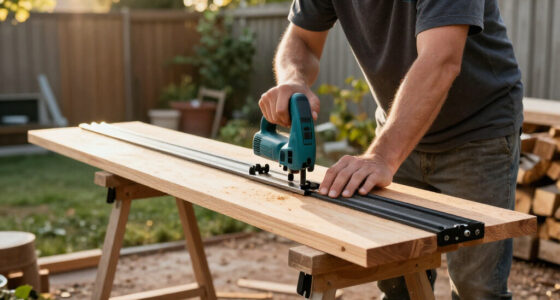

This checklist is for people setting up a home woodworking workspace and deciding which tools to gather first. It covers cutting, sanding, measuring, dust collection, carving, and clamping, with practical notes to help you assess each slot.

Get business pricing on tools and workshop supplies
- Business-only prices and quantity discounts
- Tax-exempt purchasing
- Multiple users, one account, clear invoices
The sections follow the listed picks and advice-only category. Each one explains why the slot matters, what to check before buying, and where fit or compatibility deserves a closer look. Product names are included as supplied; the combination square pick may not match the tool named in that section.
Use the checklist to compare the products with your projects, workspace, and tools you already own. Check the manufacturer’s specifications for dimensions and compatibility, and prioritize the items that address your immediate needs. For clamps, use the advice to choose a suitable type and size.
Cordless Circular Saw
A circular saw can support straight cuts when preparing stock for a project, so this slot matters if your work involves sizing boards or sheet goods. The listed pick is the DEWALT 20V MAX 7-Tool Cordless Combo Kit with 5Ah Battery and Charger. Because it is identified as a combo kit, review the included tools and decide whether the full set suits your needs; the product name alone does not specify the saw’s blade size, cutting depth, or included accessories.
A common buying mistake is assuming a kit contains the exact configuration or accessories you expect. Check the manufacturer’s specifications for blade compatibility and cutting capacity, and confirm what is included before purchase. For cordless equipment, verify that the battery and charger arrangement works with your existing tools or planned setup. Also consider how you will support and secure the material during a cut, and whether the saw’s size and handling suit the stock you typically use. Match the tool to your actual projects rather than choosing a kit solely because it contains multiple items.
What to look for:
- Confirm which tools and accessories the kit includes.
- Check blade size and compatible blade types.
- Compare cutting capacity with the material you plan to cut.
- Verify battery and charger details against your cordless tool setup.
- Consider handling and material support for your typical cuts.
DEWALT 20V MAX 7-Tool Cordless Combo Kit with 5Ah Battery and Charger (DCK751P1)

This DEWALT 20V MAX kit includes a drill, impact driver, reciprocating saw, circular saw, oscillating tool, random orbital sander, and jigsaw, plus a 5Ah battery and charger. The cordless tools support a range of construction and woodworking tasks, with features such as brushless motors, variable speed controls, and compact designs for tight spaces.
Pros:
- Includes seven cordless tools, a battery, and a charger
- Brushless motors on several tools
- Variable speed controls on the sander and jigsaw
- Compact saw design helps reach tight spaces
Cons:
- The kit weighs 29.8 pounds
- Only one battery is included
Best for: Woodworkers who want to assess a multi-tool cordless kit
Not ideal for: Shoppers seeking a specified saw configuration without checking kit details
Bottom line: Verify the kit contents and saw specifications against your projects before choosing it.
Random Orbital Sander
Sanding is part of preparing wood surfaces, making a sander a useful slot to consider for a starter workspace. The pick is the Bosch GET75-6N 6-Inch Dual-Mode Random Orbit Sander. Its name identifies a six-inch model and dual-mode operation, but it does not explain the modes, included abrasives, dust-collection arrangement, or other specifications. Check the product details to see whether its functions and included equipment suit the surfaces you plan to work on.
A common mistake is buying a sander without checking how its pad size and abrasives fit the job. Confirm which sanding discs it accepts and whether the dust-collection setup works with your workspace or extractor. Consider the tool’s size and grip in relation to the areas you need to sand, especially if you expect to work on both broad surfaces and smaller pieces. Also check what is included in the package rather than assuming accessories come with it. Choosing based on your project surfaces and existing dust-control setup can help avoid a mismatch.
What to look for:
- Confirm the sander’s operating modes and how to select them.
- Check which six-inch sanding discs it accepts.
- Review the dust-collection connection and compatibility.
- See which accessories or abrasives are included.
- Consider the tool’s size for the surfaces you plan to sand.
Bosch GET75-6N 6-Inch Dual-Mode Random Orbit Sander

This corded 6-inch sander offers standard random-orbit and turbo modes for smooth finishing or faster material removal. Its variable-speed motor, multi-hole pad system, auxiliary handle, and vacuum-compatible dust collection support a range of sanding and polishing tasks.
Pros:
- Two sanding modes for finishing and aggressive material removal
- Variable-speed motor
- Compatible with a wide variety of 6-inch abrasive discs
- Vacuum-compatible dust collection system
Cons:
- Vacuum cleaner and hoses are required for dust collection and may be sold separately
Best for: Shoppers looking for a named six-inch random orbit sander
Not ideal for: Anyone who needs particular accessories or dust fittings without checking specifications
Bottom line: Match the pad, modes, and dust connection to your projects and workspace.
Woodworking Clamps
Clamps help hold workpieces in position during tasks where movement would make the work harder to manage, so they deserve a place in a starter checklist even without a specific product pick. Think first about the projects you expect to tackle and the shapes or sizes of the pieces you need to secure. A collection chosen around those tasks is more useful than buying clamps without considering their opening capacity and reach.
A common mistake is choosing clamps that cannot reach around the workpiece or apply pressure where needed. Check the manufacturer’s stated opening, throat depth, and clamping method, then compare those measurements with your project materials and work surface. Consider how the clamp will contact the wood and whether its pads or other contact points suit the finish you want to protect. Before purchasing multiple clamps, identify the tasks they must cover and confirm that the selected types can be positioned as required. A deliberate mix based on workpiece dimensions and access will make the collection more useful.
What to look for:
- Compare opening capacity with the widest workpieces you expect to hold.
- Check throat depth and whether the clamp can reach the target area.
- Choose a clamping method that suits your project tasks.
- Review contact pads or surfaces for the wood finish you want to protect.
- Plan the number and arrangement of clamps around each project.
Combination Square
A combination square belongs in a measuring checklist because accurate layout depends on using a tool suited to the intended measurements and marks. The supplied pick is Metal Stand with Basketball Hoop Light LED, 103.9x15x27.5 inches, Fits, whose name does not identify a combination square. Treat this as a product-name mismatch and verify the intended item before relying on it as the measuring-tool pick. The supplied description alone does not establish that it can perform woodworking layout tasks.
A common buying mistake is proceeding from a section heading without checking whether the listed product is actually the tool required. Confirm the product category, measuring scale, construction, and included parts from the source listing. For a combination square, compare its stated dimensions and functions with the measurements you need to make, and check that its design suits the stock and workspace involved. Do not infer measurement capability from the current product name. If the listing is correct but the name is incomplete, use the manufacturer’s information to resolve the discrepancy before purchase; otherwise, identify the intended square first.
What to look for:
- Verify that the listing is for a combination square.
- Confirm the scale and measurement functions in the product specifications.
- Check dimensions and included components against your layout needs.
- Compare the tool’s design with the stock you plan to measure.
- Resolve the mismatch between the section and supplied product name before buying.
Metal Stand with Basketball Hoop Light LED, 103.9x15x27.5 inches, Fits Square Po

This metal stand with LED lighting enhances nighttime basketball games by providing bright, adjustable illumination for your hoop and court. Designed for in-ground basketball systems, it fits most square and round poles and is easy to install, ensuring safety and visibility during play.
Pros:
- Bright, adjustable LED lighting improves night-time visibility
- Universal fit for most in-ground basketball hoops
- Easy and quick installation with included tools
- Enhances safety during night games
Cons:
- Not compatible with all pole types; measure before purchasing
- Does not include solar charging feature
- Limited to AC power source
Best for: Readers checking the listing before selecting a measuring tool
Not ideal for: Anyone expecting the supplied name to confirm a combination square
Bottom line: Confirm the intended product and its measuring functions before treating this as the square pick.
Dust Extractor
Dust collection is a practical consideration in a woodworking setup, so this slot prompts a check of how an extractor will fit your tools and workspace. The pick is the Festool 578512 CT MIDI I Dust Extractor. The product name identifies it as a dust extractor, but does not specify its connection types, capacity, included accessories, or compatibility with particular tools. Review the manufacturer’s details to determine whether it fits the equipment you plan to use.
A common mistake is assuming a dust extractor will connect directly to every tool or hose. Check the inlet, hose, adapters, and any tool-specific connections, then compare them with your sander and other equipment. Consider where the extractor will sit and how its dimensions and hose arrangement fit the available workspace. Review the product specifications for capacity and filter details relevant to your intended use, without relying on the name alone to establish them. Confirm connection compatibility and what comes in the box before purchase, especially if you expect to use the extractor with multiple tools.
What to look for:
- Check inlet and hose connection details.
- Confirm adapters or accessories included with the extractor.
- Compare connections with the tools you plan to use.
- Review stated capacity and filter specifications for your needs.
- Consider placement, dimensions, and hose routing in your workspace.
Festool 578512 CT MIDI I Dust Extractor

Compact, corded HEPA dust extractor designed for woodworking and construction use. Features automatic tool start, Bluetooth remote start/stop, manual filter cleaning, and tool-free filter changes.
Pros:
- HEPA filtration for fine dust capture
- Bluetooth remote start/stop and automatic tool start
- Manual filter cleaning maintains suction performance
- Compact and lightweight with robust chassis for easy mobility
Cons:
- Only one power level
- Corded design limits portability
- Premium Festool pricing
Best for: Shoppers planning dust collection around named tools
Not ideal for: Anyone assuming direct compatibility without checking fittings
Bottom line: Verify the extractor’s connections, accessories, and workspace fit before selecting it.
Chisel Set
A chisel set can be relevant when your projects call for hand carving or detail work. The listed pick is the Schaaf 12-Piece Wood Carving Chisel and Gouge Set. Its name identifies a twelve-piece set for carving, but it does not provide the individual tool shapes, sizes, handle details, or included storage. Check the product listing to understand which tools are actually in the set and whether they correspond to the work you intend to do.
A common mistake is choosing a set by piece count without checking the shapes and sizes. Review the included chisels and gouges, and compare them with the details, curves, or cuts in your planned projects. Consider how the handles fit your hands and whether you have an appropriate place to store and protect the tools. Check the manufacturer’s care guidance and inspect what the package includes rather than assuming it contains extras. For a starter collection, useful tool shapes matter more than a count by itself; choose the set only after confirming its contents suit your intended carving tasks.
What to look for:
- Review the listed chisel and gouge shapes in the set.
- Compare tool sizes with the detail work you plan to do.
- Check handle information and how the tools are intended to be used.
- Confirm whether storage or other accessories are included.
- Review care guidance and storage needs before purchase.
Schaaf 12-Piece Wood Carving Chisel and Gouge Set

This 12-piece set includes full-size carving chisels and gouges made from chromium-vanadium steel hardened to Rockwell C60. Ash wood handles, a protective canvas tool roll, and beginner tutorials support a range of carving projects, from reliefs to bowls and spoons.
Pros:
- 12 versatile chisels and gouges for different carving projects
- Hardened steel blades designed to hold an edge
- Ash handles resist rolling on the work surface
- Includes a canvas tool roll and beginner tutorials
Cons:
- Beginner tutorials may require additional time to learn sharpening and care
Best for: Shoppers looking for a named carving and gouge set
Not ideal for: Anyone choosing by piece count without checking tool shapes
Bottom line: Confirm the set’s individual tools match the carving tasks you have in mind.
When organizing purchases, start with the tasks you expect to do most and the tools needed to complete them. Check the saw and sander against your cutting and surface-preparation plans, then confirm how dust collection will connect to your equipment. Choose clamps by measuring the workpieces and clamping points, and resolve the combination-square listing mismatch before adding it to your list. This buying order follows your projects and helps you spot compatibility questions early.
A starter setup can come together one considered choice at a time. Use the look-for points to check product details, confirm what each package includes, and compare dimensions with your workspace and materials. Where a product name does not answer a question, consult the manufacturer’s specifications before deciding. With a clear list of projects and a few careful checks, you can build a workable woodworking checklist that fits the way you plan to work.