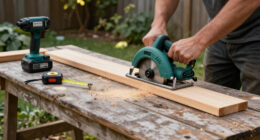

The right power woodworking tools depend less on brand loyalty and more on how you work: cordless versus corded, benchtop versus handheld, and how much workshop space you can spare. My top pick overall is the DEWALT 20V MAX 3-Tool Combo Kit, because bundling a brushless router, orbital sander, and jig saw with a shared battery platform covers the widest range of projects for the money. For precision crosscutting, the Metabo HPT 10-Inch Miter Saw stands out with its Xact Cut shadow line, while the Bosch PR20EVS Colt Palm Router is the standout single-tool buy for detail work like hinge mortising and edge profiling. The main tradeoff in this category is convenience versus capability — compact cordless tools go anywhere, but corded machines like band saws and miter saws deliver sustained power for heavier stock. Read on for the full breakdown of all nine picks and who each one suits best.

Get business pricing on tools and workshop supplies
- Business-only prices and quantity discounts
- Tax-exempt purchasing
- Multiple users, one account, clear invoices
Complete the kit


Key Takeaways
- The DEWALT combo kit ranks first because battery-platform sharing across three tools delivers more project coverage per dollar than any single-tool purchase in this lineup.
- The Bosch PR20EVS and the TwoWin/Avid Power routers show a clear capability gap: the Colt’s variable speed and soft-start justify its price for frequent use, while the budget routers make sense only for occasional trim work.
- Both WEN benchtop options (the 9-inch band saw and the 6-amp hand planer) prove that entry-level pricing works for hobbyists but comes with capacity and dust-collection compromises serious woodworkers will outgrow.
- Buying the standalone DEWALT 20V jig saw only makes sense if you already own DEWALT batteries — otherwise the combo kit is the stronger value despite its higher upfront cost.
- A book made this list on purpose: Power Tool Woodworking for Everyone fills a real gap for beginners who own tools but lack technique, and it costs less than a single router bit set.
| DEWALT 20V MAX 3-Tool Combo Kit with Brushless Cordless Router, Orbital Sander, Jig Saw, Battery, and Charger |  | Best Overall | Router: 20V MAX XR Brushless Cordless Compact Router | Sander: 20V MAX Random Orbital Sander | Jig Saw: 20V MAX XR Cordless Jig Saw | VIEW LATEST PRICE | See Our Full Breakdown |
| WEN 9-Inch Band Saw, 2.8-Amp Benchtop (BA3959) |  | Best Value for Curved Cuts | Motor: 2.8-amp, 120V AC | Blade Speed: 2500 rpm | Blade Length: 59.5 inches | VIEW LATEST PRICE | See Our Full Breakdown |
| TwoWin 800W Compact Wood Router Tool, 110V-120V |  | Best Budget Router Kit | Power: 800W | Voltage: 110V-120V | Speed: 30,000 RPM (fixed) | VIEW LATEST PRICE | See Our Full Breakdown |
| DEWALT 20V MAX XR Cordless Brushless Jig Saw (Bare Tool) |  | Best for Precision Curve Cutting | Max Blade Speed: 3,200 SPM | Motor: Brushless | Power Source: 20V MAX XR battery (not included) | VIEW LATEST PRICE | See Our Full Breakdown |
| Bosch PR20EVS Colt 1.0 HP Variable-Speed Palm Router |  | Best Premium Palm Router | Power: 1.0 HP, 5.6 amps | Speed Range: 16,000–35,000 RPM, variable | Base Type: Aluminum fixed base | VIEW LATEST PRICE | See Our Full Breakdown |
| Metabo HPT 10-Inch Single Bevel Compound Miter Saw |  | Best Crosscut Precision | Blade Size: 10 inches | Motor Power: 15-Amp | No-Load Speed: 5,000 RPM | VIEW LATEST PRICE | See Our Full Breakdown |
| WEN 6530 6-Amp Electric Hand Planer, 3-1/4-Inch |  | Best Value Hand Planer | Motor Power: 6 Amp | Cutting Width: 3-1/4 inches | Max Cutting Depth: 1/8 inch | VIEW LATEST PRICE | See Our Full Breakdown |
| Power Tool Woodworking for Everyone |  | Best for Beginners | Format: Print book | Skill Level: Beginner to intermediate | Topics Covered: Safety, power tool techniques, project ideas | VIEW LATEST PRICE | See Our Full Breakdown |
| Avid Power Compact Wood Router Tool 630W 5.3 Amp |  | Best Budget Router Kit | Power: 630W | Amperage: 5.3 Amp | RPM: 35,000 | VIEW LATEST PRICE | See Our Full Breakdown |
More Details on Our Top Picks
DEWALT 20V MAX 3-Tool Combo Kit with Brushless Cordless Router, Orbital Sander, Jig Saw, Battery, and Charger
Building a cordless workshop in one purchase is the real appeal here, and that’s why this kit takes the top spot. You get a brushless compact router, a random orbital sander, and a jig saw, plus a 5.0Ah battery, a 2.0Ah battery, and a 4-amp fast charger — the bare-tool DEWALT 20V MAX XR jig saw sold separately costs nearly as much as this kit once you add power. The brushless motors translate into noticeably longer runtime per charge, which matters most on the sander where corded models tether you to an outlet. The tradeoff is weight: cordless tools with 5.0Ah packs get fatiguing during long handheld sanding sessions, and the compact router can’t match the Bosch PR20EVS for depth precision. Still, no other option in this lineup covers cutting, shaping, and finishing at once.
Pros:- Three brushless tools cover cutting, shaping, and finishing in one kit
- Two batteries (5.0Ah and 2.0Ah) plus a 4-amp fast charger included
- Brushless motors extend runtime and motor life over brushed alternatives
- Everything packs into a single contractor bag for job site portability
Cons:- Cordless tools with larger batteries get heavy during prolonged handheld use
- No dedicated plunge base or fine depth system for the router, limiting precision work
Best for: DIYers and new woodworkers who want to start a matching cordless ecosystem with cutting, routing, and sanding covered in a single purchase
Not ideal for: Buyers on a tight single-tool budget — if you only need one function, a dedicated tool like the Bosch PR20EVS router delivers more refinement per dollar
- Router:20V MAX XR Brushless Cordless Compact Router
- Sander:20V MAX Random Orbital Sander
- Jig Saw:20V MAX XR Cordless Jig Saw
- Batteries:20V MAX XR Lithium Ion, 5.0Ah and 2.0Ah
- Charger:12V MAX/20V MAX 4 Amp
- Includes:Contractor bag
Our verdict“The fastest way to outfit a cordless woodworking bench from scratch, as long as you accept some ergonomic compromise for the convenience.”
WEN 9-Inch Band Saw, 2.8-Amp Benchtop (BA3959)
If your projects involve resawing stock or cutting curves, no handheld tool in this roundup can do what a band saw does, and the WEN does it at a price that undercuts most competitors by a wide margin. The 2.8-amp motor handles softer hardwoods up to 3-1/2 inches deep, and the 45-degree bevel table plus included rip fence and miter gauge give it more stationary-tool versatility than anything else at this price. Compared with the DEWALT jig saw for curve work, the band saw produces cleaner, splinter-free arcs because the blade cuts continuously rather than reciprocating. The catch is capacity: the 9-inch throat and modest motor mean thick hardwoods and wide boards are off the menu, and you’ll want a better blade than what ships on it.
Pros:- Cuts up to 3-1/2 inches deep and 9 inches wide from a benchtop footprint
- Rip fence, miter gauge, and dust port included as standard
- 45-degree bevel-capable work table for angled cuts
- Two-year warranty backs the whole machine
Cons:- Stock blade quality is mediocre and will need replacing for fine work
- Light 2.8-amp motor bogs down in dense hardwoods
Best for: Hobbyists with limited bench space who want accurate curved cuts and light resawing without paying floor-standing saw prices
Not ideal for: Woodworkers milling thick hardwoods or wide panels — the 9-inch throat and 2.8-amp motor simply run out of capacity
- Motor:2.8-amp, 120V AC
- Blade Speed:2500 rpm
- Blade Length:59.5 inches
- Max Cutting Depth:3-1/2 inches
- Throat Capacity:9 inches
- Bevel Range:Up to 45 degrees
- Weight:40 pounds
- Warranty:Two years
Our verdict“The cheapest credible path into curved and resawn cuts, provided your stock stays under 9 inches wide and mostly under 3-1/2 inches thick.”
TwoWin 800W Compact Wood Router Tool, 110V-120V
This is the starter-router package: an 800W motor spinning at 30,000 RPM plus 15 router bits, guides, wrenches, and a wooden organizer, all for less than many name-brand bare tools cost. That accessory bundle is the whole argument — a beginner buying the Bosch PR20EVS would spend as much again just stocking bits and guides. The transparent base genuinely helps when following a line for edge trimming, a nice touch at this price. Where the gap shows is control and refinement: no variable speed means you can’t dial down RPM for larger-diameter bits, and build quality falls short of the Bosch’s aluminum precision. Compared with the Avid Power 630W router, the TwoWin’s extra wattage gives it more headroom in hardwoods, but both demand careful technique.
Pros:- 15 router bits plus straight and trimming guides included out of the box
- 800W motor provides solid power for edge work and grooving
- Transparent base improves line visibility during cuts
- Wooden organizer keeps the accessory set from disappearing into a drawer
Cons:- No variable speed control, limiting use with larger bits and delicate materials
- Weight becomes tiring during extended handheld sessions
- Included bits are budget-grade and dull faster than name-brand carbide
Best for: Beginners and occasional hobbyists who want to try routing without investing in premium bits and accessories separately
Not ideal for: Anyone doing production work or using large-diameter bits — fixed 30,000 RPM and entry-level bearings make it the wrong tool for daily use
- Power:800W
- Voltage:110V-120V
- Speed:30,000 RPM (fixed)
- Router Bits:15 included
- Guides:Straight guide, trimming guide
- Extras:Wrenches, carbon brush, wooden organizer, hardware
Our verdict“A low-risk way to learn routing with everything in one box, best treated as a stepping stone rather than a long-term workshop anchor.”
DEWALT 20V MAX XR Cordless Brushless Jig Saw (Bare Tool)
For scrollwork, cutouts, and curved trim, this is the most capable cutter in the lineup. The brushless motor pushes 3,200 strokes per minute with variable speed, and the 4-position orbital action lets you trade cut smoothness for speed — full orbital for rough ripping, zero orbital for clean curves in veneer. The LED light and dust blower work together to keep your cut line visible, which sounds minor until you’ve fought a sawdust-covered pencil line. Against the WEN band saw, the jig saw wins on portability and the ability to cut in place on installed work; the band saw wins on cut quality in thick stock. Note this is a bare tool: if you don’t already own DEWALT 20V batteries, the 3-tool combo kit above is the smarter buy, since the kit price effectively includes this class of tool plus batteries.
Pros:- 4-position orbital action matches aggressiveness to material and cut quality needs
- Variable speed up to 3,200 SPM for controlled starts and fine work
- Keyless T-shank blade changes take seconds
- LED light and dust blower keep the cutting line clear
Cons:- Bare tool only — battery and charger sold separately
- Bevel detents limited to 0°, 15°, 30°, and 45° with no intermediate stops
Best for: Woodworkers already invested in the DEWALT 20V platform who need a portable, precise curve-cutting tool
Not ideal for: Buyers starting from zero with no DEWALT batteries — the bare-tool pricing plus battery and charger costs makes the combo kit the better value
- Max Blade Speed:3,200 SPM
- Motor:Brushless
- Power Source:20V MAX XR battery (not included)
- Blade Type:T-shank
- Orbital Action:4-position
- Bevel Stops:0°, 15°, 30°, 45°
- Visibility:LED light with integrated dust blower
Our verdict“The best cutting precision in a portable package, but only a smart purchase if DEWALT batteries are already on your shelf.”
Bosch PR20EVS Colt 1.0 HP Variable-Speed Palm Router
This is the refinement pick — the router you buy after outgrowing a budget unit. Micro-fine depth adjustment lets you sneak up on a cut in thousandths of an inch, which is the difference between a crisp roundover and a scorched, chewed edge. The variable speed range of 16,000 to 35,000 RPM matters more than it sounds: dropping RPM for larger bits prevents burnishing and keeps the work safe, something the fixed-speed TwoWin 800W simply cannot do. The aluminum fixed base and rubber over-molded grip feel like tools built for years of daily edge work, far beyond the TwoWin or Avid Power alternatives. The tradeoffs are scope and cost — it accepts only 1/4-inch shank bits up to 1-5/16 inches in diameter, and bit changes require the spindle lock and wrenches rather than a tool-free system. It’s a specialist, priced accordingly.
Pros:- Micro-fine depth adjustment enables precise, repeatable cuts
- Variable speed from 16,000 to 35,000 RPM adapts to bit size and material
- Durable aluminum fixed base built for long-term daily use
- Ergonomic rubber over-molded grip reduces fatigue in handheld edge work
Cons:- Limited to 1/4-inch shank bits up to 1-5/16 inches in diameter
- Bit changes require spindle lock and wrenches, not tool-free
Best for: Serious hobbyists and professionals doing frequent edge profiling, hinge mortising, and fine laminate trim work where depth accuracy is everything
Not ideal for: Budget-focused beginners or anyone needing plunge cuts or large bits — the fixed base and 1-5/16-inch capacity cap rule out heavy mortising and panel work
- Power:1.0 HP, 5.6 amps
- Speed Range:16,000–35,000 RPM, variable
- Base Type:Aluminum fixed base
- Bit Capacity:1/4-inch shank, up to 1-5/16 inch diameter
- Power Source:Corded electric, 120V
- Depth Adjustment:Micro-fine
Our verdict“The palm router to buy when precision edge work is a regular part of your projects and you’re willing to pay for build quality that lasts.”
Metabo HPT 10-Inch Single Bevel Compound Miter Saw
Every woodworking lineup needs a saw that can make accurate crosscuts and angled cuts, and this Metabo HPT miter saw fills that gap better than anything else in this batch. The 15-Amp motor spinning at 5,000 RPM powers through hardwood without bogging down, and the Xact Cut shadow line shows exactly where the blade will land — a feature many budget saws leave out entirely. At 24 lbs, it is far easier to move between job sites than most compound miter saws, let alone a benchtop machine like the WEN 9-Inch Band Saw, which trades portability for resawing capacity. The tradeoff is the single-bevel design: you only tilt one direction, so mirrored bevel cuts require flipping your workpiece. And unlike the cordless DEWALT 20V MAX tools in this roundup, you are tethered to an outlet.
Pros:- Powerful 15-Amp motor handles hardwood without bogging down
- Xact Cut shadow line gives visual cut accuracy
- Lightweight 24 lb build makes it genuinely portable
- 5-year warranty exceeds typical tool coverage
Cons:- Single-bevel design means flipping stock for opposing bevels
- Corded power limits jobsite flexibility compared with cordless options
- No sliding mechanism, so crosscut capacity is limited by blade size
Best for: Woodworkers building furniture, trim, or framing projects who need repeatable angled crosscuts
Not ideal for: Anyone doing mostly curved or scroll work — a band saw or jig saw like the DEWALT 20V MAX XR is the better fit
- Blade Size:10 inches
- Motor Power:15-Amp
- No-Load Speed:5,000 RPM
- Miter Range:0-52°
- Bevel Range:0-45°
- Weight:24 lbs
- Warranty:5 years
Our verdict“Buy this if accurate crosscuts and miters are central to your projects and you can live with flipping stock for compound angles.”
WEN 6530 6-Amp Electric Hand Planer, 3-1/4-Inch
Flattening a glue-up or fitting a stubborn door is a job no other tool in this roundup can do, and the WEN 6530 handles it at a bargain price. With 34,000 cuts per minute and 16 positive depth stops, it removes material quickly and predictably — something a router like the Avid Power Compact Wood Router can only approximate with a flattening bit and a jig. The bundled rabbeting guide, parallel fence, dust bag, and kickstand are accessories that competitors often sell separately, which stretches the value further. The compromises are real, though. The 1/8-inch maximum depth per pass means heavy stock removal takes multiple passes, and there is no variable speed control — at this price, blade snipe and finish quality fall short of premium planers. Treat it as a capable occasional-duty tool rather than a production workhorse.
Pros:- 34,000 cuts per minute removes material fast
- 16 positive depth stops make adjustments repeatable
- Includes rabbeting guide, fence, dust bag, and kickstand
- Only 6 lbs, so overhead and edge work stay manageable
Cons:- 1/8-inch max depth per pass slows heavy removal jobs
- No variable speed limits control on delicate work
- Basic construction may show snipe and chatter on hardwoods
Best for: Hobbyists and DIYers who need occasional stock flattening and door fitting without paying professional prices
Not ideal for: Fine furniture makers who need whisper-smooth finishes — a higher-end planer or hand plane will produce cleaner surfaces
- Motor Power:6 Amp
- Cutting Width:3-1/4 inches
- Max Cutting Depth:1/8 inch
- Positive Stops:16
- Weight:6 pounds
- Included:Dust bag, rabbeting guide, kickstand, parallel fence
- Warranty:2 years
Our verdict“A low-cost entry into power planing that makes sense for occasional jobs, as long as you accept slower material removal and a rougher finish.”
Power Tool Woodworking for Everyone
Among all the power woodworking tools in this roundup, this is the only one that teaches you how to use them well. Power Tool Woodworking for Everyone covers technique, safety, and project planning — the knowledge gap that separates someone who owns a Bosch PR20EVS Colt palm router from someone who gets clean results with one. Compared with buying another tool, spending on instruction often delivers more improvement per dollar, because most beginner failures come from poor technique, not underpowered equipment. The book serves both newcomers and woodworkers transitioning from hand tools to power tools, pairing naturally with any pick here, whether the Metabo miter saw or the Avid Power router. The honest limitation: it is not a tool at all, it appears to be an older title with unclear edition details, and it cannot replace hands-on practice or up-to-date reviews of modern cordless platforms like the DEWALT 20V MAX line.
Pros:- Covers safety fundamentals most beginners skip
- Technique guidance applies to nearly any power tool brand
- Project ideas give new tool owners a way to practice
- Inexpensive compared with any tool in this roundup
Cons:- Not a tool — provides no cutting or shaping capability itself
- Edition and format details are unclear, so content may be dated
Best for: Beginners building foundational skills before or alongside their first major tool purchase
Not ideal for: Experienced woodworkers seeking current tool comparisons or advanced joinery techniques
- Format:Print book
- Skill Level:Beginner to intermediate
- Topics Covered:Safety, power tool techniques, project ideas
- Focus:Power tool woodworking instruction
Our verdict“A smart companion purchase for anyone new to power woodworking who wants to learn technique before buying more tools.”
Avid Power Compact Wood Router Tool 630W 5.3 Amp
If the Bosch PR20EVS Colt is the benchmark palm router, the Avid Power compact router is the budget challenger that gets you 80% of the capability for a fraction of the price. Its 630W motor at 35,000 RPM handles edge profiling, hinge mortising, and decorative work, and the included router bits, guide, and wrenches mean you can start cutting immediately — the Bosch arrives as a bare investment by comparison. Three guide modes plus adjustable depth give it more versatility than the similar TwoWin 800W router in this lineup. The compromises are typical of budget routers: the 1/4-inch collet only rules out heavier 1/2-inch shank bits for big-profile work, and extended run times risk overheating. Fixed speed at 35,000 RPM also means less control on delicate or heat-sensitive materials where the variable-speed Bosch pulls ahead.
Pros:- Complete starter kit includes bits, guide, and wrenches
- 630W motor powers through edge profiling and mortising
- Three guide modes add routing versatility
- Lightweight, ergonomic body suits one-handed detail work
Cons:- 1/4-inch collet only limits bit selection for heavy profiles
- No variable speed reduces control on delicate materials
- Can overheat during long continuous sessions
Best for: Beginners and casual woodworkers wanting an all-inclusive starter router for edge work and light detailing
Not ideal for: Serious router-table users or production shops needing 1/2-inch collets and variable speed
- Power:630W
- Amperage:5.3 Amp
- RPM:35,000
- Guide Modes:3
- Collet Size:1/4 inch
- Included Accessories:Router bits, guide, wrenches
Our verdict“The best-value way to start routing today, provided your projects stay light-duty and you eventually upgrade for production work.”

How We Picked
I evaluated these nine options against the criteria that actually change a purchase decision: versatility across projects, power delivery (corded consistency versus cordless convenience), usability for different skill levels, and long-term value including battery ecosystem costs and accessory availability. A tool that excels at one narrow task but limits future projects scored lower than one that grows with the woodworker. I also weighed build quality and replacement-part access, because a cheap tool that dies mid-project costs more than its price suggests.
The ranking order follows a simple logic: platform-building tools first, capability specialists second, budget fill-ins third. The DEWALT combo kit earns the top spot because it solves three tool needs at once. The Metabo miter saw and Bosch palm router follow as best-in-class specialists. The budget routers, benchtop band saw, and hand planer occupy the value tier where tradeoffs are real but acceptable for hobbyists. The final entry is a deliberate outlier — a technique book included because the right first purchase for some woodworkers isn’t a tool at all.
Factors to Consider When Choosing Power Woodworking Tools
Choosing power woodworking tools is really a sequence of small strategic decisions — about power sources, project scope, and how your collection will grow. These are the factors I weigh before any purchase in this category.Corded vs. Cordless: Think Platforms, Not Tools
The single biggest mistake new woodworkers make is buying cordless tools piecemeal across brands. Every cordless tool you buy locks you into a battery platform, and batteries often cost as much as the tools themselves. If you buy one DEWALT tool bare and later want another, the battery you skipped buying becomes a hidden expense. Corded tools like the Metabo miter saw or WEN band saw avoid this entirely — they deliver consistent full power indefinitely, which matters for long ripping or resawing sessions where a battery sags. My rule: go cordless for tools you carry and use in bursts (routers, jig saws, sanders), and corded for stationary or high-draw machines.
Match the Tool to Your Actual Projects, Not Your Aspirations
It’s easy to over-buy based on projects you imagine doing someday. A 12-inch sliding miter saw sounds appealing until you realize most furniture work involves cuts a 10-inch single-bevel saw handles fine. The same logic applies to routers: a full-size plunge router is overkill if your real needs are edge rounding, hinge mortises, and light trim — exactly what a 1 HP palm router does better because it’s easier to control one-handed. Write down your last five actual projects, then buy for those. The gap between the tools you need and the tools you want is where budgets die.
Benchtop Machines: Where Cheap Gets Expensive
Benchtop band saws, planers, and sanders are where budget brands compete hardest, and where the tradeoffs bite hardest. A sub-$200 benchtop band saw can genuinely handle hobby-scale curves and light resawing, but undersized motors, plastic guides, and mediocre dust collection mean you’ll spend time tuning it that a better machine wouldn’t demand. Before buying any benchtop machine, check three things: blade availability in its size, whether the fence and table are adjustable enough to be accurate, and parts support. If a saw uses a blade size no one stocks locally, its bargain price stops being a bargain the first time it dulls.
Brushless Motors and Variable Speed: Pay More When Precision Matters
Brushless motors run longer per battery charge, last longer mechanically, and maintain speed under load — worthwhile for tools you use weekly, wasted on tools you use seasonally. Variable speed matters more than most beginners expect, especially in routers: soft woods burn at high RPM with larger bits, and hard woods chip out at the wrong feed speed. Fixed-speed budget routers force you to adapt your technique to the tool; variable-speed models like the Bosch Colt adapt to the work. If a tool will see precise finish work, variable speed is a non-negotiable feature. If it’s rough dimensioning only, save the money.
Skill Books Belong in a Tool Budget
Most woodworkers budget entirely for machines and nothing for knowledge, then wonder why their results don’t match their equipment. A well-regarded technique book costs less than a decent router bit and pays back faster, because technique improves every tool you own rather than just one. This is especially true for routers and hand planers, where poor technique ruins stock instantly — a planer snipe or router gouge wastes more lumber in a year than a book costs. If you’re starting out, pairing one solid reference with mid-range tools beats pairing premium tools with guesswork. It’s the highest-return line item on this entire list.
Budget Allocation: The 60/25/15 Split
A workable starting framework for a first serious tool purchase: put roughly 60% of your budget into your most-used tool, 25% into accessories (blades, bits, sandpaper, clamps), and hold 15% back. Accessories are chronically underestimated — a great jig saw with the stock blade performs worse than a mediocre one with a quality blade. The reserve matters because every tool purchase reveals a need you didn’t anticipate, whether that’s a battery, a dust adapter, or a sharpening solution. Buyers who spend 100% of their budget on day one almost always end up making a frustrated second purchase within a month.
Frequently Asked Questions
Is the DEWALT combo kit a better buy than buying the jig saw or router separately?
Only if you don’t already own DEWALT 20V batteries. The combo kit includes a battery and charger, which typically cost $100–$150 on their own, so the three tools effectively come at a steep per-tool discount. If you already run the 20V MAX platform and only need one tool, the bare jig saw or a standalone router is the smarter, cheaper path. But if this is your first DEWALT purchase, the kit establishes the platform and every future bare-tool purchase gets cheaper. The math favors the kit strongly for anyone starting a collection.
Can a budget router like the TwoWin or Avid Power replace the Bosch Colt?
For occasional, forgiving tasks — rounding over an edge, trimming laminate, simple groove cuts — a $50–$70 router will get the job done, and for many hobbyists that’s enough. Where the gap shows up is control and consistency: the Bosch Colt’s variable speed, soft start, and smoother depth adjustment mean cleaner results in dense woods and larger bits, plus far less grabbing when you plunge. If you router something every week, or work with hardwoods, the Colt pays for its premium quickly. If you router something every few months in pine and plywood, the budget models are a reasonable choice.
Is a 9-inch benchtop band saw actually useful, or should I save for a 14-inch model?
A 9-inch band saw earns its bench space for curve cutting, small parts, and hobby-scale work — it’s compact, affordable, and far safer than freehanding curves on a table saw. Its limits are real: a 2.8-amp motor struggles with resawing anything thick or hard, and throat depth caps the width of your curves. If your projects involve furniture-scale work, thick stock, or regular resawing, saving for a 14-inch saw is the better long-term move. But if you mostly cut templates, toys, small boxes, and trim curves, the benchtop size is a feature, not a compromise — it fits shops that a floor-standing saw wouldn’t.
Do I need a compound miter saw if I already own a circular saw?
A circular saw can make every cut a miter saw makes, but not repeatably, not quickly, and not safely with your hands near the blade. A compound miter saw earns its spot the moment you’re doing repeated identical cuts — trim work, framing, picture frames, box sides — where a shadow line or laser lets you place cuts precisely without measuring each piece. The Metabo’s Xact Cut shadow line is especially valuable here because it shows the actual kerf position, eliminating the guesswork that fence-mounted lasers introduce. If your work is mostly breaking down sheet goods, keep the circular saw. If you’re building anything with repeated angles, the miter saw changes your daily experience.
Is a power hand planer worth it, or should I learn with a hand plane first?
They solve different problems, and many shops end up with both. A power hand planer like the WEN 6530 excels at removing lots of material fast — flattening glued-up panels, trimming door edges, thicknessing rough stock — work that would exhaust you with a hand plane. A traditional hand plane is better for final smoothing, fine shavings, and quiet work where a power planer’s snipe and swirl marks would need sanding anyway. The risk with the power version is that it removes material so fast that mistakes are instant and deep, so practice on scrap first. If you dimension rough lumber regularly, the power planer is genuinely worth it; if you only surface occasional boards, a sharpened hand plane teaches more and ruins less.
Conclusion
The right choice here depends entirely on where you are in your woodworking journey. For most buyers, the DEWALT 20V 3-Tool Combo Kit is the best overall pick — it builds a battery platform and covers routing, sanding, and scrolling in one purchase. The best value goes to the WEN 9-inch band saw for hobbyists who need curved-cut capability at a beginner-friendly price, with the Avid Power router as the value pick if your needs are trim-only.
For the premium buyer, the Bosch PR20EVS Colt is the single tool here most worth paying extra for — its control and build quality outclass every budget router in this lineup, and the Metabo HPT miter saw is the premium choice for anyone doing precision crosscut work. Beginners should seriously consider pairing the combo kit with Power Tool Woodworking for Everyone, since technique multiplies every tool you own. For specific needs: rough-stock dimensioning points to the WEN hand planer, dedicated scrolling and curve work points to the band saw, and existing DEWALT owners should just grab the bare jig saw. Buy for the projects you actually do, and every pick above will earn its place on your bench.
Halloween Picks
halloween
As an affiliate, we earn on qualifying purchases.