
TL;DR
A Livingetc writer describes how growing dozens of orchids changed her approach to plant care and to decorating her home. She says orchids reward patience, and outlines basic care practices including bright light, watering based on root color, diluted fertilizer and cooler nights for some Phalaenopsis orchids.
In a Livingetc first-person report, a houseplant enthusiast says she has learned to value patience and close observation after growing dozens of orchids and reducing a collection that once reached an estimated 300 to 400 plants. Her account combines personal reflections on waiting for orchids to flower again with practical guidance on light, watering, feeding and temperature.

Get business pricing on tools and workshop supplies
- Business-only prices and quantity discounts
- Tax-exempt purchasing
- Multiple users, one account, clear invoices
The writer says she now keeps about 60 houseplants, most of them orchids, after deciding to scale back her collection. She describes using a simple test when deciding which plants to keep: plants that brought her joy stayed, while those she felt indifferent toward were given up. Orchids, she says, did not need to go through that test.
She presents the wait for a plant to flower again as part of the appeal. In her view, seeing an orchid bloom after receiving care brings a sense of pride. The report does not provide a timeline for how long a particular orchid may take to rebloom, and the writer’s experience is not a controlled horticultural study.
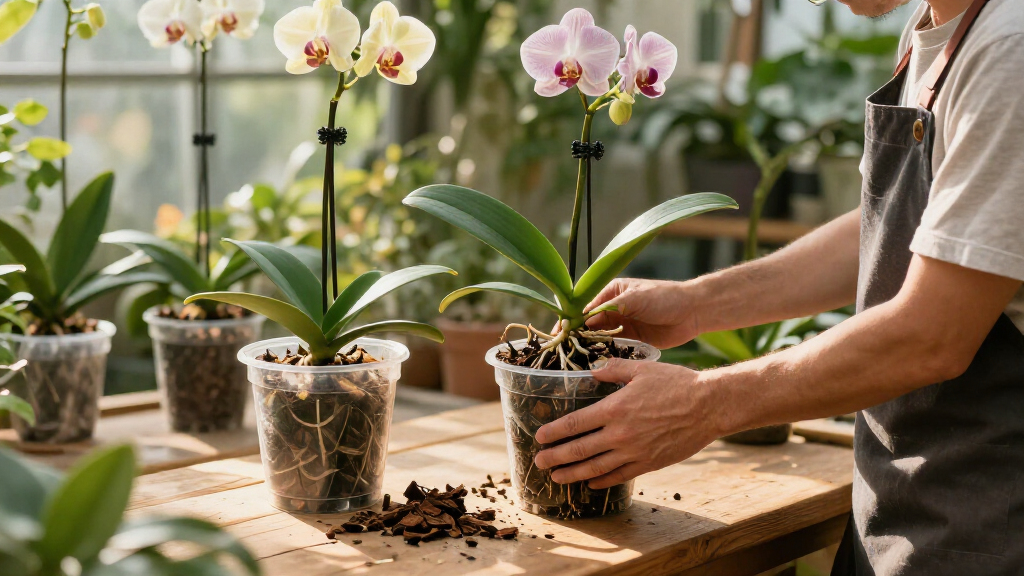
For indoor care, the article recommends a bright windowsill, watering when orchid roots change from green to silvery-gray, and applying orchid fertilizer at one-quarter of the package’s recommended dosage once or twice a month. It also says Phalaenopsis orchids may need a slight nighttime temperature drop to encourage a new flower spike. The guidance is attributed to the Livingetc report and should not be read as a guarantee that every orchid will rebloom under those conditions.
What Orchid Care Rewards
The report’s practical message is that orchid care involves watching the plant and responding to its condition rather than following a rigid schedule. Checking root color before watering, for example, gives growers a visible cue instead of relying only on the calendar. The writer also highlights that light, feeding and nighttime temperature can affect growth and flowering.
For readers managing a large indoor collection, her account makes a separate point about workload: filling every room with plants can turn an enjoyable hobby into a responsibility. She says reducing her collection helped her appreciate each plant’s shape and color more. That is a personal conclusion, but it offers a relatable alternative to treating a bigger collection as the only measure of success.
The article links plant care with choices about home decoration, too. The writer favors displaying an orchid where it can be seen and choosing a decorative pot that remains part of the room’s focal point when the plant is not flowering. These are design preferences, rather than horticultural requirements.
Popular right now

Dyson V8 Motorhead Origin Cordless Vacuum

KitchenAid 5.5-Quart Bowl-Lift Stand Mixer, Porcelain White

Vitamix Touch & Go Advance 32-Ounce Bar Blender, White
As an affiliate, we earn on qualifying purchases.
From Hundreds of Plants to Sixty
The writer recalls reaching a “peak plant” collection of about 300 to 400 houseplants in a 1930s semi-detached home. She says maintaining plants throughout the house became demanding, prompting her to keep only those that still brought her joy. Her current collection is smaller, though she describes roughly 60 plants as her minimalist phase.
The report also mentions Sarah Gerrard-Jones, author of Love Your Orchid: An Inspirational Guide to Keep Your Plants Blooming, described in the source as a new DK Books title for autumn 2026 and “available now.” The material does not give a publication date or explain that timing. The article’s care advice is framed around indoor orchids, particularly Phalaenopsis, rather than every orchid variety or growing environment.
““They’re missing the best part: the wait.””
— The Livingetc writer
Limits of the Care Advice
The report is a personal account, not a trial comparing orchid-care methods. It does not identify the varieties of all the orchids the writer has grown, give a full set of growing conditions, or establish how reliably the listed practices lead to reblooming. The nighttime temperature advice specifically refers to Phalaenopsis orchids, and individual plants may respond differently.
The source also gives no publication date for the Livingetc report. Its description of Gerrard-Jones’s book as an autumn 2026 title that is “available now” does not clarify when the article was published or which release date applies.
What Growers Can Watch
The article does not announce a new study, product launch or follow-up report. For readers applying its advice, the next step is to observe their own plants: check root color before watering, place orchids where they receive suitable light, and follow fertilizer directions while accounting for the article’s recommendation to use a reduced dose. Growers considering a cooler nighttime position should keep the advice in scope: the report discusses Phalaenopsis and does not specify exact temperatures.
Any further update on the book’s release or additional orchid-care guidance would depend on information from the author, publisher or Livingetc. The source material provides no schedule for such an update.
Key Questions
How many plants does the Livingetc writer keep now?
She says she has about 60 houseplants, most of them orchids. Her earlier collection was an estimate of 300 to 400 plants.
When does the report say to water an orchid?
The article recommends watering when the roots change from green to silvery-gray. It does not give a fixed number of days between waterings.
What care steps does the article recommend?
It recommends bright light, watering according to root color, orchid fertilizer at one-quarter of the recommended dosage once or twice a month, and a slight nighttime temperature drop for Phalaenopsis orchids to encourage a flower spike.
Does the article promise that these steps will make an orchid bloom again?
No. The guidance reflects the writer’s experience and the article’s recommendations; it does not guarantee reblooming or report results from a controlled test.
Why does the writer keep orchids after reducing her collection?
She says orchids were the plants she did not need to evaluate before downsizing. She enjoys their appearance and the experience of waiting for them to flower again.
Source: livingetc.com