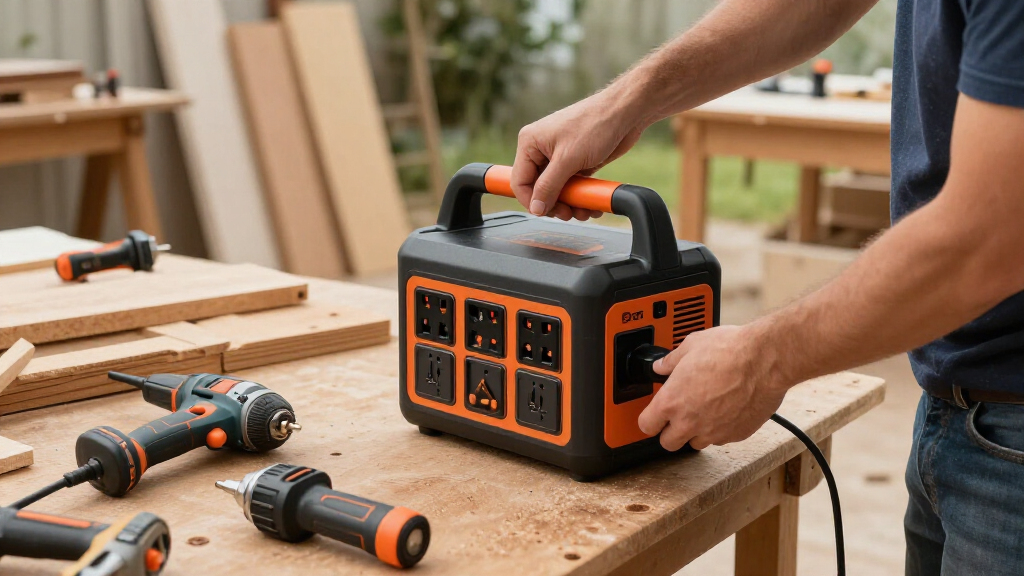
When selecting the best portable power stations for job sites, durability, power capacity, and versatility are key. The EF ECOFLOW DELTA Pro stands out for its massive capacity and expandability, making it ideal for demanding work environments. The BLUETTI Apex 300 offers impressive power and fast charging, perfect for continuous use, while the Jackery Explorer 1000 v2 balances portability with reliable performance for smaller jobs. Each option involves tradeoffs between size, capacity, and cost, which can influence your choice depending on your specific needs. Continue reading for a detailed breakdown of these models and more to find your best fit.

Get business pricing on tools and workshop supplies
- Business-only prices and quantity discounts
- Tax-exempt purchasing
- Multiple users, one account, clear invoices
Complete the kit


Key Takeaways
- The highest capacity models like the ECOFLOW DELTA Pro are best for large, prolonged job site use but come with higher costs and weight.
- LiFePO4 battery technology consistently offers longer lifespan and safer operation, making it ideal for frequent, demanding use.
- Portability often involves a tradeoff with capacity; smaller units are easier to carry but may lack sufficient power for extended work.
- Fast charging features significantly reduce downtime but can vary widely between models, affecting workflow efficiency.
- Expandable systems provide flexibility for future power needs but typically come at a premium and added complexity.


| portable power stations for job site | Capacity | Battery Type | Weight | AC Output |
|---|---|---|---|---|
| DABBSSON Portable Power Statio | 2048Wh | Semi-solid LiFePO4 | 41 lbs | 2200W |
| Jackery Explorer 1000 v2 Porta | 1070Wh | LiFePO4 | 23.8 lbs | 1500W |
| BLUETTI Apex 300 Portable Powe | 2764.8Wh | — | — | — |
| 1000W Portable Power Station 1 | 1024Wh | LiFePO4 | 27.73 lbs | 2×110V |
| EF ECOFLOW Portable Power Stat | — | — | — | 3600W |
| Librids Portable Power Station | 640Wh | LiFePO4 | — | — |
| Anker SOLIX C1000 Gen 2 Portab | 1024Wh | LiFePO4 | Less than similar models (exact weight not specified) | — |
More Details on Our Top Picks
DABBSSON Portable Power Station 2000L, 2048Wh Semi-Solid LiFePO4 Battery, 2200W AC Output, Solar Generator for Home Backup, Camping & RVs
The DABBSSON 2000L stands out for combining a substantial 2048Wh capacity with a lightweight design that weighs only 41 lbs, making it highly portable for job sites where mobility matters. Its semi-solid LiFePO4 batteries deliver safety and a lifespan exceeding 10 years, surpassing traditional lithium options. With a robust 2200W continuous output and a surge capacity of 3300W, it easily powers heavy-duty tools and appliances, similar to the larger EF ECOFLOW DELTA Pro, but in a more compact form. The fast 1-hour recharge time is a major advantage, especially when quick turnaround is needed. However, it requires an external solar panel for solar input, and its recharging options are somewhat limited to specific inputs, which could be a drawback in remote or off-grid scenarios. Compared to the Jackery Explorer 1000, it offers higher power output and longer runtime, but at a likely higher price and with fewer portable charging options.
Pros:- High capacity with 2048Wh for prolonged use
- Lightweight at only 41 lbs for portability
- Fast 1-hour recharge significantly reduces downtime
- Robust safety and long lifespan due to semi-solid LiFePO4 batteries
Cons:- Requires external solar panel for solar charging
- Limited input options may limit flexibility in some locations
Best for: Contractors and tradespeople who need a portable, high-capacity power source that can handle heavy tools on job sites.
Not ideal for: Weekend campers or casual users seeking a low-cost, simple solution without high power demands.
- Capacity:2048Wh
- Battery Type:Semi-solid LiFePO4
- Weight:41 lbs
- AC Output:2200W
- Power Surge:3300W
- Charging Time:1 hour
- Ports:6 AC outlets
- Supports Solar Input:Up to 800W MPPT
- Warranty:5 years
Our verdict“This power station is best suited for professionals needing reliable, portable power with quick recharge times and heavy-duty capability.”
Jackery Explorer 1000 v2 Portable Power Station, 1070Wh, 1500W, Fast Charge, LiFePO4 Battery, USB-C, Solar Generator for Camping and Emergency
The Jackery Explorer 1000 v2 offers a balanced mix of portability and power, with 1070Wh capacity and a 1500W AC output, making it ideal for camping, RV trips, or emergency scenarios. Its fast 1-hour recharge using advanced technology rivals the DABBSSON 2000L but in a smaller, lighter package at just 23.8 lbs—perfect for users who prioritize ease of transport. The inclusion of multiple ports, including USB-C and AC outlets, enhances versatility, while the LiFePO4 battery provides over a decade of reliable service. However, it relies on Jackery’s proprietary solar panels, which can limit compatibility and add to costs. Compared to the EF ECOFLOW DELTA Pro, it’s less expandable and has lower overall capacity, but it excels in portability and quick charging for light to medium loads.
Pros:- Lightweight at 23.8 lbs for easy transport
- Fast 1-hour recharge with smart charging tech
- Multiple ports including USB-C and AC outlets
- Long-lasting LiFePO4 batteries with over 10-year lifespan
Cons:- Requires proprietary Jackery solar panels for solar charging
- Limited capacity compared to larger systems like ECOFLOW DELTA Pro
Best for: Outdoor enthusiasts and homeowners needing reliable backup power during outages or off-grid adventures.
Not ideal for: Users requiring very high power output or large-scale expansion, as it is limited in capacity and expandability.
- Capacity:1070Wh
- AC Output:1500W
- Surge Peak:3000W
- Weight:23.8 lbs
- Charging Time:1 hour
- Battery Type:LiFePO4
- USB-C Ports:2
- Solar Panel Compatibility:Jackery panels only
Our verdict“This model makes the most sense for outdoor users who need portable, reliable power with rapid recharge times for moderate loads.”
BLUETTI Apex 300 Portable Power Station 2764.8Wh 3840W LFP Solar Generator
The BLUETTI Apex 300 offers a massive 2764.8Wh capacity with 3840W continuous power, making it a top choice for jobsites requiring sustained energy for multiple tools or larger appliances. Its 120V/240V dual output and support for solar, wall, and vehicle charging provide flexible recharging options. Unlike the Jackery Explorer 1000, which is better suited for lightweight tasks, the Apex 300 is designed for extended operation and can be expanded with additional batteries, making it ideal for long-term off-grid or backup scenarios. The complex setup, including optional expansion modules, can be overwhelming for casual users. Its higher cost and size mean it’s less suited for quick, on-the-move jobs but excels in stationary or semi-permanent applications.
Pros:- Enormous 2764.8Wh capacity for extended use
- Supports multiple charging options including solar
- Expandable with additional batteries for increased capacity
- Supports 120V/240V output for versatile appliances
Cons:- Complex setup may intimidate casual users
- Higher initial investment and size may limit portability
Best for: Construction crews or off-grid operators needing high capacity and expandability for continuous work.
Not ideal for: Light-duty users or those seeking a simple, plug-and-play portable power source due to setup complexity.
- Capacity:2764.8Wh
- AC Ports:6 ports (3840W)
- Output Voltage:120V/240V
- Battery Technology:LiFePO4
- Expandable:Yes
- Additional Features:UPS backup, app alerts, black start
Our verdict“This system is designed for professionals needing reliable, expandable power for long-term, high-demand job site use.”
1000W Portable Power Station 1024Wh LiFePO4 Solar Generator for Camping & Emergency
The 1000W Portable Power Station offers a balanced 1024Wh capacity and 1000W continuous output in a compact design, making it a practical choice for powering lights, small tools, and essential devices during outages or outdoor work. Its 60W USB-C PD port and lightweight 27.7 lbs build enhance usability in varied environments. Compared with larger units like the BLUETTI Apex 300, it’s less suited for heavy-duty or long-term off-grid projects but excels in portability and safety, supported by a durable LiFePO4 battery with over 3000 cycles. The need for a 6-8 hour solar charge in optimal conditions limits its quick recharging in remote scenarios. This makes it ideal for short-term, low-demand jobs or emergency use rather than sustained power needs.
Pros:- Decent 1024Wh capacity with long cycle life
- Lightweight at 27.73 lbs with a sturdy handle
- Fast-charging USB-C PD port
- Supports solar input up to 300W
Cons:- Solar recharge can take 6-8 hours in optimal conditions
- Limited AC power output for larger appliances
Best for: Small contractors or emergency responders needing lightweight, reliable backup power for essential devices.
Not ideal for: Users requiring high power for large tools or continuous operation over extended periods.
- Power:1000W
- Capacity:1024Wh
- Battery Type:LiFePO4
- AC Output:2×110V
- USB-C PD Output:60W
- Solar Input:up to 300W
- Weight:27.73 lbs
Our verdict“This model suits users needing a portable, reliable backup for small loads during emergencies or outdoor work.”
EF ECOFLOW Portable Power Station 3600Wh DELTA Pro, 120V 3600W AC Output, Expandable up to 25kWh, Solar Generator for Home, Camping, RV, Emergencies
The ECOFLOW DELTA Pro offers an enormous 3600Wh capacity with a 3600W continuous output, expandable to a staggering 25kWh, making it ideal for large-scale job sites and backup power for extended outages. Its fast recharge under 3 hours and multiple input options—including wall, solar, and EV stations—make it versatile and ready for demanding environments. Compared with the BLUETTI Apex 300, it provides greater capacity and expandability but at a higher weight and price, which could hinder portability for quick deployment. Its extensive output ports and app control give it an edge for managing multiple tools and devices simultaneously, perfect for complex job site setups that require sustained, scalable power.
Pros:- Massive 3600Wh capacity with expandability
- Fast recharge in under 3 hours with multiple inputs
- Multiple output ports including USB-C, AC, and DC
- Smart app control for remote monitoring
Cons:- High initial cost may be prohibitive
- Heavy and bulky, affecting portability
Best for: Large construction crews or facilities needing scalable, long-duration power backup.
Not ideal for: Solo operators or small teams with limited space or budget, due to its size and cost.
- Battery Capacity:3600Wh
- AC Output:3600W
- Expandable Capacity:up to 25kWh
- Recharge Time:2.7 hours
- Input Options:solar, EV station, wall, car
- App Control:Yes
Our verdict“This power station is best for large-scale or long-term job sites where high capacity and flexibility outweigh portability concerns.”
Librids Portable Power Station 640Wh, 1200W Surge, Solar Generator with 8 Ports, LiFePO4 Battery, Metal Design for RV Camping, Home Backup & Emergency
The Librids Portable Power Station stands out for its balance of reliability and portability, especially with its fast 1.5-hour charging time and durable LiFePO4 battery that offers over 4,000 cycles. Its multiple output ports—including 4 AC and 4 USB—make it versatile enough for various devices, and the pure sine wave inverter ensures sensitive electronics are protected. Compared with larger models like the Anker SOLIX C1000, this unit is more compact and easier to store but falls short on portability details, which could be a concern for outdoor use. Its indoor-only design limits outdoor wet weather use, but for emergency backup or indoor job sites, this power station offers consistent performance. The absence of weight and dimension info makes gauging portability difficult, yet its quick charging and long lifespan make it a dependable choice for backup needs.
Pros:- Fast charging in just 1.5 hours, minimizing downtime
- Long-lasting LiFePO4 battery with 4000+ cycles ensures durability
- Multiple ports provide versatile charging options
- Pure sine wave inverter protects sensitive electronics
Cons:- Designed primarily for indoor use, limiting outdoor outdoor wet conditions
- Weight and size details are missing, complicating portability assessment
Best for: Homeowners or contractors needing a reliable indoor backup power source for sensitive electronics or emergency situations.
Not ideal for: Outdoor workers or those needing a lightweight, weatherproof unit for wet or rugged job sites, due to its indoor-only design and unspecified portability metrics.
- Capacity:640Wh
- Surge Power:1200W
- Charge Time:1.5 hours
- Battery Type:LiFePO4
- Number of Outlets:4 AC, 4 USB
- Cycle Life:4000+ cycles
- Inverter Type:Pure Sine Wave
- Warranty:5 years
Our verdict“This power station is best suited for indoor backup or emergency use where reliability and long cycle life matter more than rugged portability.”
Anker SOLIX C1000 Gen 2 Portable Power Station, 1024Wh, 2000W
The Anker SOLIX C1000 Gen 2 offers a significant upgrade in power output and recharging speed, making it ideal for demanding job sites. Its 1024Wh capacity paired with a 2000W (peak 3000W) inverter enables powering multiple tools and appliances simultaneously, outperforming smaller units like the Librids in raw power. The rapid 49-minute recharge time and 1.8-hour solar recharge make it highly practical for fast turnaround on busy days. Its compact and lightweight design makes it easier to transport than larger models like the BLUETTI Apex 300, but the specific weight isn’t listed, which could impact portability for some users. While it requires an app for advanced features, its durability over 4,000 cycles ensures long-term reliability. This pick excels where high power and quick recharging are priorities, though its higher price point might be a consideration for budget-conscious buyers.
Pros:- Fast recharge in just 49 minutes reduces downtime
- High continuous power output supports multiple devices or tools
- Lightweight and compact for easy transport
- Over 4,000 cycles retain at least 80% capacity over time
Cons:- Price is not specified, which could be a barrier for some buyers
- Requires a smartphone app for full functionality, adding complexity
Best for: Contractors or professionals needing a portable, high-capacity power source capable of running heavy-duty tools and quick turnaround recharging.
Not ideal for: Light-duty users or those with tight budgets, as its price and complexity might be overkill for simple backup or occasional use.
- Capacity:1024Wh
- Output Power:2000W (3000W peak)
- Recharge Time:49 minutes
- Solar Recharging:1.8 hours
- Battery Type:LiFePO4
- Weight:Less than similar models (exact weight not specified)
Our verdict“This power station is ideal for professionals who need rapid recharging, high power delivery, and portability for demanding job site use.”
How We Picked
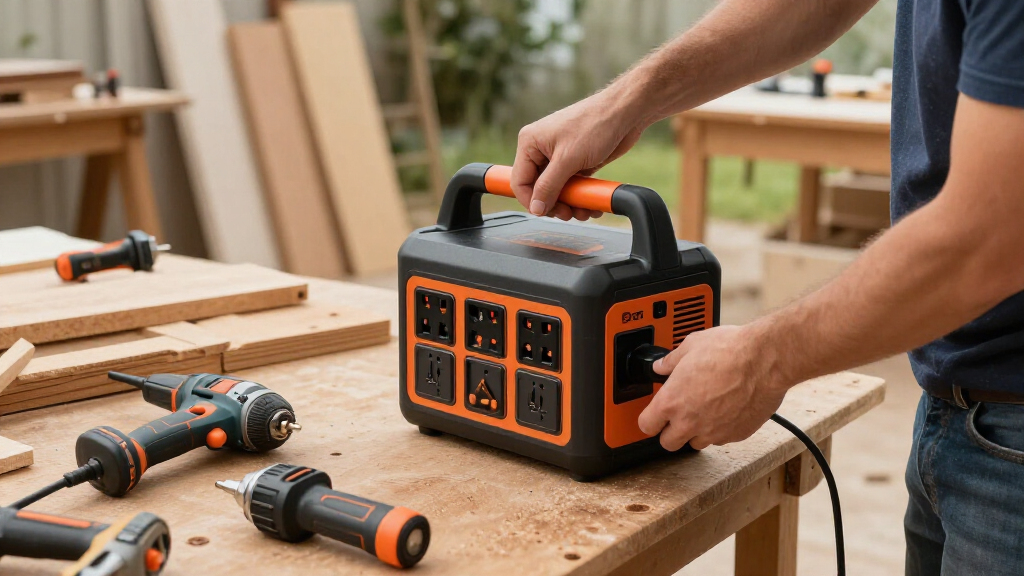
These products were selected based on their power capacity, durability, usability in demanding environments, and overall value. Priority was given to models with robust build quality, reliable battery chemistry like LiFePO4, and practical features such as multiple outlets and fast charging. We also considered user feedback on real-world performance and maintenance needs. The ranking reflects how well each station balances power, portability, and price, with the most versatile options placed higher. Tradeoffs such as size versus capacity and upfront costs versus long-term durability shaped the order.
| portable power stations for job site | Battery Type |
|---|---|
| DABBSSON Portable Power Statio | Semi-solid LiFePO4 |
| Jackery Explorer 1000 v2 Porta | LiFePO4 |
| BLUETTI Apex 300 Portable Powe | — |
| 1000W Portable Power Station 1 | LiFePO4 |
| EF ECOFLOW Portable Power Stat | — |
| Librids Portable Power Station | LiFePO4 |
| Anker SOLIX C1000 Gen 2 Portab | LiFePO4 |
Factors to Consider When Choosing Best Portable Power Stations For Job Sites
Choosing the right portable power station for a job site involves balancing several factors. Size and weight are important if mobility matters, but larger capacity units typically weigh more. Battery chemistry, such as LiFePO4, affects lifespan and safety, especially under heavy daily use. Power output and outlet options determine whether the station can run your tools and equipment simultaneously. Consider expandability if your power needs may grow, and look for features like fast charging to minimize downtime. Making the right choice depends on understanding these tradeoffs and aligning them with your specific work demands.Capacity and Power Output
For job sites, capacity and power output are critical. You need enough watt-hours to run your tools for the duration required, and sufficient surge power to start demanding equipment. Larger capacities like 2000Wh or more are ideal for extended use, but they also tend to be heavier and more expensive. Matching your tool power requirements with the station’s continuous and surge power ratings helps avoid overloads or insufficient runtime. Remember, a high-capacity unit isn’t always necessary if your tasks are light or intermittent.
Battery Chemistry and Durability
Battery chemistry impacts lifespan and safety on the job site. LiFePO4 batteries are more stable, offer longer cycle life, and are safer compared to older lithium-ion types. This makes them better suited for frequent, heavy-duty use, reducing replacement costs and maintenance. Cheaper options with inferior chemistry might save money upfront but could lead to quicker degradation and more downtime. Prioritize models with proven, durable chemistry if your work demands high reliability.
Portability and Size
Portability is often a key concern, especially if your job site requires moving equipment frequently. Smaller, lightweight units are easier to carry but may sacrifice capacity and power. Conversely, large units with high capacity can be cumbersome to transport but provide longer runtime and more outlets. Consider how often you’ll need to move the station and whether you can manage the weight, or if a modular, expandable system might better suit your workflow.
Expandability and Future-Proofing
Some power stations offer expansion options, allowing you to connect additional batteries or solar panels as your needs grow. This flexibility can be valuable for long-term projects or expanding operations. However, expandability systems tend to carry higher initial costs and added complexity. If your current needs are modest but may increase later, investing in an expandable unit can save money and hassle over time.
Charging Speed and Replenishment
Fast charging features can significantly reduce downtime, especially on busy job sites. Look for units that support rapid AC charging or high-wower solar input if solar is your primary source. Keep in mind that some models with quick recharge options may have tradeoffs, such as higher cost or reduced lifespan. Balancing charging speed with overall durability and capacity is key to maintaining continuous operation during demanding work periods.
Frequently Asked Questions
How long can a portable power station run power tools on a job site?
The runtime depends on both the capacity of the station and the power draw of your tools. For example, a 2000Wh station running a 500W tool could last around 4 hours, but this varies with load and efficiency. It’s important to match your tools’ wattage requirements with the station’s continuous output, and consider surge ratings for tools with high starting power. Planning for some margin ensures uninterrupted work, especially for longer jobs.
Is LiFePO4 the best battery chemistry for job site power stations?
LiFePO4 batteries are widely regarded as the best choice for demanding environments like job sites because they offer longer cycle life, greater thermal stability, and enhanced safety. These qualities mean the battery can withstand frequent deep discharges and harsh conditions without significant degradation. While they tend to cost more upfront, their durability and safety benefits often translate into lower total cost of ownership over time.
Should I prioritize capacity or portability when choosing a power station for my job site?
The decision hinges on your specific workflow. If your work involves stationary tasks or you need to power multiple heavy-duty tools for long durations, higher capacity units are essential despite their weight. Conversely, if frequent movement is involved and you need quick setup and breakdown, a lighter, more portable model makes more sense. Often, a middle ground—such as a reasonably portable unit with sufficient capacity—strikes the best balance for many users.
Can I run my entire job site off a portable power station?
Running an entire job site is possible with high-capacity, expandable systems like the ECOFLOW DELTA Pro or BLUETTI Apex, which support multiple outlets and large batteries. However, it requires careful planning to match the total power demand of all equipment. Small to medium setups are manageable, but for full-scale operations with many heavy tools, multiple stations or dedicated power solutions may be necessary. Always calculate the total wattage and runtime before relying solely on a single station.
What maintenance is needed for portable power stations used on job sites?
Maintenance for these stations is generally minimal but important. Keep the units clean and dry, store in a cool environment to prevent overheating, and periodically check battery health if the device provides diagnostics. Charging the battery regularly, even when not in use, helps preserve capacity. Following manufacturer guidelines for storage and use can extend the lifespan, ensuring reliable power supply when you need it most.
Conclusion
For most users, the EF ECOFLOW DELTA Pro offers the best overall value with its high capacity, expandability, and reliable performance, making it perfect for large or demanding job sites. The Jackery Explorer 1000 v2 suits small to medium projects where portability and quick setup are priorities. For those willing to invest in premium features and longer-term durability, the BLUETTI Apex 300 provides substantial power with fast charging. Beginners or occasional users may find the Librids Portable Power Station more manageable, while professionals with expanding needs should consider systems supporting modular growth. Your choice ultimately depends on balancing power, portability, and budget based on your specific work requirements.
Fall yard work Picks
leaf blowers
As an affiliate, we earn on qualifying purchases.