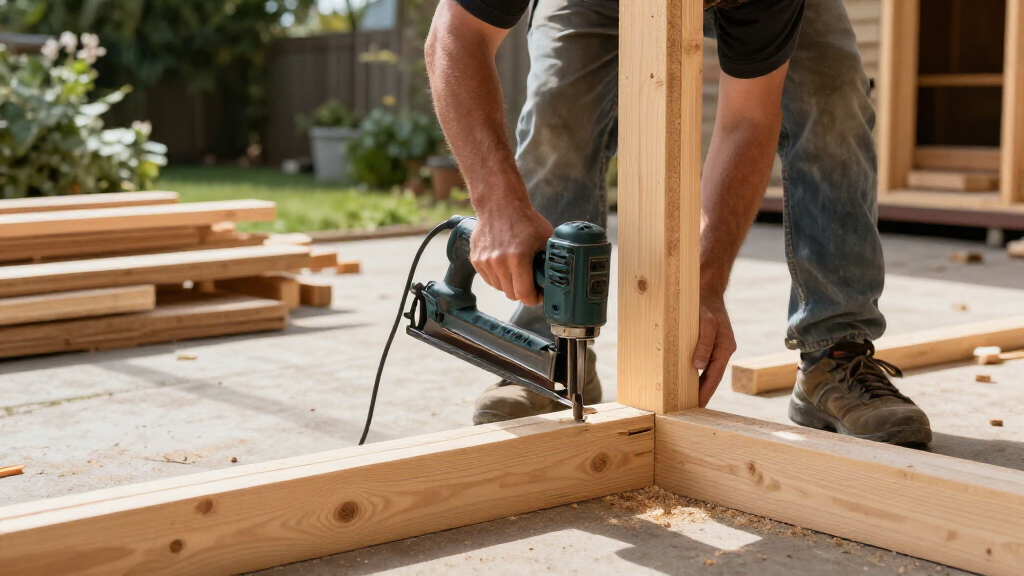
The Milwaukee M18 FUEL 30 Degree Framing Nailer is my best overall pick for buyers seeking a capable cordless framing tool, while the DeWalt DCN930P1 stands out as a ready-to-work kit and the FLEX 24V Brushless 21° Kit pairs a battery and fast charger with a different nail angle. The key choice is not just brand: 21° and 30° collation affect which nails you can use and how you load the tool. Kit contents, battery-platform ownership, weight, and the expected pace of work also separate these models. Tool-only options can make more sense for existing platform users, while kits suit buyers starting fresh. Read on for my full comparison and guidance on matching a cordless framing nailer to your projects.

Get business pricing on tools and workshop supplies
- Business-only prices and quantity discounts
- Tax-exempt purchasing
- Multiple users, one account, clear invoices
Complete the kit


Key Takeaways
- The Milwaukee M18 FUEL 30 Degree leads this lineup as my best overall choice; the DeWalt DCN930P1 kit is a strong alternative if you want a battery and charger included.
- Collation angle narrows your nail choices. The lineup includes 21° and 30° tools, so confirm nail compatibility and local availability before choosing a model.
- Kit contents matter as much as tool features. FLEX, DeWalt, and the Makita XNB03M1 include batteries, while several other picks are tool-only and make more sense for owners of that battery platform.
- There is no single best fit for every framing task. Paper-tape, clipped-head, and full-round-head options offer different nail-format choices, so check project requirements and local code before buying.
- Brand loyalty can be a practical advantage. A tool-only CRAFTSMAN, RYOBI, RIDGID, Makita, or Metabo HPT may be a better buy for someone already invested in its battery system than a kit from another platform.


| cordless framing nailer | Model | Weight |
|---|---|---|
| Milwaukee M18 FUEL 30 Degree F | 2745-20 | — |
| DeWalt DCN930P1 20V 30° Framin | DCN930P1 | — |
| FLEX 24V Brushless 21° Framing | FX4351A-1C | 22.1 pounds |
| Makita XNB03M1 18V LXT Brushle | XNB03M1 | 11.9 pounds with battery |
| CRAFTSMAN V20 Brushless Cordle | CMCN630PTB | 9.83 pounds |
| RYOBI ONE+ HP 18V Brushless Co | PBL350B | — |
| CRAFTSMAN V20 21-Degree Cordle | CMCN621PLB | — |
| Makita XNB03Z 18V LXT Lithium- | XNB03Z | 20.6 lb with battery attached |
| Metabo HPT 18V MultiVolt Cordl | NR1890DRA | 8.4 lb without battery |
| RIDGID 18V Brushless Cordless | R098941B | — |
| Metabo HPT 18V Paper Tape Cord | — | 8.2 lb without battery |
| Makita XNB07Z 18V LXT Lithium- | XNB07Z | 11.9 lb with battery; battery not included |
More Details on Our Top Picks
Milwaukee M18 FUEL 30 Degree Framing Nailer
I’d put the Milwaukee M18 FUEL 30 Degree Framing Nailer high on the list for buyers already invested in Milwaukee’s M18 batteries. Its 30-degree magazine suits framing work where a more angled tool can reach into tighter spaces, and the tool-only format avoids buying another battery kit. Compared with the DeWalt DCN930P1, which comes with a battery, this is a better fit for an established M18 shop than for someone starting from scratch. The description identifies it as a FUEL model built for demanding applications, but does not provide a firing rate, nail capacity, or weight, so I wouldn’t rank it on those measures. The tradeoff is straightforward: you need a compatible M18 battery and charger, and cordless framing nailers can feel heavier than pneumatic setups.
Pros:- Runs on Milwaukee’s M18 battery system, useful for buyers who already own compatible packs
- 30-degree magazine can help reach tighter framing locations
- FUEL motor is positioned for demanding framing tasks
- Tool-only purchase avoids duplicating batteries and chargers
Cons:- Battery and charger are not included
- Requires investment in or ownership of the M18 battery platform
- May feel heavier than a pneumatic framing nailer
Best for: Framing contractors and serious DIYers who already own compatible Milwaukee M18 batteries and want a 30-degree cordless nailer.
Not ideal for: First-time cordless-tool buyers without M18 batteries, or users prioritizing a documented low weight or included battery kit.
- Brand:Milwaukee
- Model:2745-20
- Power source:M18 FUEL battery system
- Nailer type:Framing nailer
- Magazine angle:30 degrees
- Battery and charger:Not included; tool only
Our verdict“Choose this Milwaukee if you already have M18 batteries and want a 30-degree framing nailer; otherwise, a kit such as the DeWalt DCN930P1 is easier to start with.”
DeWalt DCN930P1 20V 30° Framing Nailer Kit
The DeWalt DCN930P1 makes the most sense for buyers who want a 30-degree cordless framing nailer with a battery included, rather than a tool-only purchase like the Milwaukee M18 FUEL or CRAFTSMAN V20 CMCN630PTB. Its 20V platform and included lithium-ion battery give a new DeWalt user a more complete starting point, while the 30-degree magazine matches the angle of those two alternatives. The listed weight is 9.98 pounds, a useful reference for comparing carry burden, though the supplied data doesn’t clarify whether that figure includes the battery. One detail needs caution: the listing describes it as cordless but also gives “hand powered” as the power source. I’d verify the exact configuration before buying. The available information also lacks drive-rate and per-charge capacity figures, limiting comparisons for high-volume work.
Pros:- Includes a lithium-ion battery, unlike the tool-only Milwaukee and CRAFTSMAN options
- 20V cordless design
- 30-degree magazine for compatible angled framing nails
- Listed weight of 9.98 pounds provides a reference point when comparing carry weight
Cons:- Product data inconsistently lists the power source as hand powered despite describing a 20V cordless tool
- No drive-rate or nails-per-charge figure is provided
- Battery configuration and weight basis should be confirmed before purchase
Best for: Home builders and remodelers who want a 30-degree nailer kit with a battery included and are already considering DeWalt’s 20V platform.
Not ideal for: Buyers who need clearly documented power-source details, runtime figures, or a tool-only option for an existing battery collection.
- Manufacturer:Stanley Black and Decker
- Model:DCN930P1
- Voltage:20V
- Magazine angle:30 degrees
- Listed weight:9.98 pounds
- Battery:One lithium-ion battery required; included in the kit
- Package dimensions:18.03 x 18.03 x 8 inches
Our verdict“Consider the DeWalt if you want a battery-included 30-degree kit, but confirm the power-source and battery details before choosing it over the more clearly specified alternatives.”
FLEX 24V Brushless 21° Framing Nailer Kit with 5.0Ah Battery and Fast Charger
For buyers focused on sustained framing sessions, the FLEX 24V kit offers the clearest output and runtime figures in this group: up to 1,100 nails per charge with its included 5.0Ah battery and a drive rate of up to three nails per second. Adjustable depth, sequential and bump firing, and dry-fire lockout give it more control features than the basic details supplied for the Milwaukee M18 FUEL. The kit also arrives with a fast charger and useful accessories, so there’s less to assemble than with tool-only picks. Its main compromise is weight: the listed 22.1 pounds is substantial beside the Makita XNB03M1’s 11.9 pounds with battery. I’d also factor in the warranty registration deadline if the five-year term matters to your purchase.
Pros:- Up to 1,100 nails per charge with the included 5.0Ah battery
- Drive rate of up to three nails per second
- Includes battery, 160W fast charger, carrying bag, and jobsite accessories
- Depth adjustment, two firing modes, dual LED lights, and dry-fire lockout
Cons:- Listed weight of 22.1 pounds is much higher than the Makita XNB03M1’s 11.9 pounds with battery
- Five-year warranty requires registration within 30 days; otherwise the listed term is three years
- 21-degree magazine differs from the 30-degree format used by the Milwaukee and DeWalt picks
Best for: Framing crews and high-output DIY builders who value stated runtime, rapid firing, and a complete battery-and-charger kit.
Not ideal for: Users who work overhead for long stretches, prioritize a lighter nailer, or don’t want to track a registration deadline for the longer warranty.
- Model:FX4351A-1C
- Voltage:24V
- Fastener angle:21 degrees
- Fastener length:2 to 3.5 inches
- Drive rate:Up to 3 nails per second
- Capacity per charge:Up to 1,100 nails with included 5.0Ah battery
- Weight:22.1 pounds
- Included kit:5.0Ah battery, 160W fast charger, rafter hook, belt clip, three no-mar tips, and bag
- Warranty:5 years with registration within 30 days; 3 years without registration
Our verdict“Pick the FLEX for a feature-rich kit and strong stated per-charge capacity, but choose the lighter Makita if carry weight matters more.”
Makita XNB03M1 18V LXT Brushless Cordless 21° Framing Nailer Kit with 4.0Ah Battery
The Makita XNB03M1 is the more manageable complete kit for buyers who want a battery and charger without taking on the FLEX’s listed 22.1-pound weight. At 11.9 pounds with battery, it is easier to carry between framing locations, and its 21-degree nail format works with full-round-head plastic-collated nails from 2 to 3.5 inches. Makita lists up to 1,000 nails per charge, close to FLEX’s stated 1,100, though the FLEX also specifies a faster drive rate and includes a larger 5.0Ah battery. The Makita adds sequential and bump-fire modes, tool-free depth adjustment, and anti-dry-fire protection. Its limits are platform and fastener fit: it’s an 18V LXT tool restricted to compatible 21-degree nails, unlike the 30-degree Milwaukee and DeWalt options.
Pros:- Listed weight is 11.9 pounds with battery, well below the FLEX kit’s stated weight
- Up to 1,000 framing nails per charge
- Includes a 4.0Ah battery, charger, tool case, and accessories
- Tool-free depth adjustment, two firing modes, and anti-dry-fire mechanism
Cons:- Limited to compatible 21-degree plastic-collated full-round-head nails
- Requires the Makita 18V LXT battery platform
- Still weighs 11.9 pounds with battery, which may be tiring during extended overhead work
Best for: Framers who want a battery-included 21-degree kit with a stated 1,000-nail capacity and a lower listed weight than the FLEX.
Not ideal for: Buyers committed to 30-degree nails, users outside the Makita 18V LXT platform, or anyone seeking the lightest possible setup.
- Model:XNB03M1
- Power source:18V LXT lithium-ion battery
- Motor:Brushless
- Nail angle:21 degrees
- Compatible nail length:2 to 3.5 inches
- Compatible nail diameter:0.113 to 0.148 inches
- Magazine capacity:41 nails
- Weight:11.9 pounds with battery
- Included kit:4.0Ah battery, charger, no-mar tip, hex wrench, belt hook, rafter hook, and tool case
Our verdict“Choose the Makita for a relatively lighter, battery-included 21-degree kit; choose the FLEX if its higher stated nail capacity and faster drive rate matter more.”
CRAFTSMAN V20 Brushless Cordless 30° Framing Nailer (Tool Only, CMCN630PTB)
The CRAFTSMAN V20 CMCN630PTB is a strong match for buyers who want a 30-degree nailer and already own V20 batteries, with a listed weight of 9.83 pounds. That makes it a more carry-conscious option than the FLEX kit and a close alternative to the DeWalt DCN930P1, though the DeWalt includes a battery while this CRAFTSMAN is tool only. Its brushless motor, tool-free depth adjustment, rapid sequential firing, and jam indicator speak to practical jobsite control rather than a large bundle of extras. It can drive full-round-head nails up to 3-1/4 inches, a shorter stated maximum than the 3.5-inch fasteners supported by the Makita XNB03M1 and FLEX. Buyers should also note that no battery or charger is included.
Pros:- Listed weight of 9.83 pounds supports a more carry-conscious setup
- Brushless motor with tool-free depth adjustment
- Rapid sequential firing and a jam indicator
- Drives full-round-head nails up to 3-1/4 inches
Cons:- Battery and charger are sold separately
- Maximum stated nail length is shorter than the 3.5-inch capacity listed for FLEX and Makita
- No per-charge capacity or drive-rate figure is provided
Best for: V20 owners who want a comparatively light 30-degree framing nailer for routine framing and prefer a tool-only purchase.
Not ideal for: Buyers who need a battery in the box, require 3.5-inch fastener compatibility, or want published runtime and drive-rate figures.
- Model:CMCN630PTB
- Voltage:20V
- Power source:Battery powered
- Motor:Brushless
- Nailer angle:30 degrees
- Maximum nail length:3-1/4 inches
- Weight:9.83 pounds
- Battery and charger:Sold separately
Our verdict“Choose the CRAFTSMAN if you own V20 batteries and want a lighter 30-degree tool; the DeWalt kit is a more ready-to-use choice if you need a battery included.”
RYOBI ONE+ HP 18V Brushless Cordless AirStrike 30° Framing Nailer (Tool Only)
The RYOBI ONE+ HP AirStrike stands out for its stated capacity of up to 750 nails per 4.0 Ah charge, giving crews a useful runtime target without a compressor, hose, or gas cartridge. Its 30° magazine takes a different angle from the 21° CRAFTSMAN V20 and RIDGID models in this group, so nail compatibility should guide the choice. Sequential and contact modes let you favor placement control or faster production, while tool-free depth adjustment makes changes easier as materials vary. The tradeoff is substantial carry weight at 5.19 kg, and this is a bare tool: buyers without a compatible ONE+ battery need to account for that separately. I’d choose it for users already invested in RYOBI batteries who value the advertised per-charge capacity over a lighter setup.
Pros:- Works without a compressor, hose, or gas cartridge
- Up to 750 nails per charge with a 4.0 Ah battery
- Offers sequential and contact actuation modes
- Tool-free depth adjustment
Cons:- Weighs 5.19 kg, which can add fatigue during extended overhead work
- Battery is sold separately
- 30° nail angle limits choices to compatible collated nails
Best for: RYOBI ONE+ owners framing projects who want a 30° cordless tool with a stated high nail count per charge
Not ideal for: Buyers seeking a lighter framing nailer or those without a compatible RYOBI battery, since this model is heavy and sold tool-only
- Model:PBL350B
- Power:18V cordless
- Motor:Brushless
- Nail angle:30°
- Maximum nail length:3-1/2 in.
- Drive modes:Single sequential and contact actuation
- Nails per charge:Up to 750 with a 4.0 Ah battery
- Battery:Sold separately
- Item weight:5.19 kg
Our verdict“Choose the RYOBI if you already own ONE+ batteries and want a 30° nailer with a strong stated runtime, but skip it if low weight is your priority.”
CRAFTSMAN V20 21-Degree Cordless Framing Nailer, Tool Only (CMCN621PLB)
The CRAFTSMAN V20 CMCN621PLB makes the most sense for buyers who already use the V20 battery platform and need a straightforward cordless framing nailer. It drives full round head nails up to 3-1/4 inches, a shorter maximum than the 3-1/2-inch reach of the Makita XNB03Z and RYOBI AirStrike. That may be enough for many framing tasks, but buyers working regularly with longer fasteners should favor those alternatives. Tool-free depth adjustment simplifies changes between materials, and the rafter hook gives users a practical place to hang the tool while repositioning. At 10.75 pounds, it is not a light carry; the bare-tool package also means battery and charger costs sit outside the box. Its three-year limited warranty is a plus, but the limited nail length narrows its appeal.
Pros:- Cordless operation avoids a compressor, hose, and gas cartridges
- Drives full round head nails up to 3-1/4 inches
- Tool-free depth adjustment
- Includes a rafter hook and carries a three-year limited warranty
Cons:- Battery and charger are sold separately
- Maximum nail length is shorter than the Makita XNB03Z and RYOBI AirStrike
- Listed weight is 10.75 pounds
Best for: Home renovators and framing crews who already own CRAFTSMAN V20 batteries and primarily use nails up to 3-1/4 inches
Not ideal for: Framers who regularly need 3-1/2-inch nails or want a lighter tool for long overhead sessions
- Model:CMCN621PLB
- Power:20V battery powered
- Nail angle:21°
- Maximum nail length:3-1/4 in.
- Nail type:Full round head
- Item weight:10.75 lb
- Dimensions:17.8 x 17.75 x 5.95 in.
- Battery and charger:Sold separately
- Warranty:3-year limited
Our verdict“Pick this CRAFTSMAN for routine framing if you already own V20 batteries; choose a 3-1/2-inch model for work that calls for longer nails.”
Makita XNB03Z 18V LXT Lithium-Ion Cordless 21° Full Round Head 3-1/2″ Framing Nailer, Tool Only
For buyers prioritizing runtime and nail length, the Makita XNB03Z offers a stated up to 1,000 nails per charge and accepts 21° full-round-head nails from 2 to 3-1/2 inches. That gives it a broader stated range than the CRAFTSMAN V20, which tops out at 3-1/4 inches, though the Makita’s battery and charger are also sold separately. Its anti-dry fire mechanism helps prevent firing when the magazine is empty, while the 41-nail magazine, depth adjustment, and sequential or bump-fire selector support different work styles. A built-in LED and rubberized grip add practical touches. The main compromise is bulk: the listed 20.6-pound weight with battery attached is substantial, and a 41-nail capacity means frequent reloads compared with longer-magazine setups.
Pros:- Stated capacity of up to 1,000 nails per charge
- Accepts 21° full-round-head nails from 2 to 3-1/2 inches
- Anti-dry fire mechanism and tool-less depth adjustment
- Sequential and bump-fire modes, plus a built-in LED
Cons:- Battery and charger are sold separately
- Listed weight is 20.6 pounds with battery attached
- Magazine holds 41 nails; a larger magazine is sold separately
Best for: Makita 18V LXT users tackling extended framing runs who need 3-1/2-inch fasteners and value the stated nail count per charge
Not ideal for: Buyers who prioritize a lightweight tool or want fewer reloads, since the listed weight is high and the magazine holds 41 nails
- Model:XNB03Z
- Power:18V battery powered
- Nail angle:21°
- Nail type:Full round head
- Nail length range:2–3-1/2 in.
- Nails per charge:Up to 1,000
- Magazine capacity:41 nails
- Drive modes:Sequential or bump fire
- Weight:20.6 lb with battery attached
Our verdict“Choose the XNB03Z for long runs and full-length framing nails if you can manage its weight and are already set up for Makita 18V batteries.”
Metabo HPT 18V MultiVolt Cordless 21° Framing Nailer Kit (NR1890DRA)
The Metabo HPT NR1890DRA is the clearest choice here for buyers who want a ready-to-use kit rather than a bare tool: it includes a 4.0 Ah battery, charger, wrench, bag, and safety glasses. Its brushless motor and air-spring drive are described as firing without ramp-up time, which should appeal to framers who want a more direct response than a system that pauses to build pressure. It accepts nails up to 3-1/2 inches and offers bump or sequential firing with tool-less depth adjustment. The stated runtime is up to 500 nails per charge, below the RYOBI’s 750 and Makita’s 1,000 figures. At 8.4 pounds before the battery, it is no featherweight, and conflicting product descriptions for framing and finish nailers make it sensible to verify the exact listing before purchase.
Pros:- Kit includes a 4.0 Ah battery, charger, wrench, bag, and safety glasses
- Air-spring drive system is described as firing without ramp-up time
- Accepts nails up to 3-1/2 inches
- Tool-less depth adjustment and bump or sequential firing modes
Cons:- Weighs 8.4 pounds before adding the battery
- Stated runtime of up to 500 nails per charge is below the RYOBI and Makita figures
- Product details conflict on framing and finish nailer descriptions
Best for: Buyers who need a complete cordless framing-nailer kit, including battery and charger, and value air-spring drive response
Not ideal for: Existing battery-platform owners seeking a bare tool, or buyers who need a clearly documented product listing and the highest stated nail count per charge
- Model:NR1890DRA
- Power:18V battery powered
- Magazine angle:21°
- Drive system:Air spring
- Motor:Brushless
- Maximum nail length:3-1/2 in.
- Weight:8.4 lb without battery
- Nails per charge:Up to 500
- Included battery:4.0 Ah lithium-ion
Our verdict“Choose the NR1890DRA if you want the battery and charger included with a 3-1/2-inch air-spring nailer, but confirm the listing details before ordering.”
RIDGID 18V Brushless Cordless 21° Framing Nailer, 3-1/2 in., Tool Only
The RIDGID R098941B suits existing RIDGID 18V users who want a brushless framing nailer without adding a compressor or hose to the job. Its 21° magazine accepts plastic-collated nails from 2 to 3-1/2 inches, matching the longer reach of the Makita XNB03Z and exceeding the CRAFTSMAN V20’s 3-1/4-inch limit. Tool-free depth adjustment supports flush or countersunk driving, so users can tune the fastener finish without reaching for a separate tool. At 8.5 pounds, its listed weight is well below the Makita’s 20.6 pounds with battery attached, though the figures may not use the same weighing conditions. This is a bare-tool listing, and the available details do not specify a firing-mode selector or runtime figure, making it less fully documented than the Metabo HPT kit.
Pros:- Accepts plastic-collated nails from 2 to 3-1/2 inches
- Brushless motor and cordless operation
- Tool-free depth adjustment for flush or countersunk driving
- Listed weight of 8.5 pounds
Cons:- Battery and charger are not included
- Available product details do not state runtime or firing modes
- Limited package contents make it less ready to use than the Metabo HPT kit
Best for: RIDGID 18V owners who need a 21° nailer for plastic-collated fasteners up to 3-1/2 inches
Not ideal for: Buyers without RIDGID batteries or those who need an included battery, charger, or clearly stated runtime and firing modes
- Model:R098941B
- Power:18V battery
- Motor:Brushless
- Magazine angle:21°
- Compatible nails:2–3-1/2 in., plastic collated
- Item weight:8.5 lb
- Dimensions:5 x 16 x 14 in.
- Included components:Nailer only
Our verdict“Pick the RIDGID if you already own its 18V batteries and need a 3-1/2-inch 21° nailer; choose the Metabo HPT if you need a complete kit.”
Metabo HPT 18V Paper Tape Cordless Framing Nailer (30° Kit) NR1890DCA
The Metabo HPT NR1890DCA is a strong fit for framers who want a complete 30-degree kit without the heft of some cordless alternatives. At 8.2 pounds before the battery, its compact body is easier to maneuver in tight framing bays than the Makita XNB07Z, which weighs 11.9 pounds with a battery. Its brushless motor and air-spring drive support firing up to three nails per second, while tool-less depth adjustment and sequential or bump-fire modes let you adapt to the task.
The kit includes a 4.0Ah battery and charger, unlike the tool-only Makita. The tradeoff is runtime: the supplied battery is rated for roughly 500 nails per charge, so sustained production may call for a spare. Battery weight also narrows its advantage over pneumatic nailers. I’d choose it for mobility and included kit components, not maximum nails per charge.
Pros:- Compact 8.2-pound tool body is easier to position in confined framing areas
- Brushless motor and air-spring drive deliver firing speeds up to three nails per second
- Includes a 4.0Ah battery, charger, and carrying bag
- Tool-less depth adjustment and selectable sequential or bump-fire modes
Cons:- Supplied battery provides roughly 500 nails per charge, which may require mid-shift swaps
- Battery adds weight, reducing the handling advantage over pneumatic nailers
- Less suited to extended high-volume work than a setup with greater battery capacity
Best for: Framers who need a relatively compact 30-degree cordless kit for punch-list work, tight spaces, and moderate daily nailing.
Not ideal for: Crews doing long, high-volume framing runs without time to recharge or swap batteries, or buyers who prioritize the lightest setup once a battery is installed.
- Manufacturer:Koki Holdings America, Ltd
- Part number:NR1890DCAM
- Voltage:18V
- Weight:8.2 lb without battery
- Dimensions:14.5 x 12.3 x 5 in
- Battery:4.0Ah lithium-ion
- Nail length:2 to 3½ in
- Collation angle:30° paper tape
- Warranty:Lifetime tool body; 2-year battery; 1-year charger
Our verdict“Choose the Metabo HPT if you want a compact, ready-to-work 30-degree kit for moderate framing tasks and can plan around its roughly 500-nail battery runtime.”
Makita XNB07Z 18V LXT Lithium-Ion Brushless Cordless 30° Clipped Head 3-1/2″ Framing Nailer – Tool Only
The Makita XNB07Z makes the most sense for buyers who value longer stretches between battery changes: it is rated for up to 1,000 nails per charge, compared with the Metabo HPT NR1890DCA’s roughly 500 nails on its included 4.0Ah battery. Its brushless motor, 3½-inch nail capacity, and sequential or bump-fire selection suit framing work where a cordless tool needs to keep pace. Tool-less depth adjustment and an anti-dry-fire mechanism help reduce setup fuss and avoid firing when the magazine is empty.
That runtime claim comes with a catch: this is a tool-only purchase, so the battery needed to use it is sold separately. At 11.9 pounds with a battery, it is also heavier than the Metabo HPT’s bare tool, and its 58-nail magazine means frequent reloads even when battery life is generous. I’d favor it for crews already on Makita LXT batteries who want fewer battery swaps, not for buyers seeking a complete kit.
Pros:- Rated for up to 1,000 nails per charge
- Brushless motor and 3½-inch nail capacity support demanding framing tasks
- Anti-dry-fire feature helps prevent firing with an empty magazine
- Tool-less depth adjustment, LED work light, and sequential or bump-fire modes
Cons:- Battery and charger are sold separately
- 58-nail magazine requires frequent reloading
- 11.9-pound weight with battery is heavier than the Metabo HPT’s bare tool
Best for: Makita LXT users framing with clipped-head nails who want high stated nail output per charge and already own compatible batteries.
Not ideal for: First-time cordless nailer buyers who need a battery and charger included, or workers who want fewer magazine reloads and a lighter loaded tool.
- Model:XNB07Z
- Voltage:18V
- Battery type:Lithium-ion
- Weight:11.9 lb with battery; battery not included
- Nail capacity:58 nails
- Nail length:Up to 3½ in
- Collation angle:30° clipped head
- Operation modes:Sequential and bump fire
- Included components:No-mar tip, hex wrench, belt hook, and rafter hook
Our verdict“Choose the Makita XNB07Z if you already own LXT batteries and prioritize longer nail runs between charges over an included kit and fewer reloads.”
How We Picked
I ranked these cordless framing nailers by the needs that most affect a framing purchase: compatibility with the nails a buyer expects to use, battery-platform fit, kit readiness, and suitability for repeated framing work. I gave weight to the distinction between 21° and 30° collation, as well as paper-tape and clipped-head formats, because those choices affect nail sourcing and job requirements. I also compared the practical value of included batteries and chargers against tool-only configurations for buyers who already own compatible batteries.
The order reflects overall job fit and flexibility, not a claim that every tool suits every user. The Milwaukee leads for its broad appeal as a cordless framing option; the DeWalt and FLEX kits earn attention for buyers who need a more complete starting package. Other picks move up for platform owners, particular nail formats, or a preferred angle, while tool-only options rank lower for a first-time buyer unless their battery ecosystem is already in place. I treat build and usability as selection criteria, but avoid claiming hands-on performance results not established by the listed product information.
Factors to Consider When Choosing Cordless Framing Nailers
Before settling on a model, I would check the demands of the job and the battery system already in your shop. Those choices can matter more than a small feature difference: a nailer that accepts the wrong collation for your supply or project can become an inconvenient purchase. These points add a broader decision framework to the product comparisons.
Match the nail angle to your supply and project
Start by checking the nail type specified for your work, then confirm the exact collation angle the nailer accepts. A 21° tool and a 30° tool are not interchangeable simply because both are framing nailers. Think about the fasteners you can readily buy where you work, not only the nailer’s advertised capacity. If a project calls for a particular nail configuration, confirm that requirement with the plans or relevant local rules before choosing. A common mistake is buying the tool first and discovering that the preferred nails are harder to source or incompatible. If you take on varied jobs, prioritize the format that fits your most frequent work and supply access.
Check nail head and collation requirements separately
Angle is only part of fastener compatibility; head style and the material holding the nails together also matter. This roundup includes full-round-head, clipped-head, and paper-tape options, so the product name alone may not tell you whether its nails suit a particular project. Look up the nailer’s accepted fastener specifications and compare them with the project requirements before ordering either tool or nails. Do not assume that two 30° models accept identical fasteners or that every 21° strip will work in every 21° nailer. Paper-tape and other collation formats can also affect what you can find from your preferred supplier. Confirming all these details can prevent a tool-and-fastener mismatch.
Decide whether a kit is worth more to you than a bare tool
A kit can be the simpler starting point when you do not already own compatible batteries and a charger. A tool-only model may be the more sensible purchase for someone with several batteries in the same platform, since it avoids adding equipment that may sit unused. Compare the full setup you need, including battery capacity, charging access, and whether you need a spare battery to keep work moving. Do not compare kit and tool-only listings as if they contain the same package. If you are entering a new battery ecosystem, consider what other tools you might want to add, not just the nailer. That wider platform commitment can shape long-term usefulness more than a single included accessory.
Plan for weight, balance, and work position
A framing nailer is held and repositioned repeatedly, often at awkward angles or above shoulder height. The tool’s weight with a battery attached matters more than its bare-tool weight, so check the complete working setup when specifications are available. A larger battery may extend the time between charges but can make the tool feel heavier and change its balance. If you mostly frame at floor level, that tradeoff may matter less than it would for overhead or ladder work. Buyers who handle a nailer for long sessions should pay attention to grip, loading access, and the amount of repositioning a task requires. A showroom lift or a return policy can help you judge fit before committing to a long workday with the tool.
Match cordless convenience to the amount of work
For occasional repairs or smaller builds, the convenience of a cordless tool may matter more than maximizing continuous production. Larger framing jobs put more pressure on battery capacity, spare-battery planning, charging time, and how quickly the tool can be reloaded. A kit with a battery and charger provides a clear starting point, but one battery may not suit a long work session. For recurring professional work, think through battery rotation and whether you can charge between tasks. Also compare cordless convenience against your existing pneumatic setup: if you already have a compressor and hose system, a cordless nailer may be most useful where mobility or quick setup saves effort. Choose around the work pattern you expect, rather than assuming one power format is best for every job.
Check service, upkeep, and the cost of platform ownership
Framing nailers face dust, repeated loading, and regular handling, so service access and parts support deserve a place in the decision. Before buying, check the manufacturer’s maintenance guidance, warranty terms, and availability of service in your area. Follow the stated procedure for clearing jams and use only compatible fasteners; forcing an incorrect strip can create avoidable problems. Battery-platform ownership also affects the long-term commitment, since a new system may mean buying chargers and spare packs for other tools. A slightly cheaper tool-only package can become less attractive if you must build a platform around it. Weigh the whole setup and likely support needs rather than focusing only on the nailer itself.
Frequently Asked Questions
Should I choose a 21° or 30° cordless framing nailer?
I would choose based on the nail format required by your projects and the fasteners you can reliably source. This lineup contains both angles, but angle alone does not confirm compatibility with every nail strip of that angle. Check the manufacturer’s accepted fastener specifications and any project requirements before purchasing. If you regularly work across different sites, ask suppliers which compatible nails are consistently available there. That check can be more useful than choosing an angle based only on brand preference.
Is a cordless framing nailer a sensible replacement for my pneumatic nailer?
It can be a good fit if mobility, quick setup, or working without a hose is a priority. For repeated, long framing sessions, think through battery rotation, charging access, tool weight, and how often you will reload. If you already own a compressor and use it across several tools, keeping the pneumatic setup may still suit stationary or high-volume work. Some buyers will get the best result from using cordless for punch-list tasks and locations where hoses are awkward, while retaining pneumatic tools for established workflows. Match the power format to your job pattern rather than expecting one tool to replace every setup.
Should I buy a kit or a tool-only framing nailer?
A kit is usually the more straightforward choice if you lack a compatible battery and charger, since it gives you the basics to start using the tool. Tool-only models make more sense when you already own batteries from the same platform and have enough capacity for the work ahead. Check precisely what the kit includes; included battery and charger details differ across the listed products. If buying a new platform, factor in the cost and usefulness of future batteries and other tools, not only the nailer. For an existing platform owner, the bare tool can avoid unnecessary duplicate equipment.
Can I use clipped-head or paper-tape nails for any framing project?
No single nail format should be assumed to suit every job. Project specifications, applicable building rules, and the nailer’s approved fastener range all affect what you can use. This roundup includes models associated with clipped-head and paper-tape formats, but those labels do not replace checking the exact nail dimensions and requirements. Confirm details with the plans, the tool documentation, and the appropriate local authority or professional when requirements are unclear. Buy the fasteners only after matching the full specification to the tool and project.
What should I prioritize if I frame only occasionally?
For occasional projects, I would start with compatibility and platform fit rather than paying for features you may rarely use. A tool-only model can be attractive if you already have its batteries; if not, a kit may reduce the friction of getting started. Consider storage, battery upkeep, and how easy it will be to source the correct nails when the next project comes along. A heavier or more production-focused setup may be less appealing if you only frame for short periods. Choose a model that fits the jobs you actually expect to do, and confirm its fasteners before the work begins.
Conclusion
For most buyers, I recommend the Milwaukee M18 FUEL 30 Degree Framing Nailer as the best overall pick in this lineup. The DeWalt DCN930P1 kit is a strong choice for someone who wants a battery and charger included, while the FLEX kit is another ready-to-start option with a 21° format. For best value, I would look first at a tool-only model that matches batteries already in your shop; buying into a new platform changes that calculation. Beginners without compatible gear should favor a complete kit, then confirm nail compatibility before buying. For a specific fastener format or brand ecosystem, compare the Makita, Metabo HPT, CRAFTSMAN, RYOBI, and RIDGID options against your project and battery needs. The right choice comes down to matching nail requirements, platform, and work pace—not simply choosing the most familiar brand.