
The best work jacket for most people is the Carhartt Men’s Washed Duck Active Jacket, a practical choice for cold, demanding days when warmth and a hood matter. The Dickies Insulated Eisenhower Front-Zip Jacket is a better fit for a lighter, less bulky layer, while the Ergodyne GloWear 8377 stands out when high visibility is a work requirement. The main tradeoff is between insulation and mobility: heavier jackets add warmth but can restrict movement, while lighter options offer less protection in cold weather. Materials, weather resistance, hood design, and workplace safety needs also separate these picks. Read on for the full breakdown and guidance on choosing a jacket that matches your work conditions.

Get business pricing on tools and workshop supplies
- Business-only prices and quantity discounts
- Tax-exempt purchasing
- Multiple users, one account, clear invoices
Complete the kit


Key Takeaways
The Carhartt Washed Duck Active Jacket leads for general cold-weather work because its hooded, insulated format suits demanding outdoor wear; its bulk is the main tradeoff.
The lineup spans more than insulated duck jackets: the Dickies Eisenhower offers a lighter profile, while the Flint and Tinder Classic Chore Coat prioritizes a simpler cotton layer.
For wet or changeable conditions, the Legendary Whitetails waxed cotton and Dickies Hydroshield options make weather resistance a central part of the decision, but they serve different styles and warmth needs.
Safety requirements can outweigh warmth or everyday versatility: the Ergodyne GloWear 8377 is the dedicated high-visibility option, unlike the standard workwear jackets in this group.
Several picks share rugged duck construction, so the clearest differentiators are hood versus collar, insulation level, length, and intended work setting—not simply the fabric name.
| Carhartt Men’s Washed Duck Active Jacket | 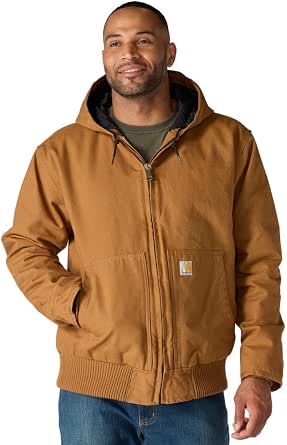 | Best Overall | Shell fabric: 12-ounce, 100% ring-spun washed cotton duck | Lining: Nylon taffeta | Insulation: 80g 3M Thinsulate featherless insulation | VIEW LATEST PRICE | See Our Full Breakdown |
| Legendary Whitetails Men’s Flannel-Lined Waxed Cotton Shirt Jacket |  | Best for Windy, Damp Days | Fabric: 63% cotton, 37% polyester | Shell treatment: Waxed cotton shell described as water- and wind-resistant | Lining: Flannel | VIEW LATEST PRICE | See Our Full Breakdown |
| Dickies Men’s Insulated Eisenhower Front-Zip Jacket |  | Best for a Straightforward Work Uniform | Fabric: 65% polyester, 35% cotton | Material: Poly-cotton twill | Weather properties: Water-resistant and water-repellent | VIEW LATEST PRICE | See Our Full Breakdown |
| Huckberry Flint and Tinder Classic Chore Coat, Men’s Lightweight Cotton Jacket |  | Best for Work-to-Everyday Wear | Fabric: 98% cotton, 2% spandex | Material: Soft peached cotton twill | Stretch: 2% spandex | VIEW LATEST PRICE | See Our Full Breakdown |
| Levi’s Men’s Cotton Depot Jacket with Corduroy Collar |  | Best for Vintage-Inspired Utility | Fabric: 100% cotton | Collar: Corduroy | Lining: Quilted | VIEW LATEST PRICE | See Our Full Breakdown |
| Ergodyne GloWear 8377 Hi-Vis Winter Bomber Safety Jacket |  | Best for High-Visibility Winter Work | Fabric: 100% polyester | Shell: 300D Oxford polyester with PU coating | Insulation: 160g quilted | VIEW LATEST PRICE | See Our Full Breakdown |
| Blaklader Toughguy Pile Lined Rugged Work Jacket |  | Best for Pocket-Heavy Cold-Weather Work | Shell fabric: 100% cotton | Lining: Polyester pile | Pockets: Breast, front, sleeve, pen, and cell phone pockets | VIEW LATEST PRICE | See Our Full Breakdown |
| Carhartt Men’s Iconic J01 Duck Detroit Jacket |  | Best for Rugged, Classic Workwear | Fabric: 100% cotton sandstone duck | Fabric weight: 12 ounces | Body lining: Sherpa | VIEW LATEST PRICE | See Our Full Breakdown |
| Carhartt Men’s Washed Duck Bartlett Jacket |  | Best Hooded Duck Jacket for Cold Work | Fabric: 12-ounce, 100% cotton ring-spun washed duck | Body lining: Sherpa | Sleeve lining: Quilted | VIEW LATEST PRICE | See Our Full Breakdown |
| Dickies Men’s Fleece Hooded Duck Shirt Jacket with Hydroshield |  | Best for Relaxed, Weather-Resistant Layering | Fabric: 100% cotton | Fit: Relaxed | Water protection: Hydroshield water-repellent technology | VIEW LATEST PRICE | See Our Full Breakdown |
| Berne Men’s Heritage Duck Hooded Active Work Jacket |  | Best for Cold, Active Work | Shell: 10 oz, 100% cotton duck | Body lining: Heavyweight insulation quilted to polyester brushed tricot | Sleeve lining: Medium-weight insulation quilted to polyester taffeta | VIEW LATEST PRICE | See Our Full Breakdown |
| work jacket | Pockets | Fabric | Care |
|---|---|---|---|
| Carhartt Men’s Washed Duck Act | Two lined front pockets, one with pen stall, and two inner pockets | — | — |
| Legendary Whitetails Men’s Fla | Hand-warmer pockets | 63% cotton, 37% polyester | — |
| Dickies Men’s Insulated Eisenh | Multiple functional pockets, including a pencil pocket | 65% polyester, 35% cotton | — |
| Huckberry Flint and Tinder Cla | Multiple pockets | 98% cotton, 2% spandex | — |
| Levi’s Men’s Cotton Depot Jack | Multiple pockets | 100% cotton | Machine wash |
| Ergodyne GloWear 8377 Hi-Vis W | Two external front pockets and one upper chest cell phone pocket | 100% polyester | Machine wash cold; tumble dry low; do not bleach, use fabric softener, iron, or dry clean |
| Blaklader Toughguy Pile Lined | Breast, front, sleeve, pen, and cell phone pockets | — | Machine wash |
| Carhartt Men’s Iconic J01 Duck | Multiple functional pockets | 100% cotton sandstone duck | Machine wash |
| Carhartt Men’s Washed Duck Bar | — | 12-ounce, 100% cotton ring-spun washed duck | Machine wash |
| Dickies Men’s Fleece Hooded Du | Front chest pockets and fleece hand-warmer pockets | 100% cotton | Machine wash |
| Berne Men’s Heritage Duck Hood | Three inside pockets, including one with zipper closure, plus two front patch pockets | — | — |
More Details on Our Top Picks
Carhartt Men’s Washed Duck Active Jacket
I’d put the Carhartt Washed Duck Active Jacket first for buyers who need a durable, insulated layer with practical work details. Its 12-ounce washed cotton duck and triple-stitched main seams suit regular wear, while 80g 3M Thinsulate adds warmth without the bulk of a heavily padded coat. Reinforced sleeve hems and internal storm cuffs target wear and drafts in spots that matter on the job. Compared with the Dickies Insulated Eisenhower, this jacket offers a hood and more explicit cold-weather features; the Dickies has a simpler profile and water-resistant finish. The tradeoff is versatility: the Carhartt’s insulation and substantial cotton shell can feel too warm for mild days, and duck fabric may feel stiff beside the Flint and Tinder’s stretch twill.
Pros:- Washed cotton duck and triple-stitched main seams are suited to repeated work wear
- 80g 3M Thinsulate provides warmth without thick, bulky padding
- Cordura-reinforced sleeve hems help protect a high-wear area
- Lined front pockets and two inner pockets include a useful pen stall
Cons:- Insulation may be too warm for mild weather or active indoor work
- Cotton duck can feel stiff compared with lighter stretch fabrics
Best for: Tradespeople who want a hard-wearing hooded jacket with moderate insulation, reinforced sleeves, and pockets for daily work essentials.
Not ideal for: Workers in mild climates or those who need a flexible, lightweight layer; its insulated duck construction can feel warm and stiff.
- Shell fabric:12-ounce, 100% ring-spun washed cotton duck
- Lining:Nylon taffeta
- Insulation:80g 3M Thinsulate featherless insulation
- Reinforcement:Cordura-reinforced sleeve hems
- Closure:Full-zip front
- Hood:Attached hood with inner drawcord and cord-lock
- Pockets:Two lined front pockets, one with pen stall, and two inner pockets
- Cuffs and care:Internal rib-knit storm cuffs; machine wash
Our verdict“Choose this for a durable, hooded work jacket with useful insulation; skip it if you need a cool-weather-only or especially flexible layer.”
Legendary Whitetails Men’s Flannel-Lined Waxed Cotton Shirt Jacket
The Legendary Whitetails waxed cotton shirt jacket is the lineup’s pick for buyers who value a weather-resistant shell and shirt-jacket styling over heavy insulation. Its waxed cotton blend is described as water- and wind-resistant, while the flannel lining adds a softer layer for cool outdoor tasks. Hand-warmer pockets and adjustable cuffs make it more practical than a standard overshirt, and Big & Tall sizing up to 5XL gives it a broader fit range than the listed specs for the Huckberry Flint and Tinder Chore Coat. That coat is the more stretch-friendly choice for casual wear, but it does not list the same weather resistance. This jacket’s heavyweight build can feel cumbersome in warm conditions, and the fit may run roomy enough that some buyers prefer sizing down.
Pros:- Waxed shell is described as water- and wind-resistant for changeable outdoor conditions
- Flannel lining adds warmth and a softer feel than an unlined shell
- Hand-warmer pockets and adjustable cuffs suit practical outdoor use
- Big & Tall sizes are listed up to 5XL
Cons:- Heavyweight construction is less comfortable in warm weather
- May fit roomy, and some buyers may need to size down
- Color availability is limited in some sizes
Best for: Outdoor workers and rural homeowners who want wind and water resistance, a warm flannel lining, and Big & Tall sizing for layering.
Not ideal for: Buyers who work in warm conditions or want a close-fitting, lightweight jacket; its heavyweight construction and roomy fit may be inconvenient.
- Fabric:63% cotton, 37% polyester
- Shell treatment:Waxed cotton shell described as water- and wind-resistant
- Lining:Flannel
- Pockets:Hand-warmer pockets
- Cuffs:Adjustable
- Fit details:Back pleat; may run roomy
- Size range:Big & Tall sizes up to 5XL
- Care and origin:Machine wash; imported
Our verdict“Pick this shirt jacket for cool, breezy outdoor work and a wider size range, but choose a lighter option for warm days or a trim fit.”
Dickies Men’s Insulated Eisenhower Front-Zip Jacket
I’d choose the Dickies Insulated Eisenhower for a no-frills work jacket with a familiar, short-waisted profile and practical details. Its poly-cotton twill is described as water-resistant and water-repellent, and adjustable waist tabs let wearers refine the fit over work clothes. A brass zipper and pencil pocket keep the design focused on everyday utility. Compared with the hooded Carhartt Washed Duck Active Jacket, the Eisenhower has a cleaner, less bulky silhouette, but it does not list a hood, reinforced sleeve hems, or a defined insulation weight. Buyers needing a clearly specified cold-weather layer may prefer the Carhartt; the Dickies is better for a simpler uniform-style jacket. Its weight may still feel substantial, and the available information does not establish suitability for extreme cold.
Pros:- Poly-cotton twill is described as water-resistant and water-repellent
- Adjustable waist tabs allow fit adjustment over work layers
- Pencil pocket and multiple pockets support everyday job-site use
- Classic profile is less feature-heavy than the hooded Carhartt Active Jacket
Cons:- May feel heavy for workers who prefer a lightweight layer
- Insulation details do not establish how well it handles extreme cold
- No hood is listed for added coverage in wind or rain
Best for: Workers who want a classic, uniform-friendly jacket with water-resistant fabric, adjustable waist tabs, and a pocket for a pencil.
Not ideal for: People working in extreme cold or needing a hood and clearly specified insulation; those features are not detailed here.
- Fabric:65% polyester, 35% cotton
- Material:Poly-cotton twill
- Weather properties:Water-resistant and water-repellent
- Closure:Front zipper with brass zipper detail
- Fit adjustment:Adjustable waist tabs
- Pockets:Multiple functional pockets, including a pencil pocket
- Care and origin:Machine wash; imported
Our verdict“Choose the Eisenhower for a straightforward, adjustable work-uniform jacket, but look elsewhere if you need a hood or clearly defined cold-weather insulation.”
Huckberry Flint and Tinder Classic Chore Coat, Men’s Lightweight Cotton Jacket
The Flint and Tinder Classic Chore Coat is the most adaptable choice here for buyers who want workwear utility without a heavily insulated or overtly rugged look. Its peached cotton twill with 2% spandex pairs a softer, broken-in feel with a little give, which should make reaching and layering more comfortable than the stiffer duck shell of the Carhartt Washed Duck Active Jacket. Multiple pockets and reinforced details preserve a practical side, while the chore-coat styling can work beyond a job site. The difference is protection: unlike the Carhartt, this coat’s listed specs do not include insulation, a hood, or water resistance. It is a better pick for mild conditions and everyday wear, but not for cold, wet shifts or formal settings.
Pros:- Cotton twill with 2% spandex allows more give than rigid workwear fabric
- Peached, pre-washed fabric is described as soft with a broken-in feel
- Multiple pockets and reinforced details add practical utility
- Chore-coat styling is easier to wear casually than the insulated Carhartt Active Jacket
Cons:- No insulation or hood is listed for cold-weather coverage
- Water resistance is not specified
- May be too casual for formal settings and too warm for very hot weather
Best for: Buyers who split time between light-duty tasks and casual daily wear and want stretch, pockets, and a softer cotton feel.
Not ideal for: Workers who need insulation, a hood, or listed weather resistance for cold or wet job sites.
- Fabric:98% cotton, 2% spandex
- Material:Soft peached cotton twill
- Stretch:2% spandex
- Finish:Pre-washed for a broken-in feel
- Pockets:Multiple pockets
- Construction:Reinforced details
- Care and origin:Machine wash; imported
Our verdict“Choose this chore coat for mild-weather tasks and everyday versatility, not for cold or wet work that calls for insulation or weather protection.”
Levi’s Men’s Cotton Depot Jacket with Corduroy Collar
The Levi’s Cotton Depot Jacket puts vintage styling at the center of its workwear appeal. A corduroy collar gives it a distinct look, while the quilted lining adds warmth for cooler everyday wear. Multiple pockets preserve practical storage, though the product details do not specify their layout or capacity. Compared with the Legendary Whitetails waxed shirt jacket, the Levi’s has a more style-led feature set: the Whitetails option explicitly lists wind and water resistance, while this jacket makes no such claim. I’d favor the Levi’s for dry conditions and casual utility, not exposed work in uncertain weather. Its all-cotton build and quilted lining may also feel heavy, and buyers seeking a hard-wearing, weather-focused layer have clearer choices elsewhere in the lineup.
Pros:- Quilted lining adds warmth for cool-weather wear
- Corduroy collar gives the jacket a distinct vintage-inspired appearance
- Multiple pockets provide storage for everyday essentials
- 100% cotton construction suits buyers who prefer a natural-fiber shell
Cons:- No water-resistance claim is listed, unlike the waxed Whitetails jacket
- Quilted lining may make it feel heavy during active work
- Color availability is limited, and specific pocket details are not provided
Best for: Buyers who want a warm, casual workwear-inspired jacket with a corduroy collar and useful pockets for dry, cool days.
Not ideal for: Outdoor workers who need documented water resistance or a lighter jacket for active work in warmer conditions.
- Fabric:100% cotton
- Collar:Corduroy
- Lining:Quilted
- Pockets:Multiple pockets
- Care:Machine wash
- Origin:Imported
Our verdict“Pick the Levi’s for dry, cool days when vintage styling and quilted warmth matter more than documented weather protection.”
Ergodyne GloWear 8377 Hi-Vis Winter Bomber Safety Jacket
For work where being seen is a safety requirement, the Ergodyne GloWear 8377 serves a different purpose from the canvas-first jackets in this roundup. Its ANSI/ISEA 107-2020 Type R Class 3 reflective design is the key reason to choose it for low-light roadside or site work; the Carhartt Men’s Iconic J01 Duck Detroit Jacket focuses instead on rugged cotton construction and warmth without listed high-visibility markings. A water- and wind-resistant shell, quilted insulation, and adjustable inset hood add practical cold-weather coverage, while black panels can help disguise dirt in everyday work. The tradeoff is that a safety-focused polyester bomber is less suited to buyers seeking traditional duck-canvas durability or a low-profile casual jacket. Its care rules are also restrictive: no ironing, fabric softener, or dry cleaning.
Pros:- Type R Class 3 reflective material supports visibility in demanding work settings
- Water- and wind-resistant 300D Oxford shell helps shield against exposed conditions
- Quilted insulation and an adjustable inset hood add cold-weather coverage
- Chest phone pocket, front pockets, and mic tabs support workday organization
Cons:- Safety-oriented styling is less discreet and versatile for everyday casual wear
- Care instructions prohibit ironing, fabric softener, and dry cleaning
Best for: Road crews, utility workers, and other outdoor workers who need Class 3 visibility in cold, low-light conditions.
Not ideal for: Buyers who want a conventional cotton-canvas jacket for general shop work or casual wear, or who need unrestricted garment-care options.
- Fabric:100% polyester
- Shell:300D Oxford polyester with PU coating
- Insulation:160g quilted
- Reflective material:2-inch stripes; ANSI/ISEA 107-2020 compliant
- Pockets:Two external front pockets and one upper chest cell phone pocket
- Hood:Adjustable inset hood with drawstrings and stoppers
- Mic tabs:Two upper chest tabs
- Care:Machine wash cold; tumble dry low; do not bleach, use fabric softener, iron, or dry clean
Our verdict“Choose the GloWear 8377 when Class 3 visibility and weather protection matter more than a traditional canvas look.”
Blaklader Toughguy Pile Lined Rugged Work Jacket
The Blaklader Toughguy is the utility-minded pick for cold jobs that call for a place for every tool and small item. Its cotton canvas shell and polyester pile lining give it a more traditional, substantial feel than the lighter, relaxed Dickies Men’s Fleece Hooded Duck Shirt Jacket with Hydroshield. The Blaklader also spreads storage across breast, front, sleeve, pen, and phone pockets, and pairs those compartments with heavy-duty zippers and snap closures. An extended back and high collar add coverage when bending or working in chilly conditions. That robust build has a cost in comfort: the jacket may feel heavy, especially for workers who move constantly or prefer a lighter layer. The available description also gives no specific weatherproofing claim, so I would not choose it over the Ergodyne GloWear 8377 for wet, low-light work.
Pros:- Cotton canvas shell and polyester pile lining suit cold-weather work
- Multiple breast, front, sleeve, pen, and phone pockets offer varied storage
- Heavy-duty zippers and snap closures are suited to regular work use
- Extended back and high collar add coverage
Cons:- Substantial construction may feel heavy during active work or long shifts
- No specific water-resistance or high-visibility performance is listed
Best for: Cold-weather tradespeople who carry small tools, pens, and a phone on their jacket and favor a substantial canvas layer.
Not ideal for: Workers who need a lightweight jacket for frequent movement or dependable high-visibility and weather-protection features.
- Shell fabric:100% cotton
- Lining:Polyester pile
- Pockets:Breast, front, sleeve, pen, and cell phone pockets
- Closure:Zip and snap closures
- Design features:Extended back and quilted sleeves
- Care:Machine wash
- Origin:Imported
Our verdict“Pick the Blaklader for cold workdays when broad pocket storage and a sturdy feel matter more than light weight or safety markings.”
Carhartt Men’s Iconic J01 Duck Detroit Jacket
For buyers who want a hard-wearing duck jacket with a classic workwear profile, the Carhartt Men’s Iconic J01 is the most straightforward choice in this group. Its 12-ounce sandstone duck shell is paired with a sherpa-lined body and quilted nylon sleeves, balancing torso warmth with sleeves designed for easier movement than a fully sherpa-lined build. Compared with the hooded Carhartt Men’s Washed Duck Bartlett Jacket, the J01 trades an attached hood for adjustable cuffs and waist; that suits workers who prefer a simpler collar-and-layer setup. A pleated back adds room to move, while multiple pockets keep essentials close. The tradeoff is weight and bulk: this is a poor match for warm conditions or buyers seeking a trim casual jacket. Unlike the Ergodyne, it is not presented as a high-visibility safety option.
Pros:- 12-ounce sandstone duck shell is built for demanding work
- Sherpa body lining adds warmth while quilted sleeves support mobility
- Adjustable cuffs and waist allow fit refinement
- Pleated back and multiple pockets suit active work and daily carry
Cons:- Heavy insulation and duck fabric can feel uncomfortable in warm weather
- Bulkier profile is less suited to buyers wanting a streamlined casual layer
- No attached hood or listed high-visibility safety features
Best for: Tradespeople who want a durable cotton duck jacket with substantial body warmth and adjustable fit details.
Not ideal for: Workers in mild or hot conditions, or anyone who needs an attached hood or certified high-visibility markings.
- Fabric:100% cotton sandstone duck
- Fabric weight:12 ounces
- Body lining:Sherpa
- Sleeve lining:Quilted nylon
- Fit features:Adjustable cuffs and waist; pleated back
- Pockets:Multiple functional pockets
- Care:Machine wash
- Origin:Imported
Our verdict“Choose the J01 for rugged, hood-free duck-jacket warmth and adjustability, but skip it if you need a light or safety-marked layer.”
Carhartt Men’s Washed Duck Bartlett Jacket
The Carhartt Bartlett stands out for workers who want a hood built into a rugged duck jacket rather than a separate layer. Its 12-ounce ring-spun washed duck shell is paired with a sherpa-lined body, quilted sleeves, and an attached hood with low-profile adjustment. Compared with the hoodless Carhartt Men’s Iconic J01 Duck Detroit Jacket, the Bartlett offers more head coverage and adds inner rib-knit cuffs to help close off the sleeves. Cordura-reinforced sleeve hems are a practical detail where cuffs meet abrasive surfaces. The main compromise is that the sleeves are quilted rather than sherpa-lined, so buyers seeking the same plush lining throughout should look elsewhere. The hood also makes this a more coverage-focused choice than the Dickies shirt jacket, which has a jersey-lined hood but a relaxed, shirt-jacket format.
Pros:- Washed ring-spun duck shell provides a sturdy workwear exterior
- Sherpa-lined body and quilted sleeves add cold-weather insulation
- Attached hood offers head coverage without needing a separate layer
- Cordura-reinforced sleeve hems and inner rib-knit cuffs support hard use
Cons:- Quilted sleeve lining is less plush than sherpa for buyers wanting full-jacket pile warmth
- Heavy duck construction may be too warm or bulky for mild-weather work
Best for: Outdoor tradespeople who want a durable duck shell, a warm lined body, and an attached adjustable hood for cold shifts.
Not ideal for: Buyers who prefer sherpa lining through the sleeves or want a lighter, less substantial layer for mild conditions.
- Fabric:12-ounce, 100% cotton ring-spun washed duck
- Body lining:Sherpa
- Sleeve lining:Quilted
- Sleeve hem:Cordura-reinforced with inner rib-knit cuff
- Hood:Attached with low-profile adjustment
- Care:Machine wash
- Origin:Imported
Our verdict“Choose the Bartlett if an attached hood and reinforced cuffs matter more than sherpa lining throughout the sleeves.”
Dickies Men’s Fleece Hooded Duck Shirt Jacket with Hydroshield
The Dickies shirt jacket is the more flexible layering choice for buyers who want duck fabric and a hood without the heavy, insulated feel of the Carhartt Men’s Iconic J01 Duck Detroit Jacket. Its relaxed fit leaves room for layers, while Hydroshield water repellency and a jersey-lined hood suit damp, changeable workdays. Fleece-lined hand-warmer pockets add comfort when hands are not occupied, and chest pockets keep the shirt-jacket utility familiar. Compared with the more heavily insulated Carhartt Men’s Washed Duck Bartlett Jacket, this Dickies option favors a versatile layer-over-shirt role rather than a sherpa-lined cold-weather setup. That lighter approach is not ideal for severe cold on its own, and the relaxed cut may feel loose on workers who want a close fit. Its cotton construction also offers less of a technical-fabric approach than the polyester Ergodyne.
Pros:- Hydroshield treatment provides water repellency for damp workdays
- Relaxed fit accommodates layers underneath
- Jersey-lined hood and fleece hand-warmer pockets add comfort
- Duck fabric offers a sturdier feel than a lightweight shirt layer
Cons:- Relaxed silhouette may feel too loose for workers who prefer a tailored fit
- No substantial insulated lining is listed for severe cold
- Cotton construction is less technical than the polyester shell of the Ergodyne
Best for: Workers who want a relaxed duck layer for damp, cool conditions and need room to wear it over other clothing.
Not ideal for: People working in severe cold who need substantial insulation, or those who prefer a tailored fit or synthetic technical shell.
- Fabric:100% cotton
- Fit:Relaxed
- Water protection:Hydroshield water-repellent technology
- Lining:Jersey-lined hood
- Pockets:Front chest pockets and fleece hand-warmer pockets
- Closure:Zipper and snap
- Care:Machine wash
- Sustainability:Cotton sourced through the Better Cotton Initiative
Our verdict“Pick the Dickies for relaxed, water-repellent layering in cool conditions, not as a heavily insulated jacket for severe cold.”
Berne Men’s Heritage Duck Hooded Active Work Jacket
The Berne Heritage Duck Hooded Active Work Jacket is my pick for outdoor jobs that call for warmth, weather resistance, and room to move. Its 10 oz cotton duck shell has a water-repellent finish, while separate insulation weights in the body and sleeves balance warmth with mobility. Pleated elbows and an action back make reaching and bending easier than in a more restrictive insulated layer. Compared with the Dickies Insulated Eisenhower, Berne adds a hood, storm cuffs, and a warmer-feeling lined body, making it better suited to cold, exposed work. The tradeoff is bulk: this is less adaptable for mild conditions or indoor tasks. Three inside pockets offer useful storage, though the heavy insulation may feel like more jacket than some workers need.
Pros:- Water-repellent cotton duck shell helps shed light moisture.
- Insulated hood, knit storm cuffs, and waistband help limit drafts.
- Pleated elbows and action back support a wider range of motion.
- Three inside pockets provide secure storage, including one with a zipper.
Cons:- Heavy insulation can feel too warm and bulky for mild weather or indoor work.
- Cotton duck is not described as waterproof, so it is not a substitute for rain gear.
- A hooded, insulated cut may be less convenient to layer under a harness or fitted outer shell.
Best for: Outdoor workers who need an insulated hooded jacket for cold shifts and frequent reaching, bending, or lifting.
Not ideal for: Workers in mild climates, heated indoor shops, or jobs requiring a light layer that packs down easily.
- Shell:10 oz, 100% cotton duck
- Body lining:Heavyweight insulation quilted to polyester brushed tricot
- Sleeve lining:Medium-weight insulation quilted to polyester taffeta
- Finish:Water-repellent
- Hood:Three-piece insulated hood with drawstring
- Cuffs and waistband:Knit storm cuffs and waistband
- Movement features:Pleated elbows and action back
- Pockets:Three inside pockets, including one with zipper closure, plus two front patch pockets
- Construction and care:Heavy-duty brass front zipper; triple-needle stitched main seams; machine wash
Our verdict“Choose the Berne for cold outdoor work that calls for a warm hood and flexible movement, but skip it if you need a lightweight or waterproof jacket.”

How We Picked
I compared these jackets by how well their design matches real work conditions: cold exposure, movement, weather, visibility needs, and the demands of regular wear. I gave weight to construction and material, the usefulness of insulation and lining, practical coverage from the cut and closure, and features that affect daily use, such as a hood or safety visibility. I also looked at how easy each option is to place in a work wardrobe, since a jacket that is too warm, too restrictive, or unsuitable for a job site may not be a good fit even if it is rugged.
The ranking favors versatile work-ready performance first, then more specialized strengths. The Carhartt Washed Duck Active Jacket ranks highest as a broad cold-weather choice; the Eisenhower earns a distinct place for buyers who prefer less bulk, and the Ergodyne is ranked for the specific need for high visibility rather than general-purpose appeal. Lined, waxed, chore, and hooded duck styles follow according to their narrower use cases. Since fit and warmth depend on the wearer and local conditions, I treat layering range and intended setting as part of the choice—not as one-size-fits-all claims.
| work jacket | Care |
|---|---|
| Carhartt Men’s Washed Duck Act | — |
| Legendary Whitetails Men’s Fla | — |
| Dickies Men’s Insulated Eisenh | — |
| Huckberry Flint and Tinder Cla | — |
| Levi’s Men’s Cotton Depot Jack | Machine wash |
| Ergodyne GloWear 8377 Hi-Vis W | Machine wash cold; tumble dry low; do not bleach, use fabric softener, iron, or dry clean |
| Blaklader Toughguy Pile Lined | Machine wash |
| Carhartt Men’s Iconic J01 Duck | Machine wash |
| Carhartt Men’s Washed Duck Bar | Machine wash |
| Dickies Men’s Fleece Hooded Du | Machine wash |
| Berne Men’s Heritage Duck Hood | — |
Factors to Consider When Choosing Best Work Jackets
A work jacket should match the conditions you actually face, not just look rugged on a product page. I’d start with the job’s exposure, movement, and safety demands, then choose warmth and coverage around those needs. These distinctions can prevent a common mistake: buying the heaviest jacket available when a lighter layer or a certified visibility garment would serve better.
Match Insulation to Your Work Rate
How warm a jacket feels depends on both the weather and how hard you work. A person moving equipment or walking a site may generate more heat than someone standing outdoors for long stretches, so the same insulation can feel comfortable to one worker and stifling to another. Think about whether you can remove a layer during a shift and whether your job involves repeated changes between indoor and outdoor spaces. A bulky insulated jacket can be a poor choice if it catches on equipment or limits reaching overhead. When conditions vary, a jacket that leaves room for a base or midlayer may be more adaptable than relying on one very warm garment. Avoid sizing up automatically for layering; excess fabric can also impede movement.
Choose Coverage for the Tasks You Do
Hoods, collars, cuffs, and jacket length change how a work jacket behaves throughout the day. A hood can help in wind or precipitation, but it may get in the way around machinery, hard hats, or tasks that require a clear peripheral view. A collar-based style can feel less cumbersome for indoor work or frequent movement between sheltered areas. Longer coverage may protect the lower back when bending, while a shorter cut can make climbing and tool-belt use easier. Check whether the closure and pockets remain usable with gloves and the gear you wear on shift. Choose based on your movements rather than assuming more coverage is always better.
Separate Water Resistance From Rain Protection
Fabric treatments and waxed finishes can help with drizzle, splashes, or damp work, but they are not automatically a substitute for rainwear during prolonged exposure. Consider how often you work in steady rain, whether you need a dedicated waterproof shell, and how much breathability matters while active. A treated jacket may be useful as an everyday outer layer, yet prolonged wet conditions can call for a shell worn over insulation. Maintenance is part of this choice: some finishes may need care or renewal to keep performing as intended. Do not choose by a water-related product label alone; check the garment’s stated limitations and care instructions. If you often work in wet weather, plan for both the jacket and the layers underneath to dry between shifts.
Treat Visibility as a Job Requirement, Not a Style Feature
High-visibility clothing can be a workplace safety requirement, and ordinary bright colors or reflective details may not meet the rules that apply to your site. Check your employer’s requirements for garment class, reflective coverage, and permitted use before buying. Also consider the environment: dirt, abrasion, and repeated washing can reduce how clearly a garment stands out over time. A dedicated safety jacket may be the right answer for roadway or equipment zones, while a standard rugged jacket is not a substitute simply because it has a bold color. Confirm that the selected layer works with any vest, harness, or other protective equipment you must wear. When visibility is mandatory, prioritize compliance and condition over appearance or extra insulation.
Balance Durability With Mobility and Care
Heavy fabrics can take rough treatment, but more robust construction may add weight, stiffness, and drying time. Think about where wear occurs in your job: shoulders, elbows, cuffs, and pockets can matter more than a broad claim of toughness. A jacket that restricts reaching, kneeling, or driving may wear less comfortably even if its fabric is durable. Check care instructions before choosing a lined or treated style, particularly if you need to wash workwear frequently. Dirt and grease can affect both comfort and the useful life of a garment, so a realistic cleaning routine matters. Paying more for heavier construction makes sense when your tasks repeatedly stress the jacket; it may not be worthwhile for occasional or lighter-duty use.
Buy for Fit With Your Work Layers
Workwear sizing can feel different from everyday outerwear because the jacket may need to sit over a sweatshirt, uniform, or protective equipment. Measure the layers you plan to wear and check the brand’s sizing guidance rather than choosing solely by your usual casual-jacket size. Pay attention to shoulder room, sleeve length when reaching, and whether the hem stays in place when bending. A loose fit helps layering only up to the point where fabric becomes a snag risk or shifts during work. If you cannot try it on, review the return terms and compare garment measurements where available. Fit is especially personal for insulated jackets, since too little room can compress layers while too much can feel cumbersome.
Frequently Asked Questions
Should I choose an insulated jacket or a lighter work jacket?
Choose based on how long you stay outside, how physically active your work is, and whether you can add or remove layers during a shift. Insulation suits prolonged cold exposure or slower-paced outdoor tasks, while a lighter jacket may feel better during active work or frequent indoor visits. A heavy jacket can become uncomfortable when you generate body heat, even if the morning starts cold. If your conditions vary, layering often gives you more control than relying on one highly insulated garment. Also check whether added thickness interferes with tools, protective equipment, or movement.
Can a waxed or water-resistant work jacket replace a rain shell?
Not necessarily: water resistance can help with light precipitation or splashes, but it does not automatically mean a jacket is designed for sustained rain. Check the product’s stated weather protection and care guidance before relying on it for a full wet shift. A separate shell may be more suitable when rain is heavy or persistent, especially if you need to keep insulating layers dry. Waxed or treated fabrics can also need particular maintenance, so factor upkeep into your choice. For regular wet-weather work, plan around both water protection and how quickly your clothing can dry.
Is a high-visibility work jacket interchangeable with a reflective vest?
Only if the jacket meets the visibility requirements set by your employer or site rules. Reflective details alone do not prove that a garment meets a required standard, and some jobs specify garment class or coverage. Check what must be worn over or under the jacket, since a vest, harness, or tool belt can obscure visible panels. The Ergodyne option is the lineup’s dedicated high-visibility pick, but the product’s compliance details still need to match your workplace. If visibility is a safety condition, confirm requirements before purchase rather than relying on color or appearance.
How much room should I leave for layers under a work jacket?
Leave enough space for the layers you genuinely wear, but avoid excess fabric that shifts, catches, or blocks movement. Test the fit with your usual work shirt and midlayer, then raise your arms, bend, and sit to see whether the hem and sleeves stay useful. Shoulder and sleeve mobility are especially important for overhead work or driving. Insulated jackets may already feel substantial, so sizing up without checking measurements can create a cumbersome fit. If protective equipment is worn over the jacket, check that combination too.
When is it worth paying more for a work jacket?
More investment can make sense when the jacket faces frequent abrasion, prolonged exposure, or daily use where a better-matched design will matter every shift. A specialized requirement, such as high visibility or weather protection, may also justify choosing a purpose-built option over a general jacket. For occasional yard work or mild conditions, a simpler layer may be sufficient, and added weight or care demands can be more drawback than benefit. Compare construction, fit, intended use, and maintenance rather than treating a premium label as proof of better performance. The right choice is the one whose extra capabilities address a real need in your workday.
Conclusion
For a single jacket aimed at cold, general outdoor work, I’d start with the Carhartt Men’s Washed Duck Active Jacket as the best overall pick, provided its insulated hooded build suits your movement and climate. For a lighter workday layer, the Dickies Insulated Eisenhower is the best value-style choice in this lineup; the Flint and Tinder Classic Chore Coat is the best premium-leaning pick for buyers who prefer a simpler cotton chore-coat format over a heavily insulated jacket. Beginners who want a familiar, straightforward hooded work-jacket design can start with the Carhartt Active Jacket, while those who need job-site visibility should choose the Ergodyne GloWear 8377 after confirming site requirements. For wet-weather variation, compare the waxed Legendary Whitetails shirt jacket with the Dickies Hydroshield, and for rugged lined coverage, consider the Blaklader, Carhartt Bartlett, or Berne. Choose by work conditions and required safety features first; warmth and style come after fit for the job.