TL;DR

Get business pricing on tools and workshop supplies
- Business-only prices and quantity discounts
- Tax-exempt purchasing
- Multiple users, one account, clear invoices
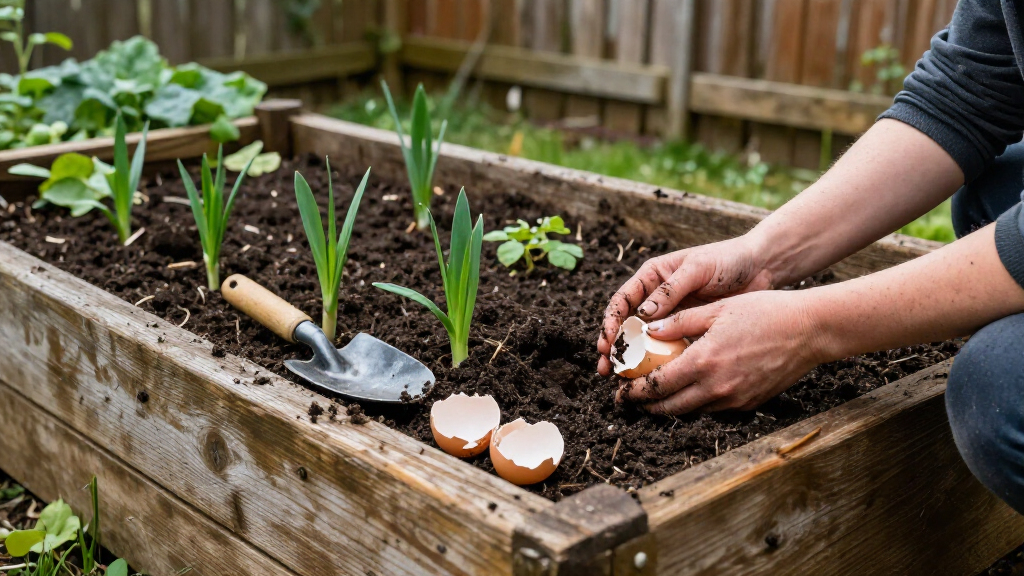
Hunker’s gardening report recommends adding crushed eggshells in fall because they decompose slowly and have more time to release calcium before spring planting. Spring use is still possible, but benefits may be delayed; finely ground shells break down faster than large pieces.
Fall is generally the better time to add crushed eggshells to garden beds, according to a Hunker gardening report, because the shells break down slowly and need time to release calcium into the soil. Gardeners can still add them in spring, but the nutrient benefit may arrive later, particularly if the shells are left in large pieces.
The report says eggshells contain calcium and may be used around crops such as tomatoes, cucumbers and eggplant. Their usefulness depends in part on how finely they are crushed: large or intact pieces can remain in soil or compost for more than one growing season, while smaller particles decompose faster. The report does not provide a measured timeline for how long that process takes.
For fall application, Hunker recommends drying the shells and grinding them into a fine powder with a coffee grinder, food processor or mortar and pestle. Its suggested preparation is to bake shells at 400 degrees Fahrenheit for about 10 minutes before grinding, then mix the powder into soil while preparing beds for winter. Gardeners who want to check the result can test soil before application and again in spring, the report says.
For a spring application, the report describes a different method: boil up to 20 eggshells in water, let the mixture stand overnight, then strain it. It recommends applying two cups of the liquid around each plant. That guidance is presented as a way to use shells when fall application was missed, not as a guarantee of a particular calcium increase or plant response.
Timing Affects Calcium Availability
The seasonal choice matters because eggshells are a slow-release material, not an immediate fix for a diagnosed soil problem. Adding finely ground shells in fall gives them more time to break down before the next planting period, while waiting until spring may mean plants receive little benefit early in the season. The speed of decomposition also depends on particle size, so preparation can matter as much as timing.
That distinction is useful for gardeners deciding whether kitchen scraps can address a soil need. The report recommends soil testing as a way to compare conditions before and after use; it does not establish that eggshells alone will correct a deficiency. A test can help prevent gardeners from treating an assumed problem without evidence, while symptoms should not be taken as a substitute for a soil assessment.
Popular right now

Ninja Luxe Café Mini Plus Espresso and Drip Coffee Machine with AutoFroth, Stainless Steel, ES351

Samsung 42-Inch S90H OLED 4K Smart TV Bundle

Bose QuietComfort Wireless Noise-Cancelling Over-Ear Headphones, Black
As an affiliate, we earn on qualifying purchases.
Why Eggshells Take Time
The report’s recommendation rests on the shells’ slow breakdown in soil. Calcium-rich shells are hard, and larger pieces can persist long enough to be found in beds or compost in later seasons. In that form, the report says, their nutrients have not yet been released into the surrounding soil to the same extent as material that has decomposed.
Hunker also names possible garden uses and claims commonly associated with shells, including slug deterrence and soil-pH adjustment. Those claims are not supported in the supplied report with trial results or measurements. Its central comparison is narrower: fall allows more time for shells to decompose before planting, while spring use remains an option with potentially delayed effects.
““Fall is usually the best time to add them to your garden beds.””
— Hunker gardening report
How Much Calcium Will Reach Soil
The source does not report controlled tests, calcium-release measurements or a standard decomposition period for eggshells. It also does not establish how much calcium a given bed needs, or whether the suggested boiled-shell liquid delivers a reliably useful amount. Results may vary with shell particle size, soil conditions and the starting nutrient level.
The report mentions yellowing, parachute-shaped leaves as possible signs of calcium deficiency, but those symptoms alone do not confirm the cause. It remains unclear from the source how consistently the liquid method changes soil calcium or improves plant health. A soil test offers a way to assess nutrient levels, but the report gives no test results or measured outcomes from gardeners who followed either method.
Test Soil Before Applying
Gardeners planning fall applications can dry and finely grind shells, mix them into prepared beds, and compare a pre-application soil test with another test in spring. Those results would give a more useful indication of changes than simply counting shells or judging their appearance in the soil.
For gardeners who missed the fall window, the report says spring application remains possible, with the expectation that effects may be delayed. The next practical step is to check whether the soil actually needs calcium and to monitor plants without assuming that visible symptoms have a single cause. The source does not specify a further research study or a timetable for new findings.
Key Questions
Is fall or spring better for adding eggshells to garden soil?
Fall is generally preferred in Hunker’s report because eggshells break down slowly and have more time to release calcium before spring planting. Spring application remains an option, but benefits may be delayed.
Should eggshells be crushed before they go into the garden?
Yes. The report says finer particles break down faster than large pieces. It suggests drying shells before grinding them into a powder.
Can eggshells be added in spring if fall was missed?
Yes. The report describes boiling up to 20 shells, soaking them overnight, straining the liquid and applying two cups around each plant. It does not provide measured evidence for how much calcium this method supplies.
How can gardeners tell whether their soil needs calcium?
Hunker recommends a soil test before applying eggshells and another in spring to compare results. The report notes possible plant symptoms, but symptoms alone do not confirm a calcium deficiency.
Source: hunker.com