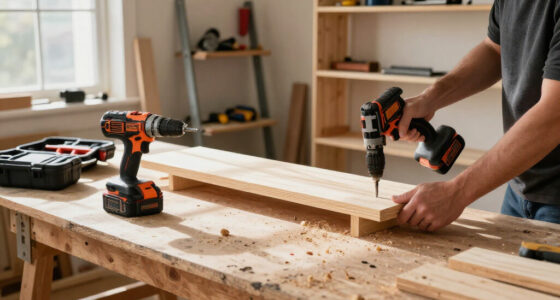

Choosing a cordless power drill set is often a choice between a smaller tool that is comfortable for everyday repairs and a stronger platform that can handle demanding jobs and more attachments. A 12V cordless drill set typically costs less, weighs less, and suits furniture assembly, hardware installation, and occasional home maintenance. An 18V set is generally heavier and more expensive, but its added power and broader tool ecosystem can make it a better fit for renovation work, frequent use, and tougher materials.

Get business pricing on tools and workshop supplies
- Business-only prices and quantity discounts
- Tax-exempt purchasing
- Multiple users, one account, clear invoices

Craftsman V20 Cordless Hammer Drill Kit, 1/2 in., 2 Batteries and Charger Included
- ✔ Voltage: 20V MAX
- ✔ Tool type: Hammer drill
- ✔ Chuck: 1/2-inch ratcheting

CRAFTSMAN V20 Cordless Drill and Impact Driver Combo Kit with 2Ah Battery and Charger
- ✔ Voltage: 20V
- ✔ Included tools: 1/2-inch drill/driver and 1/4-inch impact driver
- ✔ Drill speed: Up to 1,700 rpm

Greenworks PowerAll 24V Brushless Cordless Drill/Driver Kit, 3/8-Inch, 280 in-lbs, 2.0Ah USB-C Battery, Charger, and Drill Bits
- ✔ Voltage: 24V
- ✔ Motor: Brushless
- ✔ Chuck: 3/8-inch keyless
The voltage label alone does not determine quality: battery capacity, included accessories, charger speed, tool design, and warranty all vary by brand and package. Still, the central tradeoff is clear. Choose 12V when maneuverability and cost matter more than maximum output; choose 18V when you expect to drill larger holes, drive long fasteners, or add more tools to the same battery system.
At a Glance
| Criteria | 12V cordless drill set | 18V cordless drill set | Winner |
|---|---|---|---|
| Power for demanding jobs | Suits smaller holes and routine fastening; may struggle sooner in dense material or with long fasteners. | More torque and capacity for larger holes, tougher materials, and sustained workloads. | B |
| Weight and handling | Usually lighter and easier to control overhead or in tight spaces. | Typically heavier, especially with larger batteries, but still manageable for many users. | A |
| Typical household tasks | A strong match for furniture, shelves, cabinet hardware, and occasional repairs. | Better suited to renovation, repeated drilling, deck work, and expanding tool use. | A |
| Battery capacity and runtime | Often uses smaller batteries; runtime depends on capacity and workload. | Larger battery options can support longer or more demanding work, at added weight and cost. | B |
| Tool selection and expansion | Good options exist, though the range may be narrower within some brands. | Broad platform choices commonly include saws, sanders, lights, and outdoor tools. | B |
| Set contents and compatibility | Often packaged with a drill, batteries, charger, and a case; check the exact kit. | Kit quality varies; some sets include useful accessories, while others charge extra for batteries or cases. | Depends |
| Purchase value | Usually the lower upfront cost, especially for light-duty users. | Higher initial price can pay off when extra power and platform growth will be used. | Depends |
Craftsman V20 Cordless Hammer Drill Kit, 1/2 in., 2 Batteries and Charger Included
For buyers who need one drill set to cover more than household screwdriving, the Craftsman V20 Hammer Drill Kit has the widest stated scope in this lineup. Its description names wood, concrete, and brick, while the 1/2-inch ratcheting chuck and two-speed gearbox make it a more substantial drilling setup than Greenworks’ compact 3/8-inch model. We rank it first because the second battery also gives us a ready replacement during a job rather than relying on one pack.The kit’s tradeoff is weight and battery capacity. At 5.4 pounds and with two 1.3Ah batteries, it is less appealing for extended overhead work or buyers who want the lightest tool. The CRAFTSMAN combo is more compelling if fastening speed and a separate impact driver are the priority; this kit is the better choice when the drill itself needs to take on varied materials. The supplied details do not specify a hammer-action rate or drilling capacities, so we should treat masonry suitability as the stated use rather than infer performance for every bit or surface.
Pros:
- Hammer drill is described for wood, concrete, and brick.
- Includes two lithium-ion batteries and a fast charger.
- 1/2-inch ratcheting chuck is designed to improve bit retention.
- Two-speed gearbox supports different drilling and fastening tasks.
Cons:
- At 5.4 pounds, it is heavier than the 2-pound Greenworks drill.
- Each included battery is 1.3Ah, and runtime may be limited for prolonged heavy-duty work.
- No extra accessories such as a wall-mount organizer are listed.
Best for: Homeowners and DIYers who need a 1/2-inch hammer drill for wood and occasional concrete or brick work, and value having a spare battery in the kit.
Not ideal for: Buyers prioritizing the lightest tool, a dedicated impact driver, or longer runtime from higher-capacity batteries.
Bottom line: We rank this first for its stated masonry capability, 1/2-inch chuck, and two-battery kit, provided its weight and battery capacity suit the job.
“We rank this first for its stated masonry capability, 1/2-inch chuck, and two-battery kit, provided its weight and battery capacity suit the job.”
CRAFTSMAN V20 Cordless Drill and Impact Driver Combo Kit with 2Ah Battery and Charger
This kit solves a different problem from the hammer drill: instead of specializing in masonry, it pairs a 1/2-inch drill/driver with a 1/4-inch impact driver. That second tool is useful when a project alternates between making pilot holes and driving many fasteners, since we can keep the drill set up for drilling and reserve the impact driver for fastening. Compared with the Greenworks single-tool kit, the combo gives us a broader two-tool workflow; compared with the Craftsman hammer drill, it adds an impact driver but the description does not list hammer action or concrete and brick use.The main compromise is the single 2Ah battery. Having two tools does not mean we have two batteries ready to rotate, so heavier or longer jobs may require pauses for charging. Both tools have onboard LEDs, and the included bag keeps the kit together, but VersaTrack belt clips and accessories are sold separately. This is the better fit for routine drilling plus fastening, not the pick we would choose when masonry is a central requirement or a spare battery is essential.
Pros:
- Combines a 1/2-inch drill/driver with a separate 1/4-inch impact driver.
- Both tools include onboard LED lights.
- Includes a 2Ah battery, charger, bits, and storage bag.
- The listed drill speed reaches 1,700 rpm.
Cons:
- Only one battery is included for the two tools.
- VersaTrack belt clips and accessories are sold separately.
- The supplied description does not identify hammer action for masonry drilling.
Best for: DIYers and homeowners who regularly switch between drilling holes and driving fasteners and want both tools in one kit.
Not ideal for: Buyers who need a hammer drill for masonry, want two batteries included, or prefer a lighter single drill for occasional repairs.
Bottom line: We recommend this combo when a dedicated impact driver will save tool changes during fastening, and a single included battery is enough for the work.
“We recommend this combo when a dedicated impact driver will save tool changes during fastening, and a single included battery is enough for the work.”
Greenworks PowerAll 24V Brushless Cordless Drill/Driver Kit, 3/8-Inch, 280 in-lbs, 2.0Ah USB-C Battery, Charger, and Drill Bits
Greenworks is the most portable option in this comparison. At 2 pounds and 6.1 inches front to back, its brushless drill/driver is aimed at home repairs and tight spaces where a heavier hammer drill or two-tool combo can feel like more kit than we need. The USB-C battery doubles as a 12,000mAh power bank, a distinctive extra for buyers who value one battery that can also charge compatible devices. A 10-piece titanium drill bit set and built-in LED make the package ready for basic tasks.Its compact format also sets clear limits. The 3/8-inch chuck is smaller than the 1/2-inch chucks on both Craftsman options, and the single 2.0Ah battery gives us no spare to swap in. Its listed 280 in-lb torque and 800 rpm maximum should be read alongside that home-repair focus. Compared with the Craftsman hammer drill, Greenworks is easier to carry but is not described for concrete or brick; compared with the combo, it does not provide a separate impact driver. We would choose it for light, varied household work rather than demanding drilling or extended fastening.
Pros:
- Listed weight of 2 pounds suits compact home-repair tasks.
- Brushless motor provides up to 280 in-lb of stated torque.
- USB-C battery also functions as a 12,000mAh power bank.
- Includes a 10-piece titanium drill bit set and built-in LED.
Cons:
- 3/8-inch chuck is smaller than the 1/2-inch chucks on both Craftsman kits.
- Only one 2.0Ah battery is included.
- Its listed 800 rpm maximum is lower than the stated maximum speeds of the Craftsman drills.
Best for: Apartment dwellers and homeowners who want a light drill for household repairs, tight spaces, and occasional device charging from the battery.
Not ideal for: Buyers who need hammer action for masonry, a 1/2-inch chuck, a second battery, or a dedicated impact driver.
Bottom line: We place Greenworks third overall, but it is the clear compact choice for lighter household jobs where portability and USB-C charging matter most.
“We place Greenworks third overall, but it is the clear compact choice for lighter household jobs where portability and USB-C charging matter most.”
As an Amazon Associate we earn from qualifying purchases.
Key Differences
The practical gap shows up when a job pushes beyond ordinary household work. Both types can drive screws and drill common holes, but an 18V drill generally has more reserve for large bits, dense wood, and repeated fastening. That reserve can reduce slowdowns and make a demanding job less frustrating. For occasional assembly or small repairs, however, the 12V tool’s lower weight and easier control are often more valuable than power that may rarely be used.
The ownership decision also includes batteries and future tools. A 12V kit can be an economical, compact solution if the drill is likely to be the only cordless tool needed. An 18V platform can offer a stronger path to adding saws, impact drivers, and other equipment, though the initial investment grows as batteries and bare tools are added. Compare the exact kit contents and the tools you expect to buy; voltage does not tell you whether a set includes two useful batteries, a fast charger, or the accessories your work requires.
Detailed Comparison
Power for demanding jobs (18V cordless drill set wins — major)
The 18V set wins by a moderate to major margin when drilling wide holes, working in dense wood, or driving long fasteners repeatedly. It has more capacity for those loads. For small pilot holes and ordinary screws, that advantage may be minor because both sets can do the job. Pick 18V if tough work is routine; pick 12V if it is occasional.
Weight and handling (12V cordless drill set wins — moderate)
The 12V set usually wins for overhead work, tight cabinets, and long sessions of screwdriving. Its lighter tool and battery can reduce fatigue and make precise positioning easier. The gap is moderate: battery size and drill design matter, and an 18V model can still be comfortable for short jobs. If the drill will be used in awkward positions, favor the lighter kit.
Typical household tasks (12V cordless drill set wins — moderate)
For assembling furniture, hanging shelves, installing handles, and basic repairs, 12V is usually the better fit. It supplies enough capability without as much weight or cost. An 18V drill also handles these jobs, but its extra output does not add much value when the tasks are light. This is a moderate advantage for 12V for occasional home use.
Battery capacity and runtime (18V cordless drill set wins — moderate)
18V platforms often offer larger batteries and more headroom for sustained work, giving them the advantage for busy job days. Yet runtime is not guaranteed by voltage: battery amp-hour rating, tool efficiency, and material all affect how long a charge lasts. A high-capacity 12V battery can outlast a small 18V battery in some tasks. The difference is moderate, so compare the batteries included in the specific sets.
Tool selection and expansion (18V cordless drill set wins — moderate)
18V usually wins for users who plan to build a broad cordless collection. Major brands often place many saws, sanders, impact drivers, and other tools on their 18V platform. Some brands also offer capable 12V families, so check the range you would actually use. The gap is moderate and brand-dependent; the better platform is the one with compatible tools you expect to buy.
Set contents and compatibility (major difference)
Neither voltage wins automatically. One kit might include two batteries, a useful charger, and a sturdy case, while another at a similar price provides only one small battery. Confirm battery capacity, charger type, case, bits, and whether the listed tools share a battery platform. This criterion depends on the exact package, and the difference can be major if missing batteries must be purchased separately.
Purchase value (moderate difference)
For occasional repairs, the 12V set is usually the better value because its lower price and lighter handling cover the likely workload. The 18V set earns its higher cost when extra power avoids delays or when its battery platform will support several future tools. Paying more for 18V without a demanding workload or expansion plan buys capability that may go unused. The winner depends on expected use.
12V cordless drill set: Pros and Cons
Pros:
- Lighter and easier to control in tight or overhead spaces.
- Often costs less to get started.
- Well suited to furniture assembly and common household repairs.
- Compact batteries and tools are convenient to store.
Cons:
- Less reserve for large bits, dense materials, and repeated heavy fastening.
- Some brands offer fewer 12V tools than they do on their 18V platform.
- Smaller battery options may require more frequent charging during demanding work.
18V cordless drill set: Pros and Cons
Pros:
- More power for larger holes, tougher materials, and longer fasteners.
- Often has a wider selection of compatible tools for future expansion.
- Larger battery options can support sustained workloads.
- A flexible choice for renovation projects and frequent use.
Cons:
- Usually costs more, especially when buying extra batteries and tools.
- Greater weight can cause fatigue during overhead or precision tasks.
- May be more capability than occasional household work requires.
Who Should Choose What
Choose 12V cordless drill set if:
- You mainly assemble furniture, install hardware, hang shelves, or handle small repairs.
- You value a light drill for overhead work, tight spaces, or longer sessions.
- You want a lower-cost starter kit and do not expect to build a large tool collection.
Choose 18V cordless drill set if:
- You regularly drill large holes or work in dense wood and other demanding materials.
- You are renovating, doing repeated projects, or expect the drill to see frequent use.
- You want to add compatible saws, sanders, impact drivers, or other tools over time.
Skip both if: You need to drill masonry regularly or drive many long structural fasteners; compare a hammer drill or impact driver suited to those jobs, and check whether the chosen kit includes that function.
Value for Money
Pay more for 18V when the added power will solve a real workload problem or when you will use its battery platform for other tools. For a homeowner who drills now and then, the 12V kit is usually better value: it handles common jobs and is easier to pick up and use. The cheapest set is not always the best deal, though. A kit that includes a second battery and a suitable charger can cost less overall than a bare tool followed by separate purchases.
Compare the full package price, battery capacity, warranty, and replacement battery cost. If you already own compatible tools, staying on that brand’s platform may outweigh the usual 12V versus 18V tradeoff. Otherwise, base the premium on projects you expect to do, not on a higher voltage number by itself.
Final Verdict
For most occasional household users, choose a 12V cordless drill set: it is lighter, typically cheaper, and capable of the common jobs that come up at home. Choose an 18V set if you regularly work with larger bits or tough materials, have renovation projects ahead, or plan to grow a cordless tool collection. The deciding factor is how often you need power beyond routine fastening. Pay extra for 18V when that capability will see regular use; otherwise, the 12V set is the smarter buy.
Frequently Asked Questions
Is an 18V drill always more powerful than a 12V drill?
18V drills generally have more power available for demanding work, but voltage alone does not establish a tool’s performance. Motor design, gearing, battery condition, and the specific model also matter. Compare torque and other specifications for the exact drills when the job depends on them.
Can a 12V drill handle normal home repairs?
Yes. A suitable 12V drill can drive screws and drill common holes for furniture, shelves, and hardware. It is less suited to repeated work with large bits or long fasteners in dense materials.
Is an 18V set worth the higher price?
It is worth paying more if you need its extra capacity for renovation or frequent demanding work, or if you will add compatible tools. For occasional light repairs, a well-equipped 12V kit usually provides better value.
What should I check before buying a drill set?
Check the included battery count and capacity, charger, case, warranty, and compatible tools in the brand’s battery platform. Consider the materials and fasteners you expect to work with, and compare the full kit rather than relying on voltage or the advertised tool count.