
TL;DR

Get business pricing on tools and workshop supplies
- Business-only prices and quantity discounts
- Tax-exempt purchasing
- Multiple users, one account, clear invoices
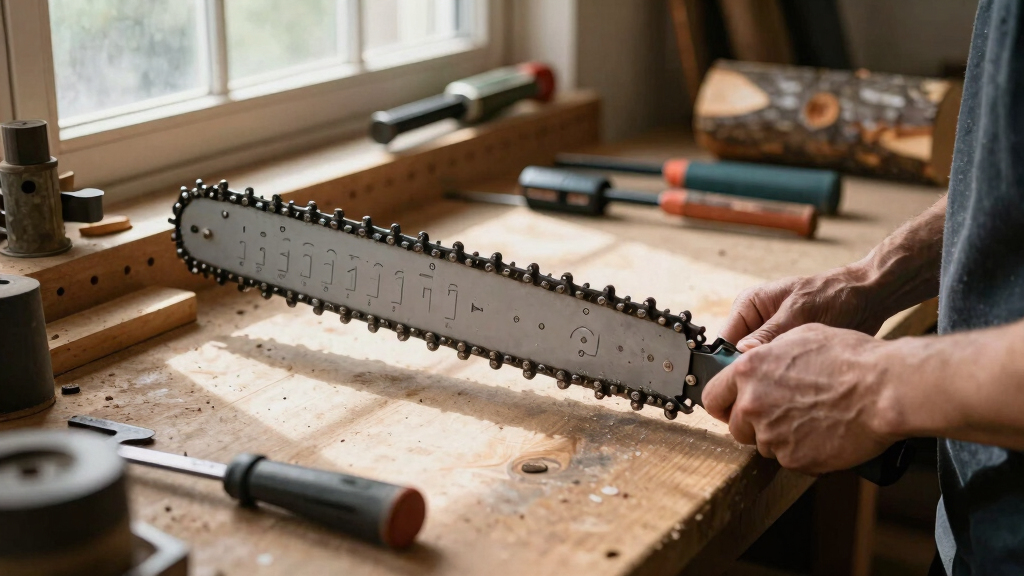
Hand sharpening a chainsaw chain relies on choosing the right file size and maintaining a consistent angle—usually around 30°. Proper technique ensures efficient, safe cuts and longer chain life. Using guides and regular practice makes all the difference.
There’s an art to keeping your chainsaw cutting like a hot knife through butter. When done right, hand sharpening transforms a dull chain into a precision tool that slices through logs, not just tears at them. But it’s not just about grabbing a file and going at it—knowing your file sizes and sharpening angles makes all the difference between a quick touch-up and a costly mistake.
In this guide, you’ll learn how to pick the right file, what angle to sharpen at, and how small tweaks can turn your chainsaw into a razor-sharp beast. Whether you’re a weekend warrior or a professional logger, mastering these details will keep your chain in tip-top shape and your cuts smooth and safe.
Always match your file size to your chain’s pitch—using the wrong size dulls teeth faster and risks damage.
Maintain a consistent sharpening angle—usually around 30°—to ensure even, efficient cuts.
Use a guide to keep angles and depths uniform, especially if you’re new to hand sharpening.
Sharpen your chain regularly—don’t wait until it’s painfully dull—to save time and extend chain life.
Avoid common mistakes like applying too much pressure or changing angles mid-sharpening.
Why Choosing the Right File Size Matters — It’s the Foundation of Good Sharpening
Choosing the correct file size is the first step to a sharp, effective chain. Think of it like fitting the right key into a lock—if the size is off, everything else gets wonky. The file size must match your chain’s pitch, which is the distance between drive links. For example, a 3/8″ pitch chain typically uses a 3/16″ (0.1875″) file, while a 0.325″ pitch chain calls for a 7/32″ (0.21875″) file.
Using the wrong size can have serious implications. A file that’s too small will fail to remove enough material efficiently, resulting in dulling teeth quickly and uneven cutting. Conversely, a file that’s too large can over-sharpen the tooth, weakening its structure and increasing the risk of breakage. Properly matching the file size ensures you remove just enough material to maintain the tooth’s integrity, leading to longer-lasting, sharper teeth. It’s a tradeoff: too aggressive, and you weaken the tooth; too gentle, and you won’t sharpen effectively. Understanding this balance is key for optimal performance and safety.
Tip: Always check your chain’s pitch and gauge before grabbing a file. It’s marked on the chain or saw, or you can measure with a caliper.
chainsaw chain sharpening file set
As an affiliate, we earn on qualifying purchases.
As an affiliate, we earn on qualifying purchases.
Understanding the Sharpening Angles — Why Consistency Matters
Sharpening your chain at the correct angle is crucial for maintaining optimal cutting performance and chain durability. Most chainsaw teeth are sharpened at about 30°. This angle strikes a good balance—sharp enough to cut fast but durable enough to resist dulling quickly. If you sharpen at a shallower angle (say 25°), you might get faster cuts but risk dulling sooner because the edge is less robust. Too steep (around 35°) and the tooth may become overly brittle, increasing the chance of chipping or breakage during heavy use. The angle you choose affects the tooth’s cutting efficiency and durability—finding the right balance is essential for a long-lasting, effective chain.
Here’s how to do it right:
- Secure your chain or saw to prevent movement.
- Attach your guide to set the 30° angle.
- Use a round file in the guide, keeping it flat against the tooth.
- File from the inside out, making smooth, even strokes.
- Repeat for all teeth, keeping the same angle and number of strokes.
Maintaining a consistent angle isn’t just about aesthetics; it’s about ensuring each tooth cuts evenly, wears at the same rate, and maintains the chain’s overall balance. Small deviations can cause uneven wear, leading to crooked cuts, increased strain on your saw, and even chain failure over time. The tradeoff here is between speed and longevity—sharpening at a slightly different angle might give a marginally faster cut but at the expense of quicker dulling or damage. Striking the right angle ensures you maximize both cutting performance and chain life.
Pro tip: Practice on a scrap chain or a worn tooth first. It’s better to get a feel for the angle before risking your good chain.
chainsaw sharpening guide with angle
As an affiliate, we earn on qualifying purchases.
As an affiliate, we earn on qualifying purchases.
Applying Your Knowledge — Step-by-Step Sharpening Technique
Now that you understand the importance of correct file size and angle, it’s time to put that knowledge into practice. Follow these steps to sharpen your chainsaw chain effectively:
- Secure the chain or saw in a stable position, using a workbench or clamp.
- Attach your round file and guide, setting the angle to about 30°.
- Begin filing each tooth from inside to outside, applying gentle, consistent pressure.
- Maintain the same number of strokes per tooth to ensure uniform sharpness.
- Check each tooth’s sharpness visually and by feel, ensuring a smooth, even edge.
- Repeat the process for all teeth, maintaining the same angle and stroke count.
Regularly inspect your chain for signs of uneven wear or damage. If you notice chipped or cracked teeth, replace the chain instead of trying to sharpen further. Proper technique combined with consistent angles and correct file sizes will keep your chainsaw performing at its best for longer.
Tip: Use a marker to color the top of each tooth before sharpening. This way, you can see which teeth have been sharpened and ensure uniformity.
chainsaw file kit for 3/8 inch pitch chain
As an affiliate, we earn on qualifying purchases.
As an affiliate, we earn on qualifying purchases.
Frequently Asked Questions
How do I know which file size to use for my chain?
Check the chain’s pitch marked on the chain or saw—common sizes include 3/16″ for 3/8″ pitch, 7/32″ for 0.325″ pitch, and 5/32″ for low-profile chains. Matching the file size ensures proper sharpening and longevity.Can I sharpen my chain without a guide?
Yes, but using a guide helps maintain a consistent angle and depth, which leads to better, more uniform sharpening. Without it, you risk uneven teeth and reduced cutting performance.How often should I sharpen my chain?
Sharpen when you notice increased effort, rough cuts, or visible dullness. Usually, every few hours of cutting or after every 2-3 logs is a good routine for regular users.What signs indicate my chain needs replacement?
If sharpening doesn’t improve performance, or teeth are chipped, cracked, or excessively worn, it’s time to replace the chain. Dull, damaged chains compromise safety and efficiency.Are hand sharpening and machine sharpening interchangeable?
Hand sharpening offers control and portability, perfect for quick touch-ups. Machines can be faster and more precise, especially for large volumes, but require investment and setup. Choose based on your needs and skill level.As an affiliate, we earn on qualifying purchases.
Conclusion
Keeping your chainsaw chain sharp by hand isn’t magic—it’s about the right tools, consistent angles, and regular care. When you master these small details, your saw will slice through logs like a hot knife through butter, making every cut safer and more efficient.
Remember, sharp chains mean less effort, less wear on your saw, and fewer accidents. Grab that file, set your guide, and sharpen with confidence. Your logs will thank you.
Fall Picks
fall essentials
As an affiliate, we earn on qualifying purchases.