
TL;DR

Get business pricing on tools and workshop supplies
- Business-only prices and quantity discounts
- Tax-exempt purchasing
- Multiple users, one account, clear invoices
Hunker compared four common driveway materials—gravel, asphalt, concrete and pavers—by upfront cost, functional lifespan, maintenance and customization. Gravel is the least expensive but needs frequent upkeep; pavers cost the most in the report but offer a stated lifespan of up to 50 years and the broadest design options.
Hunker has compared four common driveway materials—gravel, asphalt, concrete and pavers—ranking them from worst to best across upfront cost, functional lifespan, maintenance and customization. The report places gravel last and pavers first overall, while showing that each option involves trade-offs rather than a single best choice for every homeowner.
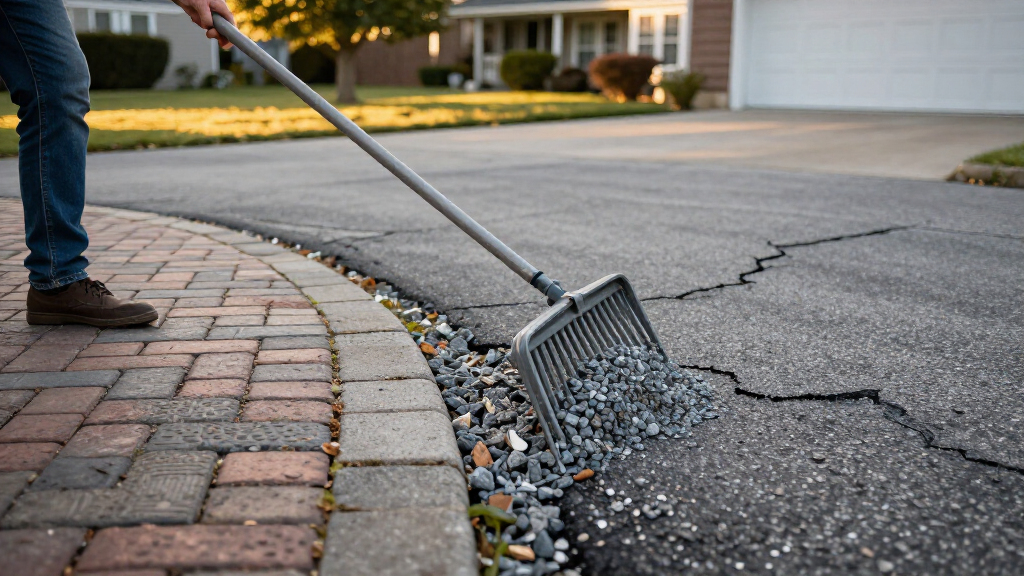
The ranking weighs the four criteria rather than judging materials by appearance, which the report says depends on personal taste. Its figures are presented as typical price and lifespan estimates, not guaranteed quotes or service lives. Gravel is listed at $2 to $4 per square foot, including labor, making it the least expensive option in the comparison. The report says a properly installed gravel driveway can last indefinitely, but recommends grading and adding a fresh surface layer at least every one to three years. Weather and heavy use can bring repairs sooner.
Asphalt costs about $7 to $13 per square foot, according to the report’s citation of Angi, and is said to last about 20 years or longer with timely care. Resealing is recommended every two to three years, while small cracks may appear after about five years and can be patched. Concrete is listed at $8 to $20 per square foot and may last around 30 years without major repairs when properly installed. Its routine upkeep is described as less frequent than asphalt’s, but substantial cracking can be costly to address.
Pavers are the highest-cost option in the report, at about $18 to $24 per square foot, citing Homewyse. Their functional lifespan is given as up to 50 years. Individual units can be replaced if damaged, and the report points to their range of shapes, sizes and colors as a design advantage. It recommends annual power washing, professional resealing every three to four years depending on traffic, and deep cleaning with re-sanding every two to three years.
How Upfront Cost Trades Against Upkeep
The comparison matters because purchase price alone does not capture the work or repair risk involved over a driveway’s life. Gravel has the lowest stated installation cost, but its recurring grading and resurfacing may demand regular time or paid maintenance. Asphalt falls between gravel and the more expensive choices in the report, while requiring periodic sealing and crack repairs.
Concrete and pavers ask homeowners to spend more at installation, but the report associates them with longer service lives. That does not mean they are maintenance-free: concrete can be expensive to repair when cracking is extensive, and pavers have cleaning and resealing needs. For a property owner comparing bids, local installation prices, drainage and site conditions may matter as much as the ranking.
The report also treats customization as a factor. Concrete can be stained, stamped or finished in different ways, while pavers offer a wider choice of individual unit shapes and colors. Homeowners who prioritize a particular appearance may judge the materials differently from someone focused primarily on initial expense or routine care.
Popular right now

Samsung 42-Inch S90H OLED 4K Smart TV Bundle

Bose QuietComfort Wireless Noise-Cancelling Over-Ear Headphones, Black

Vitamix 5200 Professional-Grade Blender, 64 oz. Container, Black
As an affiliate, we earn on qualifying purchases.
The Four Criteria Behind the Ranking
The source report’s order is gravel, asphalt, concrete and pavers, from worst to best under its combined criteria. It explicitly sets aside default appearance because preferences differ, and instead compares cost, functional lifespan, maintenance and the ability to customize. This is a ranking based on those selected measures, not a universal assessment for every climate, property or budget.
The estimates draw on outside pricing references: the report attributes asphalt’s $7-to-$13-per-square-foot range to Angi and pavers’ $18-to-$24 range to Homewyse. It does not provide equivalent named citations for every figure in the supplied material. Installation quality is also part of the report’s framing: its stated lifespans apply to properly installed materials and, for some options, timely maintenance.
““We chose not to consider default ‘looks’ since everyone’s tastes are different.””
— Hunker report
Costs and Lifespans Vary by Site
The supplied report does not give a publication date, a geographic basis for its prices, or a consistent set of sources for every estimate. Actual installation costs can differ with location, driveway dimensions, preparation and contractor pricing; the figures should not be treated as current local quotes. The report also does not set out a standardized method for comparing maintenance costs over time.
Its lifespan estimates are general claims, not guarantees for an individual driveway. The source says proper installation and maintenance affect durability, but does not quantify how soil, drainage, climate, vehicle loads or workmanship change the expected life. Nor does the supplied material provide a detailed weighting for how each of its four criteria produces the overall ranking. A homeowner should compare site-specific estimates and maintenance plans before choosing.
Compare Local Bids and Site Needs
The report describes a comparison rather than a new industry rule or policy, and it identifies no upcoming decision or follow-up date. For homeowners considering a replacement, the practical next step is to request local quotes that spell out preparation, installation, drainage, expected maintenance and repair costs—not just the material price per square foot.
Homeowners can then weigh those estimates against their priorities: the lowest initial outlay, less frequent routine work, longer expected use or more design options. Because the report’s figures are broad estimates, site conditions and contractor guidance will be needed to determine which material is suitable for a particular driveway.
Key Questions
Which driveway material is cheapest in the report?
Gravel is the least expensive listed option, at about $2 to $4 per square foot, including labor. The report also says it requires regular grading and fresh surface material, so the installation price does not reflect all upkeep.
Which material has the longest stated lifespan?
The report gives pavers a functional lifespan of up to 50 years. That is an estimate, not a guarantee, and the source says installation and maintenance affect durability.
How often do the materials need maintenance?
The report recommends grading and adding a new top layer to gravel at least every one to three years. It says asphalt should be resealed every two to three years, concrete every two to 10 years, and pavers professionally resealed every three to four years, with other cleaning tasks also recommended.
Does the ranking apply to every homeowner?
No. Hunker’s order reflects its selected criteria and general price and lifespan estimates. Local costs, property conditions, maintenance capacity and design preferences can change which material makes the most sense for a particular project.
Source: rss