
TL;DR
Apartment Therapy writer Heather Bien recommends giving party hosts breakfast items for the next morning, such as cinnamon buns or banana bread, instead of wine or flowers that could feel like an immediate serving task. The advice is a lifestyle recommendation, not a new rule or reported trend; the host’s preferences and dietary needs still matter.
Apartment Therapy writer Heather Bien recommends bringing hosts breakfast for the next morning—such as cinnamon buns or banana bread—instead of wine, flowers or sweets that might leave them feeling obliged to serve or arrange the gift during the party. The article presents the idea as practical etiquette advice, not as a formal rule or a documented shift in hosting habits.

Get business pricing on tools and workshop supplies
- Business-only prices and quantity discounts
- Tax-exempt purchasing
- Multiple users, one account, clear invoices
Bien’s reasoning is that a host may be busy preparing food, tending to guests and managing the evening when someone arrives with a conventional gift. A bottle of wine could be opened, flowers might need to be cut and placed in a vase, and candy may be brought out to share. Those responses can turn a present intended for the host into another task during the event, she writes.
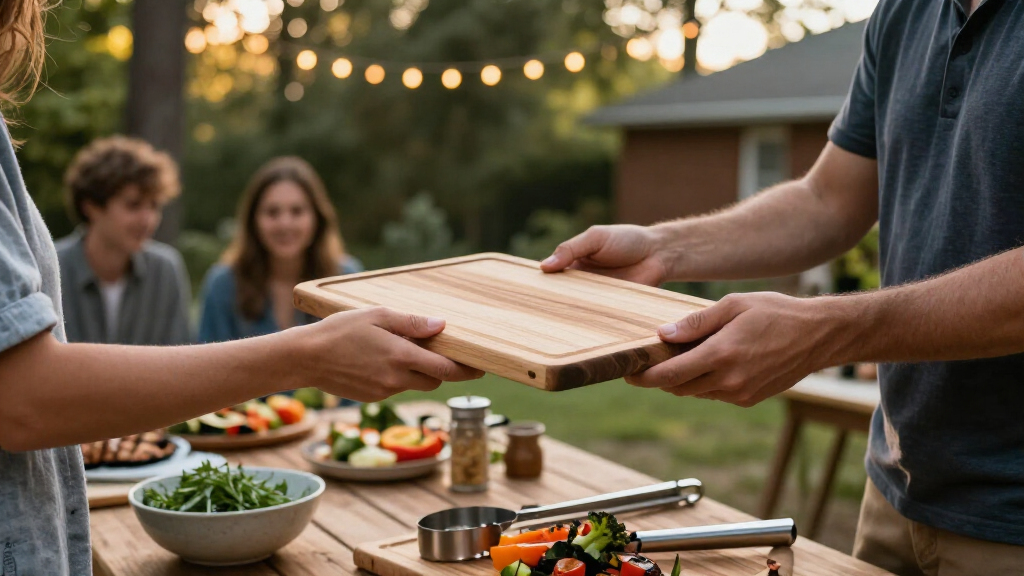
Instead, the article suggests choosing something clearly meant to be enjoyed later. Unbaked cinnamon buns can come with reheating instructions, while a baked loaf of banana bread could be paired with jam or butter. A note explaining that the gift is for the morning after can make its timing clear and remove any expectation that it be served to guests.
Bien also suggests wrapping the food in a reusable dish towel and tying it with ribbon. She says this adds presentation and can help keep the gift covered until it is needed. Items requiring refrigeration should be handled accordingly; the article’s advice is not that every food gift can safely be left out overnight.
A Gift That Fits the Morning After
The recommendation addresses a practical hosting consideration: a gift can prompt an immediate decision about where to put it, whether to serve it and how to prepare it. A breakfast gift signals that the host can set it aside and enjoy it after the gathering, when the event’s food and logistics are no longer the priority.
For guests, the idea is to give a gift without asking the host to accommodate it during the party. For hosts, it recognizes that hosting tasks may continue after guests leave and that an easy meal the next day may be useful. Breakfast food may not suit every household; allergies, dietary restrictions, storage needs and personal tastes affect whether it is appropriate.
Popular right now

Vitamix VX1 Professional-Grade Blender, 64 oz, Black

Roborock Q10 S5+ Robot Vacuum and Mop with 10,000 Pa Suction

Ninja Specialty Coffee Maker with 10-Cup Carafe and Fold-Away Frother, CM401
As an affiliate, we earn on qualifying purchases.
Why Conventional Gifts Can Add Work
The source is a service article by Heather Bien for Apartment Therapy, a home and lifestyle publication. It was framed for the holiday season, when hosts may be preparing a meal and coordinating several details at once. It does not report survey results, sales data or a broader change in gift-giving customs.
Bien says she follows the idea that host gifts should be for later consumption and attributes that principle to Ina Garten, whom she describes as a proponent. The article does not provide a direct quote from Garten or cite a specific source for her view. Bien’s own extension is to make the gift breakfast for the following morning, rather than food intended to accompany the event’s meal or dessert.
“The best host gifts are actually edible, and edible later — not as a pairing with dinner or dessert.”
— Heather Bien, Apartment Therapy writer
What the Advice Does Not Establish
The article offers one writer’s recommendation; it does not show that hosts generally prefer breakfast gifts, or that wine and flowers are unwelcome. Individual preferences vary, and a host may enjoy receiving a bottle or bouquet. The source also does not compare the cost or popularity of different host gifts.
It does not specify how to accommodate particular allergies or dietary requirements, or how long any suggested food can be kept safely. Guests should check relevant restrictions where possible and provide storage or preparation instructions. The source provides no publication date beyond saying it was published during the holiday season.
Choosing a Gift for Your Host
The article describes no scheduled follow-up or wider initiative; its guidance is ready to apply to future gatherings. A guest considering the idea can choose a breakfast item suited to the host, label it for the next morning and include clear heating or serving instructions. If the food needs refrigeration, it should be kept at an appropriate temperature rather than left out for presentation.
When the host’s dietary needs or preferences are unknown, guests can ask in advance or choose a different small gift. The practical point is to make the timing clear and avoid placing an unexpected task on the host during the event—not to treat one gift choice as a universal etiquette rule.
Key Questions
What host gift does the article recommend?
Apartment Therapy writer Heather Bien recommends breakfast food for the next morning, such as cinnamon buns or banana bread, rather than a gift the host may feel expected to serve during the party.
Why might wine or flowers create extra work?
Bien says a host may feel obliged to open wine, arrange flowers or put out sweets while already managing the gathering. The article presents this as a possibility, not something every host will do.
How can a guest make clear that the food is for later?
Tell the host directly that it is for the next morning and attach a note with heating or serving instructions. Bien also suggests wrapping it in a reusable dish towel.
Does the recommendation apply to every host?
No. The article is personal etiquette advice, not a universal rule. Guests should take account of dietary restrictions, allergies, food storage and the host’s preferences.
Source: apartmenttherapy.com