
TL;DR
A hands-on review of Ryobi’s RY40HPCW02 finds its 16-inch cordless chainsaw capable of routine limb cutting and seasonal tree care, while showing more strain in dense oak. Ryobi claims up to 60 cuts per charge with the included 4.0Ah battery; price, test conditions behind the runtime figures and broader performance comparisons are not provided in the source material.
A hands-on review of the Ryobi RY40HPCW02, a 40V cordless chainsaw with a 16-inch bar, found it well suited to routine limb cutting and seasonal yard work, though it slowed when cutting dense oak. The review positions the saw as a mid-range option for homeowners already using Ryobi’s 40V battery platform, rather than a substitute for the brand’s more powerful 20-inch model.

Get business pricing on tools and workshop supplies
- Business-only prices and quantity discounts
- Tax-exempt purchasing
- Multiple users, one account, clear invoices
The saw uses a brushless motor with a chain speed of up to 14.2 meters per second. Ryobi says it delivers more power than a 40cc gas chainsaw. That is a manufacturer claim; the review does not provide independent measurements to verify the comparison. The higher-end Ryobi 40V 20-inch model is listed at 25 meters per second and 52cc gas-equivalent power, illustrating the performance gap between the two saws.
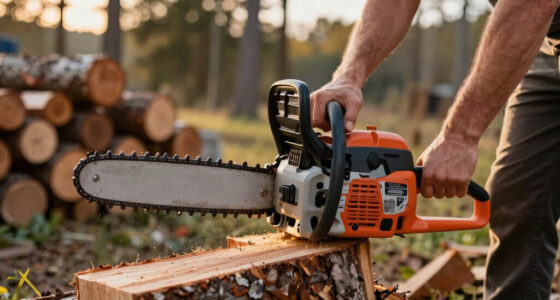
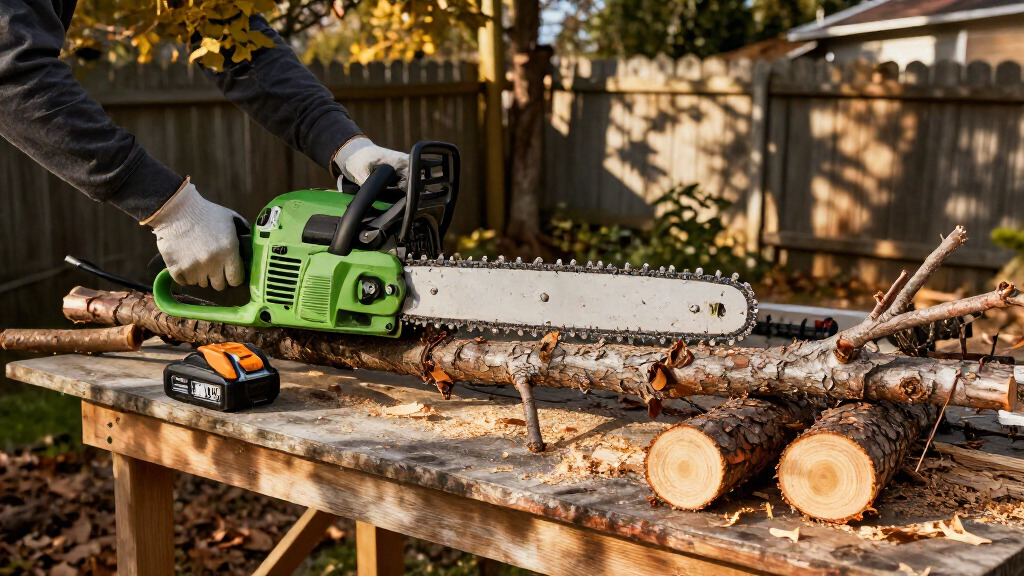
In the reviewer’s backyard test, the chain cut through 4- to 5-inch camphor branches without apparent difficulty. The reviewer also cut oak, a denser hardwood, and reported clean cuts but slower progress and more audible motor strain when pushing the saw. The account describes this as expected for the tool’s class and says the saw worked better when allowed to cut at its own pace. This is a limited hands-on test, not a controlled comparison across woods or competing models.
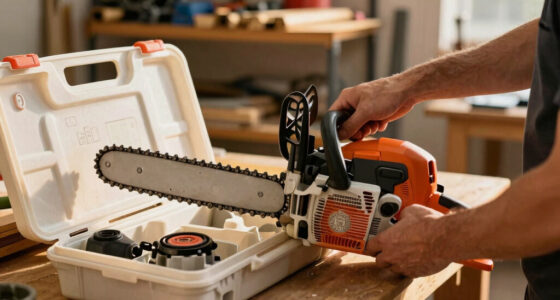
The saw comes with a 16-inch bar and a 56-link chain with a 0.050-inch gauge and 3/8-inch pitch. Ryobi rates it for felling, bucking and limbing. The review says the bar can handle wood up to 14 inches in diameter in a single-sided cut, or up to 28 inches when cutting from both sides, while warning users to guard against the bar becoming pinched on larger cuts. Its chain tension is adjusted with a bar nut, and a scrench is stored onboard; the design does not use a captured bar on the side cover.
Ryobi 40V Chainsaw Performance and value
The RY40HPCW02 handles routine limb cutting and seasonal yard work, with more strain in dense oak. It may suit homeowners already using Ryobi’s 40V battery platform.
What it handles
The backyard review found it capable in routine yard work, while dense hardwood took more time.
Camphor branches
The reviewer cut 4- to 5-inch branches without apparent difficulty.
Oak slows it down
It made clean cuts, but progress slowed and motor strain increased when pushed.
Seasonal yard care
The review positions it for trimming and storm cleanup, not heavier work suited to Ryobi’s 20-inch model.
Battery claims
Ryobi’s cut counts may help compare battery options, but the test conditions are not stated.
Choose for your workload
- Routine limb cutting and seasonal care
- 40V platform for existing Ryobi users
- 9.9 pounds without battery; 12.8 with included battery
- Price and package contents are not provided
- Runtime and gas-equivalent claims lack stated test conditions
- Heavier or frequent hardwood work may need more power
Cut size and safe use
The review describes reach beyond the bar length, with a caution for larger cuts.
- Up to 14 inches in diameter from one side, according to the review
- Up to 28 inches when cutting from both sides, according to the review
- Guard against bar pinching and follow Ryobi’s operating instructions
Where the 16-Inch Saw Fits
The RY40HPCW02 offers a middle ground for homeowners who need more cutting reach than a small pruning saw but do not need the power and capacity of a larger chainsaw. The review’s test suggests it can manage routine storm cleanup and seasonal trimming, while the slower oak cuts show why heavier or frequent hardwood work may call for a more powerful model.
Its claimed runtime and weight also affect how useful it may be around the yard. Ryobi says the included 4.0Ah battery delivers up to 60 cuts, and claims up to 130 cuts with an 8.0Ah battery sold separately. Those figures may help buyers compare battery options, but the source does not state the wood dimensions or test conditions used to count a cut. A larger battery adds weight and can change the saw’s balance.
Popular right now

Bose QuietComfort Headphones (2nd Gen) – Wireless Over-Ear Noise Cancelling Headphones, Eucalyptus Green

Dyson V9 Motorbar Cordless Vacuum

KitchenAid Artisan 5-Qt Tilt-Head Stand Mixer, Cardamom
As an affiliate, we earn on qualifying purchases.
Ryobi’s 40V Chainsaw Range
Ryobi sells more than a dozen chainsaw models across different performance levels and offers cordless saws on both 18V and 40V platforms. The RY40HPCW02 is presented as a mid-range choice for people already invested in the 40V system. The source material does not give a price, so its value cannot be independently assessed against specific competing products.
The review lists the saw at 9.9 pounds without a battery and 12.8 pounds with the included 4.0Ah battery. It measures 34 inches from tip to tail. The reviewer describes its balance as even to slightly rear-biased when held from the top handle and says the saw’s balance helped it rock through cuts. The listed weight is above the roughly 11-pound figure given for its predecessor, the RY40505BTL, though the source does not clarify whether that earlier model’s figure includes a battery.
Other design details include a translucent oil reservoir with an 8.5-ounce capacity, allowing the operator to check the bar-oil level. The source also mentions a thumb safety switch. It does not provide further detail on the switch’s operation or identify additional safety features.
“If I just let the saw do the work at its own pace, everything was A-OK.”
— The reviewer
Runtime, Price and Test Limits
The source does not state the chainsaw’s price, its publication date or the conditions used for Ryobi’s runtime and gas-equivalent claims. It also does not provide a side-by-side test against another saw, measured cutting times, or a detailed account of battery performance across different wood types. The backyard test covered camphor branches and some oak, so it does not establish how the saw performs across the full range of jobs for which it is rated.
The material says the product has a thumb safety switch but ends before describing its operation. It also does not specify included protective equipment or give a complete operating-safety assessment. Buyers should consult Ryobi’s manual and follow chainsaw safety guidance before use.
What Buyers Should Check
No follow-up test, price announcement or additional product update is specified in the source. For prospective buyers, the practical next steps are to confirm current pricing and package contents with a retailer, check compatibility with their Ryobi 40V batteries, and compare the saw’s bar length and output with the wood they expect to cut. Anyone considering larger cuts should account for the review’s warning about bar pinching and follow the manufacturer’s instructions for safe operation.
The source’s runtime numbers and hands-on observations offer an initial picture, not a guarantee of results in every yard. A more complete assessment would require testing across additional wood species, cut sizes and battery capacities, with conditions stated clearly.
Key Questions
What jobs is the Ryobi RY40HPCW02 intended for?
Ryobi rates the 16-inch chainsaw for felling, bucking and limbing. The review describes it as a fit for seasonal tree care, routine trimming and some storm cleanup, rather than the heavier work suited to the brand’s larger 20-inch model.
How many cuts does the battery provide?
Ryobi claims up to 60 cuts with the included 4.0Ah battery and up to 130 with an 8.0Ah battery sold separately. The source does not specify the wood or test conditions behind those figures, and actual results may vary.
How did it perform in the review’s cutting test?
The reviewer reported that it cut through 4- to 5-inch camphor branches readily. It also cut oak, but more slowly and with greater motor strain when pushed; the reviewer said it performed better when allowed to work at its own pace.
Can it cut wood wider than the bar?
The review says the saw can cut wood up to 14 inches in diameter from one side, or up to 28 inches when cutting from both sides. It cautions users to avoid pinching the bar on larger cuts and to follow the manufacturer’s operating instructions.
Source: protoolreviews.com