
TL;DR

Get business pricing on tools and workshop supplies
- Business-only prices and quantity discounts
- Tax-exempt purchasing
- Multiple users, one account, clear invoices
A Hunker report outlines granite edging as a durable way to define gravel driveways and help limit grass encroachment and gravel movement. It describes curbing, cobblestones and boulders, while noting that installation depth and driveway shape affect the choice.
Hunker has outlined granite edging as one option for homeowners seeking to limit grass encroachment and gravel spread along driveways. The report describes granite curbing, cobblestones and boulders, and says the edging’s effectiveness against grass depends on proper installation.
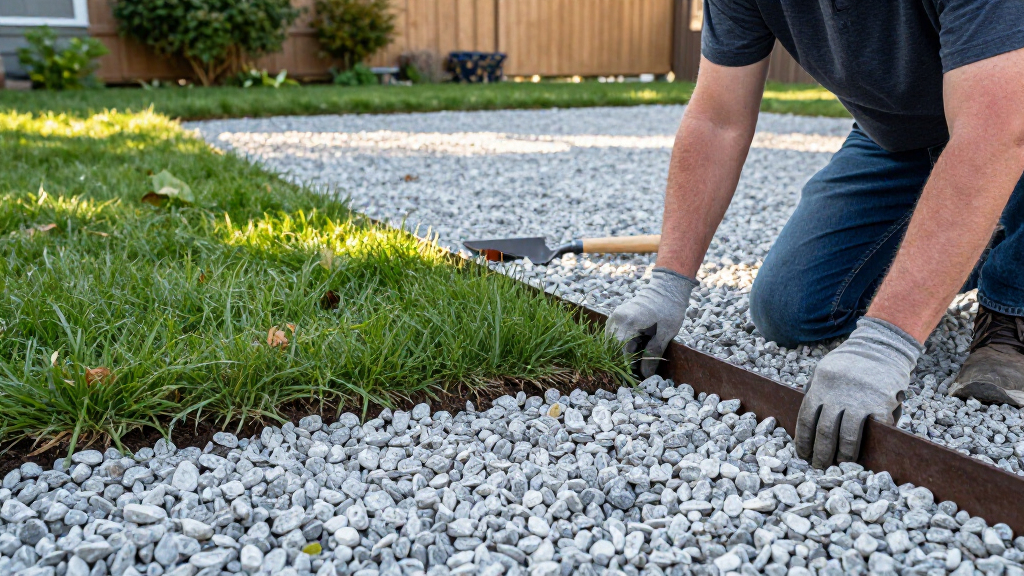
The report says granite’s density and low porosity make it suitable for outdoor use, where edging is exposed to weather. A border can help hold gravel in place and create a defined line between the driveway and lawn. Granite’s natural patterns and range of colors, including white, dark gray and red, can also give the border a distinct appearance.
For a straight driveway, granite curbing can create a continuous, orderly line. Hunker gives the example of curbing units commonly sold in four-foot lengths: a 20-foot stretch bordered by lawn on both sides would take five units per side, or 10 units total. Smaller granite cobblestones, also called Belgian blocks, may suit irregular layouts and offer a more traditional look.
The report recommends setting edging 4 to 6 inches into the soil and leaving about two inches above ground. It says that depth is intended to impede underground grass runners, while the exposed portion can help block surface growth. Granite boulders are another option, though their weight may make them difficult to move. The report also identifies erosion control and driveway framing as possible additional benefits.
A Defined Border for Gravel Drives
Grass growing into gravel can mean repeated weeding and replenishing displaced stone, according to the Hunker report. A fixed border addresses a different part of the problem: the lawn’s advance at the driveway edge and the movement of aggregate beyond the drive. For homeowners, the appeal is a physical boundary that also contributes to the yard’s appearance.
The material and installation choice matter. Edging that is too low or poorly placed may not stop grass runners, and a border cannot by itself remove weeds already growing through the gravel. Granite can also involve substantial handling, especially when large blocks or boulders are used. The report presents it as a potential solution, not a guarantee that grass will never return.
Popular right now

Dyson V8 Cyclone Cordless Vacuum

De'Longhi Dinamica Plus Fully Automatic Espresso Machine

Dyson Big Ball Multi Floor Canister Vacuum, Yellow
As an affiliate, we earn on qualifying purchases.
Choosing Granite for the Layout
The Hunker article frames granite as a landscaping material also used for indoor tiles and countertops. For driveway use, its suggested formats address different designs: long curbing blocks for straight runs, individual cobblestones for bends or a rustic finish, and boulders for a more irregular natural border. The number and type of pieces depend on the driveway’s length and shape.
The example of a 20-foot driveway assumes lawn borders both sides and curbing units are four feet long. It is an illustration, not a universal materials estimate; actual lengths, gaps, corners and product dimensions can change the quantity required. The report notes that property owners in granite-rich areas may be able to source boulders locally, but it does not provide pricing or installation-cost comparisons.
Installation Details Still Matter
The source does not provide independent testing, cost estimates, or a measured comparison of granite edging with other materials. It also does not specify a base or setting method, how to manage drainage, or whether particular soil and climate conditions call for different installation depths. Its 4-to-6-inch depth guidance is presented as general advice, not as a site-specific plan.
How much grass is already established in the gravel, the type of grass, and the driveway’s construction may affect results. The report does not say that granite edging eliminates maintenance; it describes the border as a way to help prevent encroachment and gravel movement. Homeowners should confirm dimensions and installation requirements for the chosen product and site.
Measure Before Selecting Edging
The next practical step is to measure the driveway’s edge, note curves and slopes, and decide whether a continuous curb, individual blocks or boulders fit the layout. Buyers can then check the actual dimensions and weight of available granite products and estimate quantities for each side. Because the source gives no cost figures, local suppliers are needed for current prices and delivery information.
Before installation, homeowners should check local requirements and assess drainage and soil conditions. A properly placed border may reduce lawn encroachment, but ongoing weeding and gravel upkeep may still be needed. The report offers no follow-up data showing how well the options perform over time.
Key Questions
Does granite edging stop all grass from growing in gravel?
No guarantee is given. Hunker says properly installed edging can help keep grass out, but weeds may still grow through the gravel and require regular weeding.
How deep should granite driveway edging be installed?
The report recommends sinking it 4 to 6 inches into the soil and leaving roughly two inches above ground. Site conditions and product specifications may affect the installation.
Which granite edging works for a curved driveway?
Hunker identifies smaller granite cobblestones or Belgian blocks as an option for varied driveway shapes. The best fit depends on the curve, block dimensions and installation plan.
Can granite edging help keep gravel in place?
According to the report, a border can help prevent gravel from spreading and may also help limit erosion. It does not provide measured results or guarantee that gravel will stay in place.
Source: hunker.com