TL;DR

Get business pricing on tools and workshop supplies
- Business-only prices and quantity discounts
- Tax-exempt purchasing
- Multiple users, one account, clear invoices
A House Beautiful report outlines four design approaches that can improve staircase safety without treating appearance as an afterthought. Designers recommend layered lighting, a tightly fitted stair runner, a continuous handrail and balusters spaced to reduce gaps; the right solution depends on the home and local requirements.
House Beautiful has published four designer recommendations for improving staircase safety while keeping the stairs visually distinctive: add lighting, fit a runner securely, provide a continuous handrail and address wide gaps between balusters. The advice is aimed at households where children, older adults or pets may face greater risks on dim, slippery or poorly protected stairs.
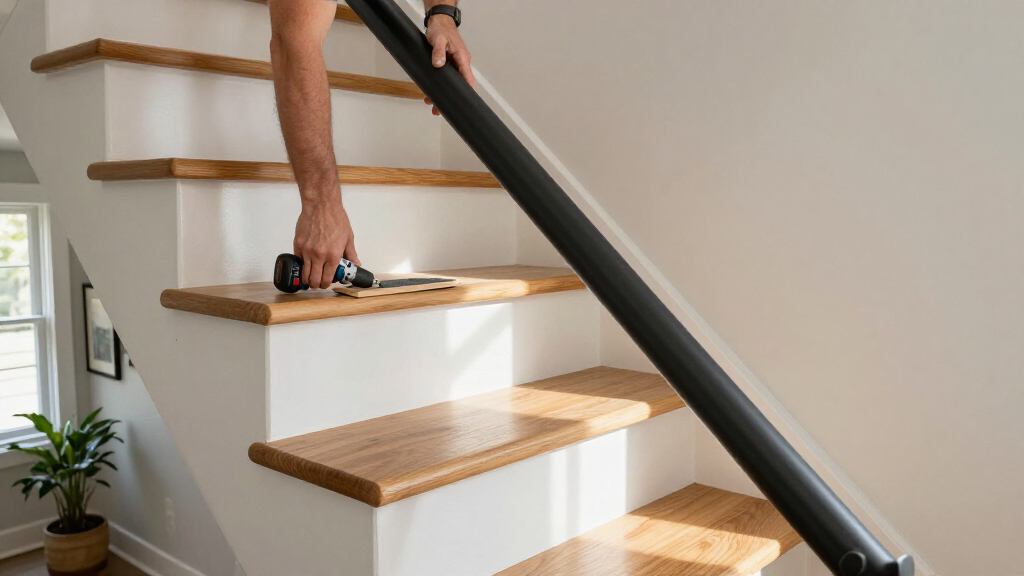
Lighting is the first recommendation from Terri Fiori, founder of Fiori + Co. and a Certified Aging in Place specialist. In a renovation, she paired recessed stairwell lights with touch-activated LED lighting beneath handrails. She said the combination reduced shadows and gave children who cannot reach a wall switch another way to activate light. The report presents this as a design example, not as a measured study of injury reduction.
For stair runners, designer Caroline Aycock of Koukla Collective recommends a patterned design as a way to add character, particularly on narrow or steep historic stairs. Fiori advises specifying a “Hollywood” installation, in which the runner follows the shape of each tread and is secured beneath the nosing and to the riser. She cautions against a waterfall installation, where the fabric drops from tread to tread without being attached as closely around the step.
Designer Prudence Bailey recommends a second continuous handrail where a break occurs near a landing between stair sections. It can be styled with a contrasting finish or material, she said, but should be sturdy and easy to grip. Designer Shannon Crain recommends addressing balusters that are spaced too far apart, especially where small children or pets could pass through. The article offers four inches as a general rule of thumb, while noting that building codes differ by location.
Design Choices Can Address Stair Hazards
Stairs are used repeatedly, and the report focuses on hazards that can be harder to manage for young children, aging adults and small pets: poor visibility, slipping, a handrail gap or openings between balusters. Its recommendations make safety part of the design plan rather than an afterthought, with lighting, materials and hardware selected to suit the home.
The practical value is in matching each change to the condition it is meant to address. Lighting can make tread edges easier to see; a securely attached runner may reduce movement underfoot; and a continuous rail offers a handhold through a landing. A decorative upgrade alone does not establish that a staircase is safe, however. Installation quality, the condition of the existing stairs and applicable local building rules remain relevant.
stair tread LED motion sensor lights rechargeable
As an affiliate, we earn on qualifying purchases.
As an affiliate, we earn on qualifying purchases.
Four Upgrades From Design Projects
The recommendations come from a House Beautiful report that asked designers about additions they use on staircases. Its examples include a custom ombré runner in a historic Pittsburgh home designed by Betsy Wentz, as well as Fiori’s combination of recessed and handrail lighting. The report frames stair safety as a concern for people at different ages and for households with pets, while also emphasizing that functional changes can be incorporated into a home’s style.
The advice is based on designers’ professional experience and examples, not a comparative safety trial or a code guide. The four-inch baluster spacing figure is described as a rule of thumb, not a universal legal standard. Requirements can vary by jurisdiction and building type, so homeowners should check the rules that apply to their property before changing a railing or staircase.
“Recessed lighting plus handrail lighting ensured that shadows on the steps were eliminated and a trip to the ER avoided.”
— Terri Fiori, founder of Fiori + Co. and a Certified Aging in Place specialist
non-slip stair runner rug with stair rods or installation tape
As an affiliate, we earn on qualifying purchases.
As an affiliate, we earn on qualifying purchases.
Local Rules and Results Vary
The report does not provide data showing how much any of the four changes reduces falls, nor does it compare the approaches. Fiori’s account of lighting is a designer’s description of one project, not a controlled finding. It is also not clear from the source what local codes apply to an individual reader’s stairs; the article says requirements vary and presents four inches only as a rule of thumb.
Households will also need to assess the particular stairway: its layout, lighting, existing railings, surface condition and the needs of the people using it. The source does not offer a technical installation manual or a cost estimate. A runner or handrail that is poorly fitted may not deliver the intended benefit, and the report does not claim that any design change removes all fall risk.
wall-mounted continuous stair handrail kit
As an affiliate, we earn on qualifying purchases.
As an affiliate, we earn on qualifying purchases.
Check the Staircase Before Renovating
The report does not announce a product launch, policy change or scheduled follow-up. For homeowners considering an upgrade, the next step is to identify the specific issue—such as dim treads, a slippery surface, a gap in the handrail or wide baluster spacing—and select a change suited to it. Before work begins, check local building requirements, particularly for railing and baluster changes, and seek qualified help where the project requires it.
After installation, the stairs should be checked for secure fittings, unobstructed treads, reliable lighting and a handrail that is comfortable to grip. The source provides no formal inspection checklist, so readers should not treat the designers’ suggestions as a substitute for applicable codes or a professional assessment of a hazardous staircase.
stair baluster spacing safety net or gap guard
As an affiliate, we earn on qualifying purchases.
As an affiliate, we earn on qualifying purchases.
Key Questions
What four stair-safety changes does the report recommend?
The designers recommend adding lighting, fitting a stair runner securely, providing a continuous handrail and addressing balusters with wide gaps. Which measures suit a home depends on the staircase and its users.
What is a Hollywood-style stair runner installation?
In the report, it means the runner follows the shape of each step and is secured beneath the tread nosing and to the riser. Terri Fiori contrasts it with a waterfall style, where the runner drops between treads without being attached as closely around the step.
How far apart should stair balusters be?
The report gives four inches as a rule of thumb, but says exact building codes vary by location. Check local requirements rather than treating that figure as a universal legal limit.
Does the report prove these changes prevent falls?
No. It shares designers’ recommendations and examples, but does not provide comparative data measuring fall reduction. Fiori’s comments about lighting describe one renovation project and are not presented as a controlled study.
Source: rss
Fall Picks
fall essentials
As an affiliate, we earn on qualifying purchases.