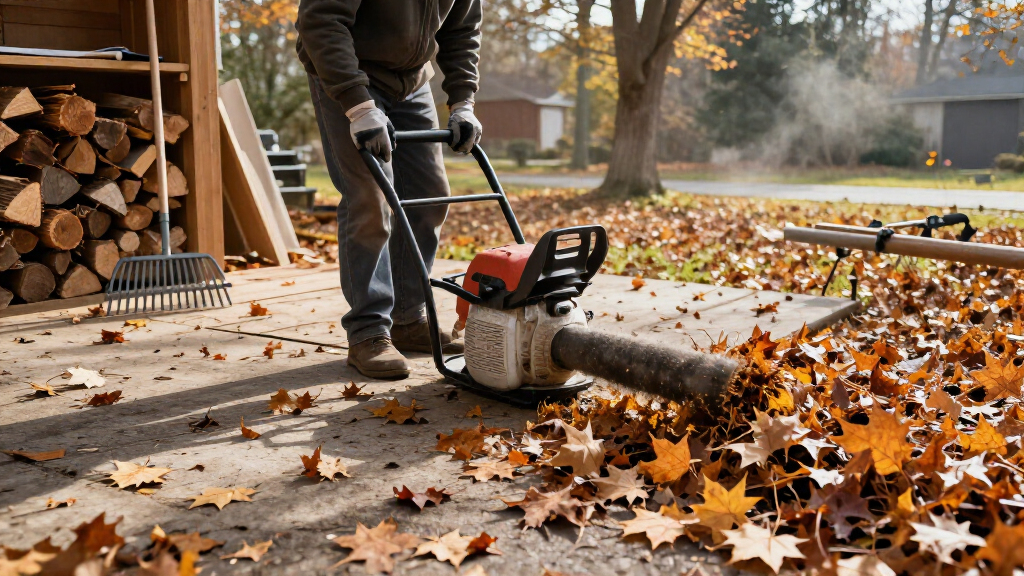

Among these gas-powered leaf blowers, I’d choose the Husqvarna 350BT as the best overall for its established brand, backpack format, and balanced stated airflow and air speed. The Husqvarna 580BTS stands out for demanding large-property work, while the handheld PROYAMA 29CC adds vacuum and mulching functions for people who want more than blowing. The main choice is between the mobility and lighter handling of a handheld and the sustained power and weight distribution of a backpack, with engine noise, fuel, and upkeep part of either gas model’s tradeoff. Published airflow and speed figures are useful clues, but they don’t tell the whole story about comfort, control, or how a blower handles damp debris. Read on for my full comparison and guidance on matching a blower to your yard and workload.

Get business pricing on tools and workshop supplies
- Business-only prices and quantity discounts
- Tax-exempt purchasing
- Multiple users, one account, clear invoices
Complete the kit


Key Takeaways
- The Husqvarna 350BT is the most balanced pick in this lineup: its 50.2-cc backpack design and stated 692 CFM offer a middle ground between basic handheld models and the largest blowers.
- The Husqvarna 580BTS is the clear high-output option by listed specs: its 1000 CFM and 47 N rating suit heavier workloads, but buyers should expect to prioritize capacity over a lighter, simpler setup.
- Several 63-cc backpack listings cluster around 665 CFM: compare support, controls, harness, and clearly documented specifications rather than assuming similar engine size means equal ownership experience.
- Handheld models fill a different job: the PROYAMA 29CC adds vacuum and mulching functions, while the 26-cc and Husqvarna 125B suit buyers who value maneuverability over backpack-style output.
- Headline air-speed figures need context: the 28-cc model lists 280 MPH alongside 490 CFM, so buyers should weigh both airflow and speed claims, plus build and comfort details, instead of choosing by MPH alone.


| gas powered leaf blower | Power source | Form factor | Airflow capacity | Maximum air speed |
|---|---|---|---|---|
| Husqvarna 350BT Gas Backpack L | Gas powered | Backpack | 692.17 CFM | 180 MPH |
| 63cc Gas Backpack Leaf Blower | Gas powered | Backpack | 665 CFM | — |
| Husqvarna 580BTS Gas Backpack | Gasoline powered | Backpack | — | 220 MPH |
| VEVOR 63CC Gas Backpack Leaf B | Gas powered | Backpack | 1110 CFM | 220 MPH |
| PROYAMA 72CC Gas Backpack Leaf | Gas powered | Backpack | 880 CFM | 275 MPH |
| HTK Gas Backpack Leaf Blower | Gas powered | Backpack | — | — |
| PROYAMA 29CC Gas Powered Handh | Gas powered | Handheld | — | — |
| 26cc Gas Leaf Blower | Gas powered | Handheld | — | — |
| 28 CC Gas Leaf Blower | Fuel powered | Handheld | — | — |
| Husqvarna 150BT Gas Backpack L | Gas powered | Backpack | — | — |
| 63CC Backpack Leaf Blower | Gas powered | Backpack | 665 CFM | 205 MPH |
| Backpack Gas Powered Leaf Blow | Gas powered | Backpack | 850 CFM | 210 MPH |
| 52cc Gas Backpack Leaf Blower | Gas powered | Backpack | 550 CFM | 230 MPH |
| Husqvarna 125B Gas Leaf Blower | Gas powered | Handheld | 470 CFM | 170 MPH |
| 52CC Backpack Leaf Blower | Gas powered | Backpack | 550 CFM | 200 MPH |
More Details on Our Top Picks
Husqvarna 350BT Gas Backpack Leaf Blower, 50.2-cc, 2.1-HP, 180 MPH, 692 CFM
The Husqvarna 350BT earns my Best Overall spot by balancing useful airflow with a more manageable 22-pound weight than the heavy-duty Husqvarna 580BTS. Its 692 CFM and 180 MPH output suit routine cleanup across residential properties without pushing into the more demanding, high-output class. An ergonomic harness and vibration reduction matter over longer sessions, while the air purge system is intended to make starting easier. The tradeoff is that its performance falls short of the 580BTS’s 1000 CFM and 47 N for large, leaf-heavy sites. It also remains a gas backpack blower: buyers need to handle fuel and maintenance, and its weight may still wear on users during extended work. I’d choose it for a broad mix of yard tasks, not maximum-force clearing.
Pros:- 692 CFM airflow offers a practical balance for routine yard cleanup.
- Ergonomic harness and vibration reduction support longer sessions.
- Air purge system is designed to ease starting.
- Lighter than the 34-pound Husqvarna 580BTS.
Cons:- At 22 pounds, it can still cause fatigue during prolonged use.
- Its 180 MPH output is less suited to demanding, heavy-debris jobs than higher-output options.
- Gas operation requires refueling and engine maintenance.
Best for: Homeowners and landowners with medium-to-large yards who want a balanced backpack blower for regular seasonal cleanup.
Not ideal for: Professionals clearing large properties daily who need the greater airflow and blow force of the Husqvarna 580BTS, or buyers who want a lightweight handheld tool.
- Power source:Gas powered
- Form factor:Backpack
- Engine displacement:50.2 cc
- Horsepower:2.1 HP
- Airflow capacity:692.17 CFM
- Maximum air speed:180 MPH
- Item weight:22 lb
- Warranty:2 years; extendable to 5 years with fuel purchase
Our verdict“Choose the 350BT for a versatile residential workhorse; step up to the 580BTS if maximum clearing force matters more than weight.”
63cc Gas Backpack Leaf Blower, 665 CFM, 3hp/2.3KW Engine
This 63cc backpack blower is a straightforward choice for buyers who want gas-powered mobility and adjustable speed control without moving to the higher-output Husqvarna 580BTS. Its 665 CFM airflow is close to the Husqvarna 350BT’s listed 692 CFM, making the two more comparable for general cleanup than their engine sizes suggest. The adjustable control helps tailor output to different jobs, while the backpack format keeps the blower’s weight off the arms. The drawbacks are significant: the listed 112 dB noise level calls for hearing protection and may be a poor fit for noise-sensitive areas, and its 19-pound weight is still substantial for some users. Buyers also need to manage fuel mixing and refueling. I’d favor it for practical, varied yard work rather than quiet neighborhoods or long, uninterrupted sessions.
Pros:- 665 CFM airflow is in the same general range as the Husqvarna 350BT.
- Adjustable speed control helps match output to different cleanup tasks.
- Backpack form factor reduces the need to support the motor in one hand.
- Gas power avoids waiting for battery charging.
Cons:- Listed noise level of 112 dB makes hearing protection important and limits use around noise-sensitive areas.
- At 19 pounds, it may be tiring for some users over long sessions.
- Requires fuel mixing and refueling.
Best for: Yard owners who want a gas backpack blower with adjustable speed for switching between lighter cleanup and tougher debris.
Not ideal for: People working near noise-sensitive homes or anyone who wants to avoid fuel mixing, engine upkeep, and a 19-pound backpack tool.
- Power source:Gas powered
- Form factor:Backpack
- Engine displacement:63 cc
- Engine output:3 hp / 2.3 kW
- Airflow capacity:665 CFM
- Noise level:112 dB
- Maximum speed:6800 rpm
- Item weight:19 lb
Our verdict“Pick this model for adjustable gas-powered cleanup at moderate airflow; choose the Husqvarna 350BT for its stated comfort features and easier-starting system.”
Husqvarna 580BTS Gas Backpack Leaf Blower, 75.6-cc, 4.59-HP, 2-Cycle, 1000 CFM, 47 N, 220 MPH
When the job is dominated by large volumes of leaves, the Husqvarna 580BTS brings the strongest stated combination of airflow and force in this group: 1000 CFM, 47 N, and 220 MPH. That puts it ahead of the Husqvarna 350BT’s 692 CFM for demanding cleanup across expansive grounds. A ventilated harness and padded hip belt are useful design choices for distributing its load, and the large fuel tank is described as reducing refueling interruptions. The cost of that capacity is physical: at 34 pounds, it is much heavier than the 350BT and the 21-pound PROYAMA 72CC. The listed 74 dB figure does not remove the need to assess noise and hearing protection for the work setting. I’d reserve this model for users who can make use of its output, rather than occasional small-yard cleanup.
Pros:- 1000 CFM airflow and 47 N blow force suit large-scale debris clearing.
- 220 MPH maximum speed adds strong air velocity for stubborn material.
- Ventilated harness and padded hip belt are designed to improve carrying comfort.
- Large fuel tank is described as reducing refueling interruptions.
Cons:- At 34 pounds, it is substantially heavier than the Husqvarna 350BT and PROYAMA 72CC.
- Its high output is more than many small-yard owners need to carry.
- Gas engine operation requires fuel and routine maintenance.
Best for: Landscaping crews and owners of large, leaf-heavy properties who need high airflow and blow force for demanding cleanup.
Not ideal for: Homeowners with small yards, or users who prioritize a lighter backpack blower for extended work; the 34-pound weight is a substantial tradeoff.
- Power source:Gasoline powered
- Form factor:Backpack
- Engine displacement:75.6 cc
- Horsepower:4.59 HP
- Airflow:1000 CFM
- Blow force:47 N
- Maximum air speed:220 MPH
- Item weight:34 lb
- Warranty:2-year limited manufacturer’s warranty
Our verdict“Choose the 580BTS for demanding, large-property work where its high airflow justifies the 34-pound load.”
VEVOR 63CC Gas Backpack Leaf Blower, 2-Cycle, 1110 CFM, 220 MPH
The VEVOR 63CC stands out for its listed 1110 CFM airflow, the highest airflow figure among these five options, paired with 220 MPH maximum speed. That makes it a high-capacity alternative to the Husqvarna 350BT for buyers who want more air volume, though the product data does not provide a blow-force figure for a direct force comparison. Its 1.89 L fuel tank is intended to support longer runs between refills, and the included accessories broaden its stated use beyond leaves. The tradeoff is a 26.5-pound load: it is heavier than the 350BT and PROYAMA 72CC, though lighter than the 580BTS. It also uses manual starting, which may be less convenient for frequent stop-and-start work. I’d shortlist it for sustained, high-volume cleanup, not for users who put low weight or easy starting first.
Pros:- 1110 CFM is the highest stated airflow in this five-product group.
- 220 MPH maximum speed suits forceful outdoor cleanup.
- 1.89 L fuel tank is designed to reduce interruptions for refueling.
- Accessory kit supports a range of outdoor cleaning tasks.
Cons:- At 26.5 pounds, it is heavier than the Husqvarna 350BT and PROYAMA 72CC.
- Manual starting may be inconvenient for jobs with frequent stops.
- Noise level is not specified, leaving an important factor unclear for residential use.
Best for: Property owners who need high-volume airflow for extended yard or snow cleanup and value a large fuel tank.
Not ideal for: Users who need a lighter blower, frequent easy restarts, or verified low-noise operation; the listed data gives no noise level.
- Power source:Gas powered
- Form factor:Backpack
- Engine displacement:63 cc
- Engine type:2-cycle
- Airflow capacity:1110 CFM
- Maximum air speed:220 MPH
- Maximum speed:6500 rpm
- Item weight:26.5 lb
- Fuel tank capacity:1.89 L
Our verdict“Choose the VEVOR for its unusually high stated airflow and large tank if you can manage its weight and manual starting.”
PROYAMA 72CC Gas Backpack Leaf Blower for Yard and Snow Removal
The PROYAMA 72CC is the pick for buyers drawn to high stated air speed without carrying the heaviest machine here. Its 275 MPH maximum speed exceeds the 220 MPH figures listed for both the Husqvarna 580BTS and VEVOR 63CC, while its 21-pound weight is far below the 580BTS’s 34 pounds. That lighter pack comes with a compromise in airflow: its 880 CFM trails the VEVOR’s 1110 CFM and Husqvarna’s 1000 CFM. Cruise control and a variable-speed throttle offer more control during changing tasks, and the dual-tube nozzle adds flexibility for yard and snow cleanup. At 21 pounds, it is not a lightweight handheld option, and its plastic construction and one-year warranty may matter to buyers comparing long-term ownership. I’d choose it for speed and manageable backpack weight, not maximum air volume.
Pros:- 275 MPH maximum speed is higher than the listed figures for the Husqvarna 580BTS and VEVOR 63CC.
- At 21 pounds, it is much lighter than the 34-pound Husqvarna 580BTS.
- Cruise control and variable-speed throttle support steadier control.
- Dual-tube nozzle is intended for varied yard and snow cleanup.
Cons:- 880 CFM airflow is lower than the VEVOR 63CC and Husqvarna 580BTS.
- A 21-pound backpack unit may still fatigue users during long sessions.
- The one-year warranty is shorter than the Husqvarna models’ stated coverage.
Best for: Homeowners or groundskeepers who want a backpack gas blower with high listed air speed, cruise control, and a lower weight than the Husqvarna 580BTS.
Not ideal for: Buyers who need the highest airflow for large debris volumes, prefer a compact handheld blower, or want a longer stated warranty.
- Power source:Gas powered
- Form factor:Backpack
- Engine displacement:72 cc
- Horsepower:3.7 HP
- Airflow capacity:880 CFM
- Maximum air speed:275 MPH
- Item weight:21 lb
- Material:Plastic
- Warranty:1 year
Our verdict“Pick the PROYAMA for high air speed and a more manageable weight than the 580BTS, but choose the VEVOR or 580BTS for greater stated airflow.”
HTK Gas Backpack Leaf Blower, 63CC 2-Stroke, 665 CFM, Max 205 MPH, Orange
The HTK 63cc pairs substantial engine displacement with a backpack harness, making it a better fit for long sessions than a handheld blower. Its 665 CFM airflow suits broad cleanup, while variable-speed control and cruise control let me adjust output without holding the throttle wide open. The air-purge starting aid is a practical advantage when restarting after a pause. Compared with the Husqvarna 150BT, the HTK lists lower airflow and airspeed, but it also has a larger 1.7 L fuel tank and a stated 71 dB noise level. That balance favors steady yard work over maximum clearing force. The tradeoff is the weight and upkeep of a 2-stroke gas engine; buyers wanting a simpler, lighter tool should look at a handheld option instead.
Pros:- 63cc 2-stroke engine and 665 CFM airflow suit demanding yard cleanup.
- Padded backpack harness helps distribute the load during longer sessions.
- Variable-speed throttle and cruise control support more controlled operation.
- 1.7 L fuel tank provides substantial capacity for extended work.
Cons:- Backpack weight can still cause fatigue during prolonged use.
- Two-stroke operation requires fuel mixing and routine engine maintenance.
- Listed 205 MPH airspeed is lower than the Husqvarna 150BT’s stated 270 MPH.
Best for: Homeowners with large yards who want a backpack harness, cruise control, and a sizable fuel tank for sustained gas-powered cleanup.
Not ideal for: People with small properties, limited tolerance for carrying a heavy blower, or a preference for low-maintenance electric equipment.
- Power source:Gas powered
- Form factor:Backpack
- Engine:63cc 2-stroke
- Airflow:665 CFM
- Maximum airspeed:205 MPH
- Noise level:71 dB
- Fuel tank capacity:1.7 L
- Dimensions:18.5 x 14 x 21.5 in
Our verdict“Choose the HTK for large-yard cleanup where backpack comfort and fuel capacity matter more than class-leading airspeed.”
PROYAMA 29CC Gas Powered Handheld Leaf Blower, 3-in-1 Vacuum & Mulcher Kit
The PROYAMA 29cc is the lineup’s most versatile pick for buyers who want to collect leaves, not only push them into piles. Its blower, vacuum, and mulcher functions, along with a collection bag and two nozzles, cover cleanup tasks that a conventional blower like the 26cc handheld model does not. The listed 480 CFM and 175 MPH are useful for routine yard debris, though this is not the choice for moving heavy, wet leaf piles across a large property. A handheld design also puts the tool’s weight in the user’s arms; at 12.3 pounds, it is heavier than the 9.4-pound 26cc model. I would choose it for smaller yards with beds or corners where vacuuming is useful, and skip it if extended blowing sessions are the main job.
Pros:- Three functions add vacuuming and mulching to standard blowing.
- Collection bag and dual nozzles support different cleanup tasks.
- 29cc engine with listed 480 CFM and 175 MPH handles routine debris.
- Cruise-control handle and accessible parts support operation and maintenance.
Cons:- At 12.3 pounds, it is heavier than the 26cc handheld option listed at 9.4 pounds.
- Handheld weight can make prolonged use tiring, especially while vacuuming.
- Two-cycle gas operation requires premixed fuel and ongoing maintenance.
Best for: Homeowners with small or medium yards who want one gas tool for blowing paths and vacuuming leaves from beds and confined areas.
Not ideal for: Buyers clearing large properties or heavy wet leaves, and anyone who would find a 12.3-pound handheld tool tiring.
- Power source:Gas powered
- Form factor:Handheld
- Engine:29cc 2-cycle
- Airflow:480 CFM
- Maximum airspeed:175 MPH
- Item weight:12.3 lb
- Functions:Blow, vacuum, and mulch
- Included accessories:Collection bag and dual nozzles
Our verdict“Pick the PROYAMA if vacuuming and mulching are worth the added handheld weight; choose a simpler blower for long blowing-only jobs.”
26cc Gas Leaf Blower, 380 CFM, 180 MPH, Handheld 2-Cycle
At a listed 9.4 pounds, this 26cc model is the lightest handheld option in this group, and its anti-vibration handles are aimed at making quick cleanup less taxing on the arms. The 380 CFM output is more modest than the 28cc blower’s 490 CFM or the PROYAMA’s 480 CFM, so I’d favor it for patios, walkways, and ordinary leaf cover rather than dense piles. Its 180 MPH airspeed gives it some focused clearing ability, while the translucent tank makes fuel checks easier between passes. Reduced-resistance recoil is another convenience, but it remains a gas tool with the noise and maintenance that entails. Choose it for manageable weight and straightforward blowing; skip it if you need vacuuming or the stronger listed airflow of the other handhelds.
Pros:- Listed 9.4-pound weight is lower than the other handheld models in this batch.
- Anti-vibration handles are intended to reduce arm fatigue.
- Translucent fuel tank allows quick fuel-level checks.
- Reduced-resistance recoil system is designed to ease starting.
Cons:- 380 CFM is below the 480 CFM PROYAMA and 490 CFM 28cc model.
- Handheld form factor is less suitable for prolonged cleanup across large properties.
- Two-cycle gas operation requires a 50:1 fuel mix and regular maintenance.
Best for: Homeowners who want a lighter gas handheld for regular cleanup around patios, driveways, and modestly sized yards.
Not ideal for: People who need to move heavy debris over a large area, want a vacuum-mulcher, or prefer to avoid gas-engine maintenance.
- Power source:Gas powered
- Form factor:Handheld
- Engine:26cc 2-cycle
- Airflow:380 CFM
- Maximum airspeed:180 MPH
- Item weight:9.4 lb
- Fuel mix:50:1 gas-to-oil
- Start type:Reduced-resistance recoil system
Our verdict“Choose this 26cc blower when lower handheld weight matters more than maximum airflow or vacuuming features.”
28 CC Gas Leaf Blower, 490 CFM 280 MPH, 1.1-HP 2-Stroke
The standout claim here is 280 MPH airspeed, paired with 490 CFM from a 28cc engine. That makes this handheld a better match for concentrated clearing than the lighter 26cc model, whose listed airspeed is 180 MPH and airflow is 380 CFM. The higher figures may help move stubborn debris from edges and hard surfaces, but they do not turn a handheld blower into a backpack tool for broad, all-day work. The weight data also conflict: the description calls it 9.5 pounds, while the specifications list 11.5 pounds, so I would not buy it on the assumption that it is especially light. Its quick-start system and 0.65 L tank add practical appeal, but the fuel capacity is smaller than the HTK backpack’s 1.7 L tank.
Pros:- Listed 280 MPH airspeed is higher than the other handheld models in this batch.
- 490 CFM airflow exceeds the 26cc model’s listed 380 CFM.
- Quick-start ignition is designed to reduce starting hassle.
- 28cc engine and 1.1 HP specification offer more output than the smaller 26cc option.
Cons:- Weight is inconsistent in the supplied data: 9.5 lb in the description and 11.5 lb in specifications.
- Its 0.65 L fuel capacity is smaller than the HTK backpack blower’s 1.7 L tank.
- Handheld design is less suited to prolonged, large-area work than a backpack model.
Best for: Buyers who want a handheld gas blower with a high stated airspeed for focused clearing around driveways, paths, and yard edges.
Not ideal for: People who need a low-weight handheld, long runtime between refills, or a backpack blower for extensive property cleanup.
- Power source:Fuel powered
- Form factor:Handheld
- Engine displacement:28cc
- Horsepower:1.1 HP
- Airflow:490 CFM
- Maximum airspeed:280 MPH
- Listed item weight:11.5 lb (description also states 9.5 lb)
- Fuel capacity:0.65 L
Our verdict“Consider this model for high-airspeed handheld clearing, but verify its actual weight before choosing it over the lighter 26cc blower.”
Husqvarna 150BT Gas Backpack Leaf Blower, 51-cc 2.16-HP 2-Cycle
The Husqvarna 150BT leads this batch on stated airflow, with 765 CFM and up to 270 MPH, making it the strongest fit here for broad piles and heavier debris. Its padded harness, hip belt, and load-management system help carry that output on the back rather than in the arms. Compared with the HTK 63cc, it has a smaller 51cc engine but substantially higher listed airflow and airspeed; that makes the performance figures more persuasive than displacement alone. The tradeoff is a 22-pound listed weight, and the supplied 45 dB noise figure should be checked against operating conditions rather than treated as a guarantee of quiet use. For small yards, the lighter handheld 26cc model is easier to manage and less machine than most buyers need.
Pros:- 765 CFM is the highest listed airflow among these five products.
- Up to 270 MPH airspeed suits demanding debris-clearing work.
- Padded harness, hip belt, and load-management system distribute carrying weight.
- Variable-speed throttle and cruise control support sustained, adjustable operation.
Cons:- Listed weight of 22 pounds can become tiring during extended sessions.
- Backpack size and weight are excessive for small properties and brief cleanup.
- The listed 45 dB noise figure may not reflect perceived noise during actual operation.
Best for: Owners of large properties who regularly clear heavy or wet leaves and want backpack support with the highest stated airflow in this batch.
Not ideal for: People with compact yards, limited strength for carrying a 22-pound blower, or a need for a lightweight, easy-storage handheld tool.
- Power source:Gas powered
- Form factor:Backpack
- Engine:51cc 2-cycle
- Horsepower:2.16 HP
- Airflow:765 CFM
- Maximum airspeed:270 MPH
- Item weight:22 lb
- Noise level:45 dB
Our verdict“Choose the 150BT for demanding large-yard work where high airflow and a supportive harness matter more than low weight.”
63CC Backpack Leaf Blower, 665 CFM, 205 MPH, 2-Cycle Gas Powered
With 665 CFM and a 1.7 L tank, this backpack blower suits larger properties where steady output and fewer refueling stops matter. Its airflow matches the listed 63cc backpack option with 665 CFM, while the adjustable speed and cruise control give you a way to set airflow for different tasks without holding the throttle constantly. The padded harness and anti-vibration feature also favor longer cleanup sessions over the handheld Husqvarna 125B, which is lighter and easier to maneuver but offers less airflow.
The tradeoff is its 22-pound weight: the harness spreads the load, but it is still a substantial machine to wear. Gas mixing, maintenance, and noise are part of the package, too. I’d choose it for broad yard work, not for quick jobs or buyers prioritizing low carrying weight.
Pros:- 665 CFM airflow suits substantial yard and driveway cleanup.
- 1.7 L fuel tank supports longer work between refills.
- Padded harness and anti-vibration design help manage extended use.
- Adjustable speed and cruise control allow steadier, task-specific airflow.
Cons:- At 22 pounds, it is heavier than the 17-pound 52cc backpack options in this lineup.
- Gas operation requires fuel handling and routine engine maintenance.
- Loud operation may be unwelcome in noise-sensitive neighborhoods.
Best for: Homeowners with large yards who want backpack support, cruise control, and a sizable fuel tank for extended leaf cleanup.
Not ideal for: People who need a lightweight blower for short tasks, have limited storage, or want the quieter, lower-maintenance operation of an electric model.
- Engine:63cc, 2-cycle
- Power source:Gas powered
- Form factor:Backpack
- Airflow capacity:665 CFM
- Maximum air speed:205 MPH
- Weight:22 pounds
- Fuel tank capacity:1.7 L
- Warranty:2 years
Our verdict“Choose this 63cc model for larger cleanup sessions where its tank and backpack controls matter more than keeping carried weight low.”
Backpack Gas Powered Leaf Blower, 2.7kW, 850 CFM, 63CC, 4.3HP, 2-Stroke, Lightweight, Air-Cooled, 1.8L Fuel Tank for Yard Lawn Care and Snow Removal
The headline advantage here is 850 CFM, a higher listed airflow capacity than the 665 CFM 63cc backpack blower in this group. That extra volume can help move broad piles across open areas, and the 1.8 L tank gives it the largest stated fuel capacity among these five picks. Its adjustable outlet adds flexibility for different cleanup tasks, including the yard and snow-removal uses described for the model.
This output comes with clear tradeoffs. The blower weighs 10 kg—heavier than the 17-pound 52cc models—and its listed 101 dB noise level may be a concern around neighbors. The product description calls it lightweight, but the listed weight makes it a substantial backpack choice. Compared with the more manageable Husqvarna 125B, this is better suited to demanding, open-area work than quick cleanup near the house.
Pros:- 850 CFM is the highest stated airflow among these five products.
- 1.8 L tank offers the largest stated fuel capacity in this batch.
- Adjustable air outlet supports different yard cleanup tasks.
- Backpack format distributes the load across the body.
Cons:- Listed weight of 10 kg is substantial for prolonged carrying.
- Listed 101 dB noise level may be disruptive.
- Two-stroke gas operation requires fuel and oil handling.
Best for: Owners of large, open properties who prioritize high airflow and a larger fuel tank for moving substantial debris.
Not ideal for: Buyers who need a genuinely light pack, work in noise-sensitive areas, or mainly clear small patios and paths.
- Engine:63cc, 2-stroke
- Power source:Gas powered
- Form factor:Backpack
- Airflow capacity:850 CFM
- Maximum air speed:210 MPH
- Fuel tank capacity:1.8 L
- Weight:10 kg
- Noise level:101 dB
Our verdict“Pick this blower when maximum stated airflow and tank capacity outweigh its substantial weight and loud operation.”
52cc Gas Backpack Leaf Blower, 550 CFM
This 52cc pack pairs 550 CFM with a stated 230 MPH maximum speed, making it a different kind of choice from the higher-volume 63cc models. Its airflow capacity is lower than the 665 CFM option, but the higher listed air speed may appeal when you want to dislodge wet leaves or stubborn debris rather than move a wide, loose pile. At 17 pounds, it is also notably lighter than the 22-pound 63cc backpack blower.
The padded harness, adjustable speed, and cruise control help tailor operation, though its stated run time of about 45 minutes means larger properties may require a refueling break. The listed 78 dB noise figure is lower than the 101 dB listed for the 850 CFM backpack model, but buyers should still expect gas-engine sound. I’d favor this for targeted, forceful cleanup, not maximum-volume coverage.
Pros:- 230 MPH stated maximum speed suits forceful, targeted debris clearing.
- 17-pound weight is lower than the 22-pound 63cc option.
- Padded harness, adjustable speed, and cruise control support more comfortable operation.
- Description lists uses including leaf, debris, dust, and snow removal.
Cons:- 550 CFM is less airflow than either 63cc model with 665 or 850 CFM.
- Approximately 45 minutes of stated run time may mean refueling on larger properties.
- Backpack weight and gas-engine noise can still wear on users during long sessions.
Best for: Homeowners who often deal with damp leaves or stubborn debris and prefer a lighter backpack blower with high stated air speed.
Not ideal for: People clearing very large areas who need maximum airflow or longer work periods without refueling.
- Engine:52cc
- Power source:Gas powered
- Form factor:Backpack
- Airflow capacity:550 CFM
- Maximum air speed:230 MPH
- Weight:17 pounds
- Noise level:78 dB
- Stated run time:Approximately 45 minutes
Our verdict“Choose this 52cc blower for forceful, focused cleanup when its lower weight matters more than maximum airflow or extended runtime.”
Husqvarna 125B Gas Leaf Blower
Not every yard needs a backpack blower. The Husqvarna 125B keeps the format handheld and the listed weight to 9.4 pounds, making it easier to carry between a driveway, porch, and small lawn than the 17-pound 52cc backpack models. Its 470 CFM is the lowest airflow figure among these five products, but it is a more practical match for routine, lighter cleanup than the 850 CFM backpack blower, which is built around greater output and a heavier frame.
The 28cc engine, air-purge starting system, variable speed, and cruise control offer useful control for homeowner tasks. Its limit is heavy debris and broad, demanding work: the 52cc backpack option provides more air speed and a harness for longer sessions. At a listed 94 dB, it is still a loud gas tool, so handheld convenience does not mean quiet operation.
Pros:- 9.4-pound handheld design is easier to maneuver than the backpack models.
- 470 CFM suits routine light-duty yard cleanup.
- Air-purge starting system is intended to simplify starting.
- Variable speed and cruise control offer more control over airflow.
Cons:- Lower airflow than all three backpack models in this batch.
- Not designed for heavy debris or demanding large-area work.
- Listed 94 dB noise level is high for close neighbors.
Best for: Homeowners with small or medium yards who want a lighter handheld gas blower for leaves, paths, and driveway cleanup.
Not ideal for: People clearing large properties, wet heavy piles, or extensive debris who would benefit from backpack support and more airflow.
- Engine:28cc, 2-cycle
- Power source:Gas powered
- Form factor:Handheld
- Airflow capacity:470 CFM
- Maximum air speed:170 MPH
- Weight:9.4 pounds
- Noise level:94 dB
- Blowing force:12.5 N
Our verdict“Choose the 125B for manageable handheld cleanup around a smaller property, but move to a backpack model for heavy or extended work.”
52CC Backpack Leaf Blower, 550 CFM, 200 MPH, 2-Stroke Gas Powered
This 52cc backpack blower is a balanced option for ordinary yard cleanup: its 550 CFM and 200 MPH sit below the higher-speed 52cc model’s 230 MPH and the 665 CFM 63cc blower’s airflow, but the feature set emphasizes controlled, steady use. A padded harness and anti-vibration design help with carrying, while cruise control can reduce the need to hold the throttle continuously. Its 1.2 L tank also provides a stated capacity, though it is smaller than the 1.7 L and 1.8 L tanks on the larger backpack options.
At 17.2 pounds, it is close in weight to the 17-pound 52cc model, but its air-speed figure is lower. That makes it a better fit for routine leaves than for buyers chasing maximum force on wet debris. Gas maintenance and a bulky backpack form remain tradeoffs, especially for small storage spaces or brief jobs.
Pros:- Padded harness and anti-vibration feature support more comfortable carrying.
- Cruise control helps maintain airflow without constant throttle pressure.
- 550 CFM suits routine residential leaf cleanup.
- 1.2 L tank provides fuel capacity for yard work.
Cons:- 200 MPH is lower than the 230 MPH stated by the other 52cc backpack model.
- 1.2 L tank is smaller than the tanks listed for both 63cc options.
- Backpack shape takes more storage space than the handheld Husqvarna 125B.
Best for: Homeowners seeking a midweight backpack blower with cruise control for recurring leaf cleanup across a typical yard.
Not ideal for: Buyers who need the strongest stated air speed, the highest airflow, a large fuel tank, or a compact tool for small jobs.
- Engine:52cc, 2-stroke
- Power source:Gas powered
- Form factor:Backpack
- Airflow capacity:550 CFM
- Maximum air speed:200 MPH
- Weight:17.2 pounds
- Fuel tank capacity:1.2 L
- Warranty:2 years
Our verdict“Pick this model for controlled, recurring yard work if comfort features matter more to you than the highest air speed or largest tank.”
How We Picked
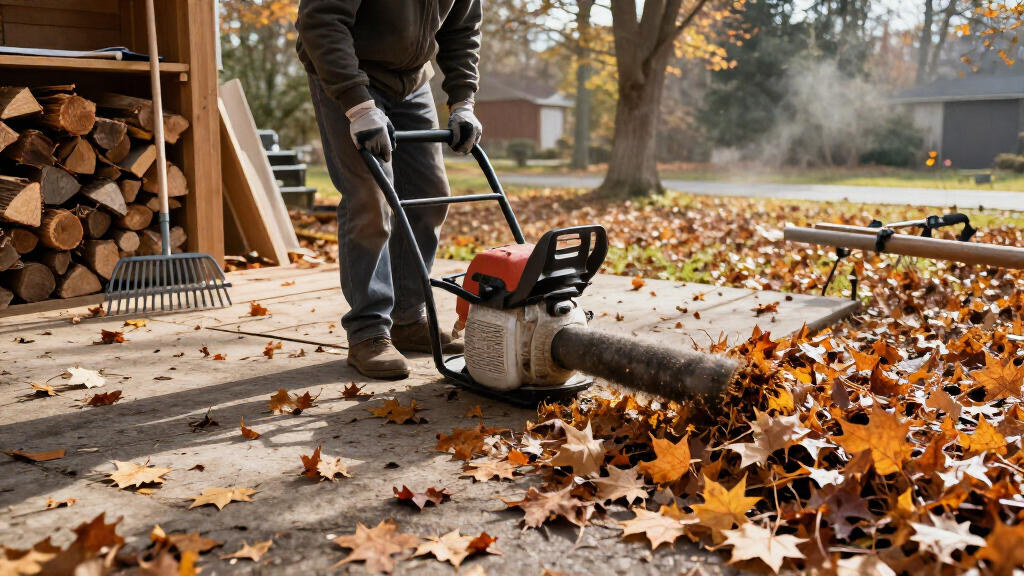
I compared the 15 listings around the factors that change the buying decision: blower format, stated engine size, airflow, air speed, and intended workload. I gave weight to practical fit, too: a backpack can make extended clearing more manageable, while a handheld may be easier to store and steer around small spaces. Models with added vacuum or mulching functions were judged for their extra versatility, not as direct substitutes for high-output backpack blowers.
The ranking favors models with a clear role and useful, internally consistent specification details, while distinguishing established-brand options from listings that provide fewer ownership details in the product name. The Husqvarna 350BT leads as a balanced choice; the 580BTS ranks for demanding output rather than broad everyday fit. Similar 63-cc models are separated by their stated performance and clarity, while compact handhelds rank for convenience and specialized cleanup rather than raw coverage. Specifications are listing claims, not a guarantee of real-world results, so I also account for the tradeoffs buyers should verify before purchase.
| gas powered leaf blower | Power source | Form factor |
|---|---|---|
| Husqvarna 350BT Gas Backpack L | Gas powered | Backpack |
| 63cc Gas Backpack Leaf Blower | Gas powered | Backpack |
| Husqvarna 580BTS Gas Backpack | Gasoline powered | Backpack |
| VEVOR 63CC Gas Backpack Leaf B | Gas powered | Backpack |
| PROYAMA 72CC Gas Backpack Leaf | Gas powered | Backpack |
| HTK Gas Backpack Leaf Blower | Gas powered | Backpack |
| PROYAMA 29CC Gas Powered Handh | Gas powered | Handheld |
| 26cc Gas Leaf Blower | Gas powered | Handheld |
| 28 CC Gas Leaf Blower | Fuel powered | Handheld |
| Husqvarna 150BT Gas Backpack L | Gas powered | Backpack |
| 63CC Backpack Leaf Blower | Gas powered | Backpack |
| Backpack Gas Powered Leaf Blow | Gas powered | Backpack |
| 52cc Gas Backpack Leaf Blower | Gas powered | Backpack |
| Husqvarna 125B Gas Leaf Blower | Gas powered | Handheld |
| 52CC Backpack Leaf Blower | Gas powered | Backpack |
Factors to Consider When Choosing Gas Powered Leaf Blowers
Choosing a gas blower is less about finding the biggest number and more about matching the machine to the work you repeat. I’d decide on the format and typical debris first, then check whether the published performance, carrying setup, and maintenance demands make sense for your property.
Choose a handheld or backpack around the length of the job
A handheld blower is usually easier to lift, store, and aim for short sessions around patios, steps, and smaller yards. A backpack shifts much of the machine’s weight onto a harness, which can feel more practical when clearing a larger area without frequent breaks. That doesn’t make every backpack comfortable: harness fit, vibration, controls, and total weight still matter. A common mistake is buying for occasional peak output and then resenting the bulk during routine cleanup. If possible, check the listed weight and carrying design, not just engine size. For work that takes a long time, comfort can matter more than a small difference in advertised airflow.
Read CFM and MPH as a pair
CFM describes the volume of air moved, while MPH describes its speed; neither figure alone predicts how quickly a yard will be cleared. Higher airflow can help move broad piles across open ground, while a forceful stream can help loosen leaves caught in corners or heavier debris. Look at both measurements and ask whether the listing explains how they were measured. Comparing numbers from different brands can mislead if test methods or nozzle configurations differ. Don’t treat an unusually high MPH claim as proof of superior overall performance. For a useful comparison, consider the air volume, the nozzle design, and the type of debris you face.
Match engine output to debris and property size
Small, dry leaves on a compact lot call for less sustained output than wet leaves, pine needles, or debris spread across a large property. Larger engines and higher-output backpack models may reduce the number of passes, but they bring more machine to carry, fuel, and maintain. Buying the largest engine for light cleanup can add weight and expense without improving your routine. At the other extreme, a compact handheld may become tiring if it must handle a long driveway and heavy seasonal leaf fall. Think through the hardest job you actually do, not an occasional worst-case scenario. That helps keep capacity and day-to-day usability in balance.
Treat gas ownership as part of the purchase
Gas blowers need fuel, routine engine care, and proper storage, so the purchase decision includes more than clearing power. Check the manual for the correct fuel mixture or fuel type, starting procedure, air-filter care, and seasonal storage steps before choosing a model. A two-cycle engine can require mixed fuel, and using the wrong mixture can cause problems that performance figures won’t reveal. Buyers who don’t want to keep fuel on hand or perform basic maintenance may prefer a different power source. Also check what comes with the blower and what needs separate purchase, such as protective gear or maintenance supplies. Planning for upkeep can prevent a capable machine from becoming an inconvenient one.
Check noise, vibration, and local rules before buying
Gas blowers can be loud, and the working environment matters as much as the machine’s power. Check local restrictions on blower type, operating hours, or noise before selecting a gas model; rules vary by location and may change. Hearing protection is a sensible part of operating a gas blower, and eye protection helps guard against dust and flying debris. Vibration and handle layout also affect how manageable a longer session feels, yet these details may not be captured by engine specifications. If you work near neighbors or in a noise-sensitive area, the strongest model may be a poor fit even if its output looks appealing. Compare the practical operating conditions with the work you need done.
Pay extra for a feature you will use, not a number on a label
A premium or high-output blower makes sense when it saves meaningful time on frequent, demanding work or provides a carrying setup you value. For occasional cleanup, a simpler handheld can be easier to store and handle, while a vacuum-and-mulcher attachment is useful only if you want to collect and reduce leaves rather than move them into piles. Consider the availability of service information, replacement parts, and warranty support alongside advertised engine power. Sparse product details make it harder to judge long-term ownership, even when the listed specifications appear competitive. Avoid paying for a feature set that duplicates tools you already own. The better fit is the one whose added capability solves a recurring task.
Frequently Asked Questions
Is a backpack gas blower worth choosing for a small yard?
It can be, but a backpack’s main advantage is carrying comfort during longer work, not a guaranteed improvement for every small-yard task. For brief sessions around a patio or driveway, a handheld is often easier to grab, aim, and store. A backpack may make more sense if the yard has heavy seasonal debris or you already know you prefer its harness style. Compare the machine’s weight and control layout, since backpack models still require handling and setup. If your cleanup is infrequent and light, avoid buying extra size you won’t use.
Should I choose a blower with the highest MPH number?
No: air speed is only one part of blower performance, and a high figure does not by itself show how much air the machine moves. Check CFM as well, then compare nozzle design and the kind of debris you need to clear. Published figures may come from different testing setups, so avoid treating small differences as a reliable head-to-head result. For broad piles, airflow volume can matter; for stuck debris, a concentrated stream may help. The best choice is a balance that fits your yard, not a single headline number.
How do I compare several 63-cc backpack blowers with similar airflow claims?
When engine size and stated CFM are close, look beyond those numbers. Compare the harness and back support, listed weight, controls, fuel capacity, warranty, parts access, and the clarity of the owner documentation. Check whether air speed and airflow are both provided and whether the listing explains the figures. Also verify the seller’s service and return terms before committing to a product with limited ownership information. A less familiar model can still fit your needs, but similar headline specifications don’t establish equal build quality or support.
Does a gas leaf blower that vacuums and mulches replace a dedicated blower?
Not necessarily. A combination tool can be useful when you want to collect leaves from beds or contained areas and reduce their volume for disposal or composting. Switching modes and handling a collection bag can take more effort than simply moving leaves into piles, so it may not suit fast clearing across a large lawn. Check what attachments are included and how the manufacturer describes the conversion process. If blowing is your main task, prioritize blower performance and comfort; choose the vacuum feature only if you’ll use it regularly.
What should I verify before buying a gas blower with limited product details?
Look for a complete manual, the exact engine and fuel requirements, product weight, warranty terms, and a clear path to replacement parts or service. Confirm whether accessories shown or mentioned are included, and check the return policy in case the fit or starting process does not suit you. Verify that performance numbers describe the same configuration you’ll use, including any nozzle. For a gas engine, unclear fuel guidance is a real ownership concern, not a minor missing detail. If essential specifications or support information remain unavailable, a better-documented model may be the safer choice.
Conclusion
For the broadest mix of capability and day-to-day fit, I’d start with the Husqvarna 350BT as best overall. Buyers prioritizing top listed backpack output should look at the Husqvarna 580BTS as the premium, heavy-work pick, while the 63-cc backpack models may offer value for buyers comparing strong stated airflow who are comfortable checking support and ownership details carefully. For beginners or anyone with a smaller property, a handheld model such as the Husqvarna 125B is a more approachable format than a large backpack blower. If leaf collection and volume reduction matter as much as blowing, the PROYAMA 29CC vacuum-and-mulcher is the specific-task choice. Match the machine to your usual workload, then confirm fit, fuel requirements, service support, and local rules before deciding.
Halloween Picks
halloween
As an affiliate, we earn on qualifying purchases.