TL;DR

Get business pricing on tools and workshop supplies
- Business-only prices and quantity discounts
- Tax-exempt purchasing
- Multiple users, one account, clear invoices
An Apartment Therapy writer said a light application of WD-40 around exterior window frames was followed by no visible spiderwebs for a month, including after heavy rain. That is a personal account, not controlled evidence that the method works for other homes or lasts a year; the report also advises keeping the spray off window glass.
Apartment Therapy writer Trisha Sprouse reported that spiderwebs did not return to her outdoor windows during the month after she applied a light coating of WD-40 around the frames. The account offers a household tip for people dealing with recurring webs, but it is one person’s test and does not establish that the method works reliably or lasts for a year.
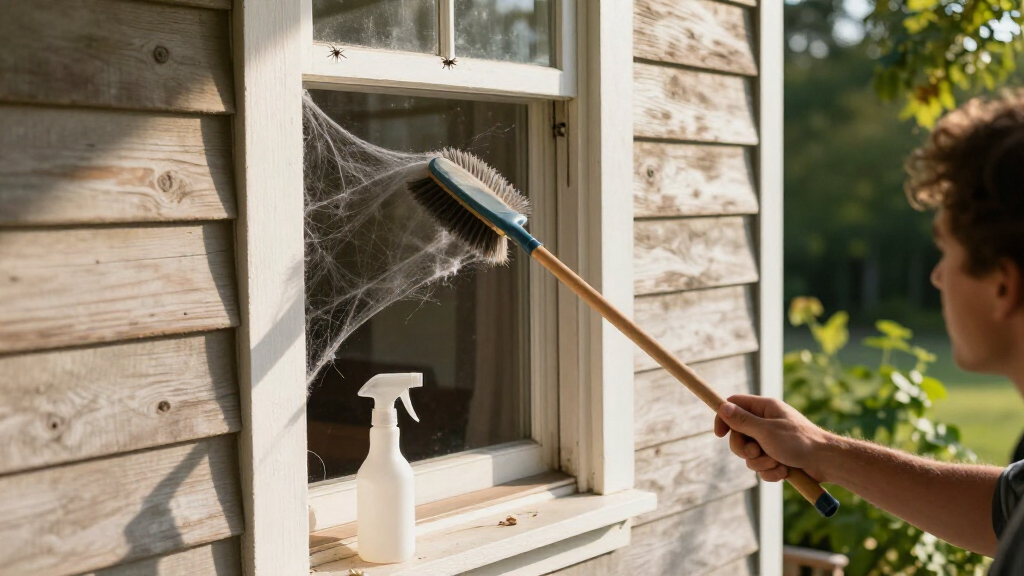
Sprouse said she first removed the existing webs and cleaned the windows. She then sprayed WD-40 around each window’s exterior perimeter, starting at the sill and covering the sides and top. She also applied a small amount in corners where spiders had gathered, while trying to keep the product off the glass so it would not look greasy. She let the coating dry without wiping it.
In her report, Sprouse said she saw no visible webs after a week and still saw none a month after applying the spray. She also noted that heavy rain had fallen in the meantime and said the coating appeared to have held up. These are observations from her home, not results from a controlled test or a comparison with untreated windows.
The article suggests that the product’s lubricating properties may leave a surface that is harder for spiders to use when building webs. Sprouse also speculated that its odor could deter them. The report does not provide evidence testing either explanation, nor does it establish that WD-40 repels other insects or prevents bees and wasps from nesting.
A Household Test, Not a Guarantee
Recurring webs can mean repeated cleaning, especially around exterior window corners and frames. Sprouse’s account gives readers a specific method and a result observed over one week and one month, but those time periods describe her experience only. They do not show how the approach performs on different window materials, in other climates, or where spider activity is heavier.
The distinction matters because the article’s headline promises a lasting fix, while its evidence is a single before-and-after account. A reader considering the tip should treat it as an anecdotal household experiment, not a proven pest-control treatment. The report does not supply independent testing, product-specific instructions for this use, or evidence supporting its suggestion that one application can last up to a year.
As an affiliate, we earn on qualifying purchases.
How the Window Treatment Was Applied
The original Apartment Therapy report describes the writer’s experience in an older home in Florida, where she said spiders repeatedly built webs around outdoor window panes. She wrote that cleaning the windows and removing the webs did not stop them from returning within days. That recurring problem prompted her to try the WD-40 approach.
The source’s instructions are to clean first, apply a light coating around the exterior frame and let it dry, while avoiding the glass. It does not describe a measured amount, a controlled test, or a comparison against other ways of reducing webs. Its claim that the product is weatherproof and may last up to a year is presented as the writer’s understanding, not as a finding established by the reported month of observation.
“After checking the windows for signs of spiderwebs and seeing none after a week, I was pleasantly surprised to see how effective it was.”
— Trisha Sprouse, Apartment Therapy writer
As an affiliate, we earn on qualifying purchases.
How Long the Effect May Last
The report does not say whether the result would be repeated in other homes, whether the treatment affects spiders beyond preventing visible webs, or whether the spiders moved elsewhere. It also provides no controlled comparison or independent confirmation of the proposed slick-surface or odor explanations.
Although Sprouse said the application appeared to withstand rain and suggested it could last up to a year, she reported observing the result for one month. The source does not establish a year-long effect. It also does not provide product-label guidance or assess possible effects on different frame finishes, nearby plants, pets, or other surfaces.
As an affiliate, we earn on qualifying purchases.
What Readers Can Verify at Home
The source describes no formal follow-up study or product testing. For now, the reported outcome remains limited to Sprouse’s windows and the month she observed them. Anyone considering the method should check the product label and test compatibility with the frame material in an inconspicuous area, keeping the spray off glass as the writer did.
Readers can track whether webs return after cleaning and application, including after rain, but that would still be an individual observation rather than proof of general effectiveness. The report offers no confirmed timetable for reapplication and no verified basis for treating WD-40 as a way to prevent other insects or nests.
As an affiliate, we earn on qualifying purchases.
Key Questions
What did the Apartment Therapy writer do?
She removed webs, cleaned the windows, then sprayed a light coating of WD-40 around the exterior frames and in some corners, avoiding the glass. She let it dry without wiping it.
How long did the writer say the windows stayed free of webs?
She reported seeing no visible webs after one week and still none after one month. The report does not verify that the effect lasts longer.
Does the report prove WD-40 keeps spiders away?
No. It is a first-person account from one home, without a controlled comparison or independent testing. The suggested explanations about lubrication and odor are not established by the account.
Should WD-40 be sprayed on the window glass?
The writer said she tried to keep it off the glass because she did not want a greasy appearance. The source does not provide broader product-use or surface-compatibility guidance, so readers should check the label and test materials carefully.
Source: rss
Halloween Picks
halloween
As an affiliate, we earn on qualifying purchases.