
TL;DR

Get business pricing on tools and workshop supplies
- Business-only prices and quantity discounts
- Tax-exempt purchasing
- Multiple users, one account, clear invoices
Moving firewood hurts your back more than splitting it because each piece gets lifted, carried and restacked several times. The best hauling setups let you split directly into a cart, trailer, pallet cage or bulk bag that travels to the stack as one unit, keeping work near waist height. Match the carrier to your terrain: two-wheel carts for flat ground, pneumatic tires for soft soil, powered carriers for hills, and container systems for big volumes.
You just split four face cords in an afternoon and your arms feel fine. Your lower back, meanwhile, has filed a formal complaint. That’s because the hardest part of processing firewood is often not splitting it — it’s repeatedly lifting, carrying, loading, unloading and stacking every single piece from the splitter to the pile.
Do the math and it gets ugly fast. A cord of seasoned hardwood weighs several thousand pounds, and a clumsy workflow puts your hands on each piece four, five, even six times: ground to splitter, splitter to ground, ground to wheelbarrow, wheelbarrow to pile, pile to arms, arms to hearth. Cut that to two touches and you’ve saved yourself thousands of pounds of cumulative lifting.
In this guide, you’ll learn how to design a hauling workflow that minimizes touches, keeps work near waist height, and matches your carrier to your actual terrain — not the terrain in the catalog photo. I’ll compare six proven setups, from a simple two-wheel cart to powered carriers and pallet-cage systems, plus the ergonomic habits and safety limits that keep you upright at the end of the day.
Reducing the number of handling cycles saves more effort than buying a faster splitter — aim for two touches per piece instead of five by splitting directly in…
Match the carrier to your terrain before anything else: two-wheel cart for flat ground, large pneumatic tires for soft soil, powered carriers or tractors for h…
Keep work near waist height with a splitter outfeed table or staging surface — wood that never hits the ground never has to be lifted back up.
Choose balanced loads and real braking over maximum capacity, and plan loads for green weight, which runs dramatically heavier than seasoned wood.
Position your stack where the loaded carrier can reach it directly, keep it on firm, level, raised supports with airflow, and never work beneath a raised load…
From Splitter to Stack: Firewood Hauling Setups That Save Your Back
Moving firewood hurts your back more than splitting it, because each piece gets lifted, carried and restacked several times. The best setups let you split directly into a carrier that travels to the stack as one unit — keeping work near waist height and matched to your real terrain.
The Workflow Change That Beats a Faster Splitter
Every time a piece of wood changes hands or containers, you pay for it in lifting. Eliminating entire handling cycles saves more effort than upgrading your splitter ever will. The classic backyard mistake: pieces fall to the grass, get bent-for into a wheelbarrow, wheeled over, then bent-for again to stack.
Most touches start with a deep bend. Across a cord, that is thousands of pounds of cumulative lifting from ground level.
Same wood, same splitter — half the work and a fraction of the bending. A staging table prevents hundreds of deep bends per session; wood that never hits the ground never gets picked back up.
Match the Carrier to Your Terrain — Not the Catalog Photo
Walk your route with a critical eye before you spend a dollar. Time yourself. Note where mud pools in spring, where the gate pinches a wide wagon, where the grade steepens. That ten-minute walk tells you more than any spec sheet — and remember: the empty return route matters too.
Two-Wheel Garden Cart
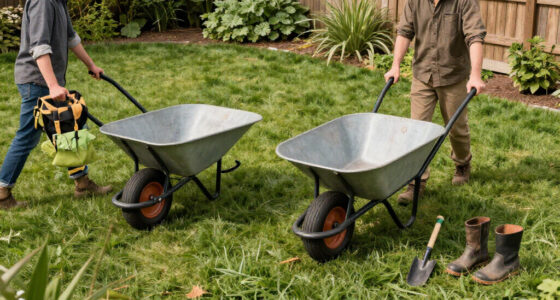
Best pick: a two-wheel cart or balanced firewood cart — cheap, simple, easy to steer, and it places less weight on the operator than a single-wheel wheelbarrow.
Pneumatic Tires & Clearance
Large pneumatic tires, wider wheels and high ground clearance cut rolling resistance dramatically across mud, roots and soft soil.
Powered Carrier or Tractor
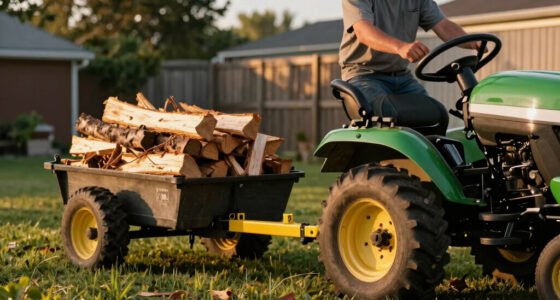
Powered wheelbarrows, tracked carriers, garden tractors, ATVs or compact utility vehicles give braking and control you can’t get with muscle alone.
Trailer / Pallet / Bulk Bag
For long hauls and big batches, a small trailer, pallet system or bulk bag saves the most labor per trip — fill once, tow once.
Narrow Cart, Non-Marking Tires
Fits through doors and cuts trips to the hearth — but keep loads small enough to stay in control on thresholds and corners.
Design Workflow First
Field guidance is blunt: design the workflow before choosing the equipment — never the other way around. Plan loads for green weight, which runs dramatically heavier than seasoned wood.
Ergonomics That Protect What Equipment Can’t
No cart or carrier protects your back if your lifting technique is bad — the equipment reduces the number of lifts; your technique determines how much each one costs you.
Keep work at waist height
A splitter outfeed table or staging surface means pieces are slid or placed — never lifted from ground level. Wood that never hits the ground never has to be picked back up.
Favor balanced loads over maximum capacity
A big cart is useless if it’s hard to start, stop, steer or dump. Keep loads low and centered; avoid side-slope travel.
Treat every slope as a braking problem
Going downhill with a heavy load is more dangerous than pulling it uphill. Powered carriers need real brakes, low gearing and adequate traction.
Build storage around access
Position stacks where a loaded carrier can reach them directly, on firm, level, raised supports with airflow. Never work beneath a raised load.
“A cord of seasoned hardwood weighs several thousand pounds. Cut your handling from five touches to two, and you’ve spared your back thousands of pounds of cumulative lifting.”
Key Insight · Cumulative LoadWorking-height spectrum — target the waist zone for splitting, catching and stacking
Six Hauling Setups Compared
Ranked roughly by volume capacity, from a simple two-wheel cart to conveyor-assisted systems. The right choice depends on your route, your volume, and whether you have machinery.
| Setup | Best For | Main Limitation | Handling Advantage |
|---|---|---|---|
| Splitter-to-cart · two-wheel cart beside outfeed | Small properties, level paths, moderate quantities | Wood still gets ~ individually stacked | ✓ 2 touches, lowest cost, no machinery needed |
| Splitter-to-trailer · low-deck, towed by tractor/ATV | Longer routes, larger batches | Towing vehicle and braking must ~ match terrain | ✓ Deck height close to stacking zone; tipping bed |
| Pallet cage / IBC tote | Minimal handling, measured-batch seasoning | Requires ✗ forks or tractor rated for full load | ✓ Fill once, move mechanically, season in place |
| Bulk-bag system · ventilated firewood bags | Farms with loaders or rated lifting attachments | ✗ Useless without machinery; loops need inspection | ✓ Theoretical minimum of touches per piece |
| Powered wheelbarrow / tracked carrier | Hills, woodland paths, no-tractor properties | Cost, battery range or fuel, ~ braking, maintenance | ✓ Control on slopes muscle alone can’t provide |
| Conveyor-assisted | High-volume processing into trailers or bins | ✗ Expensive; needs guarding and a receiving plan | ✓ Continuous flow — near-zero manual carrying |
Pallet cages and modified IBC totes are the fastest-growing trend — split directly into a vented unit, move it by forklift, season the wood in place. But former chemical containers should not be converted without knowing their full history, and any modified container needs a stable base and real ventilation.
Map Your Route First: Why the Best Setup Depends on Your Ground
The right firewood hauling setup is the one matched to your actual route — distance, slope, surface, gates and turning space — not the one with the biggest capacity. A cart that glides across a flat driveway can be downright dangerous on a steep woodland trail, and a heavy trailer that saves labor on the far side of the property becomes a liability the moment it has to descend a wet grade.
So before you spend a dollar, walk your route with a critical eye. Time yourself. Note where the mud pools in spring, where the gate pinches a wide wagon, where the grade steepens enough that a loaded cart wants to roll faster than you do. That ten-minute walk will tell you more than any spec sheet.
- Short, level routes: a two-wheel garden cart or balanced firewood cart — cheap, simple, easy to steer.
- Rough or soft ground: large pneumatic tires, wider wheels and high ground clearance cut rolling resistance dramatically.
- Hills: a powered wheelbarrow, tracked carrier, garden tractor, ATV or compact utility vehicle gives you control you can’t get with muscle alone.
- Long distances or big volumes: a small trailer, pallet system or bulk bag saves the most labor per trip.
- Indoor delivery: a narrow cart with non-marking tires fits doors and cuts trips — keep loads small enough to control.
Here’s the part people forget: the return route matters too. You’ll travel it empty every time, but if your empty cart can’t get back past a tight corner or a stack you just built, your clever system dies on trip two. Outdoor Pro Masters’ field guidance is blunt on this point — design the workflow before choosing the equipment, never the other way around.
Going downhill with a heavy load is more dangerous than pulling it uphill. Treat every slope as a braking problem first.
firewood cart with pneumatic tires
As an affiliate, we earn on qualifying purchases.
As an affiliate, we earn on qualifying purchases.
Count Your Touches: The Workflow Change That Beats a Faster Splitter
Every time a piece of wood changes hands or containers, you pay for it in lifting. The single biggest labor saving in firewood processing comes from reducing handling cycles — eliminating entire lifting steps — and that usually saves more effort than upgrading to a faster splitter ever will.
Picture the classic backyard mistake. The splitter sits in the middle of the yard, pieces fall onto the grass, and you bend down to gather them into a wheelbarrow, wheel them over, then bend again to stack. Each piece gets touched four or five times, and most of those touches start with a deep bend from ground level. Now picture the fix: park a two-wheel cart right beside the splitter’s outfeed, catch each finished piece at waist height, wheel the full cart to a rack positioned where the cart can pull alongside, and stack from cart to rack. Two touches. Same wood, same splitter, half the work and a fraction of the bending.
The waist-height rule is the other half of the equation. A sturdy sorting or staging table beside the splitter prevents hundreds of deep bends over a long session. Splitter trays and work tables keep pieces from ever hitting the ground in the first place — and wood that never lands on the ground never has to be picked back up.
One honest caveat: even the perfect workflow still ends with individual stacking unless you go to a containerized system. That final stacking step is where the bigger setups in the next section earn their keep.
As an affiliate, we earn on qualifying purchases.
6 Hauling Setups Compared: Which One Fits Your Property
There are six proven firewood hauling setups, ranked roughly by volume capacity: splitter-to-cart, splitter-to-trailer, pallet cages, bulk bags, powered carriers and conveyors. The right choice depends on your route, your volume and whether you have machinery — here’s how they stack up side by side.
| Setup | Best For | Main Limitation |
|---|---|---|
| Splitter-to-cart (two-wheel cart beside outfeed) | Small properties, level paths, moderate quantities | Wood still gets individually stacked |
| Splitter-to-trailer (low-deck, towed by tractor/ATV) | Longer routes, larger batches | Towing vehicle and braking must match terrain |
| Pallet cage / IBC tote system | Minimal handling, measured-batch seasoning | Requires forks or tractor rated for full load |
| Bulk-bag system (ventilated firewood bags) | Farms with loaders or rated lifting attachments | Useless without machinery; loops need inspection |
| Powered wheelbarrow / tracked carrier | Hills, woodland paths, no-tractor properties | Cost, battery range or fuel, braking, maintenance |
| Conveyor-assisted | High-volume processing into trailers or bins | Expensive; needs guarding and a real receiving plan |
A word on the container systems, because they’re the fastest-growing trend: a pallet cage or modified IBC tote lets you split directly into a vented unit, move the whole thing by forklift, and season the wood in place. Fill once, move mechanically, store as a unit — that’s the theoretical minimum of touches. But be careful with repurposed totes: former chemical containers should not be converted without knowing their full history, and any modified container needs a stable base and real ventilation.
On the powered side, battery-powered carriers and compact electric utility vehicles have become genuinely practical for residential use — quiet, zero exhaust at the stack, simpler than small gas engines. Compare real-world range under load, not unloaded specs, and expect cold-weather performance to fall short of the brochure. On firm ground, wheeled models are usually quicker; tracks win on soft, rutted terrain.
As an affiliate, we earn on qualifying purchases.
Buy Wheels and Balance, Not Just Capacity: What Makes a Cart Back-Friendly
A firewood cart helps your back when it’s balanced and easy to control fully loaded — not when it simply holds the most cubic feet. Overloaded carts that you can barely start, steer or stop defeat the entire purpose, which is why a balanced load beats maximum capacity every time.
Start with wheel count. Two-wheel carts carry more of the load themselves and place less weight on you than a single-wheel wheelbarrow, which demands constant balancing effort. Four-wheel wagons support the full load entirely but need more room to turn — fine on an open lane, miserable on a narrow side path. Then look at tire size: large pneumatic tires roll over roots, gravel and soft soil where small hard wheels bog down and stall. Yes, pneumatics need pressure checks and can puncture; flat-free tires trade a little cushion for zero maintenance. On rough ground, that trade usually pays.
Consider a realistic scenario. You’re hauling green oak up a gravel path with a slight grade. Green wood is considerably heavier than seasoned — plan loads for the green weight, not the dry weight. A cart rated generously for seasoned softwood can become a runaway anchor when you fill it with fresh green hardwood and point it downhill. That’s why loaded weight, wheel size and braking matter more than advertised volume. Several controlled trips beat one exhausting epic every single time.
- Choose pneumatic tires at least 15–16 inches for anything off pavement.
- Look for removable sides or a tipping bed — unloading without lifting is half the battle.
- Keep loads low and centered; a low center of gravity improves stability on every surface.
- Reduce load size whenever the surface is wet, icy, uneven or steep.
As an affiliate, we earn on qualifying purchases.
Small Tools That Kill the Bending: Tongs, Pickaroons and Splitter Tables
The cheapest back-savers in firewood aren’t machines — they’re the hand tools and work-surface accessories that keep you from bending to the ground hundreds of times per session. A $30 pickaroon can prevent more fatigue than a $300 cart upgrade, because it attacks the single worst motion in the whole process: the deep, repeated bend.
A pickaroon or hookaroon lets you hook a split piece and pull it toward you without stooping — sliding it across the splitter table or dragging it to the cart instead of picking it up. Long-handled timber tongs do the same for individual rounds, letting you lift with your legs and the tool’s leverage rather than your lumbar spine. Add a splitter outfeed table or log tray, and pieces land on a surface at working height instead of the dirt.
The learning curve is real, though. These are sharp, pointed tools, and they require practice and clear space — keep points away from your feet and any bystanders, and wear non-slip gloves and boots with real traction. An accessory worth its weight:
- Pickaroon/hookaroon — pull and position pieces without bending.
- Long-handled timber tongs — move rounds with leverage, not your spine.
- Splitter tray or outfeed table — catch pieces at waist height.
- Removable cart sides and tailgate ramps — slide wood out instead of lifting it out.
- Wheel chocks and trailer stabilizers — a parked trailer that shifts mid-unload is a hand injury waiting to happen.
- Log arch — move big logs to the splitter before processing, when they’re at their heaviest.
The principle behind all of it: raise the work rather than repeatedly reaching down to it. Every piece you slide, roll or hook is a piece you don’t lift.
Lift Like It’s Your Job: Ergonomics That Protect What Equipment Can’t
No cart or carrier protects your back if your lifting technique is bad — the equipment reduces the number of lifts, and your technique determines what each of the remaining lifts costs you. Both matter, and only one of them is free.
The core rules are old because they work. Keep the load close to your body. Bend at the hips and knees instead of rounding your lower back. Never lift and twist at the same time — turn with your feet, not your spine. Alternate sides and tasks instead of repeating the same motion for three straight hours, and take short breaks before fatigue quietly rewrites your form into something dangerous.
- Keep loads close — hold wood against your body, not at arm’s length.
- Hinge, don’t round — hips and knees do the lowering, spine stays neutral.
- Turn with your feet — lift and twist together is the classic back injury recipe.
- Alternate sides and tasks — switch carrying shoulders and split up the stacking.
- Slide or roll heavy rounds whenever the ground allows.
- Stop before you’re tired — technique degrades quietly under fatigue.
- Get help or use machinery when a piece can’t be handled smoothly.
Two load-planning rules complete the picture. Separate oversized pieces instead of mixing them into routine loads — one 60-pound gnarly round hiding among normal splits ruins your balance and your rhythm. And remember that green wood is dramatically heavier than seasoned: a quantity you’ve hauled dry all winter may be 30–50% heavier fresh-cut, depending on species and moisture. Estimate conservatively and trust equipment ratings, not visual judgment.
Where You Stack Matters: Build Storage Around Access (and Don’t Skip the Safety Rules)
Your wood stack should be placed where a loaded cart or trailer can reach it without tight turns or awkward carrying — positioning the pile is a hauling decision, not just a storage decision. A stack you built ten feet from the nearest wheel path costs you ten feet of arm-carrying on every single piece, forever.
Start with a stable base: firm, level ground with pallets, runners or a rack keeping the wood off the soil. Ground contact wicks moisture and invites rot, so airflow under and around the pile is non-negotiable for seasoning. Cover the top against rain, but never seal the sides — a tarp wrapped tight traps moisture and undoes everything your drying time was supposed to accomplish. Firewood dries best when raised, exposed to airflow, and protected mainly from rain falling from above.
Now the safety rules, because firewood storage has real hazards. Stack only as high as the base and the piece shapes allow — tall, narrow stacks with irregular pieces are collapse candidates, and end supports need to resist real outward pressure. Keep wood away from ignition sources and follow local guidance on clearance from buildings, especially in wildfire-prone regions. Never carry passengers in utility trailers or loader buckets. Never work beneath a raised bed, bucket or palletized load unless it’s held by an approved mechanical support — a hydraulic resting position is not a safety device. And keep hands clear of dumping gates and pivot points; a tipped trailer bed closing on a hand is one of the most common equipment injuries in this work.
If your hauling involves powered equipment on slopes, treat rated payload as only one constraint: tongue weight, hitch rating, tire pressure, axle capacity and — above all — braking ability on the actual grade all have to line up. A lightweight lawn tractor that tows a trailer fine on flat ground can be overwhelmed by the same trailer on a steep descent.
The Mistakes That Cost You: 7 Errors That Undo a Good Setup
Most firewood hauling injuries and frustrations trace back to a short list of predictable mistakes — avoiding these seven will put you ahead of nearly everyone hauling wood this season. None of them require bad luck, just a busy afternoon and a shortcut.
- Choosing a carrier by volume, not loaded weight. The cart that “holds three face cords” doesn’t mention that you can’t stop it on a grade when full of green oak.
- Small wheels on soft ground. Narrow, hard wheels sink into soft soil and turn a five-minute trip into a twenty-minute wrestling match.
- Parking the splitter where pieces fall to the ground. Every piece that lands on the dirt is a deep bend you scheduled for yourself.
- Building stacks where vehicles can’t approach. The prettiest corner of the yard is worthless if the cart can’t get within three feet of it.
- Pulling an unbraked heavy trailer downhill. The descent, not the climb, is where loaded trailers get away from people.
- Assuming a loader’s max rating applies at full height and reach. Lift capacity drops as the load moves out and up — check the load chart, not the brochure number.
- Making one exhausting trip instead of several controlled ones. Overloading “to save a trip” is how backs and equipment both fail.
The pattern is consistent: every mistake optimizes for one trip at the expense of the hundred that follow. Firewood work rewards the boring, controlled, repetitive approach — and punishes the heroic single effort.
Frequently Asked Questions
What is the easiest way to move firewood without hurting my back?
Split directly into a well-balanced cart, low trailer or movable container positioned beside the splitter’s outfeed. Keep the receiving surface near waist height so pieces are placed rather than lifted from the ground, and locate the final stack where the carrier can pull right up alongside it. This typically cuts your touches per piece from four or five down to two.
Is a two-wheel cart better than a wheelbarrow for firewood?
Usually, yes. Two wheels carry more of the load themselves and require far less balancing effort than a single-wheel wheelbarrow, which constantly loads your arms and core. A wheelbarrow may still win on very narrow paths where two wheels won’t fit, but it demands more strength and control — especially loaded and on any grade.
Can I haul firewood with a lawn tractor?
Possibly, if the tractor, hitch, trailer, terrain and load are all within their ratings. The danger zone is steep slopes: a lightweight lawn tractor that tows a trailer easily on flat ground can be overwhelmed by the same loaded trailer on a descent, particularly if the trailer has no brakes. Keep loads conservative, and remember the towing vehicle must start, steer and stop the load on your actual terrain, not on paper.
How much does a load of firewood actually weigh?
It varies widely by species, moisture content and volume, but the totals are always sobering — a nominal cord of seasoned hardwood weighs several thousand pounds. Green hardwood is considerably heavier than seasoned wood of the same volume. Estimate conservatively, use equipment payload ratings rather than visual judgment, and plan loads for the green weight if you’re hauling fresh-cut wood.
Are battery-powered wheelbarrows and carriers worth it?
For residential use, increasingly yes. They’re quiet, produce no exhaust at the stack, and are simpler to operate than small gas engines. Their limits are battery runtime, cold-weather performance, payload and replacement-battery cost — so compare real-world range under load, not unloaded specs. Wheeled models are typically faster on firm ground; tracked versions win on soft or rutted terrain.
Which single upgrade gives the best value for a homeowner?
For most homeowners, the best first upgrades are larger wheels, a balanced two-wheel cart and a raised splitter outfeed table. Those three changes attack the deepest and most frequent bends in the process for a modest total cost. For larger operations, eliminating loose handling entirely through trailers, pallet cages or bulk bags usually produces the greatest labor savings of all.
Conclusion
Here’s the whole article in one line: stop asking how to move firewood faster and start asking how many times you touch each piece. Count your touches on your next session. If the answer is more than two, you’ve found the cheapest upgrade available — not a bigger machine, but a better-placed cart, a waist-height table and a stack your carrier can reach.
Your splitter will happily make all the pieces you need. It’s the stretch between the splitter and the stack that decides whether you finish the season processing wood or rehabbing a back. Build the workflow first, then let the equipment follow it — and let the wheels carry the several thousand pounds your spine was never designed to.
Fall yard work Picks
leaf blowers
As an affiliate, we earn on qualifying purchases.