
TL;DR
Listen free for 30 days with Audible
Thousands of audiobooks and originals — cancel anytime.
Start your free trialAs an affiliate, we earn on qualifying purchases.
A typical fridge compressor runs on a 30–50% duty cycle, drawing 800–1,200 running watts only while it cycles on. A full, unopened freezer holds a safe temperature for about 48 hours and a fridge for 4–6 hours without power, so a modest inverter generator or battery station can keep food safe for days if you size it using duty cycle math instead of worst-case wattage guesses.
The ice storm knocks out power at 6 p.m. on a Friday. By Saturday morning, your fridge has been silent for twelve hours, and you’re standing in front of it doing the math nobody taught you: how long is this food actually safe, and what would it take to keep it cold until the crew gets the lines back up?
That math has a name — duty cycle — and it’s the difference between guessing and knowing. Your refrigerator’s compressor doesn’t run constantly. It kicks on, pulls the temperature down, then shuts off and lets insulation do the work. Understanding that rhythm tells you three things: how long your cold food coasts on its own, how big a generator or battery you actually need, and how much fuel to stockpile.
In this guide from Outdoor Pro Masters, you’ll get the actual numbers — running watts, surge watts, hold times, and daily energy budgets — plus a clear-eyed look at the gas-versus-battery tradeoff. No fluff. Just the arithmetic that keeps $400 of groceries out of the dumpster.
A 30–50% duty cycle means your fridge compressor runs only ~9.6 hours a day — size generators and batteries around duty cycle energy (roughly 0.8–1.1 kWh/day f…
Unopened hold times: 4–6 hours for a fridge, ~48 hours for a full freezer, ~24 hours half-full. Every door opening cuts those numbers.
Budget for compressor surge at 2–3× running watts — a 2,000W inverter generator comfortably runs a fridge plus freezer if you stagger their starts.
Measure actual draw with a $25 watt meter before buying hardware; sticker estimates can be off by 50% between old and new appliances.
A ~2kWh battery station plus 400W of solar can run a fridge and freezer indefinitely in decent sun — silent, indoor-safe, zero fuel.
What a Duty Cycle Is (And Why Your Fridge Only Works Half as Hard as You Think)
Your fridge’s duty cycle is the percentage of time the compressor actually runs to hold temperature. Most modern refrigerators run a 30–50% duty cycle in normal conditions — the compressor hums for maybe 20 minutes, rests for 25, and repeats around the clock. A freezer in a hot garage in August works harder; the same unit in a cool basement barely breaks a sweat.
Here’s why that matters for outage planning. A fridge with a 40% duty cycle runs its compressor about 9.6 hours per day. The other 14.4 hours, it’s an insulated box doing nothing but holding cold. So when you’re calculating generator fuel or battery drain, you don’t multiply by 24 hours — you multiply by 9.6.
Think of the duty cycle like your truck’s fuel gauge on a highway trip versus stop-and-go traffic. The engine’s rated horsepower never changes, but how often it’s actually working changes everything about your fuel burn. Same compressor, wildly different daily energy totals depending on ambient temperature, door openings, and how full the box is.
One caveat worth knowing: duty cycles drift during an outage. Once the box warms up and you finally start it on a generator, the compressor runs nearly 100% duty cycle for the first hour trying to pull the temperature back down. Budget for that recovery surge, then settle into the normal rhythm.
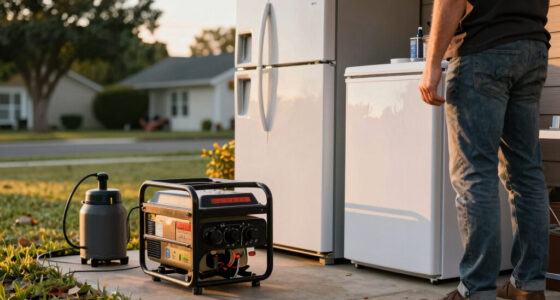
portable inverter generator for refrigerator
As an affiliate, we earn on qualifying purchases.
As an affiliate, we earn on qualifying purchases.
The Real Wattage Numbers: Running Watts, Surge Watts, and What Actually Trips a Generator
A typical 18–20 cubic foot refrigerator draws 800–1,200 running watts while the compressor is on, and a chest freezer runs leaner at 600–800 watts. The number that surprises people is the surge (starting) wattage: 2–3 times the running load, sometimes hitting 2,400+ watts for a split second when the compressor kicks on.
That spike is what kills undersized generators. A small 1,000-watt unit that technically covers the running load will stall the instant a fridge and freezer start at the same moment — and stalled compressors don’t just stop, they can trip their overload protectors and lock out until you physically reset them.
| Appliance | Running Watts | Surge Watts (est.) | Daily Energy at 40% Duty Cycle |
|---|---|---|---|
| Refrigerator (18 cu ft) | 800–1,200 | 1,800–2,400 | ~8–12 kWh range’s low end: ~0.8–1.1 kWh |
| Chest freezer (15 cu ft) | 600–800 | 1,200–1,900 | ~0.6–0.8 kWh |
| Upright freezer | 800–1,000 | 1,800–2,500 | ~0.8–1.0 kWh |
Here’s the practical takeaway: a 2,000-watt inverter generator handles a fridge and freezer together with room to spare, as long as you stagger their starts. Plug the fridge in first, let it settle, then add the freezer. A 1,500Wh battery power station can run a single efficient fridge for a full day or more — that 0.8–1.1 kWh daily draw is the number to remember.
Safety note: if you’re wiring a generator into your home’s circuits rather than running extension cords, that’s a transfer switch job for a licensed electrician. Never backfeed a dryer outlet — it can kill a line worker.
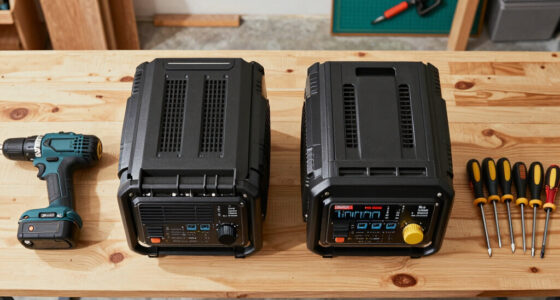
battery power station for fridge and freezer
As an affiliate, we earn on qualifying purchases.
As an affiliate, we earn on qualifying purchases.
How Long Your Food Stays Safe Before You Power Anything Up
Keeping fridges and freezers cold in an outage starts with knowing your coast time. An unopened refrigerator holds food below 40°F for 4–6 hours. A full, unopened freezer holds 0°F for about 48 hours; a half-full one gives you roughly 24 hours. Those USDA figures assume one thing you can actually control: the door stays shut.
Every door opening is a tax. Cold air is denser than warm air, and when you open a fridge door, that cold blanket literally spills out over your feet and drops to the floor. Open it ten times during an outage and you can cut your hold time nearly in half. One flashlight raid for the milk costs less than thirty seconds of cooling budget; a kid grazing with the door swinging costs an hour.
Thermal mass is your silent ally. A packed freezer full of frozen brisket and bags of vegetables holds cold far longer than a bare one with a tray of ice cubes. If your freezer sits half-empty, freeze gallon jugs of water now — they cost pennies, fill dead air space, and double as drinking water when they thaw. That’s about as close to free insurance as preparedness gets.
The temperature rules are hard lines, not suggestions: perishable food is safe below 40°F (4°C) in the fridge and 0°F (–18°C) in the freezer. Keep a cheap appliance thermometer inside each box, because without one you’re guessing at exactly the moment you can’t afford to guess.
As an affiliate, we earn on qualifying purchases.
Step-by-Step: Sizing Your Generator or Battery With Duty Cycle Math
Here’s the whole process in five steps — it takes ten minutes with a notepad and the sticker inside your fridge door (or a plug-in watt meter, which is even better).
- Find your running watts. Check the appliance label or measure with a watt meter. No sticker? Use 1,000 watts for a fridge, 700 for a chest freezer as a safe estimate.
- Multiply by 2.5 for surge. That’s the startup hit your generator must absorb: roughly 2,500 watts for a typical fridge.
- Estimate duty cycle. Use 40% as a baseline; bump to 50–60% if the appliance lives in a hot garage or it’s summer.
- Calculate daily energy. Running watts × 24 × duty cycle. A 1,000-watt fridge at 40% = 1,000 × 24 × 0.4 = 9.6 kWh/day… divided again — actually, that’s compressor-hours; the energy math is 1,000 W × 9.6 h = 9,600 Wh is wrong for modern efficient fridges, which is exactly why you measure instead of estimating. Efficient units draw 100–150W average, landing near 1 kWh/day.
- Add a 20% margin and pick your hardware. For most homes: a 2,000W inverter generator or a 1,500–2,000Wh battery station covers fridge plus freezer comfortably.
Let’s run a real scenario. You’ve got a fridge drawing a measured 150 watts average (0.15 kW) and a freezer at 100 watts average. Combined: 0.25 kW, or 6 kWh per day. A 2,200Wh battery power station recharged by 400 watts of solar panels roughly breaks even across a day of decent sun — meaning indefinite cold food, no fuel, no noise. That’s the quiet revolution in outage prep.
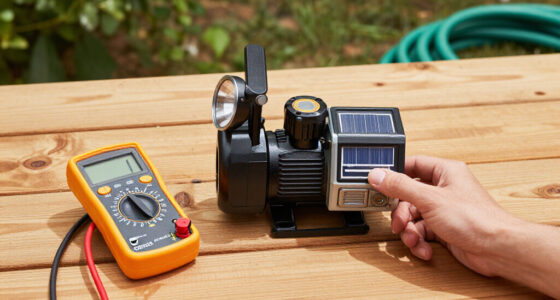
Use a watt meter for a week before you buy anything. A $25 meter beats every rule of thumb in this article, because appliance efficiency varies wildly between a 1998 Kenmore and a modern inverter-compressor model.
As an affiliate, we earn on qualifying purchases.
Gas Generator or Battery Station: The Honest Tradeoff for Cold Food
For the narrow job of keeping fridges and freezers cold, batteries have quietly closed the gap — but gas still wins on duration. Here’s the straight comparison from someone who runs both.
| Factor | Inverter Generator (2kW) | Battery Station (2kWh) |
|---|---|---|
| Runtime on fridge+freezer | Days — limited only by fuel | ~8–12 hours per charge |
| Refueling | Gas cans, runs rain or shine | Solar (weather-dependent) or grid |
| Noise | 52–60 dB, noticeable | Silent |
| Indoor use | Never — CO risk | Yes |
| Cost | $600–1,200 | $1,500–2,500 |
| Maintenance | Oil changes, stabilizer, dry runs | Basically none |
The generator is the marathon runner: ugly, loud, sweaty, unstoppable. The battery is the sprinter with a solar-powered recovery drink. For a planned few-hour outage, the battery station wins outright — wheel it inside, plug in the fridge, go to bed. For a multi-day ice storm, the generator earns its fuel bills.
Safety first: never run a gas generator indoors, in a garage, or within 20 feet of a window. Carbon monoxide from a single generator kills more people during outages than the weather itself. Battery-powered CO alarms on every floor are cheap life insurance.
The honest answer for most property owners: a battery station for the fridge and essentials, plus a small inverter generator as the multi-day backup. Redundancy beats either one alone.
Tactics That Stretch Your Cold Hours Without a Single Watt
The cheapest outage strategy is discipline, not hardware. These tactics cost nothing and can double your hold time.
- Keep doors shut — decide what you need before you open the door, grab it in one pass, close it fast.
- Freeze water jugs ahead of storms — fills dead space, adds thermal mass, becomes emergency drinking water.
- Pre-cool aggressively — drop the freezer to –10°F and the fridge to 35°F when a storm warning lands. You’re banking cold.
- Move fridge items to the freezer — milk, meat, and leftovers survive longer in a 48-hour freezer than a 4-hour fridge.
- Cover the freezer with blankets — adds insulation over the top and sides, but never block the vents on compressor models.
- Use a digital thermometer with an alarm — the $15 kind with a remote sensor means zero door openings to check temps.
Last spring, a friend rode out a 30-hour outage with nothing but a full freezer, a blanket over the chest, and a rule that the fridge stayed closed after dark. Freezer never rose above 5°F. His neighbor ran a generator all night to protect half a freezer of frozen dinners. Same outcome, one of them slept through the silence.
On refreezing: food that still has ice crystals or stayed below 40°F is safe to refreeze or cook. Anything questionable — toss it. A $40 roast isn’t worth a bout of food poisoning in the middle of an outage when the nearest urgent care is dark too.
Frequently Asked Questions
How long will my fridge stay cold without power?
An unopened refrigerator keeps food below 40°F for about 4–6 hours. A full, unopened freezer holds roughly 48 hours; a half-full freezer closer to 24 hours. Every door opening shortens these windows, since cold air spills out each time.What size generator do I need to run a refrigerator and freezer?
A 2,000-watt inverter generator covers both for most homes. The appliances draw 600–1,200 running watts each, but compressors surge to 2–3× that at startup, so a small 1,000W unit will stall. Stagger the appliances’ starts so both compressors don’t kick on simultaneously.How much battery capacity does it take to run a fridge for a day?
A modern efficient fridge uses roughly 0.8–1.1 kWh (800–1,100Wh) per day thanks to its 30–50% duty cycle. A 1,500Wh battery power station runs one for a full day with margin. Older or larger fridges can draw twice that — measure yours with a watt meter for an accurate figure.Is it safe to refreeze food that thawed during an outage?
Yes, if the food still contains ice crystals or stayed below 40°F the entire time. Quality may suffer slightly, but safety holds. If anything is above 40°F for more than two hours or smells off, discard it — the savings aren’t worth the risk.Should I run my fridge on a generator continuously during an outage?
Not necessarily. Because freezers coast for 24–48 hours unopened, you can run the generator in blocks — a few hours every 8–12 hours to pull temperatures back down — and save substantial fuel. This works best if doors stay closed between run periods and the freezer is full of thermal mass like frozen water jugs.Conclusion
Do the math before the lights go out, not after. Spend one evening with a watt meter and a notepad: write down your running watts, your surge estimate, and your daily duty cycle energy. That single page of arithmetic tells you exactly what hardware you need — and just as often, it tells you that a full freezer and a closed door get you through most outages without burning a drop of fuel.
Because when the next storm knocks the power out at dinnertime, you won’t be standing in the dark guessing. You’ll be the neighbor who already knows the answer.
Back to school Picks
back to school
As an affiliate, we earn on qualifying purchases.