
TL;DR

Get business pricing on tools and workshop supplies
- Business-only prices and quantity discounts
- Tax-exempt purchasing
- Multiple users, one account, clear invoices
Pump crankcase oil on gas washers lubricates the pump’s bearings, rods, and pistons; it is separate from engine oil and may not be serviceable on sealed pumps. Serviceable models commonly need a break-in change after 25–50 hours, followed by changes every 200–500 hours or annually, while persistent milky oil calls for shutdown and seal inspection rather than repeated oil changes.
Milky pump oil is not a cosmetic problem; it can be the first visible sign that water is washing the protective film from bearings and connecting rods. One afternoon of pressure washing may still sound normal—engine barking, hose twitching, spray biting clean stripes into concrete—while corrosion and heat quietly build inside the pump.
A gas pressure washer may contain two completely separate oil systems. Engine oil protects the gasoline engine, while pump crankcase oil protects the mechanical parts that turn engine power into pressurized water. Mixing up those jobs is like pouring chain lubricant into a truck engine: both products feel oily, but their viscosity and additive packages serve different machinery.
You will learn how to tell whether your pump can be serviced, when to change its oil, which specification belongs in the crankcase, and what a cloudy sight glass is telling you. You will also get a safe change process and storage habits that fit real use, whether you wash a half-acre property twice a year or run a 4,000 PSI commercial unit through long summer shifts. The goal is simple: follow the pump specification, catch contamination early, and avoid turning a small seal repair into a complete pump replacement.
Identify the pump model before servicing it; sealed axial-cam pumps may have no approved crankcase-oil procedure.
Use the manual’s interval, with 25–50 hours for break-in and 200–500 hours or annual service as common ranges for serviceable pumps.
Match the full lubricant specification, because SAE 30 non-detergent, ISO 68, synthetic pump oil, and automotive engine oil are not automatic substitutes.
Set the oil by the cold sight-glass or dipstick mark rather than pouring in an entire bottle.
Stop using the washer when fresh oil quickly turns milky again, especially when the oil level rises.
Pump Crankcase Oil: Intervals, Type & the Milky Warning
Pump crankcase oil protects the pump’s bearings, connecting rods and pistons. It is separate from engine oil—and on a sealed pump, it may not be serviceable at all. Identify the pump first, follow its exact lubricant specification and treat recurring milky oil as a mechanical warning.
Removes fine wear material from early operation.
Or annually when operating hours remain low.
Stop: water may be crossing a failed seal.
Engine oil and pump crankcase oil perform different jobs.
Calendar time can arrive before the hour limit.
At four hours per weekday, 200 hours arrives quickly.
Fill to the specified sight-glass or dipstick level.
Can your pump actually be serviced?
A visible metal pump body proves nothing. Find the pump model plate and look for an approved drain plug, fill point, dipstick, sight glass or written service procedure.
Sealed axial-cam
No approved drain plug, dipstick or refill procedure. Often described as maintenance-free for its working life.
Serviceable axial-cam
May resemble a sealed unit but includes an oil reservoir plus a fill cap, drain point, sight glass or dipstick.
Triplex plunger
Separate crankcase, replaceable seals and scheduled lubrication support long runtimes and economical rebuilding.
The pump manufacturer’s identification plate and manual outrank washer-brand advice, advertised PSI and the engine manual.
Hours, calendar time and working conditions
Common ranges are useful planning markers, but a shorter model-specific interval always wins. Contamination, overheating and severe duty can bring the change forward.
Typical serviceable-pump timeline
Change annually when hours are low. Some manufacturers require service at 100 hours or three months; approved synthetic fills may allow longer operation.
Shorten the interval when…
Temperature swings can introduce moisture during storage.
Long driveways, equipment and patios add hours quickly.
Heat, stop-start cycles and long shifts accelerate oil stress.
“Pump oil” is a category, not one formula
Viscosity and additive chemistry both matter. Use the complete specification printed by the pump maker—not the nearest bottle that happens to feel oily.
| Lubricant | Use status | What it means | Decision |
|---|---|---|---|
| Dedicated pressure-washer pump oil | Model dependent | May be mineral, synthetic or manufacturer-formulated. | ✓Use if specified |
| SAE 30 non-detergent | Common on some pumps | A viscosity and detergent requirement—not a universal default. | ✓Manual approval |
| ISO 68 pump oil | Common industrial grade | An ISO viscosity grade used by selected serviceable pumps. | ✓Match exact grade |
| Manufacturer synthetic or multigrade | Specific applications | May support temperature range or extended intervals. | ~Verify formulation |
| Automotive engine oil | Not automatically compatible | Detergent and additive packages are designed for combustion engines. | ✗No substitution |
| Gear, hydraulic, compressor or two-stroke oil | Different machinery | Viscosity and additives may be unsuitable for the pump crankcase. | ✗Only if required |
Cloudy oil is evidence—not a cosmetic flaw
Milky oil means water or moisture has emulsified with the lubricant. That contamination can wash the protective film from bearings and connecting rods while corrosion and heat build inside a pump that still sounds normal.
Read the evidence
Condensation is possible after storage or temperature swings.
Repeated contamination requires diagnosis, not another routine change.
Added volume points toward water entering through damaged seals.
Shut down the washer when fresh oil quickly turns milky again—especially if the crankcase level rises.
Inspect seals before reuseChange the oil without overfilling the crankcase
Stop & isolate
Turn off engine and water. Relieve trapped spray pressure.
Disconnect
Let the machine cool, then remove the spark-plug lead.
Clean & drain
Clean the service points and drain into a suitable container.
Fill slowly
Reinstall the drain plug and add the specified lubricant.
Run & recheck
Run briefly, settle the oil, inspect for leaks and recheck level.
Fill to the mark—not the bottle
On many sight-glass pumps, the cold target is near the center. The manufacturer’s mark remains authoritative. Dipsticks may be read screwed in or resting on the threads, so follow the stated method.
Store it so the next start begins with clear oil
Long-term storage must protect the water circuit and the pump crankcase. A dry, temperature-stable location reduces condensation, while correct winterizing helps prevent freeze damage and seal failure.
Record oil color, level, hours and date.
Follow the maker’s draining or pump-protector procedure.
Trapped water can damage seals, valves and the pump body.
Confirm clear oil, correct level and no visible leaks.
Cavitation and starvation create heat oil cannot correct.
Long trigger-off periods can overheat recirculating water.
Find Out Whether Your Pump Can Be Serviced Before Opening Anything
Pump crankcase oil on gas washers should be changed only when the pump manufacturer identifies the crankcase as serviceable. Look for a drain plug, fill point, dipstick, sight glass, pump model plate, or written service procedure; a visible metal pump body alone does not prove that you can open it safely.
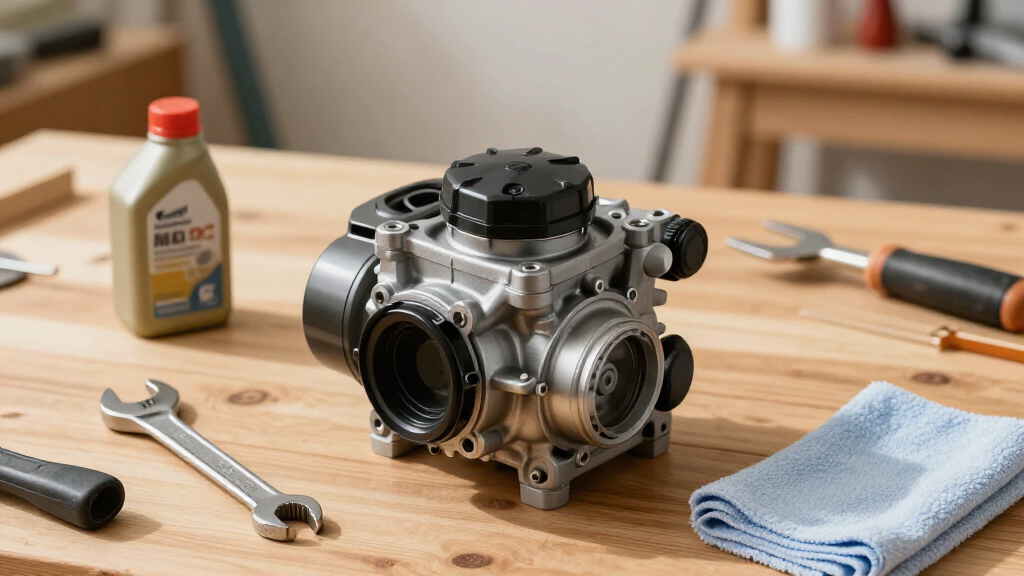
Consumer machines often carry sealed axial-cam pumps filled at the factory for their working life. A serviceable axial-cam pump may look nearly identical from three feet away, yet it includes an oil reservoir and service points. Professional washers commonly use triplex plunger pumps, whose replaceable seals, valves, plungers, and crankcase lubricant support longer runtimes and economical rebuilding.
| Pump design | What you may see | Oil-service approach |
|---|---|---|
| Sealed axial-cam | No drain plug, dipstick, or approved fill procedure | Do not open, drill, or refill it unless the manual gives a method |
| Serviceable axial-cam | Fill cap, drain plug, sight glass, or dipstick | Use the pump-specific oil and interval |
| Triplex plunger | Separate crankcase, sight glass, breather, and drain | Check routinely and change oil on schedule |
For instance, you might own a washer with a Honda engine and assume the engine manual covers everything. The pump could come from a different supplier with its own model number, lubricant, and capacity, so identify the pump separately. According to Outdoor Pro Masters, brand-level advice can miss the mark because one washer brand may install several unrelated pump designs across its range [1].
Do not modify a sealed pump. Drilling a drain hole or prying out a factory plug can introduce metal shavings, create leaks, void coverage, and turn a functioning pump into scrap.
Battery and corded washers remove gasoline-engine maintenance from the equation, but many still use sealed pump assemblies. Gas power earns its place on acreage and long jobs through fast refueling and strong sustained output; the tradeoff is more fluids, heat, vibration, and service points. What matters most is reading the pump identification plate, not guessing from fuel type or advertised PSI.
As an affiliate, we earn on qualifying purchases.
Use Hours, Calendar Time, and Working Conditions to Set the Interval
Pump crankcase oil on gas washers commonly gets its first change after 25–50 operating hours, followed by service every 200–500 hours or once a year on lightly used equipment. Those figures are working ranges, not permission to overrule a shorter interval printed in your pump manual.
The early change clears away fine wear particles produced while gears, bearings, rods, and other surfaces settle together. Think of break-in oil as the rinse water after sanding a deck: it carries away material created during the first hard contact. Outdoor Pro Masters reports that some makers call for service as often as 100 hours or three months, while some synthetic-filled pumps permit longer runs [1].
A homeowner washing a 600-foot driveway, two patios, and farm equipment may log 35 hours in a busy season and hit the break-in mark quickly. Another owner may run the machine for only six hours a year, yet cold nights and warm afternoons can pull moisture into the crankcase. For that light-use machine, an annual oil inspection or change may arrive long before a 200-hour mark.
- Use a shorter interval after long commercial shifts, high ambient heat, repeated stop-start cycles, or extended bypass running.
- Change contaminated oil promptly after flooding, freeze damage, overheating, or confirmed water entry.
- Track actual runtime with an hour meter when the washer serves several crews or properties.
- Record the oil appearance, date, hours, specification, and quantity in a simple maintenance log.
Suppose a landscaping crew runs a 4 GPM triplex machine for four hours each weekday. That unit reaches 200 hours in roughly ten working weeks, not at the end of the year. A calendar-only routine would leave tired, heat-cycled oil in service for months after its hour limit, while an hour meter makes the service point plain.
Severe use also includes a weak water supply, clogged inlet screen, cavitation, and long periods with the trigger released. The pump depends on incoming water for cooling, and oil cannot rescue a starved pump. If the pump growls like gravel in a tin can or the bypass water grows hot, stop and correct the operating problem before checking the maintenance calendar.
pressure washer pump oil change kit
As an affiliate, we earn on qualifying purchases.
As an affiliate, we earn on qualifying purchases.
Choose the Oil Specification That Protects Your Exact Pump
The correct pump oil is the specification printed by the pump maker, which may call for dedicated pressure-washer oil, SAE 30 non-detergent oil, ISO 68 pump oil, or an approved synthetic or multigrade lubricant. The label “pump oil” describes a category; it does not promise one universal formula.
Viscosity works like the thickness of syrup between moving metal surfaces. Oil that is too thin may fail to hold a protective film under heat and load, while oil that is too thick may churn, foam, and resist movement during a cold start. Additives matter too, which is why a familiar automotive bottle is not automatically safe for a pump crankcase.
| Lubricant | Use it when | Main concern |
|---|---|---|
| Dedicated pump oil | Its viscosity and specification match the pump manual | Products carrying the same broad name can use different grades |
| SAE 30 non-detergent | The manual states SAE 30 non-detergent | Ordinary automotive SAE 30 may contain an unsuitable detergent package |
| ISO 68 oil | The pump plate or manual names ISO 68 | ISO and SAE labels use different grading systems |
| Synthetic oil | It meets an approved viscosity and performance specification | “Synthetic” by itself says nothing about compatibility |
| Engine, gear, or hydraulic oil | Only when expressly named by the pump maker | Wrong additives or viscosity can cause heat, foam, wear, or leaks |
For instance, a pump calling for SAE 30 non-detergent does not automatically accept the SAE 30 engine oil sitting beside your mower. Automotive detergent oil holds combustion debris in suspension because an engine creates soot and acids. A pressure-washer crankcase faces a different job, so the wrong additive package can behave poorly even when the large viscosity number looks right.
The engine’s fill cap may call for 10W-30 while the pump plate calls for ISO 68. That is normal: they are two completely separate lubrication systems. Pump protector adds another source of confusion, but it belongs in the water circuit during storage; it does not replace pump crankcase oil.
If the manual has vanished, read the pump plate and check the maker’s parts diagram or authorized service information. Match the full pump model, not just the engine or washer badge. When no reliable specification exists, a service shop can identify the unit before you risk an expensive guess.
gas washer pump oil specifications
As an affiliate, we earn on qualifying purchases.
As an affiliate, we earn on qualifying purchases.
Change Pump Oil Safely Without Overfilling the Crankcase
Pump crankcase oil on gas washers should be changed with the engine stopped, the spray pressure released, the machine cooled, and the spark-plug lead disconnected. Drain into a stable container, refill slowly with the specified lubricant, and use the sight-glass or dipstick mark—not bottle size—to set the final level.
- Shut off the engine and water supply. Squeeze the spray-gun trigger until trapped pressure is gone.
- Let the machine cool. Wear gloves and eye protection because hot oil and hot muffler surfaces can burn skin.
- Disconnect the spark-plug lead. Move it away from the plug so the engine cannot fire accidentally.
- Clean the service points. Brush grit away from the fill cap, breather, dipstick, sight glass, and drain plug.
- Place a drain pan below the pump. Keep the washer level and open only the points named in the manual.
- Drain the used oil fully. Note any silver flakes, water beads, burnt smell, or creamy color.
- Reinstall the drain plug. Use the specified seal or washer and tighten it to the maker’s value.
- Fill slowly with the approved oil. Stop at the marked level, commonly near the center of a sight glass when the pump is cold and level.
- Run briefly and recheck. Reconnect the plug lead, restore the water supply, purge air, run the machine, shut it down, let the oil settle, and inspect for leaks.
Imagine pouring from a one-quart bottle into a pump that holds far less. The bottle still feels half full, yet the sight glass is already covered from edge to edge. Stop at the specified level; excess oil can foam, build crankcase pressure, seep past seals, or spit through the vent.
Dipsticks need equal care because some are read after being screwed in and others rest on the threads. A quarter-inch difference can change the reading enough to invite overfilling. The model-specific reading method beats any shop habit learned on a different pump.
Collect used oil in a clean, capped container and take it to an approved waste-oil or recycling location. Never tip it onto gravel, soil, or a storm drain. If the drained oil contains metal flakes, heavy sludge, or a burnt varnish smell, record what you found and arrange professional pump inspection before the next long job.
milky pump oil water intrusion detection
As an affiliate, we earn on qualifying purchases.
As an affiliate, we earn on qualifying purchases.
Treat Milky Oil as a Warning, Not Just an Oil-Change Reminder
Milky pump oil usually means water contamination or severe aeration. Let the pump rest and inspect the sight glass: temporary bubbles can clear, but cloudy gray, cream-colored, or rising oil that remains after settling points toward water intrusion and calls for diagnosis before more pressure washing.
Healthy oil is commonly clear amber or pale gold, much like fresh honey under a shop light. Water breaks that clarity into a cloudy emulsion that resembles coffee with cream. According to Outdoor Pro Masters, common entry points include worn water seals, damaged plungers, a loose vent or fill cap, storage condensation, flooding, and careless washing around service openings [2].
A small tree-service crew offers a useful example. Its washer looks normal on Monday, but the oil window turns beige after 20 minutes and the level creeps above the center mark. That combination is more than air whipped into overfilled oil; the rising level shows added liquid, making a leaking water-side seal the leading suspect.
| What you see | Likely meaning | Next move |
|---|---|---|
| Cloudiness that clears after resting | Temporary aeration from operation or overfilling | Verify level and approved oil before the next run |
| Persistent milkiness with stable level | Condensation or water contamination | Change the oil and inspect caps, vents, seals, and storage conditions |
| Milky oil with a rising level | Active water entry into the crankcase | Stop operation and inspect water seals and plungers |
| Falling oil level or oily exterior | Oil leak at a plug, gasket, vent, or seal | Find and repair the leak rather than relying on top-offs |
Water strips strength from the oil film, promotes rust, builds sludge, and raises frictional heat. Bearings, crankshafts, connecting rods, and pistons then run with a weak cushion between loaded surfaces. The damage can start as a dull rumble and end with a seized or shattered pump.
One oil change can remove contaminated lubricant, but it cannot repair a failed seal. If fresh oil turns milky again, stop using the washer and have the seals, plungers, vent, and crankcase inspected.
Cut Heat, Cavitation, and Bypass Time Before They Ruin Fresh Oil
Fresh oil lasts only when the pump receives steady water, stays within its duty limits, and avoids long bypass periods. A clean inlet filter, open supply valve, unkinked hose, and adequate flow protect the pump more effectively than pouring premium oil into a machine that is running hot or starving for water.
Cavitation occurs when the inlet cannot feed the pump smoothly, creating vapor pockets that collapse with tiny hammer blows. You may hear a harsh gravelly rattle and feel the hose pulse instead of humming steadily. It resembles drinking a thick milkshake through a pinched straw: the pump pulls hard, but the supply cannot keep up.
For instance, a 4 GPM washer connected to a weak well outlet may empty a small buffer faster than the well refills it. The pressure gauge still spikes, yet the inlet stream coughs and breaks. Stop the job and correct the supply because pump crankcase oil cannot prevent cavitation damage to valves, plungers, and seals.
- Confirm water flow before starting. Feed the pump with the amount and pressure required by the manual.
- Clean the inlet screen. Sand, algae, and rust flakes can starve a healthy pump.
- Keep bypass periods short. With the trigger released, circulating water can heat quickly inside the pump head.
- Watch ambient heat and duty cycle. Long commercial runs on a 35°C afternoon age oil faster than short spring cleanups.
- Protect the unit from freezing. Ice can crack housings and damage seals even when the oil looks clean.
Stop-start work can also be rough. A contractor washing dozens of small bins may spend half the shift idling in bypass while moving hoses, which heats the same small volume of water again and again. Shut down during longer pauses, or follow the pump maker’s bypass limits and thermal-relief guidance.
An incorrect oil level adds another layer of heat and foam. Too little oil leaves metal poorly covered; too much makes rotating parts churn the crankcase like a kitchen mixer. Keep the machine level, check the cold settled reading, and correct the operating cause before shortening the oil interval again.
Store the Washer So Spring Starts With Clear Oil and Strong Pressure
Long-term storage should protect both the water circuit and the pump crankcase. Follow the maker’s winterizing process, use an approved pump protector where directed, store the washer upright in a dry space, and inspect serviceable pump oil before the first spring startup.
Pump protector and crankcase oil work on opposite sides of an internal wall. Protector coats or displaces water in valves, passages, and seals, while crankcase oil lubricates bearings, rods, and pistons. Treat them like coolant and engine oil in a truck: both support the machine, but one cannot stand in for the other.
Consider a washer parked in an unheated shed after an October siding job. Moist air enters as temperatures swing from a sunny afternoon to a frosty night, and leftover water sits in low passages. By March, the sight glass may carry a pale haze, while frozen water may have nicked a seal that later sends more moisture into the crankcase.
- Clean and inspect the machine. Find oil leaks, loose caps, damaged hoses, and cracked fittings before storage hides them for months.
- Protect the water side. Drain or treat the passages with the manufacturer-approved pump protector or antifreeze procedure.
- Check the crankcase separately. Change dirty or contaminated oil when the manual directs, and leave the correct settled level.
- Store upright and dry. Keep rain, floodwater, and direct spray away from the vent and fill points.
- Inspect before reuse. Check oil color and level, restore a strong water supply, purge air, and look for leaks during a brief test.
A cover can help with dust, but trapping a wet machine under non-breathable plastic can hold moisture against steel and aluminum. Let the unit dry first and keep it off a damp floor if possible. A small maintenance tag showing date, hours, oil specification, and observed color saves guesswork six months later.
Frequent top-offs are not a storage plan. If oil keeps disappearing, locate the leaking plug, gasket, breather, or seal and repair it. A persistent internal leak deserves a qualified pressure-washer technician because running the pump low can turn a manageable repair into a complete assembly replacement.
Frequently Asked Questions
Does every gas pressure washer need pump-oil changes?
No, some gas washers use sealed, factory-filled pumps with no approved oil-change interval. Service the pump only when its manual, identification plate, or maker’s procedure identifies a drain, fill method, and lubricant specification.
Is pressure-washer pump oil the same as engine oil?
Pump oil and engine oil are usually different because the pump and gasoline engine perform separate jobs. A washer may contain 10W-30 in the engine and ISO 68 or SAE 30 non-detergent oil in the pump, so check both manuals independently.
Can I use ordinary SAE 30 engine oil in the pump?
Use it only when the pump maker expressly approves that exact formulation. A pump calling for SAE 30 non-detergent oil may not accept ordinary automotive SAE 30, whose detergent and additive package was designed for a combustion engine.
How much pump oil should I add?
Add enough to reach the specified sight-glass or dipstick mark with the pump level and cold. Many sight-glass pumps read near the center, but capacities vary widely, and the whole bottle rarely belongs in the crankcase.
Can I keep using a pressure washer with milky pump oil?
Continued use risks corrosion, heat, sludge, and bearing damage. Replace the contaminated oil and find the entry point; if fresh oil quickly turns milky or the level rises, stop operating the washer until the seals, plungers, vent, and crankcase have been inspected.
Will one oil change cure milky pump oil?
One change may solve minor condensation after the storage problem has been corrected. It will not repair a failed water seal or damaged plunger, so recurring milkiness calls for mechanical service rather than repeated flushing and running.
Why is pump oil leaking from the vent or seals?
Common causes include overfilling, a blocked vent, loose plugs, worn seals, damaged gaskets, and excess heat. Check the cold oil level and vent first; if leakage continues, repair the fault instead of relying on frequent top-offs.
Does pump protector replace crankcase oil during winter storage?
No, pump protector treats the water circuit, where it guards passages, valves, and seals against storage damage. Pump crankcase oil stays in a separate mechanical reservoir and lubricates the bearings, connecting rods, and pistons.
Conclusion
Treat the pump model and oil appearance as your two best guides. Confirm that the crankcase is serviceable, use the exact lubricant and interval, and check the cold level before long jobs. If clear amber oil becomes persistent gray cream—especially with a rising level—stop the machine and repair the path that let water in.
Ten seconds spent reading a sight glass can save a four-figure professional pump. Make that check before the engine starts barking and the spray cuts its first bright stripe across the driveway; clear oil, correct level, steady water is the combination you want to see.
Halloween Picks
halloween
As an affiliate, we earn on qualifying purchases.