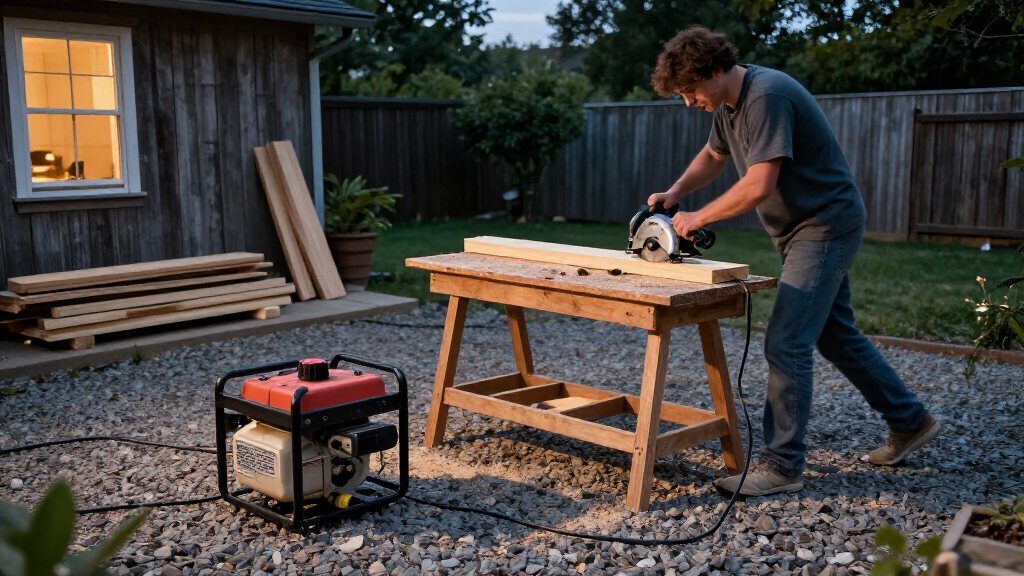

Portable generators span compact inverter models for sensitive electronics and larger fuel-flexible units for home backup. My best overall pick is the Westinghouse WGen5300DFcv, a practical dual-fuel option with a carbon monoxide sensor; for greater output and fuel choice, the WGen10500TFc stands out, while the GENMAX GM5000iHD brings a gas-and-battery hybrid approach. The main tradeoffs are power versus portability, inverter-style output versus conventional generator capacity, and the convenience of multiple fuels versus added complexity. I compare all nine on those buyer priorities, including who should skip each type. Read on for the full breakdown and a guide to choosing the right generator for your needs.

Get business pricing on tools and workshop supplies
- Business-only prices and quantity discounts
- Tax-exempt purchasing
- Multiple users, one account, clear invoices
Complete the kit

Key Takeaways
- The WGen5300DFcv is the most balanced pick: dual-fuel flexibility and a CO sensor make it more versatile for household backup than the compact inverter models, without moving into the largest-output class.
- The two large tri-fuel Westinghouse models favor capacity over easy handling: the WGen10500TFc and WGen11500TFc suit buyers with substantial backup loads and access to multiple fuel sources, but their size and output may be excessive for occasional small-device use.
- Inverter models target a different job: the SIOKIUU 2500W, PowerSmart 4000 Watt, and Oxseryn 4400-Watt prioritize a more compact format and inverter power, rather than the heavier-load focus of the Westinghouse WGen units.
- Fuel flexibility varies in useful ways: several Westinghouse picks are dual-fuel, two are tri-fuel, and the GENMAX pairs gas with battery power; buyers should choose based on fuel they can actually store or access.
- Output labels do not settle the choice: peak watts alone do not show whether a generator can run a planned load continuously, so compare running output, startup surges, outlets, and runtime at the expected load before buying.
| Westinghouse WGen5300DFcv Dual-Fuel Portable Generator with CO Sensor |  | Best Mid-Range Dual-Fuel Choice | Fuel type: Gasoline and propane | Running watts: 5,300 W on gasoline; 4,800 W on propane | Peak watts: 6,500 W on gasoline; 5,800 W on propane | VIEW LATEST PRICE | See Our Full Breakdown |
| GENMAX GM5000iHD 5000W Gas and Battery Hybrid Portable Generator |  | Best for Battery-Assisted Convenience | Fuel type: Gasoline | Peak wattage: 5,000 W | Running wattage: 3,800 W | VIEW LATEST PRICE | See Our Full Breakdown |
| Westinghouse WGen10500TFc Tri-Fuel Portable Generator, 13,500 Peak Watts |  | Best for Three-Fuel Flexibility | Fuel types: Gasoline, propane, and natural gas | Running output: 10,500 W | Peak output: 13,500 W | VIEW LATEST PRICE | See Our Full Breakdown |
| Westinghouse WGen11500TFc Tri-Fuel Portable Generator, 14,500 Peak Watts |  | Best High-Output Portable Backup | Fuel types: Gasoline, propane, and natural gas | Running wattage: 11,500 W | Peak wattage: 14,500 W | VIEW LATEST PRICE | See Our Full Breakdown |
| SIOKIUU 2500W Portable Inverter Generator with CO Sensor |  | Best Compact Inverter for Electronics | Fuel type: Gasoline | Engine: 80 cc, 4-stroke | Peak output: 2,500 W | VIEW LATEST PRICE | See Our Full Breakdown |
| Westinghouse WGen10500DFc Dual Fuel Portable Generator with CO Sensor |  | Best for High-Output Home Backup | Peak wattage: 13,500 watts | Running wattage: 10,500 watts | Fuel type: Gasoline and propane | VIEW LATEST PRICE | See Our Full Breakdown |
| Westinghouse WGen9500DF Dual-Fuel Portable Generator |  | Best for Flexible Backup Connections | Starting wattage, gasoline: 12,500 watts | Running wattage, gasoline: 9,500 watts | Running wattage, propane: 8,500 watts | VIEW LATEST PRICE | See Our Full Breakdown |
| PowerSmart 4000 Watt Portable Inverter Generator for Home Use |  | Best for Cleaner, Quieter Portable Power | Starting wattage: 4,000 watts | Running wattage: 3,200 watts | Total harmonic distortion: Less than 3% | VIEW LATEST PRICE | See Our Full Breakdown |
| Oxseryn 4400-Watt Gas Inverter Generator |  | Best for Longer Runs in the Compact Inverter Class | Peak wattage: 4,400 watts | Running wattage: 3,400 watts | Fuel type: Gasoline | VIEW LATEST PRICE | See Our Full Breakdown |
| portable generator | Fuel type | Engine | Runtime | Running wattage |
|---|---|---|---|---|
| Westinghouse WGen5300DFcv Dual | Gasoline and propane | 274 cc, 4-stroke OHV | Up to 14.5 hours | — |
| GENMAX GM5000iHD 5000W Gas and | Gasoline | — | — | 3,800 W |
| Westinghouse WGen10500TFc Tri- | — | 500 cc, 4-stroke OHV | Up to 19 hours at 25% load | — |
| Westinghouse WGen11500TFc Tri- | — | 550 cc, 4-stroke OHV | Up to 19 hours | 11,500 W |
| SIOKIUU 2500W Portable Inverte | Gasoline | 80 cc, 4-stroke | Up to 17 hours at 25% load; 8.6 hours at 50% load | — |
| Westinghouse WGen10500DFc Dual | Gasoline and propane | 500cc 4-stroke OHV | Up to 19 hours at 25% load | 10,500 watts |
| Westinghouse WGen9500DF Dual-F | Gasoline or propane | 457cc 4-stroke OHV | Up to 12 hours | — |
| PowerSmart 4000 Watt Portable | Gasoline | — | — | 3,200 watts |
| Oxseryn 4400-Watt Gas Inverter | Gasoline | 208cc 4-stroke | Up to 14 hours at 25% load in ECO mode | 3,400 watts |
More Details on Our Top Picks
Westinghouse WGen5300DFcv Dual-Fuel Portable Generator with CO Sensor
The WGen5300DFcv suits buyers who need meaningful home-backup or RV power without stepping up to the much larger WGen10500TFc or WGen11500TFc. Its 5,300 running watts on gasoline, 120/240V selector, and 30A RV and transfer-switch-ready outlets support a broader range of uses than the compact SIOKIUU inverter. Switching between gasoline and propane gives you another fuel option when one is inconvenient, while the CO sensor and low-oil shutdown add automatic safeguards. The tradeoff is that its 4.7-gallon tank is smaller than the two larger Westinghouse models’ 9.5-gallon tanks, so extended operation may mean more refueling. It also needs some assembly, and its conventional generator design is less tailored to sensitive electronics than an inverter model.
Pros:- Runs on gasoline or propane, giving fuel flexibility.
- Provides up to 5,300 running watts on gasoline.
- Includes RV-ready TT-30R and transfer-switch-ready L14-30R outlets.
- CO sensor, low-oil shutdown, wheel kit, and propane hose are included.
Cons:- The 4.7-gallon tank can require refilling during extended use.
- Requires some assembly before use.
- Its conventional generator design is not specified with an inverter or low-THD output.
Best for: RV owners and households seeking dual-fuel backup with 30A connections, without the size and output of a high-wattage tri-fuel unit.
Not ideal for: Buyers needing long runs between refills, natural-gas compatibility, or inverter-style power for sensitive electronics.
- Fuel type:Gasoline and propane
- Running watts:5,300 W on gasoline; 4,800 W on propane
- Peak watts:6,500 W on gasoline; 5,800 W on propane
- Engine:274 cc, 4-stroke OHV
- Fuel tank capacity:4.7 gallons
- Runtime:Up to 14.5 hours
- Voltage:120/240 V selector
- Outlets:5–20R 120V duplex, TT-30R 30A, L14-30R 30A
- Safety and warranty:CO sensor and automatic low-oil shutdown; 3-year limited warranty
Our verdict“Choose the WGen5300DFcv for flexible gasoline-or-propane power and 30A connections when the larger tri-fuel Westinghouse models would be more generator than you need.”
GENMAX GM5000iHD 5000W Gas and Battery Hybrid Portable Generator
The GENMAX GM5000iHD is the lineup’s unusual choice for buyers who want battery power for small loads alongside a gasoline generator for heavier demand. Its detachable 144 Wh battery supplies up to 300W on its own, which can handle modest electronics without running the engine; push-button, remote, and recoil starting offer more flexibility than the recoil-start SIOKIUU. When battery output is not enough, the unit provides up to 3,800 running watts and 5,000 peak watts from gasoline. That makes it less suited to whole-home loads than either large Westinghouse tri-fuel model, and its battery-only capacity is deliberately limited. At 56.7 pounds, it is also heavier than the SIOKIUU, despite its compact listed dimensions. Choose it for mixed small-load and generator use, not extended engine-free backup.
Pros:- Detachable 144 Wh battery supplies up to 300W without running the engine.
- Offers push-button, remote-control, and recoil starting.
- Includes 120V AC, USB-A, and USB-C output options.
- CO detection, low-oil shutdown, overload protection, and digital monitoring are included.
Cons:- Battery-only output is limited to 300W, restricting the loads it can support.
- More power requires gasoline, so it is not a fully battery-powered solution.
- At 56.7 pounds, it is heavier than the SIOKIUU compact inverter.
Best for: Campers and households who want a detachable battery for low-wattage electronics plus gasoline backup for larger loads.
Not ideal for: Buyers seeking substantial battery-only runtime, whole-home backup capacity, or a generator that runs on propane or natural gas.
- Fuel type:Gasoline
- Peak wattage:5,000 W
- Running wattage:3,800 W
- Battery capacity:144 Wh
- Battery-only output:Up to 300 W
- Starting options:Push button, remote control, and recoil
- Outlets:120V 20A and 30A AC, USB-A, and USB-C
- Weight:56.7 pounds
- Safety features:CO sensor, low-oil shutdown, and overload protection
Our verdict“Pick the GM5000iHD if battery-assisted convenience matters more than long engine-free operation or the greater backup output of the Westinghouse units.”
Westinghouse WGen10500TFc Tri-Fuel Portable Generator, 13,500 Peak Watts
For buyers who prioritize fuel choice alongside substantial backup capacity, the WGen10500TFc runs on gasoline, propane, or natural gas and delivers 10,500 running watts. That output and its 9.5-gallon tank make it a better fit for extended household backup than the WGen5300DFcv, while three fuel options can help when gasoline is difficult to obtain or store. Push-button and remote starting are practical on a large unit, and the CO sensor and low-oil shutdown add safety protections. The WGen11500TFc offers 1,000 more running watts, so buyers with heavier loads may prefer that model. This generator’s large, heavy-duty form also makes portability relative: the wheel kit helps with repositioning, but it is not a grab-and-go choice. A transfer switch must be purchased separately.
Pros:- Runs on gasoline, propane, or natural gas.
- Delivers up to 10,500 running watts for substantial backup loads.
- Offers push-button electric, remote, and recoil starting.
- Provides up to 19 hours of runtime at 25% load on gasoline.
Cons:- Its heavy-duty size can make moving and storage difficult.
- An automatic transfer switch is sold separately.
- The WGen11500TFc provides greater running output for buyers with larger loads.
Best for: Homeowners who need high-output backup and want the option to use gasoline, propane, or an existing natural-gas supply.
Not ideal for: Campers, apartment residents, or anyone who needs a lightweight generator that is easy to transport or store.
- Fuel types:Gasoline, propane, and natural gas
- Running output:10,500 W
- Peak output:13,500 W
- Engine:500 cc, 4-stroke OHV
- Gasoline tank capacity:9.5 gallons
- Runtime:Up to 19 hours at 25% load
- Starting methods:Push-button electric, remote key fob, and recoil
- Safety features:Low-oil shutdown, CO sensor, and overload protection
- Warranty and support:3-year limited residential warranty; lifetime technical support
Our verdict“Choose the WGen10500TFc when three-fuel flexibility and strong household backup matter more than easy transport or the WGen11500TFc’s extra output.”
Westinghouse WGen11500TFc Tri-Fuel Portable Generator, 14,500 Peak Watts
The WGen11500TFc takes the high-output route: its 11,500 running watts exceed the WGen10500TFc by 1,000 W, giving buyers more capacity for simultaneous household loads. It shares the practical three-fuel setup—gasoline, propane, or natural gas—and adds L14-30R and 14-50R outlets for compatible connections. Remote and electric starting save effort with a machine of this scale, while the CO sensor, low-oil shutdown, and overload protection supply useful safeguards. Its stated less-than-5% THD is a more specific power-quality claim than the supplied specs for the WGen10500TFc, though the SIOKIUU’s less-than-3% figure is lower for buyers focused on sensitive electronics. The tradeoff is bulk: this is portable for repositioning, not for frequent carrying, and a transfer switch is sold separately.
Pros:- Provides 11,500 running watts and 14,500 peak watts.
- Uses gasoline, propane, or natural gas.
- Includes electric and remote starting with L14-30R and 14-50R outlets.
- Lists less than 5% THD plus CO, low-oil, and overload protections.
Cons:- Its heavy-duty design can be difficult to move and store.
- An automatic transfer switch is sold separately.
- The SIOKIUU lists lower THD, making it a more targeted option for sensitive electronics at much lower output.
Best for: Households with high backup loads that want tri-fuel flexibility, remote starting, and 30A or 50A connections.
Not ideal for: Buyers who need a lightweight camping generator, lower output for occasional small loads, or a transfer switch included in the package.
- Fuel types:Gasoline, propane, and natural gas
- Running wattage:11,500 W
- Peak wattage:14,500 W
- Engine:550 cc, 4-stroke OHV
- Fuel tank capacity:9.5 gallons
- Runtime:Up to 19 hours
- Total harmonic distortion:Less than 5%
- Outlets:L14-30R 30A and 14-50R 50A
- Features and support:Electric and remote start, CO sensor, low-oil shutdown, overload protection; 3-year limited residential warranty and lifetime technical support
Our verdict“Choose the WGen11500TFc over the WGen10500TFc when the extra running capacity matters more than portability or a lower-THD compact inverter design.”
SIOKIUU 2500W Portable Inverter Generator with CO Sensor
The SIOKIUU 2500W is the lineup’s compact, lower-output pick for buyers who value portability and cleaner inverter power over whole-home capacity. At 39.46 pounds, it is far easier to carry than the WGen10500TFc or WGen11500TFc, while its less-than-3% THD rating makes it a more focused match for sensitive electronics than those large generators’ listed power-quality figures. Its 1,900 running watts can cover modest loads, and ECO mode helps stretch fuel use; the stated runtime reaches 17 hours at 25% load. That figure falls to 8.6 hours at 50% load, so heavier use means more frequent refueling. Unlike the dual-fuel WGen5300DFcv, this model runs only on gasoline, and its output is not intended for major household appliances or broad backup coverage.
Pros:- Weighs 39.46 pounds and includes a carrying handle.
- Less than 3% THD suits sensitive electronics.
- Runs up to 17 hours at 25% load and includes ECO mode.
- CO sensor provides automatic shutdown protection; parallel capability is included.
Cons:- Its 1,900 running watts limit the size and number of loads it can power.
- Gasoline is its only listed fuel.
- Runtime drops to 8.6 hours at 50% load.
Best for: Campers and electronics users who need a carryable inverter for modest loads, with CO shutdown protection and parallel capability.
Not ideal for: Households seeking whole-home backup, high-wattage appliance support, or the option to run on propane or natural gas.
- Fuel type:Gasoline
- Engine:80 cc, 4-stroke
- Peak output:2,500 W
- Running output:1,900 W
- Total harmonic distortion:Less than 3%
- Fuel tank capacity:1.06 gallons
- Runtime:Up to 17 hours at 25% load; 8.6 hours at 50% load
- Noise and weight:Under 59 dBA at 23 feet; 39.46 pounds
- Features and warranty:ECO mode, parallel capability, CO sensor, recoil start; 3-year warranty
Our verdict“Pick the SIOKIUU for portable, lower-output inverter power and cleaner electricity, but choose a Westinghouse model if household backup capacity is the priority.”
Westinghouse WGen10500DFc Dual Fuel Portable Generator with CO Sensor
For buyers who need substantial backup output, the WGen10500DFc pairs 10,500 running watts on gasoline with the option to switch to propane. Its 240-volt output and transfer-switch-ready connections suit larger household loads better than the WGen9500DF, while remote and electric starting reduce the effort of getting it running. The 9.5-gallon tank supports up to 19 hours at 25% load, but its size also makes refilling and handling fuel a bigger chore. A CO sensor and low-oil shutdown add safety features, though this remains a substantial machine with wheels and a handle—not a generator to carry around a campsite. The automatic transfer switch is not included, so buyers planning a fixed backup setup need to account for that separately.
Pros:- 10,500 running watts on gasoline supports larger backup loads.
- Gasoline and propane operation provides fuel flexibility.
- Remote and electric starting make startup easier.
- CO sensor and automatic low-oil shutdown add safety protection.
Cons:- The 9.5-gallon tank is bulky to handle and refill.
- Automatic transfer switch is sold separately.
- Its high-output, wheeled design is less practical for frequent transport.
Best for: Homeowners who need high-output 240-volt backup, want gasoline and propane flexibility, and can manage a large wheeled generator.
Not ideal for: Campers or buyers with limited storage space who need a light, quiet generator; also not suited to anyone expecting an automatic transfer switch in the package.
- Peak wattage:13,500 watts
- Running wattage:10,500 watts
- Fuel type:Gasoline and propane
- Engine:500cc 4-stroke OHV
- Fuel tank:9.5 gallons
- Runtime:Up to 19 hours at 25% load
- Voltage:240 volts
- Starting methods:Electric, remote, and recoil
Our verdict“Choose the WGen10500DFc for substantial home backup and dual-fuel flexibility if you have room for a large generator and are prepared to buy a transfer switch separately.”
Westinghouse WGen9500DF Dual-Fuel Portable Generator
The WGen9500DF offers a strong balance for buyers who need household backup power but do not need the WGen10500DFc’s higher 10,500-watt running output. It provides 9,500 running watts on gasoline and 8,500 on propane, with outlets for household, RV, and transfer-switch use. That range makes it more adaptable across backup and recreational setups than a small inverter model such as the PowerSmart 4000, although it is a much heavier, louder-style choice for camping. Remote and electric start help with operation, while the digital display and fuel gauge make basic status checks easier. Its 6.6-gallon tank is smaller than the WGen10500DFc’s, but the stated runtime is also shorter—up to 12 hours—and applies to gasoline operation.
Pros:- Dual-fuel operation offers gasoline and propane choices.
- Includes household, transfer-switch-ready, and RV connections.
- Remote, electric, and recoil starting provide several startup options.
- Digital display and fuel gauge make operating status easier to check.
Cons:- Heavy-duty size can make movement difficult despite the wheels.
- Listed runtime is up to 12 hours and is specified for gasoline operation.
- Running output on propane is lower than on gasoline.
Best for: Homeowners and RV users who want dual-fuel backup power, multiple connection types, and a generator below the WGen10500DFc’s output class.
Not ideal for: Buyers who need a compact, quiet generator for tent camping or frequent solo transport, or those seeking the longest listed runtime.
- Starting wattage, gasoline:12,500 watts
- Running wattage, gasoline:9,500 watts
- Running wattage, propane:8,500 watts
- Fuel type:Gasoline or propane
- Engine:457cc 4-stroke OHV
- Fuel tank:6.6 gallons
- Runtime:Up to 12 hours
- Starting methods:Remote, electric, and recoil
Our verdict“Pick the WGen9500DF if you want a versatile dual-fuel backup generator with RV and transfer-switch connections but do not need the WGen10500DFc’s extra output.”
PowerSmart 4000 Watt Portable Inverter Generator for Home Use
The PowerSmart 4000 suits buyers who value cleaner, quieter power more than whole-home capacity. Its 3,200 running watts and less-than-3% THD are a better fit for electronics and smaller essential loads than the high-output WGen9500DF, while its stated noise level of 59 dBA at 23 feet makes it more appealing around a campsite or close neighbors. Six outlets, USB ports, a 12V DC outlet, and a 30A twist-lock connection add useful flexibility. The tradeoff is endurance: the 1.3-gallon tank is small, and recoil is the only listed starting method. At 50.7 pounds it is portable by generator standards, but still a load to lift, and parallel operation requires a separately sold kit.
Pros:- Less than 3% THD is suited to sensitive electronics.
- Stated noise level is 59 dBA at 23 feet.
- USB, DC, duplex AC, and twist-lock outlets support varied devices.
- Parallel capability allows expanded output with a separate kit.
Cons:- The 1.3-gallon tank limits fuel capacity.
- Recoil is the only listed starting method.
- At 50.7 pounds, it may be awkward for one person to lift and carry.
Best for: Campers and homeowners powering electronics and a limited set of essential loads who prioritize inverter output and lower stated noise over long runtime.
Not ideal for: Households that need high-wattage whole-home backup, dual-fuel operation, or long stretches between refueling.
- Starting wattage:4,000 watts
- Running wattage:3,200 watts
- Total harmonic distortion:Less than 3%
- Noise level:59 dBA at 23 feet
- Fuel type:Gasoline
- Fuel tank:1.3 gallons
- Starting method:Recoil
- Weight:50.7 pounds
Our verdict“Choose the PowerSmart 4000 for quieter inverter power and electronics-friendly output, not for long runtime or high-capacity household backup.”
Oxseryn 4400-Watt Gas Inverter Generator
The Oxseryn 4400 offers a modest step up in output and fuel capacity from the PowerSmart 4000: it supplies 3,400 running watts and carries a 2-gallon tank, with up to 14 hours of runtime stated at 25% load in ECO mode. That makes it a useful fit for lighter RV use or overnight essentials, but the runtime figure depends on a low load and should not be read as a full-output estimate. Its open-frame design and stated noise level under 72 dBA at 23 feet make it less appealing around noise-sensitive campsites than the enclosed-style PowerSmart 4000, which has a lower stated noise figure. At 56 pounds, it remains movable for some users, though it is not an effortless carry. Gasoline-only operation and a one-year warranty are further limits.
Pros:- 3,400 running watts provide more output than the PowerSmart 4000.
- Up to 14 hours of runtime is stated at 25% load in ECO mode.
- Includes AC, DC, and RV outlets.
- 56-pound weight and compact listed dimensions support wheeled-free transport by some users.
Cons:- Open-frame construction and a stated level under 72 dBA may be intrusive in quiet settings.
- Gasoline is the only listed fuel option.
- One-year warranty is shorter than the three-year coverage listed for the Westinghouse models.
Best for: RV users and campers who want around 3,400 running watts, a longer stated low-load runtime, and can tolerate more noise.
Not ideal for: Noise-sensitive campers, buyers seeking dual-fuel operation, or anyone who needs a long warranty or a clearly specified low-THD output.
- Peak wattage:4,400 watts
- Running wattage:3,400 watts
- Fuel type:Gasoline
- Fuel tank:2 gallons
- Runtime:Up to 14 hours at 25% load in ECO mode
- Noise level:Under 72 dBA at 23 feet
- Engine:208cc 4-stroke
- Weight:56 pounds
Our verdict“Choose the Oxseryn if you want a little more running output and longer stated low-load runtime than the PowerSmart 4000, and noise is not your main concern.”
How We Picked
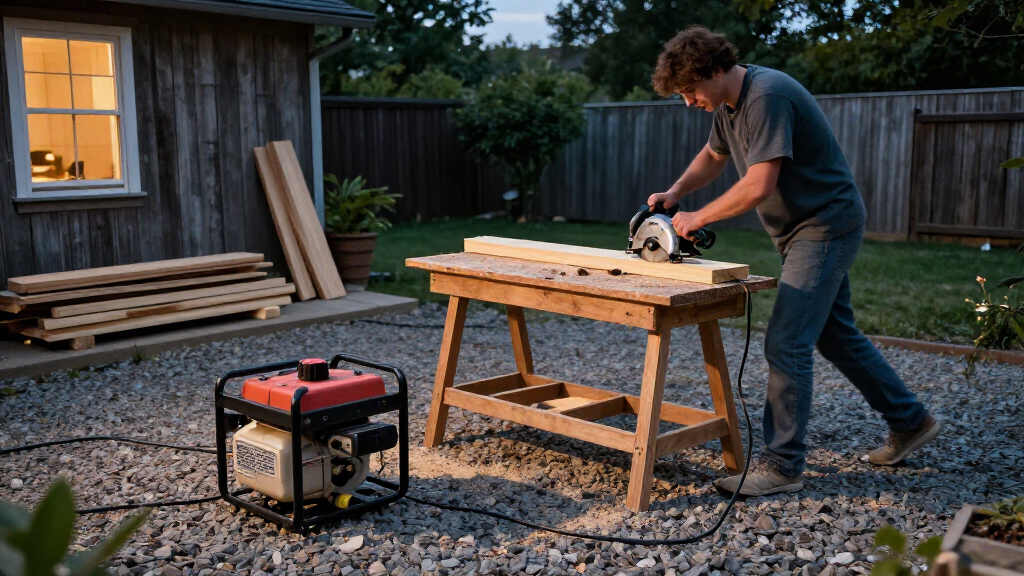
I ranked these portable generators around the jobs buyers are most likely to have: keeping essential home loads running, powering tools or appliances, and supplying electricity away from home. I weighed stated output and fuel options against portability, inverter design, carbon monoxide safety features, and the practical complexity each brings. A large generator can support more equipment, but it takes more space and is less convenient to move; a compact inverter is easier to take along, but its capacity can limit what runs at once.
The ranking favors useful balance over the biggest number. That puts the dual-fuel WGen5300DFcv ahead for broad household use, while the higher-output tri-fuel Westinghouse models rank better for buyers who need substantial backup capacity and can accommodate a larger machine. Inverter models earn their place for buyers who value a more compact setup, and the GENMAX hybrid is distinct for its gas-and-battery format. I also treated missing or unclear runtime, noise, weight, and outlet details as questions buyers should verify in the listing and manual rather than assuming specifications that are not provided here.
| portable generator | Fuel type | Runtime |
|---|---|---|
| Westinghouse WGen5300DFcv Dual | Gasoline and propane | Up to 14.5 hours |
| GENMAX GM5000iHD 5000W Gas and | Gasoline | — |
| Westinghouse WGen10500TFc Tri- | — | Up to 19 hours at 25% load |
| Westinghouse WGen11500TFc Tri- | — | Up to 19 hours |
| SIOKIUU 2500W Portable Inverte | Gasoline | Up to 17 hours at 25% load; 8.6 hours at 50% load |
| Westinghouse WGen10500DFc Dual | Gasoline and propane | Up to 19 hours at 25% load |
| Westinghouse WGen9500DF Dual-F | Gasoline or propane | Up to 12 hours |
| PowerSmart 4000 Watt Portable | Gasoline | — |
| Oxseryn 4400-Watt Gas Inverter | Gasoline | Up to 14 hours at 25% load in ECO mode |
Factors to Consider When Choosing Portable Generators
Choose a generator around the loads and conditions you actually expect, not a headline wattage or a fuel option you may never use. These broader checks can prevent a portable generator from being too small to help or too cumbersome to keep ready.
1. Size for Running Loads and Startup Surges
Write down the appliances and equipment you may run at the same time, then check both their running watts and startup demand. Motors in refrigerators, pumps, and some tools can draw extra power at startup, so a generator that looks adequate on continuous wattage may still struggle when loads switch on. Avoid adding every appliance in the house unless you plan to run them simultaneously; staggering use can reduce the capacity you need. At the same time, leave room for a future load or an unexpected surge rather than choosing a unit that only just meets your estimate. Treat peak watts as short-term headroom, not as the generator’s everyday capacity.
2. Choose Fuel Around Storage and Availability
Dual-fuel and tri-fuel capability can add options during an outage, but it helps only if you have a workable supply plan for those fuels. Think about what you can store safely, what is available locally, and how you will connect or replenish the generator. More fuel choices can also mean additional setup steps, so check the instructions for the exact fuel and connection requirements. A gas-only inverter may be simpler for a buyer who already has a straightforward supply routine. Avoid assuming a generator can switch fuels while running or that every fuel delivers the same output; check its manual for operating limits.
3. Decide Whether Inverter Power Matches Your Loads
An inverter generator may suit electronics and smaller, varied loads, while a conventional high-output model is often a better fit when the priority is running several large appliances. The word inverter by itself does not guarantee a particular noise level, runtime, or capacity, so check the manufacturer’s specifications for each. Consider whether sensitive devices will connect directly and follow their guidance about power quality and grounding. If your main need is a sump pump, well pump, or multiple household circuits, confirm the generator’s output and compatible connection method before choosing a compact unit. Paying for a larger conventional model can be wasted capacity if you mainly need occasional portable power for modest loads.
4. Check Portability as a Complete Setup
Portable does not always mean easy to move. Generator weight, dimensions, handles, wheels, and the route from storage to the operating spot all affect whether you can use it without help. Also account for fuel containers, cords, and any transfer equipment; the generator itself is only part of the setup. A high-output unit may be manageable on a level driveway but awkward over steps, gravel, or soft ground. For camping or frequent transport, a smaller inverter can be easier to live with even if it cannot run as many loads. Check the manufacturer’s stated weight and lifting guidance before relying on a product name or photo to judge mobility.
5. Plan Safe Placement and Household Connection
A CO sensor is a useful safety feature, not permission to run a generator indoors. Operate any fuel-powered generator outdoors, well away from doors, windows, and vents, and follow the manual’s placement instructions. Carbon monoxide can enter a home even when the generator is outside, so a household CO alarm remains a separate safety measure. For home backup, decide whether you will power devices with extension cords or connect through a properly installed transfer setup; never feed a home through an improvised connection. Confirm outlet types, circuit needs, and any local electrical requirements before buying, since wattage alone does not establish compatibility.
6. Compare Runtime, Maintenance, and Ownership Needs
Runtime depends on load and operating conditions, so a published estimate at a light load may not match a night of powering several appliances. Compare runtime figures only when the test load and fuel are alike, and check tank capacity alongside those figures. Before purchase, read the maintenance schedule for oil changes, storage, and restarting after a long idle period. Fuel can degrade in storage, and a generator that is rarely checked may not be ready when needed. A buyer who wants emergency reliability should plan periodic operation and safe fuel storage, while someone buying for occasional outings may prefer a simpler unit with fewer setup steps.
Frequently Asked Questions
How do I know whether a portable generator can power my home essentials?
List the appliances you want to run together and find each one’s running wattage and startup demand. Add the running loads, then check that the generator can handle the total while also accommodating the largest likely startup surge. Decide whether you need to power whole circuits or only selected devices, since those plans involve different equipment and connections. Confirm the generator’s outlets and connection method support your plan; a high wattage figure alone does not mean it can connect directly to a home panel. If you are unsure about a transfer setup, ask a licensed electrician to check the plan.
Should I choose a dual-fuel or tri-fuel generator for an outage?
Choose based on fuels you can store or obtain reliably, rather than the number of fuel options on the label. Dual-fuel models offer a choice between two sources, while tri-fuel adds another possible supply route, which can help if one fuel becomes difficult to find. That flexibility comes with extra connection and operating details to understand before an outage. Check whether output changes by fuel type and what accessories or regulators the setup requires. If you will only use one fuel, a simpler option may be easier to maintain and operate.
Is an inverter generator enough for refrigerator and pump backup?
It can be, but the answer depends on the appliances’ running loads and startup surges, not on the inverter label. Check the specifications for the refrigerator and pump, then compare their combined requirements with the generator’s running output and surge capacity. If both motors may start at once, allow for that overlap or plan to start them separately. Compact inverter models in this roundup trade some capacity for a more portable format, while larger Westinghouse models target heavier backup demands. Verify outlets and connection requirements before treating any model as a home-backup solution.
Can I run a portable generator in a garage if the door is open?
No. A fuel-powered generator should not run in a garage, even with the door open, because carbon monoxide can build up or move into the home. Place it outdoors and follow the manufacturer’s distance and ventilation instructions, keeping it away from doors, windows, and vents. A built-in CO sensor can add a layer of protection, but it does not replace safe placement or working household CO alarms. Check the manual for rain protection and grounding guidance as well, since operating conditions affect safe use.
What should I verify before buying a generator for long-term emergency storage?
Check the maintenance schedule, fuel-storage guidance, and the steps required to restart the unit after it has sat unused. Compare runtime at a realistic load rather than relying on a maximum or light-load estimate, and confirm that the tank or fuel setup fits your planned operating period. Make sure you have a safe storage location, suitable cords or transfer equipment, and a way to move the generator into its operating position. Review which fuels are practical for your household and whether accessories are needed. A generator is only useful in an outage if its fuel, connections, and starting process are ready too.
Conclusion
For the broadest mix of home-backup capacity and fuel choice, I recommend the Westinghouse WGen5300DFcv as best overall. Buyers who want a more portable inverter format should compare the PowerSmart 4000 Watt and Oxseryn 4400-Watt, while the SIOKIUU 2500W better suits modest loads where compact size matters more than capacity. I would point shoppers seeking the greatest backup headroom toward the WGen11500TFc as the premium, high-output choice, with the WGen10500TFc as a tri-fuel alternative for slightly lower stated peak output. The GENMAX GM5000iHD is the distinctive pick for buyers drawn to a gas-and-battery hybrid, but they should verify its operating details before choosing it. For beginners, the WGen5300DFcv is the clearest starting point among these options; for greater loads, choose a larger Westinghouse model only after checking running watts, connection needs, and safe placement.