Cordless framing nailers have eliminated the compressor and hose without giving up much driving power, but the category splits sharply between pro-grade gas-free models and budget battery options built for lighter-duty work. The Milwaukee M18 FUEL 21-Degree Framing Nailer earns the best overall spot for its consistent driving power, nail capacity, and jobsite durability, while the Metabo HPT NR1890DRA kit stands out as the best full-package value and the Ryobi ONE+ HP AirStrike 30° is the clear pick for DIYers and occasional builders. The main tradeoffs you’ll face are weight, battery platform loyalty, and whether you need to sink 3-1/2″ nails all day or just frame the occasional shed. Read on for the full breakdown, including which renewed models are worth the risk.

Get business pricing on tools and workshop supplies
- Business-only prices and quantity discounts
- Tax-exempt purchasing
- Multiple users, one account, clear invoices
Complete the kit


Key Takeaways
- Brushless motors and full metal drivetrains separated the pro picks — the Milwaukee M18 FUEL and Metabo HPT NR1890DRA consistently outperform brushed budget models in nail-driving depth and cycle rate.
- Angle matters more than most buyers realize: 30° nailers (DeWalt 30°, Ryobi AirStrike) accept paper-tape nails that leave less job-site debris, while 21° plastic-collated nails are cheaper and more widely stocked.
- Kits versus tool-only pricing created the biggest value gap — the Metabo HPT kit includes batteries and a charger, while most DeWalt and Milwaukee options assume you already own the battery platform.
- Renewed units (the DeWalt 20V MAX XR and Craftsman CMCN621PLB) can halve your entry cost but carry warranty risk that only makes sense if you already own compatible batteries.
- The Ryobi ONE+ HP AirStrike is the only pick here suited to homeowners rather than contractors — it trades raw power and magazine capacity for lower weight and one-battery ecosystem convenience.


| cordless framing nailer | Nail angle | Voltage |
|---|---|---|
| 20-Volt 21° Cordless Framing N | 21° | 20V |
| 20-Volt 30° Cordless Framing N | 30° | 20V |
| DEWALT 20V MAX XR Brushless Co | 21 degrees | 20V MAX |
| Metabo HPT NR1890DRA 18V Cordl | 21° | — |
| Metabo HPT NR90AES1 21° Plasti | — | — |
| ONE+ HP Brushless 18V Cordless | 30° | 18V |
| Craftsman V20 Cordless 21-Degr | 21 degrees | — |
| Milwaukee M18 FUEL 21-Degree F | — | 18V |
| CRAFTSMAN V20 21-Degree Cordle | 21 degrees | — |
More Details on Our Top Picks
20-Volt 21° Cordless Framing Nailer (Tool-Only)
For a framer who wants to cut the compressor cord without a big spend, this bare-tool 21° nailer is the cheapest doorway into battery-powered framing on this list. The 21° angle matters more than it sounds: it matches plastic-collated full-round-head nails, the same ammo the DEWALT 20V MAX XR uses, so nail availability at any jobsite supply house is never a problem. Compared with the 20-Volt 30° model, this one trades paper-tape convenience for the stronger holding power of full round heads. The catch is stark, though — you get the tool and nothing else, so the real cost depends entirely on what battery platform you already own. If you don’t have compatible 20V packs and a charger sitting in your truck, the price advantage shrinks fast against the Metabo HPT NR1890DRA kit, which includes a 4.0Ah battery.
Pros:- Cordless operation means no hoses or compressor to drag around
- 21° angle accepts widely available full-round-head plastic collated nails
- Lowest-cost entry point into cordless framing in this lineup
- Bare-tool format lets you reuse batteries you already own
Cons:- Tool-only package — battery and charger must be sourced separately
- No published runtime or nails-per-charge figures to plan a workday around
Best for: Budget-conscious DIYers or part-time builders who already own compatible 20V batteries and want full-round-head nails for structural work
Not ideal for: Anyone starting from zero with no batteries — buying a battery and charger separately can erase the savings versus a complete kit
- Voltage:20V
- Nail angle:21°
- Power source:Cordless (battery)
- Collation type:Plastic collated (full round head)
- Package contents:Tool only
- Battery included:No
Our verdict“A sensible low-cost cordless starter for builders already invested in a 20V battery platform, but total-cost shoppers should do the math against kits first.”
20-Volt 30° Cordless Framing Nailer (Tool-Only)
The 30° angle is the story here. Where the 21° nailer above it favors full round heads, this model takes 30° paper-tape nails, which are typically thinner, lighter to carry in bulk, and produce less plastic collation debris on the floor — a real plus if you’re working indoors or finishing floors. That narrower magazine also helps in tight corners and joist bays where a wider 21° magazine can physically refuse to fit. Like its 21° sibling, it’s sold bare, so this pick makes the most sense for someone already carrying 20V batteries from other tools. Compared with the Ryobi ONE+ HP AirStrike 30° elsewhere in this roundup, it occupies the same angle class but leaves you to supply the power — a fair trade if your existing fleet keeps the effective cost down. The tradeoff is structural: clipped or offset heads on 30° nails carry slightly less holding power than full round heads, which matters for some code-driven framing jobs.
Pros:- 30° paper-tape nails are lighter to haul and leave no plastic debris
- Narrower magazine fits tighter spaces than 21° models
- Cordless design with no compressor dependency
- Bare-tool pricing keeps it accessible for existing 20V platform owners
Cons:- Tool-only — battery and charger not included
- 30° fasteners generally have clipped or offset heads with less holding power
- No stated nails-per-charge or runtime figures
Best for: Remodelers and interior framers working in cramped spaces who value lighter paper-tape nails and already own 20V batteries
Not ideal for: Builders framing to code with full-round-head nail requirements — the 30° fastener format may not qualify
- Voltage:20V
- Nail angle:30°
- Power source:Cordless (battery)
- Collation type:30° paper tape
- Package contents:Tool only
- Battery included:No
Our verdict“The right cordless pick for confined-space and interior work with paper-tape nails, provided you can supply the battery and your framing code allows offset heads.”
DEWALT 20V MAX XR Brushless Cordless Framing Nailer, 21-Degree, Plastic Collated, Tool Only (Renewed)
This is the pick I’d put at the top of a cordless framing shortlist. The brushless motor is not marketing fluff — it directly translates to more nails per charge and less maintenance over years of jobsite abuse. DEWALT publishes real productivity numbers: up to 530 sq. ft. of subflooring or 100 ft. of wall framing per charge, which lets a crew actually plan a day instead of guessing. At 8.65 lbs. tool-only, it sits in the same weight class as the Metabo HPT NR1890DRA, but the magnesium magazine and aggressive toe-nailing nose give it an edge for layout-heavy framing work. The rapid sequential mode closes the gap between shots in a way the budget 20V models above simply don’t address. Two honest tradeoffs: this is a renewed unit, so warranty coverage and cosmetic condition vary, and the TOOL CONNECT tracking chip is sold separately. The Milwaukee M18 FUEL elsewhere in this roundup is its closest rival; DEWALT wins here on the strength of published runtime data at a renewed price.
Pros:- Brushless motor delivers longer runtime and longer service life
- Published productivity figures (530 sq. ft. subflooring per charge) make planning easy
- Magnesium magazine and toe-nailing nose built for real framing layouts
- No compressor, hoses, or gas cartridges required
Cons:- Renewed condition means variable cosmetic state and warranty terms
- Battery, charger, and TOOL CONNECT chip are all sold separately
- Weight climbs past 10 lbs. once a high-capacity battery is mounted
Best for: Professional framers and serious DIYers who want top-tier cordless performance and runtime without paying full retail for a new tool
Not ideal for: Buyers who want a full factory warranty and untouched tool — renewed condition means some uncertainty is baked in
- Voltage:20V MAX
- Motor:Brushless
- Nail angle:21 degrees
- Collation:Plastic collated
- Weight:8.65 lbs. (tool only)
- Magazine:High-strength magnesium
- Subflooring per charge:Up to 530 sq. ft.
- Wall framing per charge:Up to 100 ft.
- Condition:Renewed, tool only
Our verdict“The strongest all-around cordless framer in this batch for pros who accept renewed-condition risk in exchange for flagship performance at a lower price.”
Metabo HPT NR1890DRA 18V Cordless 21° Framing Nailer Kit
This is the only cordless framer in this batch that arrives ready to work out of the box — battery, charger, and a lifetime tool body warranty included. That alone separates it from the bare-tool 20V options and the renewed DEWALT, which all assume you bring your own power. The air spring drive system delivers 120 joules of drive energy with no ramp-up delay, meaning the first nail sinks as hard and fast as the fiftieth — a genuine advantage in LVL and other dense stock where cheaper cordless models can stumble. At 500 nails per charge from the included 4.0Ah pack, runtime is respectable, though a full day of production framing will demand a second battery. Compared with the DEWALT 20V MAX XR, the Metabo counters with the complete kit and lifetime warranty, but gives up DEWALT’s larger platform ecosystem. Weight is the honest knock: 8.4 lbs. before the battery, so expect a wrist-heavy tool overhead.
Pros:- Complete kit — battery and charger included, no hidden costs
- Air spring drive with 120 joules sinks nails into hard materials with zero ramp-up
- Tool-less depth adjustment plus bump and sequential firing modes
- Lifetime tool body warranty backs the investment long-term
Cons:- 8.4 lbs. before the battery makes it tiring for overhead work
- 500 nails per charge requires a spare battery for full-day jobs
Best for: First-time cordless nailer buyers and tradespeople who want a single purchase with battery, charger, and long-term warranty coverage included
Not ideal for: Production framers needing all-day runtime — a single 4.0Ah battery won’t cover a full shift without a recharge window
- Model:NR1890DRA
- Power:18V
- Drive system:Air spring drive, 120 joules
- Motor:Brushless
- Nail angle:21°
- Max nail length:3-1/2 inches
- Battery:4.0Ah lithium-ion (included)
- Nails per charge:Up to 500
- Weight:8.4 lbs. without battery
Our verdict“The smartest one-purchase cordless framing option here for buyers who value included power, hard-material driving power, and warranty peace of mind over platform ecosystem.”
Metabo HPT NR90AES1 21° Plastic-Collated Framing Nailer
I’ll be direct: this is a pneumatic nailer, so it only belongs in a cordless roundup as a counterweight — and for the right buyer, it earns the spot. At 7.5 pounds, it undercuts every cordless model here by a full pound or more, and it will fire nails all day without a battery gauge in sight, limited only by your compressor’s capacity. If you already own a compressor and hose, this model is better suited to sustained production framing than the NR1890DRA, its battery sibling, because runtime simply stops being a variable. The tool-less depth adjustment and dual sequential/contact actuation match what the cordless guns offer. The tradeoffs are the cordless roundup’s whole reason for existing: you’re tethered to a hose, you need to buy and maintain a compressor, and mobility across a large site suffers. Think of this as the pick for the shop-anchored builder, not the roving one.
Pros:- Lightest tool in this lineup at 7.5 lbs., reducing fatigue on long days
- Unlimited runtime when paired with an adequate compressor
- Switchable sequential and contact actuation for precision or speed
- 5-year warranty with a redesigned head guard for easy service
Cons:- Requires an air compressor and hose, eliminating cordless freedom
- Limited to plastic-collated 21° nails only
Best for: Framers with an existing compressor setup who prioritize light weight and unlimited all-day runtime over jobsite mobility
Not ideal for: Anyone buying specifically to escape hoses and compressors — this tool reintroduces both problems the cordless models solve
- Model:NR90AES1
- Power source:Pneumatic (air-powered)
- Collation angle:21° plastic collated
- Nail length:2–3.5 inches
- Actuation modes:Sequential and contact
- Depth adjustment:Tool-less
- Weight:7.5 lbs.
- Warranty:5 years
Our verdict“A lightweight, no-runtime-limits workhorse for compressor-equipped framers — everyone else should stay cordless and pick the Metabo NR1890DRA or DEWALT instead.”
ONE+ HP Brushless 18V Cordless AirStrike 30° Framing Nailer (Tool Only)
This model makes the most sense for anyone already sitting on a pile of Ryobi ONE+ batteries, because it slots into that platform without forcing a new battery investment. The brushless motor paired with AirStrike technology means no compressor, no hose, and no gas cartridges — the same cordless freedom the Milwaukee M18 FUEL offers, but aimed at a homeowner and part-time builder audience rather than full-time crews. Runtime is genuinely competitive too: up to 750 nails per charge on a 4.0 Ah battery matches Milwaukee’s figure. The tradeoff is that this is a 30° tool, so it takes clipped or full head paper-tape nails rather than the full round head plastic-collated sticks the Craftsman V20 guns accept — a real limitation if your lumberyard stocks mostly 21° nails.
Pros:- Runs entirely without compressor, hoses, or gas cartridges
- Sequential and contact drive modes for precision or speed work
- Tool-free depth adjustment speeds up flush and countersink changes
- Up to 750 nails per charge with a 4.0 Ah battery
Cons:- Battery sold separately, which adds real cost for first-time Ryobi buyers
- 30° angle limits fastener options compared with common 21° plastic-collated round head nails
Best for: Homeowners and DIY framing builders who already own Ryobi ONE+ 18V batteries and want cordless nailing without buying into a pro platform
Not ideal for: Professional framers who need full round head nails for code compliance or who drive thousands of nails daily on production jobs
- Voltage:18V
- Motor:Brushless
- Nail Angle:30°
- Maximum Nail Length:3-1/2 in.
- Drive Modes:Single sequential and contact actuation
- Depth Adjustment:Tool-free
- Nails per Charge:Up to 750 with a 4.0 Ah battery
- Included Battery:No; tool only
- Features:Rafter hook and on-board air fill valve
Our verdict“If you already run Ryobi ONE+ tools, this is the framing nailer to add to the stack; if you’re starting from zero batteries, a pro-grade platform makes more sense.”
Craftsman V20 Cordless 21-Degree Framing Nailer, Bare Tool (CMCN621PLB) (Renewed)
For buyers whose top priority is keeping the entry cost down, this renewed unit undercuts the new-tool version (B0B9T45MH8) while delivering the identical core hardware: a 21° round-head nailer that drives up to 3-1/4-inch fasteners even into dense laminated veneer lumber. Compared with the Milwaukee M18 FUEL, it gives up bump-fire speed and the sophisticated nitrogen mechanism, but for occasional framing, deck repairs, and shed builds, that difference rarely shows up on the job. The renewed condition is the defining tradeoff — you accept cosmetic wear and shorter warranty protection in exchange for the lower price. It’s a smarter risk for a garage workshop than for a crew that will punish the tool daily.
Pros:- Cordless design needs no compressor, hose, or gas cartridge
- Drives 3-1/4 inch round-head nails into laminated veneer lumber
- Tool-free depth adjustment for quick flush-nail tuning
- Includes a rafter hook for overhead and solo work
Cons:- Renewed condition means cosmetic wear and reduced warranty protection
- Battery, charger, and VERSATRACK accessories are all sold separately
Best for: Budget-conscious DIYers and V20 battery owners who want full round head framing capability at the lowest possible entry cost
Not ideal for: Daily-use professionals who need new-tool warranty coverage and a mechanism rated for production nail counts
- Type:Cordless framing nailer
- Platform:Craftsman V20
- Nail Angle:21 degrees
- Maximum Nail Length:3-1/4 inches
- Depth Adjustment:Tool-free
- Battery and Charger:Sold separately
- Condition:Renewed
Our verdict“A sensible low-cost way into 21° round-head cordless framing — provided you can live with renewed-condition risk.”
Milwaukee M18 FUEL 21-Degree Framing Nailer (Tool Only)
This is the pick where money buys speed and refinement. The sealed nitrogen gas mechanism is oil-free and needs no cartridges, and the tool fires with no ramp-up time — pull the trigger and the nail goes, with up to 3 nails per second in bump-fire mode. That responsiveness is what separates it from the Craftsman V20 pair, which are capable but slower tools aimed at lighter-duty work. Runtime holds its own against the Ryobi AirStrike at roughly 750 nails per 5 Ah charge, and details like dry fire lockout, tool-free jam clearance, and the no-mar tip add up to fewer interruptions on a framing deck. The cost of that performance is weight — at 9.6 pounds it’s heavier than most rivals, and both batteries and the extended magazine cost extra.
Pros:- Instant trigger response with sequential and contact firing modes
- Up to 3 nails per second in bump-fire mode for production pace
- Oil-free nitrogen mechanism needs no gas cartridges or lubrication
- Dry fire lockout, tool-free jam clearance, and no-mar tip
Cons:- At 9.6 lbs it is one of the heavier cordless framing nailers
- Battery, charger, and extended-capacity magazine all sold separately
Best for: Professional framers and serious remodelers on the M18 platform who prioritize firing speed and all-day reliability
Not ideal for: Occasional DIY users and anyone sensitive to tool weight, since the price and 9.6-pound heft are wasted on light-duty projects
- Model:2744-20
- Voltage:18V
- Motor Type:Brushless
- Firing Modes:Sequential and contact actuation
- Fastener Type:Full round head, 2–3½ in.
- Magazine Angle:20–22 degrees
- Nails per Charge:Up to 750 with an M18 XC 5.0 Ah battery
- Weight:9.6 lbs.
- Mechanism:Oil-free sealed compressed nitrogen gas
Our verdict“If framing is how you earn a living, this Milwaukee’s speed and durability justify the premium; weekend builders should spend less.”
CRAFTSMAN V20 21-Degree Cordless Framing Nailer (Bare Tool, CMCN621PLB)
Compared with its renewed sibling, this new-condition version of the CMCN621PLB is the right call for anyone who wants full warranty coverage and pristine hardware — a worthwhile upgrade in price for a tool you’ll keep for years. It shares the same core capability: 21° round-head nails up to 3-1/4 inches, driven into LVL without a compressor or gas cartridges, with tool-free depth adjustment and a rafter hook included. Against the Ryobi AirStrike, it trades the 30° platform’s paper-tape convenience for the far more common 21° plastic-collated nail supply at most job sites and hardware stores. It won’t match the Milwaukee M18 FUEL for bump-fire pace, but for decks, fences, and room additions the difference is marginal.
Pros:- Cordless operation with no compressor, hose, or gas cartridges
- Drives round-head nails up to 3-1/4 inches into laminated veneer lumber
- Tool-free depth adjustment for fast setting changes
- New-condition tool with full warranty, unlike the renewed version
Cons:- Battery and charger sold separately
- VERSATRACK clip and storage accessories are extra purchases
Best for: Craftsman V20 battery owners and value-focused DIYers who want a new, warrantied 21° round-head framing nailer for decks, sheds, and remodeling
Not ideal for: High-volume framing crews who need maximum firing speed and heavy-duty internals like the Milwaukee M18 FUEL provides
- Brand:CRAFTSMAN
- Series:V20
- Tool Type:Cordless framing nailer
- Nail Angle:21 degrees
- Maximum Nail Length:3-1/4 inches
- Depth Adjustment:Tool-free
- Included:Framing nailer, rafter hook
- Battery and Charger:Sold separately
- VERSATRACK Compatible:Yes; clip and accessories sold separately
Our verdict“The smart middle ground in this roundup: new-tool warranty, widely available 21° nails, and V20 convenience for less than pro-grade rivals.”
How We Picked
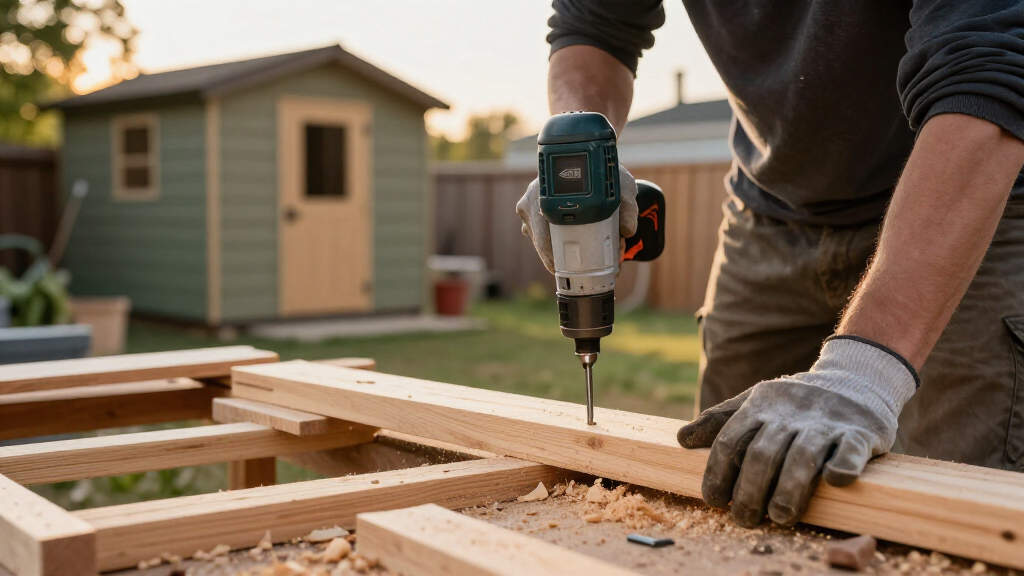
My ranking logic for these cordless framing nailers came down to four buyer-relevant factors. First, driving performance: a framing nailer has to sink 3″ to 3-1/2″ nails flush into engineered lumber without double-firing, and brushless models with heavier drivetrains simply do this more consistently under repeated load. Second, total cost of ownership — a tool-only price only tells part of the story, so I weighed whether each pick requires batteries you may not already own. Third, ergonomics and weight, because a 9-pound nailer swinging overhead all day tires you out faster than any spec sheet suggests. Fourth, nail availability and angle compatibility, since a nailer is only as useful as the collated nails you can find at your local supplier.
With those criteria applied, the pro-grade brushless models rose to the top, the mid-tier options earned their place through ecosystem value and included kits, and the renewed units were judged on whether their savings justified the shorter warranty. No pick is universally right — the ranking reflects who each tool serves best, not just raw power.
Factors to Consider When Choosing Cordless Framing Nailers
Before you commit to a cordless framing nailer, a few category-level realities shape whether you’ll be happy with your purchase six months from now. These are the factors that trip buyers up most often.Battery Platform Lock-In
The single biggest hidden cost in cordless framing nailers isn’t the tool — it’s the batteries. Most models in this roundup ship tool-only, which is a great deal if you already own DeWalt 20V MAX, Milwaukee M18, Metabo HPT MultiVolt, or Ryobi ONE+ batteries, and a poor one if you don’t. Adding two high-amp-hour batteries and a fast charger can push your real cost up substantially. My advice: pick the platform you already use for drills and saws, and only switch platforms if the nailer itself offers something your ecosystem can’t match. Contractors running mixed fleets should prioritize the Milwaukee or Metabo HPT kits, since those platforms extend into full-size outdoor power equipment.
Nail Angle and Collation Type
The degree rating isn’t about performance — it’s about which collated nails fit the magazine. A 21° nailer uses plastic-collated nails, which are the cheapest and most widely stocked at home centers, but the plastic strips shatter and litter the jobsite. A 30° nailer uses paper-tape collation, which is cleaner and often holds more nails per stick, but availability varies by region. Mixing them up is a classic beginner mistake: buy the wrong angle and your nails literally won’t load. Check what your local supplier stocks in the lengths you need before choosing between the two.
Brushed vs. Brushless Motors
Brushless motors aren’t marketing fluff in this category — they directly affect drives per charge and consistent flush nailing. Brushed budget models tend to lose driving depth as the battery drains, forcing you to re-set nails by hand. Brushless models like the Milwaukee M18 FUEL and DeWalt XR maintain power output across the full discharge curve and run cooler during all-day framing. If you’re a weekend builder doing a deck or a basement wall once a season, brushed is acceptable. If framing is your trade, brushless pays for itself in rework avoided.
Weight, Balance, and Overhead Work
Cordless framing nailers run heavier than their pneumatic counterparts because the battery and drivetrain sit in the handle. That weight matters most during overhead work like joists and rafters, where a pound or two compounds over hours. Pay attention to where the battery mounts — a rear-mounted pack shifts balance back toward your wrist, while center-mounted designs feel more neutral. Bigger isn’t automatically better here: the largest-capacity battery you own may make an already heavy tool unwieldy at height.
The Renewed-Tool Gamble
Factory-renewed nailers can cut entry costs dramatically, but framing nailers are mechanical tools with wear parts — driver blades, O-rings, and bump mechanisms all degrade with use. A renewed nailer that’s seen a production framing crew may work fine for months, then develop double-fires or depth inconsistencies. Renewed units make sense when you already own the batteries and the savings are substantial; they make little sense if you’d be buying batteries at full price anyway. Check the renewed warranty terms carefully before committing.
Depth Adjustment and Firing Modes
Tool-free depth adjustment is non-negotiable for framing work, because wood density changes daily and you’ll constantly fine-tune nail depth between studs, sheathing, and engineered lumber. Similarly, a reliable selectable bump-fire mode doubles your speed on sheathing while sequential mode keeps you safe in tight spots. Cheaper nailers sometimes have stiff or imprecise depth dials that drift during use — a small annoyance that becomes a real productivity drag over a full day. Test the depth mechanism’s resistance and detents if you can handle the tool before buying.
Frequently Asked Questions
Can a cordless framing nailer really replace a pneumatic one?
For most framing tasks, yes — modern brushless cordless models like the Milwaukee M18 FUEL and Metabo HPT NR1890DRA drive 3-1/2″ nails flush consistently, and they do it without a compressor, hose, or trip hazard. Where pneumatics still win is in sustained high-volume production framing, where an air tool’s faster cycle time and unlimited runtime matter. Cordless nailers also weigh more, which adds fatigue on overhead work. But for remodelers, deck builders, and crews that move between small job sites, the convenience tradeoff is heavily in cordless favor. The category has matured enough that many full-time framers now run cordless exclusively.
Which nail angle should I choose — 21° or 30°?
Choose based on nail availability and cleanliness preferences, not performance. A 21° nailer fires plastic-collated nails, which are the cheapest and easiest to find at any home center, but the plastic shards scatter across your work area. A 30° nailer fires paper-tape collated nails, which break down cleanly and typically fit more rounds per magazine — the DeWalt 30° and Ryobi AirStrike options in this roundup take that format. Neither drives nails better than the other. If you’re buying your first nailer, check what your local supplier stocks in the lengths you actually use before committing to an angle.
Are renewed cordless framing nailers worth the risk?
It depends on what you already own and how you’ll use the tool. Renewed units like the DeWalt 20V MAX XR or Craftsman CMCN621PLB can cut your entry cost dramatically, which is compelling if you already have compatible batteries. The risk is that framing nailers have wear parts — driver blades, seals, and contact trip mechanisms — that degrade with prior use, and renewed warranties are typically shorter than new-tool coverage. For occasional DIY use, that risk is usually acceptable. For daily professional framing, the downtime from a failed tool can cost more than the savings, so most pros should buy new.
How many batteries do I need for a full day of framing?
Plan on at least two high-amp-hour batteries if you’re doing serious framing work, with a third if you can afford it. A single battery typically drives several hundred to over a thousand nails depending on nail length, wood density, and whether the motor is brushed or brushless — brushless models extract noticeably more drives per charge. Rotating two batteries on a fast charger usually keeps pace with all-day work. Framing nailers also draw heavy burst current, so avoid small compact batteries; they’ll drain fast and may trigger thermal cutoffs in hot weather.
Is the Ryobi ONE+ HP AirStrike powerful enough for real framing?
For light framing — sheds, playhouses, non-structural interior walls, deck repairs — the AirStrike handles the job well and its lower weight makes it genuinely pleasant to use. Where it falls short is dense engineered lumber and repeated 3-1/2″ full-head nail driving, where the pro models maintain depth and the Ryobi can struggle or slow down. It’s also built with more polymer in the drivetrain, which is fine at DIY duty cycles but not for daily production abuse. The honest framing: it’s the best homeowner nailer in this lineup, not a contractor tool at a discount. If framing is your trade, step up to the Milwaukee or Metabo HPT.
Conclusion
Matching these nine cordless framing nailers to buyer types: professionals and serious framers should buy the Milwaukee M18 FUEL 21-Degree — it’s the best overall pick for driving consistency, durability, and depth control across all-day use. The best value goes to the Metabo HPT NR1890DRA kit, which includes batteries and a charger, making it the cheapest true pro-grade entry point. For the best premium experience, the Milwaukee again takes it, with the DeWalt 20V MAX XR brushless as the alternative if your fleet is yellow. Beginners and DIYers should choose the Ryobi ONE+ HP AirStrike 30°, which trades raw power for affordability within the friendliest battery ecosystem for homeowners. For budget-conscious buyers who already own DeWalt or Craftsman 20V batteries, the renewed DeWalt XR and Craftsman CMCN621PLB offer legitimate savings with acceptable risk. Whatever you choose, buy the nail angle that matches nails you can actually source locally — that decision will affect your satisfaction longer than any spec on the box.
Fall Picks
fall essentials
As an affiliate, we earn on qualifying purchases.