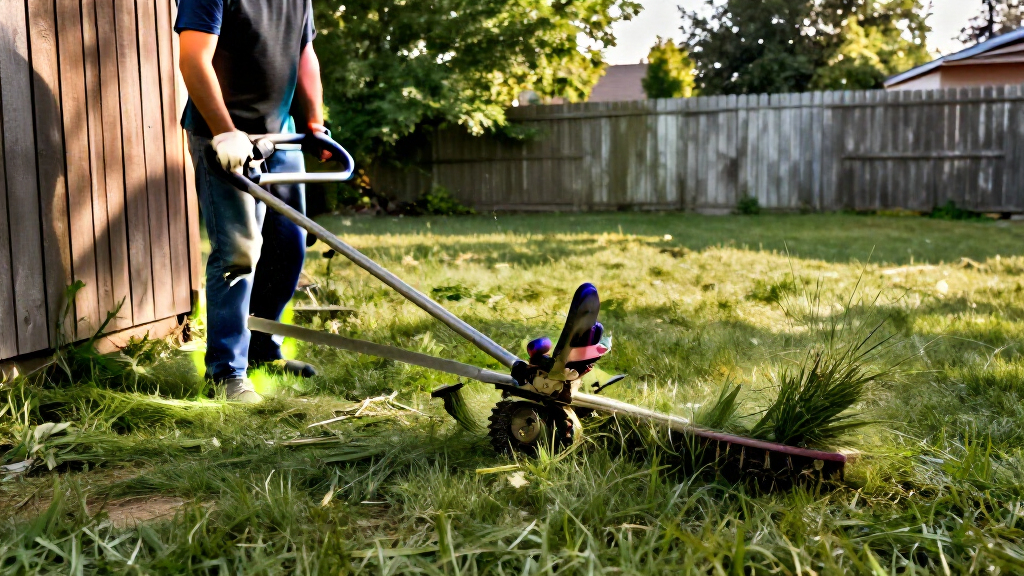
For most buyers, I’d start with the BILT HARD Self-Propelled Walk-Behind String Trimmer: its self-propelled drive can make covering rough or uneven ground less tiring. The Earthquake 60V is the standout for shoppers who prefer battery power, while the YARDMAX YL2250 offers a straightforward gas alternative with a 22-inch cutting width. The main tradeoff is between gas runtime and power, battery convenience and charging limits, and features that reduce pushing effort versus a simpler setup. I compare all eight options by their intended use, usability, and ownership demands below. Read on for the full breakdown and help matching a mower to your property.

Get business pricing on tools and workshop supplies
- Business-only prices and quantity discounts
- Tax-exempt purchasing
- Multiple users, one account, clear invoices
Complete the kit


Key Takeaways
- Self-propelled drive sets BILT HARD apart: It is the clearest choice in this lineup for buyers who want help moving a walk-behind trimmer across demanding ground.
- The Earthquake 60V is the battery-powered alternative: Its two 4Ah batteries offer a different ownership experience from the seven gas models, though runtime depends on the work and battery charge.
- Most of the lineup shares a 22-inch cutting width: That makes power source, propulsion, and operating preferences more useful comparison points than width alone.
- Gas models dominate the choices: The BILT HARD, YARDMAX, AMERISUN, PowerSmart, and PROYAMA use 170cc engines, while both Earthquake gas listings specify 160cc Viper engines.
- Two Earthquake gas entries have closely matching stated specs: Buyers should check exact model details and included equipment before choosing between Model 40314 and the other 160cc listing.


| trimmer mower | Cutting width | Engine | Cutting height | Warranty |
|---|---|---|---|---|
| BILT HARD Self-Propelled Walk- | 22 inches | 170cc OHV 4-cycle gas | 1.6–3.7 inches | — |
| YARDMAX YL2250 22-Inch 170cc G | 22 inches | 170cc gas | 1.5–3.5 inches | 2-year limited manufacturer warranty |
| Earthquake Walk-Behind String | 22 inches | 160cc four-cycle Viper | 1.5–3 inches | 5-year limited |
| Earthquake 60V Walk-Behind Str | 22 inches | — | 1.5–4 inches | 5-year limited tool; 3-year limited battery |
| AMERISUN 22-Inch 170cc Walk-Be | 22 inches | 170cc 4-stroke OHV | 1.9–4.0 inches | — |
| Earthquake Walk-Behind String | 22 inches | 160cc 4-cycle Viper | 1–4 inches, tool-free adjustment | 5-year limited |
| PowerSmart 22-Inch 170cc Walk- | 22 inches | 170cc four-cycle OHV gas | 1.9–3.9 inches | 2-year limited |
| PROYAMA 170cc Walk-Behind Stri | 22 inches | 170cc 4-cycle OHV | — | — |
More Details on Our Top Picks
BILT HARD Self-Propelled Walk-Behind String Trimmer, 170cc, 22-Inch Cutting Width
I’d put the BILT HARD first for buyers who want a walk-behind trimmer that helps with the pushing, not just the cutting. Its self-propelled drive moves at 1.9 mph, a useful distinction from the manual-push YARDMAX YL2250 and AMERISUN AM6222 on slopes or uneven ground. The 22-inch cutting path and eight height positions also give it more adjustment choices than YARDMAX’s five settings, which helps when switching between rough growth and shorter weeds. Flat-free wheels avoid inflation chores, while the foldable handle eases storage. The tradeoff is that this is still a gas-powered machine with recoil starting: it needs fuel and engine upkeep, and the drive speed is fixed. Choose it for reduced pushing effort, not for a maintenance-free setup.
Pros:- Self-propelled drive reduces pushing effort on slopes and uneven ground.
- 22-inch cutting path covers a broad strip with each pass.
- Eight cutting-height positions provide more adjustment than the YARDMAX YL2250’s five.
- Flat-free wheels and a foldable handle reduce tire upkeep and storage demands.
Cons:- Recoil starting requires pulling a starter cord.
- Gas operation means fuel handling and routine engine maintenance.
- The 1.9 mph drive speed may not suit users who want to set their own walking pace.
Best for: Property owners clearing thick weeds on sloped or uneven ground who want powered assistance and several cutting-height choices.
Not ideal for: Buyers who want cordless operation or minimal upkeep, since this model needs gasoline, routine engine maintenance, and pull starting.
- Engine:170cc OHV 4-cycle gas
- Cutting width:22 inches
- Cutting height:1.6–3.7 inches
- Height positions:8
- Self-propelled speed:1.9 mph (3.06 km/h)
- Wheel size:10 inches
- Deck material:Steel
- Dimensions:52.7 × 18.6 × 42.1 inches (D × W × H)
Our verdict“Choose the BILT HARD if powered assistance matters more than avoiding gas-engine upkeep.”
YARDMAX YL2250 22-Inch 170cc Gas Walk-Behind String Trimmer Mower
The YARDMAX YL2250 earns a place for its offset cutting head, which is aimed at edging along fences and landscaping rather than simply mowing the middle of an open patch. That makes it a more targeted choice than the BILT HARD, whose main advantage is self-propelled assistance, not a listed offset head. Its 14-inch wheels and compact design support maneuvering across varied terrain, while the onboard cord caddy keeps spare line close when a change is needed. Five tool-free height settings make adjustments straightforward, though the range tops out at 3.5 inches—less than the AMERISUN AM6222’s 4 inches. At 61.7 pounds, it still takes muscle to push, and its gas engine brings fuel and maintenance chores. I’d choose it for fence borders, not for reducing effort on long slopes.
Pros:- Offset head helps reach along fences and landscaping.
- Onboard cord caddy keeps spare trimmer line handy.
- Five cutting-height settings adjust without tools.
- 14-inch wheels are suited to varied terrain.
Cons:- Manual push operation can be tiring over long distances or on slopes.
- Gas engine requires fuel and routine maintenance.
- Maximum cutting height of 3.5 inches is lower than the AMERISUN AM6222’s 4-inch maximum.
Best for: Homeowners with fence lines, garden edges, and landscaping borders who want an offset head and accessible spare-line storage.
Not ideal for: Users who need help pushing on steep or uneven ground, or who want a cordless mower with no gas-engine maintenance.
- Engine:170cc gas
- Cutting width:22 inches
- Cutting height:1.5–3.5 inches
- Height settings:5 tool-free settings
- Wheel size:14 inches
- Weight:61.7 pounds
- Included feature:Onboard cord caddy
- Warranty:2-year limited manufacturer warranty
Our verdict“Pick the YARDMAX YL2250 for fence and landscape borders if you’re comfortable pushing a gas-powered mower.”
Earthquake Walk-Behind String Mower with 160cc Viper Engine, 22-Inch Cutting Width, Model 40314
The Earthquake 40314 is the simpler gas-powered pick in this group: it pairs a 160cc four-cycle Viper engine with a 22-inch cutting width and keeps the controls focused on the job. Its engagement bail stops the cutting head without requiring an engine restart, a practical difference from a basic setup when you need to pause briefly. The adjustable handlebar and foldable design also help with fit and storage. Compared with the cordless Earthquake 44965, this model avoids battery-runtime planning, but it gives up quieter operation and the convenience of battery power. Its 1.5–3-inch height range is narrower than the BILT HARD’s, and the line must be loaded as needed. A five-year limited warranty is a notable ownership feature, though it doesn’t remove pull-starting or gas-engine upkeep.
Pros:- 22-inch cutting path handles broad strips of weeds and grass.
- Engagement bail stops the cutting head without restarting the engine.
- Adjustable handlebar and foldable design support fit and storage.
- Five-year limited warranty is longer than the YARDMAX YL2250’s listed two-year warranty.
Cons:- Pull starting and gas-engine maintenance are part of ownership.
- Cutting height tops out at 3 inches, below the BILT HARD and AMERISUN ranges.
- Cutting line needs to be loaded as it wears or runs out.
Best for: Buyers who prefer a conventional gas engine, want a simple stop control, and value a five-year limited warranty.
Not ideal for: People seeking cordless convenience, a tall maximum cutting height, or a trimmer that avoids pull starting and line replacement.
- Engine:160cc four-cycle Viper
- Model:40314
- Cutting width:22 inches
- Cutting height:1.5–3 inches
- Cutting line:0.155 inches
- Wheels:2.5 × 14.5-inch airless
- Warranty:5-year limited
Our verdict“Choose the Earthquake 40314 if you want a straightforward gas trimmer mower with a useful stop control and longer listed tool warranty.”
Earthquake 60V Walk-Behind String Mower with Two 4Ah Batteries
For buyers who want to leave gasoline out of the shed, the Earthquake 44965 is the clearest alternative to the gas-powered models here. Its 60V brushless motor runs from two included 4Ah batteries, with up to 90 minutes of stated total runtime; the product data also lists up to 45 minutes per charge, so actual working time depends on conditions and battery use. A three-speed dial lets you adapt cutting pace, while the offset 22-inch head helps follow fences and buildings. The 1.5–4-inch height range is broader than the Earthquake 40314’s, and 14-inch airless wheels avoid inflation. The tradeoff is reliance on charged batteries and replacement line, rather than the fuel-based flexibility of the BILT HARD. I’d favor it for routine property work where cordless operation is worth planning around charge time.
Pros:- Two 4Ah batteries are included, with up to 90 minutes of stated runtime.
- Three cutting speeds and a 1.5–4-inch height range give users control over pace and cut.
- Offset 22-inch head is suited to trimming around fences and buildings.
- 14-inch airless wheels need no inflation.
Cons:- Runtime varies, and the listing also states up to 45 minutes per charge.
- Battery charging can interrupt work on larger properties.
- Cutting line still needs replacement as it wears.
Best for: Homeowners who want a cordless walk-behind trimmer for regular yard and fence-line work and can plan around battery charging.
Not ideal for: People clearing large areas continuously without time to recharge, or buyers who prefer a gas engine’s fuel-based operation.
- Power:60V battery
- Batteries:Two 4Ah batteries
- Maximum runtime:Up to 90 minutes
- Cutting width:22 inches
- Cutting height:1.5–4 inches
- Cutting speeds:Three
- Wheel size:14 inches
- Weight:40 pounds
- Warranty:5-year limited tool; 3-year limited battery
Our verdict“Choose the Earthquake 44965 if cordless operation and adjustable speed matter more than uninterrupted fuel-powered runtime.”
AMERISUN 22-Inch 170cc Walk-Behind String Trimmer
The AMERISUN AM6222 stands out for buyers who need more room to leave weeds and rough growth tall: its adjustable cutting height reaches 4 inches, matching the cordless Earthquake 44965 and exceeding the BILT HARD’s 3.7-inch maximum. Its 170cc four-stroke engine and 22-inch cutting path suit broad areas, while the offset trimmer head helps reach along fences and landscaping. Fourteen-inch wheels are intended for rough or uneven terrain, and the foldable handle helps with transport and storage. Unlike the self-propelled BILT HARD, this is a manual-push model, so its 62-pound weight can become a drawback over hills or extended runs. I’d choose it for height range and terrain-oriented wheels, but skip it if reducing push effort is the main priority.
Pros:- Cutting height adjusts from 1.9 to 4 inches for taller growth.
- Offset trimmer head helps reach beside fences and landscaping.
- 14-inch wheels are designed for rough or uneven terrain.
- Foldable handle supports more compact storage and transport.
Cons:- Manual push operation offers less help on slopes than the self-propelled BILT HARD.
- At 62 pounds, it may be demanding to maneuver over extended runs.
- Gas engine requires fuel and routine maintenance.
Best for: Property owners who cut tall weeds or rough growth and want a 4-inch maximum height, offset head, and large wheels.
Not ideal for: Buyers who need self-propelled assistance, want cordless operation, or expect to push long distances with minimal effort.
- Engine:170cc 4-stroke OHV
- Power source:Gas powered
- Cutting width:22 inches
- Cutting height:1.9–4.0 inches
- Wheel diameter:14 inches
- Weight:62 pounds
- Dimensions:25.6 × 19.7 inches
- Handle:Foldable
Our verdict“Choose the AMERISUN AM6222 for tall, rough growth and a high cutting range if you can manage a heavy, manual-push gas mower.”
Earthquake Walk-Behind String Mower, 160cc 4-Cycle Viper Engine, 22-Inch Cutting Width
The Earthquake 47325 is a strong fit for buyers who want a walk-behind mower with practical controls rather than a larger engine. Its 160cc four-cycle Viper engine and 22-inch cutting width suit overgrown edges and open patches, while the cutting head is designed to reduce weed wrap—a useful detail when clearing dense growth. Compared with the PowerSmart DB6222, it offers tool-free height adjustment across a wider stated range and a longer limited warranty. The engagement bail also lets you stop the cutting head without restarting the engine, which can make interruptions easier to manage. The tradeoff is shared with the other gas models here: fuel and engine upkeep are part of ownership, and its walk-behind footprint is less handy in tight spaces.
Pros:- Cutting head is designed to reduce weed wrap in dense growth
- Tool-free cutting-height adjustment from 1 to 4 inches
- Engagement bail stops the cutting head without restarting the engine
- Fold-down handlebar helps reduce storage space
Cons:- Gas engine requires fuel and routine maintenance
- Walk-behind size can be awkward in small or crowded yards
Best for: Homeowners clearing weeds and tall grass across medium-to-large areas who value tool-free height changes, reduced line wrapping, and a longer limited warranty.
Not ideal for: Owners of compact yards with narrow gates or frequent tight turns, and buyers who want to avoid gas-engine fueling and maintenance.
- Model:47325
- Engine:160cc 4-cycle Viper
- Cutting width:22 inches
- Cutting height:1–4 inches, tool-free adjustment
- Cutting line:0.095-inch or 0.155-inch
- Wheels:2.5 × 14.5 inches, airless
- Deck:One-piece steel
- Warranty:5-year limited
Our verdict“Choose the Earthquake 47325 if reduced weed wrap and convenient height adjustment matter more than a lighter, compact trimming setup.”
PowerSmart 22-Inch 170cc Walk-Behind Gas String Trimmer
The PowerSmart DB6222 suits buyers who need a straightforward gas trimmer mower for tall grass, weeds, and brush. Its 170cc OHV engine, 22-inch swath, and included 0.155-inch line are aimed at clearing broader areas without the narrow pass pattern of a handheld trimmer. At 56 pounds, it is lighter on paper than a sprawling setup might suggest, but that weight can still make lifting it into a vehicle or maneuvering around obstacles a chore. Compared with the Earthquake 47325, the PowerSmart has a larger engine but a narrower stated cutting-height range and a shorter limited warranty. Its folding handle and included tools and line make it ready for routine yard work, though the gas engine still calls for fuel and upkeep.
Pros:- 170cc four-cycle OHV engine for demanding growth
- 22-inch cutting swath covers ground efficiently
- 14-inch wheels are suited to uneven terrain
- Folding handle and included trimming line and tools simplify storage and setup
Cons:- 56-pound weight can complicate lifting and tight maneuvering
- Gas operation requires fuel and engine maintenance
- Two-year limited warranty is shorter than the Earthquake 47325’s stated coverage
Best for: Property owners who regularly cut tall grass and brush across open, uneven areas and want included line and basic tools for setup.
Not ideal for: Buyers who need easy lifting or frequent transport, prefer battery power, or want a broad cutting-height range and longer warranty coverage.
- Model:DB6222
- Engine:170cc four-cycle OHV gas
- Cutting width:22 inches
- Trimming line:0.155-inch diameter
- Cutting height:1.9–3.9 inches
- Wheel size:14 inches
- Weight:56 pounds
- Warranty:2-year limited
Our verdict“Pick the PowerSmart DB6222 for open areas with persistent tall growth, provided its weight and gas-engine upkeep fit your routine.”
PROYAMA 170cc Walk-Behind String Trimmer Mower
The PROYAMA PWT-22 stands out for buyers who want useful setup items included with a full-size, gas-powered trimmer mower. Its 170cc four-cycle OHV engine and 22-inch cutting path put it in the same broad-clearing category as the PowerSmart DB6222, while the 14-inch flat-free rear wheels are a practical match for uneven ground without tire inflation chores. The package includes trimmer line, engine oil, and a side bag, giving it a more ready-to-start feel than the Earthquake 47325, whose listed advantages lean more toward cutting-head design and controls. PROYAMA lists engine output and torque, but does not provide a cutting-height range or product weight in the supplied details, making fit and handling harder to judge. Expect gas upkeep and a wide walk-behind footprint.
Pros:- 22-inch cutting path handles broad strips of overgrowth
- 14-inch flat-free rear wheels avoid tire inflation
- Tool-free folding handle supports storage
- Includes engine oil, nylon line, and a side bag
Cons:- Gas engine requires fuel and routine maintenance
- Weight is not supplied, so transport and maneuverability are difficult to gauge
- No cutting-height range is listed in the provided specifications
Best for: Buyers clearing brush and tall grass on uneven property who value flat-free wheels and included oil, line, and a side bag.
Not ideal for: People who need a published cutting-height range or weight before buying, want quiet operation, or have narrow paths and limited storage.
- Model:PWT-22
- Engine:170cc 4-cycle OHV
- Engine power:3.5 kW / 5 HP
- Engine speed:3600 rpm
- Torque:6.64 ft-lb
- Cutting width:22 inches
- Line diameter:0.155 inches (listed as 0.16 inches in item details)
- Rear wheels:14 inches, flat-free
- Included accessories:Side bag, 450 ml engine oil, nylon trimmer line
Our verdict“Choose the PROYAMA PWT-22 if flat-free wheels and included accessories appeal more than published handling and cutting-height details.”
How We Picked
I compared the eight mowers on factors that shape day-to-day ownership: power source, stated engine or battery setup, cutting width, propulsion, and expected maintenance. A 22-inch width appears on nearly every listing, so I gave more weight to differences that affect a buyer’s workload, such as the BILT HARD’s self-propelled drive and the Earthquake 60V’s battery system. I also considered whether each option suits buyers who want a conventional gas mower or prefer to avoid fuel and engine upkeep.
The ranking favors a clear use-case fit, not a claim that one machine will suit every yard. BILT HARD leads for its self-propelled setup; the battery-powered Earthquake earns a distinct place for shoppers prioritizing cordless operation; and the gas choices follow according to how clearly their listed specifications serve a practical need. The two similar Earthquake gas listings are not treated as meaningfully different without more distinguishing information. I avoid inferring cutting performance, runtime, or included accessories beyond the stated product details, so buyers should confirm those points with the manufacturer before purchase.
Factors to Consider When Choosing Best Trimmer Mowers
Before choosing among these mowers, I’d match the machine to the land and the way you want to maintain it. Cutting width is only one part of the decision; slopes, vegetation, storage, and tolerance for routine maintenance can matter just as much. These broader checks can help prevent buying more machine—or a different power system—than your property needs.
Match the mower to the terrain, not just the acreage
A small property with steep banks or uneven ground can be harder to mow than a larger, mostly level lot. Think about slopes, ruts, obstacles, and how often you will need to turn around trees or fences. Self-propelled drive can reduce pushing effort, but it does not replace safe footing or careful operation on slopes. Walk the intended route before buying and note narrow gates, soft ground, and areas where a wide deck could be awkward. If your land is mostly flat and open, a simpler walk-behind setup may be easier to justify. Choose for the hardest regular section of your yard, not an occasional patch you can handle another way.
Choose gas or battery around your work pattern
Gas and battery models solve different ownership problems, so the right choice depends on when and how long you mow. Gas avoids stopping to recharge, but brings fuel handling and engine maintenance. Battery operation sidesteps gas and oil routines, yet the amount of ground you can cover depends on vegetation, workload, battery condition, and charging access. Do not treat a battery’s listed capacity as a guaranteed runtime for heavy weeds. If a job may exceed one charge, check whether compatible spare batteries are available and how long charging takes. For either power source, match the mower to your actual mowing schedule rather than assuming a single specification predicts a full work session.
Treat cutting width as a balance between speed and access
A wider cutting path can reduce the number of passes over open ground, but it can be cumbersome around tight corners and narrow entrances. Most models here list a 22-inch cutting width, so small differences in width are not the central separator in this group. Measure gates, shed openings, and the tightest route to your mowing area before ordering. Also think about whether the mower can reach the edges and obstacles that prompted you to consider a trimmer mower in the first place. A machine that cuts quickly in an open patch may still need a separate handheld trimmer for confined areas. The best fit is the width you can maneuver comfortably, not simply the largest number.
Check what the specifications do not tell you
Engine displacement and battery capacity help describe a power system, but neither alone confirms how a mower handles your weeds or how long it will run under load. Look for clear manufacturer information about cutting-height adjustment, line replacement, line compatibility, controls, and any included accessories. Check the owner’s manual for maintenance intervals and storage requirements before settling on a gas model. For battery equipment, verify charger details, battery compatibility, and replacement availability. Listings with similar specifications may still differ in small but useful ways, so compare exact model numbers rather than relying on product titles. When a detail is missing, treat it as an open question rather than assuming the feature is included.
Count ownership effort alongside mowing effort
Buying decisions often focus on how quickly a mower cuts, but upkeep and storage affect whether it remains convenient to use. Gas equipment calls for routine engine care and sensible fuel storage, while battery equipment needs charging and a suitable place to store its batteries. All string trimmers require attention to cutting line and wear items, so check how readily the correct supplies can be obtained. Consider whether you have room to store the mower safely and access the tools or service needed for upkeep. A lower-effort routine may matter more than extra engine displacement if you mow infrequently. Choose the ownership pattern you are likely to maintain consistently.
Frequently Asked Questions
Is a 22-inch cutting width enough for a large or rough property?
A 22-inch path can work well for many walk-behind jobs, but it does not by itself tell you how quickly a mower will clear a large area. Tall, dense growth, uneven terrain, and frequent obstacles can slow progress regardless of cutting width. Compare the width with your narrowest access point as well as the open sections of the property. For a large area, also check the power system, maintenance needs, and whether the machine is practical to store and move. If you have extensive open land, a wider mower may be worth comparing, while a trimmer mower can make more sense where obstacles and rough edges dominate.
Should I choose the Earthquake 60V or a gas trimmer mower?
Choose based on your work sessions and your preference for maintenance, not just the power source label. The Earthquake 60V listing includes two 4Ah batteries, making it the lineup’s cordless option, while the gas models suit buyers who prefer fuel-powered equipment. Battery use can be convenient when charging access is available, but actual runtime varies with the vegetation and workload. Gas avoids a charging pause but adds fuel and engine-care tasks. Before deciding, check charging time, spare-battery availability, and the maker’s guidance on running time for the work you expect to do.
Does self-propelled drive matter on a walk-behind string mower?
It can make a meaningful difference when the mower is heavy to push, the ground is uneven, or the job covers a broad area. In this group, the BILT HARD listing specifically identifies itself as self-propelled, which gives it a clear role for buyers seeking assistance with forward movement. That feature does not mean the mower will handle every slope safely, and it may add mechanical complexity compared with a simpler push model. If your yard is compact and mostly level, you may not gain enough to make propulsion a priority. Check the manual for operating guidance and drive controls before using any mower on sloped ground.
Are the two Earthquake 160cc gas listings different enough to choose between?
The supplied listings give both an Earthquake gas model with a 160cc Viper engine and a 22-inch cutting width, while one identifies Model 40314. Those details alone do not establish a practical performance difference. I would compare the exact model number, included equipment, controls, warranty terms, and manufacturer documentation before deciding. If the specifications and package contents match, availability or support may be more useful factors than the wording of the listing title. Confirm the details with the seller or manufacturer rather than assuming the two listings describe separate feature sets.
What should I check before buying a mower for tall weeds?
First, check the manufacturer’s stated limits for vegetation height and the type of growth the machine is meant to cut; a trimmer mower is not automatically suited to every brush or woody stem. Ask what cutting line it uses, how line is replaced, and whether the mower has an adjustment range that fits your terrain. Look at the machine’s weight and propulsion, especially if your work includes slopes or long passes. Plan to clear wire, stones, and other debris before mowing, since obstacles can create safety hazards and damage equipment. If your property has heavy brush beyond the mower’s stated capability, consider a tool designed for that material instead.
Conclusion
For the broadest match in this lineup, I’d choose the BILT HARD as best overall, especially if self-propelled movement would ease work on rough or tiring routes. The best for battery-focused buyers is the Earthquake 60V, while the best gas alternative for a familiar 22-inch setup is the YARDMAX YL2250. I can’t name a clear best value or best premium choice from the supplied specifications alone because they do not establish comparative package contents, build differences, or ownership costs. For beginners, I’d prioritize a mower with clearly documented controls, maintenance instructions, and replacement-line guidance; confirm those details before choosing rather than assuming any one listing is simpler. If your specific need is gas power, compare the 170cc options with the 160cc Earthquake models by exact features and support, not engine size alone.
Evergreen bestsellers Picks
bestsellers
As an affiliate, we earn on qualifying purchases.