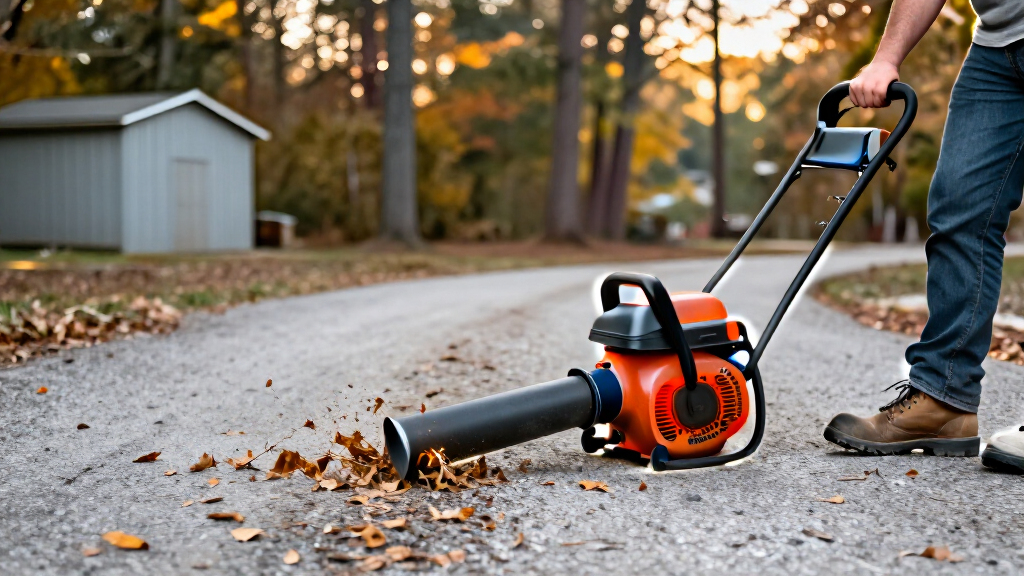
For large properties, the Husqvarna 150BT is my best overall pick: its 51 cc backpack design pairs substantial airflow with a format suited to longer cleanup sessions. The BILT HARD 212cc walk-behind stands out for broad, heavy-duty clearing, while the Husqvarna 570BTS is the premium choice for buyers prioritizing a commercial-class backpack model. The main tradeoff is between clearing power and coverage, which can come with more weight, noise, fuel use, and upkeep than a handheld blower. I compare all 15 options by their stated specifications, form factor, and fit for different property needs. Read on for the full breakdown and guidance on choosing the right blower for your terrain and workload.

Get business pricing on tools and workshop supplies
- Business-only prices and quantity discounts
- Tax-exempt purchasing
- Multiple users, one account, clear invoices
Complete the kit

Key Takeaways
Backpack blowers dominate this lineup for sustained property work: the 150BT, 570BTS, and several 63 cc models put the engine on a harness rather than in your hand.
Maximum airflow is not the only measure of useful coverage: the BILT HARD walk-behind lists 1,200 CFM, but its larger, less nimble format suits open areas better than tight garden beds.
Several backpack models share nearly identical published figures: the Thalorus 63cc, TDH 63CC, Getell 63cc, and HTK 63cc each list 665 CFM and 205 MPH, so compare support, controls, and fit rather than assuming the numbers distinguish them.
The lineup spans distinct workloads: handheld options such as the Husqvarna 125B and 26–28 cc models favor lighter, shorter tasks; 63–80 cc backpacks and the 72 cc models target tougher, broader cleanup.
Published specs leave important ownership questions open: weight, noise, fuel capacity, starting behavior, and warranty can change how suitable a blower is for a large property, so check these details before choosing.
| Husqvarna 150BT Gas Backpack Leaf Blower, 51 cc, 2.16 HP, 2-Cycle |  | Best Overall | Engine: 51 cc, 2-cycle, 2.16 HP | Form factor: Backpack | Airflow capacity: 765 CFM | VIEW LATEST PRICE | See Our Full Breakdown |
| Baococo 28cc Gas Handheld Leaf Blower, 200 MPH |  | Best Lightweight Handheld for Smaller Sections | Engine: 28cc two-stroke gasoline | Form factor: Handheld | Air speed: Up to 200 MPH | VIEW LATEST PRICE | See Our Full Breakdown |
| BILT HARD 212cc Gas Walk-Behind Leaf Blower, 1200 CFM, 150 MPH |  | Best for Broad, Open Grounds | Engine: 212cc 4-stroke OHV | Form factor: Walk-behind | Airflow capacity: 1,200 CFM | VIEW LATEST PRICE | See Our Full Breakdown |
| Husqvarna 125B Gas Handheld Leaf Blower |  | Best for Routine Cleanup and Easy Handling | Engine: 28 cc, 2-cycle, 1.1 HP | Form factor: Handheld | Airflow capacity: 470 CFM | VIEW LATEST PRICE | See Our Full Breakdown |
| Thalorus 63cc Backpack Leaf Blower, 665 CFM, 205 MPH |  | Best for Longer Runs Between Refueling | Engine: 63cc, 2-cycle gas | Form factor: Backpack | Airflow: 665 CFM | VIEW LATEST PRICE | See Our Full Breakdown |
| Getell 26cc 2-Cycle Handheld Gas Leaf Blower, 380 CFM, 180 MPH |  | Best Handheld for Smaller Cleanup Zones | Engine: 26cc 2-cycle | Airflow: 380 CFM | Maximum air speed: 180 MPH | VIEW LATEST PRICE | See Our Full Breakdown |
| TDH 63CC Gas Backpack Leaf Blower, 665 CFM, 205 MPH |  | Best for Extended Heavy-Duty Clearing | Model: TDHLBO01 | Engine: 63 cc, 2-stroke | Airflow: 665 CFM | VIEW LATEST PRICE | See Our Full Breakdown |
| 72CC 2-Stroke Gas Backpack Leaf Blower, 760 CFM, 235 MPH, Variable Speed, Cruise Control |  | Best for Maximum Clearing Output | Engine: 72CC 2-stroke | Airflow: 760 CFM | Maximum wind speed: 235 MPH | VIEW LATEST PRICE | See Our Full Breakdown |
| Getell 63cc Gas Backpack Leaf Blower, 665 CFM, 205 MPH |  | Best for Filter Maintenance | Model: EB650FSH / GB657 PRO | Engine: 63cc, 3 HP, 2-cycle | Airflow: 665 CFM | VIEW LATEST PRICE | See Our Full Breakdown |
| HTK 63cc Gas Backpack Leaf Blower, 665 CFM, 205 MPH |  | Best for Easier Starting | Engine: 63cc 2-stroke | Airflow capacity: 665 CFM | Maximum air speed: 205 MPH | VIEW LATEST PRICE | See Our Full Breakdown |
| Getell 80cc Gas Backpack Leaf Blower, 900 CFM |  | Best for High-Volume Clearing | Engine: 80 cc two-stroke | Power: 3.2 kW / 4.3 HP | Airflow: Up to 900 CFM | VIEW LATEST PRICE | See Our Full Breakdown |
| NEO-TEC 52 cc Backpack Gas Leaf Blower |  | Best for Controlled Residential Cleanup | Engine: 52 cc, two-cycle | Airflow: 564 CFM | Maximum air speed: 216 MPH | VIEW LATEST PRICE | See Our Full Breakdown |
| PROYAMA 72CC Gas Backpack Leaf Blower |  | Best for Switching Between Cleanup Tasks | Engine: 72 cc two-cycle gas | Engine power: 3.7 HP | Airflow: Up to 880 CFM | VIEW LATEST PRICE | See Our Full Breakdown |
| Thalorus 52cc Gas Backpack Leaf Blower, 550 CFM |  | Best Lightweight Pick | Engine displacement: 52 cc | Airflow: 550 CFM | Maximum air speed: 230 MPH | VIEW LATEST PRICE | See Our Full Breakdown |
| Husqvarna 570BTS Commercial Backpack Leaf Blower |  | Best Commercial-Grade Pick | Engine: 66 cc, 4 HP, two-cycle X-Torq | Air volume: 972 CFM | Maximum air speed: 236 MPH | VIEW LATEST PRICE | See Our Full Breakdown |
| gas leaf blowers for large propertie | Engine | Weight | Maximum air speed | Form factor |
|---|---|---|---|---|
| Husqvarna 150BT Gas Backpack L | 51 cc, 2-cycle, 2.16 HP | 22 lb | 270 MPH | Backpack |
| Baococo 28cc Gas Handheld Leaf | 28cc two-stroke gasoline | Under 10 lb | — | Handheld |
| BILT HARD 212cc Gas Walk-Behin | 212cc 4-stroke OHV | 98 lb | — | Walk-behind |
| Husqvarna 125B Gas Handheld Le | 28 cc, 2-cycle, 1.1 HP | 9.4 lb | 170 MPH | Handheld |
| Thalorus 63cc Backpack Leaf Bl | 63cc, 2-cycle gas | 22 lb | 205 MPH | Backpack |
| Getell 26cc 2-Cycle Handheld G | 26cc 2-cycle | 9.4 pounds | 180 MPH | Handheld |
| TDH 63CC Gas Backpack Leaf Blo | 63 cc, 2-stroke | — | 205 MPH | Backpack |
| 72CC 2-Stroke Gas Backpack Lea | 72CC 2-stroke | 21 pounds | — | Backpack |
| Getell 63cc Gas Backpack Leaf | 63cc, 3 HP, 2-cycle | 21 lb | 205 MPH | — |
| HTK 63cc Gas Backpack Leaf Blo | 63cc 2-stroke | — | 205 MPH | Backpack |
| Getell 80cc Gas Backpack Leaf | 80 cc two-stroke | About 22 lb | 206 MPH | — |
| NEO-TEC 52 cc Backpack Gas Lea | 52 cc, two-cycle | 22.7 lb | 216 MPH | Backpack |
| PROYAMA 72CC Gas Backpack Leaf | 72 cc two-cycle gas | 21 lb | 275 MPH | — |
| Thalorus 52cc Gas Backpack Lea | — | 17 lb | 230 MPH | — |
| Husqvarna 570BTS Commercial Ba | 66 cc, 4 HP, two-cycle X-Torq | 24.5 lb | 236 MPH | Backpack |
More Details on Our Top Picks
Husqvarna 150BT Gas Backpack Leaf Blower, 51 cc, 2.16 HP, 2-Cycle
For a large property where clearing time and operator comfort both matter, the Husqvarna 150BT makes the strongest all-around case in this group. Its 765 CFM and 22 N of blowing force give it more listed airflow than the Thalorus 63cc, which is rated at 665 CFM, while the padded harness and hip belt help spread the load across longer sessions. Cruise control is useful when sweeping broad areas at a steady pace, and the air-purge system supports easier starting.
The tradeoff is a 22-pound pack and the fuel mixing and upkeep common to two-cycle engines. It is a better fit for sustained property work than the lighter Husqvarna 125B handheld, but it takes more effort to store and wear. I’d choose it for broad lawns and long leaf-clearing runs, not quick touch-ups.
Pros:- 765 CFM and 22 N of blowing force suit broad areas and substantial leaf piles.
- Padded harness and hip belt distribute the load for longer work sessions.
- Cruise control helps maintain a consistent airflow without holding the throttle continuously.
- Air-purge system supports easier starting.
Cons:- At 22 pounds, it can feel burdensome during long sessions or when moving between work areas.
- Two-cycle operation requires fuel mixing and routine engine maintenance.
- A backpack blower is bulkier to store and less convenient for quick, isolated cleanup than a handheld.
Best for: Owners of large, tree-lined properties who want strong airflow, hands-free carrying, and cruise control for extended cleanup sessions.
Not ideal for: People who mainly clear patios or short driveways, or who want to avoid carrying a 22-pound blower and maintaining a two-cycle engine.
- Engine:51 cc, 2-cycle, 2.16 HP
- Form factor:Backpack
- Airflow capacity:765 CFM
- Maximum air speed:270 MPH
- Blowing force:22 N
- Weight:22 lb
- Features:Variable-speed throttle, cruise control, air-purge system, padded harness, hip belt
Our verdict“Choose the Husqvarna 150BT for large properties where its strong airflow and supportive harness justify the weight and two-cycle upkeep.”
Baococo 28cc Gas Handheld Leaf Blower, 200 MPH
The Baococo 28cc is the handheld pick for buyers who need gas power for selected parts of a large property rather than a machine for clearing every acre. At under 10 pounds, it is easier to carry one-handed than either backpack option here, and its listed 200 MPH air speed gives it a useful jet for moving leaves and light debris from paths, patios, and driveway edges. Compared with the Husqvarna 150BT, it sacrifices airflow and hands-free carrying, but offers a simpler, lighter tool for short jobs.
Its stated airflow is a concern: the product information lists 475 CFM in the description and 495 CFM in the title, so I would not use either figure as a firm basis for comparison. The two-stroke engine also requires gasoline and oil mixing. This is a practical secondary blower, not my pick for sustained cleanup across a large property.
Pros:- Weighs under 10 pounds for easier one-handed handling.
- Listed air speed of up to 200 MPH can help move light debris and leaves.
- Handheld format is more convenient for quick tasks than the 22-pound Husqvarna 150BT backpack.
- Gas power avoids dependence on a cord during outdoor cleanup.
Cons:- Airflow is listed inconsistently as 475 CFM and 495 CFM.
- Lower listed capacity and handheld format make it less suited to long sessions across large areas than a backpack blower.
- Two-stroke operation requires mixing gasoline with oil and routine maintenance.
Best for: Large-property owners who want a lightweight gas handheld for patios, driveway edges, and smaller cleanup zones.
Not ideal for: Buyers clearing large leaf piles or broad lawns in one session, or anyone who wants consistent airflow specifications and no fuel mixing.
- Engine:28cc two-stroke gasoline
- Form factor:Handheld
- Air speed:Up to 200 MPH
- Air volume:475 CFM in description; title lists 495 CFM
- Weight:Under 10 lb
- Power source:Gas powered
- Dimensions:13.8 × 9.8 × 25.6 in
Our verdict“Pick the Baococo for lightweight, occasional cleanup around smaller sections of a large property, not whole-property leaf clearing.”
BILT HARD 212cc Gas Walk-Behind Leaf Blower, 1200 CFM, 150 MPH
When a large property has wide lawns, gravel drives, or open stretches to clear, the BILT HARD walk-behind changes the job from carrying a blower to steering one. Its 1,200 CFM output is the highest listed airflow among these five products, and the 13-inch steel impeller is built to move a large volume of air. Three airflow directions—level, upward, or downward—add control around different surfaces; the front deflector and large wheels also help with steering across lawns and paving.
That capacity comes with a substantial 98-pound machine that needs room for storage and a path it can roll over. Unlike the Husqvarna 150BT, it is not a wearable choice for stairs, tight beds, or lots of obstacles. Its listed 150 MPH is lower than the backpack models’ peak speeds, so I’d favor it for sweeping broad areas rather than directing a narrow stream at stubborn debris.
Pros:- 1,200 CFM provides the highest listed airflow in this five-product group.
- Three airflow directions help adapt the stream to lawns and hard surfaces.
- Large rear wheels and a swiveling front wheel support maneuvering across open ground.
- Four-stroke engine avoids the gasoline-and-oil mixing required by the two-cycle backpack models.
Cons:- At 98 pounds, it is difficult to lift, transport, and reposition by hand.
- Walk-behind size limits access around tight landscaping and obstacles.
- Recoil starting and gas-engine upkeep remain part of operation.
Best for: Owners of large, mostly open properties who can roll a heavy blower across lawns, gravel, and paved areas.
Not ideal for: People with steep slopes, narrow passages, many garden beds, or limited storage space; the 98-pound machine is less portable than a backpack blower.
- Engine:212cc 4-stroke OHV
- Form factor:Walk-behind
- Airflow capacity:1,200 CFM
- Air speed:150 MPH
- Impeller:13-inch steel, four welded blades
- Weight:98 lb
- Airflow adjustment:Level, 15° upward, or 15° downward
- Starting method:Recoil
Our verdict“Choose the BILT HARD if your large property has broad, accessible areas where high-volume airflow matters more than portability.”
Husqvarna 125B Gas Handheld Leaf Blower
The Husqvarna 125B is the more balanced choice for buyers who prefer a handheld and expect to clear manageable sections rather than sweep a large property in one pass. Its 9.4-pound weight, balanced design, adjustable tube, and cruise control support controlled work around paths and landscaping. The air-purge system and auto-return stop switch also address two everyday annoyances: starting and getting the machine ready for its next run.
Against the Baococo 28cc, the 125B has a clearly stated 470 CFM but a lower listed peak speed of 170 MPH versus 200 MPH. Neither handheld matches the reach and hands-free carrying of the Husqvarna 150BT for extended property-wide clearing. Its listed noise level is 94 dB, so hearing protection is important, and the two-cycle engine requires fuel and maintenance. I’d choose it for regular, controlled cleanup—not heavy leaf volume.
Pros:- At 9.4 pounds, it is substantially lighter to carry than the 22-pound Husqvarna 150BT.
- Balanced design, soft-grip handle, and adjustable tube support controlled handling.
- Cruise control helps maintain a chosen speed during repeat cleanup tasks.
- Air purge and an auto-return stop switch support straightforward starting and restart preparation.
Cons:- 470 CFM and 12.5 N of blowing force are less suited to heavy, property-wide leaf clearing than the Husqvarna 150BT.
- Listed noise level is 94 dB, making hearing protection advisable.
- Two-cycle operation requires fuel and routine maintenance.
Best for: Owners of medium-to-large properties who want a manageable handheld for regular paths, driveways, and targeted yard cleanup.
Not ideal for: Buyers who need to move heavy leaf loads across extensive grounds, want a backpack harness, or are sensitive to loud equipment.
- Engine:28 cc, 2-cycle, 1.1 HP
- Form factor:Handheld
- Airflow capacity:470 CFM
- Maximum air speed:170 MPH
- Blowing force:12.5 N
- Weight:9.4 lb
- Noise level:94 dB
- Features:Adjustable tube, air purge, auto-return stop switch, variable-speed throttle, cruise control
Our verdict“Choose the Husqvarna 125B for lighter, regular cleanup where handheld control matters more than backpack-level capacity.”
Thalorus 63cc Backpack Leaf Blower, 665 CFM, 205 MPH
The Thalorus 63cc is aimed at buyers who value a large fuel tank and maintenance access alongside backpack carrying. Its 1.7 L tank gives it a stated capacity advantage for longer work periods, while cruise control and variable speed make it easier to adjust output for different areas. The two-stage air filter has tool-free replacement, a practical detail for owners expecting regular use. Compared with the Husqvarna 150BT, however, its listed 665 CFM is lower than the Husqvarna’s 765 CFM, so it gives up airflow despite its larger 63cc engine.
At 22 pounds, it has the same listed weight as the Husqvarna backpack and still requires two-cycle fuel mixing and upkeep. Its padded harness and anti-vibration features support longer sessions, but the product data does not list a blowing-force figure, making direct force comparisons difficult. I’d pick it for steady maintenance runs where tank capacity and filter access matter more than maximum listed airflow.
Pros:- 1.7 L fuel tank supports longer work periods between refills.
- Variable speed and cruise control allow airflow adjustments for different cleanup areas.
- Padded harness and anti-vibration features support extended operation.
- Two-stage air filter has tool-free replacement for easier maintenance access.
Cons:- Listed airflow of 665 CFM is below the Husqvarna 150BT’s 765 CFM.
- At 22 pounds, it has the same substantial listed weight as the Husqvarna backpack.
- Two-cycle operation requires fuel mixing and routine engine maintenance.
Best for: Owners of large properties who prefer a backpack blower with a sizable tank, cruise control, and accessible routine filter maintenance.
Not ideal for: Buyers seeking the strongest listed airflow in this group or anyone who wants to avoid carrying a 22-pound, two-cycle blower.
- Engine:63cc, 2-cycle gas
- Form factor:Backpack
- Airflow:665 CFM
- Maximum air speed:205 MPH
- Fuel tank capacity:1.7 L
- Weight:22 lb
- Air filter:Two-stage, tool-free replacement
- Features:Variable speed, cruise control, adjustable tube length, anti-vibration
Our verdict“Pick the Thalorus 63cc for longer property-maintenance runs where tank capacity and filter access matter more than maximum airflow.”
Getell 26cc 2-Cycle Handheld Gas Leaf Blower, 380 CFM, 180 MPH
For a large property, this 9.4-pound handheld is best treated as a quick-cleanup tool, not a substitute for a backpack blower across long driveways or broad lawns. Its 380 CFM and 180 MPH output suits paths, patios, and scattered clippings, while the reduced-pull starter and cushioned handles can make brief jobs less tiring. Compared with the TDH 63CC Backpack, it moves much less air, but it is lighter and avoids carrying a pack when the task is limited to a few spots. The tradeoff is capacity: clearing extensive leaf fall will take more passes, and the 50:1 fuel mix adds preparation and upkeep. I’d choose it as a convenient secondary blower for a property with small hardscape areas, rather than as the main machine for acreage.
Pros:- Light 9.4-pound handheld design for short jobs
- Reduced-pull recoil system lowers starting effort
- Anti-vibration handles help with comfort during routine cleanup
- 180 MPH air speed handles light debris and light snow
Cons:- 380 CFM is limited for extensive property-wide cleanup
- Requires a 50:1 gas-to-oil mix and routine gas-engine care
Best for: Owners of large properties who want a light gas blower for patios, walkways, and quick touch-ups between larger cleanup jobs
Not ideal for: Buyers clearing broad lawns, heavy leaf piles, or long driveways who need backpack-level airflow and less time spent making repeated passes
- Engine:26cc 2-cycle
- Airflow:380 CFM
- Maximum air speed:180 MPH
- Form factor:Handheld
- Weight:9.4 pounds
- Fuel mix:50:1 gas-to-oil
- Fuel tank:Translucent
- Warranty:2 years
Our verdict“Choose this Getell for lightweight spot-cleaning around a large property, but select a backpack model for regular whole-yard leaf clearing.”
TDH 63CC Gas Backpack Leaf Blower, 665 CFM, 205 MPH
The TDH pairs 665 CFM and 205 MPH with a backpack setup, making it a stronger fit for large properties than the handheld Getell 26cc when leaves cover broad areas. Variable speed and cruise control let me hold a steady output across longer stretches, while the 1.8 L tank supports extended sessions between refills. Its adjustable straps, breathable back panel, and three-layer vibration reduction address the fatigue that can build during acreage-scale work. It does not match the 72CC sudelin’s higher stated airflow and speed, so that model is the more forceful choice for especially demanding piles. The TDH’s tradeoff is the burden of a backpack frame and the fuel, noise, and upkeep that come with a 63cc two-stroke engine. It suits buyers who value sustained clearing over compact storage.
Pros:- 665 CFM and 205 MPH suit demanding yard debris
- Cruise control helps maintain a steady output over long stretches
- Adjustable straps and breathable back panel support extended wear
- 1.8 L fuel tank and vibration-reduction system are suited to longer sessions
Cons:- Backpack form can feel cumbersome for quick, localized cleanup
- Two-stroke gas operation requires fuel and ongoing engine maintenance
- Lower stated airflow and speed than the 72CC sudelin backpack
Best for: Owners with large lawns or wooded lots who need a backpack blower for lengthy leaf and debris sessions
Not ideal for: Buyers with mostly patios and short paths, or anyone who wants a compact, low-maintenance blower rather than a gas backpack machine
- Model:TDHLBO01
- Engine:63 cc, 2-stroke
- Airflow:665 CFM
- Maximum air speed:205 MPH
- Fuel tank capacity:1.8 L
- Form factor:Backpack
- Noise level:74 dB
- Dimensions:18 x 12.5 x 21 in
Our verdict“Pick the TDH for sustained large-property clearing and carrying comfort, unless you need the greater stated output of the 72CC sudelin.”
72CC 2-Stroke Gas Backpack Leaf Blower, 760 CFM, 235 MPH, Variable Speed, Cruise Control
Among these five, the sudelin has the highest stated airflow and air speed: 760 CFM and 235 MPH. That extra capacity over the 665 CFM, 205 MPH TDH and Getell 63cc models can help when a large property has dense leaf piles or stubborn debris that would otherwise need repeated passes. Its variable speed and cruise control provide control over output, while the padded, ventilated harness and vibration reduction are aimed at longer wear. The cost of that output is a 21-pound pack and a larger 72CC engine, so this is not the easiest choice for quick jobs or users sensitive to weight. The listed 25:1 fuel-to-oil mix during break-in also calls for attention to the specified setup. I’d favor it when clearing capacity matters more than carrying a lighter machine.
Pros:- Highest stated airflow and maximum air speed among these five products
- Variable speed and cruise control give control over sustained output
- Padded, ventilated harness and vibration reduction support longer sessions
- Includes fuel-mixing and maintenance accessories
Cons:- At 21 pounds, it may be tiring to carry for extended periods
- Requires gas-engine maintenance and a 25:1 fuel-to-oil mix during break-in
- Greater output may be unnecessary for properties with mostly light debris
Best for: Owners of large, leaf-heavy properties who prioritize high stated airflow for substantial cleanup sessions
Not ideal for: Buyers who need a light machine for brief jobs or prefer to avoid fuel mixing, heavier backpack equipment, and gas-engine maintenance
- Engine:72CC 2-stroke
- Airflow:760 CFM
- Maximum wind speed:235 MPH
- Form factor:Backpack
- Weight:21 pounds
- Fuel tank capacity:1.8 L
- Fuel-to-oil mix:25:1 during break-in
- Noise level:68 dB
Our verdict“Choose the 72CC sudelin when large leaf piles call for the strongest stated output here and you can manage its weight and fuel requirements.”
Getell 63cc Gas Backpack Leaf Blower, 665 CFM, 205 MPH
This Getell matches the TDH on the headline figures—665 CFM and 205 MPH—but differentiates itself with a tool-free two-stage air filter designed for simpler cleaning. That feature has practical value on a large property, where dusty or debris-heavy work can make routine filter care part of ownership. Cruise control, adjustable speed and tube length, and padded straps add flexibility for changing conditions and longer sessions. The TDH lists a slightly larger 1.8 L tank; this Getell holds 1.7 L, so it may need refueling sooner. At 21 pounds, it is still a substantial pack, and the two-cycle engine requires mixed fuel. I’d choose it over the TDH when convenient filter access is a priority, while buyers seeking the greatest stated output should look to the 72CC sudelin instead.
Pros:- 665 CFM and 205 MPH provide backpack-level clearing output
- Tool-free access to the two-stage air filter simplifies cleaning
- Cruise control and adjustable speed and tube length offer operating flexibility
- Padded adjustable straps and vibration reduction support longer use
Cons:- 21-pound weight can become tiring during extended cleanup
- Two-cycle engine requires fuel mixing and routine maintenance
- 1.7 L fuel tank is smaller than the TDH’s 1.8 L tank
Best for: Large-property owners who expect dusty, frequent use and want accessible air-filter cleaning alongside backpack-level output
Not ideal for: Buyers who prioritize the longest interval between refills, a lighter blower, or higher stated airflow than 665 CFM
- Model:EB650FSH / GB657 PRO
- Engine:63cc, 3 HP, 2-cycle
- Airflow:665 CFM
- Maximum air speed:205 MPH
- Fuel tank capacity:1.7 L
- Weight:21 lb
- Noise level:78 dB
- Warranty:2 years
Our verdict“Choose this Getell over the similar-output TDH if straightforward air-filter maintenance matters more than a slightly larger fuel tank.”
HTK 63cc Gas Backpack Leaf Blower, 665 CFM, 205 MPH
The HTK offers the same 665 CFM and 205 MPH figures as the TDH and Getell 63cc backpacks, so its case rests on usability details rather than extra clearing power. The air-purge starting system is intended to help with starting, while the padded harness, low-vibration design, and cruise control suit longer cleanup runs. Its 1.7 L tank is smaller than the TDH’s 1.8 L capacity, and it lacks the Getell’s specified tool-free, two-stage filter access. Against the 72CC sudelin, the HTK gives up substantial stated airflow and speed but is a more modest option for properties that need backpack support without the highest-output engine. It remains a gas two-stroke machine, though, so noise, fuel handling, and routine maintenance are part of ownership.
Pros:- 665 CFM and 205 MPH suit demanding routine yard clearing
- Air-purge starting system is designed to support starting
- Padded harness and low-vibration design help during longer sessions
- Cruise control maintains a steady output without constant throttle adjustment
Cons:- 1.7 L fuel tank is smaller than the TDH’s 1.8 L tank
- Gas two-stroke engine requires fuel and ongoing maintenance
- Does not match the 72CC sudelin’s stated airflow and air speed
Best for: Owners of large properties who want a 63cc backpack blower with an air-purge starting system and cruise control for regular cleanup
Not ideal for: Buyers who need maximum clearing output, a smaller handheld for short tasks, or a blower that avoids gas-engine maintenance and operating noise
- Engine:63cc 2-stroke
- Airflow capacity:665 CFM
- Maximum air speed:205 MPH
- Form factor:Backpack
- Fuel tank capacity:1.7 L
- Starting system:Air-purge
- Noise level:71 dB
- Warranty:2 years
Our verdict“Select the HTK for regular large-property work when its air-purge start and cruise control appeal more than maximum output or a larger tank.”
Getell 80cc Gas Backpack Leaf Blower, 900 CFM
For a large property where moving broad piles quickly matters more than keeping the pack light, the Getell 80cc pairs 900 CFM airflow with a 77.8-ounce fuel tank. That combination suits long cleanup runs across lawns, drives, and outbuildings better than the lower-volume NEO-TEC 52 cc, though the NEO-TEC is a less powerful choice for buyers who do not need this much air. Cruise control and vibration-reducing suspension can make steady work less tiring, and the included tool kit helps with routine upkeep. The tradeoff is substantial: at about 22 pounds, it can wear on the operator over a long shift, and its 88 dB noise level calls for hearing protection and consideration of nearby neighbors. I’d choose it for capacity, not lightweight handling.
Pros:- 900 CFM airflow is suited to moving large volumes of leaves and debris.
- 77.8-ounce fuel tank supports longer work between refills.
- Cruise control and vibration-reducing suspension support sustained operation.
- Includes a tool kit and setup items for basic maintenance.
Cons:- About 22 pounds can become tiring over extended use.
- The 88 dB noise level makes hearing protection and neighbor awareness important.
- An 80 cc two-stroke engine requires fuel mixing and routine engine maintenance.
Best for: Owners of large, leaf-heavy properties who want high airflow and a larger fuel tank for extended cleanup sessions.
Not ideal for: Operators who prioritize low carry weight, quiet operation, or occasional cleanup on a small lot.
- Engine:80 cc two-stroke
- Power:3.2 kW / 4.3 HP
- Airflow:Up to 900 CFM
- Maximum air speed:206 MPH
- Fuel tank capacity:77.8 oz / 2.3 L
- Weight:About 22 lb
- Noise level:88 dB
- Features:Cruise control, adjustable speed, anti-vibration, overload protection, throttle lock
Our verdict“Choose the Getell 80cc if high-volume clearing and longer runs matter more than a lighter pack.”
NEO-TEC 52 cc Backpack Gas Leaf Blower
The NEO-TEC 52 cc is the more restrained backpack option here: its 564 CFM airflow suits regular leaf and debris clearing without stepping up to the high-volume output of the Getell 80cc or Husqvarna 570BTS. That makes it a more sensible fit for a large residential property with routine cleanup than for a site buried in wet leaves or heavy debris. A padded harness, anti-vibration system, and throttle lock support longer passes, while tool-free air-filter access makes a basic maintenance task simpler. Its 216 MPH air-speed figure is strong, but airflow is lower than the larger machines, so it may take more passes over broad areas. At 22.7 pounds and 95 dB, it is neither light nor quiet; I’d skip it if those are the main priorities.
Pros:- 564 CFM airflow is suited to routine residential leaf and debris work.
- Padded harness and anti-vibration system help support longer sessions.
- Throttle lock and adjustable speed allow controlled operation.
- Tool-free air-filter access simplifies routine maintenance.
Cons:- Its airflow is well below the Getell 80cc and Husqvarna 570BTS for broad, heavy cleanup.
- At 22.7 pounds, it is a substantial pack for extended work.
- The listed 95 dB noise level is high, and gas operation requires fuel and maintenance.
Best for: Residential property owners who need a backpack blower for recurring leaf cleanup and value straightforward filter access.
Not ideal for: Buyers clearing very large, debris-heavy grounds who need maximum airflow, or operators seeking a quieter, lighter machine.
- Engine:52 cc, two-cycle
- Airflow:564 CFM
- Maximum air speed:216 MPH
- Form factor:Backpack
- Weight:22.7 lb
- Noise level:95 dB
- Features:Adjustable speed, throttle lock, padded harness, anti-vibration system
- Maintenance access:Tool-free air-filter access
Our verdict“Pick the NEO-TEC for regular residential cleanup if you do not need the greater clearing capacity of the largest blowers.”
PROYAMA 72CC Gas Backpack Leaf Blower
The PROYAMA 72CC stands apart through its combination of 880 CFM airflow, a stated 275 MPH maximum air speed, and both flat and round nozzles. The nozzle choice gives a large-property owner more flexibility: the flat nozzle can suit broad clearing, while the round nozzle offers a different approach for concentrated debris. Compared with the Getell 80cc, it has a smaller engine and slightly lower stated airflow, but its higher listed air speed and nozzle options make it appealing for varied yard tasks. Cruise control and a padded shock-absorbing harness add support for longer runs. The cost of that versatility is the usual two-cycle fuel and maintenance routine, plus a 21-pound carry weight. Its one-year warranty is also shorter than the two-year coverage listed for the Getell and Thalorus.
Pros:- 880 CFM airflow and 275 MPH maximum air speed suit demanding cleanup.
- Flat and round nozzles provide options for different debris and work areas.
- Variable-speed throttle and cruise control support adjustable, sustained operation.
- Padded shock-absorbing harness and balanced weight distribution support carrying comfort.
Cons:- At 21 pounds, it is still a substantial load for long work sessions.
- The two-cycle engine requires fuel and regular maintenance.
- One-year warranty is shorter than the listed coverage on some alternatives.
Best for: Owners of large properties who alternate between broad leaf piles and concentrated debris and want interchangeable nozzle styles.
Not ideal for: Buyers who want the longest listed warranty, a lightweight handheld tool, or minimal gas-engine maintenance.
- Engine:72 cc two-cycle gas
- Engine power:3.7 HP
- Airflow:Up to 880 CFM
- Maximum air speed:275 MPH
- Nozzles:Flat and round
- Weight:21 lb
- Features:Variable-speed throttle, cruise control, padded shock-absorbing harness
- Warranty:1 year
Our verdict“Choose the PROYAMA if nozzle flexibility and strong clearing figures matter more than a longer warranty or lighter carry weight.”
Thalorus 52cc Gas Backpack Leaf Blower, 550 CFM
At 17 pounds, the Thalorus T692 Pro is the lightest backpack blower in this five-product group, giving it a clear advantage for owners who need to cover a large property but want less weight on their back. Its 550 CFM airflow is better matched to routine leaves and yard debris than to large, dense piles; the Getell 80cc and Husqvarna 570BTS offer substantially more airflow for that work. The 230 MPH maximum air speed and cruise control provide useful clearing force and steady operation, while the padded harness helps distribute the load. A 33.8-ounce tank is listed for up to 45 minutes of runtime, so bigger properties may require refueling during a session. I’d favor this over the heavier NEO-TEC when carrying weight matters more than peak volume.
Pros:- 17-pound listed weight is lower than the other backpack models in this group.
- 230 MPH maximum air speed supports routine leaf and yard-debris clearing.
- Padded harness, adjustable thumb throttle, and cruise control support manageable operation.
- Listed runtime is up to 45 minutes per tank.
Cons:- 550 CFM airflow is modest beside the high-volume Getell 80cc and Husqvarna 570BTS.
- The 33.8-ounce tank may require refueling during larger cleanup sessions.
- Gas operation brings refueling and engine maintenance.
Best for: Property owners who want a relatively light backpack blower for regular leaf cleanup and prioritize easier carrying over maximum airflow.
Not ideal for: Buyers facing frequent wet leaves, heavy debris, or broad acreage that calls for the higher airflow of the Getell 80cc or Husqvarna 570BTS.
- Engine displacement:52 cc
- Airflow:550 CFM
- Maximum air speed:230 MPH
- Weight:17 lb
- Fuel tank capacity:33.8 fl oz
- Listed runtime:Up to 45 minutes
- Noise level:78 dB
- Features:Adjustable speed, thumb throttle, cruise control, padded harness
- Warranty:2 years
Our verdict“Choose the Thalorus T692 Pro if a lighter backpack matters more than maximum airflow or uninterrupted runtime.”
Husqvarna 570BTS Commercial Backpack Leaf Blower
For acreage that calls for sustained, demanding cleanup, the Husqvarna 570BTS leads this group on listed airflow at 972 CFM and adds 37 N of blowing force. That makes it a stronger fit for broad, stubborn debris than the lighter Thalorus T692 Pro, whose 550 CFM output favors routine work. Its 66 cc X-Torq engine, professional air filter, air purge, and cruise control suit frequent operation, while the load-reducing harness and LowVib technology address comfort during longer runs. The tradeoff is weight: at 24.5 pounds, it is the heaviest backpack option in this batch, despite its support features. I’d choose it for demanding property maintenance, not occasional leaf pickup, and would plan for the fuel and maintenance demands of a two-cycle gas engine.
Pros:- 972 CFM airflow and 37 N of blowing force suit demanding cleanup.
- Load-reducing harness and LowVib technology support longer operation.
- Air purge and cruise control help with starting and steady use.
- Professional air filter is suited to extended operation.
Cons:- At 24.5 pounds, it is the heaviest option in this group.
- Its commercial-grade capacity may be more machine than occasional yard cleanup requires.
- Gas operation requires fuel and regular engine maintenance.
Best for: Commercial operators and owners of large, debris-heavy properties who need high airflow and features suited to frequent use.
Not ideal for: Occasional users, smaller yards, or operators who cannot comfortably carry a 24.5-pound blower for extended periods.
- Engine:66 cc, 4 HP, two-cycle X-Torq
- Air volume:972 CFM
- Maximum air speed:236 MPH
- Blowing force:37 N
- Weight:24.5 lb
- Form factor:Backpack
- Features:Adjustable speed, cruise control, air purge, LowVib technology
- Warranty:2-year limited manufacturer warranty for professional use
Our verdict“Choose the Husqvarna 570BTS for frequent, demanding work across a large property if you can manage its 24.5-pound carry weight.”

How We Picked
I organized the 15 products around the demands of large-property cleanup: moving leaves across broad areas, handling heavier debris, and staying manageable over longer work sessions. I compared the stated engine size, airflow and airspeed where provided, and whether each blower is handheld, backpack-mounted, or walk-behind. Those figures help indicate likely workload fit, but they do not tell the whole story: CFM and MPH are not interchangeable, and published specifications may use different measurement conditions.
The ranking favors a useful balance of coverage, carrying format, and plausible day-to-day versatility rather than the biggest number alone. That puts the Husqvarna 150BT first as a substantial backpack option, with the BILT HARD walk-behind and Husqvarna 570BTS serving more specialized heavy-duty or premium needs. Handheld models rank lower for large properties because their format is less suited to extended, high-volume clearing, even when it may be easier to handle for brief jobs. I also account for how much can be judged from the available specifications; buyers should verify missing details such as operating weight, noise, warranty, and maintenance requirements before purchasing.
| gas leaf blowers for large propertie | Form factor |
|---|---|
| Husqvarna 150BT Gas Backpack L | Backpack |
| Baococo 28cc Gas Handheld Leaf | Handheld |
| BILT HARD 212cc Gas Walk-Behin | Walk-behind |
| Husqvarna 125B Gas Handheld Le | Handheld |
| Thalorus 63cc Backpack Leaf Bl | Backpack |
| Getell 26cc 2-Cycle Handheld G | Handheld |
| TDH 63CC Gas Backpack Leaf Blo | Backpack |
| 72CC 2-Stroke Gas Backpack Lea | Backpack |
| Getell 63cc Gas Backpack Leaf | — |
| HTK 63cc Gas Backpack Leaf Blo | Backpack |
| Getell 80cc Gas Backpack Leaf | — |
| NEO-TEC 52 cc Backpack Gas Lea | Backpack |
| PROYAMA 72CC Gas Backpack Leaf | — |
| Thalorus 52cc Gas Backpack Lea | — |
| Husqvarna 570BTS Commercial Ba | Backpack |
Factors to Consider When Choosing Gas Leaf Blowers For Large Properties
Choosing a blower for a large property is less about chasing one headline number and more about matching the machine to the shape of the work. I would first map the areas that need clearing, the debris you face, and how long you expect to run the blower at a time. These broader factors can prevent an oversized purchase—or a light-duty model that turns a routine cleanup into a long session.
Match the blower format to the property layout
A backpack blower spreads the engine’s weight across your shoulders and hips, which can be more manageable than holding a powerful handheld model for a long route. A walk-behind unit may suit wide lawns, long drives, or open grounds where pushing a machine is easier than carrying one. Handheld blowers are simpler to store and can be easier around steps, patios, and narrow beds, but may be tiring during prolonged work. Many large properties have both open and confined spaces, so think about how often you will move between them. A common mistake is choosing for the biggest open area and then finding the machine awkward near buildings, gates, or landscaping. If your site has varied terrain, maneuverability can matter as much as raw output.
Read CFM and MPH as different clues
CFM describes air volume, while MPH describes airspeed; neither figure alone predicts how quickly you can clear a whole property. Higher volume can help move broad swaths of leaves, while a concentrated fast stream can help dislodge stubborn or wet debris. Nozzle shape, air control, and how the manufacturer measured its specifications also affect real-world results. Avoid comparing models as if a higher MPH always means better coverage, or as if CFM figures from different brands were measured identically. For the lineup here, several 63 cc backpacks share listed figures of 665 CFM and 205 MPH, which makes other ownership details especially relevant. Treat the numbers as a starting point, then check the machine’s intended use and operating setup.
Choose power for your actual debris and workload
Dry leaves on a maintained lawn call for a different level of force than wet leaf mats, pine needles, or debris gathered along a long boundary. Larger engines and higher stated output can help with demanding cleanup, but they may also bring added weight, fuel consumption, noise, and maintenance. If you only clear a few areas several times each season, a high-output commercial-style unit may be more machine than you need. On the other hand, repeated heavy cleanup across acres can make a small handheld blower frustratingly slow. Estimate the time and frequency of your jobs, not just the property’s total acreage. Pay more for additional power when it meaningfully reduces repeated passes or handles debris your lighter option cannot move.
Check carrying comfort and handling details
Engine displacement and airflow do not reveal whether a blower will feel manageable after an hour. Check operating weight, harness padding and adjustment, vibration control, handle position, and the reach of the controls. A backpack’s frame and fit can determine whether its power remains useful over a long session; a poor fit can make even a capable machine unpleasant. For handheld models, pay attention to grip, balance, and how much force is needed to control the nozzle. Do not assume two blowers with the same engine size or output will feel alike. If you can, compare the stated weight and harness design before buying, especially if more than one person will use the machine.
Account for fuel, noise, and routine maintenance
Gas power can suit properties far from outlets and extended work, but it also brings recurring tasks that affect ownership. Check whether a model is two-cycle or another engine type, what fuel and oil it requires, and how the maker describes storage and service. Noise can be a concern for household members and neighbors, particularly during long cleanup sessions; use suitable hearing protection and follow local rules. A larger tank may reduce refueling interruptions, but that specification is not available for every model in this roundup. Before purchase, confirm replacement-part access, warranty terms, and the maintenance schedule rather than relying on engine size as a proxy for durability. These details can make a less powerful blower the better long-term fit if it is easier to maintain and support.
Decide when a premium or specialized model pays off
A premium backpack or walk-behind makes sense when it solves a recurring workload problem: extensive grounds, dense debris, or long sessions that would strain a smaller machine. For occasional leaf cleanup, a simpler handheld blower may be easier to store and justify, even if it takes more passes. Walk-behind designs trade portability for broad-area handling, so consider slopes, tight turns, and storage access before choosing one. Commercial-class equipment may also involve more demanding maintenance and a larger storage footprint. Do not pay for power you rarely use, but do not undersize a machine that must repeatedly clear wet or heavy debris. The best value is the option that completes your typical job comfortably, not automatically the least expensive or most powerful model.
Frequently Asked Questions
Is a backpack blower a better choice than a handheld blower for a large property?
Often, yes, if your cleanup involves long sessions or broad areas, because a backpack carries the engine on a harness instead of asking your arm to support it. That format makes the Husqvarna 150BT and the 63 cc backpack options more natural candidates for extended work than the handheld models in this list. A handheld blower can still make sense for short jobs, tight spaces, or buyers who value a smaller machine. Compare operating weight and harness fit before deciding: backpack designs vary, and a heavy or poorly fitted unit can still tire you out. If your property includes both large lawns and confined beds, prioritize the areas where you spend the most time.
Should I choose the BILT HARD walk-behind or a backpack blower for open acreage?
The BILT HARD’s listed 1,200 CFM makes it a distinctive option for broad, open cleanup, while a backpack blower is easier to carry between separated areas and steer around obstacles. A walk-behind is a stronger fit when much of your work happens on accessible ground with room to maneuver. Consider slopes, gates, storage space, and how often you need to clear near planting beds before choosing it. The published airflow figure does not by itself establish how quickly it will clear every kind of debris. If the property has varied terrain or many tight sections, a backpack is likely to be more versatile even if it calls for more walking effort.
Can I compare blowers directly by their CFM and MPH numbers?
Use those figures as clues, not as a definitive head-to-head score. CFM measures air volume and MPH measures airspeed, so the two describe different aspects of airflow. Nozzle design and test methods can also affect how brand specifications compare. Several 63 cc backpacks here list the same 665 CFM and 205 MPH, which means those numbers alone cannot identify the best fit among them. Check operating weight, controls, warranty, and service information as well, and consider what debris you need to move. For a large property, useful coverage and manageable operation matter more than a single headline figure.
Is a 72 cc or 80 cc blower too much for residential acreage?
Not necessarily, but a larger engine is most useful when the workload is consistently demanding—such as heavy debris, broad grounds, or frequent long sessions. The 72 cc models and Getell 80cc backpack sit toward the high-output end of this lineup, while lighter handheld options are better aligned with brief, less demanding tasks. Higher engine size can bring added weight, fuel use, noise, and upkeep, so it is not a free performance gain. Think about how often you clear difficult debris and whether the extra output would save meaningful time. If your typical cleanup is modest, a smaller backpack may be easier to live with.
What should I verify before buying a blower when key specifications are missing?
Confirm the operating weight, noise information, fuel capacity, starting procedure, and warranty for the exact model and configuration. These details matter because they affect comfort, interruptions during a job, and the cost of keeping the blower running. Check the maker’s recommended fuel and maintenance schedule, along with access to parts and service. For backpack models, review harness adjustment and control placement; for a walk-behind, verify dimensions and storage needs. Published engine and airflow figures can help narrow choices, but missing ownership details may separate otherwise similar options. If you cannot confirm a detail that affects your work, treat that uncertainty as part of the buying decision.
Conclusion
For most owners with substantial grounds, I would start with the Husqvarna 150BT as best overall: its 51 cc backpack format offers a practical balance of output and suitability for longer cleanup sessions. For broad, open areas, the BILT HARD walk-behind is the specialized pick; buyers seeking a premium commercial-style backpack should compare the Husqvarna 570BTS. The best value depends on verified support, warranty, and fit among the similarly specified 63 cc backpacks, rather than airflow claims alone. For beginners or anyone handling shorter, lighter jobs, the Husqvarna 125B is a more approachable handheld direction than a large backpack or walk-behind, though it is not the best match for sustained acreage work. Choose a high-output 72–80 cc backpack only if heavy debris and frequent large-area clearing justify the added power and ownership demands; confirm weight, noise, and service details before committing.
Fall yard work Picks
leaf blowers
As an affiliate, we earn on qualifying purchases.