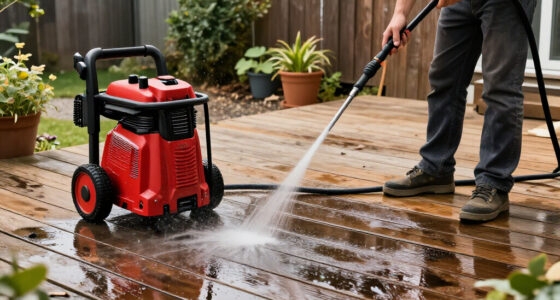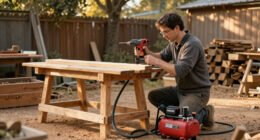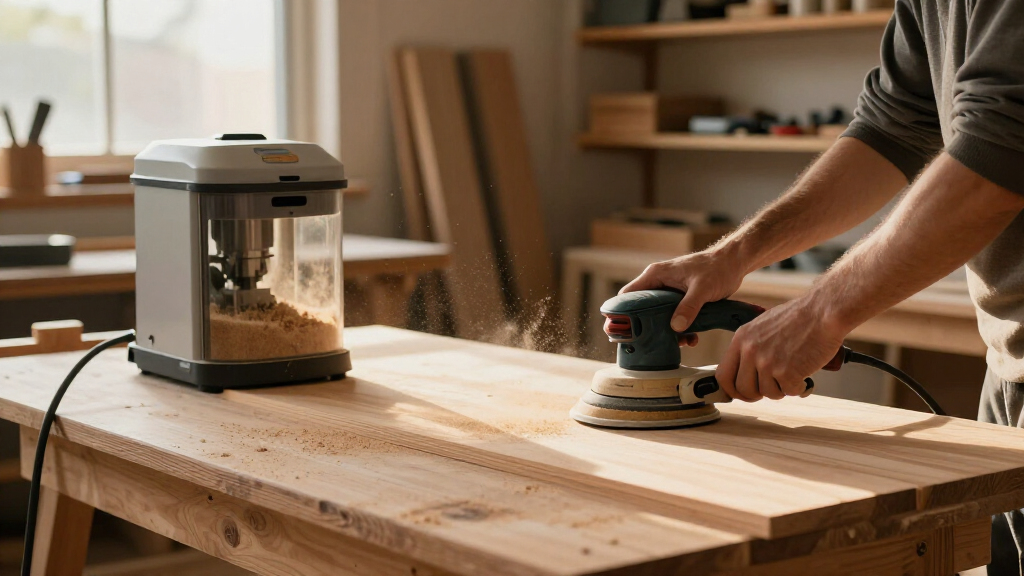

Shopping for woodworking dust extractors means sorting through two very different machines that often get lumped together: high-CFM collectors like the WEN DC1300 that capture chips at stationary machines, and compact HEPA extractors like the Festool CT MIDI I and DEWALT DWV010 that follow your power tools around. For a dedicated woodworking shop with table saws and planers, the WEN DC1300 stands out as the best overall pick thanks to its 1,300 CFM airflow and 50-gallon capacity. If most of your work happens with handheld tools, the Festool MIDI’s tool-triggered suction and HEPA filtration make it the stronger choice, while the BUCKTOOL DC30A-1 wins on floor-space savings as a wall-mounted option. The core tradeoff throughout this roundup is raw airflow versus fine-particle filtration, and matching that balance to your workflow matters more than any single spec. Read on for the full breakdown of all 14 machines.

Get business pricing on tools and workshop supplies
- Business-only prices and quantity discounts
- Tax-exempt purchasing
- Multiple users, one account, clear invoices
Complete the kit


Key Takeaways
- The lineup splits cleanly into two categories: chip-moving collectors (WEN DC1300, Record Power CamVac, BUCKTOOL) and fine-dust extractors for power tools (Festool, Fein, Bosch, DEWALT) — very few buyers actually need both, but buying the wrong type is the most common mistake.
- Filtration rating separated the premium tier from the budget tier more than any other spec: the Fein Turbo II, Festool CT 15, and Bosch VAC090AH carry true HEPA or M-Class filtration, while bag-style collectors like the WEN models stop at 2–5 microns, letting the finest (and most hazardous) dust pass through.
- Automatic filter cleaning proved to be the hidden differentiator among extractors over roughly $300 — DEWALT, Bosch, Festool, and YOWMOFT all include it, and it directly prevents the suction fade that plagues cheaper machines within minutes of heavy sanding.
- Power tool activation is the feature that makes compact extractors genuinely useful rather than just convenient; options without it (like the DYNAVEX) force you to manage two switches for every cut.
- Mid-range offerings like the Rockler Dust Right and ECOMAX blur the line between shop vac and collector, and they make sense only for small shops that can’t fit both machines — a dedicated collector plus a compact extractor remains the more capable two-step solution.


| woodworking dust extractor | Capacity |
|---|---|
| WEN DC1300 1,300 CFM 14-Amp 5- | — |
| Festool 578512 CT MIDI I Dust | — |
| DYNAVEX 10 Amp Portable Woodwo | — |
| BUCKTOOL DC30A-1 Wall-Mount Du | — |
| Fein Turbo II HEPA Wet/Dry Dus | 8.5 gallons |
| Rockler Dust Right 9-Gallon HE | 9 gallons |
| Festool CT 15 Dust Extractor w | — |
| 8-Gallon Dust Extractor Shop V | 8 gallons |
| ECOMAX 8 Gal 6.5 HP HEPA Shop | 8 gallons |
| Record Power CGV336-4-US CamVa | 14.5 gal / 55L |
| WEN DC3401 Woodworking Dust Co | — |
| Bosch VAC090AH 9 Gallon Dust E | 9 gallons |
| DEWALT DWV010 8-Gallon HEPA Du | 8 gallons |
| YOWMOFT CVMA40-S M Class Dust | 10 gallons |
More Details on Our Top Picks
WEN DC1300 1,300 CFM 14-Amp 5-Micron Woodworking Dust Collector with 50-Gallon Collection Bag and Mobile Base, Black
The WEN DC1300 stands out for its impressive airflow of 1,300 CFM, making it a strong choice for serious workshops needing large-volume dust extraction. Its 50-gallon collection bag minimizes the need for frequent emptying, unlike smaller units like the Festool CT MIDI. The mobile base with swivel casters enhances maneuverability, though its bulkiness and weight make it less ideal for tight spaces. Compared to smaller or more portable options, this model delivers unmatched capacity but sacrifices ease of storage. The dual 4-inch inlets allow connection to multiple tools simultaneously, which is beneficial in a busy workshop. However, limited to a single speed, it lacks adjustable airflow control, which could be advantageous for delicate dust tasks. Overall, this pick makes the most sense for workshops with ample space and high dust output, prioritizing capacity and power.
Pros:- High airflow capacity of 1300 CFM for effective dust extraction
- Large 50-gallon collection bag reduces frequent emptying
- Mobile base with swivel casters for easy movement
- Dual inlets allow connection to multiple tools
Cons:- Heavy and bulky design complicates storage and setup
- Single speed operation limits airflow adjustment
- Requires ample space for maneuverability
Best for: Large woodworking shops or setups with high dust output that need a powerful, high-capacity dust collector.
Not ideal for: Small workshops or hobbyists with limited space who prefer portability and easier storage.
- Airflow:1300 CFM
- Motor Power:14 amps
- Collection Capacity:50 gallons
- Inlet Size:4 inches
- Impeller Speed:3450 RPM
- Wheels:4 swivel casters
Our verdict“This dust collector is best suited for large workshops demanding high capacity and powerful airflow, where space and mobility are less constrained.”
Festool 578512 CT MIDI I Dust Extractor
The Festool CT MIDI I excels in capturing fine dust with its HEPA filtration, making it ideal for detailed woodworking projects. Its compact, lightweight canister design offers excellent portability, especially compared to bulkier units like the WEN DC1300. The built-in Bluetooth remote start/stop and AutoClean system streamline workflow, but the single power level may limit control over suction depending on the task. While the corded design restricts movement compared to battery-powered units, its robust chassis and four wheels ensure smooth mobility. Compared with larger dust collectors, this model prioritizes air quality and precision, though it may require additional equipment for larger debris or very heavy-duty tasks. This makes it perfect for fine finish work, but less suitable for high-volume dust collection or workshops with multiple large tools operating simultaneously.
Pros:- HEPA filtration captures fine dust particles effectively
- Bluetooth remote start/stop enhances workflow convenience
- AutoClean system maintains suction performance with minimal manual effort
- Compact and lightweight for easy transport
Cons:- Limited to a single power level, reducing versatility
- Corded operation limits mobility compared to battery options
- Premium pricing may be a barrier for some users
Best for: Woodworkers focused on fine dust control, finishing, or working in noise-sensitive environments where air quality matters.
Not ideal for: Workshops with heavy debris or high dust volumes, where larger capacity and higher airflow are needed.
- Filter Type:HEPA
- Power Source:Corded Electric
- Surface Recommendation:Hard Floor, Tile Floor, Hardwood
- Number of Wheels:4
- Special Features:Bluetooth, AutoClean System
- Impeller Speed:N/A
Our verdict“This dust extractor is ideal for those prioritizing air quality and fine dust filtration in a compact, mobile package.”
DYNAVEX 10 Amp Portable Woodworking Dust Extractor, 12-Gallon Tank
The DYNAVEX 10 Amp provides a balanced mix of power and portability, with 142 CFM airflow capable of capturing fine dust during sawing, sanding, or routing. Its 12-gallon tank reduces the need for frequent emptying, similar to larger units like the WEN, but with added mobility options. The auto-start feature, which links to power tools up to 550 watts, offers automation that’s valuable in busy workshops—though it’s limited to lighter-duty tools for continuous operation. The inclusion of a complete accessory kit and optional wheels enhances its versatility, but the 550-watt limit and the need for wheel installation may be inconvenient for some. Compared to fixed units, this model is a good choice for those who want a portable, auto-linked dust extractor for intermediate tasks. It’s less suited for continuous operation with high-wattage tools or heavy-duty debris removal.
Pros:- Effective 142 CFM airflow captures fine woodworking dust
- Large 12-gallon tank reduces frequent emptying
- Auto-start linked switch automates operation with connected tools
- Complete accessory kit enhances setup flexibility
Cons:- Connected tool wattage limited to 550 watts for continuous use
- Wheels require optional installation, adding setup complexity
- Not designed for heavy-duty or continuous high-wattage operation
Best for: Small to medium workshops needing a portable dust extractor with auto-start linked to standard power tools.
Not ideal for: Heavy-duty workshops or environments with high-wattage tools that require continuous, high-capacity dust collection.
- Motor:1.5 HP, 10-Amp
- Airflow:142 CFM
- Tank Capacity:12 gallons
- Filtration:HEPA
- Auto-Start Socket Limit:550 watts
- Includes:Hose, clamps, filters, fittings
Our verdict“This model suits small to medium workshops needing a portable, auto-linked dust extractor for general woodworking tasks.”
BUCKTOOL DC30A-1 Wall-Mount Dust Collector with Remote Control, 1HP 6.5A, 550CFM, 2-Micron Filter Bag
The BUCKTOOL DC30A-1 offers a compact, space-efficient design with the flexibility of wall-mounting or wheeled mobility, making it ideal for smaller workshops. Its 550 CFM airflow and 1HP TEFC induction motor provide reliable dust extraction, comparable to larger units like the Festool CT MIDI but with more installation options. The inclusion of a long-range remote control adds convenience, especially in tight spaces where manual operation might be cumbersome. The 2-micron filter bag captures fine dust, though it’s recommended to upgrade for optimal filtration. Compared to larger, more mobile units, this model is best for those prioritizing space-saving and remote operation, but the wall-mounting process may require additional hardware and effort. It’s less suitable for workshops with very high dust volumes or heavy debris, where higher capacity units excel.
Pros:- Space-saving wall-mount or wheeled operation
- Remote control with 49-ft range for convenience
- Durable steel impeller and 1HP motor for reliable performance
- Flexible installation options
Cons:- Requires additional hardware for wall mounting
- 2-micron filter bag may need upgrade for finer dust
- Limited airflow compared to larger units
Best for: Small workshops needing space-efficient dust collection with remote operation and flexible installation.
Not ideal for: Large workshops or high-volume dust environments where greater airflow and capacity are needed.
- Motor:1HP TEFC Induction
- Amperage:6.5 Amps
- Air Flow:550 CFM
- Impeller:Steel
- Filter Bag:2-micron
- Remote Control Range:49 ft
Our verdict“This dust collector is ideal for workshops where space is at a premium but remote control and reliable dust extraction are desired.”
Fein Turbo II HEPA Wet/Dry Dust Extractor (9-20-36)
The Fein Turbo II HEPA combines wet and dry capabilities with HEPA filtration, making it a versatile choice for workshops that handle both dust and liquids. Its 151 CFM airflow and 98 PSI static water lift excel in cleaning up debris, liquids, and fine dust, surpassing many dry-only units like the DYNAVEX in handling varied messes. The quiet operation at 66 dB makes it suitable for noise-sensitive environments, and the long 19-foot cord plus 13-foot hose extend its reach across large spaces. The HEPA filter ensures cleaner air, but the unit’s weight of 25 pounds and one-speed operation limit portability and control. Compared to dedicated woodworking dust extractors, this model offers more functionality but at the expense of simplicity and size. It’s best suited for workshops that need both wet and dry cleanup, rather than those focused solely on fine dust collection.
Pros:- Powerful suction handles dust, debris, and liquids
- Quiet operation at 66 dB for noise-sensitive settings
- HEPA filtration ensures clean air and fine dust removal
- Long cord and hose facilitate large workspace coverage
Cons:- Limited to one speed, reducing adjustable control
- Heavy at 25 pounds, impacting portability
- Primarily designed for multi-purpose cleanup, not high-volume dust collection
Best for: Workshops that require versatile dust and liquid cleanup with HEPA filtration, especially in environments where liquids are common.
Not ideal for: Pure woodworking shops focused solely on fine dust collection or those needing high airflow for large debris.
- Motor Power:1100 watts
- Airflow:151 CFM
- Static Water Lift:98 PSI
- Capacity:8.5 gallons
- Noise Level:66 dB
- Filtration:HEPA
Our verdict“This extractor suits workshops needing versatile wet and dry cleanup with HEPA filtration, prioritizing air quality and quiet operation over high airflow capacity.”
Rockler Dust Right 9-Gallon HEPA Dust Collector with Power Tool Activation
This option stands out for how completely it’s equipped out of the box — a 12-foot hose, extension wands, floor brush, and nozzles mean it works as a workshop vacuum and a tool-connected extractor on day one. The automatic tool activation for tools up to 7 amps puts it in the same hands-free category as the ECOMAX 8-Gallon, but the Rockler runs quieter at under 65 dB versus the ECOMAX’s 75 dB, which matters in an attached garage. Pulse filter cleaning and a washable HEPA filter rated to 0.3 microns keep long-term maintenance costs down. The tradeoff is raw power: 85 CFM is modest, so compared with the CamVac CGV336’s 2200W cyclonic system, this is a cleanup-and-handheld-tool machine, not a stationary-equipment dust solution.
Pros:- Automatic start for power tools up to 7 amps for hands-free extraction
- Complete accessory kit included, compatible with the broader 2-1/4″ Dust Right system
- Quiet operation under 65 dB
- Washable HEPA filter with pulse cleaning lowers maintenance costs
Cons:- 7-amp tool limit excludes many larger shop tools
- Single power level with no variable suction control
Best for: Hobbyist woodworkers who want one quiet, mobile unit that doubles as a shop vacuum with full accessories included
Not ideal for: Shops running table saws or planers that generate high chip volumes — 85 CFM won’t keep up with stationary machinery
- Capacity:9 gallons
- Filtration:Washable HEPA, captures particles down to 0.3 microns
- Suction:85 CFM
- Noise Level:≤ 65 dB
- Auto-Start:Power tools up to 7 amps via 110V socket
- Hose Length:12 ft
- Power Cord:20 ft
Our verdict“A well-rounded, quiet pick for small-shop woodworkers who value included accessories and tool-triggered operation over raw suction.”
Festool CT 15 Dust Extractor with HEPA Filter and AutoClean System
The CT 15 is the entry point into Festool’s extractor ecosystem, and that pedigree shows in the build quality and AutoClean system that keeps the HEPA filter clear during continuous sanding — something the generic 8-Gallon Remote Control model simply doesn’t offer. Compared with the Festool CT MIDI I elsewhere in this roundup, the CT 15 trades container size (15L versus larger siblings) for a lighter, more mobile footprint, making it a sensible jobsite companion rather than a shop centerpiece. The flat top doubles as a work surface, a small but genuinely useful touch when space is tight. The honest tradeoff is price: you’re paying a premium for the system fit, and buyers who just need a garage cleanup vac will get more capacity per dollar from the Rockler 9-Gallon.
Pros:- AutoClean system maintains HEPA filter performance during sustained sanding
- Compact and lightweight with a flat top that serves as a work surface
- Three-year warranty reflects strong build confidence
- Integrated seamlessly with Festool tools and hoses
Cons:- Premium pricing for the capacity offered
- 15L container empties quickly in heavy-production shops
Best for: Finish carpenters and Festool tool owners who need a compact, mobile extractor for sanding and on-site work
Not ideal for: Budget-conscious buyers or shop-focused woodworkers — the price buys portability and ecosystem fit, not capacity
- Container Capacity:15L (3.96 gallons)
- HEPA Filter:Yes
- AutoClean System:Yes
- Included Accessories:Crevice and upholstery nozzles
- Form Factor:Compact, lightweight with flat work surface
- Warranty:3 years
Our verdict“The smart choice for mobile tradespeople invested in the Festool system who prioritize filter longevity and portability over raw capacity.”
8-Gallon Dust Extractor Shop Vacuum with Remote Control
This model makes the list for versatility per dollar: dry vacuuming, wet pickup, and even a blower mode in one 8-gallon body. None of the other picks here handle wet messes — the Rockler and ECOMAX are dry-only — so if your workshop cleanup includes spills or damp debris, this 3-in-1 design earns its place. The remote control mirrors the convenience of the YOWMOFT CVMA40-S elsewhere in this roundup, letting you switch the unit on without walking back to the tank. HEPA filtration plus a 30L paper bag protects the motor and preserves suction as the bag fills. The compromises are real, though: a 1000W motor trails the ECOMAX’s 6.5 HP output, and you’ll spend time assembling wheels and accessories before first use.
Pros:- 3-in-1 dry, wet, and blowing functions cover nearly every cleanup scenario
- HEPA filter plus paper bag system protects the motor and maintains suction
- Remote control adds hands-off convenience
- 8-gallon tank reduces how often you stop to empty
Cons:- 1000W motor is underpowered compared with dedicated woodworking extractors
- Requires assembly of wheels and accessories out of the box
Best for: Garage tinkerers and casual woodworkers who want one affordable machine for dry dust, wet spills, and blowing off the workbench
Not ideal for: Serious dust-control enthusiasts — the modest motor lacks the suction and filtration refinement of dedicated extractors like the Bosch VAC090AH
- Capacity:8 gallons
- Motor Power:1000W
- Functions:Dry, wet, and blowing (3-in-1)
- Filtration:HEPA filter with 30L paper bag
- Remote Control:Yes, with Velcro strap
- Included:2 straight tubes, hose, brushes, pagoda adapter, wheels, swivel casters
Our verdict“A practical budget pick for general workshop cleanup where flexibility matters more than professional-grade dust extraction.”
ECOMAX 8 Gal 6.5 HP HEPA Shop Vac and Dust Extractor with Power Tool Activation
This pick makes the most sense for woodworkers who want power-tool-activated extraction without the premium price of a Festool CT 15 or Fein Turbo II. With a 6.5 HP motor and dual power levels, it offers more grunt than the 1000W 3-in-1 Remote Control model, and the semi-automatic HEPA filter cleaning with a dust-full indicator addresses the biggest weakness of budget shop vacs — suction fade as the filter clogs. The anti-static 10-foot hose is a thoughtful touch that the Rockler doesn’t match, reducing those annoying shocks in dry winter shops. Tradeoffs: at 75 dB it’s the loudest of this group, and the corded design with a shorter hose limits reach compared with the Rockler’s 12-foot hose and 20-foot cord.
Pros:- Power Tool Activation starts extraction automatically when the tool fires
- Semi-automatic HEPA filter cleaning with dust-full indicator sustains suction
- Anti-static hose prevents shocks and dust cling
- Generous accessory kit covers workshop, garage, and vehicle cleanup
Cons:- 75 dB operation is noticeably loud
- 10-foot hose and corded design limit mobility around a larger shop
Best for: Value-focused woodworkers connecting handheld power tools like sanders, routers, and circular saws to dedicated dust collection
Not ideal for: Noise-sensitive shared spaces — 75 dB is loud enough to require hearing protection during long sessions
- Capacity:8 gallons
- Motor:6.5 HP, 15A, 120V
- Filter Type:HEPA (cleanable), plus 3 disposable bags and foam filter
- Power Levels:2
- Hose:10 ft anti-static
- Noise Level:75 dB
- Auto-Start:Yes, via power tool activation
Our verdict“The strongest value among tool-triggered extractors here, delivering near-premium features at a mainstream price with some noise penalty.”
Record Power CGV336-4-US CamVac 14.5 Gal/55L 2200W Compact Cyclonic Dust Extractor with 4″ Inlet
This option stands out as the only machine-grade extractor in this batch, with a 4-inch inlet and 2200W of combined airflow and static pressure designed to serve stationary tools — something the smaller hose-based units like the ECOMAX or Rockler cannot do. The cyclonic separation means chips drop into the 55L drum before reaching the filter, and the sub-micron filter captures 95% of 0.3-micron particles, putting its fine-dust performance in genuine HEPA territory rather than the coarser 5-micron collection of a WEN DC1300 bag-style collector. Compared with the BUCKTOOL wall-mounted unit elsewhere in this roundup, the CamVac offers finer filtration and a mobile, compact footprint. The drawbacks are cost of completeness — the exhaust muffler that cuts noise by 10 dB is sold separately — and a capacity that suits small shops rather than industrial output.
Pros:- Sub-micron filtration removes 95% of hazardous 0.3-micron dust
- 4-inch inlet and 2200W output handle stationary woodworking machines
- Cyclonic separation extends filter life by dropping chips first
- Secure bayonet hose connections with included 2m of 100mm ducting
Cons:- Optional exhaust muffler sold separately despite promising 10 dB noise reduction
- 55L capacity limits suitability for high-volume industrial shops
Best for: Small-shop woodworkers running table saws, jointers, and lathes who need fine-dust filtration at machine volumes
Not ideal for: Handheld-tool-only users — the 4-inch inlet system is overkill and less convenient than a hose-based extractor like the Festool CT 15
- Capacity:14.5 gal / 55L
- Power:2200W
- Inlet Size:4″ / 100mm
- Filter:Sub-micron, 95% of 0.3-micron particles
- Included:100mm bayonet adaptor, 2m flexible 100mm hose, DX100X Easy Fit Cuff
- Noise Reduction:Up to 10 dB with optional CVA250-10-102 muffler
- Region:USA/CAN model
Our verdict“The pick for woodworkers whose priority is connecting stationary machines to serious fine-dust filtration in a compact footprint.”
WEN DC3401 Woodworking Dust Collector, 5.7-Amp Motor with 12-Gallon Bag and Mobile Base
Most extractors in this roundup move around 150 CFM, but the WEN DC3401 pushes up to 660 CFM through a 6-inch impeller, which puts it in a different category: this is a chip collector for stationary machines, not a fine-dust vacuum for handheld tools. That distinction matters when you’re hooking it to a table saw or planer, where shaving volume matters more than micron-level filtration. Compared with the WEN DC1300, you trade the 50-gallon bag and higher capacity for a far smaller footprint and a lighter 17-pound build that rolls on lockable casters or mounts to a wall. The tradeoff is real, though: a 5-micron bag lets the finest, most hazardous dust pass back into your shop air, so pair it with ambient air filtration if lung protection is your priority.
Pros:- 660 CFM airflow far exceeds the 150 CFM typical of dust extractors in this lineup
- Lightweight at 17 pounds with casters, a carry handle, and optional wall mounting
- Standard 4-inch port connects directly to most stationary woodworking tools
- Two-year warranty backs the budget price point
Cons:- 5-micron filtration lets fine, health-hazardous dust recirculate into shop air
- Single 4-inch port prevents running multiple machines at once without ductwork
Best for: Hobbyist woodworkers with a small shop who need serious chip-hauling airflow from a table saw, jointer, or planer without giving up floor space
Not ideal for: Anyone sanding indoors or working with fine dust — the 5-micron bag won’t capture the sub-micron particles a HEPA unit like the DEWALT DWV010 traps
- Model:DC3401
- Motor:5.7-amp brushed
- Impeller:6-inch
- Airflow:660 CFM
- Dust Port Size:4-inch
- Collection Bag:12-gallon, 5-micron zippered
- Dimensions:34.25 x 13 x 14.2 inches
- Weight:17 pounds
- Warranty:2 years
Our verdict“Buy this if your main enemy is chips and shavings from stationary machines and you want maximum airflow per dollar — skip it if fine dust control is the goal.”
Bosch VAC090AH 9 Gallon Dust Extractor with Auto Filter Clean
The Bosch VAC090AH is built around a regulatory problem: concrete and masonry grinding that kicks up respirable silica. With HEPA filtration at 99.97% of 0.3-micron particles and alignment with OSHA Silica Table 1, this is the pick when compliance paperwork is as important as clean air. Its automatic filter cleaning every 15 seconds is more aggressive than the 30-second pulses on the DEWALT DWV010, which helps maintain suction during continuous grinding where filter loading is relentless. The Power Broker dial splits amp draw between tool and vacuum, a smart touch on crowded circuits. The honest limitation: this machine was engineered around grinders like the Bosch 1773AK, so compared with a generalist like the Fein Turbo II, it feels less versatile as an all-around shop vacuum.
Pros:- Automatic filter cleaning every 15 seconds maintains suction during continuous heavy grinding
- HEPA filtration captures 99.97% of particles down to 0.3 microns
- Power tool activation with Power Broker dial manages shared circuit load
- Supports OSHA Silica Table 1 compliance as part of the PRO plus GUARD system
Cons:- Purpose-built for grinder pairing, reducing versatility for general shop use
- 150 CFM airflow is modest next to chip collectors like the WEN DC3401
Best for: Contractors and remodelers doing concrete grinding or masonry work who need documented OSHA silica compliance and constant suction under heavy dust load
Not ideal for: General woodworking shops wanting one vacuum for everything — its grinder-first design limits flexibility compared with multi-tool extractors
- Capacity:9 gallons
- Max Airflow:150 CFM
- Max Static Water Lift:97 in.
- Filter:HEPA (99.97% at 0.3 microns)
- Filter Cleaning:Automatic, every 15 seconds
- Power Tool Activation:Yes
- OSHA Silica Table 1 Compliant:Yes
Our verdict“This is the compliance-first choice for silica-generating work — generalist woodworkers will get more day-to-day value elsewhere.”
DEWALT DWV010 8-Gallon HEPA Dust Extractor with Automatic Filter Cleaning
Where the Bosch VAC090AH leans toward silica grinding, the DEWALT DWV010 casts a wider net, meeting the EPA RRP Rule for HEPA vacuums used in lead-safe renovation work — a certification that matters enormously for remodelers working in older homes. Its automatic filter pulses every 30 seconds keep operation continuous, and the 15-foot anti-static hose gives it real reach across a jobsite, longer than most competitors here. Power tool actuation means the vacuum starts with your sander or saw, the same convenience the Bosch offers. Two caveats temper the pitch: RRP compliance only holds when fitted with the separately specified DWV9330 filters, and that 15-amp motor can trip breakers on older residential panels. It’s a durable, jobsite-hardened tool rather than a refined shop unit like the Festool CT 15.
Pros:- Meets EPA RRP lead-safe standards when paired with DWV9330 filters
- Automatic filter cleaning every 30 seconds enables uninterrupted work
- 15-foot anti-static hose offers longer reach than most extractors in this class
- Heavy-duty wheels and casters survive jobsite abuse
Cons:- RRP compliance depends on separately specified DWV9330 filters, not the stock setup
- 15-amp motor can overload smaller jobsite power supplies
Best for: Remodelers and renovation contractors who need EPA RRP-compliant HEPA extraction for lead dust work plus everyday power tool cleanup on rough jobsites
Not ideal for: Workshops on older 15-amp circuits shared with other tools — the motor draw will trip breakers
- Capacity:8 gallons
- Motor:15 amps
- Airflow:150 CFM
- Filter Cleaning:Automatic, pulses every 30 seconds
- Hose Length:15 ft (anti-static)
- Hose Diameter:1.25 inches
- Compliance:EPA RRP Rule for HEPA vacuums (with DWV9330 filters)
Our verdict“The go-to HEPA extractor for contractors juggling lead-renovation rules and jobsite durability — overkill for a casual home shop.”
YOWMOFT CVMA40-S M Class Dust Extractor, 10 Gallon with Remote Control, Auto HEPA Clean & Dust Indicator Light
The YOWMOFT CVMA40-S competes on convenience features the big brands charge a premium for. A remote control working up to 5 meters lets you kill the vacuum from across the shop instead of walking back to the unit — the same trick the BUCKTOOL DC30A-1 offers, but here it’s paired with true M Class certification and HEPA filtration at 99.97% of 0.3 microns. The dust indicator light is a genuinely useful touch the Bosch and DEWALT units don’t match in such an obvious way, telling you at a glance when the filter is loading up before suction quietly degrades. Its universal tool port connects to table saws, sanders, and cutters without adapters. Against the Festool CT MIDI I, you give up brand refinement and ecosystem integration, and the 10-gallon tank still needs frequent emptying in a busy shop — plus it’s rated indoor only.
Pros:- Remote control up to 5 meters allows hands-free operation from anywhere in a small shop
- Automatic HEPA self-cleaning prevents filter clogging and sustained suction loss
- M Class filtration captures 99.97% of particles down to 0.3 microns
- Universal connection port fits table saws, sanders, and most power tools without fuss
Cons:- 10-gallon capacity demands frequent emptying in high-volume workshops
- Indoor-only rating limits outdoor and jobsite flexibility
Best for: Woodworkers running multiple tools across a garage or basement shop who want remote start/stop and M Class filtration without Festool pricing
Not ideal for: High-volume production shops pumping out dust all day — the 10-gallon tank fills fast, and outdoor use isn’t supported
- Model:CVMA40-S
- Capacity:10 gallons
- Airflow:150 CFM
- Filter Type:HEPA
- Filtration Efficiency:99.97% of particles down to 0.3 microns
- Dust Class:M Class
- Remote Control Range:Up to 5 meters
- Special Features:Remote control, auto HEPA clean, dust indicator light
Our verdict“A feature-dense M Class extractor for small-shop woodworkers who value remote convenience and clean air over brand prestige.”

How We Picked
My ranking logic starts with a simple question: what kind of dust does this machine actually need to capture? Stationary woodworking machines throw off large volumes of chips and coarser dust, which demands high CFM (ideally 650+) and large-diameter inlets. Handheld routers, sanders, and track saws produce fine particulate, which demands sealed HEPA or M-Class filtration and tool-triggered activation. I evaluated each extractor against the job it claims to do, then compared filtration ratings, tank or bag capacity, noise, mobility, and maintenance burden.
From there, I weighted real-world usability over peak specs. A collector with a huge CFM number but a 5-micron bag fails the fine-dust test; a HEPA extractor without automatic filter cleaning loses suction during real sanding sessions. Features like remote controls, power tool activation, and mobile bases earned weight because they determine whether a machine gets used daily or gathers dust itself. Finally, I factored in capacity and footprint, since shop space constraints quietly disqualify more options than any performance spec does.
Factors to Consider When Choosing Woodworking Dust Extractors
Before picking a specific model, it helps to understand the category’s broader landscape. These are the factors that actually drive satisfaction — and the mistakes I see buyers make most often.Collector or Extractor: Know Which Problem You’re Solving
This is the single biggest decision, and getting it wrong wastes the entire purchase. A dust collector (like the WEN DC1300 or Record Power CamVac) moves massive air volume through 4-inch ducting to capture chips at the source — it’s the right tool for table saws, jointers, and planers. A dust extractor (like the Fein Turbo II or Festool MIDI) prioritizes sealed fine-particle filtration and works with handheld power tools through smaller hoses. A collector’s typical 5-micron bag will not protect your lungs from sanding dust, and an extractor’s airflow will choke on a planer’s chip stream. Many serious woodworkers eventually own both, connected to different machines — if you can only buy one, buy for the tool you use most.
Filtration Rating and Why Microns Matter
Filtration claims are where marketing gets slippery. A 5-micron bag catches chips and visible dust but passes the sub-micron particles that reach deep into your lungs — the ones health agencies actually warn about. 2-micron bags (like the BUCKTOOL’s) are better but still not lung protection. True HEPA and M-Class ratings capture 99.9%+ of particles down to 0.3 microns, and they’re sealed systems, meaning air can’t leak around the filter the way it can in a bag-style collector. If you sand, rout, or work indoors, this is the spec worth paying extra for. Also check whether the filter is washable or replaceable, because consumable costs compound over years of use.
CFM, Static Pressure, and Honest Airflow Expectations
Manufacturers quote CFM with zero resistance — no hose, no filter, no ductwork — so real-world performance is always lower. What matters more is how airflow holds up under load. Collectors with 1,000+ CFM ratings like the WEN DC1300 can afford to lose half their airflow and still move chips; a 100 CFM shop vac cannot. Duct diameter matters too: a 2.5-inch hose can never feed a machine rated for a 4-inch inlet without choking it. And a clogged filter is the most common cause of mysterious suction loss — which is why machines with automatic filter cleaning maintain their rated performance for far longer between maintenance sessions than those without.
Power Tool Activation and Workshop Workflow
Tool-triggered activation — where the extractor starts automatically when you switch on your sander or router — sounds like a luxury but changes daily behavior more than almost any other feature. Without it, you’re reaching for a second switch on every cut, and inevitably there are days you skip it. Machines like the Festool MIDI, Rockler Dust Right, ECOMAX, and Bosch VAC090AH include this. Check the amp rating of the outlet: extractors with power-tool sockets typically handle tools up to a specified amperage, and a 15-amp table saw won’t work through one. This feature only matters for handheld tools, so don’t pay for it if you’re buying purely for stationary machines.
Capacity, Footprint, and Noise
Capacity choices carry real tradeoffs. A 50-gallon bag (WEN DC1300) means emptying monthly; a 9-gallon tank (Bosch, DEWALT, Rockler) might need emptying mid-project during heavy planing — but it also fits under a workbench. Wall-mounted units like the BUCKTOOL free up floor space entirely but cap your expansion options. Noise is the underrated factor: bag collectors roar at levels that make hearing protection mandatory and neighbor complaints possible, while canister extractors run noticeably quieter. If you work in a garage attached to a house or a shared space, a quieter compact extractor may serve you better than a louder, higher-capacity collector you’re afraid to run in the evening.
Common Mistakes and Total Cost of Ownership
The most frequent error I see is buying an extractor for a dust-collection problem or vice versa — followed closely by underestimating consumables. Bags, HEPA filters, and collection liners are recurring costs, and some proprietary filters (particularly Festool and Fein) cost more than a budget shop vac. Another mistake is ignoring static pressure losses from long duct runs: a collector rated for a one-machine garage will struggle with 20 feet of duct and multiple blast gates. Finally, don’t buy capacity you won’t move around. A 50-gallon collector on a mobile base only works if your floor is clear enough to roll it; a wall-mounted unit only works if your layout is permanent. Match the machine to the shop you actually have, not the one you imagine.
Frequently Asked Questions
Do I need a dust collector, a dust extractor, or both?
If you run stationary machines like a table saw, planer, or jointer, you need a dust collector — high CFM through a 4-inch duct is the only thing that keeps up with chip volume. If your work centers on handheld tools like sanders, routers, and track saws, a compact HEPA extractor is the better fit because it captures the fine particles those tools produce. Owning both is the ideal setup for a serious shop, and it’s cheaper than buying one machine that tries to do both jobs poorly. A mid-size option like the Record Power CamVac or Rockler Dust Right can bridge the gap if budget or space forces a single purchase. The mistake to avoid is assuming one machine’s spec sheet covers both use cases — it almost never does.
Is a 5-micron filter bag good enough for woodworking?
For capturing chips and shavings, yes — a 5-micron bag like the WEN DC1300’s does that job well. The problem is what it doesn’t capture: wood dust below 5 microns is exactly the fraction that penetrates deepest into your lungs, and it’s the size most linked to long-term respiratory harm. A 5-micron bag effectively recirculates the most hazardous dust back into your shop air. Upgrading to a 2-micron bag (as on the BUCKTOOL) improves things, but true protection comes from sealed HEPA or M-Class filtration, whether that’s in a secondary air filter or a dedicated extractor. Many woodworkers run a bag collector for chips plus an ambient air filter or HEPA extractor for fine dust, which addresses both problems without replacing the collector.
What does automatic filter cleaning actually do, and is it worth paying for?
Automatic filter cleaning periodically pulses or knocks accumulated dust off the filter while the machine runs, keeping airflow near its rated level. Without it, fine dust cakes into the filter within minutes of heavy sanding, and suction drops noticeably — you’ll find yourself stopping to bang the filter clean mid-project. Machines like the DEWALT DWV010, Bosch VAC090AH, Festool CT 15, and YOWMOFT CVMA40-S include this feature, and it’s one of the clearest dividing lines between occasional-use and daily-use machines. If you sand regularly or work with MDF (which produces especially clogging dust), it’s genuinely worth the premium. If your extractor only runs for quick cuts and cleanup, manual cleaning is a minor inconvenience rather than a dealbreaker.
Can I use a regular shop vac instead of a dedicated dust extractor?
You can, but with real limitations. A standard shop vac moves far less air than a collector, so it captures chips only when the hose is placed very close to the source, and most shop vacs leak fine dust through and around their filters — they recirculate rather than capture the hazardous particles. A dedicated extractor adds three things: sealed HEPA filtration, power-tool activation so suction starts with your tool, and regulated motor duty cycles designed for continuous running. For occasional handheld-tool cleanup, a shop vac with a fine-dust bag is workable. For anyone sanding or routing weekly, the difference in both air quality and convenience justifies a purpose-built machine like the Fein Turbo II or ECOMAX.
How much capacity do I actually need?
Capacity should match both your project volume and your emptying tolerance. A 50-gallon collection bag like the WEN DC1300’s suits stationary-machine work, where a single planing session can generate gallons of chips — but only if you have the floor space for it. For handheld-tool use, an 8-to-12-gallon tank (DEWALT, Bosch, YOWMOFT, DYNAVEX) is usually plenty, since fine dust packs densely and fills slowly. Undersizing means interrupting work to empty mid-project; oversizing means a heavier, bulkier machine you roll around less often than you’d like. One useful middle path is the Rockler Dust Right’s 9-gallon HEPI tank, which handles power-tool dust for weeks between empties. As a rule, plan for at least twice the capacity you think you’ll produce per session.
Conclusion
The right pick here depends entirely on what your shop looks like. For a dedicated woodworking space with stationary machines, the WEN DC1300 is my best overall recommendation — its 1,300 CFM airflow and 50-gallon bag handle chip volume that no compact extractor can touch. On a tighter budget, the WEN DC3401 offers the best value for small shops, while the BUCKTOOL DC30A-1 wins for garages where floor space is the scarcest resource thanks to its wall-mounted design with remote control. For beginners doing mostly handheld-tool work, the Rockler Dust Right or ECOMAX delivers HEPA filtration and tool activation without a steep learning curve or premium price.
At the premium end, the Fein Turbo II and Festool MIDI I are the standout choices for finish work and site-based work — sealed HEPA filtration, quiet operation, and tool-triggered suction justify the cost if fine dust is your daily reality. The Bosch VAC090AH and DEWALT DWV010 split the difference with automatic filter cleaning at a lower price, making them the smart picks for high-volume sanding. And for a specific need — a compact machine that still moves serious air through 4-inch ducting — the Record Power CamVac is the niche answer. Whatever you choose, buy for the tools you actually run today, and let the machine’s category, not its spec sheet, make the decision.
Halloween Picks
halloween
As an affiliate, we earn on qualifying purchases.