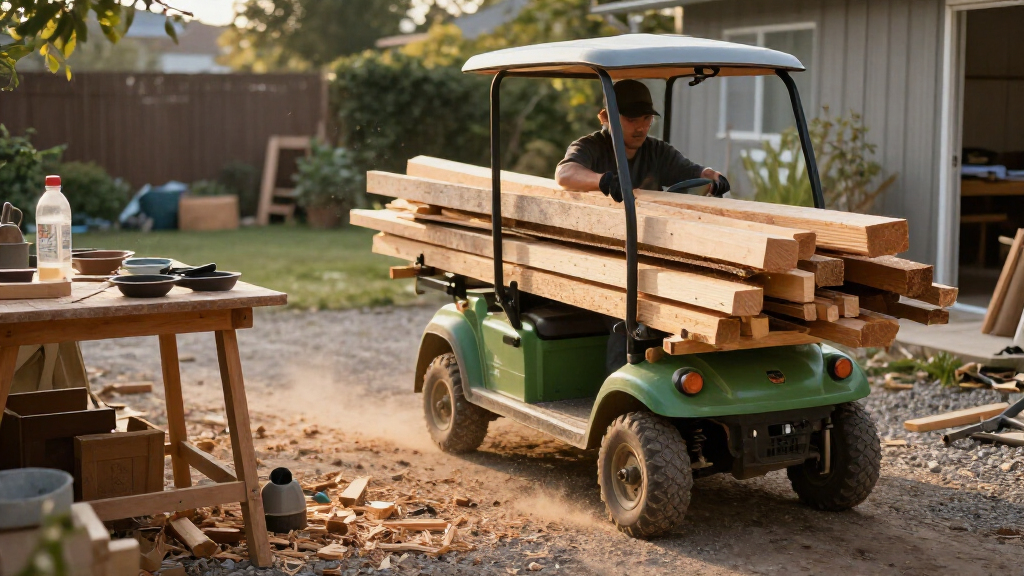
When searching for the best electric utility task vehicles, most buyers struggle to balance raw hauling power with portability and battery endurance. My analysis places the NAVEE 4X Electric Wagon at the top for its exceptional 3000W motor and 770 lb dynamic load capacity, making it ideal for serious off-road work. For those needing a budget-friendly option without sacrificing basic utility, the WORKPRO X Series 40V Electric Wheelbarrow offers solid performance for lighter tasks. The primary tradeoff in this category lies between heavy-duty 4WD systems, which offer superior traction and payload but weigh more and cost more, and lighter 2WD carts that are easier to store but struggle on steep inclines. Continue reading to see how these 13 models stack up against one another and which one fits your specific workload.

Get business pricing on tools and workshop supplies
- Business-only prices and quantity discounts
- Tax-exempt purchasing
- Multiple users, one account, clear invoices
Complete the kit



Key Takeaways
- Motor wattage alone is a poor indicator of performance; the NAVEE 4X’s 3000W system outperforms lower-wattage rivals primarily due to superior torque delivery and all-terrain gearing.
- Battery chemistry and capacity (Ah) matter more than voltage (V) for range; models like the VEVOR 36V with 432Wh offer predictable range, while higher-voltage units often lack clear Wh specifications.
- Static load capacity is frequently overstated in marketing; dynamic load (moving weight) is the true safety metric, with the NAVEE 770 lb dynamic rating significantly exceeding the 500-660 lb limits of most competitors.
- Foldable designs compromise structural rigidity; the non-foldable or rigid-frame carts like the ASHOMELI Tricycle provide better stability for uneven terrain compared to collapsible wagons.
- 4WD systems are only necessary for loose surfaces like sand or mud; for paved or packed dirt paths, 2WD models with larger tires offer better value and lighter weight.
| BougeRV Electric Utility Cart with Auto Hold, 660 lb Capacity |  | Best for Slope Control | Model: GC660 | Load capacity: 660 lb | Towing capacity: 1,000 lb | VIEW LATEST PRICE | See Our Full Breakdown |
| WORKPRO X Series 40V Electric Wheelbarrow, 440 lb Capacity |  | Best for Garden and Jobsite Dumping | Motor: 300W brushless | Battery system: Two 20V 4.0Ah batteries, 40V combined | Runtime: Up to 70–75 minutes | VIEW LATEST PRICE | See Our Full Breakdown |
| VEVOR Electric Utility Cart – 36V 432Wh Battery-Powered Wagon, 500W Motor, 660 lb Capacity with Brake |  | Best Heavy-Duty Four-Wheel Utility Cart | Voltage: 36 V | Battery capacity: 432 Wh | Motor power: 500 W | VIEW LATEST PRICE | See Our Full Breakdown |
| GT3 Electric Wagon Cart with Adult Seat – Rideable, Tow‑Assist, Foldable Motorized Utility Wagon, 1500 W, 551 lb Load Capacity |  | Best for Long-Range Ride-and-Haul Work | Peak power: 1500 W | Battery: 36V 12Ah LiFePO4, quick-release | Listed range: About 18.6 miles | VIEW LATEST PRICE | See Our Full Breakdown |
| FALANS Foldable Electric Wagon Cart with Rider Seat |  | Best Compact-Folding Rideable Wagon | Model: F-006 | Motors: Dual 250W | Driving modes: 3 | VIEW LATEST PRICE | See Our Full Breakdown |
| NAVEE 4X Electric Wagon Cart with Seat |  | Best for Heavy-Duty Terrain | Motor Power: 3000W | Drive System: 4WD | Dynamic Load Capacity: 770 lbs | VIEW LATEST PRICE | See Our Full Breakdown |
| WiseLD GT3 Electric Wagon |  | Best Versatility & Battery Flexibility | Motor Power: 2x 1500W (Dual Front) | Dynamic Load Capacity: 551 lbs | Static Load Capacity: 772 lbs | VIEW LATEST PRICE | See Our Full Breakdown |
| 60V 1500W Electric Wheelbarrow with Automatic Dump Cart |  | Best for Construction & Landscaping | Motor: 60V, 1500W Brushless | Battery: 60V, 20Ah Lithium | Max Load Capacity: 2205 lbs (Claimed) | VIEW LATEST PRICE | See Our Full Breakdown |
| ASHOMELI 1000W Electric Cargo Tricycle |  | Best for Long-Distance Transport | Motor Power: 1000W | Battery: 60V 45Ah | Range: 60-70 km (approx. 37-43 miles) | VIEW LATEST PRICE | See Our Full Breakdown |
| Goodyear Electric Power Wagon 48V |  | Best Modular Utility Cart | Voltage: 48 V | Working Load Capacity: 660 lbs | Hauling Capacity: 1000 lbs | VIEW LATEST PRICE | See Our Full Breakdown |
| Landworks Electric Utility Cart |  | Best for Heavy-Duty Warehouse & Garage Use | Motor Power: 500W | Battery Type: Four 12V 7Ah sealed lead-acid | Load Capacity: 500 lbs | VIEW LATEST PRICE | See Our Full Breakdown |
| BougeRV Electric Utility Wagon with Expandable Tailgate |  | Best Compact & Portable Option | Max Load Capacity: 440 lb | Motors: Dual 250W brushless hub motors | Battery: 133Wh removable | VIEW LATEST PRICE | See Our Full Breakdown |
| WISELD GT3 4WD Electric Utility Wagon Cart |  | Best for Versatility & Off-Road Performance | Motor Power: 3000W (4WD) | Dynamic Load: 771 lbs (4WD) | Battery: 36V 12Ah LiFePO4 | VIEW LATEST PRICE | See Our Full Breakdown |
More Details on Our Top Picks
BougeRV Electric Utility Cart with Auto Hold, 660 lb Capacity
The BougeRV GC660 is the strongest fit here for buyers moving heavy loads over uneven property where rollback matters. Its 660 lb capacity, 1,000 lb towing rating and automatic hill hold give it more hauling flexibility than the WORKPRO X Series, which is built around a smaller 440 lb hopper load. Detachable side panels also let the BougeRV switch between contained cargo and flatbed use, handy for bulky materials that do not fit neatly in a bin.
The tradeoff is its sealed lead-acid battery and up-to-4.5-mile full-load range: this is better for planned work close to a charging point than long routes. At 131.2 lb, it is also a substantial cart to move when unpowered. Choose it for short, demanding hauling jobs; skip it if distance and low-lift storage matter more than towing capacity and hill hold.
Pros:- 660 lb load capacity and 1,000 lb towing capacity support both cargo hauling and pulling equipment.
- Automatic hill hold helps limit rollback on inclines up to 15°.
- Detachable side panels allow cargo-bed or flatbed configurations.
- All-terrain setup includes 14-inch inflatable front tires and 8-inch flat-free rear swivel wheels.
Cons:- Full-load range is limited to up to 4.5 miles.
- Sealed lead-acid battery is heavier than a comparable modern lithium pack.
- At 131.2 lb, it can be difficult to reposition or load when unpowered.
Best for: Property owners and maintenance crews hauling heavy loads or towing equipment across slopes, gravel, grass, and dirt over short distances.
Not ideal for: Buyers covering long routes between charges, or anyone who needs a light cart that is easy to lift and transport without power.
- Model:GC660
- Load capacity:660 lb
- Towing capacity:1,000 lb
- Maximum incline:15°
- Battery:48V 7.5Ah sealed lead-acid (4 × 12V)
- Full-load range:Up to 4.5 mi (5 km)
- Maximum forward speed:3.17 mph (5.1 km/h)
- Dimensions:57.64 × 25.71 × 41.77 in (D × W × H)
- Weight:131.2 lb
Our verdict“Choose the BougeRV if hill hold, towing, and heavy short-haul work matter more than range or easy transport.”
WORKPRO X Series 40V Electric Wheelbarrow, 440 lb Capacity
The WORKPRO X Series is the more task-specific choice for moving soil, mulch, or debris that needs to be tipped out, rather than carried in a general-purpose wagon. Its 75L hopper and assisted dump mechanism reduce both carrying and unloading effort, while three forward speeds and reverse provide useful control in tight work areas. The brushless 300W motor is a practical contrast with the VEVOR cart’s larger 500W motor: WORKPRO prioritizes a wheelbarrow format and controlled dumping over a higher stated motor output or 660 lb payload.
Its 440 lb capacity is enough for many garden and light construction jobs, but it trails the BougeRV and VEVOR on rated load. Runtime is also capped at up to 70–75 minutes per charge, so repeated all-day hauling may require a charging plan. Pick it when dumping is central to the job; choose a flatbed-style cart for oversized cargo that will not sit well in a hopper.
Pros:- Assisted dumping reduces the effort needed to unload soil and loose materials.
- 75L hopper provides a contained space for garden and jobsite loads.
- Three forward speeds and reverse help with maneuvering and pace control.
- Electronic braking supports controlled movement on slopes up to 15°.
Cons:- 440 lb load limit is lower than the BougeRV GC660 and VEVOR cart.
- Runtime is limited to up to 70–75 minutes per charge.
- Hopper format is less suited to wide, bulky, or flat cargo.
Best for: Gardeners and small-site crews regularly moving soil, compost, mulch, or debris that they need to dump with less lifting.
Not ideal for: Buyers hauling loads above 440 lb, oversized flat cargo, or materials requiring extended operation beyond its stated runtime.
- Motor:300W brushless
- Battery system:Two 20V 4.0Ah batteries, 40V combined
- Runtime:Up to 70–75 minutes
- Hopper capacity:75L
- Load capacity:440 lb
- Forward speeds:3, up to 2.8 mph
- Maximum slope:15°
- Brakes:Electronic
- Dimensions:56.69 × 25.59 × 39.76 in (D × W × H)
Our verdict“Choose the WORKPRO when assisted dumping matters more than the higher payload and flatbed flexibility of the larger utility carts.”
VEVOR Electric Utility Cart – 36V 432Wh Battery-Powered Wagon, 500W Motor, 660 lb Capacity with Brake
The VEVOR electric utility cart takes a straightforward heavy-hauling approach: a 500W motor, 660 lb capacity, steel frame, and four pneumatic tires. Its stated 432Wh battery gives buyers a useful energy-capacity figure that is absent from the BougeRV listing, while the electronic braking system is intended to help control loads on slopes. Compared with the WORKPRO X Series, VEVOR carries 220 lb more by rated capacity and uses a general cargo-cart layout rather than a dumping hopper, making it more adaptable to tools, wood, and mixed materials.
The cost of that capacity is a 125.7 lb unpowered weight, and inflatable tires can puncture or need air and upkeep. The provided specifications do not state a range or runtime, so buyers planning long work sessions should not assume it will outlast the BougeRV. This is a better fit for heavy, varied loads than for frequent transport or buyers who need a clearly specified operating distance.
Pros:- 660 lb load capacity suits heavier jobs than the WORKPRO X Series.
- 500W motor and electric assist reduce pushing effort on rough terrain.
- Steel frame supports demanding utility use.
- Electronic braking adds control when managing loads on slopes.
Cons:- At 125.7 lb, the cart is difficult to move by hand or transport when unpowered.
- Inflatable tires can puncture and require maintenance.
- The supplied product data does not specify range or runtime.
Best for: Landscapers and property owners who need a high-capacity four-wheel cart for tools, wood, soil, and mixed loads on rough ground.
Not ideal for: Buyers who frequently load the cart into a vehicle, want puncture-resistant tires, or need a stated range before planning longer routes.
- Voltage:36 V
- Battery capacity:432 Wh
- Motor power:500 W
- Load capacity:660 lb
- Wheels:4 inflatable rubber tires
- Frame material:Steel
- Braking:Electronic braking system
- Dimensions:51.18 × 25.59 × 43.31 in (L × W × H)
- Weight:125.7 lb
Our verdict“Choose the VEVOR for heavy, mixed cargo over rough ground if its weight and unspecified range fit your work routine.”
GT3 Electric Wagon Cart with Adult Seat – Rideable, Tow‑Assist, Foldable Motorized Utility Wagon, 1500 W, 551 lb Load Capacity
The AHPERCENT GT3 is the most ride-oriented option in this group, pairing a seat and foldable design with tow-assist, reverse, cruise control, and hill-assist. Its 36V 12Ah LiFePO4 battery is listed for about 18.6 miles of range, a major contrast with the BougeRV’s up-to-4.5-mile full-load figure. That makes the GT3 a better match for spreading work across a large property or campsite, while its 1500W peak power and stated 30% slope capability target terrain beyond the more conventional WORKPRO wheelbarrow’s stated 15° limit.
There is a meaningful payload compromise: its dynamic capacity is 551 lb, below the 660 lb ratings of the BougeRV and VEVOR. At 35 kg, it also is not a featherweight despite folding. The frame is listed as ABS plastic, unlike the VEVOR’s steel frame, so buyers focused on a traditional heavy-duty steel cart may prefer that simpler format. Choose the GT3 for rider comfort and distance, not maximum cargo weight.
Pros:- Listed range of about 18.6 miles exceeds the BougeRV GC660’s stated full-load range.
- LiFePO4 battery is quick-release for easier charging and handling.
- Seat, tow-assist, reverse, cruise control, and hill-assist support varied use.
- Foldable design and Ackermann steering aid storage and maneuvering.
Cons:- 551 lb dynamic load capacity is below the 660 lb BougeRV and VEVOR ratings.
- 35 kg weight still makes it substantial to move when unpowered.
- ABS plastic frame may not suit buyers seeking a conventional steel-frame cart.
Best for: Owners of large properties, farms, and campsites who want a seated utility wagon for longer routes and varied terrain.
Not ideal for: Buyers prioritizing the highest moving payload, a steel-frame cart, or a simple non-riding utility vehicle.
- Peak power:1500 W
- Battery:36V 12Ah LiFePO4, quick-release
- Listed range:About 18.6 miles
- Dynamic load capacity:551 lb
- Static load capacity:772 lb
- Maximum slope:30%
- Weight:35 kg
- Dimensions:45.6 × 25.8 × 23.6 in (D × W × H)
- Frame material:ABS plastic
Our verdict“Choose the GT3 if a seat, long stated range, and slope capability matter more than a 660 lb moving-load rating.”
FALANS Foldable Electric Wagon Cart with Rider Seat
The FALANS F-006 puts storage and flexibility ahead of a conventional industrial-cart build. Its 53 lb listed weight and folded dimensions of 31.5 × 22 × 10.2 inches make it far easier to stow than the 125.7 lb VEVOR or 131.2 lb BougeRV. The 300L cargo bay, removable seat, and three driving modes also make it a versatile pick for RV owners, campsite use, and household hauling. Dual 250W motors and a stated 30 km range give it a different appeal from the WORKPRO X Series, whose hopper and assisted dumping are more purpose-built for loose materials.
Read its 800 lb rating as static capacity, not a promise that it can carry that much while moving; the supplied data gives no dynamic load limit. Its splash resistance is only described for light rain and splashes, so it is not suited to sustained wet-weather work. Choose it for pack-away convenience and ride-or-tow flexibility, not as a substitute for a heavy-duty steel utility cart.
Pros:- Folds to 31.5 × 22 × 10.2 inches for compact storage.
- At 53 lb, it is much lighter than the VEVOR and BougeRV carts.
- 300L cargo bay, removable seat, and three driving modes support varied use.
- Dual 250W motors and a stated 30 km range suit recreational and property hauling.
Cons:- The 800 lb capacity is specified as static, with no dynamic load rating provided.
- Splash-resistant construction is described only for light rain and splashes.
- Its foldable wagon design is less suited to heavy-duty work than the steel-frame VEVOR.
Best for: RV owners, campers, and homeowners who want a foldable ride-or-tow wagon for gear and shorter property tasks.
Not ideal for: Contractors or landscapers needing a confirmed high moving-load capacity, heavy-duty weather protection, or a steel-frame work cart.
- Model:F-006
- Motors:Dual 250W
- Driving modes:3
- Maximum static load capacity:800 lb
- Cargo capacity:300L
- Listed range:30 km
- Folded dimensions:31.5 × 22 × 10.2 in
- Weight:53 lb
- Brakes:Electronic release-trigger brake and emergency brake
Our verdict“Choose the FALANS for compact storage and versatile recreational hauling, but skip it if you need a verified heavy moving-load rating.”
NAVEE 4X Electric Wagon Cart with Seat
This model stands out for its 3000W 4WD motor, a significant power upgrade over the dual-motor WiseLD GT3. While both wagons share similar range metrics, the NAVEE’s all-terrain rubber tires and IPX5 waterproof frame make it better suited for muddy trails and wet conditions where other carts might struggle. The 770 lb dynamic load capacity allows you to transport substantial gear without sacrificing mobility, though the tradeoff is a heavier unit that is difficult to maneuver when the battery is dead. Compared to the Goodyear Wagon, the NAVEE offers more robust off-road capability but lacks the modular cargo bed flexibility. It is a powerhouse for rough environments, provided you have the strength to lift it into storage.
Pros:- 3000W 4WD motor handles steep inclines and heavy loads with ease.
- IPX5 waterproof aluminum frame resists rain, mud, and corrosion.
- Folds down to a compact size despite its heavy-duty build.
- Integrated display and cruise control simplify operation on long treks.
Cons:- Limited 18.6-mile range may require mid-trip charging for large properties.
- Heavy overall weight makes manual transport difficult if the battery dies.
- Folded dimensions are still substantial for small storage closets.
Best for: Campers and hunters who need to transport heavy, bulky gear across mud, sand, or uneven trails.
Not ideal for: Users with limited storage space or strength, as the unit is heavy and bulky when folded.
- Motor Power:3000W
- Drive System:4WD
- Dynamic Load Capacity:770 lbs
- Static Load Capacity:1300 lbs
- Range per Charge:18.6 miles
- Battery Type:36V LiFePO₄
- Tires:6.5″ All-Terrain Rubber
- Frame Material:6061 Aerospace-Grade Aluminum
Our verdict“Choose this if you need raw power and weather resistance for challenging outdoor terrain.”
WiseLD GT3 Electric Wagon
The WiseLD GT3 distinguishes itself with two removable LiFePO4 batteries, a feature that sets it apart from the single-battery systems in many competitors like the NAVEE. This setup allows for rapid battery swaps, effectively doubling your operational range without waiting for a recharge. While its 1500W dual-motor system provides ample torque for slopes, it trails the NAVEE’s 3000W output in raw power. However, the GT3’s multiple operating modes, including ride-on and tow-assist, offer greater utility for users who need to transport both cargo and themselves. The Oxford fabric liner is durable but may not offer the same rigid protection as the aluminum frames found on other models. It is a smarter choice for long-day events where charging infrastructure is scarce.
Pros:- Dual removable batteries allow for instant swaps and extended runtime.
- Multiple modes (ride-on, tow-assist, reverse) increase utility.
- Quick-release battery design simplifies charging and maintenance.
- Dual 1500W motors provide strong performance on inclines.
Cons:- Batteries are shipped separately, potentially delaying full deployment.
- Heavier than lighter carts, making manual handling difficult.
- Fabric cargo bed offers less structural rigidity than hard-shell alternatives.
Best for: Event organizers and farmers who need extended runtime and quick battery swaps throughout the day.
Not ideal for: Users seeking maximum single-charge range without carrying spare batteries, as the base range is standard.
- Motor Power:2x 1500W (Dual Front)
- Dynamic Load Capacity:551 lbs
- Static Load Capacity:772 lbs
- Battery Configuration:2x 36V 12Ah LiFePO4
- Range per Charge:18.6 miles
- Charge Time:~4 hours
- Max Speed:10 mph
- Operating Modes:Ride-on, Tow-Assist, Reverse, Foldable
Our verdict“Ideal for users who prioritize operational flexibility and battery management over raw peak power.”
60V 1500W Electric Wheelbarrow with Automatic Dump Cart
This electric wheelbarrow is purpose-built for material handling, featuring a hydraulic one-button dump bed that simplifies unloading heavy loads like soil or gravel. Unlike the wagon-style carts from NAVEE or WiseLD, this machine’s 2205 lb load capacity is designed for industrial-grade tasks, though the product listing contains conflicting weight data that requires careful verification. The 60V 1500W brushless motor provides sustained power for continuous hauling, unlike the shorter bursts typical of lighter utility wagons. Its pneumatic tires and 30-degree slope capability make it robust for construction sites, but the steel frame adds significant weight compared to aluminum competitors. It is less convenient for general camping or shopping due to its specialized dumping mechanism and bulkier footprint.
Pros:- Hydraulic dumping mechanism saves time and reduces physical strain.
- High load capacity handles dense materials like gravel and concrete.
- 4-wheel chassis and pneumatic tires provide stability on rough terrain.
- 2-year warranty covers quality issues, offering peace of mind.
Cons:- Conflicting product data regarding item weight vs. load capacity.
- Claimed 8-12 hour runtime may vary significantly under heavy load.
- Steel construction makes the unit heavy and less portable than aluminum carts.
Best for: Landscapers and construction workers who need to move and dump heavy loose materials efficiently.
Not ideal for: Campers or shoppers who need a compact, foldable cart for diverse cargo types.
- Motor:60V, 1500W Brushless
- Battery:60V, 20Ah Lithium
- Max Load Capacity:2205 lbs (Claimed)
- Dumping Mechanism:One-button Hydraulic Tilting Bed
- Max Slope:30°
- Cargo Bed Dimensions:53.2″ x 27.6″ x 21.7″
- Tires:Pneumatic, All-Terrain
- Frame Material:Steel
Our verdict“The clear choice for heavy-duty material hauling where dumping speed is critical.”
ASHOMELI 1000W Electric Cargo Tricycle
The ASHOMELI Tricycle dominates in range, offering a stated 60–70 km per charge, which far exceeds the ~18-mile limit of standard wagons like the NAVEE or WiseLD. This makes it the only option in this lineup suitable for covering large properties or commuting between distant work sites without frequent recharging. The 1100 lb load capacity and included canopy provide protection for both cargo and the operator from the elements, a feature absent in most open-wagon designs. However, its three-wheel configuration and large dimensions (117 inches long) make it less maneuverable in tight spaces compared to the compact Goodyear Wagon. It requires assembly and takes up significant storage space, making it a dedicated vehicle rather than a portable tool.
Pros:- Exceptional 60-70 km range reduces charging frequency.
- Includes canopy, lights, and mirrors for safer road use.
- High 1100 lb load capacity supports substantial cargo.
- Three-wheel design offers stable handling on paved surfaces.
Cons:- Large footprint limits maneuverability in tight or confined areas.
- Requires assembly before use.
- Top speed of 23 mph may be excessive for pedestrian-heavy zones.
Best for: Farmers or site managers who need to transport goods over long distances between buildings or fields.
Not ideal for: Users with limited storage space or those who need to navigate narrow garden paths or crowded campsites.
- Motor Power:1000W
- Battery:60V 45Ah
- Range:60-70 km (approx. 37-43 miles)
- Top Speed:23 mph
- Load Capacity:1100 lbs
- Wheels:3 Pneumatic
- Dimensions:117″ x 53″ x 42″
- Features:Canopy, Lights, Mirrors
Our verdict“Select this for maximum range and weather protection on large, open properties.”
Goodyear Electric Power Wagon 48V
The Goodyear Electric Power Wagon focuses on adaptability with its modular cargo bed, which can be reconfigured for flatbed use or enclosed transport. This flexibility contrasts with the fixed beds of the NAVEE and WiseLD, allowing it to handle awkwardly shaped items more effectively. Its 48V brushless motor is efficient but less powerful than the 3000W systems in premium off-road wagons, resulting in a lower top speed of 4.4 mph. This speed limitation makes it ideal for controlled environments like gardens or warehouses where precision matters more than velocity. The 13-inch pneumatic wheels provide good traction, but the need to purchase batteries separately adds to the initial cost. It is a practical, no-frills option for users who value customization over raw power.
Pros:- Modular cargo bed allows for versatile loading configurations.
- Quiet, emission-free 48V brushless motor operation.
- Large 13-inch pneumatic wheels handle uneven garden terrain.
- Compact folded size aids in storage when not in use.
Cons:- Batteries are sold separately, increasing total cost of ownership.
- Heavy 135 lb weight makes manual movement difficult.
- Low top speed limits utility for time-sensitive transport.
Best for: Gardeners and warehouse managers who need to transport varied shapes and sizes of goods in controlled environments.
Not ideal for: Those needing high-speed transport or off-road capability, as the speed and power are limited.
- Voltage:48 V
- Working Load Capacity:660 lbs
- Hauling Capacity:1000 lbs
- Cargo Volume:6 cu ft
- Max Forward Speed:4.4 MPH
- Wheel Size:13-inch Pneumatic
- Weight:135 lbs
- Battery Type:Li-Ion (Sold Separately)
Our verdict“Best for users who prioritize cargo flexibility and quiet operation over speed and power.”
Landworks Electric Utility Cart
This cart distinguishes itself with a 500W brushless motor and a 500 lb payload capacity, making it a robust choice for industrial environments where noise matters. Unlike the BougeRV Electric Utility Wagon, which prioritizes portability and folding convenience, the Landworks model uses a rigid frame and 13-inch pneumatic tires for superior stability on uneven concrete or gravel. The modular cargo bed offers versatility, allowing users to switch between a contained bin and a flatbed configuration. However, the 48V lead-acid battery system is heavy and lacks the quick-swap convenience of lithium options found in competitors. Its top speed of 3.1 mph is adequate for slow, controlled movements but may frustrate users needing rapid transit across large facilities.Pros:- High 500 lb payload and 1000 lb towing capacity
- Quiet brushless motor ideal for noise-sensitive indoor spaces
- Versatile modular bed converts between bin and flatbed
- Large pneumatic tires provide stability on rough terrain
Cons:- Heavy lead-acid battery pack adds significant weight
- Limited top speed of 3.1 mph slows down long-distance transport
Best for: Warehouse managers and garage owners needing a quiet, high-capacity cart for static or slow-moving heavy loads
Not ideal for: Campers or homeowners who need a lightweight, foldable cart for tight storage spaces or frequent transport
- Motor Power:500W
- Battery Type:Four 12V 7Ah sealed lead-acid
- Load Capacity:500 lbs
- Towing Capacity:1000 lbs
- Wheel Size:13-inch pneumatic
- Max Speed:3.1 mph
- Cargo Bed Volume:6 cubic feet
Our verdict“A sturdy, quiet workhorse for industrial settings where capacity outweighs the need for portability.”
BougeRV Electric Utility Wagon with Expandable Tailgate
The BougeRV wagon excels in storage efficiency thanks to its foldable carbon steel frame, a feature largely absent in bulkier rivals like the Landworks Electric Utility Cart. While its 440 lb capacity trails behind the heavier-duty options, the expandable tailgate cleverly increases volume from 180L to 250L when needed. The dual 250W hub motors provide decent assistance on 15-degree slopes, though users should expect reduced traction on soft sand compared to carts with larger wheels. A major advantage is the removable 133Wh battery, which allows for charging indoors without dragging the whole cart to an outlet. However, the 4.5-mile range under load is modest, making it better suited for short trips from the car to the campsite than for extended property maintenance.Pros:- Foldable design simplifies storage in cars and garages
- Expandable tailgate increases capacity for bulky items
- Removable battery allows for convenient indoor charging
- USB ports enable device charging while on the go
Cons:- Battery charger is not included in the package
- Range drops significantly to 4.5 miles when heavily loaded
Best for: Campers and homeowners with limited storage space who need a foldable wagon for short-distance hauling
Not ideal for: Users requiring heavy towing capacity or long-range operation across large properties
- Max Load Capacity:440 lb
- Motors:Dual 250W brushless hub motors
- Battery:133Wh removable
- Range:Up to 4.5 miles (loaded)
- Capacity:180L (250L expanded)
- Max Slope:15 degrees
- Frame Material:Carbon steel
Our verdict“An excellent space-saving solution for light-to-medium hauling where portability is the primary concern.”
WISELD GT3 4WD Electric Utility Wagon Cart
The WISELD GT3 stands out by offering ride-on capability alongside towing, a feature that separates it from pure cargo haulers like the BougeRV Wagon. With a 3000W 4WD motor and 30% slope climbing ability, it handles steep, uneven terrain far better than two-wheel-drive alternatives. The 771 lb dynamic load capacity in 4WD mode rivals the Landworks model, but the GT3 achieves this with a lighter LiFePO4 battery that offers faster charging. The removable, washable liner is a practical touch for muddy or wet conditions, though the range varies significantly by drivetrain, dropping to 9.4 miles in 4WD mode. This complexity means buyers must carefully choose their configuration, as the 2WD version offers much greater range but less raw power.Pros:- Supports riding, powered towing, and manual towing modes
- High 3000W power and 4WD capability for steep slopes
- Removable, water-resistant liner simplifies cleaning
- Includes advanced features like hill-assist and cruise control
Cons:- Range and capacity vary widely depending on 2WD vs 4WD choice
- Battery and wagon components may arrive separately
Best for: Outdoor enthusiasts and farmers who need a multi-mode vehicle for riding, towing, and rough terrain
Not ideal for: Buyers seeking a simple, single-purpose cargo cart without the learning curve of multiple modes
- Motor Power:3000W (4WD)
- Dynamic Load:771 lbs (4WD)
- Battery:36V 12Ah LiFePO4
- Max Speed:10 mph
- Max Slope:30%
- Range:Up to 18.6 miles (2WD)
- Liner Type:Removable, washable 600D Oxford
Our verdict“A powerful, multi-functional machine for those who need to ride and haul in challenging outdoor environments.”
How We Picked
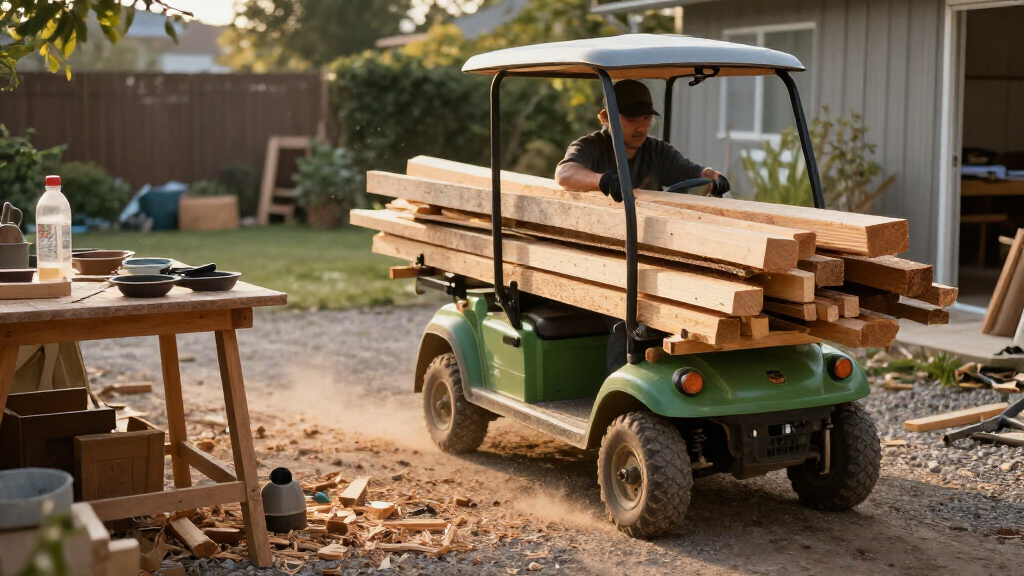
I evaluated these 13 electric utility task vehicles by prioritizing dynamic load capacity and motor torque over marketing claims of static weight limits. Many manufacturers list maximum static loads that are irrelevant when the vehicle is in motion, so I filtered out options that lacked clear dynamic specifications or relied on underpowered motors for their rated capacity. I also assessed battery management systems, giving preference to models with transparent Wh (Watt-hour) ratings, as this allows for accurate range estimation across different terrains.
Build quality and terrain adaptability were the next key filters. I distinguished between carts designed for smooth pavement and those equipped with all-terrain tires or 4WD systems. Products were ranked higher if they demonstrated a balance between payload capability and maneuverability, excluding units that were too heavy to transport without a truck or too fragile for rugged use. This approach highlights vehicles that deliver consistent performance under real-world working conditions rather than just on flat showroom floors.
Factors to Consider When Choosing Best Electric Utility Task Vehicles
Choosing the right electric utility vehicle requires looking past the headline wattage numbers. Here are the critical factors that determine whether a cart will handle your specific job site or break down after a few seasons.Dynamic vs. Static Load Capacity
Manufacturers often advertise the static load capacity—the amount of weight the cart can hold when parked—which can be dangerously misleading for moving vehicles. You must prioritize the dynamic load capacity, which reflects the maximum weight the motor, suspension, and brakes can handle while in motion. A cart rated for 1000 lbs static might only safely move 500 lbs up a slight incline. Always check if the manufacturer specifies the moving weight limit; if they do not, assume the safe working load is 50-60% of the advertised static number to prevent motor burnout or brake failure.
Motor Type and Torque Delivery
While wattage indicates power consumption, torque determines whether the vehicle can start under load or climb hills. Brushless motors generally offer better efficiency and longevity than brushed alternatives, providing consistent power output over time. For utility tasks, look for motors paired with reduction gears or multi-speed transmissions, as these convert high RPMs into the low-speed torque needed for hauling heavy materials. A 1000W motor with a single-speed direct drive will struggle on slopes where a 750W geared motor might succeed, making the drivetrain configuration more important than the raw wattage number.
Battery Chemistry and Range Realities
Lithium-ion batteries are the standard, but the Watt-hour (Wh) rating is the only true metric for range. A 36V battery with 20Ah is 720Wh, while a 48V battery with 10Ah is 480Wh; the former will last longer despite the lower voltage. Be wary of products that list only voltage and amperage, as they may use lower-quality cells that degrade quickly under heavy load. Cold weather also reduces range by 20-30%, so if you work in winter, choose a model with a higher Wh rating than your daily commute requires to account for efficiency loss.
Terrain-Specific Tire and Drive Systems
Standard plastic or small rubber wheels are suitable for smooth pavement but fail on grass, gravel, or mud. All-terrain tires with deep treads and larger diameters (8 inches or more) provide better flotation and traction. For loose surfaces, 4WD (four-wheel drive) systems prevent wheel spin, but they add weight and complexity. If your work site is primarily paved or packed dirt, a 2WD model with wide, low-pressure tires offers better value and lower maintenance costs. Reserve 4WD models for sandy, muddy, or steeply graded environments where traction is the primary failure point.
Braking Safety and Control Features
Electric utility vehicles often lack the robust braking systems found in passenger cars, making regenerative braking and mechanical disc brakes critical for safety. Regenerative braking helps recharge the battery while slowing down, but it is less effective at low speeds. Ensure your chosen model has physical disc or drum brakes for reliable stopping power on declines. Auto-hold or parking brake features are also valuable for preventing rollaways on uneven ground, a common cause of accidents when loading heavy items onto a stationary cart.
Frequently Asked Questions
Can electric utility carts handle steep hills?
Most standard electric utility carts struggle on steep inclines due to limited torque and battery drain. Models with 4WD systems and higher-wattage motors (1500W+) perform better on slopes, but even they have limits. If your work area has significant elevation changes, look for units with low-gear ratios or dedicated hill-climb modes. Always test the cart on a slope with a partial load before attempting full capacity to avoid motor strain or loss of control.How long do the batteries typically last before needing replacement?
Lithium-ion batteries in utility carts typically last 3-5 years or 500-1000 charge cycles, depending on usage and maintenance. Deep discharging (running the battery to 0%) and frequent fast charging accelerate degradation. To maximize lifespan, keep the battery between 20% and 80% charge when possible and store it in a cool, dry place. Replacement batteries can be costly, so consider the availability and price of replacements for your specific model before purchasing.Are foldable electric wagons less durable than rigid-frame carts?
Foldable designs prioritize portability over maximum durability. The hinges and locking mechanisms are potential failure points under heavy loads or rough terrain. Rigid-frame carts, like the ASHOMELI Tricycle or heavy-duty wagons, generally offer superior structural integrity and stability. If you need to store the cart in a small trunk or closet, a foldable model is a necessary tradeoff; however, for daily commercial use on job sites, a rigid frame is the more reliable and longer-lasting choice.Do I need 4WD for camping or light gardening?
For most camping and light gardening tasks, 4WD is unnecessary and adds unwanted weight and cost. 2WD models with wide, knobby tires handle grass, gravel, and mild mud effectively. 4WD is primarily beneficial for loose sand, deep mud, or steep, uneven terrain where traction is compromised. Save the extra expense for 4WD unless you regularly encounter these specific challenging conditions, as 2WD units are lighter, easier to maneuver, and more energy-efficient.What is the main difference between an electric wheelbarrow and a utility wagon?
Electric wheelbarrows, like the WORKPRO X Series, are designed for lifting and dumping heavy loads, often featuring a tilting bed. Utility wagons are designed for hauling multiple items over longer distances and usually have a flat bed or cargo box. Choose a wheelbarrow if your primary task involves moving bulk materials like soil or gravel that need to be dumped. Choose a wagon for transporting tools, gear, or equipment that needs to remain stable and secured during transit.Conclusion
Selecting the right electric utility task vehicle depends entirely on your specific workload and terrain. For those requiring maximum hauling power and all-terrain capability, the NAVEE 4X Electric Wagon stands out as the best overall choice, offering unmatched dynamic load capacity and motor performance. If you are a homeowner or light-duty user looking for an affordable entry point, the WORKPRO X Series 40V Electric Wheelbarrow provides excellent value for basic garden and yard tasks. For users who need to transport themselves along with cargo, the GT3 Electric Wagon series offers a rideable platform that balances comfort with utility. Buyers prioritizing stability and heavy commercial use should consider the ASHOMELI 1000W Electric Cargo Tricycle for its rigid frame and canopy protection. Ultimately, match the vehicle’s dynamic load rating and drive system to your most demanding daily task to ensure longevity and safety.