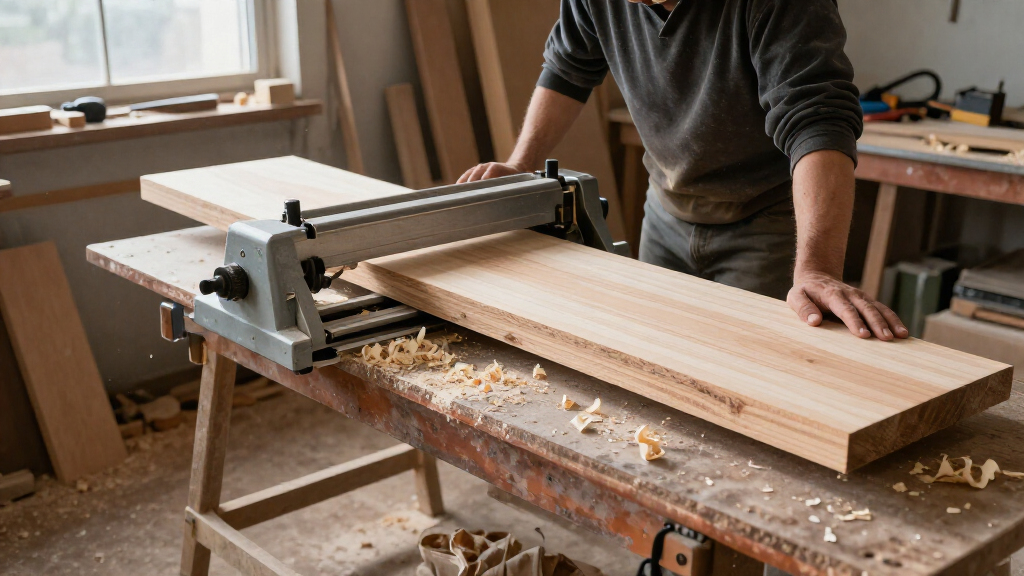

The best portable thickness planer overall in this roundup is the DEWALT DW735: its two feed speeds and three-knife cutterhead make it a versatile choice for repeat work and smoother finishes. For a spiral-head alternative, the WEN PL1337 stands out, while the DEWALT DW735X suits buyers seeking a closely matched package with included accessories. The main tradeoffs are cutterhead finish and knife upkeep, planing width and capacity, machine weight, and how much control you want over feed speed. Smaller 12- to 12.5-inch models can be easier to fit into a compact shop, but they limit board width. Read on for the full breakdown, selection criteria, and advice on choosing a planer that fits your work and workspace.

Get business pricing on tools and workshop supplies
- Business-only prices and quantity discounts
- Tax-exempt purchasing
- Multiple users, one account, clear invoices
Complete the kit



Key Takeaways
- The DEWALT DW735 leads for versatility: its two feed speeds and three-knife cutterhead give it a strong balance of finish control and everyday capacity.
- The WEN PL1337 offers a different finish-and-maintenance tradeoff: its spiral cutterhead sets it apart from the lineup’s conventional knife designs.
- DW735 and DW735X are close alternatives, not different classes of planer: compare their included equipment and setup needs before choosing between them.
- Width is a real dividing line: the 13-inch models offer more board capacity than the 12- and 12.5-inch picks, while narrower machines may suit tighter workspaces.
- Value depends on more than the initial machine: cutterhead replacement needs, dust collection, support, and stand or accessory requirements affect the long-term fit.
| WEN PL1337 13-Inch Two-Speed Benchtop Thickness Planer with Spiral Cutterhead | 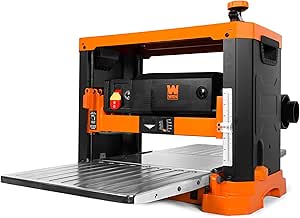 | Best for Smoother Finishing | Model: PL1337 | Type: Benchtop thickness planer | Cutting width: 13 inches | VIEW LATEST PRICE | See Our Full Breakdown |
| VEVOR 13-Inch Two-Blade Benchtop Thickness Planer |  | Best for Long-Board Support | Type: Benchtop thickness planer | Cutterhead: Two-blade, quick-change solid steel | Motor: 2000 W, 15 A | VIEW LATEST PRICE | See Our Full Breakdown |
| DEWALT DW735 13-Inch Two-Speed Thickness Planer with Three-Knife Cutterhead |  | Best for Chip Management | Model: DW735 | Power: 15 amp, corded | Cutterhead: Three knives, 10,000 RPM | VIEW LATEST PRICE | See Our Full Breakdown |
| WEN PL1326 15-Amp 13-Inch Spiral Benchtop Thickness Planer |  | Best Value Spiral-Cutterhead Pick | Model: PL1326 | Motor: 15 A | Maximum board width: 13 inches | VIEW LATEST PRICE | See Our Full Breakdown |
| WOODERS 13-Inch Benchtop Thickness Planer, 15A, 2000W |  | Best for Slightly Thicker Stock | Model: PL13-15AB | Type: Benchtop thickness planer | Motor: 15 A, 2000 W all-copper | VIEW LATEST PRICE | See Our Full Breakdown |
| WOODSTARTER 13-Inch Wood Planer, 15-Amp Benchtop Planer |  | Best for Long Boards | Motor power: 2000W | Maximum rotational speed: 10,000 rpm | Feed speed: 21 ft/min | VIEW LATEST PRICE | See Our Full Breakdown |
| DEWALT 13-Inch Thickness Planer (DW735X), 15 Amp, Two-Speed |  | Best for Adjustable Finish and Throughput | Cutting width: 13 inches | Motor: 15 A | Cutterhead speed: 10,000 rpm | VIEW LATEST PRICE | See Our Full Breakdown |
| WEN PL1252 15-Amp 12.5-Inch Two-Blade Benchtop Thickness Planer |  | Best for Compact Shop Setups | Motor amperage: 15 A | Maximum rotational speed: 20,000 rpm | Feed rate: 26 ft/min | VIEW LATEST PRICE | See Our Full Breakdown |
| VEVOR Thickness Planer with Foldable Iron Stand and Dust Exhaust |  | Best for a Ready-to-Work Stand | Motor power: 1800W (15 A) | Blade speed: 8000 rpm | Feeding speed: 6 m/min (236 in/min) | VIEW LATEST PRICE | See Our Full Breakdown |
| JET 13-Inch Benchtop Thickness Planer with Helical Cutterhead |  | Best Premium Cutterhead | Planing capacity: 13 inches wide × 6 inches thick | Cutterhead: Helical with 30 four-sided carbide inserts | Motor: 2 HP, 15 A, 120 V | VIEW LATEST PRICE | See Our Full Breakdown |
| CRAFTSMAN 12.25-Inch Benchtop Thickness Planer, 15 Amp, Two-Knife (CMEW320) |  | Best for Reversible-Knife Simplicity | Model: CMEW320 | Type: Benchtop thickness planer | Cutting width: 12.25 inches | VIEW LATEST PRICE | See Our Full Breakdown |
| DEWALT DW734 12.5-Inch Corded Benchtop Planer, 15-Amp, Three-Knife Cutter Head |  | Best for Controlled, Fine-Finish Planing | Model: DW734 | Cutting width: 12.5 inches | Maximum cutting depth: 0.13 inches | VIEW LATEST PRICE | See Our Full Breakdown |
| portable thickness planer | Motor | Model |
|---|---|---|
| WEN PL1337 13-Inch Two-Speed B | 15 amps | PL1337 |
| VEVOR 13-Inch Two-Blade Bencht | 2000 W, 15 A | — |
| DEWALT DW735 13-Inch Two-Speed | — | DW735 |
| WEN PL1326 15-Amp 13-Inch Spir | 15 A | PL1326 |
| WOODERS 13-Inch Benchtop Thick | 15 A, 2000 W all-copper | PL13-15AB |
| WOODSTARTER 13-Inch Wood Plane | — | — |
| DEWALT 13-Inch Thickness Plane | 15 A | — |
| WEN PL1252 15-Amp 12.5-Inch Tw | — | — |
| VEVOR Thickness Planer with Fo | — | — |
| JET 13-Inch Benchtop Thickness | 2 HP, 15 A, 120 V | — |
| CRAFTSMAN 12.25-Inch Benchtop | 15 A, corded electric, 120 V AC | CMEW320 |
| DEWALT DW734 12.5-Inch Corded | — | DW734 |
More Details on Our Top Picks
WEN PL1337 13-Inch Two-Speed Benchtop Thickness Planer with Spiral Cutterhead
The PL1337 is the most finish-focused choice here: its 26-blade spiral cutterhead and two feed speeds let you favor a smoother pass when surface quality matters more than speed. Compared with the WEN PL1326, it adds a slower 16 FPM setting alongside the 26 FPM feed, giving more control over the balance between throughput and finish. Its depth stop, removal gauge, and return rollers also help with repeatable work and handling boards through a portable benchtop setup.
The tradeoff is capacity: like the DEWALT DW735, it tops out at 13 inches wide and 6 inches thick, and its 15-amp motor still needs a suitable corded power source. Choose it for finish flexibility, not for oversized stock or cordless mobility.
Pros:- Two feed speeds let users prioritize quicker dimensioning or a smoother finish.
- Twenty-six staggered, rotatable HSS blades are designed to produce a clean surface.
- Depth stop, material removal gauge, and return rollers support controlled, repeatable work.
- Combination dust port accepts 2-1/2-inch and 4-inch connections.
Cons:- The 13-inch width and 6-inch thickness limits rule out larger stock.
- At 16 or 26 FPM, feed choices are useful but do not match every preferred workflow.
- Corded operation requires a nearby suitable outlet and chip collection setup.
Best for: Woodworkers processing mixed hardwood and softwood who want a slower feed option for cleaner finishing and repeatable thickness.
Not ideal for: Buyers who routinely plane boards wider than 13 inches or thicker than 6 inches, or need a cordless machine.
- Model:PL1337
- Type:Benchtop thickness planer
- Cutting width:13 inches
- Maximum board thickness:6 inches
- Feed rates:26 FPM and 16 FPM
- Cutterhead:Spiral cutterhead with 26 staggered, rotatable HSS blades
- Motor:15 amps
- Dust port:2-1/2-inch and 4-inch combination port
- Warranty:Two years
Our verdict“Choose the PL1337 if surface finish and feed-rate flexibility matter more than capacity beyond the standard 13-by-6-inch range.”
VEVOR 13-Inch Two-Blade Benchtop Thickness Planer
The VEVOR’s strongest case is its 13-inch cast-iron worktable paired with pull-out extensions that provide 35 inches of total support. That setup can make long boards easier to guide through a portable planer than the WEN PL1326, whose supplied details emphasize adjustable infeed and outfeed tables without stating the same total support length. Its 15-amp, 2000-watt motor and two-knife steel cutterhead make it a straightforward choice for general stock preparation, while the vacuum port gives chip collection a clear connection point.
There are tradeoffs: it has a single feed arrangement rather than the two speeds on the WEN PL1337 and DEWALT DW735, so it offers less choice between faster dimensioning and finer finishing. It also remains a corded machine with a 6-inch thickness limit. The 20-amp overcurrent protection is a useful safeguard, not a substitute for matching the machine to the circuit and workload.
Pros:- Pull-out extensions bring total work support to 35 inches for longer boards.
- Cast-iron worktable provides a substantial base for guiding stock.
- Two-knife cutterhead is designed for consistent planing.
- Vacuum port and 20-amp overcurrent protection add practical workshop features.
Cons:- No second feed speed is listed, limiting control over the speed-versus-finish tradeoff.
- Maximum board thickness is 6 inches.
- Corded operation ties use to an outlet and a suitable chip-collection setup.
Best for: Home-shop woodworkers who regularly feed long boards and want a cast-iron table with pull-out support extensions.
Not ideal for: Woodworkers who want selectable feed speeds for finish control or need to plane stock thicker than 6 inches.
- Type:Benchtop thickness planer
- Cutterhead:Two-blade, quick-change solid steel
- Motor:2000 W, 15 A
- Maximum board thickness:6 inches
- Worktable width:13 inches
- Total support length with extensions:35 inches
- Overcurrent protection:20 A
- Power source:Corded electric, 110 V
- Dimensions:27.4 × 20.7 × 18.9 inches
Our verdict“Pick the VEVOR if long-board support is your priority, but choose the WEN PL1337 or DEWALT DW735 for two-speed feed control.”
DEWALT DW735 13-Inch Two-Speed Thickness Planer with Three-Knife Cutterhead
The DW735 stands out among these portable planers for its fan-assisted chip ejection and two feed speeds. Those features address two common shop concerns: clearing chips from the cutting area and choosing between dimensioning pace and a finer pass. Its three-knife cutterhead also gives it a different maintenance setup from the WEN PL1337’s spiral head with rotatable HSS blades; the DEWALT uses reversible, disposable knives for changes, while the WEN’s segmented blades can be rotated.
A turret stop, depth gauge, and 33-1/2-inch material support help make repeat cuts more manageable. The cost of that control is a 1/8-inch maximum cut depth per pass, so heavy stock reduction takes multiple passes. Like the VEVOR, it is corded, and its 13-by-6-inch capacity will not accommodate oversized boards. This is the more considered pick for a tidy, repeatable shop workflow, not the fastest route through deep cuts.
Pros:- Fan-assisted chip ejection helps move debris away from the cutting area.
- Two feed speeds suit both material dimensioning and finer finishing passes.
- Turret stop and depth gauge help repeat thickness settings.
- Three-knife cutterhead and 33-1/2-inch material support suit controlled shop work.
Cons:- Maximum cut depth is 1/8 inch per pass, so substantial stock removal takes repeated passes.
- Reversible disposable knives require replacement when worn rather than rotation of individual HSS segments.
- Its 13-inch width and 6-inch depth capacity excludes larger stock.
Best for: Small-shop woodworkers who value chip evacuation, repeatable settings, and two feed speeds for different planing tasks.
Not ideal for: Buyers who need to remove more than 1/8 inch in a pass or regularly process stock wider than 13 inches or thicker than 6 inches.
- Model:DW735
- Power:15 amp, corded
- Cutterhead:Three knives, 10,000 RPM
- Motor speed:20,000 RPM
- Feed rates:96 or 179 cuts per inch
- Maximum cut depth:1/8 inch
- Capacity:13 inches wide and 6 inches deep
- Material support:33-1/2 inches
- Warranty and service:Three-year limited warranty, one-year free service contract, and 90-day money-back guarantee
Our verdict“Choose the DW735 for chip handling and repeatable two-speed work, provided its 1/8-inch pass limit fits your stock-preparation pace.”
WEN PL1326 15-Amp 13-Inch Spiral Benchtop Thickness Planer
The PL1326 makes the spiral-cutterhead approach more straightforward than the WEN PL1337: it pairs 26 rotatable HSS blades with a single 26 FPM feed rate, rather than adding a slower finishing setting. For buyers who want segmented blades and a compact benchtop format without needing selectable feed speeds, that simpler configuration may be a better fit. A depth stop, planing gauge, and height-adjustable infeed and outfeed tables give users useful control over thickness and workpiece support.
Its main limitation is pace flexibility. The PL1337 can slow to 16 FPM for a finish-oriented pass, while this model is listed at 26 FPM only. It also shares the familiar 13-inch width, 6-inch thickness, and 1/8-inch maximum removal per pass limits, so it is not a machine for extra-wide stock or aggressive cuts. A good match for routine benchtop planing, less so for work demanding variable feed or large reductions.
Pros:- Twenty-six rotatable HSS blades provide a segmented spiral cutterhead design.
- Height-adjustable infeed and outfeed tables support workpieces as they enter and leave the planer.
- Depth stop and planing gauge help manage thickness and material removal.
- 13-inch width and 6-inch thickness accommodate common benchtop stock sizes.
Cons:- Single listed feed rate offers less finish-versus-speed flexibility than the PL1337.
- Maximum material removal is 1/8 inch per pass.
- Capacity is limited to boards 13 inches wide and 6 inches thick.
Best for: Hobbyist woodworkers who want a spiral cutterhead and support tables for occasional or regular stock preparation without needing two feed speeds.
Not ideal for: Users who want a slower feed option for finish-focused work or need to remove more than 1/8 inch per pass.
- Model:PL1326
- Motor:15 A
- Maximum board width:13 inches
- Maximum board thickness:6 inches
- Cutterhead blades:26 staggered, rotatable HSS blades
- Cutterhead speed:10,000 RPM
- Feed rate:26 feet per minute
- Maximum material removal per pass:1/8 inch
- Power source:Corded electric
Our verdict“Choose the PL1326 for a spiral cutterhead and useful work support, but step up to the PL1337 if you need a slower finishing feed.”
WOODERS 13-Inch Benchtop Thickness Planer, 15A, 2000W
Among these five, the WOODERS is the one to examine if your work includes stock just beyond the usual 6-inch limit: its listed height range reaches 6.3 inches. That is a modest capacity advantage over the WEN PL1326 and DEWALT DW735, though its width remains the same 13 inches. It also includes overload protection, an integrated dust port, a lifting handle, and two extra HSS blades, making the package practical for a small shop that wants basic maintenance spares on hand.
Its dual-edge cutterhead is a simpler arrangement than the spiral heads on both WEN models, and the product data lists one 10,000-RPM cutterhead speed rather than selectable feed rates like the DEWALT. The stated specs do not give a feed rate or maximum removal per pass, so buyers seeking that level of planning detail may prefer the better-specified WEN PL1337. Treat the extra 0.3 inch of capacity as a niche benefit, not a broader performance advantage.
Pros:- Listed height range extends to 6.3 inches, slightly beyond the other reviewed models’ 6-inch limit.
- Overload protection helps guard the motor against excessive current.
- Includes two extra HSS blades and a lifting handle.
- Integrated dust port can connect to a vacuum system.
Cons:- Maximum width remains limited to 13 inches.
- Dual-edge blades do not offer the segmented spiral design of the WEN PL1326 and PL1337.
- Product data does not state a feed rate or maximum material removal per pass.
Best for: Woodworkers whose stock occasionally exceeds 6 inches in thickness and who value overload protection and included spare blades.
Not ideal for: Buyers who need boards wider than 13 inches, a spiral cutterhead, or published feed-rate and pass-depth details for planning work.
- Model:PL13-15AB
- Type:Benchtop thickness planer
- Motor:15 A, 2000 W all-copper
- Cutterhead speed:10,000 RPM
- Maximum planing width:13 inches (330 mm)
- Height range:1/4–6.3 inches (6–160 mm)
- Blades:Dual-edge HSS blades; two extra blades included
- Dust control:Integrated dust port
- Safety:Overload protection
Our verdict“Pick the WOODERS only if its 6.3-inch height range solves a real stock-size need; for more documented feed flexibility, the WEN PL1337 is the clearer choice.”
WOODSTARTER 13-Inch Wood Planer, 15-Amp Benchtop Planer
The WOODSTARTER stands out for pairing a 13-inch cutting width with a 29-inch extended worktable, giving longer stock more support than the compact setup of the WEN PL1252. Its 2000W motor, 10,000 RPM speed, and 21 ft/min feed rate make it a capable choice for routine hardwood and softwood milling, while the adjustable thickness range suits varied projects. The three-size dust port also offers more connection options than the WEN’s fixed 2-inch port. The tradeoff is portability: at 52.8 pounds, it is not an easy machine to carry repeatedly, despite being lighter than the DEWALT DW735X. I’d choose it for a shop that needs better long-board support, not for frequent jobsite moves.
Pros:- 13-inch cutting width handles broad stock.
- 29-inch table length with extensions gives long boards added support.
- Three dust-port sizes allow connection to different extraction setups.
- 2000W motor and 21 ft/min feed rate support productive milling.
Cons:- At 52.8 pounds, it is cumbersome to move often.
- The listed specifications do not provide selectable feed speeds like the DEWALT DW735X.
Best for: Woodworkers who regularly plane long boards and want a 13-inch capacity with extended work support.
Not ideal for: Mobile builders or anyone who needs to carry a planer between jobsites; its 52.8-pound weight makes frequent transport cumbersome.
- Motor power:2000W
- Maximum rotational speed:10,000 rpm
- Feed speed:21 ft/min
- Cutting width:13 inches
- Adjustable cutting thickness:0.25–6.2 inches
- Blades:Two HSS blades
- Worktable length with extensions:29 inches
- Dust-port sizes:1-2/5, 2-1/2, and 4 inches
- Weight:52.8 pounds
Our verdict“Choose the WOODSTARTER if long-board support and flexible dust-port connections matter more than easy portability.”
DEWALT 13-Inch Thickness Planer (DW735X), 15 Amp, Two-Speed
The DW735X earns its place for buyers who want to choose between faster feeding at 96 cuts per inch and a finer finish at 179 cuts per inch. That flexibility distinguishes it from the single-feed-rate WOODSTARTER and WEN PL1252, which make less room for matching feed pace to the job. Its three-knife cutterhead, fan-assisted chip ejection, and included infeed and outfeed tables make it a well-equipped option for regular shop use. The main compromise is its 102-pound weight: this is far less convenient to relocate than the VEVOR with its foldable stand, and it still needs a corded outlet. I’d rank it for a settled workshop where finish control and chip handling matter more than carrying the machine around.
Pros:- Two feed settings let users favor faster production or a finer cut.
- Three-knife cutterhead is designed for longer knife life and quicker knife changes.
- Fan-assisted chip ejection helps clear debris from the machine.
- Includes infeed and outfeed tables, extra knives, and a dust hose adapter.
Cons:- At 102 pounds, it is difficult to reposition without help or a dedicated stand.
- Requires a corded 120V connection, limiting use away from power.
- More machine than occasional hobby milling may require.
Best for: Workshop owners who plane varied stock and want selectable feed settings, included support tables, and active chip ejection.
Not ideal for: Jobsite users or small-shop owners who need to store and move their planer often; the 102-pound body is a substantial handling burden.
- Cutting width:13 inches
- Motor:15 A
- Cutterhead speed:10,000 rpm
- Feed settings:96 or 179 cuts per inch
- Maximum cutting depth:0.13 inches
- Weight:102 pounds
- Power source:Corded electric, 120 V
- Included components:Infeed and outfeed tables, extra knives, dust hose adapter, and dust-ejection chute
- Warranty:3-year limited warranty
Our verdict“Pick the DW735X for a stationary shop that values two feed choices and chip ejection over portability.”
WEN PL1252 15-Amp 12.5-Inch Two-Blade Benchtop Thickness Planer
The WEN PL1252 makes the most sense for a buyer who can give up half an inch of capacity in exchange for a straightforward benchtop footprint and useful workpiece handling features. Its 12.5-inch width is narrower than the 13-inch WOODSTARTER, VEVOR, and DEWALT options, so boards near the upper limit of those machines will not fit here. In return, the WEN supplies adjustable infeed and outfeed tables and return rollers, which help manage stock without requiring the heavier, more feature-rich DW735X. Reversible SK5 blades add a second usable edge, but the 2-inch dust port calls for a suitable extraction setup. At 55.6 pounds, it is still a benchtop machine rather than an especially light portable planer.
Pros:- Accepts boards up to 12.5 inches wide and 6 inches thick.
- Reversible SK5 blades provide another cutting edge before replacement.
- Adjustable infeed and outfeed tables support workpieces.
- Return rollers and predrilled mounting holes suit a fixed shop setup.
Cons:- Narrower capacity than the 13-inch WOODSTARTER and DEWALT models.
- The 55.6-pound weight makes frequent moving awkward.
- The 2-inch dust port requires a compatible dust-collection setup.
Best for: Hobbyist woodworkers with a compact shop who mainly mill boards up to 12.5 inches wide and want table support and return rollers.
Not ideal for: Users who routinely work with full 13-inch stock or need a planer that is easy to carry between locations.
- Motor amperage:15 A
- Maximum rotational speed:20,000 rpm
- Feed rate:26 ft/min
- Maximum cutting width:12.5 inches
- Maximum board thickness:6 inches
- Depth per pass:0–1/8 inch
- Blades:Two reversible 12.5-inch SK5 blades
- Dust port:2 inches
- Weight:55.6 pounds
Our verdict“Choose the PL1252 for a compact shop and moderate-width stock, but step up to a 13-inch model if board width is a regular constraint.”
VEVOR Thickness Planer with Foldable Iron Stand and Dust Exhaust
Unlike the WOODSTARTER, which is a benchtop planer with an extended table, the VEVOR includes a foldable iron stand and stainless-steel infeed and outfeed tables. That package suits a shop needing a dedicated working height without sourcing a separate stand. It also offers a full 13-inch width, automatic feeding, and a 6.3-inch maximum thickness, edging past the WEN PL1252 on capacity. Its 6 m/min feed rate is about 19.7 ft/min, below the WOODSTARTER’s listed 21 ft/min, and the two HSS blades do not offer the DEWALT DW735X’s selectable feed settings. The stand adds bulk, so foldability should not be mistaken for light transport; dust collection gear is also sold separately.
Pros:- Foldable iron stand provides a dedicated support setup.
- 13-inch width and 6.3-inch thickness range accommodate substantial stock.
- Automatic feeding reduces the need to push boards through manually.
- Stainless-steel infeed and outfeed tables support workpieces.
Cons:- The stand adds weight and makes transport less convenient.
- Dust collection requires a separate collector or dust bag.
- Its 6 m/min feed rate is slower than the WOODSTARTER’s listed 21 ft/min.
Best for: Woodworkers setting up a dedicated planer station who want a 13-inch machine with its own foldable stand and automatic feed.
Not ideal for: People who frequently transport tools or expect the included dust exhaust port to work without a separate collector or dust bag.
- Motor power:1800W (15 A)
- Blade speed:8000 rpm
- Feeding speed:6 m/min (236 in/min)
- Maximum cutting width:13 inches
- Cutting thickness range:0.2–6.3 inches
- Blades:Two HSS double-cutter blades
- Stand:Heavy-duty foldable iron
- Dust-exhaust interface:1.8-inch inner diameter / 2-inch outer diameter
Our verdict“Choose the VEVOR if a built-in stand matters more than minimizing weight or matching the faster listed feed rate of the WOODSTARTER.”
JET 13-Inch Benchtop Thickness Planer with Helical Cutterhead
The JET is the standout for buyers prioritizing cutterhead design over simple blade replacement. Its 30 four-sided carbide inserts are intended to deliver smoother, quieter cuts; when an edge dulls, an individual insert can be rotated rather than changing a full knife set. That makes it a different proposition from the two-blade WOODSTARTER and WEN PL1252, though the JET carries a strict material limit: it is for solid wood, not plywood, painted stock, reclaimed lumber, or end grain. It accepts 13-inch-wide boards, but its maximum cut per pass falls to 1/16 inch at full width, so wide stock may take more passes than narrower boards. Folding tables and upright storage help, while 66 pounds and the unincluded dust collector temper its portability.
Pros:- Helical cutterhead uses 30 four-sided carbide inserts for individual edge rotation.
- Designed for smoother, quieter cutting than conventional two-blade setups.
- Folding tables and upright storage help reduce shop footprint.
- Depth stop, cut-depth gauge, and five spare inserts support repeatable setup and upkeep.
Cons:- Not intended for plywood, particleboard, painted or reclaimed lumber, or end grain.
- Requires boards at least 14 inches long, 3/16 inch thick, and 3/4 inch wide.
- At full 13-inch width, the maximum cut per pass is 1/16 inch; dust collector and mounting fasteners are not included.
Best for: Woodworkers who mainly plane clean solid wood and value quieter operation, replaceable carbide inserts, and space-saving storage.
Not ideal for: Anyone who needs to plane plywood, painted or reclaimed lumber, end grain, or boards shorter than 14 inches.
- Planing capacity:13 inches wide × 6 inches thick
- Cutterhead:Helical with 30 four-sided carbide inserts
- Motor:2 HP, 15 A, 120 V
- Cutterhead speed:9,500 rpm
- Feed rate:24.6 ft/min
- Maximum cut per pass:1/8 inch on boards up to 6 inches wide; 1/16 inch at full width
- Minimum board dimensions:14 inches long × 3/16 inch thick × 3/4 inch wide
- Dust ports:4 inches and 2-1/2 inches; 550 CFM minimum recommended
- Weight:66 pounds
Our verdict“Pick the JET for clean solid-wood work where cutterhead finish and upright storage justify its material limits and slower full-width cuts.”
CRAFTSMAN 12.25-Inch Benchtop Thickness Planer, 15 Amp, Two-Knife (CMEW320)
The CRAFTSMAN CMEW320 suits woodworkers who want a straightforward benchtop planer with knives that can be flipped when one edge wears. Its 15-amp motor and 16,000 cuts per minute support routine dimensioning of both hard and soft lumber, while the vacuum port gives dust collection a direct connection point. Compared with the DEWALT DW734, it has a narrower 12.25-inch capacity and a two-knife cutter head rather than three knives, so the DEWALT is the stronger fit for wider boards and finer-cut-rate priorities. The CRAFTSMAN’s reversible, double-edged knives offer a practical service-life advantage, though the stated 0.13-inch maximum cut depth still calls for gradual passes on thicker stock. Its corded design and benchtop footprint also make it a shop-based tool, not a jobsite planer for locations without power.
Pros:- 15-amp motor is specified for working with both hard and soft wood.
- Reversible, double-edged knives provide another usable cutting edge before replacement.
- Vacuum port offers a straightforward connection for dust collection.
- 12.25-inch capacity handles many common boards and glued-up panels.
Cons:- Corded power requires an electrical outlet at the work location.
- Maximum cutting depth of 0.13 inches limits material removal per pass.
- Two-knife cutter head has a lower stated cuts-per-minute figure than the DEWALT DW734’s three-knife setup.
Best for: Home woodworkers who want a corded planer for routine board sizing and value reversible knives and a vacuum port.
Not ideal for: Woodworkers who regularly plane boards wider than 12.25 inches, need cordless mobility, or want to remove more than 0.13 inches in a pass.
- Model:CMEW320
- Type:Benchtop thickness planer
- Cutting width:12.25 inches
- Maximum cutting depth:0.13 inches
- Motor:15 A, corded electric, 120 V AC
- Cutter head:8,000 RPM; two reversible, double-edged high-carbon steel knives
- Cuts per minute:16,000
- Dust collection:Vacuum port
- Dimensions and weight:23.5 x 17.5 x 15.4 inches; 27.71 kg
Our verdict“Choose the CRAFTSMAN if you want a practical corded planer with reversible knives for ordinary shop work, but pick the DEWALT DW734 for wider capacity and its three-knife cut rate.”
DEWALT DW734 12.5-Inch Corded Benchtop Planer, 15-Amp, Three-Knife Cutter Head
The DEWALT DW734 is the more control-focused choice here: its three-knife cutter head produces up to 96 cuts per inch, and the four-column carriage lock is designed to limit snipe as boards enter and leave the machine. Extended infeed and outfeed tables provide 33.5 inches of support, helping manage longer stock than the CRAFTSMAN CMEW320’s listed setup. A material removal gauge and turret depth stop also make repeat settings easier to track, useful when dimensioning several boards to a consistent thickness. The tradeoff is knife upkeep: its reversible disposable knives must be replaced when worn, unlike the CRAFTSMAN’s double-edged knives, which can be flipped. The DW734 is still a corded benchtop tool, and its 12.5-inch width and 0.13-inch maximum cut depth set practical limits on board size and pass depth.
Pros:- Three-knife cutter head is rated for up to 96 cuts per inch.
- Four-column carriage lock is designed to reduce snipe.
- 33.5 inches of infeed and outfeed table support helps steady longer boards.
- Material removal gauge and turret depth stop assist with repeatable settings.
Cons:- Reversible disposable knives need replacement when worn rather than sharpening.
- Corded electric operation requires an outlet at the worksite.
- Maximum cutting depth is 0.13 inches, so heavier stock removal takes multiple passes.
Best for: Furniture makers and serious hobbyists who want repeatable thickness settings, long-board support, and a fine-cut-rate specification.
Not ideal for: Woodworkers who want to sharpen or reuse planer knives, need cordless portability, or routinely work with boards wider than 12.5 inches.
- Model:DW734
- Cutting width:12.5 inches
- Maximum cutting depth:0.13 inches
- Motor and power:15 A, corded electric
- Cutter head:Three knives; cutter-head speed 10,000 rpm
- Cuts per inch:Up to 96
- Table support length:33.5 inches
- Included component:Dust hood
- Warranty:Three-year limited warranty
Our verdict“Pick the DW734 for controlled, repeatable planing and supported long stock; choose the CRAFTSMAN CMEW320 if reversible double-edged knives matter more than the third-knife setup.”
How We Picked
I compared these portable thickness planers on the features that change daily use: cutting width and thickness range, cutterhead and knife arrangement, feed-speed options, dust handling, mobility, and maintenance demands. I also looked at whether the listed configuration includes practical extras, such as a stand, and whether a buyer may need to budget space and accessories around the machine. The goal is to distinguish a planer suited to repeated shop work from one that makes more sense for occasional stock sizing or a compact setup.
The ranking favors useful control, capacity, and a clear ownership fit over any single headline specification. The DEWALT DW735 ranks first for its two-speed, three-knife combination; the WEN PL1337 earns a distinct place for its spiral cutterhead; and the DW735X is a strong alternative when its package better suits the buyer. Other models rank by the value of their particular tradeoffs, including narrower widths, simpler two-blade designs, and included stand features. Where product names provide limited detail, I avoid assuming performance or accessories that are not specified.
Factors to Consider When Choosing Portable Thickness Planers
Choosing a planer is less about finding the biggest number on a spec sheet and more about matching the machine to your stock, workflow, and shop. These broader checks can help prevent a common mismatch: buying capacity you rarely use, or choosing a compact model that cannot handle the boards you routinely prepare.
Match Cutting Width to Your Actual Stock
A planer’s maximum width sets a hard limit on the boards you can flatten in one pass, so measure the widest material you expect to process rather than relying on occasional project needs. The 13-inch group here gives more room than the 12- and 12.5-inch options, but a wider machine can take up more bench and storage space. If your stock is wider than the planer’s capacity, you may be able to work around the limit by ripping and rejoining, but that adds labor and can affect grain matching. Also check the maximum and minimum thickness, since those limits shape whether the machine can handle your rough stock and thinner project pieces. Avoid buying extra width unless it supports work you genuinely expect to do; prioritize it when wide panels or furniture parts are routine.
Choose a Cutterhead With Its Upkeep in Mind
Conventional straight knives and spiral-style cutterheads differ in how they cut, how they are serviced, and what replacement parts the owner may need. A spiral design, as found on the WEN PL1337 and JET helical model, can appeal to woodworkers who value segmented cutting elements, while three-knife and two-blade designs offer more familiar arrangements. Do not judge the decision by the cutterhead label alone: check the maker’s instructions for rotating or replacing edges, replacement availability, and the tools required. Hard or figured woods can make tear-out control especially relevant, but feed direction, cut depth, and sharpness also matter. Compare the expected maintenance routine with your willingness to tune and service the machine, not just the finish you hope to get.
Treat Feed Speed as a Workflow Choice
Two-speed models give you a choice between moving stock through more quickly and feeding more slowly for a finer cut, which can be useful when the same shop handles rough sizing and finish passes. A single-speed planer may be a simpler fit if your work is mostly routine thicknessing and you are comfortable controlling the finish through lighter cuts. Faster feeding does not automatically mean more productive work if it leaves a surface that needs extra sanding. Think about how many boards you process in a session and how often the finish requirement changes. For occasional projects, consistent setup and sensible cut depth may matter more than having multiple speeds; for varied production, speed choice can reduce compromises.
Plan for Dust and Chip Collection Before Setup
Planers produce a large volume of chips, so dust handling affects cleanup, visibility, and how comfortably the machine fits into a small shop. Check the dust port size and compatibility with your extractor or shop vacuum before buying; a connector that does not match can add adapters and restrict airflow. A dust exhaust feature is useful only when it works with a collection setup capable of handling the output. Do not assume that a portable machine can run neatly without collection just because it sits on a bench. Leave room for the hose, chip path, and board infeed and outfeed, then test the setup with representative stock before placing the planer permanently.
Account for Weight, Stands, and Board Support
Portable describes a machine that can be moved, not necessarily one that is easy to carry or convenient to store. Compare the planer’s weight and footprint with where it will live, and decide whether it needs a dedicated bench, a rolling base, or a stand. The VEVOR model listed with a foldable iron stand may reduce the need to source a separate support, while other picks may require a stable work surface. Long boards also need infeed and outfeed support to reduce tipping and snipe, so the workspace around the planer matters as much as the planer’s dimensions. A compact shop should plan the full working footprint, not just the machine’s footprint.
Compare Ownership Needs, Not Just Machine Features
Before choosing, check the availability and cost of replacement knives or cutterhead components, the maker’s service information, and what accessories are included in the exact model package. Closely named versions can differ in supplied equipment, so compare the DW735 and DW735X by their listed contents rather than assuming the core machine changes. A lower-complexity model may be a sound fit for occasional use, while frequent stock preparation can justify paying more for added speed control or a cutterhead style that suits your maintenance preferences. Include collection equipment, support, and replacement parts in your ownership plan. This broader comparison often reveals that the best fit is not the model with the longest feature list, but the one you can support and use regularly.
Frequently Asked Questions
Is the DEWALT DW735X a better choice than the DW735?
They are closely related two-speed, 13-inch DEWALT planers, so the choice should start with the exact package contents rather than an assumption of a different core cutting approach. Check the current listing and manufacturer details for included accessories and any configuration differences. If you already own compatible support equipment, the simpler package may be enough. If the included items in the DW735X match what you would otherwise buy separately, that package may be more convenient. Confirm the model number and contents before ordering, since listings can vary.
Should I choose a spiral or helical cutterhead over straight knives?
Choose based on the finish needs and maintenance routine you prefer, rather than assuming one cutterhead style suits every board. The WEN PL1337 and JET helical model offer a different cutting-element approach from the straight-knife DEWALT and other conventional designs. Check the manufacturer’s guidance for replacement parts, service steps, and availability before deciding. Your results also depend on sharp edges, grain direction, cut depth, and feed settings. If you regularly work with figured stock, weigh finish control heavily; if your work is mostly rough dimensioning, familiar knife service may be the stronger priority.
Is a 12- or 12.5-inch planer too small for a home shop?
Not if the boards you prepare fit within its capacity and the smaller machine better suits your space or projects. The WEN PL1252, CRAFTSMAN CMEW320, and DEWALT DW734 offer narrower capacities than the 13-inch models, which can be a practical fit for many common boards. Measure your widest regular stock before deciding, including material you expect to handle in future projects. If wider boards are occasional, ripping and rejoining may be workable, though it adds steps. If wide panels are central to your work, the added capacity of a 13-inch planer is easier to justify.
Can I run a portable thickness planer without a dust collector?
A planer will still produce chips, but operating without suitable collection can leave a large cleanup burden and make a small work area harder to manage. Check the machine’s dust outlet and pair it with collection equipment that fits the port and can handle the chip output. A basic vacuum may not be suitable for every planer or volume of work, so follow the manufacturer’s setup guidance. Keep the work area clear and avoid blocking the exhaust. If collection equipment is not part of your current shop, include it in the total setup plan before choosing a model.
What should I buy first: a planer, a stand, or dust collection?
Start by planning the complete working setup, since a planer is difficult to use safely and neatly without stable support, board clearance, and chip management. If you already have a rigid bench and compatible collection, the machine can come first. If not, identify the support and extraction needs of the models you are comparing and include those items in your decision. The VEVOR option listed with a foldable stand may suit buyers who need a support solution, but you should still check stability and working height for your space. Reserve enough room for long stock as well as the machine itself.
Conclusion
For the broadest mix of capacity and feed control, I recommend the DEWALT DW735 as the best overall; the DW735X is a close alternative when its package contents fit your setup. The WEN PL1337 is my pick for buyers seeking a spiral cutterhead, while the JET helical model is another option to compare for that cutting style. For a more budget-conscious choice, compare the simpler VEVOR, WEN PL1252, WOODERS, and other two-blade models by width, support, dust setup, and replacement-part details rather than choosing on the name alone. Beginners should favor a machine whose capacity fits their stock and whose setup and knife maintenance feel manageable; a narrower model can be a sensible start if it meets their needs. For compact shops, the 12- and 12.5-inch choices save capacity rather than magically improving portability, while buyers needing wider boards should focus on the 13-inch group. Match the planer to your material, collection system, and workspace, and the right pick becomes much clearer.