The SHARPAL 103N All-in-One Knife and Garden Tool Sharpener earns the top spot among the best pocket lawn mower blade sharpeners because it balances a genuinely pocketable size with a tungsten carbide edge that handles thick mower blade steel without stalling. Close behind, the AccuSharp Garden Tool Sharpener offers the simplest one-stroke operation for quick touch-ups, while the Sharp Pebble Cordless Kit delivers a near-bench-result edge for buyers who want speed over portability. The core tradeoff in this category is control versus convenience: pull-through sharpeners fit in a pocket and work in minutes, but drill-mounted stones and diamond stones produce cleaner, more durable bevels. How often you mow, how dull your blades get, and whether you sharpen on or off the mower all determine which side of that tradeoff you should land on. Read on for the full breakdown of all ten options.

Get business pricing on tools and workshop supplies
- Business-only prices and quantity discounts
- Tax-exempt purchasing
- Multiple users, one account, clear invoices
Complete the kit


Key Takeaways
- Carbide pull-through sharpeners (SHARPAL 103N, AccuSharp) dominated for on-the-mower touch-ups because they need no power, no clamps, and no skill — but all of them remove more steel than stone-based options.
- Drill-mounted sharpeners like the Cenoz 5-Pack and the Sharp Pebble Cordless Kit cut sharpening time dramatically, yet they demand steady hand pressure; beginners risk rounding the bevel or over-grinding the edge.
- Multi-tool sharpeners (Orange Ninja 7-in-1, SHARPAL 129N) only make sense if you also maintain pruners, shears, and knives — otherwise you are paying for guides and slots you will never use.
- Diamond stones such as the SHARPAL 121N and the 120-grit diamond sharpener produced the longest-lasting edges in the lineup, making them the right pick for buyers who sharpen once a season and want it done properly.
- Replacement blade availability quietly separated the best picks from the rest: AccuSharp and SHARPAL sell replaceable carbide blades, while single-piece tools become disposable once the edge wears out.
| SHARPAL 103N All-in-One Knife and Garden Tool Sharpener | 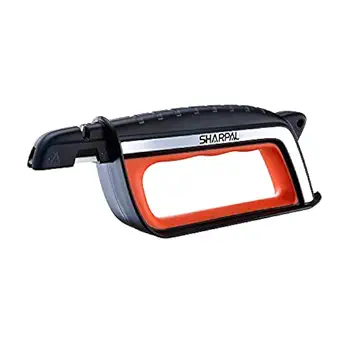 | Best Overall | Sharpening components: 5 | Sharpening features: 3 preset-angle slots, tungsten carbide bar, ceramic bar | Compatible blades: Single- and double-beveled | VIEW LATEST PRICE | See Our Full Breakdown |
| AccuSharp Garden Tool Sharpener with Diamond-Honed Tungsten Carbide Blades |  | Best Value | Blade material: Diamond-honed tungsten carbide | Blade design: Reversible, double-beveled | Compatible tools: Lawn mower blades, pruners, loppers, hoes, shovels, scythes, other single-edged tools | VIEW LATEST PRICE | See Our Full Breakdown |
| SHARPAL 129N Multipurpose Garden Tool Blade Sharpener |  | Best Pocket-Size Pick | Materials: Tungsten carbide, ceramic | Grit: Coarse, fine | Dimensions: 5 × 1 × 0.5 in | VIEW LATEST PRICE | See Our Full Breakdown |
| Cenoz Lawn Mower Blade Sharpeners for Power Drills, 5-Pack |  | Best for Fast Bulk Sharpening | Material: Corundum | Compatibility: Most power drills | Dimensions: 1.97 × 1.85 in (50 × 47 mm) each | VIEW LATEST PRICE | See Our Full Breakdown |
| Smith’s Lawn Mower Blade Sharpener |  | Best for Beginners | Model: SP-51310 | Material: Stainless steel with plastic housing | Grit type: Coarse | VIEW LATEST PRICE | See Our Full Breakdown |
| Orange Ninja 7-in-1 Garden Tool and Knife Sharpener |  | Best Multi-Tool Value | Brand: Sharp Pebble | Model: ON-GTKS-01 | Material: Plastic body with tungsten sharpening elements | VIEW LATEST PRICE | See Our Full Breakdown |
| AccuSharp Garden Tool and Lawn Mower Blade Sharpener |  | Easiest for Beginners | Brand: AccuSharp | Model: 1012C | Sharpening material: Carbide | VIEW LATEST PRICE | See Our Full Breakdown |
| SHARPAL 121N Dual-Grit Diamond Sharpening Stone for Garden Tools |  | Best for Edge Quality | Material: Monocrystalline diamond coating on full-tang stainless steel | Coarse grit: 325 grit (45 microns) | Extra-fine grit: 1200 grit (12 microns) | VIEW LATEST PRICE | See Our Full Breakdown |
| Diamond Lawn Mower Blade Sharpener, 120 Grit |  | Fastest for Heavy Jobs | Grit: 120 | Construction: All-metal | Handle diameter: 5 mm | VIEW LATEST PRICE | See Our Full Breakdown |
| Sharp Pebble Cordless Lawn Mower Blade Sharpener Kit |  | Best Powered Precision | Power: Cordless (battery powered) | Sharpening angle: 20°–40° adjustable | Variable speed: 5,000–30,000 RPM | VIEW LATEST PRICE | See Our Full Breakdown |
| pocket lawn mower blade sharpener | Dimensions |
|---|---|
| SHARPAL 103N All-in-One Knife | — |
| AccuSharp Garden Tool Sharpene | — |
| SHARPAL 129N Multipurpose Gard | 5 × 1 × 0.5 in |
| Cenoz Lawn Mower Blade Sharpen | 1.97 × 1.85 in (50 × 47 mm) each |
| Smith’s Lawn Mower Blade Sharp | 7.34 × 2.15 × 2.86 in |
| Orange Ninja 7-in-1 Garden Too | 8 x 1.96 x 3.3 in |
| AccuSharp Garden Tool and Lawn | 4.6 x 1 x 8 in |
| SHARPAL 121N Dual-Grit Diamond | — |
| Diamond Lawn Mower Blade Sharp | — |
| Sharp Pebble Cordless Lawn Mow | — |
More Details on Our Top Picks
SHARPAL 103N All-in-One Knife and Garden Tool Sharpener
This option stands out for genuine versatility: five sharpening components cover preset-angle slots, a tungsten carbide bar for heavy metal removal, and a ceramic bar for finishing — more sharpening surfaces than anything else in this lineup. Compared with the Smith’s SP-51310, which offers a single coarse preset edge, the 103N handles single- and double-beveled blades, so it works on mower blades, pruners, axes, and kitchen knives alike. The oversized rubber handle and large hand guard make it comfortable for extended sharpening sessions. The tradeoff is that it’s the bulkiest handheld here — less pocketable than the SHARPAL 129N — and SHARPAL doesn’t publish specific sharpening angles, which matters if you want a precise bevel on premium blades.
Pros:- Five sharpening components cover coarse through fine work
- Handles both single- and double-beveled blades
- Oversized handle and large hand guard improve safety and comfort
- Rated for 10,000 uses in the field
Cons:- No published sharpening angles or compatibility limits
- Too large for pocket or tool-belt carry compared with pen-style options
Best for: Homeowners who want one sharpener for mower blades plus pruners, shears, axes, and household knives
Not ideal for: Buyers who want a true pocket-sized tool for on-the-go touch-ups — it’s larger than pen-style sharpeners
- Sharpening components:5
- Sharpening features:3 preset-angle slots, tungsten carbide bar, ceramic bar
- Compatible blades:Single- and double-beveled
- Handle:Oversized, rubber over-molded
- Safety feature:Large hand guard
- Field-use test:10,000 uses
Our verdict“If you only want to buy one sharpener for the whole garage and garden, this is the one to get.”
AccuSharp Garden Tool Sharpener with Diamond-Honed Tungsten Carbide Blades
This pick makes the most sense for straightforward mower-blade sharpening on a budget. The diamond-honed tungsten carbide blades remove metal fast, and because they’re reversible and double-beveled, you effectively get two working edges before needing a replacement — reportedly 5 to 10 years down the line. Compared with the Cenoz drill attachments, there’s no power tool required, so it works anywhere. The full-length finger guard is more protective than the guard on the Smith’s model, and the ambidextrous handle is a genuine plus for left-handed users. The tradeoff: it only handles single-edged tools, so it can’t replace a multi-slot sharpener like the SHARPAL 103N if you also own scissors or double-beveled knives.
Pros:- Reversible carbide blades double usable life
- Works on mowers, pruners, loppers, hoes, shovels, and scythes
- Ambidextrous ergonomic handle
- Full-length finger guard protects the whole hand
Cons:- Limited to single-edged tools
- Carbide blades eventually require replacement
Best for: Budget-minded homeowners who want a no-fuss, durable sharpener for mower blades and single-edged garden tools
Not ideal for: Anyone hoping to sharpen scissors, double-beveled knives, or fine cutlery — single-edged tools only
- Blade material:Diamond-honed tungsten carbide
- Blade design:Reversible, double-beveled
- Compatible tools:Lawn mower blades, pruners, loppers, hoes, shovels, scythes, other single-edged tools
- Handle:Ergonomic; right- or left-handed use
- Safety feature:Full-length finger guard
- Cleaning:Soap and water or dishwasher
- Blade replacement interval:Reported 5 to 10 years
Our verdict“A dependable, long-lasting pick for basic mower and garden blade maintenance without extra features you won’t use.”
SHARPAL 129N Multipurpose Garden Tool Blade Sharpener
At 5 inches long and 32 grams, this is the sharpest-focused answer to the roundup’s portability promise — it genuinely fits in a pocket, with a pen clip and lanyard hole so it rides along on mowing days. The tungsten carbide edge handles coarse sharpening and repair work, while the ceramic edge hones and removes burrs, giving it more finishing capability than the AccuSharp, which is coarse-only. That said, its smaller size means less leverage and a smaller grip than the SHARPAL 103N’s over-molded handle, which matters on badly nicked blades. Note the technique quirk: instructions say to sharpen with the corner of the carbide tool, not the flat surface, which takes a pass or two to learn.
Pros:- Two surfaces: carbide for coarse sharpening, ceramic for honing
- Truly pocketable at 5 inches and 32 g
- Pen clip and lanyard hole for carry
- Backed by a 3-year warranty
Cons:- Corner-of-carbide technique has a learning curve
- Small grip provides less leverage on damaged blades
Best for: Owners who want a sharpener clipped in a pocket or mower bag for mid-season touch-ups
Not ideal for: Anyone restoring heavily damaged or badly nicked blades — the small size limits metal-removal leverage
- Materials:Tungsten carbide, ceramic
- Grit:Coarse, fine
- Dimensions:5 × 1 × 0.5 in
- Weight:32.2 g
- Carry features:Pen clip, lanyard hole
- Warranty:3 years
Our verdict“The best choice when carry size matters more than raw sharpening power.”
Cenoz Lawn Mower Blade Sharpeners for Power Drills, 5-Pack
This set takes a different approach from every handheld here: the corundum stones chuck into a power drill and sharpen mower, rototiller, and sickle bar blades quickly — closer to a bench-grinder result than the AccuSharp or Smith’s pull-through designs can deliver. The five-piece quantity means you can keep one in the garage, one in the tractor shed, and still have spares, which makes sense for anyone maintaining multiple machines through a season. The tradeoffs are real: it requires a compatible drill, offers no guide or guard like the guarded handhelds, and freehand drill sharpening makes it easy to over-grind or overheat a blade if you’re impatient. It’s a speed tool, not a precision one.
Pros:- Attaches to most power drills for fast sharpening
- Works on mower, tractor, rototiller, and sickle bar blades
- Five sharpeners included for spares and multiple locations
- Quick installation and use
Cons:- Requires a compatible drill and freehand technique
- No safety guard or angle guide
- Stated dimensions may vary slightly between units
Best for: Owners of multiple machines — mowers, tractors, tillers — who already own a drill and want fast regrinds
Not ideal for: Beginners or anyone without a power drill — no angle guide or finger guard means real risk of a botched bevel
- Material:Corundum
- Compatibility:Most power drills
- Dimensions:1.97 × 1.85 in (50 × 47 mm) each
- Package quantity:5 sharpeners
- Intended uses:Lawn mower, lawn tractor, rototiller, drill, and sickle bar cutter blades
Our verdict“The fastest option for multi-machine owners with drill experience — skip it if you want guided, safer handheld sharpening.”
Smith’s Lawn Mower Blade Sharpener
This model is better suited to first-time blade sharpeners than anything else here. The preset carbide edge does the thinking for you — a few pulls along the blade and you’re done — while the oversized handle fits gloved hands and the large safety guard keeps fingers clear, mirroring the safety-first design of the AccuSharp but with a dedicated mower focus. A wire cleaning brush stored in the handle is a thoughtful touch for scraping grass crust off blades before sharpening, something no other pick includes. The tradeoffs: the coarse-only grit gives a serviceable working edge rather than a polished one, and the plastic head is less durable than the metal construction on the SHARPAL 103N if you’re rough on tools.
Pros:- Preset carbide blade sharpens in a few pulls with no technique guesswork
- Oversized handle works with gloved hands
- Large safety guard protects fingers
- Storage-integrated wire brush cleans blades before sharpening
Cons:- Coarse grit only — no fine honing stage
- Plastic head is less durable than all-metal alternatives
Best for: First-time mower owners who want a simple, safe, guided sharpening experience straight out of the package
Not ideal for: Detail-oriented users wanting a fine honed edge — coarse grit and plastic construction limit precision and longevity
- Model:SP-51310
- Material:Stainless steel with plastic housing
- Grit type:Coarse
- Dimensions:7.34 × 2.15 × 2.86 in
- Weight:0.22 kg
- Included accessory:Wire-bristled cleaning brush (stores in handle)
Our verdict“The easiest entry point into DIY blade sharpening, as long as a working edge is all you need.”
Orange Ninja 7-in-1 Garden Tool and Knife Sharpener
The Orange Ninja 7-in-1 earns its spot by being the most versatile pull-through option in this lineup. Where the AccuSharp 1012C sticks to garden tools, this one adds knives, axes, hatchets, and machetes to the mix, with coarse and fine tungsten slots so you can reshape an edge and then refine it. At 1.5 ounces, it disappears into a tool bag or glovebox, which is exactly what a pocket sharpener should do.
The tradeoff is build quality: the plastic body won’t survive being stepped on or left in the rain the way the SHARPAL 121N stone’s full-tang steel construction will. It’s a field tool, not a bench tool, and buyers wanting a polished, hair-splitting edge will find the fine slot underwhelming compared with a dedicated stone.
Pros:- Sharpens an unusually wide range of tools, from machetes to pruners
- Dual coarse and fine grit slots let you shape and refine an edge
- Featherlight at 1.5 oz for genuine pocket carry
- Simple pull-through motion requires no sharpening skill
Cons:- Plastic housing feels less durable than metal or diamond-stone alternatives
- Fine grit slot is basic — it won’t produce a truly refined edge
Best for: Homeowners and campers who want one pocket-size sharpener that handles mower blades, pruners, and camp knives alike
Not ideal for: Buyers who mainly sharpen mower blades — the slot design suits smaller edges better than long, heavy blades
- Brand:Sharp Pebble
- Model:ON-GTKS-01
- Material:Plastic body with tungsten sharpening elements
- Grit:Coarse and fine
- Dimensions:8 x 1.96 x 3.3 in
- Weight:1.5 oz
- Compatible tools:Knives, axes, hatchets, machetes, pruners, shears
Our verdict“If you want a single lightweight sharpener that covers the whole tool shed and the campsite, this is the most capable jack-of-all-trades pick.”
AccuSharp Garden Tool and Lawn Mower Blade Sharpener
This is the sharpener I’d hand to someone who has never sharpened anything before. The carbide pull-through design removes guesswork entirely: a few strokes and a dull edge is serviceable again. Compared with the Orange Ninja, it covers fewer tool types but does its core job — mower blades, shears, pruners, loppers — with less fiddling, and cleanup is a rinse under the tap or even a dishwasher cycle.
The limitation is grit. Being coarse-only, it restores a working edge fast but leaves it rough, which is fine for tearing grass and rough for anything you’d want to slice cleanly. If you care about edge refinement, the SHARPAL 121N’s 1200-grit side is the better destination. Think of this as the quick-fix tool, not the finishing tool.
Pros:- Zero learning curve — just draw the blade through the slot
- Extremely light and compact for storage in a shed or truck
- Dishwasher-safe and easy to rinse clean
- Corrosion-resistant materials hold up to outdoor storage
Cons:- Coarse-only grit cannot produce a refined or polished edge
- Carbide removes more metal per pass than stones, shortening blade life over time
Best for: First-time blade sharpeners who want a no-skill, pull-through tool for seasonal mower and pruner touch-ups
Not ideal for: Anyone sharpening knives or fine edges — the coarse-only carbide leaves a rough finish
- Brand:AccuSharp
- Model:1012C
- Sharpening material:Carbide
- Grit type:Coarse
- Dimensions:4.6 x 1 x 8 in
- Weight:0.04 kg
- Compatible tools:Shears, pruners, loppers, lawn mower blades
Our verdict“The least intimidating option here — ideal if you just want your mower cutting again in two minutes without learning to sharpen.”
SHARPAL 121N Dual-Grit Diamond Sharpening Stone for Garden Tools
Where most entries in this roundup trade edge quality for speed, the SHARPAL 121N goes the other way. Its monocrystalline diamond surfaces — 325-grit for setting an edge, 1200-grit for honing — let you take a battered mower blade from dull to genuinely sharp in one pocket-size tool. The built-in 20° angle guides on both sides are the standout feature; they solve the single biggest beginner problem, which is holding a consistent angle, something neither the AccuSharp nor the Orange Ninja addresses with this precision.
Dry sharpening with no oil keeps the mess down, and the full-tang stainless build feels like it will outlast every plastic pull-through here. The cost is time and effort: this is a hands-on stone, so expect slower progress than a drill-mounted option like the 120-grit diamond wheel for heavily damaged blades.
Pros:- Dual 325/1200 grit handles both edge repair and fine honing
- Built-in 20° angle guides keep strokes consistent
- Diamond-over-steel full-tang construction is far more durable than plastic pull-throughs
- Dry use means no oil, no mess, no cleanup solvents
Cons:- Manual sharpening is slower than powered options for heavy damage
- Requires more technique and patience than slot-style sharpeners
Best for: Detail-oriented owners who want the sharpest, longest-lasting edge and don’t mind working by hand
Not ideal for: Buyers with badly nicked or dented blades who need fast material removal — a drill-based sharpener will save considerable time
- Material:Monocrystalline diamond coating on full-tang stainless steel
- Coarse grit:325 grit (45 microns)
- Extra-fine grit:1200 grit (12 microns)
- Sharpening surfaces:2
- Use:Dry sharpening; no oil needed
- Angle guides:20° on both sides
Our verdict“The best choice if edge quality matters more than speed and you want a stone that will last for years.”
Diamond Lawn Mower Blade Sharpener, 120 Grit
When a mower blade is genuinely beat up, manual pocket sharpeners run out of patience quickly. This drill-mounted diamond wheel solves that: attach the 5 mm shank to any electric drill and the 120-grit diamond surface removes metal fast. Compared with the SHARPAL 121N, it trades angle guides and fine honing for raw speed and far less elbow grease — and unlike the Sharp Pebble cordless kit, it has no motor of its own, so you’re not limited to 1–2 blades per battery charge.
The all-metal construction and double-sided wheel are real durability wins over plastic-bodied competitors. But this is a material-removal tool, full stop. There’s no angle guide, so consistency depends entirely on your steadiness, and the 120-grit finish is coarse — pairing it with a finer stone afterward yields the best results.
Pros:- Drill-powered grinding makes quick work of dull or lightly damaged blades
- All-metal build and double-sided diamond wheel for long service life
- Works on mower blades, tractors, rototillers, and garden scissors
- No battery limitations — runs as long as your drill does
Cons:- Requires an electric drill, so it’s not truly pocket-portable as a standalone tool
- No angle guide; results depend on operator technique
Best for: Owners of multiple mowers or rough blades who already own a drill and want fast material removal
Not ideal for: Anyone without an electric drill, or those wanting a precise factory angle — there’s no guide system
- Grit:120
- Construction:All-metal
- Handle diameter:5 mm
- Compatibility:Electric drills
- Grinding wheel:Diamond; usable on both sides
- Intended uses:Lawn mower blades, lawn tractors, rototillers, garden scissors, drill blades
Our verdict“The best pick for speed and heavy work if you own a drill and can hold an angle by eye.”
Sharp Pebble Cordless Lawn Mower Blade Sharpener Kit
This kit occupies the middle ground between the manual pocket sharpeners and the brute-force 120-grit drill wheel. Its adjustable 20°–40° angle guide combined with variable speed from 5,000 to 30,000 RPM means you get powered speed and controlled angles — something no other entry here offers together. The killer convenience is that many standard residential blades can be sharpened while still mounted, skipping the whole jack-up-the-mower-and-bolt-off-the-blade ritual.
Be realistic about its limits, though. It’s a touch-up tool, not a restoration tool: chips, deep dents, and missing metal are beyond it, and it explicitly won’t fit zero-turn or commercial blades. Battery capacity is also tight at 1–2 blades per charge, so anyone maintaining several mowers will find the plug-in drill wheel more practical.
Pros:- Adjustable 20°–40° angle guide delivers powered sharpening with consistent geometry
- Many residential blades sharpen without removal, saving major time
- Variable speed from 5,000 to 30,000 RPM for controlled work
- Cordless design moves easily around the yard
Cons:- Battery only covers 1–2 standard blades per charge
- Not compatible with zero-turn or heavy-duty commercial blades
- Cannot fix chips, deep dents, or missing metal
Best for: Suburban homeowners doing seasonal touch-ups who want powered speed with guided angles and minimal blade removal
Not ideal for: Commercial mower operators or anyone restoring chipped, dented blades — it’s built for maintenance, not repair
- Power:Cordless (battery powered)
- Sharpening angle:20°–40° adjustable
- Variable speed:5,000–30,000 RPM
- Charge capacity:Sharpens 1–2 standard residential blades per charge
- Intended use:Standard residential mower blades
- Blade removal:Optional for many standard residential blades
Our verdict“The most convenient option for routine residential blade maintenance — as long as your blades just need a touch-up, not a rescue.”

How We Picked
I evaluated every sharpener against five factors that actually determine satisfaction with a pocket mower blade sharpener: portability (does it genuinely fit in a pocket or tool bag), speed (minutes per blade on a typical 21-inch deck), edge quality (how clean and durable the resulting bevel is), skill requirement (can a first-timer get a usable edge without practice), and long-term cost of ownership (replaceable cutters versus a tool you throw away when worn). I also weighted versatility — sharpeners that also handle pruners, shovels, and hatchets scored higher for buyers maintaining a full tool shed, while single-purpose tools scored higher on focused performance.
The ranking logic follows a simple principle: the best pocket sharpener is the one you will actually carry and use. That pushed compact carbide tools with replaceable blades to the top, mid-tier drill-mounted stones into the middle (fast but less portable and less forgiving), and specialized diamond stones into their own niche for precision-minded owners. Every product in the lineup earned its place by being genuinely pocket-sized or pocket-adjacent — full bench grinders and clamp-on rigs were excluded from consideration entirely.
Factors to Consider When Choosing Best Pocket Lawn Mower Blade Sharpeners
Before choosing a pocket lawn mower blade sharpener, it helps to understand what separates a satisfying purchase from a drawer-clutter regret. These are the factors that shaped the rankings above, explained in the broader context of how sharpening actually works in a real garage.Sharpening Method: Carbide, Stone, or Drill-Mounted
The method a sharpener uses matters more than any other spec. Tungsten carbide pull-through sharpeners strip metal aggressively, which means a dull blade is sharp in a handful of strokes — but they also remove more steel per use, shortening blade life over years of ownership. Diamond stones cut slower and cooler, letting you hold a precise 30- to 45-degree bevel that stays sharp longer and puts far less heat stress into the steel. Drill-mounted sharpeners sit in between: fast and effective, but the spinning stone generates heat quickly, and rushing can blue the edge and ruin the blade’s temper. A common mistake is assuming faster is always better; a blade overheated during sharpening loses hardness and dulls within a couple of mows. If you sharpen rarely and want it over quickly, carbide is fine. If you sharpen deliberately each spring, a stone rewards the patience.
Blade Access: On-Mower or Off
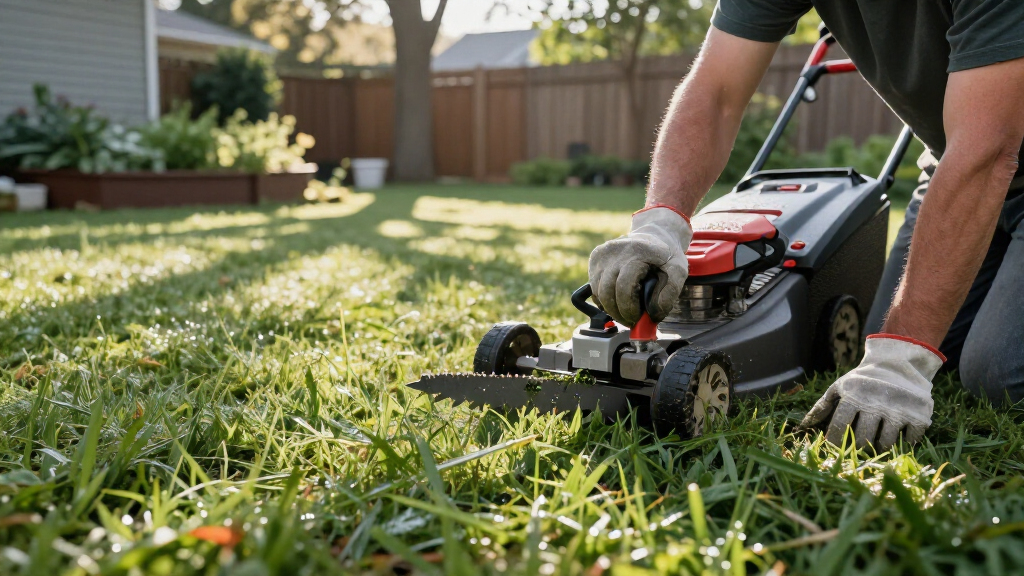
Many buyers overlook that a pocket sharpener is only convenient if it works with the blade still attached to the mower. Handheld carbide tools and stones can be used with the deck tipped on its side (spark plug wire disconnected, of course), which turns a two-hour job into a fifteen-minute one. Drill-mounted sharpeners technically work on the mower too, but maneuvering a running drill under a deck while holding a stone against a curved blade edge is awkward at best and risky at worst. Removing the blade gives you a stable workpiece and lets you check for balance afterward — something every owner should do but most skip. The mistake to avoid is assuming any sharpener suits any workflow; match the tool to whether you are a tip-the-deck touch-up person or a remove-and-balance-every-season person.
Blade Condition: Nicks, Rust, and How Dull Is Too Dull
A pocket sharpener maintains an edge; it does not resurrect a destroyed blade. Light dullness and rounded edges are exactly what these tools are built for, but deep nicks, bends, or heavy rust call for a bench grinder or outright blade replacement. Carbide pull-throughs can smooth small nicks with enough passes, but doing so eats the carbide blade and removes a lot of material unevenly. Diamond stones handle moderate nicks reasonably well because you control exactly where pressure lands, though it takes patience. A useful rule of thumb: if you can catch a fingernail in a gouge, or if the blade has been sharpened so many times it is noticeably shorter than new, replacement is cheaper and safer than more sharpening. Buying a pocket sharpener to fix a wrecked blade is the most common way buyers end up disappointed with this entire category.
Total Cost of Ownership and Replaceable Cutters
The sticker price of a pocket sharpener rarely tells the whole story. Carbide sharpeners wear out — the cutting edges chip and round over after dozens of blades — and models with user-replaceable blades cost a few dollars to refresh while single-piece designs become trash. Diamond stones essentially never wear out in home use, which makes a slightly pricier stone cheaper over a decade than three throwaway carbide tools. Multi-packs of drill-mounted stones offer a different economy: buying five at once means a worn stone is never an excuse to skip sharpening, and a damaged one costs little to write off. When comparing prices, divide by the number of blades you realistically sharpen per year and think in cost-per-season rather than cost-per-tool.
Versatility Beyond the Mower
If the mower is your only edged tool, a single-purpose sharpener is the smarter buy — simpler, smaller, and often better at the one job. But most people who own a mower also own pruners, hedge shears, a shovel, an axe, and kitchen knives that all benefit from the same attention. Multi-slot sharpeners add cost and bulk, yet a tool that lives in the shed and gets used monthly on everything beats a mower-only tool used twice a year. The tradeoff is that multi-tools tend to compromise on each individual function; a dedicated lawn mower sharpener usually holds a better angle for thick blade steel than a general-purpose slot does. Decide honestly how many tools you maintain before paying for seven functions.
Skill Level and Forgiveness
Sharpeners differ enormously in how much they forgive a shaky hand. Pull-through tools with fixed-angle carbide cutters are nearly foolproof — the tool holds the angle for you, and a first-timer gets a serviceable edge on the first try. Stones demand the most skill: keeping a consistent bevel angle freehand takes practice, and a wobbly stroke produces a rounded edge that cuts poorly and dulls fast. Drill-mounted stones fall in between, with the drill providing the speed but your hands providing all the stability. Beginners should start with a guided tool, sharpen a few times to learn what a proper edge looks and feels like, and only then consider graduating to a stone. The most expensive sharpener in the world will not help if the technique behind it is wrong.
Frequently Asked Questions
How often should I sharpen my lawn mower blades with a pocket sharpener?
For a typical suburban lawn mowed weekly, a light sharpening every 20 to 25 hours of cutting time — roughly once every one to two months in season — keeps the edge effective without removing excess steel. Signs it is overdue include grass tips that turn brown and shredded a day or two after mowing, and a cut that requires a second pass. Sandy soil, small twigs, and edging along concrete all dull blades faster, so yards with those conditions need more frequent touch-ups. The advantage of a pocket sharpener is that a five-minute touch-up every few weeks is easier to commit to than an annual full regrind, and frequent light sharpening actually extends blade life because you remove less metal each time. Watch for the balance of the blade degrading over many sharpenings, and replace it when it gets noticeably shorter or uneven.
Can I sharpen a mower blade without removing it from the mower?
Yes, and this is exactly the scenario pocket sharpeners are designed for — but safety steps are non-negotiable. Disconnect the spark plug wire (or remove the battery on an electric mower) so the blade cannot spin, then tip the mower with the air filter and carburetor facing up to avoid flooding it with oil or fuel. Handheld carbide tools and stones work well in this position because you can brace the blade with a block of wood and stroke the edge at a controlled angle. Drill-mounted sharpeners can technically be used on the mower, but the cramped space and awkward angles make it easy to slip and gouge the deck or your hand. If you sharpen in place, you also cannot check blade balance, so plan to remove the blade at least once a season for a proper inspection and balancing.
Are carbide pull-through sharpeners bad for mower blades?
They are not inherently bad, but they are the most aggressive option in the pocket category, and that cuts both ways. Carbide cutters remove steel quickly, which is why a dull blade sharpens in a few strokes — the tradeoff is that careless use removes more metal than needed, shortening the blade’s usable life from perhaps eight years of sharpening down to five or six. They can also leave a slightly rougher edge than a diamond stone, which may dull a bit faster. The buyers who run into trouble are those who use heavy pressure; let the tool’s own weight do the work and stop as soon as the edge is sharp. For maintaining an already reasonable edge a few times a season, carbide is perfectly fine. For resurrecting a badly neglected blade, a stone or drill-mounted sharpener gives more control over how much metal comes off and where.
Do I really need to balance the blade after sharpening?
You should, because sharpening almost always removes slightly more metal from one end of the blade than the other, and an unbalanced blade causes real problems. Even a small imbalance at 3,000-plus RPM creates vibration that wears crankshaft bearings, loosens deck bolts, and can crack the spindle housing over a season or two of mowing. A blade balancer costs very little, and even hanging the blade on a nail in the wall reveals which side is heavier — the heavier side gets a few more light strokes. Skipping balancing is the single most common sharpening mistake homeowners make, and the damage it causes costs far more than the thirty seconds balancing takes. If you sharpen on the mower without removing the blade, build a balancing check into your once-a-year full maintenance session instead.
What angle should a lawn mower blade be sharpened to?
Most mower blades are designed with a bevel angle between 30 and 45 degrees, and following the factory angle is the best practice — trying to regrind to your own preferred angle removes far more steel than maintaining the existing one. Many quality pocket sharpeners and stones are built around this range, with fixed-angle carbide tools typically cutting close to 40 degrees. Sharpening at too shallow an angle produces a fragile edge that folds over on twigs; too steep and the blade pushes grass rather than slicing it. You do not need to make the edge razor-sharp like a knife — a clean, consistent bevel with a burr removed cuts grass perfectly and lasts longer than an over-polished edge. Match the factory angle, keep it consistent along the whole cutting edge, and remove the wire burr on the back side with a few light strokes when you finish.
Conclusion
Mapping these ten sharpeners to real buyers makes the decision straightforward. For the best overall pick, the SHARPAL 103N wins on its rare combination of pocket portability, replaceable carbide cutters, and enough muscle for thick mower blade steel — it suits the widest range of owners. The best value goes to the AccuSharp Garden Tool Sharpener, whose replaceable carbide blades and dead-simple operation deliver the lowest cost per sharpening in the lineup. For the best premium option, the Sharp Pebble Cordless Kit bundles everything needed for a fast, near-bench-quality edge, making it ideal for owners of larger properties who sharpen multiple blades a season. Beginners should reach for the AccuSharp Garden Tool and Lawn Mower Blade Sharpener or the Orange Ninja 7-in-1, both of which hold the angle for you and forgive an unsteady first attempt. For precision-minded owners who want the longest-lasting edge and total control, the SHARPAL 121N Dual-Grit Diamond Stone is the specialist choice, while the Cenoz 5-Pack suits anyone who prefers drill-mounted speed and never wants a worn stone as an excuse. Whatever your sharpening style, the tool that lives within arm’s reach of the mower will always outperform the better one left in a drawer.
Halloween Picks
halloween
As an affiliate, we earn on qualifying purchases.