
TL;DR

Get business pricing on tools and workshop supplies
- Business-only prices and quantity discounts
- Tax-exempt purchasing
- Multiple users, one account, clear invoices
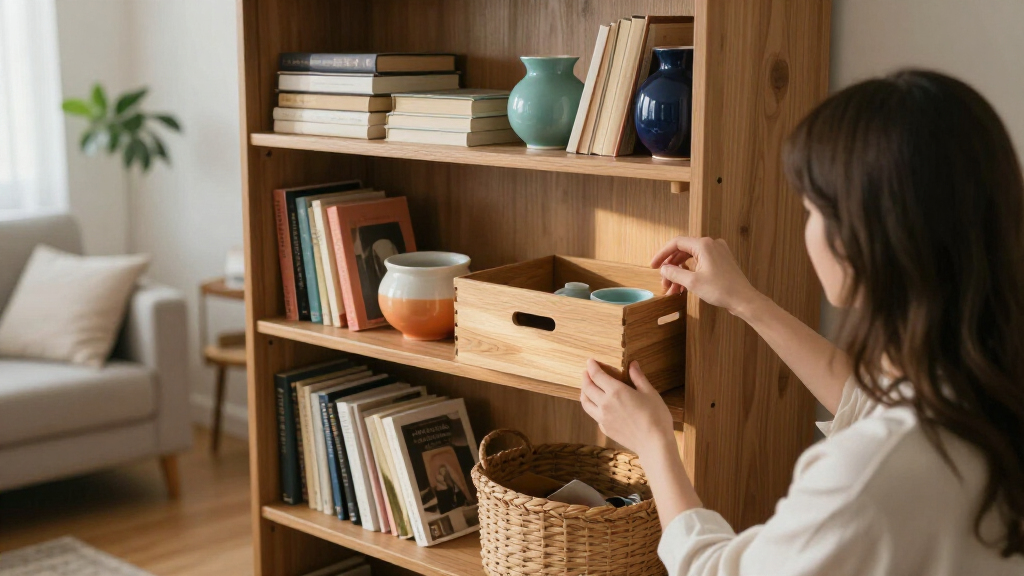
An Apartment Therapy writer describes how four tips from professional organizer Jessica Litman helped organize a cluttered built-in bookshelf. The approach focuses on sorting belongings, grouping books by use, arranging heavier items lower and leaving space around displayed objects.
An Apartment Therapy writer says four suggestions from professional organizer Jessica Litman helped turn a cluttered built-in bookshelf into a more organized display. The advice covers sorting items by category, arranging books by purpose, styling from the bottom up and leaving open space between objects.
The writer had wanted a tall bookshelf with a rolling ladder, but struggled to arrange it after getting one. Attempts to group objects in threes, stack books horizontally and follow other styling advice did not resolve the problem. A partly empty shelf and a box of photo frames remained, prompting the writer to seek help from Litman, of The Organized Mama.
Litman’s first suggestion was to remove the contents and sort them into groups. She told Apartment Therapy that people can group items by collections, book type, color or another category that makes sense for their belongings. The writer grouped silver photo frames with a matching candlestick and arranged books loosely by topic, making it easier to see what was available to place on the shelves.
For the books, Litman recommended organizing by function or subject. Examples included putting children’s books on lower shelves, grouping fiction by genre and keeping books the owner wants to read together. The writer gathered cookbooks, separated fiction, nonfiction and children’s books, and stacked coffee-table books horizontally. Litman then advised filling the shelves without overthinking, placing heavier objects lower and smaller, lighter items around eye level. Her final tip was to leave gaps so that displayed objects remain visible and the shelves do not feel crowded.
A Practical Plan for Shelf Clutter
The tips address a common design problem in the report: a bookshelf must hold useful items while also serving as a visible part of a room. Sorting belongings first gives the owner a clearer view of what needs space, while grouping books by purpose can make frequently used or unread volumes easier to find. These are suggestions from Litman as reported by Apartment Therapy, not a tested system with measured results.
The writer describes the arrangement as feeling more balanced after moving heavier objects to lower shelves and varying how books were stacked. Leaving small gaps also helped the display feel less crowded. For readers facing a similar shelf, the method offers a sequence of manageable decisions instead of requiring a single finished design at the outset.
From Dream Shelf to Working Display
The piece is a first-person home-organizing report, rather than a study or product review. Its writer had imagined owning a tall bookcase with a rolling ladder, then found it difficult to make the shelves look orderly once the furniture was in place. Earlier efforts included arranging objects in groups of three and stacking some books horizontally, but the writer says neither approach felt right.
Litman’s advice shifts the task from decorating individual shelves to sorting the contents first. The writer’s account describes grouping frames and a candlestick, separating books by category, then testing arrangements on the shelf. The report does not identify the bookshelf’s dimensions, give a product recommendation or provide before-and-after measurements. It presents a personal result and an organizer’s practical suggestions.
““Start by grouping all your items together, then decide what you want to showcase and group based on category.””
— Jessica Litman, The Organized Mama, as quoted by Apartment Therapy
What the Report Does Not Measure
The report does not say how long the reorganization took, whether the shelves stayed organized over time or whether the arrangement worked for other households. It gives no measurements or independent evaluation of the tips. The reported improvement is the writer’s personal assessment, and the article does not establish that every suggestion will suit every collection or room.
Adjust the Arrangement Over Time
Litman’s advice, as relayed by the writer, is to put items in place, step away and make changes while living with the display. That leaves the arrangement open to revision as the owner notices what is hard to reach, what feels crowded or which belongings deserve to be shown. The report describes no further project or follow-up date; its next step for readers is simply to try an arrangement and adjust it as needed.
Key Questions
What four bookshelf tips did Jessica Litman give?
She recommended grouping similar items, organizing books by purpose or subject, styling from the bottom up and leaving open space around displayed objects.
How should books be grouped?
Litman suggested grouping them by topic or use. The report gives examples including keeping children’s books on lower shelves, sorting fiction by genre and setting aside books the owner plans to read.
Where should heavier objects go?
In the report, Litman advises placing heavier objects on lower shelves and smaller, lighter items around eye level.
Does the report show that the method works for everyone?
No. It recounts one writer’s experience and Litman’s organizing advice. The article provides no measurements or longer-term results for other households.
Source: rss
Fall Picks
fall essentials
As an affiliate, we earn on qualifying purchases.